





D1 Day 1: Tokyo, arrival, Asakusa and Ueno
- D1·1Haneda Airport Airport
- D1·2Sensō-ji Temple Landmark
- D1·3Nakamise-dōri Market
- D1·4Ueno Park Park
- D1·5Ameyoko Market Market

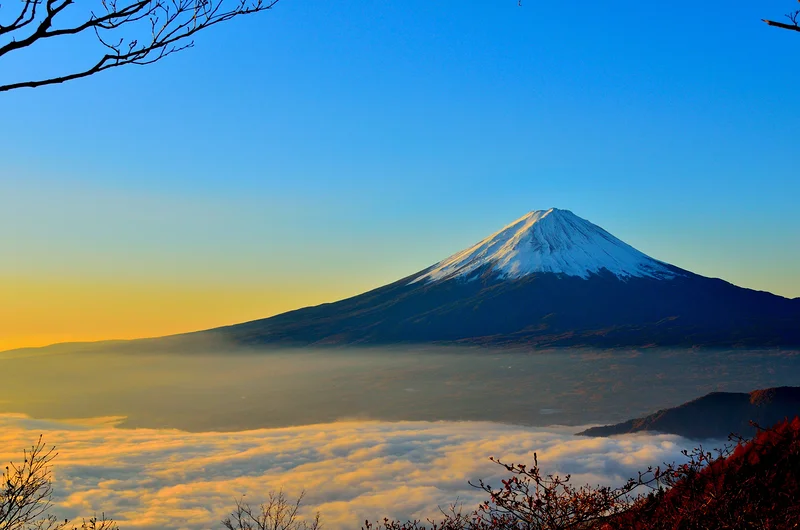
Ten days is enough for Tokyo, Kyoto, Nara and Osaka, with a night in a ryokan, a traditional inn, at Hakone between Tokyo and Kyoto, as long as you travel light and let the train do the rest: the Shinkansen, the bullet train, gets you from Odawara, at the foot of Hakone, to Kyoto in 2h10, and you won't need a car at any point. Three nights in Tokyo, one in Hakone for the hot bath and the view of Mount Fuji, three in Kyoto, one in Nara, one in Osaka, where your flight home leaves from. Book the Hakone ryokan months ahead, and Kyoto hotels too if you go in cherry blossom or maple season; you can buy train tickets the day before.
© OpenStreetMap contributors
D1 Day 1: Tokyo, arrival, Asakusa and Ueno
D2 Day 2: Meiji-jingū, Harajuku, Shibuya and Shinjuku
D3 Day 3: Kamakura, the Great Buddha and the sea
D4 Day 4: Hakone, the ropeway, the lake and the _ryokan_
D5 Day 5: the Shinkansen, Fushimi Inari and Gion
D6 Day 6: the Golden Pavilion, Ryōan-ji and Arashiyama
D7 Day 7: Uji, Kiyomizu-dera and the lanes of Higashiyama
D8 Day 8: Nara, the Great Buddha and the deer
D9 Day 9: Osaka, the castle and Dōtonbori
D10 Day 10: Himeji, the white castle, then the airport
| Day | Stops of the day | Train | Night in |
|---|---|---|---|
| Day 1 | Asakusa, Ueno | No train | Tokyo |
| Day 2 | Harajuku, Shibuya, Shinjuku | No train | Tokyo |
| Day 3 | Kamakura, Hase, Enoshima | 110 km, 2h10 | Tokyo |
| Day 4 | Hakone, Ōwakudani, Lake Ashi | 95 km, 1h50 | Hakone |
| Day 5 | Hakone, Kyoto, Fushimi, Gion | 430 km, 2h30 | Kyoto |
| Day 6 | Kita, Arashiyama | No train | Kyoto |
| Day 7 | Uji, Higashiyama | 40 km, 1h | Kyoto |
| Day 8 | Nara, Nara Park | 45 km, 45 min | Nara |
| Day 9 | Osaka, Nakanoshima, Namba | 45 km, 50 min | Osaka |
| Day 10 | Himeji, Osaka, Kansai Airport | 230 km, 2h20 | Departure |
| Total | 995 km, 11h25 |
To get there and pick your season, see When to go and How to get there.
From Haneda Airport, the closer of the two to the center, take the Keikyu line to Asakusa, with no change; from Narita Airport, farther east, take the Keisei Skyliner to Ueno, then the subway to Asakusa.
If you land in the morning, drop your bags at the hotel and walk until evening: it is the best cure for jet lag.
You reach Sensō-ji Temple, the oldest in Tokyo, through Nakamise-dōri, a 250 m (820-foot) street of stalls that starts at Kaminarimon gate and its giant red lantern: senbei, grilled rice crackers, fans and kimono rentals. The temple grounds are open day and night and free; the five-story pagoda and the main hall are lit up after sunset.
Do as the people of Tokyo do at the incense burner: waft the smoke toward you with your hands; it is said to heal. Then draw an omikuji, a paper fortune, for $1.10: if it is a bad one, tie it to the rack set up for that purpose and leave it at the temple.
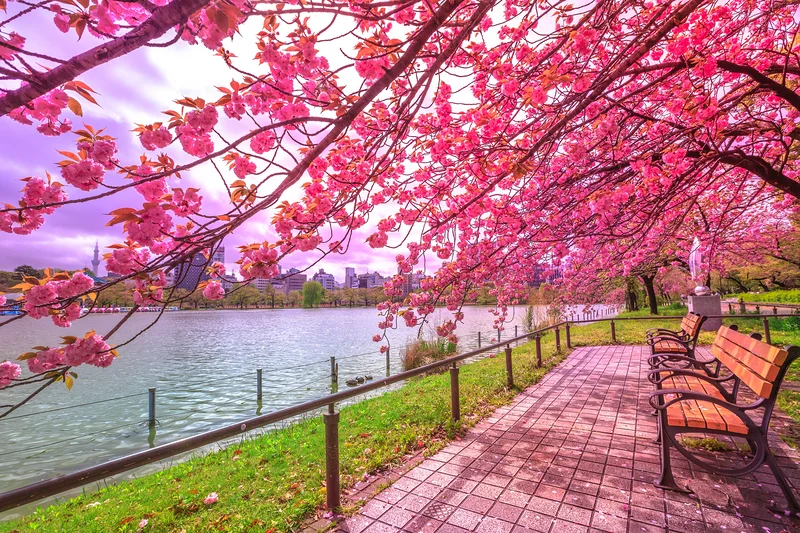
Three subway stops away, Ueno Park is home to the national museums, a pond covered in lotus in summer and a temple on an island; in April, its thousand cherry trees make it the city's picnic ground. Just south, Ameyoko Market, under the train tracks, sells dried fish, sneakers and skewers from 10am to 8pm.
Eat early, around 7pm, in an izakaya, a Japanese pub, in Ameyoko or Asakusa, or at Sometarō (2-2-2 Nishi-Asakusa), open since 1937, where you cook your own okonomiyaki, the savory filled pancake, on the hot plate at your table. Be in bed by 9pm: tomorrow starts at 9am.
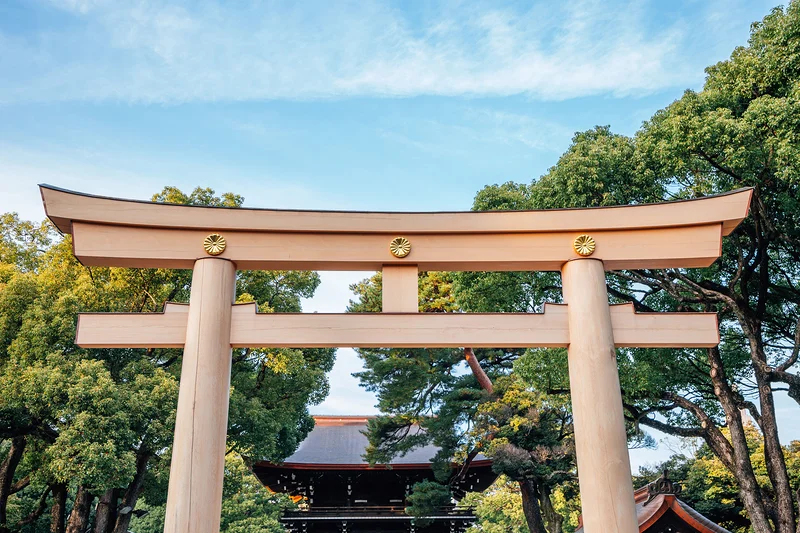
Get to Meiji-jingū Shrine at 9am, when only the faithful are there: 70 ha (170 acres) of forest planted a century ago in the middle of Tokyo, dedicated to Emperor Meiji, with a ten-minute gravel path under the torii, the wooden gateways, up to the shrine. Entry is free, from dawn to dusk. On Saturday mornings a Shinto wedding procession often passes, the bride under a white hood.
Along the path, the wall of sake barrels donated by the country's breweries is the morning's photo stop; opposite stands a row of Burgundy wine barrels, a gift from France.
The south exit of the shrine opens onto Takeshita-dōri, the pedestrian street of teenage fashion: rolled crepes, sock and costume shops, packed from 11am. 300 m (1,000 feet) of it is plenty; Omotesandō, the parallel avenue lined with zelkova trees, is its opposite, with luxury brands in buildings by famous architects.
Walk down to Shibuya Crossing, a twenty-minute walk: at every light, up to three thousand people cross in every direction. To see it from above, go up to Shibuya Sky, the open-air deck on top of the Scramble Square tower, 229 m (751 feet) up, for the sunset slot.
In Shinjuku, two Tokyos meet: west of the station, the office towers, including the Tokyo Metropolitan Government Building, with a free observatory on the 45th floor open until 10pm; east of it, Kabukichō, the district of neon signs, bars and game arcades.
Have dinner in Omoide Yokochō, two lanes of skewer counters pressed against the tracks by the west exit: eight seats per stall, yakitori at $1.70 a skewer, bottled beer, and smoke that soaks into your coat. Then have a drink in one of the bars of Golden Gai, barely 2 m (6 feet) wide, in a block of lanes packed with tiny bars ten minutes away on foot; some of them charge a $6.60 cover.
Kamakura was the shoguns' capital in the 13th century, and it keeps its temples between the hills and the sea, an hour from Tokyo on the JR Yokosuka line from Tokyo or Shinagawa station, for about $6.60 per person with a Suica card. Leave at 8am: temples open at 8 or 8:30am and the groups arrive around 11am.
From the station, Wakamiya-ōji avenue, lined with cherry trees, climbs in ten minutes to Tsurugaoka Hachiman-gū Shrine, the shoguns' own, at the top of a broad stone staircase. Then a bus, or a 25-minute walk east, takes you to Hōkoku-ji Temple and its bamboo grove, smaller and calmer than Arashiyama's: have a green tea there on the bench facing the stalks, for about $4.40.
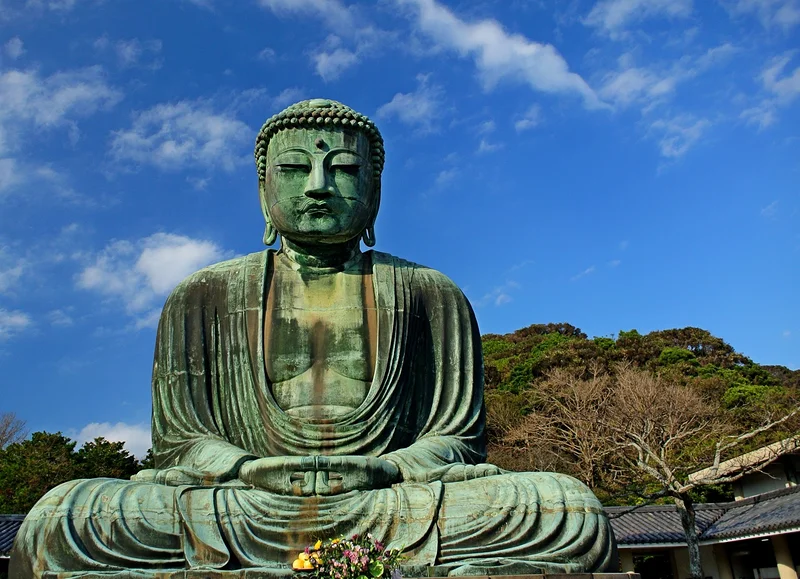
The little Enoden line, a green tram from another century, links Kamakura station to Hase in five minutes. The Great Buddha of Kamakura, 13 m (43 feet) of bronze seated in the open air since the 13th century, takes twenty minutes ($2.20); for a few yen more, you can step inside the statue and see its welds.
Hase-dera Temple, five minutes away, deserves an hour: a 9 m (30-foot) gilded wooden statue of Kannon, a cave, hydrangeas in June, and a terrace over Sagami Bay. For lunch, try shirasu-don on Hase's street between the two temples: a bowl of rice topped with raw or cooked whitebait, the specialty of the coast.
The same Enoden tram runs along the sea to Enoshima Island, joined to the shore by a bridge: a shrine, sloping lanes, a cave, and on clear days Mount Fuji on the horizon at sunset, behind the surfers. Head back to Tokyo from Fujisawa station, at the end of the Enoden line: 50 minutes by JR train.
The Romancecar, the express train of the Odakyu company, leaves from Shinjuku station and reaches Hakone-Yumoto Station in 1h25, with reserved seats and a panoramic front window for those who book first.
The Hakone Free Pass, sold at the same counter for about $44 per person, covers the round-trip train and every transport on the loop for two days: mountain train, funicular, ropeway, boat and bus; the Romancecar costs a supplement of about $8.80.
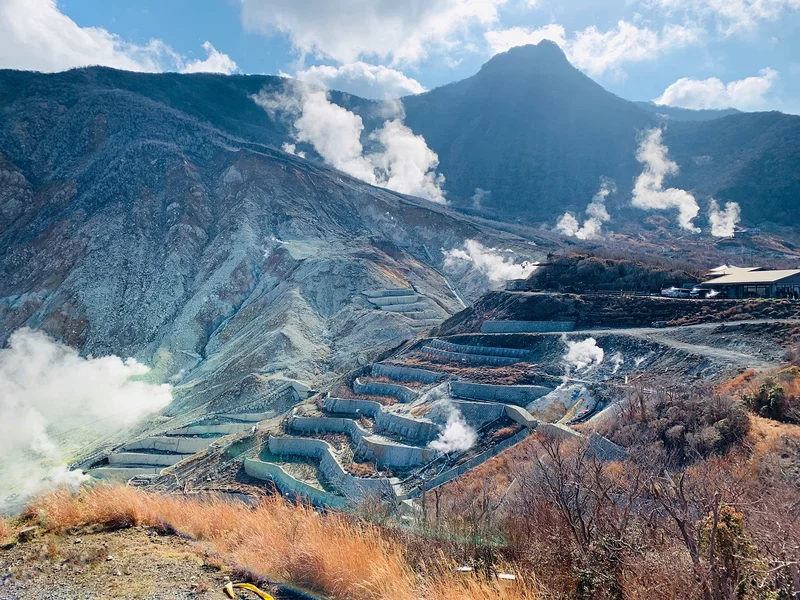
From Hakone-Yumoto, the mountain train zigzags up to Gōra in 40 minutes, through hydrangeas in June; the funicular and then the ropeway climb on to Ōwakudani, the volcanic valley where the ground steams and smells of sulfur. Black eggs boiled in the spring sell for about $3.30 a bag: legend says each one adds seven years to your life. On a clear day, you can see Mount Fuji from the cabin.
The ropeway comes down to Lake Ashi, crossed in 30 minutes by a boat dressed up as a galleon; on the far shore, you can photograph the red torii of Hakone-jinja shrine, standing in the water, after a half-hour wait in line in the afternoon. A bus takes you back to Gōra or Yumoto in 40 minutes.
Reach the ryokan before 4pm, change into the yukata, the cotton kimono provided, and go down to the bath: wash sitting on the little stool before getting into the water, which is at 40 °C (104 °F), and keep the towel on your head or on the edge, never in the pool. The kaiseki dinner is served in your room or a dining room at 6 or 6:30pm; the futon is rolled out while you eat.
The ryokan breakfast, grilled fish, rice, miso soup and egg, is served at 8am; take a last bath before it, at 7am, when the pool is empty. The bus or train goes back down to Yumoto, then a local train reaches Odawara Station in 15 minutes: the Hikari Shinkansen stops there about once an hour and gets you to Kyoto in 2h10, with Mount Fuji on the right in the first half hour.
Buy tickets the day before on the smartEX app, or at the JR machines in Odawara station (Hakone-Yumoto station doesn't sell them), and choose an E seat for Mount Fuji. Have lunch on board with an ekiben, the station bento sold on the Odawara platform for $8.80 to $14.
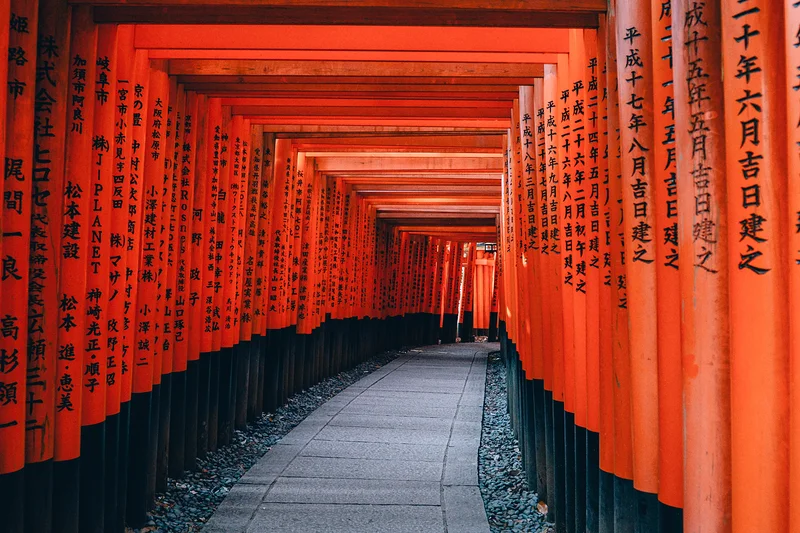
From Kyoto Station, leave the bags at the hotel or in a locker, and take the JR Nara line two stops: Fushimi Inari-taisha, the shrine of the rice god, lines thousands of vermilion torii along 4 km (2.5 miles) of mountain trail. Entry is free, and the shrine never closes; groups crowd the first 500 m (1,600 feet), and the trail empties beyond the first viewpoint, after a 30-minute climb.
Climb to the Yotsutsuji crossroads, 45 minutes up, for the view over Kyoto at sunset, and come down after dark: the lanterns light up, and stone foxes, the god's messengers, guard every gate.
Gion, on the east bank of the Kamo River, is the district of teahouses and geiko, as Kyoto calls its geishas: on Hanamikōji street, between 5:30 and 6:30pm, they head to their appointments in kimono, with small quick steps. Watch, but don't follow them, block their way or photograph them up close: the district posts fines for it.
Have dinner near Shijō Bridge, in Pontochō, the lane of restaurants along the west bank of the river, with wooden terraces over the water in summer; count on $33 to $55 per person for a seasonal meal. Many Kyoto restaurants close their kitchens at 9pm.
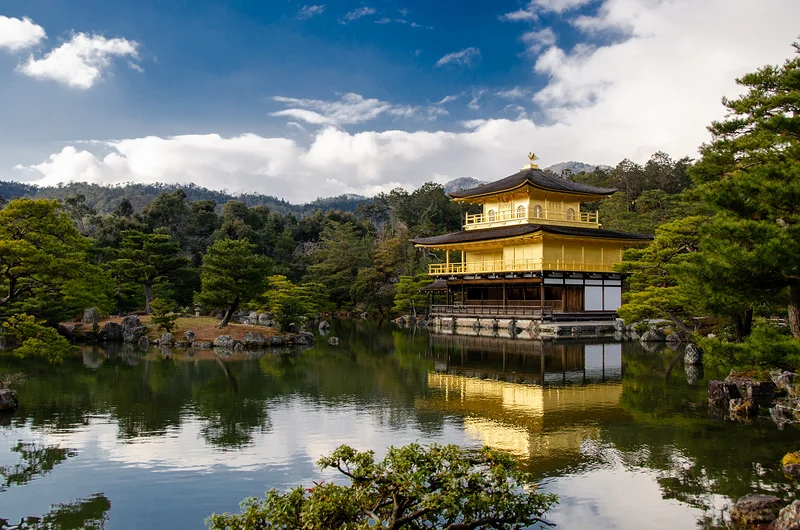
The Golden Pavilion, Kinkaku-ji, is a three-story pavilion covered in gold leaf, set on a pond that mirrors it: it is Japan's most famous photo, and everyone comes to take it. Be at the gate at 9am, opening time, to have the pond without the crowd for twenty minutes.
Entry costs $3.30, the visit takes no more than half an hour, and you can't go inside the pavilion. Bus 205 or 101 from the station takes 40 minutes; a taxi costs about $20.
A fifteen-minute walk southwest, Ryōan-ji is a Zen temple with a dry garden, fifteen rocks on a rectangle of raked gravel, that you contemplate sitting on the wooden veranda: wherever you sit, one rock stays hidden. Arrive before 10:30am for the silence, $3.30 per person, and allow twenty more minutes to walk around the temple pond.
The JR Sagano line from Kyoto Station, or the Randen tram from Ryōan-ji, reaches Arashiyama, the hillside west of the city, in 20 minutes. The Arashiyama Bamboo Grove, a 400 m (1,300-foot) path between 20 m (65-foot) stalks, is packed from 11am to 4pm: see it around 4:30pm, when the light slants through and the groups leave.
Before that, visit Tenryū-ji Temple and its 14th-century garden, with the hill as a backdrop ($3.30, $2.20 more for the buildings), then Togetsukyō Bridge, the “moon-crossing bridge” over the Katsura River, where the punt boats leave from. Have a bowl of soba, buckwheat noodles, by the water, for about $8.80.
For the evening, head back to Gion, or have dinner at one of the Arashiyama restaurants by the river, which close at 8pm, and take a later train back.
Uji is twenty minutes from Kyoto on the JR Nara line: it is the town of matcha, powdered green tea, and of the Byōdō-in, the Phoenix Hall, an 11th-century temple set on a pond, the one on the ten-yen coin. It opens at 8:30am ($4.40, plus $2.20 to enter the hall, in twenty-minute slots); the street leading to it, Byōdō-in Omotesandō, sells tea, ice cream and matcha noodles.
Have tea prepared in front of you in one of the houses on the street, such as Nakamura Tōkichi (10 Uji Ichiban), founded in 1854, for $8.80; then head back to Kyoto at 11:30am, before the lunch line.
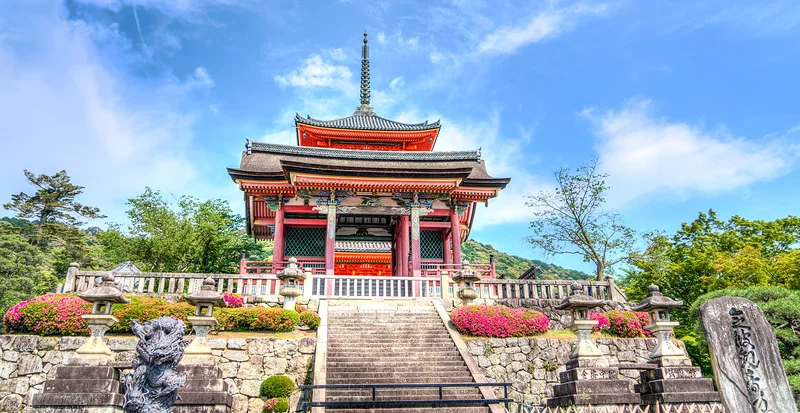
Kiyomizu-dera Temple, on the Higashiyama hillside east of the city, is known for its overhanging wooden terrace, set on tall pillars joined without a single nail, with Kyoto below; $3.30 per person, open 6am to 6pm. Three streams of water fall at the foot of the terrace: visitors drink from one of the three with a ladle, for long life, love or study, but never from all three.
Walk down via Sannenzaka and Ninenzaka, two stepped, paved lanes lined with wooden houses, pottery shops and tea rooms, where the afternoon crowds slow you down: take a break in a teahouse for a matcha ice cream.
Continuing north, Kōdai-ji Temple opens its gardens at night in spring and autumn, with the maples lit up; then Yasaka Shrine, between Higashiyama and Gion, stays open all night, its lanterns glowing.
Have a kaiseki dinner, seasonal cooking in small dishes, or simply yudōfu, Kyoto's simmered tofu, in one of the restaurants at the foot of Kōdai-ji; count on $28 for the tofu, $88 and up for a booked kaiseki.
Send the suitcases ahead to Osaka with the takkyūbin the day before, or carry them: the Kintetsu train leaves from Kyoto Station and reaches Kintetsu-Nara Station, right in the center, in 35 minutes on the limited express, for about $8.80 per person. Drop the bag at the hotel; most keep luggage from the morning.
Walk ten minutes uphill to Kōfuku-ji Temple, at the edge of the park. The deer start there: more than a thousand, roaming free, who bow for a rice cracker sold for $1.70 by the park vendors. Hold the crackers high, give them one at a time, and put the wrappers away: a deer eats everything.
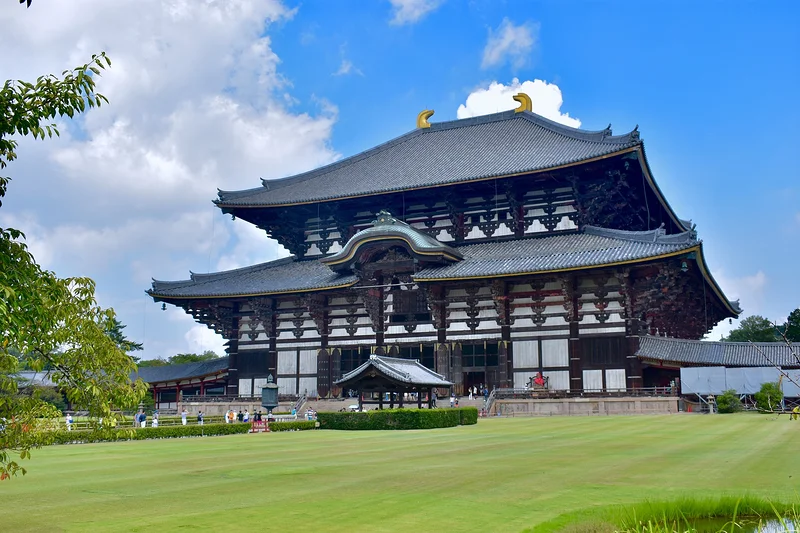
Tōdai-ji Temple houses the 15 m (49-foot) bronze Great Buddha, seated since the 8th century in one of the largest wooden buildings in the world; $5.50 per person, open 7:30am to 5:30pm from April to October, 8am to 5pm in winter. Behind the statue, a pillar has a hole the size of the Buddha's nostril: children squeeze through it for luck.
A twenty-minute path under the cedars, lined with two thousand moss-covered stone lanterns, leads to Kasuga-taisha Shrine, with its vermilion buildings and a thousand hanging bronze lanterns; $3.30 for the inner precinct. They are all lit twice a year, in early February and mid-August.
Naramachi, south of the park, is the district of merchant houses with narrow fronts and inner gardens, several of which are open free of charge. For dinner, try kakinoha-zushi, pressed mackerel sushi wrapped in a persimmon leaf, Nara's specialty, then walk back into the park after dark: the deer sleep under the trees, and Kōfuku-ji is lit up.
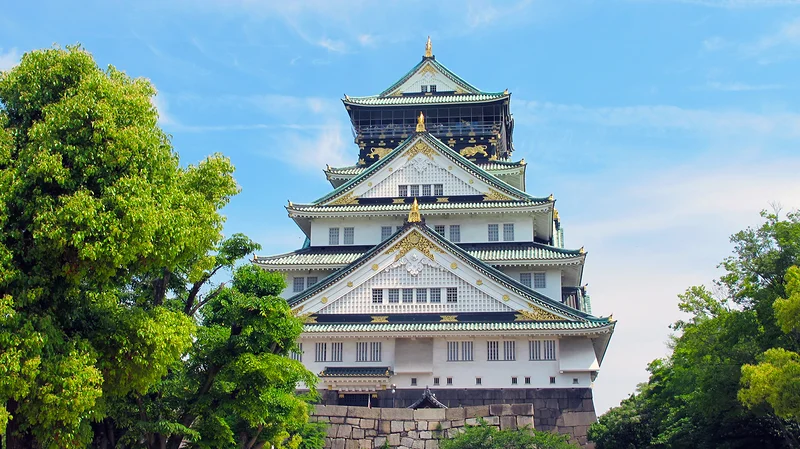
The Kintetsu train links Nara to Osaka-Namba in 40 minutes; drop the bags and take the subway to Osaka Castle, the white and gold fortress on its stone ramparts, in the middle of a park. The keep is a 1931 concrete reconstruction housing an eight-floor museum, $7.70 per person, with a deck at the top; the park, moats and walls are free, and finer than the inside. Allow 1h30 in all.
On Nakanoshima, the long, narrow island between two arms of the Ō river in the center, you walk past early 20th-century brick buildings, an art museum and riverside paths. To the north, from the Umeda Sky Building, two towers joined on the 39th floor by a floating garden, you get the widest view over Osaka, for about $14 per person.
Start at Kuromon Ichiba, the covered market where fish stalls grill scallops and crab to order, 9am to 6pm; then walk five minutes to Dōtonbori, the canal lined with animated signs, including the Glico runner, who has been raising his arms since 1935, and the giant crab waving its claws.
Eat standing, on the move: takoyaki, the octopus dumplings, at Kukuru (1-10-5 Dōtonbori); an okonomiyaki at Mizuno (1-4-15 Dōtonbori), which has a line from 6pm; breaded skewers, kushikatsu, in Shinsekai, the retro district around Tsūtenkaku tower, fifteen minutes away by subway, where the rule is never to dip twice in the shared sauce.
From Shin-Osaka Station, the Shinkansen gets you to Himeji in 30 minutes, about $25 per person in an unreserved seat; from Osaka station, the JR rapid train takes 1h for $11. Leave the suitcases in a locker at Osaka or Shin-Osaka station, whichever your airport train will leave from, and set off at 8:30am: the castle opens at 9am, and lines for the keep run over an hour after 11am in high season.
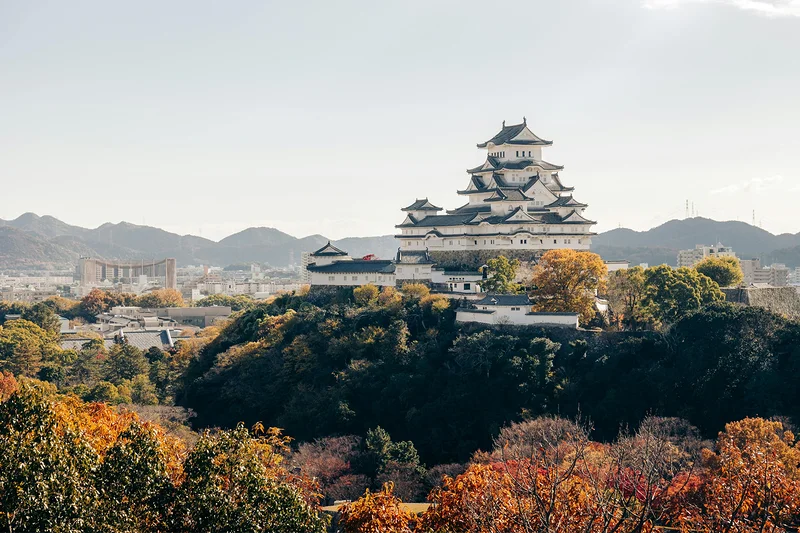
Himeji Castle, the White Heron, is the largest castle in Japan and one of the few originals: a six-story keep in wood and white plaster, built in 1609, never destroyed, at the top of a maze of walls and gates designed to lose attackers.
Entry costs about $17 per person and the visit takes two hours, in socks inside; the stairs are steep and the rooms empty: the timber frame and the view from the top floor are the reason to go.
At the foot of the walls, Kōko-en Garden gathers nine Japanese gardens separated by walls, with a tea room by a carp pond; $1.10 more on the combined ticket; allow 40 minutes, and have anago, the town's conger eel, for lunch in the garden restaurant.
Head back to Osaka by Shinkansen by 1:30pm, collect the bags and make for Kansai Airport, built on an artificial island in the bay: the JR Haruka train leaves from Shin-Osaka and Osaka stations, 50 minutes, about $20; the Nankai train leaves from Namba, 40 to 45 minutes, $6.60 to $9.90.
Be at the airport three hours before your flight: security and immigration take time at Kansai.
On this route, the seven-day Japan Rail Pass costs more than this trip's two Shinkansen rides and local trains added together, and its seven days don't cover the ten of the trip; it covers neither the Hakone Romancecar nor the Kintetsu trains to Nara. So buy single tickets, the day before, and pay for local trains with a Suica card.
| Route | Train | Time | Fare |
|---|---|---|---|
| Tokyo - Kamakura | JR Yokosuka | ~1h | ~$6.60 / pers. |
| Shinjuku - Hakone-Yumoto | Odakyu Romancecar | 1h25 | Hakone Free Pass, ~$44 / pers. |
| Odawara - Kyoto | Shinkansen Hikari | 2h10 | ~$94 / pers. |
| Kyoto - Uji | JR Nara line | 20 min. | ~$2.20 / pers. |
| Kyoto - Nara | Kintetsu limited express | 35 min. | ~$8.80 / pers. |
| Nara - Osaka-Namba | Kintetsu | 40 min. | ~$4.40 / pers. |
| Shin-Osaka - Himeji | Shinkansen | 30 min. | ~$25 / pers. |
| Osaka - Kansai Airport | JR Haruka or Nankai | 45 to 50 min. | $6.60 to $20 / pers. |
On day five, between Odawara and Kyoto, reserve your seat the day before: a suitcase over 160 cm (63 inches) in total dimensions must be declared when booking, for the space behind the last row, or you pay a fee on board. A carry-on fits in the rack above the seat.
Simplest of all is not to travel with it: on the evening of day three, leave the big suitcases at your Tokyo hotel's reception for your Kyoto hotel, where they are waiting for you the next evening, and go to Hakone with an overnight bag. Between Kyoto, Nara and Osaka, the rides are so short that the bag can come along by hand, or go ahead the day before in the same way.
| What | For which day | What the itinerary needs |
|---|---|---|
| Shibuya Sky | Day 2 | The sunset slot, a few days ahead |
| Hakone ryokan | Day 4 | 3 to 6 months ahead, with dinner; arrive before 4pm |
| Odawara to Kyoto Shinkansen | Day 5 | The day before, E seat for Mount Fuji, large-luggage space if needed |
| Kyoto hotel, late March, April and November | Days 5 to 7 | 6 months ahead |
| Kaiseki dinner in Kyoto | Day 7 | 2 to 4 weeks ahead, through the hotel |
| Shin-Osaka to Himeji Shinkansen | Day 10 | The day before, or an unreserved seat that morning |
Everything else on this itinerary is paid on the spot: temples, shrines and castles sell their tickets at the entrance, often for cash. The Ghibli Museum and teamLab are not in this plan; if you are set on one, swap it for the Shinjuku evening on day two, and book it as our “before you go” page explains.
| Item | Mid-range | With a little more |
|---|---|---|
| Hotels, 8 nights | $1,100 to $1,540 | $2,420 with the Peninsula and a Kyoto ryokan |
| Hakone ryokan, 1 night, dinner included | $330 to $500 | $770 with a private bath |
| Trains and subway | ~$440 | ~$500 in the Green Car, first class |
| Food, 10 dinners and 10 lunches | ~$990 | ~$1,430 with a kaiseki and a sushi counter |
| Sights | ~$132 | ~$220 with teamLab and Shibuya Sky |
| Takkyubin, eSIM, extras | ~$110 | ~$165 |
| Total for two | ~$3,520 | ~$5,500 |
About $3,520 for ten days excluding flights, staying in mid-range hotels, with one ryokan night and meals that alternate between $11 counters and $44 dinners. The Hakone night alone takes a tenth of the budget: it is the one to book first.
Drop the Nara night, seen from Kyoto in half a day, and the Kamakura day: Tokyo keeps two nights, Hakone one, Kyoto three, Osaka one. Nothing else changes, and Himeji stays the last morning.
Add two nights in Hiroshima after Osaka, 1h30 by Shinkansen: the Peace Memorial and the Atomic Bomb Dome, then Miyajima island and its torii in the sea, 40 minutes away by train and ferry; the seven-day Japan Rail Pass then pays off between Hakone and Hiroshima.
Or add a night at Lake Kawaguchi, at the foot of Mount Fuji, between Tokyo and Hakone, for the whole mountain mirrored in the water at dawn, and a day in Nikkō, the lacquered shrines in the forest, two hours north of Tokyo.
If flights are cheaper into Osaka, or if your dates fall during Golden Week, run the trip in reverse: Osaka, Nara, Kyoto, Hakone, Tokyo, with the Shinkansen from Kyoto to Odawara and the Romancecar to Shinjuku. Himeji becomes the first morning, and the last day is spent in Tokyo, near Haneda.
Hakone still works in an ordinary hotel with shared baths, for half the price of a ryokan, in Gōra or Yumoto; and you can do the Hakone loop in a day from Tokyo, with the same pass, if you would rather not change hotels. You then lose the evening in yukata, and gain a fourth night in Tokyo.
Japan
Pick your dates and see the offers from the major booking sites side by side.
Compare live offers from Booking, Expedia, Agoda and other partners.
Japan: find your hotel
No, unless you add Hiroshima. The seven-day pass costs more than this trip's two Shinkansen rides (Odawara to Kyoto and the round trip to Himeji) plus the local trains, and its seven days would not cover the ten of the trip. Buy single tickets at the machines or on the rail company's app, and pay for the rest with a Suica card.
No: on this itinerary, temples, shrines and castles sell their tickets at the entrance, usually for cash. Only the Hakone ryokan, the sunset slot at Shibuya Sky and a kaiseki dinner in Kyoto need booking ahead; the Ghibli Museum and teamLab, if you add them, sell out weeks in advance.
Leave them the evening before at your Tokyo hotel's reception, which ships them with the takkyūbin delivery service: they reach your Kyoto hotel the following evening, for about $17 per bag. You go to Hakone with an overnight bag, and you don't need to book the large-luggage space on the Shinkansen.
It is the right length for a first trip: two big cities, two former capitals and a night in the mountains, with no domestic flight. For Hiroshima, Kanazawa or the Japanese Alps, add two days for each: save them for a second trip rather than cutting a night in Kyoto.