Kyoto for couples: what to know before you go (2026)
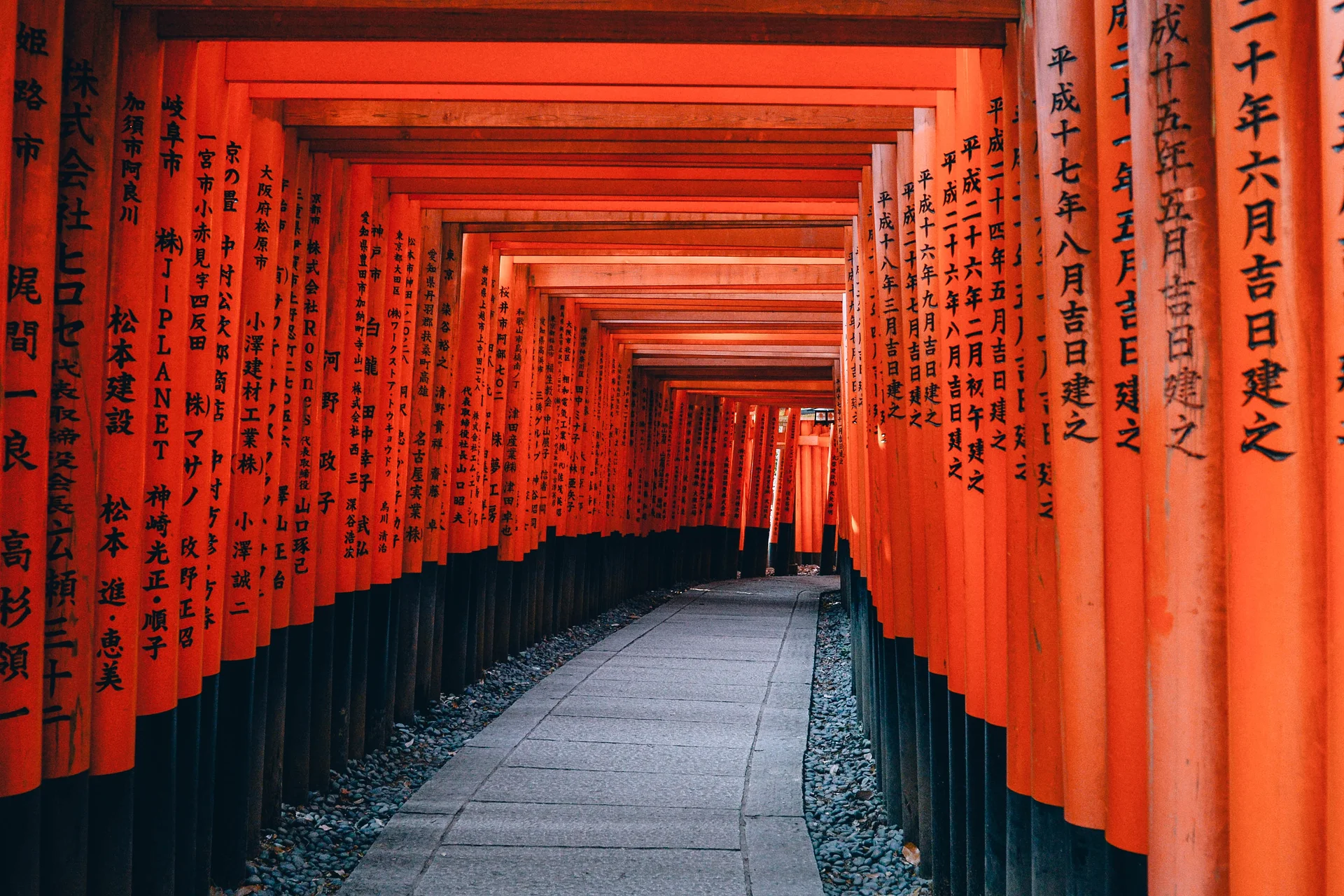
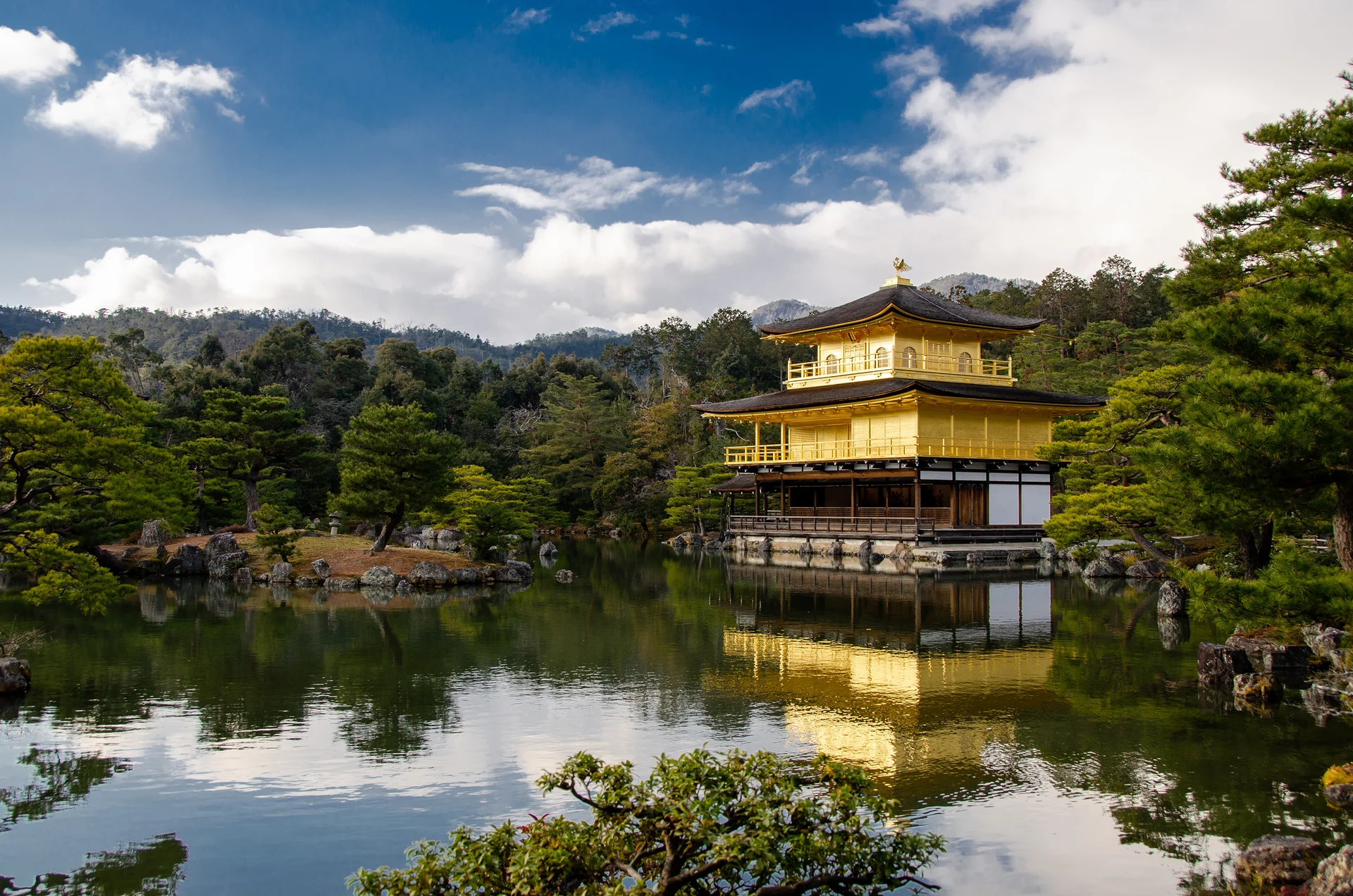
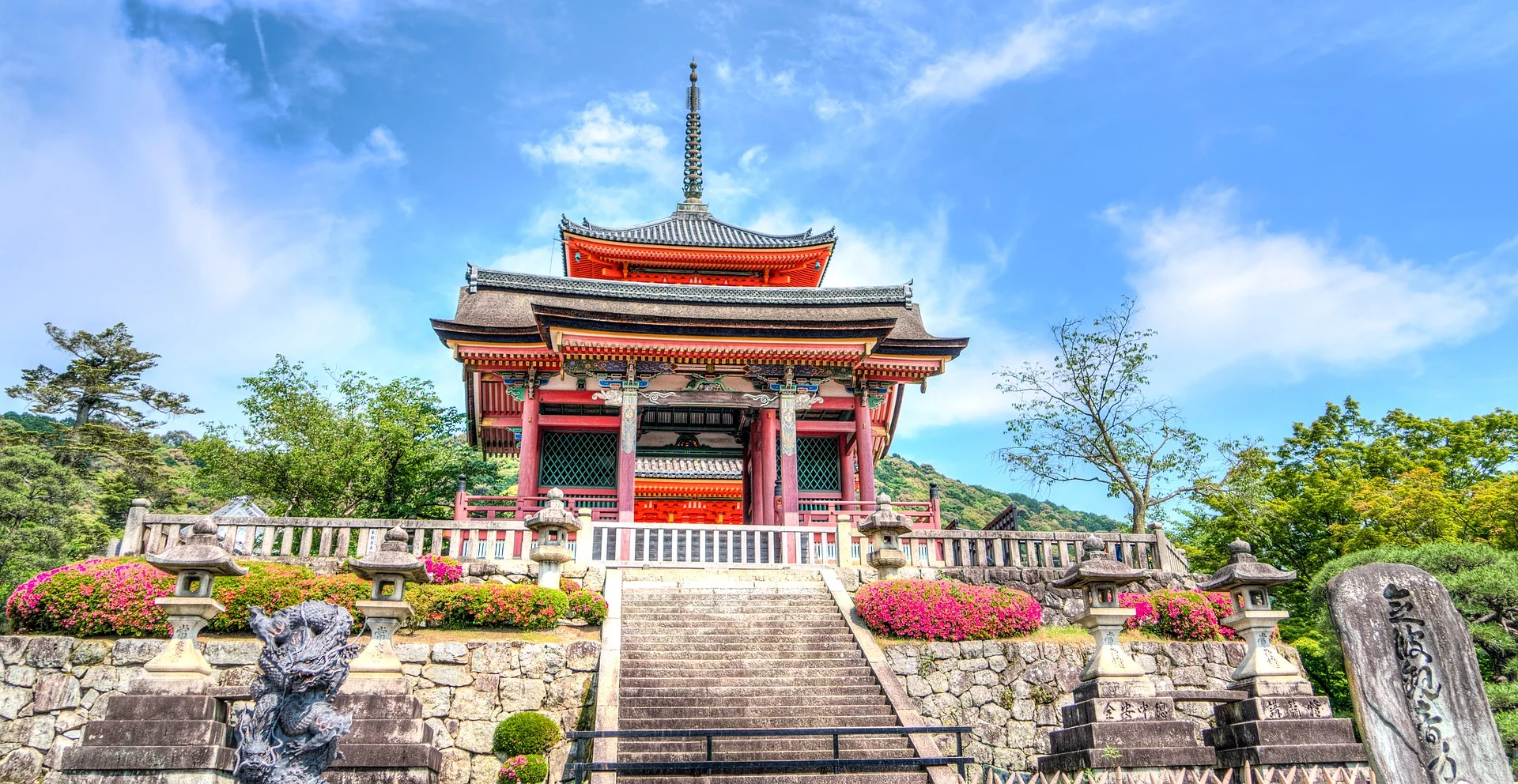
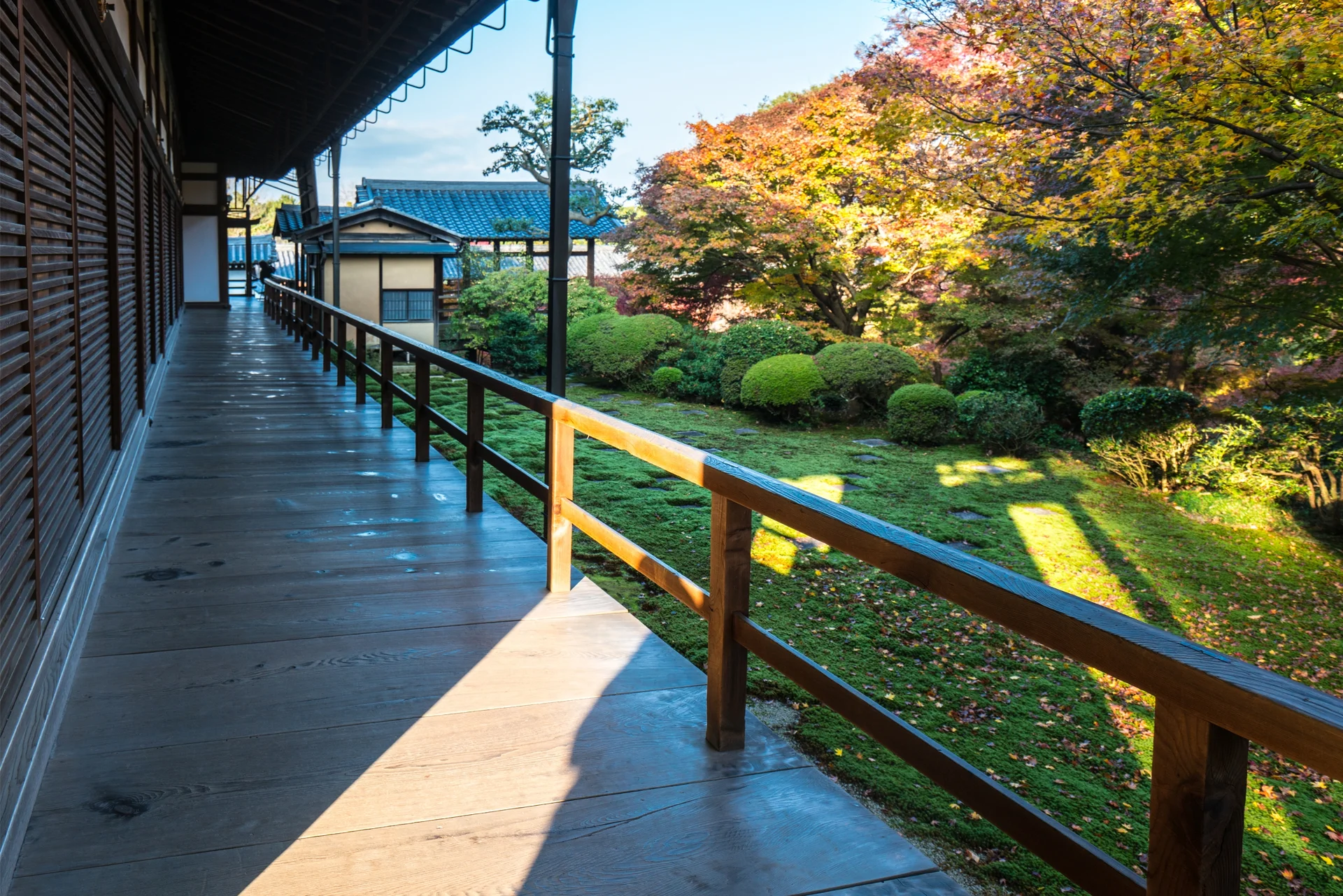
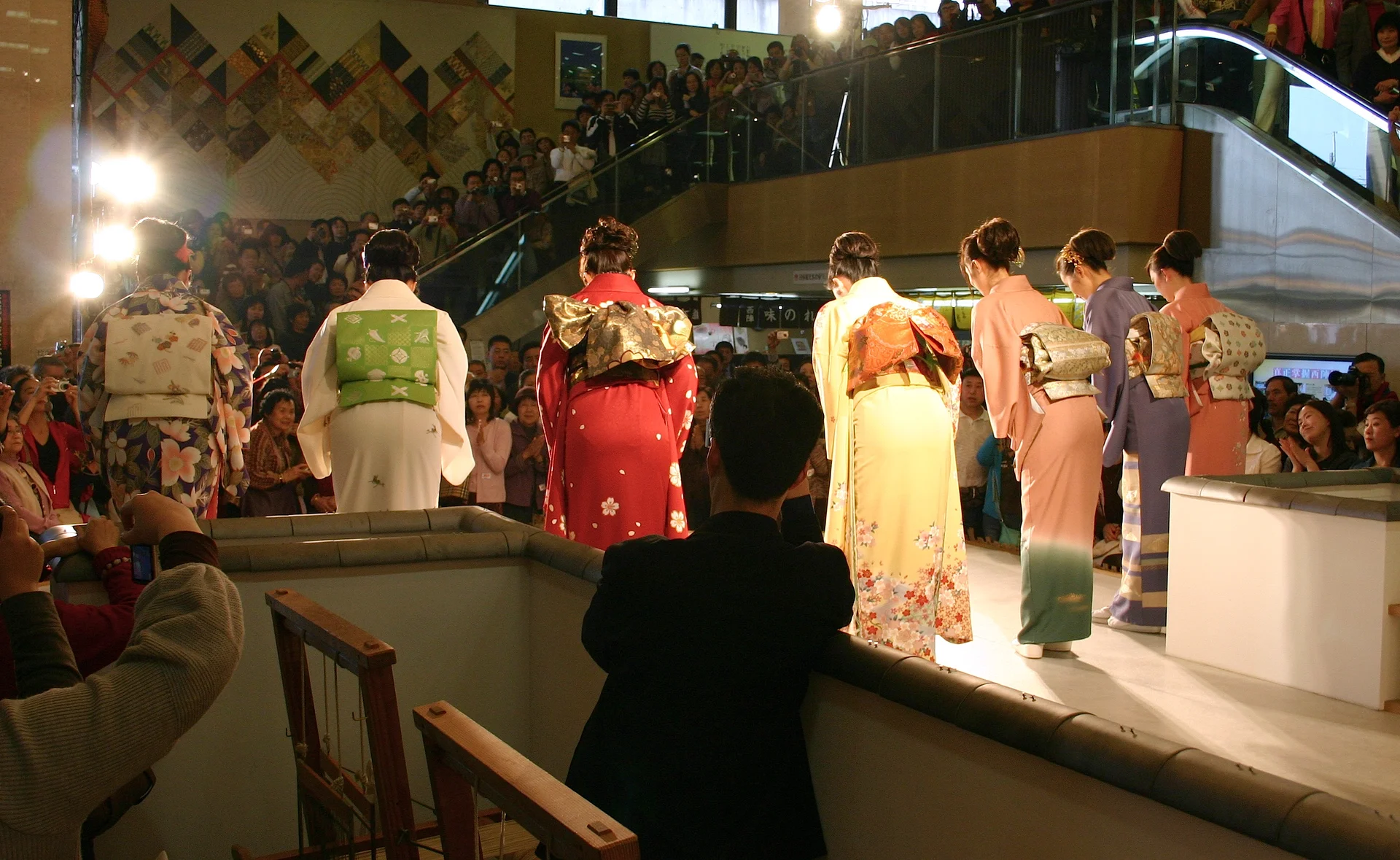
Kyoto runs on temple hours: Fushimi Inari is empty before 7:00, the Arashiyama bamboo grove before 8:00, and the lanes of Gion clear in the evening, once the tour groups have left. A couple who times their days that way sees the same places as the coaches, minus the line. What to sort out before you go: the season, which doubles room rates at cherry blossom and maple time, a ryokan night booked months ahead, some cash, and the house rules (shoes, baths, silence).
At a glance
- When to go
- Cherry blossom late March to early April, maples mid-November to early December: the loveliest weeks, and the priciest. October and May are mild and calmer; July and August top 95 °F (35 °C).
- How many days
- Four full days: Higashiyama and Gion, Fushimi Inari and the south, Arashiyama and the Golden Pavilion, Nanzen-ji and the Philosopher's Path. With three days, one of the four goes.
- Which area
- Gion and Higashiyama for a first visit, Nanzen-ji or Arashiyama for calm and the ryokan, Kawaramachi for dinners on foot, the station for trains.
- Budget for two
- About $1,680 for four nights at comfort level, meals, sightseeing and transport included, flights excluded; one ryokan night with dinner costs $510 to $1,070 for two.
- The moment for two
- The torii of Fushimi Inari at 6:30, almost empty, then in the evening the lanterns of Gion and the Shirakawa canal, once the tour groups have left.
- Book ahead
- The ryokan (3 to 6 months), a kaiseki dinner (1 to 3 months), a tea ceremony (1 to 2 weeks), the imperial villas of Katsura and Shugakuin (from 3 months ahead).
Why Kyoto for two
Kyoto was Japan's imperial capital for more than a thousand years, until 1868, and the war spared it: its temples, moss gardens, wooden townhouses and geiko districts are still standing. It is the Japanese city where a couple walks from one scene to the next: dawn in an almost empty shrine, a canal at dusk, a kaiseki dinner served on tatami, a night in a ryokan with a hot bath and a futon.
The catch is that everyone wants the same twenty places. From 9:30 on, Kiyomizu-dera, Fushimi Inari and the Arashiyama bamboo grove are walked in single file, the buses are packed and the lanes of Gion clog up. Kyoto rewards early starts and days built around three sites rather than eight.
The hours that beat the crowds
| Place | Time | Why |
|---|---|---|
| Fushimi Inari | Before 7:00 | The shrine is open day and night; the tour groups climb from 9:00 |
| Kiyomizu-dera | At 6:00, or around 17:00 | The temple opens at 6:00; the coaches arrive around 9:30 |
| Arashiyama bamboo grove | Before 8:00 | The path is free to enter; it is packed from 9:00 to 17:00 |
| Golden Pavilion | At 9:00, or after 16:00 | The groups pass through between 10:00 and 15:00 |
| Ginkaku-ji | 8:30 | The Philosopher's Path stays quiet until 10:00 |
| Gion | Before 9:00, or after 20:00 | Around 17:30, dozens of photographers wait for the maiko in the lanes |
| Nishiki Market | 10:00, or after 15:00 | The crowd peaks from 11:00 to 14:00; the stalls close around 17:00 |
When to go
| Period | Weather | Crowds | Our take |
|---|---|---|---|
| Late March to early April | Cool, 48 to 64 °F (9 to 18 °C); cherry blossom for a week or two | Very high | Blossom along the Philosopher's Path and in Maruyama Park; rooms cost two to three times the usual rate |
| Mid-April to May | Mild, 54 to 77 °F (12 to 25 °C) | High, very high in Golden Week (late April, early May) | Green gardens and azaleas; avoid Golden Week, when trains and temples overflow |
| June to mid-July | Rainy season (tsuyu), 68 to 86 °F (20 to 30 °C), humid | Medium | Bright green moss and hydrangeas, quiet gardens; bring an umbrella |
| Mid-July to August | Hot and heavy, 82 to 97 °F (28 to 36 °C) | High in July, peak in mid-August | Gion Matsuri and riverside dinners, but walking is a chore from 11:00 to 17:00 |
| September to October | Hot, then mild, 59 to 82 °F (15 to 28 °C); typhoons possible | Medium | Clear skies and falling prices; a typhoon can cancel a sightseeing day |
| Mid-November to early December | Cool, 41 to 63 °F (5 to 17 °C) | Very high | Red maples in Higashiyama and Arashiyama, evening illuminations; prices match cherry blossom season |
| December to February | Cold, 34 to 50 °F (1 to 10 °C); snow is rare in town | Low | Nearly empty temples and softer ryokan rates; short days, dark by 17:00 |
Three markers move prices. Cherry blossom: the peak shifts by a week from year to year, and forecasts start circulating in February. Maples: they turn red earlier in the northern hills and later downtown, so plan on a cautious window of November 15 to December 5. Golden Week: Japan's holiday week from late April into early May, when trains sell out.
Two dates are worth knowing: the Gion Matsuri, all of July, with its giant floats rolling through the streets on the 17th and 24th, and the Daimonji bonfires on the hills on August 16. From December 29 to January 3, many restaurants and shops close for the New Year.
Entry rules: passport, visa and health
| Documents | Visa | Health | |
|---|---|---|---|
| United States | Passport valid for your whole stay | No visa for tourist stays of up to 90 days; confirm on the Japanese Ministry of Foreign Affairs website before you book | No vaccine required; US plans rarely cover you abroad, so buy travel medical insurance with evacuation |
| United Kingdom | Passport valid for your whole stay | No visa for tourist stays of up to 90 days; confirm on the Japanese Ministry of Foreign Affairs website before you book | The GHIC does not cover Japan: buy travel insurance with medical cover and repatriation |
| Canada | Passport valid for your whole stay | No visa for tourist stays of up to 90 days; confirm on the Japanese Ministry of Foreign Affairs website before you book | Provincial plans cover little abroad: buy travel insurance with medical cover and repatriation |
Before the flight: Visit Japan Web
The Visit Japan Web site (free, run by the Japanese government) records your passport, first hotel address and customs declaration, then gives you a QR code to show on arrival: immigration moves faster than with the paper forms. Every foreign visitor is also fingerprinted and photographed at the desk.
Getting there
By air
| From | Flight time | Good to know |
|---|---|---|
| New York, Chicago | 13 to 14h | Nonstop flights to Tokyo (Haneda, Narita); Osaka-Kansai usually means one stop |
| Los Angeles, San Francisco, Seattle | ~11h | Nonstop flights to Tokyo; Osaka-Kansai usually means one stop |
| London | ~14h | Nonstop flights to Tokyo (Haneda); Osaka-Kansai usually means one stop |
| Toronto, Vancouver | 10 to 13h | Nonstop flights to Tokyo; Osaka-Kansai usually means one stop |
Kyoto has no international airport: you land at Osaka-Kansai (KIX), 50 miles away, or in Tokyo. An open-jaw ticket (arrive in Tokyo, fly home from Osaka-Kansai, or the reverse) saves backtracking and often costs no more than a round trip. Jet lag is 13 to 14 hours from New York, 16 to 17 from Los Angeles and 8 to 9 from London.
Beating jet lag
Stay awake until 9 p.m. on the first night, however tired you are; the 4 a.m. wake-up lasts only three or four days, and it is how you get to Fushimi Inari at dawn. Keep the first day light: a stroll through Gion and dinner near the hotel.
By train from Tokyo or Osaka
The Shinkansen (bullet train) links Tokyo and Kyoto in 2h15 for about $96 per person, with several departures an hour; from Osaka, the rapid train takes 30 min. and the Shinkansen 15 min. from Shin-Osaka. The Japan Rail Pass (about $340 for seven days) does not pay off with Kyoto and a Tokyo round trip.
Practical things to sort out before you leave
Phone
Japan is outside any roaming bundle, and pay-as-you-go roaming is expensive. Many US carriers sell a daily pass; an eSIM for the week (installed before you leave) costs less, and Wi-Fi is free in most hotels. Keep an offline map and a train-times app handy.
Money and tipping
- The currency is the yen (JPY). The amounts on this page are guides, converted for you.
- Cash is still useful: small temple entrances, neighborhood restaurants, some ryokan and drink vending machines. ATMs in 7-Eleven stores and post offices take foreign cards; carry $112 to $168 in notes and coins for two days.
- Contactless cards work in hotels, department stores and most restaurants; trains and buses take an IC card (see below).
- There is no tipping in Japan, and that includes restaurants, taxis and ryokan; staff may run after you to hand back the change.
- Kyoto's lodging tax, one of the highest in Japan, is paid at the hotel on top of the room rate: from ~$1.20 per person per night for a simple room to ~$68 for a luxury one.
Plugs, water and what to wear
- US plugs fit: Japan uses the same two-pin Type A sockets, at 100 volts. Your US chargers work as they are; UK plugs need an adapter, and a 230-volt hair dryer heats poorly. Look for "100-240 V" on the label.
- Tap water is safe to drink everywhere, and vending machines sell hot and cold tea for about $1.20.
- You will take your shoes off several times a day (temples, ryokan, restaurants): wear slip-ons and socks without holes.
- Bring a light jacket for mornings and evenings: temple halls are unheated and their floors are wooden.
What to book, and how far ahead
Kyoto can be seen with almost nothing booked, apart from four things: the ryokan night, the kaiseki dinner, a tea ceremony and the two imperial villas. Lock those in first and the temples fit around them.
| What | Price for two | Book | Good to know |
|---|---|---|---|
| Ryokan night with dinner | $510 to $1,070 | 3 to 6 months ahead | Blossom and maples: six months; arrive before 17:30, dinner is at a set time |
| Kaiseki dinner | $135 to $450 | 1 to 3 months ahead | Starred tables book through your hotel or online, in English; lunch costs less |
| Tea ceremony | $45 to $90 | 1 to 2 weeks ahead | In Gion, Higashiyama or Uji; 45 min. to 1h, in English |
| Katsura and Shugakuin imperial villas | Shugakuin free, Katsura ~$14 | From 3 months ahead | One-hour guided tour, requested online from the Imperial Household Agency; slots go fast |
| Kimono rental | $56 to $112 | The day before | Return by 17:00; weekend slots go first |
| Fushimi Inari, Kiyomizu-dera, Arashiyama | Free or ~$3.40 | Nothing to book | Everything is paid on the spot; timing matters, not tickets |
From the airport to your hotel
© OpenStreetMap contributors
Osaka Itami airport and the areas it serves
- Osaka Itami (ITM)
- 1Kyoto Station
- 2Gion, Higashiyama
- 3Kawaramachi
- 4Arashiyama
| Destination | Transport | Time | Indicative fare |
|---|---|---|---|
| Kyoto Station | Limousine bus | ~1h | ~$9 / pers. |
| Gion, Higashiyama | Limousine bus, then taxi | ~1h20 | ~$17 / pers. |
| Kawaramachi | Limousine bus, then subway | ~1h15 | ~$12 / pers. |
| Arashiyama | Limousine bus, then JR train | ~1h30 | ~$12 / pers. |
Osaka Itami (ITM), 25 miles away, handles only domestic flights, from Tokyo, Sapporo or Fukuoka: you land there only after a flight within Japan. The limousine buses reach Kyoto Station in about an hour. For Gion, get off at the station and take a taxi (~$14 for two), which is easier than another transfer with suitcases.
Most couples land at Osaka-Kansai (KIX), 50 miles away, too far for the map. The Haruka express (a reserved-seat train) reaches Kyoto Station in 1h20 for about $21 per person, with a departure every half hour; the bus takes longer. From the station, the subway, a train or a taxi gets you to the hotel, and a taxi runs $9 to $17 to Gion or Kawaramachi.
From Kyoto Station, the Karasuma subway line reaches Kawaramachi (Shijo) in 5 min., the JR Sagano train goes to Arashiyama (Saga-Arashiyama) in 15 min., and the JR Nara line to Fushimi Inari in 5 min.
Getting around
IC card, subway, train and bus
| Ticket | Price | Good to know |
|---|---|---|
| IC card (ICOCA, Suica, Pasmo) | Deposit and credit ~$14 | Works on trains, subway, buses and in convenience stores nationwide; on an iPhone it goes into Wallet, otherwise buy one at JR station machines |
| Subway | ~$1.70 to $2.80 | Only two lines, north-south (Karasuma) and east-west (Tozai); fast and never stuck in traffic |
| Bus | ~$1.70 a ride | Board at the back, exit at the front and tap your card; packed from 10:00 to 17:00 around Kiyomizu-dera and Gion |
| JR, Keihan and Hankyu trains | $1.20 to $2.80 | Fushimi Inari (JR or Keihan), Arashiyama (JR or Hankyu), Uji and Nara (JR); more reliable than the bus |
| Bicycle | $6.80 to $11 a day | Downtown is flat; rent one for Kawaramachi, the Kamo River and northern Higashiyama |
| Taxi | ~$7.90 for 1.5 to 2 miles | Metered, no tip, automatic door; a good choice for two between Gion and the station |
The subway does not stop at the Higashiyama temples or in Arashiyama: the most efficient combination is a train or subway ride to the foot of a district, then walking. The buses to the busiest sites are full in the middle of the day; a taxi for two on a 1.5 to 2 mile trip (Gion, Kiyomizu-dera, the station) costs about the same as two bus tickets.
Budget for two
Kyoto is pricier than the rest of Japan for a bed, especially in blossom and maple seasons; food and getting around stay affordable. Here is what four nights for two cost, flights excluded.
| Shoestring | Comfort | Splurge | |
|---|---|---|---|
| Hotel, per night | $101 to $157 | $230 to $400 | from $680 |
| One ryokan night with meals | $400 | $680 | from $1,070 |
| Meals, per day for two | $56 | $101 | $280 |
| Sightseeing for the stay | $56 | $101 | $280 with a tea ceremony |
| Transport for the stay | $34 | $56 | $135 with taxis |
During a stay, the ryokan night replaces one hotel night and its dinner: add it on top of the hotel for the other nights, evening meal included. Prices double or triple during blossom, maples and Golden Week.
Benchmark prices
| Item | Price |
|---|---|
| Bowl of ramen | $6.80 to $11 |
| Set lunch (teishoku) | $9 to $17 |
| Kaiseki lunch | $45 to $135 / pers. |
| Convenience-store rice ball | $1.20 to $1.70 |
| Matcha and a sweet in a tea house | $6.80 to $14 |
| Draft beer in a bar | $5.60 to $7.90 |
| Temple or garden entrance | $3.40 to $6.80 |
| Kimono rental for the day | $28 to $56 / pers. |
What to eat and drink
A couple eats in three beats in Kyoto: a breakfast of grilled fish and rice at the ryokan, a lunch of noodles or tofu between two temples, and a kaiseki or izakaya dinner.
At the table
-
Kaiseki
A seasonal menu of eight to twelve small dishes served one after another: sashimi, clear soup, grilled fish, simmered vegetables. The ryokan meal is one version; in a restaurant, lunch costs less than dinner.
-
Yudofu
Warm tofu in a kombu broth, a specialty of the Nanzen-ji and Sagano temples: light and delicate, ~$23 for the set menu at Nanzen-ji.
-
Obanzai
Kyoto home cooking, small plates of seasonal vegetables, seaweed and tofu served in neighborhood restaurants, with no fuss.
-
Matcha and wagashi
Powdered green tea from Uji with a seasonal Japanese sweet (wagashi): a tea house in Gion or Higashiyama, ~$6.80 to $14.
-
Nishiki Market
A covered street a quarter of a mile long: rolled omelets, skewers, pickles (tsukemono), fried tofu. You eat standing at the stall, not while walking.
-
Soba and udon
Buckwheat (soba) or wheat (udon) noodles in hot broth, $9 to $14 a bowl: the easiest lunch between two temples.
In the glass
-
Green tea
Sencha, matcha and hojicha (roasted, with no bitterness) are poured everywhere, hot or cold; a tea house in Higashiyama is worth visiting like a museum.
-
Sake
Fushimi, in the south of the city, is a district of sake breweries: a museum with tastings lets you compare five or six rice wines in half an hour, for a modest fee.
-
Beer
Asahi, Kirin and Sapporo, draft or canned, everywhere; a draft in a bar costs $5.60 to $7.90.
-
Neighborhood coffee
The kissaten, old-style cafés open in the morning, serve drip coffee and an egg toast: the breakfast for a hotel without meals.
Customs and rules to know
At a temple as at a ryokan, almost everything comes down to two gestures: taking your shoes off and lowering your voice. The rest is picked up by watching the locals.
At the ryokan
- Arrive between 15:00 and 17:30: dinner is served at a set time, 18:00 or 19:00, and the kitchen does not wait.
- Take your shoes off at the entrance (genkan); slippers stop at the edge of the tatami, which you cross in socks. The toilets have their own slippers.
- The yukata (the cotton robe in your room) is wrapped left side over right: the reverse is for the dead. You wear it in the corridor, at dinner and to the bath.
- The futon is laid out during dinner and folded away in the morning by the staff; do not roll it up yourselves.
- Breakfast arrives at 7:30 or 8:00; check-out is before 10:00.
At the bath
- You wash and rinse thoroughly, seated on a stool, before entering the bath; no swimsuits, and the towel stays out of the water (on your head or on the edge).
- Long hair goes up, and baths are separated by sex, apart from private baths (kashikiri) that a couple can book, often through the ryokan.
- Tattoos are banned in many public baths and ryokan: mention it when you book, or ask for a private bath. A small bandage is not accepted everywhere.
At temples and shrines
- Under the red gate of a Shinto shrine (torii), bow, then rinse your left hand, your right hand and your mouth (without drinking from the ladle) at the fountain (temizuya). At the altar: two bows, two claps, a prayer, a last bow. At a Buddhist temple, press your hands together without clapping.
- Photos are banned inside several halls, and in the private lanes of Gion around Hanamikoji: signs say so and a fine of about $68 applies. Hanamikoji itself, a public street, stays open.
- Do not eat while walking at the sites or at Nishiki: stop in front of the stall, eat, and throw the wrapper away where you bought it, because public bins are rare.
Gion and the maiko
The maiko and geiko crossing Gion are going to work: do not follow them, block them, touch them or photograph them up close. A few words of Japanese (arigatō, sumimasen, itadakimasu before a meal) are appreciated.
Safety
Kyoto is very safe for a couple, by day and by night. The risks to know about come from the climate and the crowds rather than from people. Pickpockets are rare; the only useful precaution is a closed bag in front of you on packed buses and in stations at rush hour.
- The heat of July and August: 95 °F (35 °C) and heavy humidity from 11:00 to 17:00; sightsee early, drink water and take the subway from noon to 15:00.
- Typhoons, from September to early October: trains stop and flights are canceled; a policy with cancellation cover refunds nights and tickets, and you check the forecast the day before.
- Earthquakes, frequent and almost always minor: follow the staff's instructions and move away from windows and shelves.
- Bar touts in Kiyamachi and Pontocho in the evening, inviting you in: bars with no price list pad the bill, sometimes by $340 or more; pick a bar that shows its prices.
- Steps and slopes at Kiyomizu-dera and Fushimi Inari, slippery in the rain and dark at night: walking shoes, a flashlight, and no summit loop after dark.
- Monkeys in Iwatayama park and deer in Nara: do not stare at a monkey, and do not feed either.
Mistakes couples make
Kyoto disappoints mainly through overpacked days and badly chosen hours: too many temples, sites at the worst time, a hotel too far from the trains. The rest can be fixed.
- Visiting eight temples a day: from the fourth on, the gardens blur together. Three sites and one neighborhood a day.
- Putting Fushimi Inari and Arashiyama on the same morning: they sit at opposite ends of the city, 45 minutes apart, and both want the dawn. One early start a day, one site per dawn.
- Reaching Fushimi Inari or Arashiyama at 10:00: the torii and the bamboo grove are packed, when they are empty before 7:00.
- Sleeping in Osaka and visiting Kyoto as a day trip: the train takes 30 minutes, but dawn at Fushimi Inari and Gion at night are lost.
- Arriving at a ryokan after 18:00 or without warning: dinner is canceled or rushed.
- Turning up at a public bath with a tattoo without asking: you are turned away, no discussion.
- Counting on cards alone: small temples, vending machines and some restaurants want cash.
- Photographing a maiko up close in a Gion lane, or following her: signs forbid it, the fine is about $68 and some lanes are now restricted.
- Taking the bus at rush hour to Kiyomizu-dera and Gion: a taxi for two, or walking from Gion, is quicker.
Frequently asked questions
Is Kyoto a good destination for a romantic trip?
Yes, for three concrete reasons: temples and gardens almost empty early in the morning, the lantern-lit lanes of Gion at night, and a ryokan night with a hot bath and a kaiseki dinner. Watch out for the crowds from 10:00 to 17:00 and for room rates at blossom and maple time.
How many days do you need in Kyoto as a couple?
Four full days give the right rhythm: Higashiyama and Gion, Fushimi Inari and the south, Arashiyama and the Golden Pavilion, then Nanzen-ji and the Philosopher's Path. With three days, drop the fourth; with two, keep Higashiyama and Fushimi Inari.
Do you need a visa for Kyoto?
US, UK and Canadian citizens do not need a visa for a tourist stay of up to 90 days; the passport must be valid for the whole stay. Check your own country's rule on the Japanese Ministry of Foreign Affairs website before you book, and fill in Visit Japan Web before the flight.
When can you see cherry blossom and maples in Kyoto?
Cherry blossom runs from late March to early April, maples turn red from mid-November to early December, and the dates shift by a week from year to year. Those are the priciest periods: book the ryokan and hotel four to six months ahead.
Can you use an onsen with a tattoo?
Not everywhere: many public baths and ryokan refuse tattoos. Mention it when you book and ask for a private bath (kashikiri), which many ryokan offer for couples, or for a bath where a bandage is enough.
Do you tip in Japan?
No: not in restaurants, taxis or ryokan. Service is included, and a tip left on the table will often be handed back to you at a run. A "thank you" (arigatō gozaimasu) is enough.