

D1 Day 1: Trinity College, Grafton Street and Georgian Dublin
- D1·1Trinity College Landmark
- D1·2Old Library Museum
- D1·3Grafton Street Neighborhood
- D1·4St Stephen's Green Park
- D1·5Merrion Square Park

With two days, you see Trinity College and the Book of Kells, the Georgian squares, Dublin Castle and the two medieval cathedrals, and you spend two evenings of music in two different pubs. A third day takes you west, to Kilmainham Gaol and the 1,700 acres (700 hectares) of Phoenix Park, then to Smithfield; the fourth takes the coastal train to Howth, for the cliff path. Book Kilmainham and the Book of Kells before you leave: these are the two visits that sell out.
© OpenStreetMap contributors
D1 Day 1: Trinity College, Grafton Street and Georgian Dublin
D2 Day 2: the castle, the cathedrals and the Liffey quays
D3 Day 3: Kilmainham, Phoenix Park and Smithfield
D4 Day 4: Howth, the harbor and the cliff path
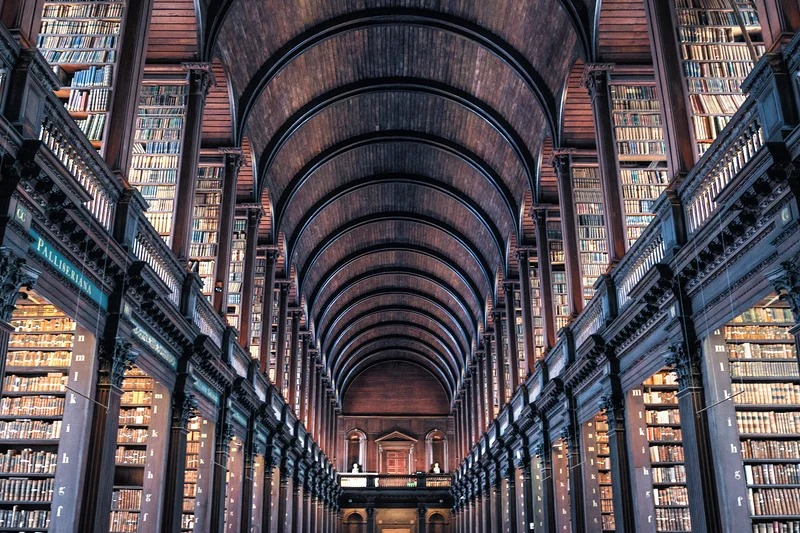
Walk into Trinity College, the university founded in 1592, at the first slot of the day, booked before you leave. The Book of Kells, gospels illuminated around the year 800, opens the visit, then you climb to the Long Room of the Old Library, the great oak-vaulted hall, 65 m (213 ft) long, most of whose books were removed ahead of its restoration. It is due to close for several years for this work: check that it is still open when you book your slot. Allow an hour and a half, then cross the cobbled square to the campanile.
Have lunch at Bewley's (78 Grafton Street), the 1927 café with Harry Clarke's stained glass, then walk up Grafton Street and its buskers to St Stephen's Green, the square of ponds and willows. From there, follow the Georgian houses with their painted doors to Merrion Square, where the statue of Oscar Wilde faces his childhood home, at number 1, and step into the National Gallery, free, for the Caravaggio and the Jack B. Yeats paintings.
Have a drink at the Shelbourne, in the Horseshoe Bar, then dinner around Merrion Row. End the night at O'Donoghue's (15 Merrion Row), the pub where the Dubliners got their start in the 1960s: musicians settle in almost every night, and the yard at the back takes those who could not find a seat.
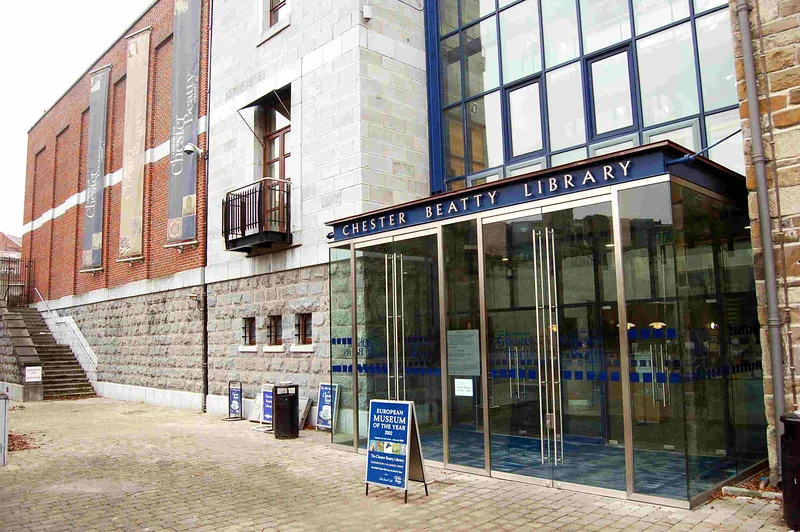
Visit Dublin Castle, the seat of British rule until 1922, and its state apartments under the painted ceiling of St Patrick's Hall. Behind it, in the garden, the Chester Beatty Library, free, shows the manuscripts, illuminated Qur'ans and Japanese prints of an American collector who settled in Dublin; go up to its roof garden before you leave.
Pick up fish and chips at Leo Burdock (Werburgh Street), then step into Christ Church Cathedral, founded by the Vikings in the 11th century, and its crypt, the largest in Ireland. Walk down next to St Patrick's Cathedral, where Jonathan Swift, the author of Gulliver's Travels, was dean, and finish in the park alongside it.
Wander through Temple Bar at sunset, then cross the Liffey on the Ha'penny Bridge, the cast-iron footbridge of 1816, and have dinner at The Winding Stair (40 Lower Ormond Quay), whose windows look onto the bridge. Come back for a last drink at The Stag's Head (Dame Court), a Victorian pub with stained glass and a marble bar, less crowded than those of Temple Bar.
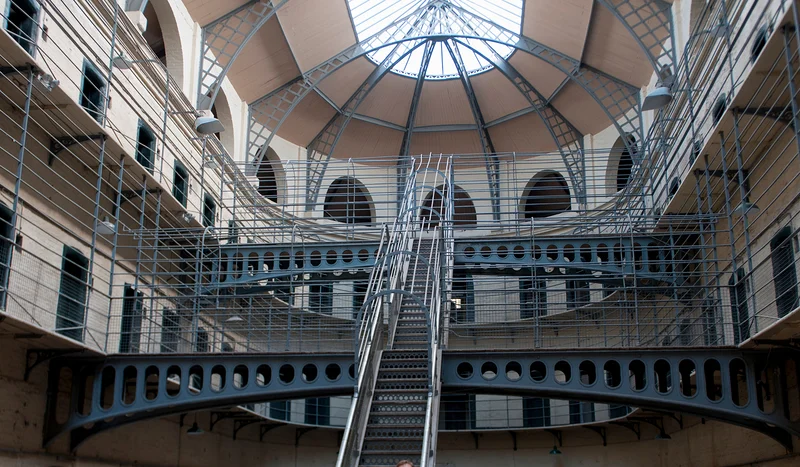
Take the bus to Kilmainham Gaol for the one-hour guided tour, booked a month ahead: the prison where the leaders of the 1916 Easter Rising were executed, and its great Victorian wing with iron walkways. Then walk to the Royal Hospital Kilmainham, the 17th-century military hospital that houses the Irish Museum of Modern Art, free, and its formal gardens.
Cross the Liffey at Islandbridge into Phoenix Park, one of the largest city parks in Europe: rent two bikes near the Parkgate Street entrance and look for the wild deer around the Papal Cross. In the late afternoon, take the Luas to Smithfield for the tour of the Jameson Distillery (Bow Street), with a tasting of three whiskeys.
Have dinner around Smithfield, the old cattle market square, or in Stoneybatter, the neighborhood next door, then spend the evening at the Cobblestone (77 King Street North): at the back of the room, traditional musicians play almost every night, and the crowd goes quiet during the songs.
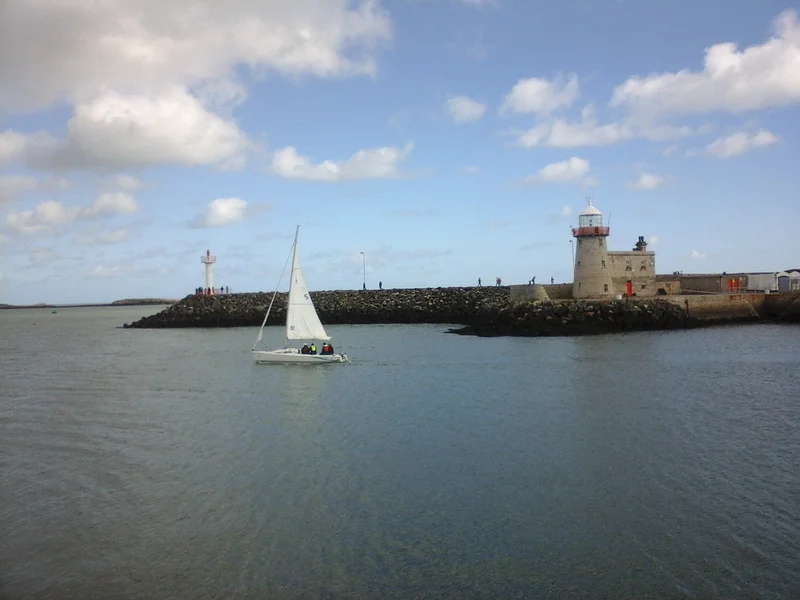
Take the DART from Tara Street or Pearse, on the right-hand side for the view over the bay: thirty minutes later, you are at Howth Harbour, a fishing village at the end of a peninsula. Walk the East Pier out to the little lighthouse, then the West Pier, where seals come looking for scraps from the trawlers in front of the fish stalls.
Follow the cliff path on the marked Black Linn loop, 8 km (5 miles) from the station: two to two and a half hours of walking above the sea, heather in summer, then the viewpoint at Howth Summit, from where you see the Baily Lighthouse below on its headland and the whole of Dublin Bay. Walking shoes are enough; in strong wind, stay on the upper part.
Have a fish dinner at Aqua (1 West Pier), at the end of the pier, with big windows over the harbor and the island of Ireland's Eye, booked a few days ahead for a table by the windows. The DART takes you back to the center in thirty minutes, until around 11:30 pm.
Dublin eats early: lunch is between 12:30 and 2:30 pm, dinner between 6 and 9:30 pm, and many kitchens close at 10 pm. Book the best tables one to four weeks ahead for a weekend.
The top table
Chapter One (18-19 Parnell Square), two Michelin stars, in the vaulted basement of a Georgian house: a menu of Irish produce, booked a month ahead.
Seasonal Irish cooking
The Winding Stair (40 Lower Ormond Quay), above a bookshop, with a view of the Ha'penny Bridge: lamb, smoked fish and Irish cheeses.
Oysters
Klaw (5a Crown Alley), a Temple Bar counter for oysters and lobster, at aperitif time, no reservations.
The food hall
Fallon & Byrne (11-17 Exchequer Street), a gourmet grocery on the ground floor, a restaurant upstairs and a wine bar in the basement.
Fish and chips
Leo Burdock (2 Werburgh Street), near Christ Church, to take away and eat in the park of St Patrick's Cathedral.
Breakfast
Bewley's (78 Grafton Street), for a full Irish under Harry Clarke's stained glass, or a scone in the afternoon.
A Dublin pub is a living room: order at the bar, sit wherever there is space, and don't be surprised when people talk to you. The finest are Victorian, with dark wood, etched mirrors and small closed booths, the snugs.
| In the mood for | Where | Our take |
|---|---|---|
| A Victorian pub | The Long Hall (South Great George's Street) | Mirrors, chandeliers and an endless bar; the Guinness is poured with care |
| A snug for two | Kehoe's (South Anne Street) | The little closed booth by the door, best early in the evening |
| A pub without music | Toners (Baggot Street), Mulligan's (Poolbeg Street) | For talking; Mulligan's has served Guinness since the 18th century |
| The last drink | The Stag's Head (Dame Court) | Stained glass and marble, away from the Temple Bar crowds |
| A cocktail | Vintage Cocktail Club (Crown Alley) | A bar hidden behind a black door, book on weekends |
For a whiskey, tell the bartender what you like, smooth, fruity or peaty, rather than a brand: they will offer you two or three to taste.
The Cobblestone
The Smithfield pub where traditional musicians play almost every night, with no stage: sit near them and keep your voice down during the songs.
O'Donoghue's
On Merrion Row, the pub where the Dubliners got their start: music almost every night, in a narrow room where you will often listen standing.
The Abbey Theatre
The national theater, founded by W. B. Yeats in 1904, on Lower Abbey Street: Irish plays and new writers, to book one to three weeks ahead.
The Gate Theatre
Near Parnell Square, an 18th-century theater for the classics, from Oscar Wilde to Samuel Beckett.
Big concerts
The 3Arena, in the Docklands, and the National Concert Hall, near St Stephen's Green, for touring acts and classical music.
Dates that matter
St Patrick's Day around March 17, several days of parades and concerts, and Bloomsday on June 16, in the footsteps of James Joyce's Ulysses.
| Destination | Getting there | What for | Our take |
|---|---|---|---|
| Dalkey and Killiney | DART, ~25 min. | The village and its castle, Vico bathing place, the view over the bay from the hill | The easiest day, and the most beautiful in clear weather |
| Malahide | Train, ~25 min. | The castle and its gardens, the walk to Portmarnock | A quiet half day to the north |
| Glendalough | Coach or tour, ~1h30 | The 6th-century monastery and its two lakes in the Wicklow Mountains | A full day, the best nature outing |
| Powerscourt | Tour, ~45 min. | Terraced gardens facing the Sugar Loaf mountain, the waterfall | Often combined with Glendalough |
| Brú na Bóinne (Newgrange) | Tour, ~1h | The passage tomb older than the pyramids | Limited places, book ahead |
| Belfast | Enterprise train, ~2h15 | The Titanic museum, the murals of the neighborhoods | A long day; Americans and Canadians need a passport and the UK ETA |
Dublin
Pick your dates and see the offers from the major booking sites side by side.
Compare live offers from Booking, Expedia, Agoda and other partners.
Dublin: find your hotel
Two days are enough for the essentials: Trinity College, the Book of Kells, St Stephen's Green and Merrion Square on the first, the castle, the Chester Beatty Library and the two cathedrals on the second, with two evenings of music. Kilmainham and Phoenix Park need a third day.
Howth for walking: the cliff path, two to two and a half hours above the sea, then fish at the harbor. Dalkey for a gentler day: a village, a castle and Killiney Hill, with the finest view over the bay. Both are twenty-five to thirty minutes away on the DART.
The national museums are free: the National Gallery, the archaeology museum and the Chester Beatty Library. Kilmainham, the Guinness Storehouse and the Jameson Distillery are all indoors, and an afternoon goes by fast in a Victorian pub like the Long Hall.
If you like beer, yes: allow two hours, and the pint at the Gravity Bar, with its view over the city, is included. Otherwise, a well-poured pint at the Long Hall or Mulligan's tells you as much for less.
At the Cobblestone, in Smithfield, or at O'Donoghue's, on Merrion Row: musicians play almost every night, with no ticket. Arrive before 9 pm for a seat.