

Where to stay in Dublin as a couple (2026): best areas
Dublin's center is so compact that the Liffey splits it into two banks fifteen minutes' walk apart, so let the noise at night decide where you stay. Around Grafton Street and Trinity College, you do everything on foot; the Georgian quarter of St Stephen's Green and Merrion Square is the quietest and the most elegant; Temple Bar has the music, and short nights. Rooms here are among the most expensive in Europe: for the sea and gentler prices, the coastal train, the DART, puts Dún Laoghaire twenty minutes from the center.
At a glance
- First visit
- Grafton Street: Trinity College, St Stephen's Green and the pubs of South Anne Street on foot, and the airport coach stopping two streets away.
- Most romantic
- The Georgian quarter: colored doors, squares in bloom, the Shelbourne and the Merrion, and silent streets after 10 pm.
- For nights out
- Temple Bar for music in every pub, as long as you ask for a room at the back: the cobbled streets are loud until 2:30 am on weekends.
- By the sea
- Dún Laoghaire: the pier at sunset, Dalkey and Killiney Hill on foot, then the DART to the center in twenty minutes.
- Budget for two
- Expect $165 to $220 a night for a simple hotel in the center, $280 to $390 for comfort, and from $550 at the Shelbourne or the Merrion.
- Ask for
- Breakfast included in the room rate: paid separately, a full Irish costs $22 to $33 per person in central hotels.
Dublin
Compare hotel prices
Pick your dates and see the offers from the major booking sites side by side.
Compare live offers from Booking, Expedia, Agoda and other partners.
Dublin: find your hotel
The neighborhoods on the map
© OpenStreetMap contributors
Grafton Street, our pick for a first visit
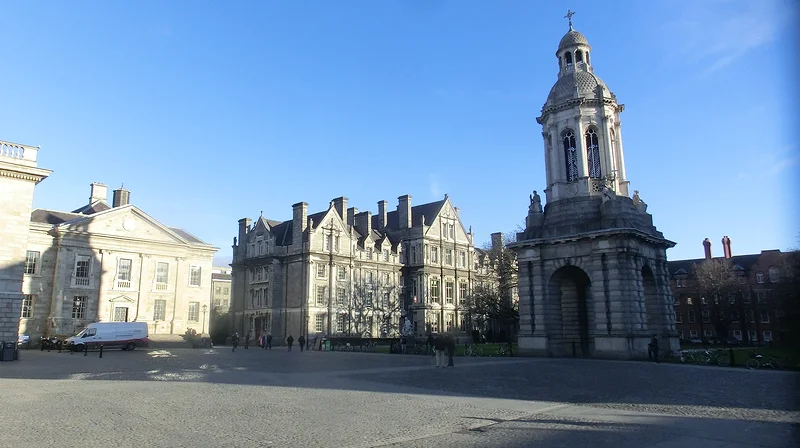
Between Trinity College to the north and St Stephen's Green to the south, Grafton Street is Dublin's pedestrian street, with its buskers, Bewley's café and its stained glass, and around it the pubs of South Anne Street and Duke Street. From your hotel, you reach Trinity College in five minutes, Temple Bar in ten, Dublin Castle in fifteen.
The street itself empties once the shops close, around 7 pm, and the streets nearby stay lively without being loud: you sleep in peace a few steps from the pubs. Prices are those of the center, and rooms in the old buildings are often small: ask for the size before you book.
- Trinity College, St Stephen's Green and Temple Bar on foot
- Pubs and restaurants on every street nearby
- The airport coach two streets away
- Rooms often small in the old buildings
- The highest prices in the city, with the Georgian quarter
Our hotel picks for Grafton Street
Available hotels on the map
The Georgian quarter, from St Stephen's Green to Merrion Square
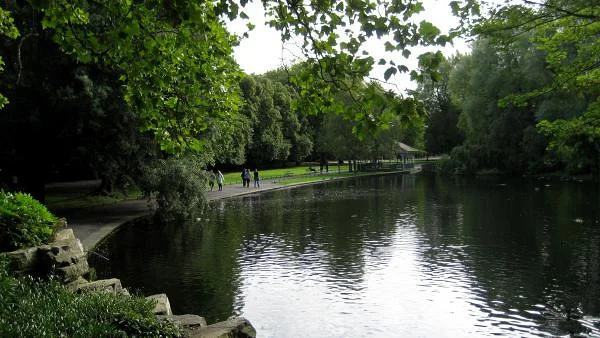
East of St Stephen's Green, 18th-century Dublin lines up its brick houses with painted doors, red, yellow or blue, around Merrion Square and Fitzwilliam Square. Here you find the city's two grand hotels, the Shelbourne and the Merrion, the national museums, free, and streets that go silent once the offices close.
In the evening, you have O'Donoghue's (Merrion Row) for traditional music and Toners (Baggot Street) for a quiet pint, and Grafton Street is five minutes away. This is Dublin's most expensive area, and its quietest on Sundays, when many of the restaurants that serve office workers stay closed.
- The quietest streets in the center, and the most beautiful
- St Stephen's Green and the national museums on foot
- O'Donoghue's and its traditional music, and Toners, close by
- The most expensive area in the city
- Few restaurants open on Sunday evening
Our hotel picks for the Georgian quarter
Available hotels on the map
Temple Bar and the Liffey quays
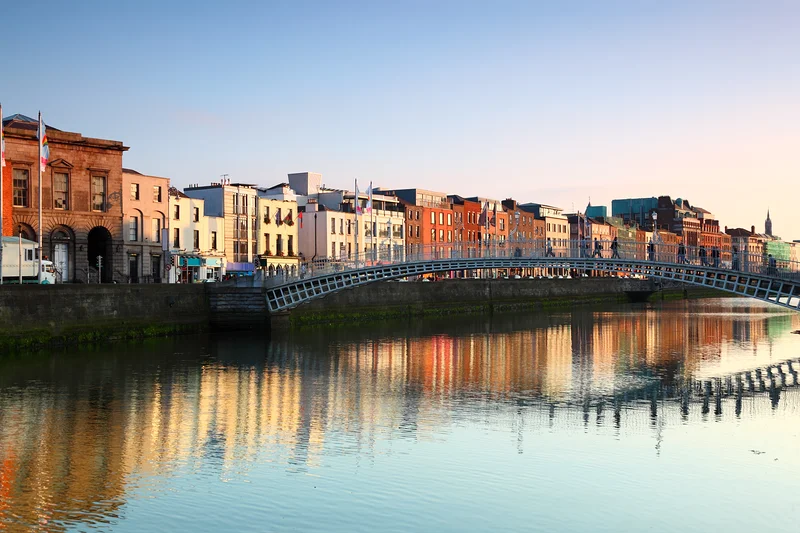
Between the Liffey and Dame Street, Temple Bar is the area of cobbled streets, pubs with painted fronts and music from the afternoon on. The Ha'penny Bridge takes you to the other bank, Dublin Castle and Christ Church are five minutes away, and the best tables in the area are on the quieter streets, Crown Alley and Eustace Street.
Nights here are short: pubs close at 11:30 pm Monday to Thursday, at 12:30 am on Friday and Saturday, at 11 pm on Sunday, but the streets stay loud until 2:30 am, with bachelor parties on Friday and Saturday. Choose a room at the back or on the quay side, and leave the area to drink: a pint costs two or three euros more than in the rest of the center.
- Music in the pubs from the afternoon
- The Liffey, the castle and the cathedrals on foot
- Rooms on the quays with a view of the river
- Loud until 2:30 am, especially on Friday and Saturday
- The most expensive pint in the city
Our hotel picks for Temple Bar
Available hotels on the map
The Docklands, around Grand Canal Dock
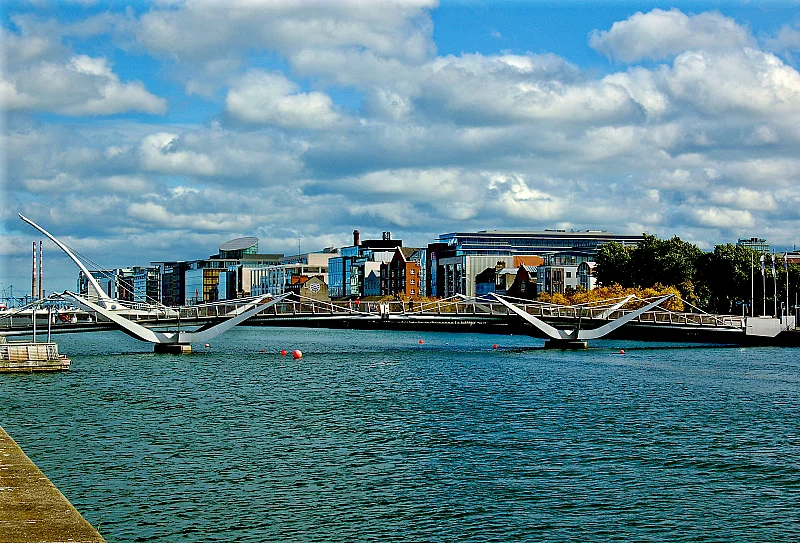
East of the center, the old Liffey docks have become the area of glass office buildings, the Bord Gáis Energy theater, the harp-shaped Samuel Beckett Bridge and the basins of Grand Canal Dock. Hotels here are recent, with rooms larger than in the old center and views of the water, and Trinity College is twenty minutes' walk along the quays.
In the evening, the action is limited to the bars and restaurants of Grand Canal Dock and the concerts at the 3Arena; on weekends, once the offices close, the area is almost deserted. The Luas tram links the north bank to the center in ten minutes, and Grand Canal Dock station serves the coast on the DART.
- Recent, spacious rooms, often with a view of the water
- Quiet at night
- The tram and the DART a few minutes away
- An office district, without old-world charm
- Twenty minutes' walk to Trinity College
Our hotel picks for the Docklands
Available hotels on the map
Dún Laoghaire and Dalkey, by the sea
12 km (7 miles) south, on Dublin Bay, Dún Laoghaire is a Victorian harbor with two long granite piers where Dubliners walk on Sundays. Further south, you can walk from the village of Dalkey to Killiney Hill in an hour, with views over the bay, and at the Forty Foot bathing spot in Sandycove, locals swim all year round.
The DART, the coastal train, takes you to the center in twenty to twenty-five minutes; it runs every ten to fifteen minutes by day, but the last train leaves the center around 11:30 pm, and a taxi then costs $39 to $50. It is the right choice for a stay of four days or more, less so for a first two-day visit.
- The pier and the sea at your hotel door
- Dalkey, Killiney and the Forty Foot bathing spot on foot
- Rooms more spacious than in the center
- Twenty to twenty-five minutes by train to the center
- The last DART around 11:30 pm, then a taxi
Our hotel picks for Dún Laoghaire
Available hotels on the map
Places to avoid for a stay as a couple
North of the center, around O'Connell Street and Talbot Street, you find the cheapest hotels in the center, but the streets are unpleasant at night, with begging and end-of-night fights. Choose the south bank instead, or Smithfield and the quays if your budget requires it.
Be wary too of hotels advertised as "near the airport" or on the outskirts: no train links the airport to the center, and every evening in town ends with a taxi.
- A street-facing room in Temple Bar on a Friday or Saturday: the street is loud until 2:30 am
- A hotel on O'Connell Street or Talbot Street to save a few euros: bleak streets at night
- An airport or suburban hotel: 30 to 45 min. by bus, or a taxi, every time you go out
- A room without breakfast, at $22 to $33 per person to pay on site
Frequently asked questions
What is the best area in Dublin for a couple?
For a first visit, around Grafton Street: Trinity College, St Stephen's Green and the pubs are on foot. For quiet and the grand hotels, the Georgian quarter of Merrion Square; for music, Temple Bar, with a room at the back; for the sea, Dún Laoghaire, twenty minutes by train.
Should you stay in Temple Bar?
Only if you want to go out every night: the pubs have music from the afternoon, but the streets are loud until 2:30 am on weekends and a pint costs more. Staying around Grafton Street, ten minutes' walk away, gives you the same evenings and a better night's sleep.
Can you stay by the sea and still visit Dublin?
Yes, in Dún Laoghaire or near Dalkey: the DART reaches the center in twenty to twenty-five minutes, every ten to fifteen minutes by day. Expect a taxi of $39 to $50 after the last train, around 11:30 pm.
How much is a hotel night in Dublin?
Expect $165 to $220 for a simple hotel in the center, $280 to $390 for a comfortable one, and from $550 for the Shelbourne or the Merrion. Prices rise sharply around St Patrick's Day, March 17, and on nights with a big match or concert.
When should you book your hotel in Dublin?
Two to three months ahead for a stay from May to September, four to six months ahead for St Patrick's Day. Before you book, check that no match at the Aviva Stadium or Croke Park and no big concert falls on your dates: the remaining rooms all go.