London for couples: what to know before you go (2026)
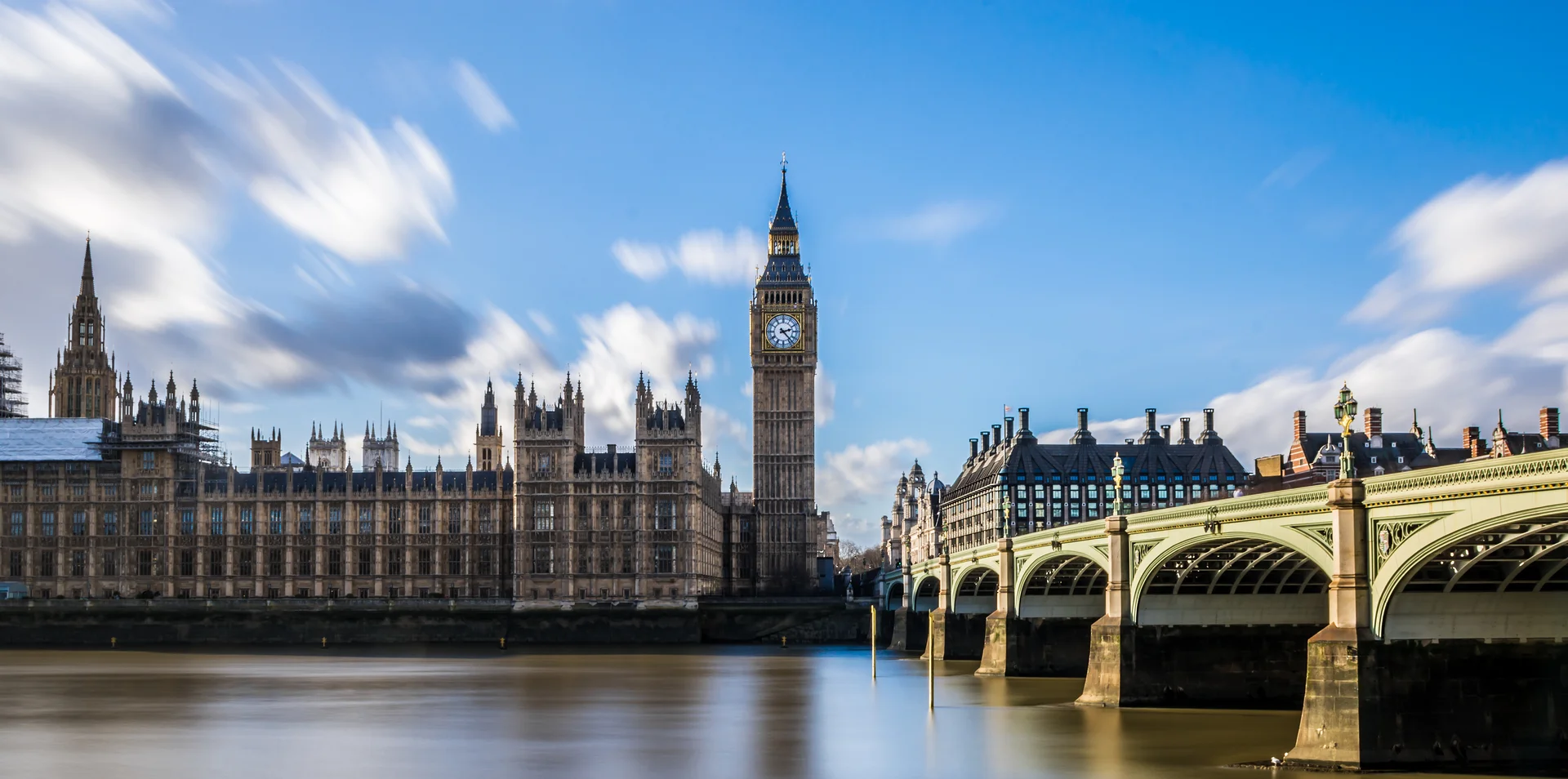
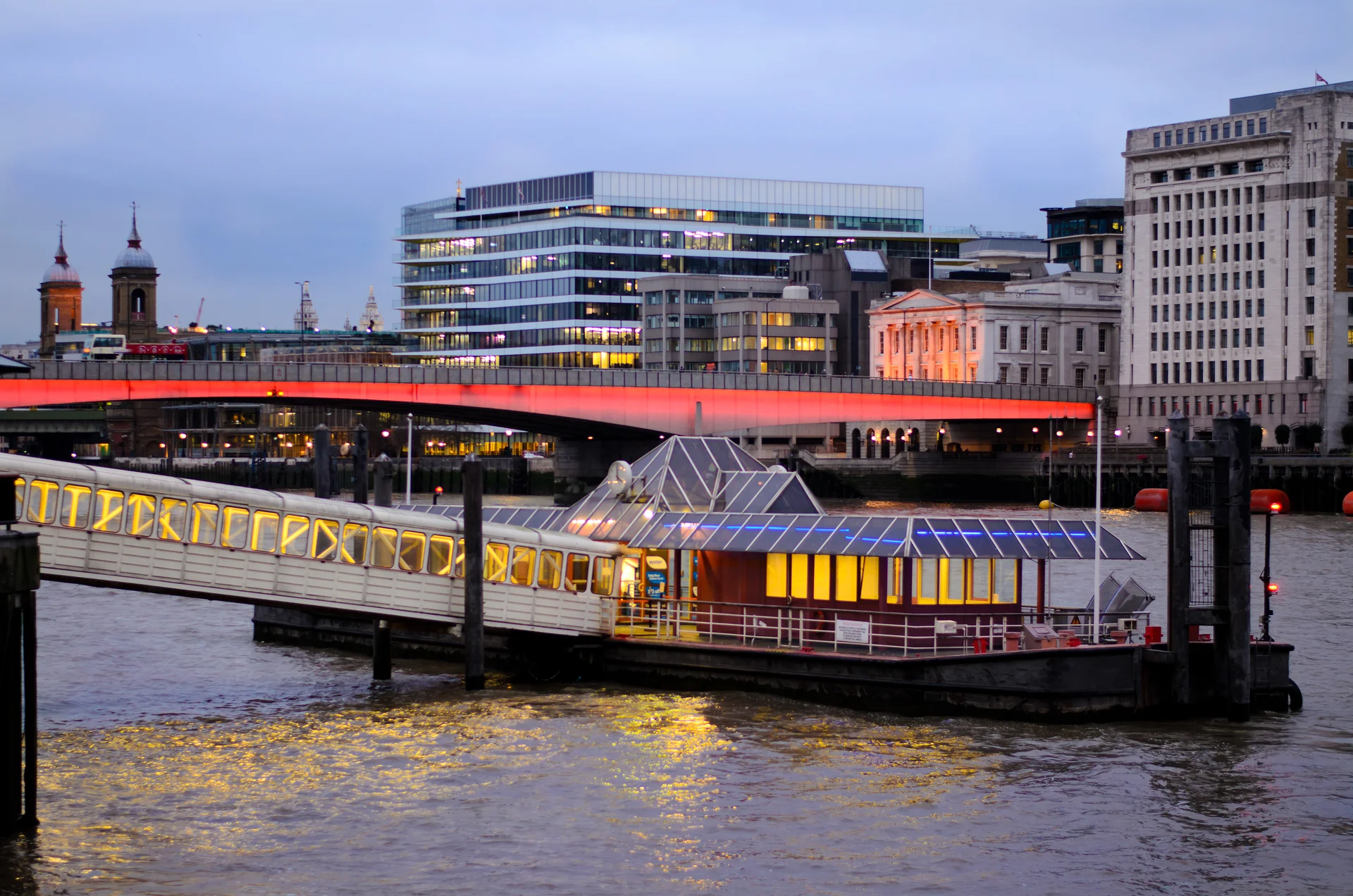
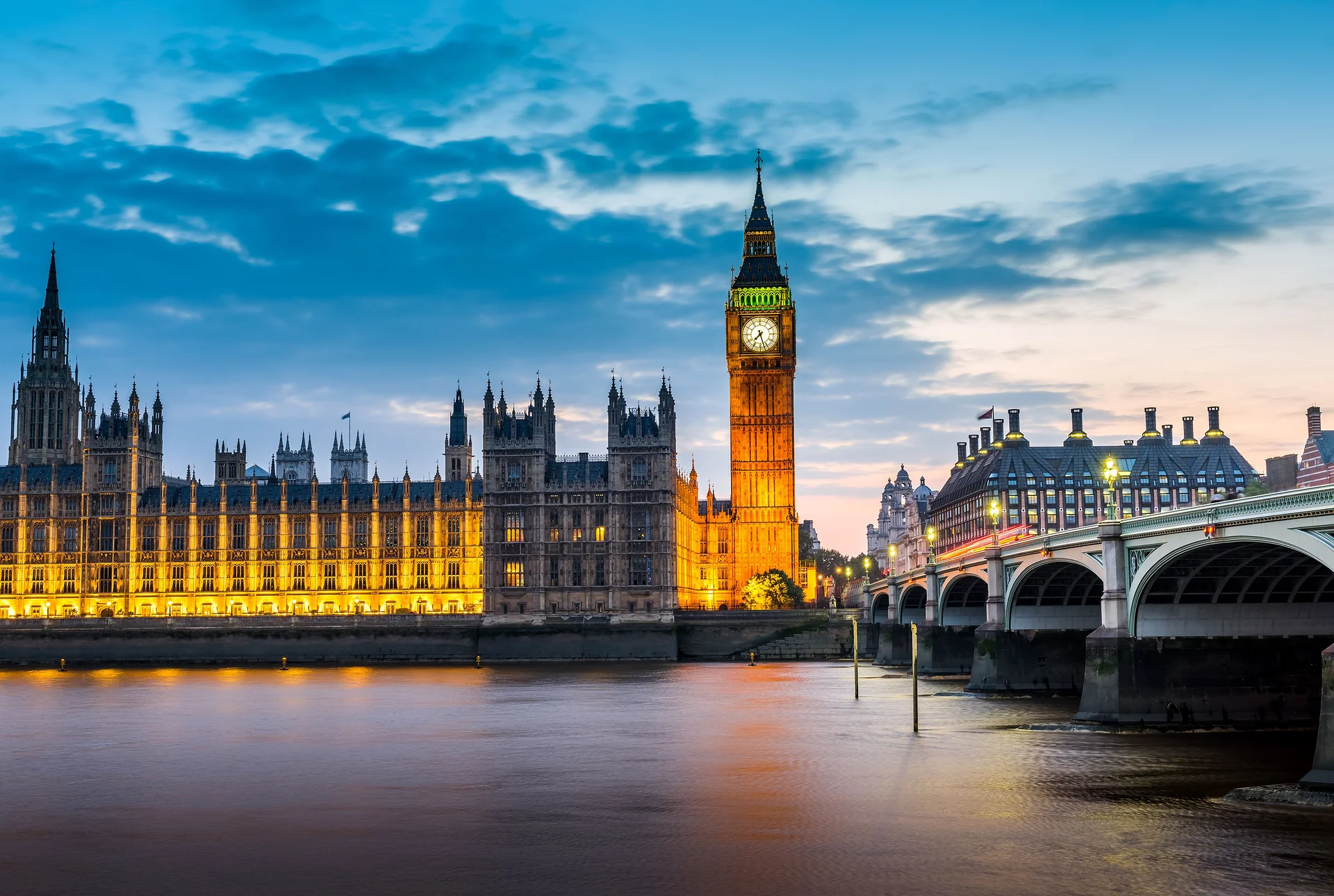
London is a city of villages more than monuments: a couple drifts from Marylebone to Notting Hill by way of Hyde Park, follows the Thames from Westminster to Tower Bridge, then settles into a pub after a West End musical. The seven great national museums are free, and so are the royal parks; what needs sorting out before you leave is the electronic travel authorization (ETA), Westminster Abbey, the Tower of London and your evening at the theater. The rest is expensive, the hotel above all, and the budget below spells out how much.
At a glance
- When to go
- May, June and September: 59 to 72 °F (15 to 22 °C), the parks in bloom or turning gold, daylight until 9 pm. December has the lights, but the sun sets before 4 pm.
- How many days
- Four full days: Westminster, the Thames, Notting Hill and the South Kensington museums, then Greenwich by boat. Three work without Greenwich; a fifth adds Kew or Hampton Court.
- Which neighborhood
- Marylebone for a first visit, Notting Hill for romance, South Kensington for quiet, Covent Garden and Soho for the evenings, Bankside for the Thames.
- Budget for two
- About $1,910 for three nights in comfort, hotel, meals, sights and transport included, flights excluded: the hotel is nearly half of it, and the national museums cost nothing.
- The moment for two
- Sunset from Waterloo Bridge, Parliament on one side and St Paul's on the other, then a West End musical with tickets bought the same day at Leicester Square.
- Book ahead
- The ETA before you fly; Westminster Abbey and the Tower of London one to two weeks ahead; afternoon tea and a weekend table three to four weeks ahead.
Why London for two
London gives a couple what few capitals offer for free: the seven great national museums, from the British Museum to Tate Modern, cost nothing, and the royal parks, Hyde Park, Kensington Gardens, St James's Park and Regent's Park, spread more than a thousand acres of lawns, ponds and rose gardens between one neighborhood and the next. You can walk for hours without going indoors, and the scenery never repeats.
What the city adds is the evening: a musical or a play in one of some forty West End theaters, a drink in a Victorian pub with etched glass windows, the Thames lit up from a rooftop terrace, then a night bus home. The city is huge, and a couple does better to take it village by village, Marylebone, Notting Hill, Hampstead, Greenwich, than as a checklist of landmarks.
When to go
| Period | Weather | Crowds | Our take |
|---|---|---|---|
| March to May | Cool then mild, 46 to 63 °F (8 to 17 °C), short showers | Moderate, heavy at Easter | Cherry blossom in March and April, green parks, longer evenings |
| June to August | Mild to hot, 64 to 77 °F (18 to 25 °C), spikes to 86 °F (30 °C) | Very heavy | Terraces and rooftops until 9:30 pm, but peak hotel prices and a stifling Tube |
| September and October | Mild then cool, 52 to 66 °F (11 to 19 °C) | Heavy in September | Our favorite: golden light in the parks, a film festival in October, lower prices |
| November to February | Cold and damp, 36 to 48 °F (2 to 9 °C) | Light, very heavy before Christmas | Lights and the Hyde Park Christmas market, but the sun sets around 4 pm |
A few dates change the city. The Notting Hill Carnival, on the last weekend of August, sends a million people through the neighborhood's streets: a party to join, not a place to sleep. In late May the Chelsea Flower Show fills the hotels around Kensington. Before Christmas, Regent Street and Oxford Street light up. On December 25, neither the Tube nor the buses run, and almost everything is closed.
Paperwork: passport, ETA, health
| Documents | Authorization | Health | |
|---|---|---|---|
| United States | Passport valid for your whole stay | ETA to get before you fly, if it is required on your dates | Travel insurance with medical cover: hospitals bill visitors for non-emergency care |
| Canada | Passport valid for your whole stay | ETA to get before you fly, if it is required on your dates | Travel insurance with medical cover: hospitals bill visitors for non-emergency care |
| Australia, New Zealand | Passport valid for your whole stay | ETA to get before you fly, if it is required on your dates | Travel insurance with medical cover |
The electronic travel authorization (ETA)
For a stay of under six months without a visa, the United Kingdom asks for an ETA, a digital authorization tied to your passport. Americans, Canadians, Australians and New Zealanders all need one, and so do most Europeans. Apply on the British government's site (gov.uk/eta) or in the UK ETA app, using the passport you will travel on: about $23, an answer usually within three working days, and two years of validity for repeat trips. Check on gov.uk that it is required on your dates, and apply a week before you leave.
How to get there
By air from North America
| From | Duration | Good to know |
|---|---|---|
| New York, Boston, Washington | 6h30 to 7h30 | Several nonstops a day to Heathrow, plus Gatwick from New York |
| Chicago, Toronto, Montreal | 6h45 to 8h | Nonstops all year to Heathrow, mostly with Air Canada, United and British Airways |
| Atlanta, Dallas, Miami | 8h to 9h30 | Daily nonstops to Heathrow, and to Gatwick from Atlanta |
| Los Angeles, San Francisco, Seattle | 10h to 11h | Daily nonstops to Heathrow, an overnight flight that lands at 6 am |
Five airports serve London: Heathrow (LHR) for long-haul flights and most mainline carriers, Gatwick (LGW) and London City (LCY) for Europe, Stansted (STN) and Luton (LTN) for budget airlines. A cheap flight into Stansted or Luton is followed by a train ticket of about $28 each, which erodes the savings. The trip to your hotel is detailed below, under “From the airport to your hotel”.
By train, from Paris, Brussels or Amsterdam
| From | Duration | Good to know |
|---|---|---|
| Paris Gare du Nord | ~2h20 | A dozen trains a day; tickets go on sale months ahead, from ~$51 one way |
| Brussels-Midi | ~2h | About ten trains a day, no change |
| Lille-Europe | ~1h20 | A few trains a day |
| Amsterdam Centraal, Rotterdam | ~4h | A few direct trains a day, with checks at the departure station |
If you are combining London with Paris or Brussels, the train is the smoothest way in: it arrives in the center, and the Tube at King's Cross reaches every neighborhood. Security and British border checks happen at the departure station, so arrive an hour before. Going back to Paris, Brussels or Amsterdam from St Pancras, plan on 90 minutes: the Schengen entry check, with biometric EES registration for travelers from outside the European Union, also happens there before you board.
By car
Practical things to know before you go
Phone
American carriers handle the UK in different ways: some plans include roaming at reduced speed, others charge a daily pass for each day you use your phone. Check your plan's “United Kingdom” line before you leave, or install an eSIM for the week. Wi-Fi is free in museums, stations and cafés, but Citymapper and TfL Go need data.
Money and tipping
- Prices are in pounds sterling, and a contactless card works almost everywhere, from museums to markets: buses no longer take cash, and some cafés and bars are fully cashless. Keep a few coins for a coat check or a market stall, nothing more.
- If the card terminal offers to charge you in dollars, choose pounds: the conversion the merchant offers costs more than your bank's rate. Bring a card with no foreign transaction fees.
- Tipping is lighter than in the US: many restaurants add a 12.5% service charge to the bill, which is optional but almost always paid; otherwise leave 10% for a good meal, not 20%. At a pub you pay at the bar with no tip, and in a taxi you round up to the next pound.
- The price you see includes 20% VAT: nothing is added at the register, unlike US sales tax.
Plugs, water and what to wear
- Type G outlets, with three flat pins, at 230 volts: you need an adapter. Phone and laptop chargers accept 230 volts, but most US hair dryers and curling irons do not, and they can burn out: leave them home or buy a UK one.
- Tap water is safe to drink everywhere, and hard; restaurants and pubs serve it free, just ask for tap water.
- A light rain jacket beats an umbrella the wind turns inside out, and so do walking shoes for six miles a day. Theaters, smart restaurants and rooftops call for neat clothes, rarely a jacket and tie.
- People drive on the left: at every crosswalk, “Look right” is painted on the pavement, and traffic comes from the right first.
What to book, and how far ahead
The national museums, the parks and most markets need no ticket; what you book are timed-entry monuments, special exhibitions and weekend tables. Lock in the theater night and afternoon tea first, then place the sights around them.
| Site | Price per person | Book | Good to know |
|---|---|---|---|
| Westminster Abbey | ~$40 | 1 to 2 weeks ahead | Closed to visitors on Sundays; take the first slot on a weekday, before the tour groups |
| Tower of London | ~$48 | 1 week ahead | The Crown Jewels first, before the 11 am line; allow three hours |
| St Paul's Cathedral | ~$36 | A few days ahead | Closed to visitors on Sundays; the dome climb is included |
| London Eye | ~$43 | The day before | Timed ticket; the capsule makes one 30 min. turn |
| Buckingham Palace, State Rooms | ~$45 | 2 to 4 weeks ahead | Open mostly from late July through September |
| Sky Garden | Free | 3 weeks ahead | A rooftop garden atop a City tower; free slots open three weeks in advance |
| Kew Gardens | ~$32 | The day before | Dated ticket; the glasshouses and the treetop walkway before noon |
| West End musical | $51 to $157 | Same day, or 2 to 8 weeks ahead | Big titles sell out weeks ahead; the tkts booth in Leicester Square sells discounted seats for the same day |
| Afternoon tea | $68 to $124 | 3 to 4 weeks ahead | The Ritz, Fortnum & Mason, Claridge's: the tea rooms fill up on weekends |
| Top restaurants | 3 to 4 weeks ahead | Friday and Saturday tables go first |
From the airport to your hotel
© OpenStreetMap contributors
The five airports, the arrival stations and the neighborhoods they serve
- Heathrow (LHR)
- Gatwick (LGW)
- Stansted (STN)
- Luton (LTN)
- London City (LCY)
- 1Paddington, Notting Hill
- 2Bond Street, Marylebone
- 3Covent Garden, Soho
- 4King's Cross, Bloomsbury
- 5South Kensington
- 6Victoria, Westminster
- 7London Bridge, Bankside
| Destination | Transport | Duration | Indicative fare |
|---|---|---|---|
| Paddington, Notting Hill | Heathrow Express | ~15 min. | $34 / pers. |
| Paddington, Notting Hill | Elizabeth line | ~30 min. | $18 / pers. |
| Bond Street, Marylebone | Elizabeth line | ~35 min. | $18 / pers. |
| Covent Garden, Soho | Piccadilly line | ~55 min. | $7.90 / pers. |
| South Kensington | Piccadilly line | ~45 min. | $7.90 / pers. |
| South Kensington | Black cab | 45 to 75 min. | $96 to $135 / cab |
| King's Cross, Bloomsbury | Piccadilly line | ~55 min. | $7.90 / pers. |
At Heathrow, the Elizabeth line (the purple line) is the best choice: it runs without a change to Paddington, Bond Street and Tottenham Court Road, leaves about every ten minutes and needs no ticket, because a contactless card works at the gates. The Heathrow Express saves fifteen minutes to Paddington, for twice the price. The Piccadilly line (dark blue) costs least and runs through Kensington, Piccadilly and Covent Garden, but it takes nearly an hour, with luggage, in narrow cars.
Black cabs take four people and all the bags, on the meter: $96 to $135 from Heathrow to the center, 45 to 75 minutes depending on traffic. Uber and Bolt cost a little less, $62 to $101. A driver who approaches you in the arrivals hall is running an unlicensed car: go to the taxi rank or book through the app.
| Destination | Transport | Duration | Indicative fare |
|---|---|---|---|
| Victoria, Westminster | Gatwick Express | ~30 min. | $27 / pers. |
| Victoria, Westminster | Southern train | 35 to 45 min. | $20 / pers. |
| London Bridge, Bankside | Thameslink | ~30 min. | $20 / pers. |
| King's Cross, Bloomsbury | Thameslink | ~50 min. | $22 / pers. |
| Destination | Transport | Duration | Indicative fare |
|---|---|---|---|
| Bond Street, Marylebone | Stansted Express then Elizabeth line | ~1h10 | $31 / pers. |
| Covent Garden, Soho | Stansted Express then Elizabeth line | ~1h05 | $31 / pers. |
| King's Cross, Bloomsbury | Stansted Express then Victoria line | ~1h05 | $31 / pers. |
| Victoria, Westminster | Direct coach | ~1h15 | $16 / pers. |
| Destination | Transport | Duration | Indicative fare |
|---|---|---|---|
| King's Cross, Bloomsbury | Shuttle then Thameslink | ~40 min. | $23 / pers. |
| Covent Garden, Soho | Thameslink then Elizabeth line | ~50 min. | $24 / pers. |
| London Bridge, Bankside | Shuttle then Thameslink | ~55 min. | $23 / pers. |
| Destination | Transport | Duration | Indicative fare |
|---|---|---|---|
| London Bridge, Bankside | DLR then Jubilee line | ~30 min. | $4.50 / pers. |
| King's Cross, Bloomsbury | DLR then Northern line | ~40 min. | $4.50 / pers. |
| Covent Garden, Soho | Black cab | 30 to 45 min. | $51 to $73 / cab |
Gatwick (26 miles, or 39 km, from the center) reaches Victoria by the nonstop Gatwick Express or by slower, cheaper Southern trains, and London Bridge by Thameslink, which continues to Blackfriars and King's Cross. Stansted (26 miles, 42 km) and Luton (27 miles, 43 km) are an hour out: the Stansted Express arrives at Liverpool Street, from where the Elizabeth line reaches Bond Street in ten minutes; at Luton, a four-minute shuttle runs to the station, and Thameslink then crosses the center. London City is the closest (7.5 miles, 12 km): the DLR, a light metro, serves the City and the Docklands, and a black cab reaches the West End in half an hour. Everywhere, the gates accept a contactless card: tap in and out with the same one.
Getting around
Tube, buses and boats
| Ticket | Price | Good for |
|---|---|---|
| Contactless card or phone | ~$3.90 a trip in Zone 1, capped at ~$12 a day in Zones 1 and 2 | Tap in and out with the same card: the cap works itself out |
| Oyster card | ~$9 for the card, nonrefundable | Only useful if your bank charges a fee on every foreign payment |
| Red bus | ~$2.30 a ride, capped at ~$6.80 a day | One flat fare; with the “Hopper,” unlimited buses within the next hour |
| Boat (Uber Boat) | $9 to $16 depending on distance | Tap your contactless card at the pier, like the Tube |
The Tube (eleven lines) runs from about 5 am to midnight, and all night on Fridays and Saturdays on five lines (Central, Jubilee, Northern, Piccadilly, Victoria). For a short hop, walk: from Leicester Square to Covent Garden the station is 275 yards (250 m) away. The red double-decker buses no longer take cash, and they are worth the ride: go upstairs, in front. The 11 links Liverpool Street to Victoria by way of St Paul's, Trafalgar Square and Westminster, for the price of a bus fare.
The Thames as transport
The river bus Uber Boat by Thames Clippers links Westminster, Embankment, Tower, London Bridge City Pier and Greenwich, on the same contactless card as the Tube: London Bridge to Greenwich takes about half an hour, past Tower Bridge, the docks and Canary Wharf. Narrated cruises leave from the same piers for $21 to $28 per person; the river bus covers the same stretch for less, minus the commentary.
Budget for two
London is one of the most expensive cities in Europe, and the hotel is what weighs most: nearly half the budget, while the museums, the parks and the markets cost nothing. On the ground everything is priced in pounds sterling; the amounts below are converted for you. Here is what three nights for two cost, flights excluded.
| Savvy | Comfort | Splurge | |
|---|---|---|---|
| Hotel, per night | $146 to $210 | $300 to $430 | from $620 |
| Meals, per day for two | $90 | $168 | $340 |
| Sights for the stay | $68 | $230 | $510 with a show and afternoon tea |
| Transport for the stay | $56 | $79 | $230 by cab |
| Total for three nights | $960 | $1,910 | $3,810 |
A room can cost twice as much on a Saturday in June as on a Tuesday in February; Christmas and the Notting Hill Carnival weekend are priced like New Year's Eve.
Benchmark prices
| Item | Price |
|---|---|
| Coffee (flat white) to go | $4.50 to $5.60 |
| A pint of beer in a central pub (a UK pint is bigger than a US one: 568 ml) | $7.90 to $11 |
| A pub main course | $20 to $28 |
| Sunday roast, the Sunday lunch | $25 to $34 |
| Dinner for two with wine, at a good restaurant | $112 to $191 |
| Cocktail in a hotel bar or on a rooftop | $18 to $25 |
| Afternoon tea | $68 to $124 / pers. |
| A West End theater ticket | $34 to $157 / pers. |
| A Tube ride, Zone 1 | ~$3.90 |
What to eat and drink
London's food comes from everywhere: the national dish, fish and chips, shares the city with some of Europe's most celebrated curries, street-food markets and a modernized British cooking. For a couple it all happens in three places: a pub, a market, a tea room.
At the table
-
Fish and chips
A fillet of cod or haddock in batter, thick chips, tartar sauce and malt vinegar, $16 to $25; eat it seated in a pub or a neighborhood chippy, not at a tourist kiosk.
-
Sunday roast
The Sunday lunch, from noon to 5 pm: roast beef or lamb, Yorkshire pudding, roast potatoes and gravy, $25 to $34 in a pub; the good pubs fill up, so book.
-
Pie and mash
A meat pie, mashed potatoes and a green parsley sauce, the working-class cooking of the East End; Manze's, on Tower Bridge Road, has served it for over a century.
-
Curry
From chicken tikka masala, adopted by Londoners, to the Bengali curries of Brick Lane and the vegetarian thalis of Drummond Street, near Euston, for $14 to $23.
-
Full English breakfast
Eggs, bacon, sausage, baked beans, mushrooms, black pudding and toast, served in a caff until 11:30 am for $12 to $16: a plate that lasts until dinner.
-
Afternoon tea
From 2 to 5 pm: crustless sandwiches, scones with clotted cream and jam, pastries, a pot of tea; in Cornwall the jam goes first, in Devon the cream, and both camps will tell you why.
In the glass
-
A pint of beer
Cask ale, an unfiltered beer served from the cellar, or a lager: you order a pint (568 ml, bigger than a US pint) or a half at the bar, $7.90 to $11.
-
Gin and tonic
London dry gin was born here: a G&T costs $11 to $16 in a pub, and several distilleries, including Beefeater's in Kennington, offer tours.
-
English sparkling wine
Sparkling wines from Sussex and Kent, grown on chalk like Champagne, $12 to $17 a glass in a wine bar.
-
Pimm's
The summer aperitif: a gin-based liqueur topped with lemonade, strawberries, cucumber and mint, $11 a glass on a park terrace.
-
Cider
Dry cider from Somerset or Herefordshire, served by the pint, $7.90 to $11: drier and stronger than most American hard cider.
Local customs and rules
Londoners are polite to the point of indifference, and a few simple reflexes spare you irritated looks: “sorry” when you brush past someone, “cheers” when you get your change, “please” and “thank you” with every order.
- People queue, everywhere: at the bus stop, at the kiosk, outside the restroom. Cutting in line is the one fault no Londoner forgives.
- On the Tube, stand on the right on escalators and let people pass on the left; let people off before you board, and wear your backpack in front at rush hour.
- At a pub there is no table service: you order and pay at the bar, carry your own drinks, and buy a round when you're with others. Kitchens serve until 9 or 10 pm, and the last-orders bell rings around 11 pm.
- In front of Buckingham Palace, the guards are not extras: don't touch them, don't cross the barrier, and a shouted “Make way” is an order.
- On Sundays many large stores close at 5 or 6 pm, and pubs serve Sunday roast until 5 pm; on December 25, neither the Tube nor the buses run.
Safety
London is safe for a couple, day and night, in the neighborhoods where you will be sleeping. The risk is phone theft more than assault, and a few street scams.
- Thieves on scooters or e-bikes snatch phones held in the hand at the curb, especially around Oxford Street and the center: walk on the building side, and put the phone away before you cross.
- On a packed Tube, at Oxford Circus, Leicester Square and around Victoria station, pickpockets work in teams: wallet and phone in an inside pocket. Be just as careful on Westminster Bridge, where the three-card monte game is played with no winner but the dealer.
- A driver who approaches you in an airport or station hall with “Taxi?” runs an unlicensed car, with no meter and no insurance: take a black cab at the rank, or book through an app.
- On Oxford Street, the “closing-down” shops that auction jewelry and perfume are tourist traps: buy nothing sold in a hurry.
- At night, avoid walking through a park: most close at dusk, and the gates lock behind you.
Mistakes to avoid as a couple
London disappoints mostly through its distances and its calendars: too many neighborhoods in a day, a landmark closed on Sunday, dinner in a tourist street. The rest can be fixed.
- Putting Westminster, the Thames and Notting Hill into one day: three neighborhoods a day at most, two on museum days.
- Counting on Westminster Abbey or St Paul's Cathedral on a Sunday: they are closed to visitors, and services come before tourists.
- Dining on Leicester Square or under the Covent Garden market hall: picture menus, a service charge on the bill, cooking for passersby. The good tables are two streets away, in Soho and around Seven Dials.
- Planning your morning around the Changing of the Guard: it happens only on certain days, is canceled in the rain, and the crowd builds an hour ahead.
- Choosing a hotel in Zone 3 or beyond to save money: each evening's trip back costs thirty minutes on the Tube, and the savings vanish in two days.
- Taking the Tube for two stops in the center: on foot, Leicester Square is five minutes from Covent Garden, and the walk is lit up.
Frequently asked questions
Is London a good destination for a romantic trip?
Yes, for three concrete reasons: royal parks and national museums that are free, village neighborhoods (Marylebone, Notting Hill, Hampstead) where you can walk to dinner, and evenings that run from the West End to pubs on the water. The things to watch are hotel prices, among the highest in Europe, and the size of the city: choose one zone a day.
How many days do you need in London as a couple?
Four full days give the best rhythm: Westminster and the West End, the Thames from Tate Modern to Tower Bridge, Notting Hill and the South Kensington museums, then Greenwich by boat. Three days work if you skip Greenwich; a fifth adds Kew or Hampton Court.
Do Americans need a passport and an ETA for London?
Yes: a passport valid for your whole stay, and the electronic travel authorization (ETA), which costs about $23, is requested on gov.uk or in the UK ETA app, and lasts two years. Check that it is required on your dates, and apply before you book nonrefundable flights.
Is London expensive?
The hotel is, yes: a comfortable double costs $300 to $430 a night. The rest is manageable: free national museums and parks, a pint at $9, a pub main at $23, a bus ride at $2.30. Plan on about $1,910 for three nights for two in comfort, hotel, meals, sights and transport included, flights excluded.
Do you tip in London?
Much less than in the US. In restaurants a 12.5% service charge is often already on the bill; otherwise leave 10% for a good meal. At a pub you pay at the bar with no tip, and in a taxi you round up to the next pound. The card terminal may suggest a tip: take it only if service isn't already included.
Do you need an Oyster card for the Tube?
No: a contactless card or a phone works at the gates of the Tube, the trains and the buses, with the same daily caps. An Oyster ($9) is only worth it if your bank charges a fee on every foreign payment. Use the same card or phone to tap in and out, or the trip is billed at the maximum fare.