





D1 Day 1: Salzburg, arrival, the old town and the fortress
- D1·1Getreidegasse Neighborhood
- D1·2Salzburg Cathedral Church
- D1·3Hohensalzburg Fortress Castle
- D1·4Mönchsberg Viewpoint

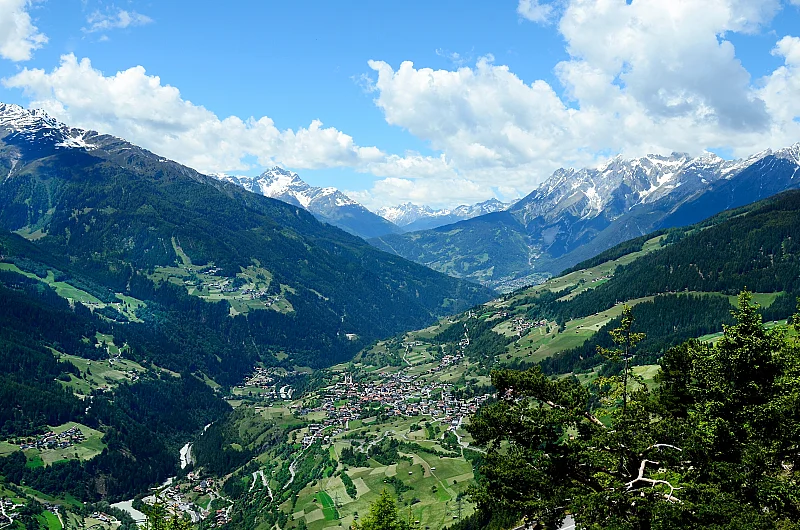
Seven days are enough for Salzburg, the lakes of the Salzkammergut, Hallstatt and Innsbruck, on two conditions: sleep in Hallstatt instead of passing through between two coaches, and keep three nights in Salzburg, from where you can drive to the lakes for the day. Pick up the car in Salzburg on the second morning and drop it in Innsbruck on the last day, one way: about 350 miles (560 km) at the wheel, one motorway vignette, and a single long leg, the one through Zell am See. You only have one booking to make months ahead, the room in Hallstatt; the rest, fortresses, mountain trains and cable cars, you buy on the spot or the day before.
© OpenStreetMap contributors
D1 Day 1: Salzburg, arrival, the old town and the fortress
D2 Day 2: the car and the Salzkammergut lakes
D3 Day 3: Hellbrunn, Mirabell and the heights of Salzburg
D4 Day 4: the road to Hallstatt via Bad Ischl
D5 Day 5: the long crossing via Zell am See
D6 Day 6: Innsbruck, the old town and the Nordkette
D7 Day 7: Ambras Castle and a valley, then the car returned
| Day | Stops of the day | Driving | Night in |
|---|---|---|---|
| Day 1 | Salzburg, Altstadt | No driving | Salzburg |
| Day 2 | Fuschlsee, Wolfgangsee, Mondsee | 110 km, 2h30 | Salzburg |
| Day 3 | Hellbrunn, Untersberg, Neustadt | 30 km, 50 min | Salzburg |
| Day 4 | Bad Ischl, Hallstatt | 75 km, 1h30 | Hallstatt |
| Day 5 | Zell am See, Kaprun, Innsbruck | 290 km, 4h15 | Innsbruck |
| Day 6 | Innsbruck, Hafelekar | No driving | Innsbruck |
| Day 7 | Ambras, Stubai, Innsbruck | 60 km, 1h15 | Innsbruck |
| Total | 565 km, 10h20 |
To get there and pick your season, see When to go and Getting there.
On the first day, you explore Salzburg on foot: from the main station, bus 1 or trolleybus 3 take ten minutes to the Altstadt, the old town, and a taxi costs about $14. Drop the bags and walk into the Getreidegasse, the street of wrought-iron shop signs where Mozart was born at number 9: allow an hour to visit his birthplace, $17.
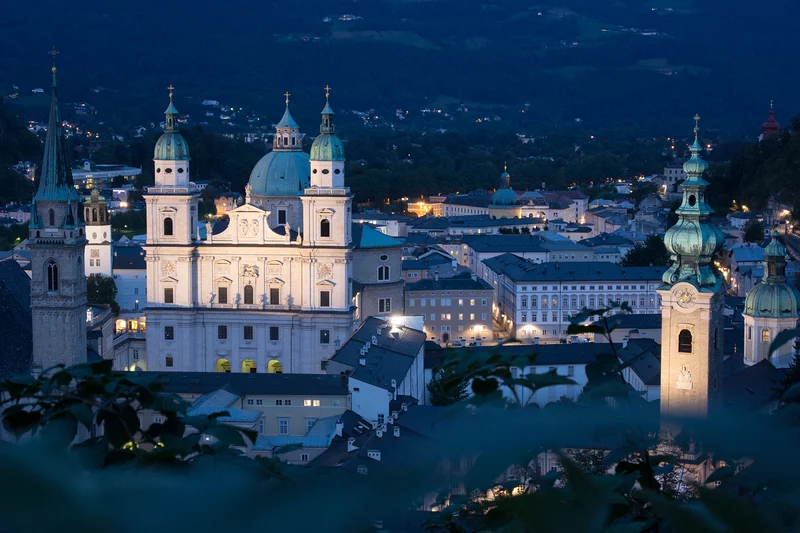
At the end of the street stands Salzburg Cathedral, baroque, with its two towers and dome, where Mozart was baptized: entry is free, and the organ plays at noon on some days. The three squares around it, Domplatz, Residenzplatz and Kapitelplatz, connect through arcaded passages: walk around them before you go up to the fortress.
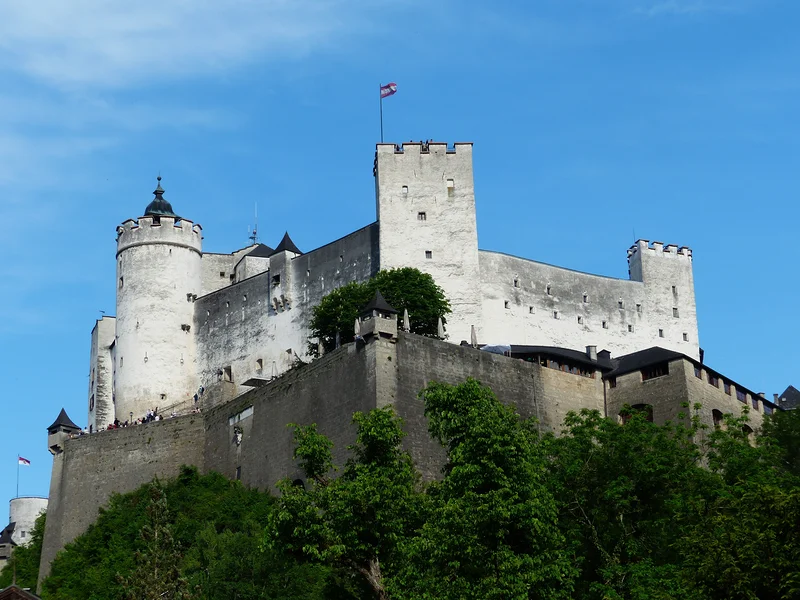
The funicular leaves from the Festungsgasse and climbs in one minute to Hohensalzburg Fortress, the castle the archbishops built above the city nine centuries ago: allow two hours for the courtyards, the princes' rooms and the rampart walk, ~$21 with the funicular. Go up around 4pm: the low light falls across the roofs and the coaches have gone.
Walk back down over the Mönchsberg, the wooded hill that closes the Altstadt to the west, to the terrace of the modern art museum, facing the city: twenty minutes of flat path. Dine at St. Peter Stiftskulinarium (Sankt-Peter-Bezirk 1/4), in the abbey's rock, if you have booked; otherwise at the Bärenwirt (Müllner Hauptstrasse 8), the inn of the Mülln neighborhood, known for its fried breaded chicken, the Backhendl.
Pick up the car at 9am at the main station or the airport, where every rental company has a desk, and leave Salzburg eastward on the B158, the lakes road: in thirty minutes, you reach the Fuschlsee, the smallest lake, green and cold, with the village of Fuschl am See at its tip and a path that takes you around it in two hours. A twenty-minute stop is enough.
St. Gilgen, ten minutes on, is the village where Mozart's mother was born, at the end of the Wolfgangsee, the big crescent-shaped lake: a square, a pier, painted houses. From there, take the boat rather than the car to St. Wolfgang, on the far shore, ~$13 per person one way, and leave the car in the pier parking lot; otherwise, drive around the lake, twenty minutes.
In St. Wolfgang, visit the pilgrimage church and its Gothic altarpiece by Michael Pacher, then have lunch on the lakeside terrace of the Weisses Rössl (Markt 74), the White Horse Inn that gave its name to the operetta. Book the day before in summer.
From St. Wolfgang, the Schafberg rack railway takes you up to 5,850 feet (1,783 m), where you can see a dozen lakes: ~$66 per person round trip, from late April to early November, worth it in clear weather only. In July and August, book the ticket the day before; under a grey sky, keep the money and walk along the lake instead.
Return via Mondsee, the village and its lake, thirty minutes north: the yellow basilica where the couple marries in The Sound of Music, the film shot in the region, and a street of cafés. Salzburg is thirty minutes away on the A1 motorway; dine in the Neustadt, the town on the right bank, at the Gasthof Alter Fuchs (Linzer Gasse 47-49), an inn serving Austrian food with an inner courtyard, closed on Wednesdays.
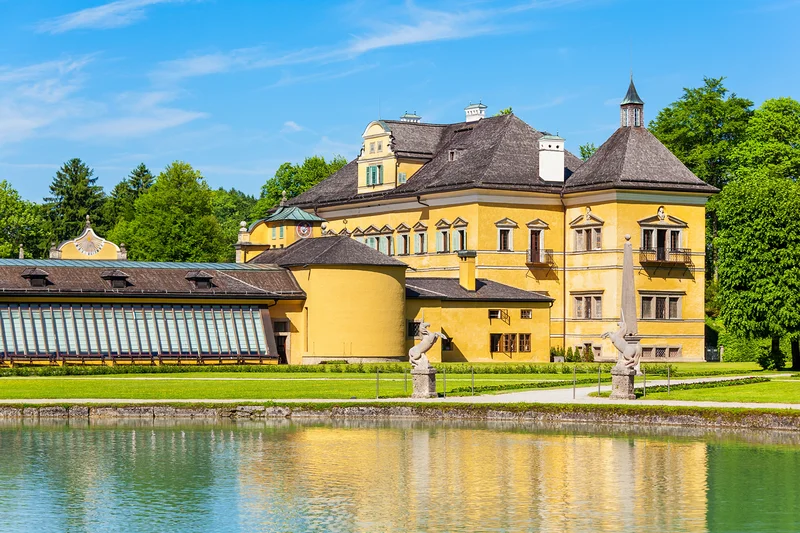
Hellbrunn Palace, fifteen minutes' drive to the south, is the pleasure palace an archbishop had built in the 17th century for his parties. You see its trick fountains, hidden jets that soak visitors from a stone table, a grotto or a mechanical theater, on a fifty-minute guided tour, ~$19 with the palace. Arrive at opening time, 9:30am: by noon, the wait is often over an hour.
Ten minutes from Hellbrunn, the Untersberg cable car climbs in ten minutes to 5,830 feet (1,776 m), on the mountain that marks the German border: the view takes in Salzburg and the lakes on one side, Berchtesgaden on the other, ~$39 per person round trip, with an hour's ridge path at the top. Under cloud, leave the car in the parking lot and go up the Mönchsberg instead, by the elevator on the Gstättengasse.
Come back in the afternoon by the right bank to see Mirabell Palace and its gardens, free to enter: the angels' staircase, and the rose beds facing the fortress. Then walk up the Linzer Gasse, the shopping street of the Neustadt, to St. Sebastian's cemetery, where Mozart's father and wife are buried.
Dine at the Augustinian abbey's brewery, the Augustiner Bräu Mülln (Lindhofstrasse 7), twenty minutes' walk along the Salzach: five halls and a big beer garden, beer drawn from the barrel into stoneware mugs, and stalls selling cold cuts and pretzels. You cannot book, and the brewery opens at 3pm on weekdays.
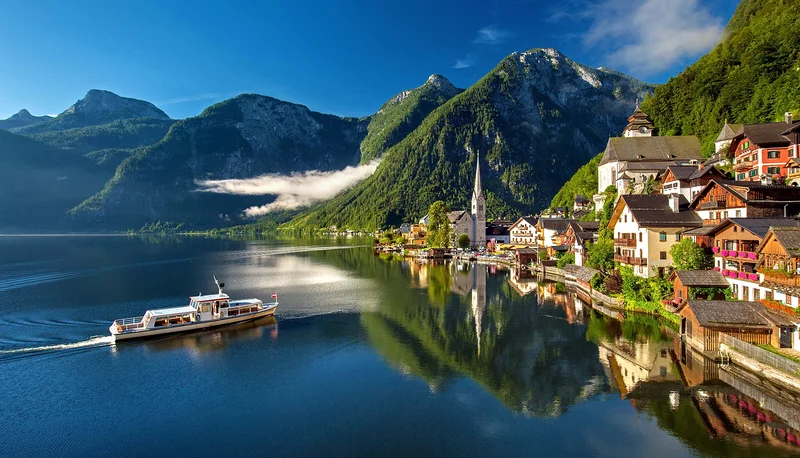
Leave Salzburg around 9am on the B158, then the B154 and B145 along the lakes: Bad Ischl, an hour away, is the spa town where Emperor Franz Joseph spent his summers, with his imperial villa, which you visit in forty-five minutes with a guide, ~$27, and the Zauner pastry shop (Pfarrgasse 7), founded in 1832, for coffee and a slice of cake upstairs. An hour and a half in Bad Ischl is enough.
Hallstatt is thirty minutes south, along the lakeshore. Park in the P1 or P2 lot at the village entrance, ~$20 for the day, and let the hotel know you have arrived: cars do not enter the village, and the hotels collect luggage in a small electric cart. Have lunch on fish from the lake at the terrace of the Seehotel Grüner Baum (Marktplatz 104), set over the water.
The funicular takes you up to the Hallstatt Salt Mine, worked for 7,000 years: the guided tour lasts an hour and a half, with two miners' slides and an underground lake, ~$55 per person including the funicular. Just above the station, the Skywalk platform juts out over Lake Hallstatt, 1,150 feet (350 m) above the roofs: this is the photo of the village, and it comes with the funicular ticket.
After 5pm, with the last boat of the day gone, Hallstatt Market Square becomes a village square again: the painted facades, the fountain, the Protestant church at the water's edge. Walk to the charnel house of St. Michael's chapel, where six hundred painted skulls are lined up, then dine on lake fish at Gasthof Zauner (Marktplatz 51), and get up before 8am: you will have the village to yourselves.
Get up early: before 9am the village is yours, and the first boat arrives around 10am. Set off at 9:30am on the B166 and the Gschütt pass, which climbs to 3,180 feet (969 m) through the firs, then take the A10 motorway south at Golling: Zell am See is two and a quarter hours away, 87 miles (140 km). This is the longest driving day of the trip, four and a quarter hours at the wheel in all: break it in two on the shore of Lake Zell.
Zell am See is a small resort town on its lake, with a promenade, boats and the Kitzsteinhorn glacier closing the horizon to the south. Have lunch on the terrace of the Steinerwirt (Dreifaltigkeitsgasse 2), in the old town, then take the boat around the lake, forty minutes, or walk an hour along the shore. Allow two hours in Zell am See.
Ten minutes away, Kaprun is the village at the foot of the glacier: from there, from late May to mid-October, a bus and an inclined elevator take you up in an hour to the Kaprun Reservoirs, two 330-foot (100 m) concrete walls holding back turquoise lakes at 6,560 feet (2,000 m), ~$39 per person round trip, three hours in all. Under cloud, or if you left late, keep them for another time: the road to Innsbruck is still long.
From Zell am See, the B168 and B161 pass through Kitzbühel, the ski resort, then the A12 motorway runs up the Inn valley: Innsbruck is two hours away, 93 miles (150 km).
Leave the car in the garage arranged with the hotel and walk to the Golden Roof, the loggia with 2,657 gilded copper tiles on the central square, which you will see up close tomorrow. Dine at the Stiftskeller (Stiftgasse 1), under its vaults or in its beer garden in summer.
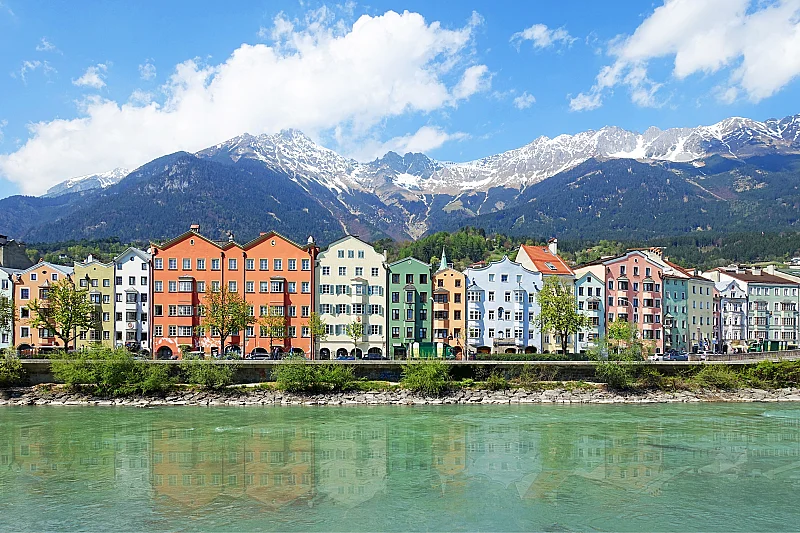
No car today. Start with the Hofkirche, the court church, where Emperor Maximilian had his empty tomb raised, surrounded by twenty-eight larger-than-life bronze statues of his ancestors and heroes: ~$9.90, half an hour. Next door, visit the Innsbruck Imperial Palace, Maria Theresa's Hofburg, in an hour, ~$11, for the Giants' Hall and its painted ceilings.
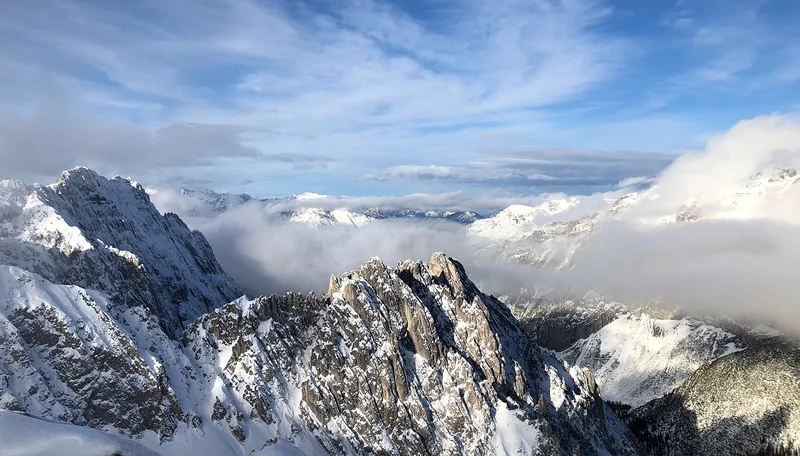
From the Congress station, five minutes from the Hofkirche, the funicular designed by Zaha Hadid climbs in eight minutes to the Hungerburg, the city's upper district, then two cable cars set you down in twenty minutes at the Hafelekar, at 7,400 feet (2,256 m), on the crest of the Nordkette: the whole city at your feet, and on the other side the Karwendel, a range with no roads or villages. Allow ~$55 per person round trip, tickets sold on the spot.
Go up in the morning, when the air is clearest, and walk twenty minutes to the summit of the Hafelekar, above the station. Have lunch on the terrace of the Seegrube, the middle station, at 6,250 feet (1,905 m): a mountain dish and the view, no booking needed. Bring an extra layer, even in August: it is 18 °F (10 °C) colder than in town.
Come down around 3pm and walk along the Maria-Theresien-Strasse, the grand street facing the Nordkette, with St. Anne's Column and the baroque facades, for coffee at Munding (Kiebachgasse 16), the oldest pastry shop in Tyrol. Dine at the Weisses Rössl (Kiebachgasse 8), an old-town inn that serves Tiroler Gröstl, fried potatoes, beef and egg in a pan, the dish of Tyrol; book the day before.
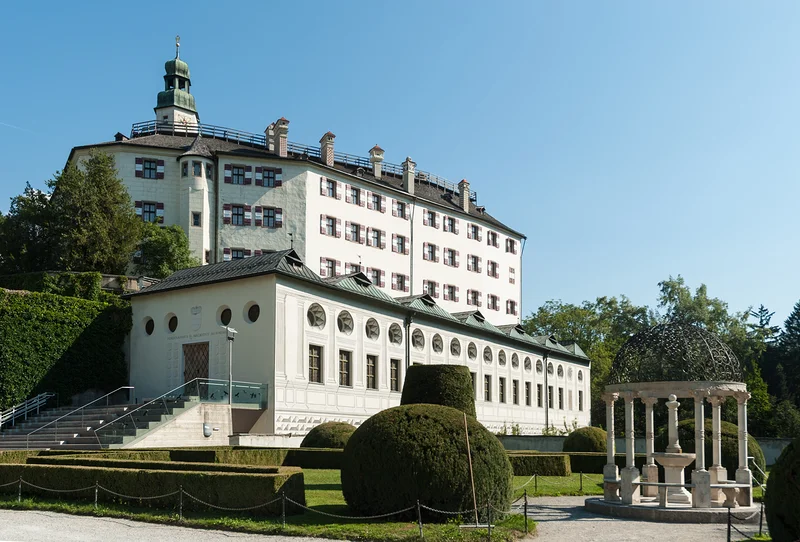
Ambras Castle, ten minutes' drive above the city, is the Renaissance castle where Archduke Ferdinand II assembled, in the 16th century, one of the first collections in Europe open to visitors: armor, curiosities, Habsburg portraits, and the Spanish Hall with its painted paneling. Entry is by time slot: book the 10am one, at opening, online the day before, ~$18, and allow two hours; the park, sloping under the trees, is free.
On the way down, stop at the Bergisel, the hill south of the city where an elevator takes you to the top of the ski jump designed by Zaha Hadid, ~$14: from the restaurant at the top of the tower, the city lies straight ahead, in line with the in-run. An hour, lunch included.
You have an afternoon of driving left: the Stubai valley, thirty minutes south, leads to Neustift im Stubaital, a village of alpine pastures below the glacier, with flat paths along the torrent and mountain inns for a coffee. If you prefer lakes, take the road to the Seefeld plateau instead, to the northwest, also thirty minutes away.
Return the car the same evening at the Innsbruck Airport desk, fifteen minutes from the center, or the next morning if your flight leaves from there: the desks close around 6pm, so check the time on your contract. For the last dinner, go up to Lichtblick (Maria-Theresien-Strasse 18, on the seventh floor of the Rathaus Galerien), a modern restaurant with the Nordkette lit up behind the windows; book two days ahead.
Choose where to pick up the car and your dates: rental companies' offers appear side by side.
Compare rental companies on Kayak in real time: Hertz, Avis, Europcar, Sixt and more.
A compact costs $50 to $77 a day in summer; book it a month ahead for that price, and check the one-way fee between Salzburg and Innsbruck on the contract, which varies threefold between companies. Pick it up at Salzburg's main station on the second morning, or at the airport.
A UK or Irish license is enough; with a US or Canadian license, bring an International Driving Permit as well. A credit card in the driver's name is required for the deposit, and debit cards are often refused. Automatics are rare in Austria, so if you only drive one, book it early. Ask for suitable tires in May and October: snow returns to the passes.
A car rented in Salzburg already has its motorway vignette; for a car picked up in Germany, see "Good to know". The vignette does not cover the toll mountain roads: the Grossglockner road, ~$50 per car, is paid at the barrier.
The legal blood alcohol limit is 0.05%, lower than the 0.08% of the United States and England, which means one glass: in the inns and wine cellars, one of you drives. Speed limits are 80 mph (130 km/h) on motorways, 62 mph (100 km/h) on open roads and 31 mph (50 km/h) in town, and speed cameras are frequent in the Inn valley.
The Gschütt pass, between Hallstatt and Golling, and the Kitzbühel road are open all year; the Grossglockner and the Kaprun dams are only open from May or June to October, and a snowfall in June closes them for a day or two. In the morning, check road conditions on the website of the Austrian automobile club, the ÖAMTC, before setting off.
| Stop | The parking | Rate | On foot |
|---|---|---|---|
| Salzburg | Mönchsberg, inside the hill | ~$4.40 / h, ~$29 / day | 3 min. to the Getreidegasse |
| St. Wolfgang | Pier parking lot | ~$8.80 / day | 5 min. to the church |
| Hallstatt | P1 or P2, at the entrance | ~$20 / day | 10 min. to the market square |
| Zell am See | Town center lot | ~$2.20 / h | 3 min. to the lake |
| Innsbruck | Hotel's garage or the Congress garage | ~$3.30 / h, ~$28 / day | 5 min. to the Golden Roof |
Hotels in Salzburg and Innsbruck rarely have parking of their own; they have a deal with a nearby garage, to ask about when you book. In Hallstatt, the car does not enter the village: both lots are at the entrance, and the hotel comes to collect the luggage.
| What | When | How much |
|---|---|---|
| The Hallstatt hotel | 3 to 4 months ahead for summer | $165 to $280 / night |
| The car | 1 month ahead | $50 to $77 / day |
| Dinner at St. Peter Stiftskulinarium | 1 week ahead | ~$66 / pers. |
| The Schafberg train | The day before in July and August | ~$66 / pers. |
| Ambras Castle | The day before | ~$18 / pers. |
You only have one booking to make months ahead: the room in Hallstatt, where the village's few hotels show full for summer from spring onward. For Salzburg during the festival and the Christmas markets, see "Good to know"; the rest of the year, a month ahead is enough.
The fortress, Hellbrunn, the salt mine, the cable cars and the boats are bought on the spot: if rain is forecast, you swap the days around without losing anything. Only the Schafberg in high summer, the Ambras time slot and the most popular tables need booking the day before.
| Item | Mid-range | High-end |
|---|---|---|
| Hotels, 7 nights | $990 to $1,320 | $1,980 to $3,080 |
| Car, 6 days | $300 to $470 | $550 with an automatic |
| Fuel, vignette, parking | ~$165 | ~$220 with the Grossglockner |
| Sights and cable cars | ~$500 | ~$610 |
| Meals | ~$610 | ~$990 |
About $2,750 for seven days excluding travel to Salzburg, car included, sleeping in mid-range hotels and eating dinner every night in an inn. The biggest item is the mountains: the Schafberg, the Hafelekar, the salt mine and the Untersberg each cost $39 to $66 per person, and you bring the total down by skipping the one the clouds would hide.
A mid-range room costs $132 to $187 in Salzburg and Innsbruck in June, $165 to $280 in Hallstatt, where the choice is thin. Dinner for two in an inn comes to $55 to $77 with beer; mountain inns serve a dish for $17.
Skip the Hellbrunn and Untersberg day: pick up the car on the second morning, do the lakes and sleep that same night in Hallstatt, via Bad Ischl, an hour from St. Wolfgang. You keep two nights in Salzburg, and the rest does not change.
Add a night in Zell am See between Hallstatt and Innsbruck: you break the long driving day in two, visit the Kaprun dams without watching the clock, and take the Grossglockner road the next morning, thirty-six hairpins up to 8,215 feet (2,504 m) and the Pasterze glacier, three hours round trip from Zell am See.
With ten days, start with Vienna, two nights, and take the train to Salzburg, 2h30: you then pick up the car in Salzburg as here, and nothing changes afterward. In the other direction, Innsbruck to Vienna by train takes 4h15.
The train links Salzburg to Hallstatt in 2h30 via Attnang-Puchheim, with the boat from the station on the far shore of the lake, and Hallstatt to Innsbruck in about 4h30, via Attnang-Puchheim and Salzburg. From Salzburg, the Postbus takes you to St. Gilgen in about an hour, and to St. Wolfgang a little further on. You only give up Zell am See and the Kaprun dams.
Austria
Pick your dates and see the offers from the major booking sites side by side.
Compare live offers from Booking, Expedia, Agoda and other partners.
Austria: find your hotel
From Salzburg if you fly into Munich or come from Vienna: Munich Airport is 1h45 from Salzburg and 2h from Innsbruck. From Innsbruck if you fly into Innsbruck or Zurich, or come from Switzerland: you then drive the route the other way round, Innsbruck first, Hallstatt on day five and Salzburg to finish.
Yes, as long as you have booked Hallstatt and Salzburg months ahead, go up the mountains in the morning before the 3pm storms, and accept full villages between 11am and 4pm. In June and September, you drive the same route with far fewer people.
For the Salzkammergut lakes, Hallstatt and Innsbruck, no: trains and buses go there, as the car-free variant explains. For Zell am See, Kaprun and the Grossglockner, yes: they are the reason you rent the car.
68 to 77 °F (20 to 25 °C) in the valleys, 18 °F (10 °C) less on the crests of the Hafelekar or the Schafberg, and a storm almost every afternoon in July and August. Do the peaks in the morning, bring a jacket, and check the summit webcam before buying the ticket.