Salzburg for couples: things to know before you go (2026)
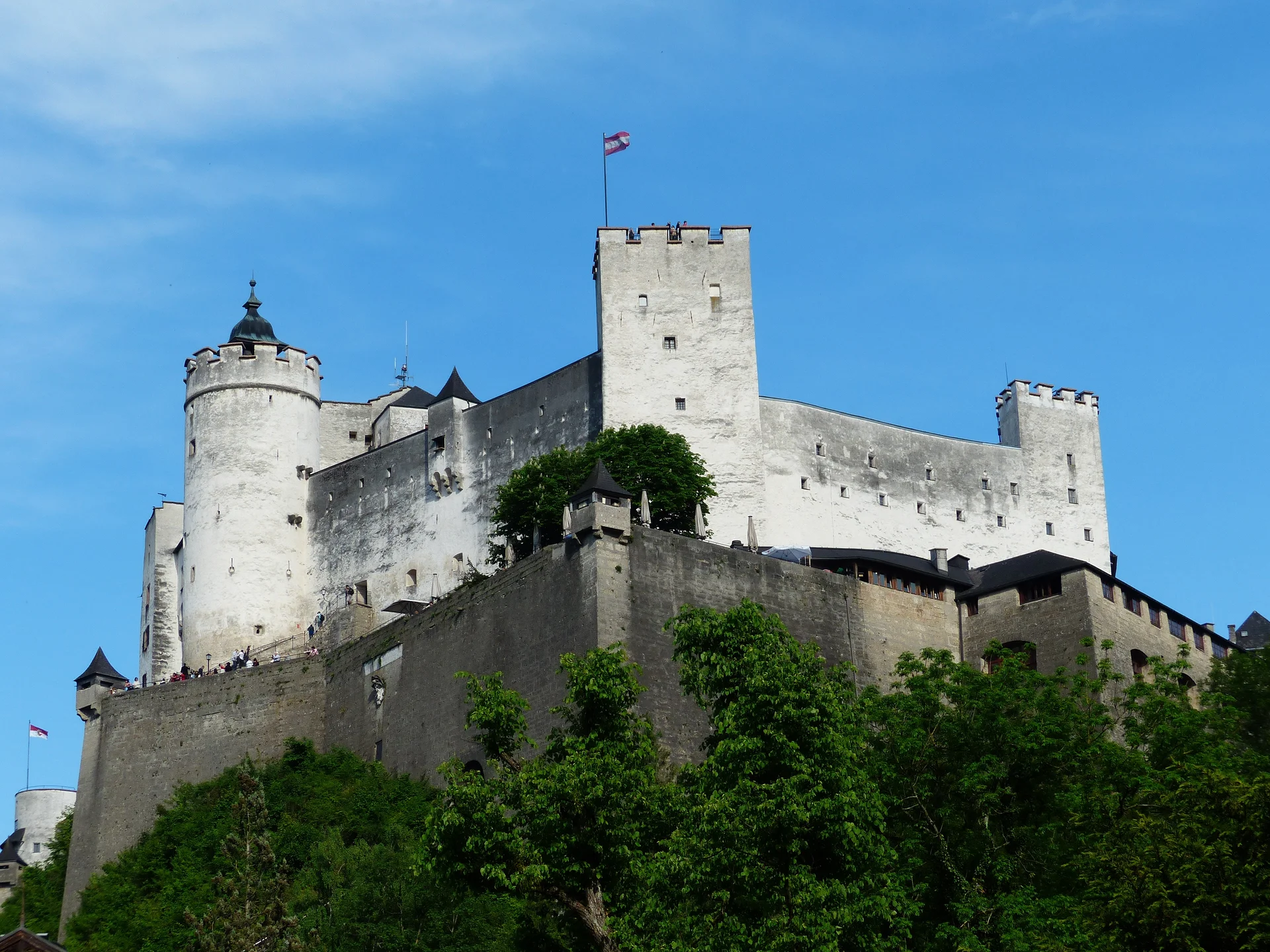
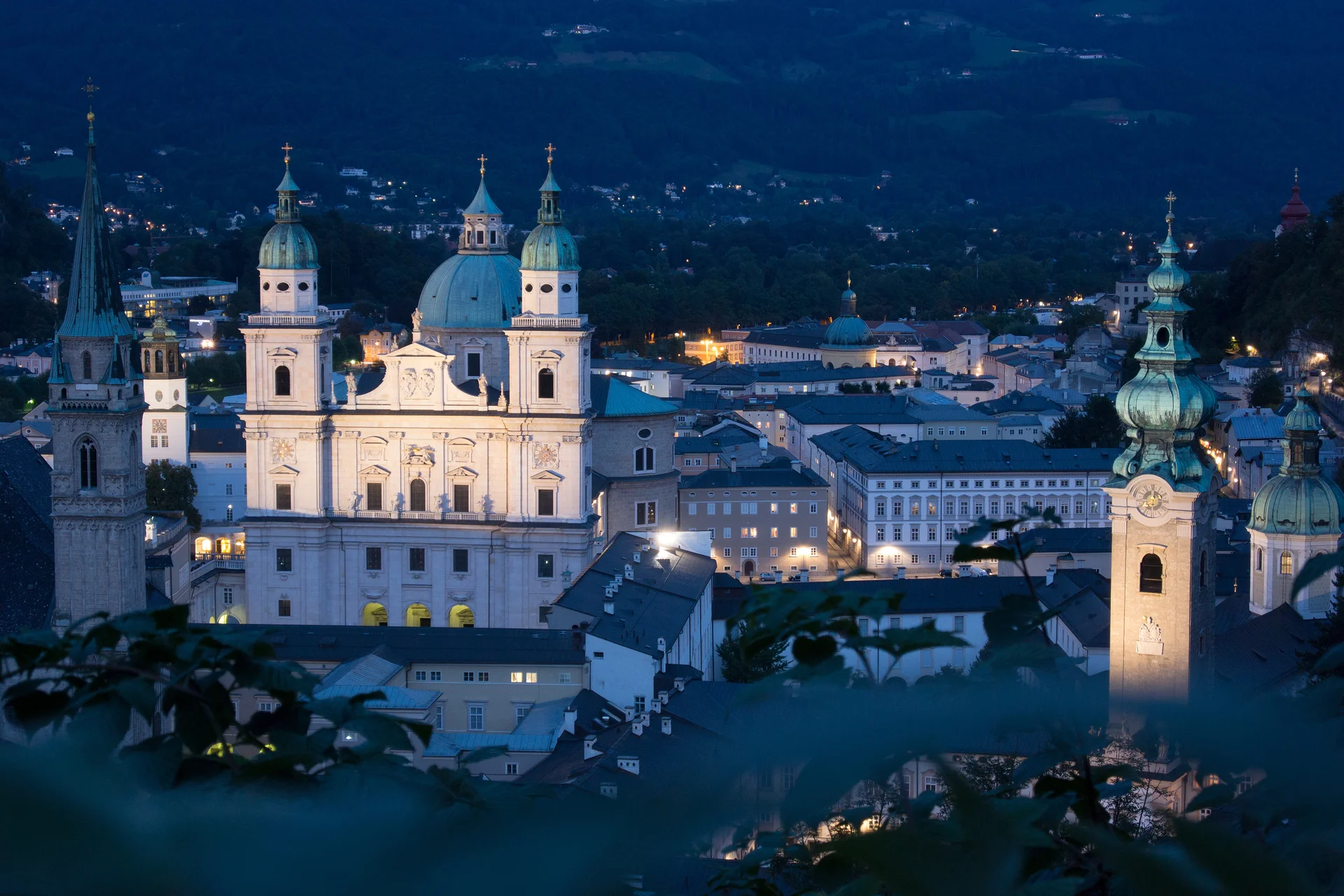
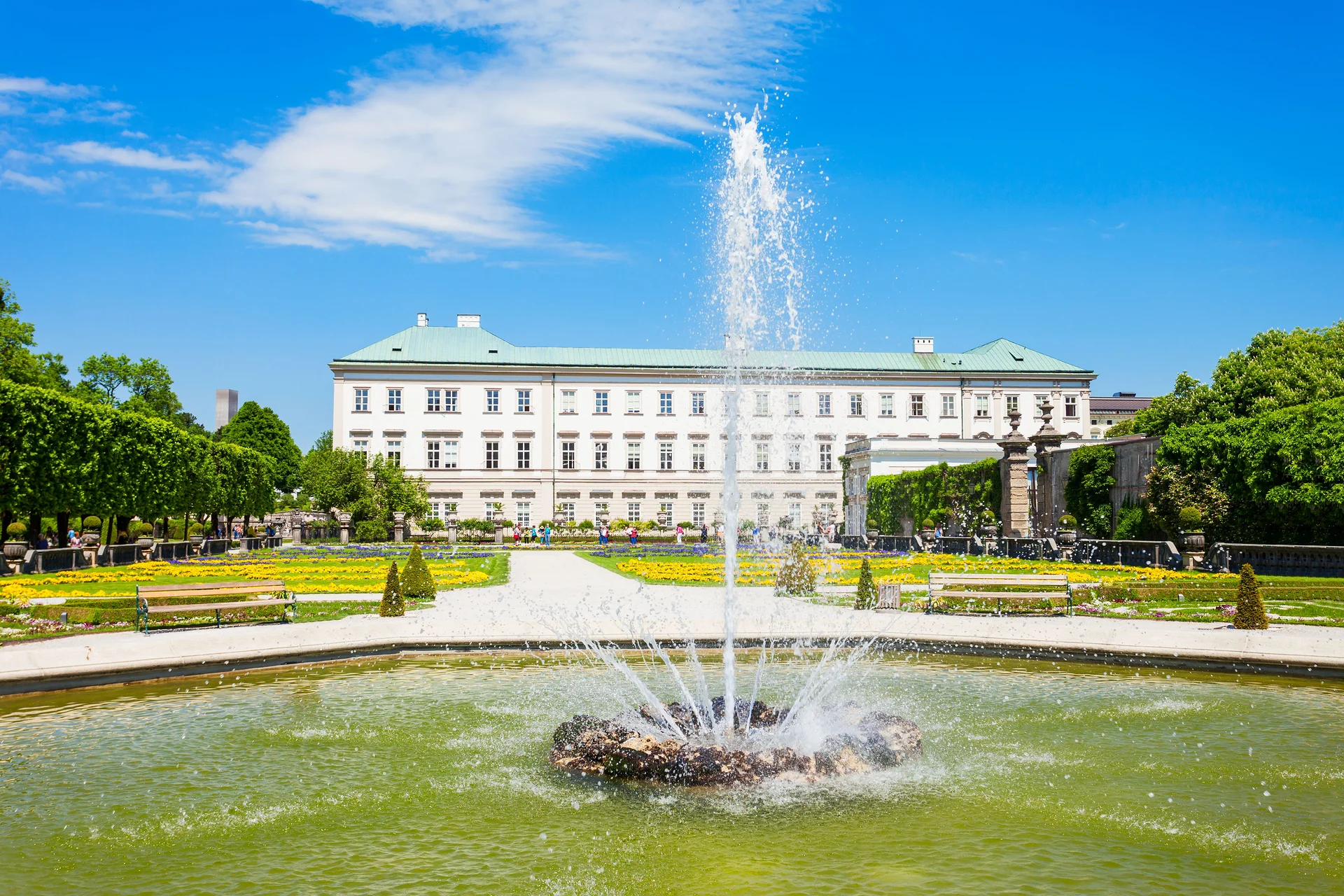
In Salzburg, the date of your trip changes more than the choice of monuments: the baroque cathedral, Mozart's birthplace and Hohensalzburg Fortress sit in the same neighborhood, and two days are enough to see them without rushing. The festival packs the city in August, the Advent markets light it up in December, and a fine drizzle can settle in for three days in July. A third day adds the Mirabell gardens and Hellbrunn, a fourth the lakes of the Salzkammergut, an hour away by bus.
At a glance
- When to go
- May, June, September and early October: gardens in bloom or turning gold, terraces open. The festival fills the city from mid-July to late August; the Advent markets open in the third week of November.
- How many days
- Two days for the old town, the fortress and Mirabell; a third for Hellbrunn and its trick fountains; a fourth for Hallstatt or another Salzkammergut lake.
- Which area
- The Old Town for a first visit, the right bank around Mirabell for fortress views at gentler prices, the Mönchsberg to sleep in a castle.
- Budget for two
- About $1,520 for three nights at comfort level, hotel, meals, sights and transport included, flights excluded: more than Vienna for a bed, much more in August.
- The moment for two
- The Mönchsberg at sunset, the old town and fortress lit up below you, then a Salzburger Nockerl to share, the city's sweet soufflé.
- Book ahead
- Festival evenings the winter before, a concert at Mirabell or a dinner concert one to two weeks ahead, your hotel two to three months ahead for August and Advent.
Why Salzburg for two
Salzburg is Mozart's city, born in 1756 on the Getreidegasse, and the most Italian of Austria's cities: its prince-archbishops built a domed cathedral, palaces, fountains and gardens in the shadow of an 11th-century fortress, Hohensalzburg, that you can see from almost everywhere. The historic center is a UNESCO World Heritage Site, has hardly any traffic, and the Salzach splits it in two under bridges from which you can watch the church towers light up at night.
For two, the city is made for evenings: a concert in the marble hall of Mirabell or by candlelight at St. Peter's Abbey, dinner in a wood-paneled inn, a last drink on a terrace by the water. Around it, the Salzkammergut lakes, the park at Hellbrunn and the Berchtesgaden mountains are an hour away, and The Sound of Music left a song in every garden. One thing to plan for: it rains about one day in three, so build a rainy-day plan into the trip.
When to go
| Period | Weather | Crowds | Our verdict |
|---|---|---|---|
| March and April | Cool, 37 to 57°F (3 to 14°C), sleet | Low, higher at Easter | Low prices, gardens turning green, the Easter Festival |
| May and June | Mild, 52 to 72°F (11 to 22°C), showers | Medium, high at Whitsun | Mirabell gardens in bloom, terraces open, long evenings |
| July and August | Warm, 57 to 77°F (14 to 25°C), thunderstorms | Very high during the festival | Open-air concerts and the lakes; the priciest and wettest season |
| September and October | Mild to cool, 43 to 66°F (6 to 19°C) | Medium | Our favorite: golden light on the hills, cheaper hotels, quiet lakes |
| November and December | Cold, 30 to 46°F (-1 to 8°C), gray | High during Advent | Advent markets, candlelit concerts, mulled wine under the fortress |
| January and February | Cold, 25 to 37°F (-4 to 3°C), snow | Low, except Mozart week | A calm city, ski slopes an hour away, museums without lines |
Three moments change the city. The Salzburg Festival runs from mid-July to late August: operas, concerts and the play Jedermann staged on the cathedral square, with hotels full and prices doubled; exact dates change every year. The Mozartwoche, in late January around Mozart's birthday, fills the Mozarteum with concerts. And Advent: the markets on the Domplatz and Residenzplatz open in the third week of November and close on December 26, and on the evening of December 5 the Krampus, furry demons with whips, run through the old town.
Paperwork: passport, visa, health
| Documents | Visa | Health | |
|---|---|---|---|
| United States | Passport valid at least 3 months after you leave the Schengen area | None for stays up to 90 days in any 180 | Travel insurance with medical cover: visitors pay for care up front |
| United Kingdom | Passport valid at least 3 months after you leave the Schengen area | None for stays up to 90 days in any 180 | Your free GHIC covers state healthcare in Austria; travel insurance for the rest |
| Canada | Passport valid at least 3 months after you leave the Schengen area | None for stays up to 90 days in any 180 | Travel insurance with medical cover |
Entering the Schengen area
On your first entry, border police record your fingerprints and a photo (the EES system): allow extra time at passport control at your first European airport. Check before you leave whether the ETIAS travel authorization is required on your dates: you apply online on the European Union site (travel-europe.europa.eu), it costs about $23 and is valid for three years. Since Brexit, British travelers go through the same checks as Americans.
Getting there
By air: easy connections, few direct flights
| From | Time | Good to know |
|---|---|---|
| New York, Boston, Chicago, Washington | 8h to 9h30 nonstop | Nonstop to Munich or Frankfurt, then a direct train to Salzburg: 1h30 to 1h45 from Munich |
| Toronto, Montreal | 7h30 to 8h30 | Nonstop to Munich or Frankfurt, Toronto to Vienna too; then the train to Salzburg |
| London | ~2h | Direct flights to Salzburg from London and some regional airports, more in winter for skiers; or fly to Munich and take the train |
Salzburg W. A. Mozart Airport (SZG) is 2.5 miles (4 km) from the center: the routes to your hotel are detailed below, in "From the airport to your hotel". Munich (MUC), 95 miles (150 km) away, has far more flights: from its terminal, the S-Bahn to the central station (45 minutes) and then the train to Salzburg add up to three to three and a half hours door to door.
By train: the best way in from Munich and Vienna
| From | Time | Good to know |
|---|---|---|
| Munich | 1h30 to 1h45 | Railjet or Meridian every hour; a regional day ticket (Bayern-Ticket) costs under $56 for two |
| Vienna | ~2h30 | Railjet and Westbahn, a train every half hour |
| Innsbruck | ~2h | Direct Railjet through Germany, several a day |
| Zurich | ~5h30 | Direct Railjet, a few a day |
All trains arrive at the Hauptbahnhof, a 15-minute walk from Mirabell and 25 minutes from the old town; city buses link it to the center. The nicest way in: a morning train from Munich or Vienna, with your bag dropped at the hotel before lunch.
By car
Practical things to know before you go
Phone
Check your plan before you fly: many US carriers charge for roaming in Austria unless you add a travel pass, and some UK plans bill extra since Brexit. An eSIM bought before departure is usually the cheapest option. Wi-Fi is free in cafés, hotels and museums.
Money and tipping
- Austria uses the euro. Cards work almost everywhere, but several beer halls, mountain huts and markets take cash only: keep $56 to $112 in notes.
- Tipping is smaller than in the US: at a café, round up ($5.20 becomes $5.60); at a restaurant, 5 to 10% handed over by saying the total you want to pay, never left on the table.
- Tap water comes from springs on the Untersberg and is safe everywhere: ask for a carafe rather than a bottle.
Plugs, clothes and season
- Type F sockets at 230 volts: UK and US plugs need an adapter, and US devices need to be dual-voltage (most phone and laptop chargers are; hair dryers and straighteners often are not).
- Pack a light waterproof and shoes that grip wet cobblestones: it rains about one day in three, more in summer. For the festival and evening concerts, a shirt and a dress are enough, but locals dress up, often in traditional costume.
- From December to February it freezes: coat, gloves and shoes with a grippy sole, because old-town cobbles are slippery.
What to book, and how far ahead
Salzburg needs less booking than Rome or Paris: the fortress and Mozart's houses can be visited without a ticket bought ahead outside August, and the lines mostly form at the funicular and the Hellbrunn trick fountains. What goes fast is music, and hotels during the festival and Advent.
| Sight | Price per person | Book | Good to know |
|---|---|---|---|
| Salzburg Festival, an evening | $34 to $510 | The winter before | Operas and Jedermann go in days; a few seats free up the day before |
| Concert at Mirabell Palace | ~$56 | 1 to 2 weeks ahead | In the marble hall, in the evening; nearly daily in summer |
| Mozart dinner concert, St. Peter's Abbey | ~$101 | 1 to 2 weeks ahead | Three courses and Mozart arias; full on weekends |
| Hohensalzburg Fortress, with funicular | ~$23 | Not needed, except August | Take the first funicular at 9am, before the groups |
| Hellbrunn trick fountains | ~$17 | The day before in summer | Guided tours from 9am until closing, April to October; closed in winter |
| Mozart's Birthplace and Residence | ~$24 for both | Not needed | Open daily; arrive at 9am in August |
| Salzwelten, Hallstatt | ~$45 | The day before | Funicular and salt-mine tour; timed ticket |
| Esszimmer, starred restaurant | 2 to 4 weeks ahead | Other old-town tables fill on Thursday, Friday and Saturday | |
| Hotel during the festival and Advent | 2 to 3 months ahead | Prices double in festival week and on December weekends |
From the airport to your hotel
© OpenStreetMap contributors
The airport and the arrival points
- Salzburg Airport (SZG)
- 1Hauptbahnhof, Neustadt
- 2Mirabellplatz, Neustadt
- 3Rathaus, Old Town
| Destination | Transport | Time | Indicative fare |
|---|---|---|---|
| Hauptbahnhof, Neustadt | Bus 2 | ~20 min. | ~$3.40 / pers. |
| Mirabellplatz, Neustadt | Bus 2 | 20 to 25 min. | ~$3.40 / pers. |
| Rathaus, Old Town | Taxi | ~15 min. | $17 to $23 / taxi |
| Destination | Transport | Time | Indicative fare |
|---|---|---|---|
| Mirabellplatz, Neustadt | On foot | ~12 min. | Free |
| Rathaus, Old Town | On foot | ~25 min. | Free |
| Rathaus, Old Town | Taxi | ~10 min. | $12 to $17 / taxi |
From the airport, bus 2 is what Salzburgers use: a bus every ten minutes, calling at the Hauptbahnhof and then Mirabellplatz, from where the old town is a ten-minute walk across the Salzach. Buy the ticket at the stop's machine, at the airport news kiosk or in the Salzburg transport app. Taxis wait outside arrivals and drop you at your hotel when the street is open to traffic; an old-town hotel will tell you where the car has to stop.
If you land in Munich (MUC), take the S-Bahn to the central station and then a direct train: it is the surest way to arrive before dinner. From Salzburg's station, Mirabell is a 15-minute walk and the Getreidegasse 25; with luggage, take a bus or a taxi.
Getting around
On foot, with a funicular and a lift for the hills
The old town is walkable: five minutes from the cathedral to the Getreidegasse; ten minutes uphill from the Residenzplatz to the fortress, or two minutes on the Festungsbahn, the funicular dating from 1892. The Mönchsberg is reached by the lift on the Gstättengasse, which spares you the stairs, for a few euros. Buses cover the rest: Hellbrunn by bus 25, the station and the right bank by several lines, the airport by the 2.
The Salzburg Card
| Length | Price | What it covers |
|---|---|---|
| 24h | ~$40 | The city's museums and sights, buses, the funicular, the Mönchsberg lift |
| 48h | ~$51 | The same admissions, over two consecutive days |
| 72h | ~$56 | The same admissions, over three consecutive days: the one for a three-day stay |
The card starts at first use and includes the fortress, both Mozart houses and the Hellbrunn trick fountains: it pays for itself once you make three visits in two days, and saves buying bus tickets. It does not cover concerts or lake excursions.
Bike, boat and carriage
Along the Salzach, the cycle path links the old town to Hellbrunn along the Hellbrunn avenue, about four miles (6 km) of flat, car-free riding: bikes can be rented in town or through your hotel. A 40-minute boat trip goes up the river in summer. The horse-drawn carriages (Fiaker) on the Residenzplatz are a ride, not a transfer: expect more than $56 for half an hour.
Budget for two
Salzburg costs more than Vienna for a bed, the same for food, and little for getting around: the city is walkable, and the Salzburg Card replaces bus tickets and most admissions. Hotels double during the festival and Advent; the rest of the year, a four-star in the old town can be found under $360. Here is what three nights for two cost, flights excluded.
| Smart | Comfort | Treat | |
|---|---|---|---|
| Hotel, per night | $146 to $210 | $250 to $360 | from $510 |
| Meals, per day for two | $79 | $146 | $320 |
| Sights for the stay | $56 | $124 | $340 with the festival |
| Transport for the stay | $23 | $34 | $90 by taxi |
| Total for three nights | $840 | $1,520 | $3,030 |
The lowest prices run from mid-January to March and in November before Advent; the highest, the festival, Christmas week and New Year. The city tax is added to the bill.
Reference prices
| Item | Price |
|---|---|
| Coffee and a slice of cake in a historic café | $12 to $16 |
| A Mozartkugel from the Fürst house | ~$2.10 each |
| Salzburger Nockerl for two | $23 to $32 |
| Bosna, the sausage in a bun | $4.50 to $5.60 |
| Kasnocken, cheese noodles | $16 to $21 |
| Dinner for two with wine, in an old-town inn | $101 to $146 |
| Half a liter of beer from the barrel | $5.60 to $6.80 |
| Fortress admission with funicular | ~$23 |
What to eat and drink
Salzburg cooking is mountain-and-lake food, sweet and generous: eaten in a Gaststube, the wood-paneled inn of the old town, and in the cafés, which serve pastries all afternoon.
At the table
-
Salzburger Nockerl
A sweet soufflé in three peaks, said to echo the city's hills, baked golden and dusted with sugar; shared by two and ordered at the start of the meal, because it takes twenty minutes.
-
Mozartkugel
The pistachio, nougat and chocolate ball invented in 1890 by the confectioner Fürst, in blue and silver foil; red-and-gold imitations are sold everywhere, the original at Konditorei Fürst, Brodgasse 13.
-
Kasnocken
Short noodles baked with mountain cheese and fried onions, the dish of the Alpine huts; the thing to eat after a walk on the Mönchsberg or around a lake.
-
Bosna
A grilled sausage in a small bun with onions, mustard and curry powder, invented in Salzburg in 1949; at Balkan Grill Walter, on the Getreidegasse, or at a stand on the Hanuschplatz.
-
Saibling
The char of the Salzkammergut lakes, pan-fried in butter with parsley potatoes, the fish of the Wolfgangsee and Hallstatt restaurants.
-
Knödel
Big dumplings of bread, bacon or semolina, served with a roast or in soup; the dish that fuels a hiker, easy to share between two.
In the glass
-
Beer
Stiegl, brewed in Salzburg since 1492, in bottles and on tap everywhere; Augustiner, drawn from wooden barrels at the Mülln brewery, drunk from a stoneware mug.
-
Wheat beer
Weissbier, cloudy and spiced, from the Die Weisse brewery on the Rupertgasse; best on a right-bank terrace in summer.
-
Almdudler
The Austrian lemonade made with Alpine herbs, amber and fizzy, ordered on every mountain terrace.
-
Wine and punch
A Grüner Veltliner, the country's dry white, by the glass; in winter, the Glühwein of the Advent markets and the Jagatee, black tea laced with rum.
Customs and rules to know
A Grüß Gott on entering a shop or an inn, a thank-you on leaving: that is the gesture that changes the welcome in Salzburg, where politeness stays formal and voices stay low in cafés.
| Rule | What awaits you |
|---|---|
| Smoking in a restaurant, café or bus | Banned indoors, fine |
| Noise in a building after 10pm | Quiet hours: neighbors call the police |
| Walking on a bike lane | Cyclists ring their bell and do not slow down |
| Riding a bus without a ticket | Frequent plainclothes checks, on-the-spot fine |
- People lunch from noon to 2pm and dine early, from 6pm to 8:30pm; many kitchens close at 9pm. Outside the festival, the old town is empty after 10pm.
- On Sundays, shops and supermarkets are closed, except at stations and the airport: shop on Saturday. Museums, cafés and restaurants are open.
- At the Augustiner brewery you serve yourself: take a mug, rinse it at the fountain, pay at the counter and have it filled from the barrel; food comes from the stalls in the garden.
- At the Hellbrunn trick fountains the guide soaks the visitors: a jacket, or clothes that dry fast, keeps you from leaving drenched.
- In churches and at St. Peter's cemetery, keep your voice low, and do not take photos during services.
Safety
Salzburg is one of Austria's safest cities: a couple can walk home at midnight over the Mozartsteg without a thought. The risks are pickpockets in crowds, the mountains when the weather turns, and a few noisy streets on weekends.
- Keep your phone and wallet in a front pocket on the Getreidegasse, narrow and packed, at the Advent markets and on buses at rush hour: that is where the thefts happen.
- Along the Rudolfskai, the left-bank bar street, Friday and Saturday nights are loud and sometimes drunken: nothing dangerous, but walk home along the Salzach rather than through the side lanes.
- The paths of the Mönchsberg and the Kapuzinerberg are not lit everywhere and get slippery after rain: come down before dark, or take the Mönchsberg lift.
- The Salzach bike paths are fast: look both ways before crossing, because bikes and e-scooters do not brake.
- In the mountains and on the lakes the weather changes within an hour: carry a jacket, do not swim alone away from the beaches, and follow the signs on trails.
Mistakes couples make
Disappointment comes from a trip that is too short, a plan with no fallback, and a lakes day poorly placed. Salzburg rewards those who follow the weather: the clear day goes to the fortress or a lake, rainy days to museums and concerts.
- Visiting for the day from Munich or Vienna: groups fill the old town from 10am to 5pm, and the city is best in the evening, when the coaches have left and the carillon rings in empty lanes.
- Going up to the fortress at noon in August: the funicular line lasts an hour. Take the first one at 9am, or the one at 5pm.
- Going to Hallstatt between 11am and 4pm: coaches unload thousands of visitors. A train before 8am gives you the village before the crowds.
- Fixing the lakes day in advance: under cloud, a lake is not worth the trip. Keep one day flexible and swap it with a day in town.
- Counting on the Hellbrunn trick fountains in winter: they close from November to March, and the palace alone is not worth the trip.
- Sleeping near the airport or the motorway to save money: the center is several miles away, and an evening taxi costs $23.
Frequently asked questions
Is Salzburg a good destination for a romantic trip?
Yes, for concrete reasons: the center is walkable, the lit-up fortress is visible from every bridge, concerts are held in palaces and churches, and a lake is an hour away by bus. The city is calm, safe at any hour, and its evenings end early, which suits a couple who like to stroll.
How many days do you need in Salzburg as a couple?
Two full days are enough for the old town, the fortress and Mirabell, provided you go up to the fortress on the first funicular. A third day covers Hellbrunn and its trick fountains, a fourth a trip to Hallstatt or another Salzkammergut lake.
How much does a trip to Salzburg for two cost?
Expect about $1,520 for three nights at comfort level, with a central hotel, meals, sights and transport, flights excluded. A smart budget is around $840 if you sleep on the right bank; a treat trip passes $3,030 with a castle hotel and a festival evening.
Is the Salzburg Card worth it?
Yes from three visits in two days: the fortress, the two Mozart houses and the Hellbrunn fountains cost together more than the 48-hour card, which also includes buses, the funicular and the Mönchsberg lift. If you only do the old town and the gardens, which are free, it saves nothing.
Can you see the festival without booking far ahead?
Hardly for operas and Jedermann, which sell out within days of the box office opening the winter before. There is more choice for concerts, and a few seats free up in the days beforehand; outside the festival, the city has a concert almost every night, at a far lower price.
Can you visit Hallstatt in a day from Salzburg?
Yes, but it is a long day: 2h15 to 2h30 each way by train and boat. Leave before 8am to arrive before the coaches, visit the salt mine and the Skywalk, and come back in the late afternoon; the Wolfgangsee, 50 minutes away by bus, is an easier option.