

D1 Day 1: the Grand-Place, the galleries and Sainte-Catherine
- D1·1Grand-Place Square
- D1·2Maison du Roi Museum
- D1·3Manneken Pis Landmark
- D1·4Galeries Royales Saint-Hubert Landmark
- D1·5Bourse Landmark
- D1·6Place Sainte-Catherine Square

In Brussels, Monday sets the order of the days: the Horta Museum, the Magritte Museum and the Musical Instruments Museum close that day, while the Grand-Place, the galleries and the Marolles flea market stay open. Keep Monday for the center and the museums for later. Two days cover the Grand-Place, the Sablon and the Mont des Arts; a third adds the Art Nouveau of the Squares district, the Cinquantenaire and an evening at Flagey; a fourth, the Atomium and Victor Horta's house. In December, every evening in the center can end at the Christmas market, ten minutes away on foot.
© OpenStreetMap contributors
D1 Day 1: the Grand-Place, the galleries and Sainte-Catherine
D2 Day 2: the Marolles, the Sablon and the Mont des Arts
D3 Day 3: Art Nouveau in the Squares, the Cinquantenaire and Flagey
D4 Day 4: the Atomium, the Horta Museum and the Châtelain
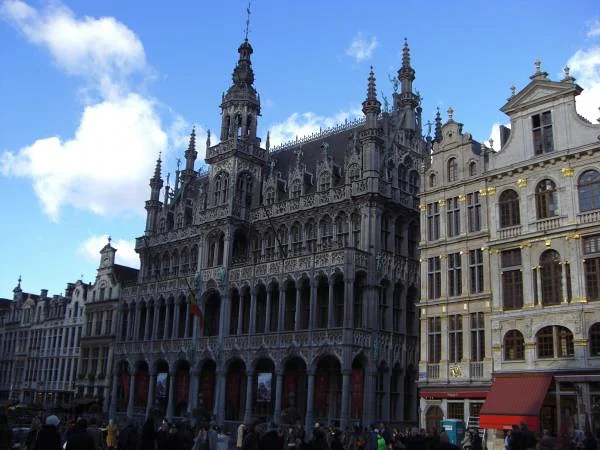
Reach the Grand-Place around 9 am, while the cobbles are still empty: walk around the guild houses, gilded with gold leaf, and look up at the town hall spire. Opposite, the Maison du Roi (the King's House) holds the City Museum, open from 10 am and closed on Mondays: scale models of the medieval city, and the original statue of the Manneken Pis.
Three minutes away, on the corner of the Rue de l'Étuve, the Manneken Pis himself, smaller than you imagine and often in costume: his wardrobe of over a thousand outfits is on show at the GardeRobe MannekenPis, on the Rue du Chêne. Walk back up the Rue au Beurre, past the waffles of Dandoy.
Have lunch at Le Cirio, a café from 1886 opposite the Bourse: a croque-monsieur and a half en half, white wine and sparkling wine in equal parts. Then step into the Galeries Royales Saint-Hubert, three covered arcades under a glass vault: the Neuhaus shop, where the praline was invented, bookshops, a cinema and cafés with tables under the glass roof.
At the far end, the Cathedral of St. Michael and St. Gudula is five minutes away, free, with its 16th-century stained glass. Around 5 pm, have a gueuze at the bar of À la Mort Subite, on the Rue Montagne-aux-Herbes-Potagères, in a room that has not changed since 1928.
Walk past the Bourse, the old stock exchange, and its lion-guarded steps at the end of the pedestrian zone, then head for the Place Sainte-Catherine and the old port quays. Eat at Fin de Siècle, on the Rue des Chartreux, which takes no bookings and has no phone, arriving before 7 pm, or at Le Vismet, on the square, for fish. Walk back across the lit-up Grand-Place.
Start on the Place du Jeu de Balle, in the heart of the Marolles, the working-class district at the foot of the Palais de Justice: its flea market runs every morning until 2 pm, with more stalls on weekends. Have a coffee at La Clef d'Or, on the corner of the square, then walk up the Rue Blaes and the Rue Haute, lined with second-hand dealers and home decor shops.
At the end of the Rue de l'Épée, a free public elevator climbs in a few seconds to the Place Poelaert, in front of the Palais de Justice (the Law Courts), the largest building of the 19th century. From the balustrade, the view stretches over the rooftops of the Marolles as far as the Atomium and the Koekelberg Basilica.
Walk down the Rue de la Régence to the Grand Sablon. Taste a praline at Pierre Marcolini, on the Rue des Minimes, and at Wittamer, on the square, then step into Notre-Dame du Sablon, a Gothic church with stained-glass windows fifteen meters (50 feet) high. Opposite, the Petit Sablon garden and its forty-eight bronze statuettes, each one a trade of the medieval city.
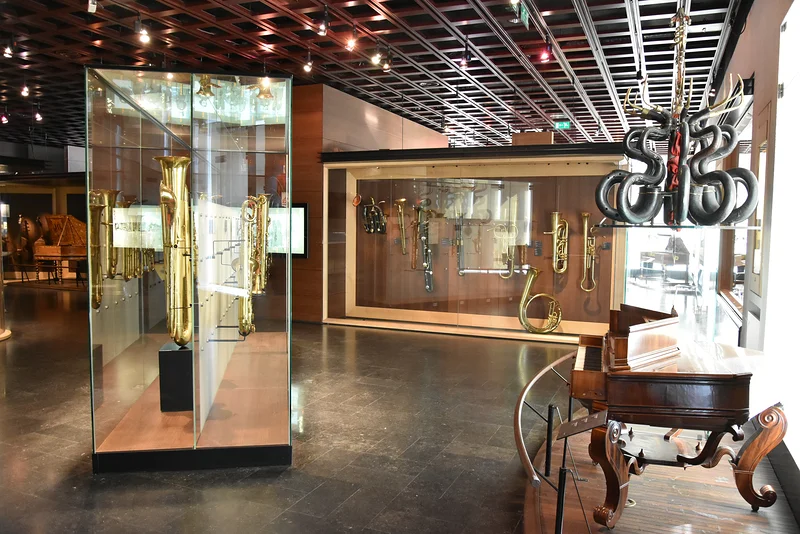
Five minutes away, the Musical Instruments Museum fills the former Old England department store, an Art Nouveau facade of iron and glass: over a thousand instruments, which the audio guide lets you hear. Go up to the top floor, to the museum restaurant, for tea on the terrace with a view over the lower town. The museum is closed on Mondays.
Walk down the gardens of the Mont des Arts at sunset: the town hall spire stands out above the rooftops at the end of the path. Have a drink at La Fleur en Papier Doré, on the Rue des Alexiens, the café where Magritte and his surrealist friends had their table, then dinner at Les Brigittines, on the Place de la Chapelle, booked a few days ahead.
From Maelbeek metro, a five-minute walk leads to the Square Marie-Louise, a pond lined with willows and Belle Époque houses. Walk around it, then climb to the Square Ambiorix: at number 11, the Maison Saint-Cyr squeezes the city's wildest Art Nouveau facade into four meters (13 feet) of width, a tangle of wrought iron around a round loggia.
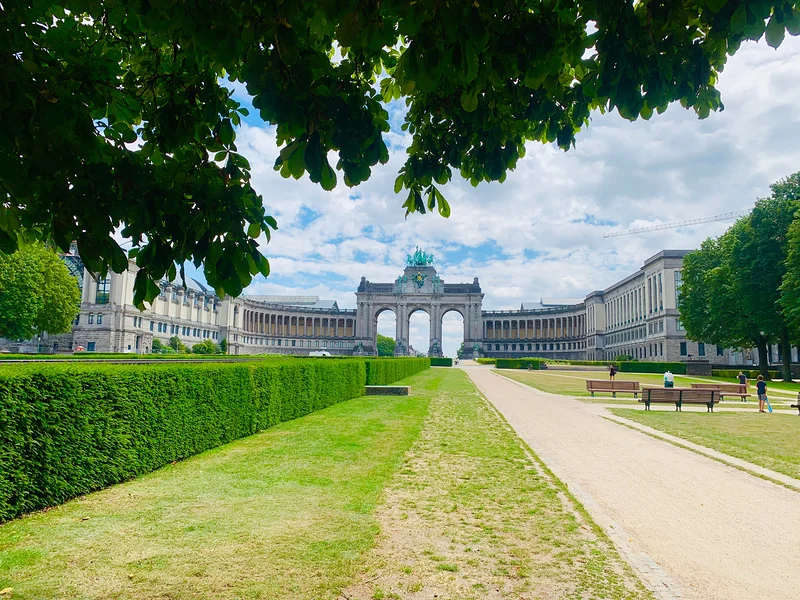
Walk down to the Cinquantenaire Park and its triumphal arch. The Royal Military Museum, to the left of the arch, gives access to its panoramic terrace, above the long avenue that runs toward the center: allow an hour with the aircraft hall, fifteen minutes for the view alone.
Have fries for lunch on the Place Jourdan, from the Maison Antoine kiosk: the cafés on the square post "fries welcome" signs and let you eat them at a table with a beer. Then cross Leopold Park, its pond and its old trees, in the shadow of the European Parliament; the House of European History, free, fills the former clinic in the middle of the park.
A twenty-minute walk south leads to the Place Flagey and its brick ocean liner, the former broadcasting house turned concert hall. Have a drink on the terrace of Café Belga, on the ground floor, then stroll along the Ixelles Ponds as the streetlights come on. Dinner at La Quincaillerie, on the Rue du Page, an Art Nouveau former hardware store, booked the day before.
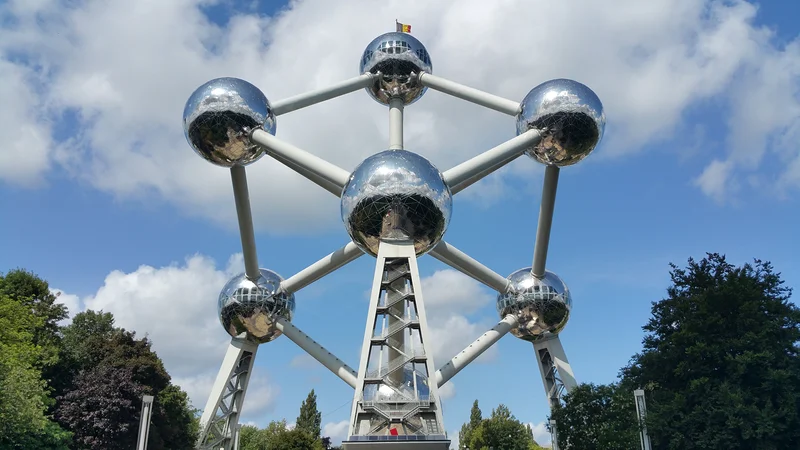
Metro line 6 reaches the Heysel in twenty minutes from the center. Be at the Atomium when it opens, at 10 am, with a booked ticket: the elevator climbs in twenty-three seconds to the top sphere, with a view over the whole city, then escalators link the other spheres, where an exhibition tells the story of the 1958 World's Fair it was built for.
Allow an hour and a half. Mini-Europe, at the foot of the Atomium, with its scale models of European landmarks, is for enthusiasts only; take metro 6 back to Louise instead, twenty-five minutes away, for lunch in Ixelles.
The Horta Museum, on the Rue Américaine in Saint-Gilles, is the house and studio the architect built for himself from 1898: the banister, the stained glass, the door handles, everything is his design, all in curves. Book the slot one to two weeks ahead; photos are not allowed, and the visit takes an hour. Outside, the Rue Defacqz lines up more Art Nouveau facades, including Paul Hankar's house at number 71.
End on the Place du Châtelain and the Rue du Bailli, the bistro quarter of Ixelles: a glass of natural wine at the counter of a neighborhood bar, then dinner in one of the small dining rooms on the street, booked in the afternoon. On Wednesdays, the market on the square runs into the evening and ends with drinks on your feet.
Brussels eats well outside the Îlot Sacré: Brussels cooking in the brasseries of the Marolles and Sainte-Catherine, fish around the old fish market, bistros in Ixelles. Book Friday and Saturday dinners a few days ahead, two to three weeks in December, and keep the fries and waffles for the street.
Brussels cooking
Les Brigittines (5 Place de la Chapelle), carbonnade, croquettes and sweetbreads in a Belle Époque dining room; Fin de Siècle (9 Rue des Chartreux), no bookings, for stoemp and carbonnade at low prices.
Fish in Sainte-Catherine
Noordzee (45 Rue Sainte-Catherine), a fishmonger's counter where soups, mussels and gray shrimp are eaten standing on the square, until late afternoon; Le Vismet (23 Place Sainte-Catherine) for a sit-down dinner.
Ixelles
La Quincaillerie (45 Rue du Page), a brasserie in a former hardware store, for the shellfish counter and mussels; the small dining rooms of the Rue du Bailli and the Châtelain for a neighborhood dinner.
Fries
Maison Antoine (Place Jourdan) and Frit Flagey (Place Flagey), the two best-known fry shops in the city, to order with a house sauce.
Waffles and speculoos
Maison Dandoy (31 Rue au Beurre, next to the Grand-Place) for the Brussels waffle with powdered sugar and homemade speculoos, served in the upstairs tearoom.
Chocolate makers
Pierre Marcolini (1 Rue des Minimes) and Wittamer (Place du Grand Sablon) in the Sablon, Neuhaus (25 Galerie de la Reine) in the galleries, Mary (73 Rue Royale), supplier to the Royal Court.
Brussels drinks beer the way other cities drink wine: by the glass, in old cafés, tasting as it goes. Ask for the menu, often several pages long, and let the waiter advise you.
| In the mood for | Where | Our take |
|---|---|---|
| An old café | À la Mort Subite (Rue Montagne-aux-Herbes-Potagères), Le Cirio (Rue de la Bourse) | Rooms from 1886 and 1928, unchanged |
| A gueuze, a lambic | Moeder Lambic (Place Fontainas, and Rue de Savoie in Saint-Gilles) | The best beer list in the city |
| A surrealist café | La Fleur en Papier Doré (Rue des Alexiens) | Magritte's café, walls covered in drawings |
| A drink with jazz | L'Archiduc (Rue Antoine Dansaert) | Art Deco bar, concerts on Saturday afternoons |
| A neighborhood terrace | Café Belga (Place Flagey) | To watch Ixelles go by, until late |
| Two thousand beers | Delirium Café (Impasse de la Fidélité) | A record-breaking list, a student crowd |
In December, mulled wine and pékèt are drunk standing between the Christmas market stalls, in a cup you pay a deposit on: return it, or keep it as a souvenir.
An opera
La Monnaie, on the Place de la Monnaie, one of Europe's great opera houses: the cheapest seats cost $17 to $33, on sale weeks ahead, with last-minute seats for under-28s.
A classical concert
Bozar, the Centre for Fine Arts designed by Horta, and Studio 4 at Flagey, for the acoustics: the program is set by season, seats from $17.
Toone's puppets
The Royal Toone Theater, at the end of an alley off the Rue du Marché aux Herbes, stages The Three Musketeers and Faust with rod puppets, in the Brussels dialect: funny even if you miss half of it, with a tavern downstairs.
Jazz
The Music Village (50 Rue des Pierres), a jazz club two minutes from the Grand-Place, concerts Wednesday to Saturday, with dinner served during the show.
A pop or rock concert
The Ancienne Belgique, on the Boulevard Anspach, and the Botanique, under the greenhouses of the old botanical garden: check the program one to two months ahead.
The Christmas light show
From late November to the first days of January, on the Grand-Place, several times a night: free, it lasts about ten minutes; stand facing the town hall.
The night starts around the Place Saint-Géry, whose bars stay open until 2 or 3 am on weekends, and on the quays of Sainte-Catherine, where Madame Moustache (Quai au Bois à Brûler) plays rock and electro for dancing. Fuse, on the Rue Blaes, has been the city's techno club since the 1990s. The metro stops around midnight: plan a taxi home.
| Destination | Journey | What for | Our take |
|---|---|---|---|
| Ghent | Train, ~35 min. | The Graslei, the Castle of the Counts, the Ghent Altarpiece | The liveliest town, stay into the evening |
| Bruges | Train, ~1h | The canals, the Markt, the beguinage | Leave early, or stay a night |
| Leuven | Train, ~25 min. | The Gothic town hall, the Oude Markt | A student town, half a day is enough |
| Antwerp | Train, ~45 min. | The station, the cathedral, the fashion district | For fashion and architecture |
| Mechelen | Train, ~20 min. | St. Rumbold's Tower, the beguinage | Quiet, half a day |
Brussels
Pick your dates and see the offers from the major booking sites side by side.
Compare live offers from Booking, Expedia, Agoda and other partners.
Brussels: find your hotel
Yes, for the essentials as a couple: the Grand-Place, the galleries and Sainte-Catherine on the first day, the Marolles, the Sablon and the Mont des Arts on the second. Art Nouveau, the Cinquantenaire, Ixelles and the Atomium need a third and a fourth day.
The Plaisirs d'Hiver Christmas market, from the Bourse to the old fish market, with its Ferris wheel and ice rink, and the sound and light show on the Grand-Place every evening. See the museums and galleries by day, and keep the late afternoon and evening for the market, on a weekday if you can.
The covered Galeries Royales Saint-Hubert, the Musical Instruments Museum, the Magritte and Fine Arts museums, which are linked, the Horta Museum and the old cafés. The Marolles and the Sablon work in the rain too, from antique dealer to chocolate maker.
For the view from the top sphere and the architecture, yes, at opening time with a booked ticket: allow an hour and a half, plus twenty minutes by metro from the center. With only two days, see it from afar, from the Place Poelaert, and keep the time for the center.
Ghent for a lively day, closer (35 minutes), with quays that stay busy into the evening; Bruges for the canals and the medieval setting, an hour away, busier during the day. With a single free day and an early start, Bruges; with an evening to spare, Ghent.