Amsterdam for couples: what to know before you go (2026)
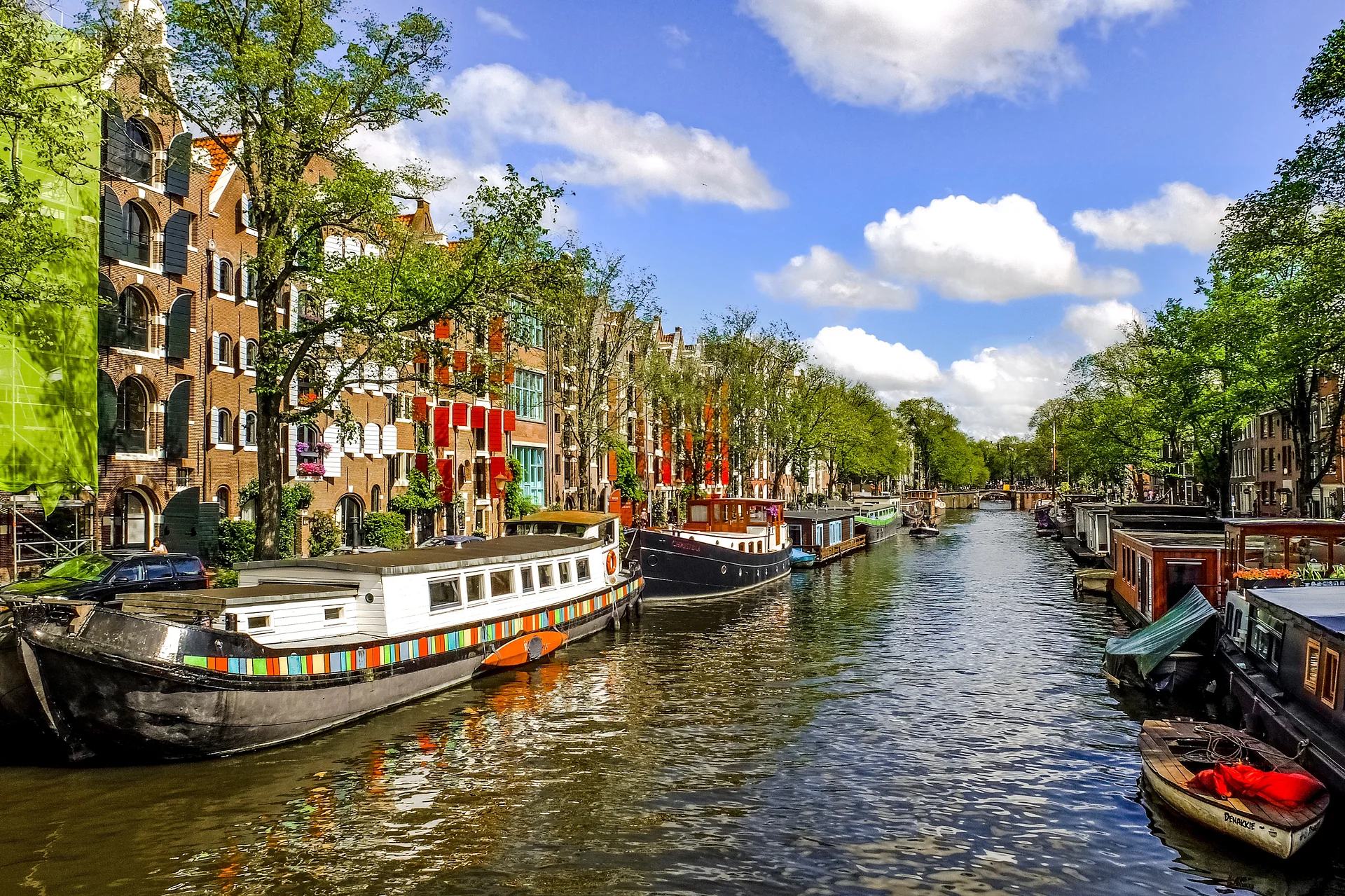
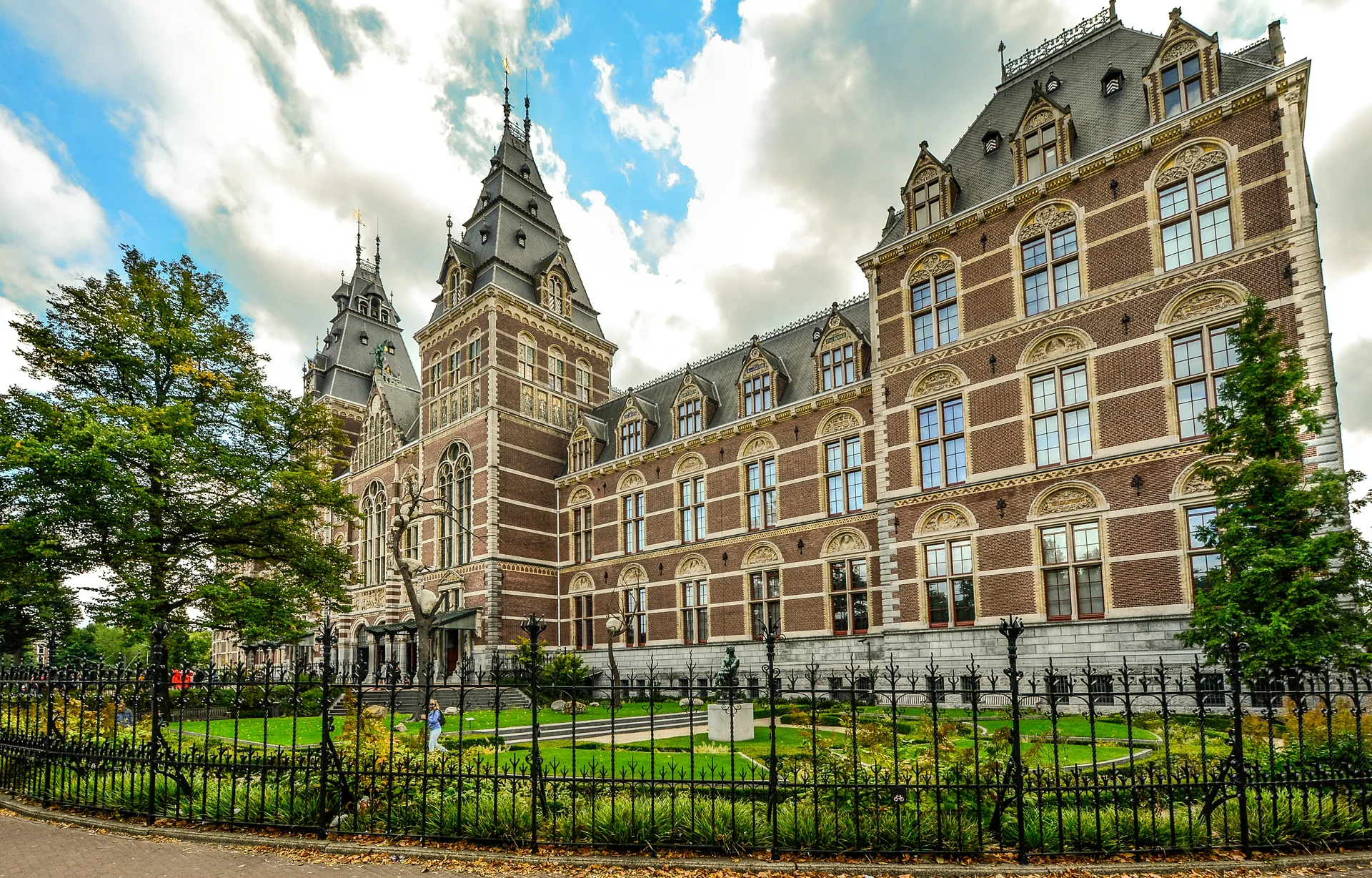
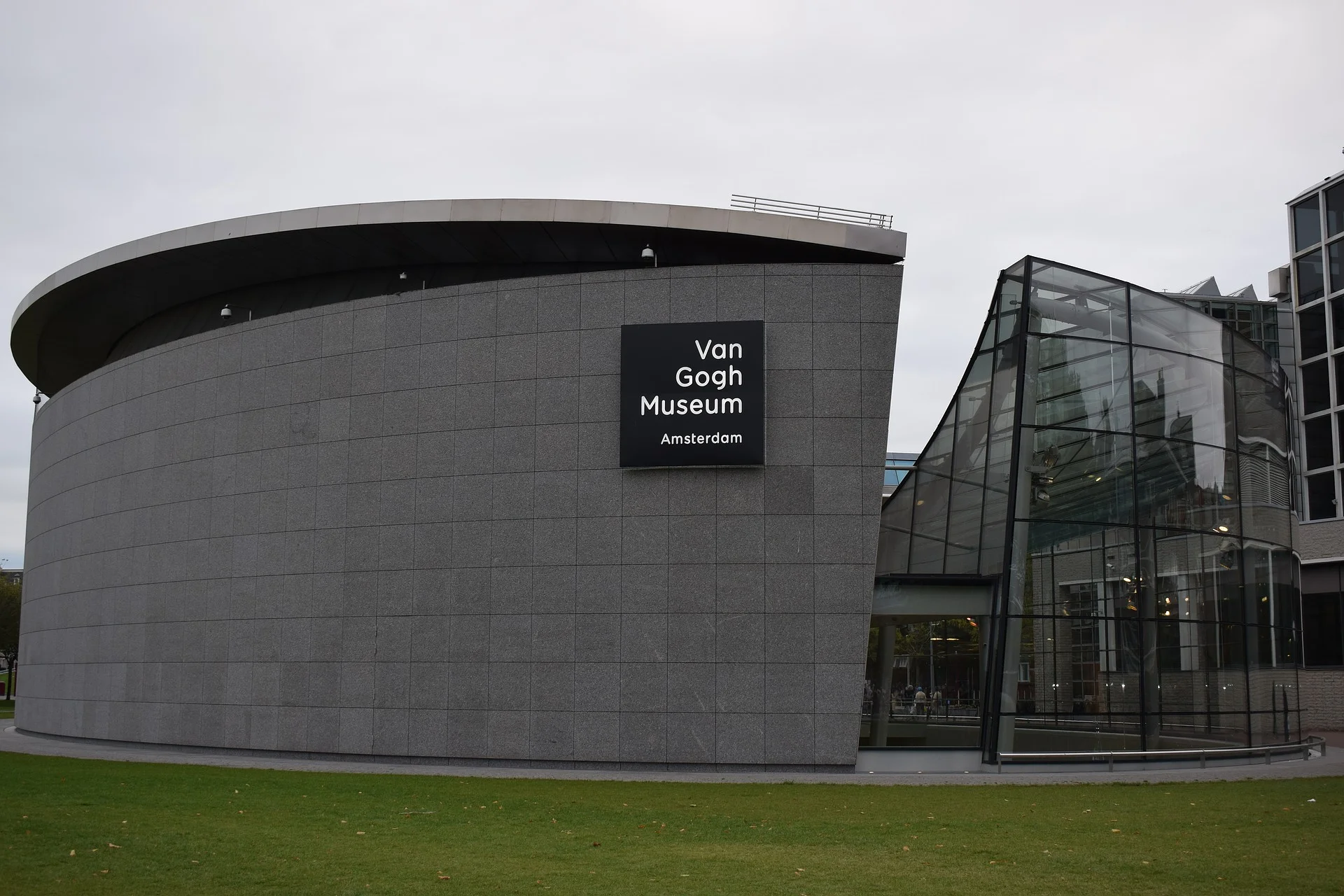
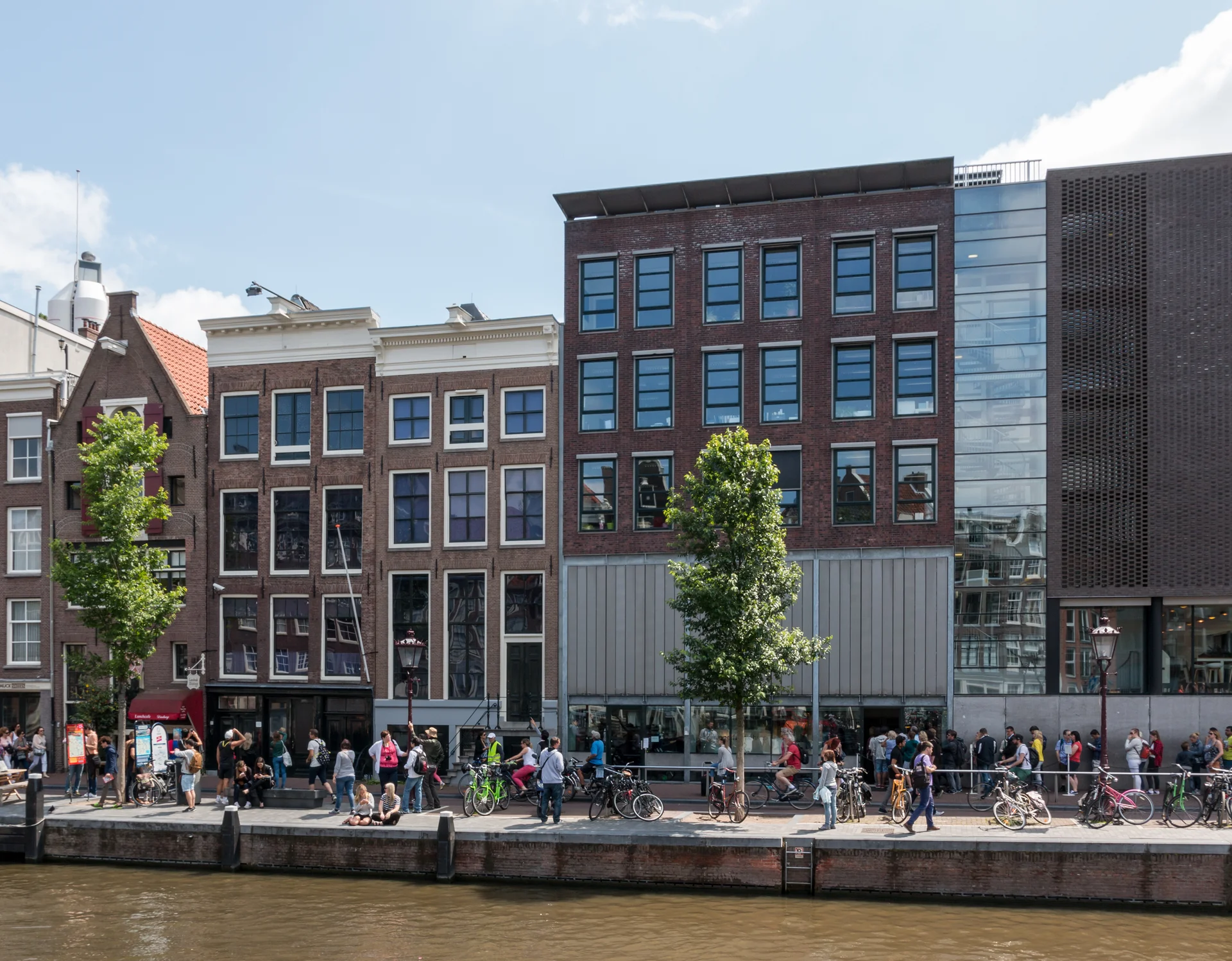
Amsterdam is seen from water level: by bike along the Prinsengracht, in a small open boat under the bridges of the Jordaan at dusk, at a table in a brown café while a shower passes. Three things get settled before you leave: the Anne Frank House ticket, which sells out six weeks ahead, the Rijksmuseum and Van Gogh Museum slots, and the hotel, because rooms here are among the most expensive in Europe and a 12.5% tourist tax goes on top. Everything else, the markets, the canals, the terraces at the first ray of sun, needs no plan at all. Here is what to know so the trip for two holds together from the first day to the last tram.
At a glance
- When to go
- Late April and May for the tulips and the first terraces, September and October for low light on the canals and falling prices; December for the Light Festival.
- How many days
- Three full days for the canals, the Jordaan, the two big museums and De Pijp; a fourth for the windmills of Zaanse Schans, Haarlem or a bike day in the Waterland villages.
- Which neighborhood
- The Jordaan for a first visit, the canal ring for a honeymoon, De Pijp for the evenings, Oud-Zuid for the museums in peace and quiet.
- Budget for two
- About $1,910 for three nights in comfort, hotel with tourist tax, meals, sights, bikes and a canal cruise included, flights excluded.
- The moment for two
- An open boat on the canals at dusk, when the bridges light up and the canal-house living rooms keep their curtains open, then a drink in a brown café in the Jordaan.
- Book ahead
- The Anne Frank House, six weeks ahead, on a Tuesday at 10am Amsterdam time; the Rijksmuseum and the Van Gogh Museum, one to three weeks ahead, more for weekends.
Why Amsterdam as a couple
Amsterdam is built at human height: no grand boulevards, no monument that crushes you, but 60 miles of canals, 1,500 bridges and brick houses leaning on each other. You live outdoors from the first ray of sun, on a bench on the Brouwersgracht, on a floating terrace in the Jordaan, on a bike along the Prinsengracht, and you go inside when it rains, into a brown café with walls stained by a century of tobacco smoke, where two hours pass over a beer and a plate of bitterballen.
What Amsterdam does better than the other capitals is pace: the Rijksmuseum is a twenty-minute walk from the Anne Frank House, the Albert Cuyp market ten from the Vondelpark, and in the evening a ten-seat boat takes you under the lit bridges while the city has dinner with the windows open. A day needs neither tram nor taxi, and the Amsterdammers, all on bikes, make room for you on the lane the moment you ride straight.
When to go
| Period | Weather | Crowds | Our take |
|---|---|---|---|
| March to May | Cool, 46 to 63°F (8 to 17°C), wind and showers | Heavy at Easter, on King's Day and for the tulips | Tulips, terraces reopening, canals in bloom |
| June to August | Mild, 63 to 73°F (17 to 23°C), showers | Very heavy, hotels full on weekends | Long evenings on the water, but crowds and high prices |
| September and October | Mild then cool, 50 to 64°F (10 to 18°C) | Heavy in September, easing in October | Our favorite: low light, leaves on the water, prices easing |
| November to February | Cold and damp, 36 to 46°F (2 to 8°C), dark by 4:30pm | Light, except Christmas, New Year and the Light Festival | Brown cafés, quiet museums, hotels 30% cheaper |
A few dates change the city. On April 27, King's Day (Koningsdag) dresses everyone in orange, fills the canals with boats and the streets with improvised flea markets: a superb party for two, provided you booked the hotel three months ahead. On May 4 at 8pm, two minutes of silence for the war dead stop the city, trams included; on May 5, Liberation Day is celebrated with free concerts. From mid-March to mid-May, the tulip fields and the Keukenhof gardens bloom 40 minutes from the city. On the third weekend of June, the hidden gardens of the canal houses open to the public (Open Tuinen Dagen), the finest weekend of the year for a couple. In early August, Pride parades in boats along the Prinsengracht; in mid-August the Grachtenfestival stages classical concerts on the water. From late November to mid-January, the Light Festival hangs light installations along the canals, best seen from a boat after dark.
Paperwork: passport, visa, health
| Documents | Visa | Health | |
|---|---|---|---|
| United States | Passport valid at least 3 months beyond your departure from the Schengen area, issued within the last 10 years | None for stays up to 90 days | Travel insurance covering medical costs: a night in hospital costs over $1,120 |
| United Kingdom | Passport valid at least 3 months beyond your departure, issued within the last 10 years | None for stays up to 90 days | Your GHIC card covers state healthcare; add travel insurance for repatriation |
| Canada, Australia | Passport valid at least 3 months beyond your departure, issued within the last 10 years | None for stays up to 90 days | Travel insurance covering medical costs |
At the border
On your first entry into the Schengen area, border police record your fingerprints and a photo (the Entry/Exit System): allow a little extra time at passport control at Schiphol, or at St Pancras if you take the Eurostar from London. Check before you travel whether the ETIAS travel authorization is required for your dates: it is applied for online on the European Union's site (travel-europe.europa.eu), costs a few euros and is valid for three years.
Getting there
By plane
| From | Flight time | Good to know |
|---|---|---|
| New York, Boston | 7h to 7h45 | Several nonstops a day; overnight, landing early morning |
| Chicago, Atlanta, Washington | 8h to 9h | Nonstops year-round |
| Los Angeles, San Francisco | 10h30 to 11h | Nonstops year-round |
| Toronto, Montreal | 7h to 7h30 | Nonstops year-round |
| London | ~1h15 | Heathrow, Gatwick, City, Stansted, Luton; the train is simpler |
| Manchester, Edinburgh, Dublin | 1h20 to 1h40 | Several flights a day |
Schiphol (AMS) is 11 miles (17 km) southwest of the city, and its railway station sits right under the terminal: a train every ten minutes reaches Centraal in a quarter of an hour. Low-cost airlines that advertise "Amsterdam" sometimes land at Eindhoven, 75 miles (120 km) away: allow an extra 1h30 by bus and train ($28 to $34 per person). The journeys to your hotel are detailed below, under "From the airport to your hotel".
By train and ferry from the UK
| From | Time | Good to know |
|---|---|---|
| London St Pancras | ~4h | Eurostar, 3 to 4 direct trains a day; passport checks in London |
| Brussels-Midi | ~1h50 | Eurostar, hourly |
| Paris Gare du Nord | ~3h20 | Eurostar, 6 to 8 a day |
The Eurostar drops you at Amsterdam Centraal, a ten-minute walk from the Jordaan and the Dam, with no shuttle and no second security check: for a couple it is the gentlest way in. Book two to three months ahead for the lowest fares, especially Friday evenings and Sundays; a ticket bought the day before costs three times as much. The overnight ferries are the slow, romantic option: Stena Line from Harwich to Hook of Holland (7h, then a metro and a train, 1h15 to Amsterdam) and DFDS from Newcastle to IJmuiden (16h, then a 30-minute bus to Centraal), both with cabins for two.
By car
Practical things to settle before you leave
Phone
From the US, check your plan: some carriers include data and texts in Europe, others charge a daily international pass that adds up over a week. From the UK, most carriers now charge a daily fee for roaming in the EU. In both cases, an eSIM bought before you leave (a Dutch or European data plan for a week) costs less than a day of roaming fees. Wi-Fi is free in cafés, museums and trains; download your timed tickets and the GVB transit app before you leave.
Money and tipping
- Cards work everywhere, and often only cards: many cafés, bakeries and market stalls display "pin only" and refuse cash. Visa and Mastercard are fine, American Express rarely, and a few machines (parking, train tickets, supermarkets) take only debit cards with a PIN: bring a debit card as well as your credit card.
- Service is included, and tipping is modest: round up at a café, leave 5 to 10% after a good dinner for two, in cash or on the terminal when it offers. Nothing is expected, and 20% would surprise.
- Prices include tax: what is on the menu is what you pay. Tap water is among the best in Europe and safe to drink; a jug at a restaurant has to be asked for and is not always free.
- Reference prices: a coffee $3.40 to $4, a 25 cl draft beer $4 to $5.10, a main course in a brown café $18 to $25.
Plugs, rain and what to wear
- Type C and F sockets, 230 volts: from the US you need an adapter and a dual-voltage charger (almost all phones and laptops, not hair dryers); from the UK, an adapter only.
- It rains one day in two, in twenty-minute showers with wind: a hooded rain jacket rather than an umbrella, which turns inside out on the bridges. Amsterdammers do not stop for rain, they wait it out in a café.
- No dress code anywhere, even in starred restaurants: brown cafés and terraces are lived in jeans. Bring good shoes for cobbles and quays, and a sweater for evenings by the water, even in August.
What to book, and how far ahead
Amsterdam's big museums sell timed tickets, and the Anne Frank House sells nothing else: no ticket desk, no line, only slots released online six weeks ahead. Book it the day your dates are set, then build each day around one ticket and one neighborhood.
| Sight | Price per person | Book | Good to know |
|---|---|---|---|
| Anne Frank House | ~$18 | 6 weeks ahead, Tuesday at 10am Amsterdam time | Online only; evening slots go last, the visit takes 1h |
| Rijksmuseum | ~$28 | 1 to 2 weeks ahead | Open daily 9am to 5pm, quietest at opening and after 3pm |
| Van Gogh Museum | ~$27 | 2 to 3 weeks ahead, more in summer | Online only, sells out on weekends; open daily |
| Open-boat canal cruise at dusk | $28 to $51 | A few days ahead | The 10 to 12-seat boats pass under bridges the big boats avoid |
| Rembrandt House | ~$23 | A few days ahead | The studio and etching demonstrations in the afternoon |
| Heineken Experience | ~$28 | A few days ahead | Two beers included; late afternoon, then De Pijp on foot |
| Keukenhof, mid-March to mid-May | ~$25, plus the bus | 1 to 2 weeks ahead | Timed entry required; at opening at 8am or after 4pm |
| Well-known restaurants | 2 to 4 weeks ahead | De Kas and the tables of the Utrechtsestraat and the Jordaan are full on weekends | |
| Hotel for April 27 and the tulips | 3 months ahead | King's Day fills the city; prices double |
From the airport to your hotel
© OpenStreetMap contributors
The airports and the neighborhoods they serve
- Schiphol (AMS)
- Rotterdam The Hague (RTM)
- 1Centraal, Jordaan, Centrum
- 2Zuid, Oud-Zuid
- 3Museumplein, De Pijp
- 4Plantage, Oost
| Destination | Transport | Time | Indicative fare |
|---|---|---|---|
| Centraal, Jordaan, Centrum | NS train | 15 to 20 min | ~$6.20 / person |
| Zuid, Oud-Zuid | NS train | ~8 min | ~$5.10 / person |
| Museumplein, De Pijp | Bus 397 Airport Express | ~30 min | ~$7.90 / person |
| Centraal, Jordaan, Centrum | Taxi | 25 to 40 min | $51 to $73 / taxi |
| Museumplein, De Pijp | Taxi | 20 to 35 min | $51 to $68 / taxi |
| Plantage, Oost | Taxi | 25 to 40 min | $56 to $79 / taxi |
| Destination | Transport | Time | Indicative fare |
|---|---|---|---|
| Centraal, Jordaan, Centrum | Bus 33, then Intercity | 1h15 to 1h30 | $23 to $28 / person |
| Zuid, Oud-Zuid | Bus 33, then Intercity | 1h10 to 1h25 | $23 to $28 / person |
From Schiphol, the train is under the arrivals hall: a departure every ten minutes to Amsterdam Centraal, from which the Jordaan, the Dam and the canal ring are ten to fifteen minutes on foot and trams 2, 12, 14 and 24 leave for everywhere else. Buy the ticket at the yellow machines or simply tap a contactless bank card at the gates (OVpay); tickets are not sold on board. For Oud-Zuid, get off at Amsterdam Zuid and take tram 5 or metro 52. Bus 397 drops you at Museumplein and Leidseplein, handy for De Pijp and Oud-Zuid with suitcases.
Taxis wait at the official rank outside the arrivals hall, never with a driver who approaches you inside: the meter is mandatory, and the ride to the center costs $51 to $73 depending on the hour; ride-hailing apps are slightly cheaper. From Rotterdam The Hague, used by a few London flights, bus 33 reaches Rotterdam Centraal station in 20 minutes, then the Intercity Direct takes 40 minutes to Amsterdam. From Eindhoven, bus 400 or 401 reaches Eindhoven station in 20 minutes, then the train takes 1h20 to Amsterdam.
Getting around
On foot and by bike
The center fits in a circle two miles (3 km) across: the Rijksmuseum is a twenty-minute walk from the Anne Frank House, the Dam ten from the Jordaan, De Pijp fifteen from the Museumplein. A bike makes the rest easy, the Plantage, the Vondelpark, the northern waterfront: rental costs $14 to $18 a day, lock included, and rental shops are everywhere (MacBike at Centraal and Waterlooplein, Black Bikes in every neighborhood). One piece of advice for riding as a couple: the red lane is a corridor, you ride on the right, signal with your hand before turning, never stop on it for a photo, and cross tram rails at an angle.
Tram, metro, bus and ferries
| Ticket | Price | Valid for |
|---|---|---|
| GVB 1-hour ticket | ~$4 | Tram, bus and metro, transfers included |
| GVB 24-hour pass | ~$12 | Tram, bus, metro; 48h ~$18, 72h ~$25 |
| Amsterdam Travel Ticket, 1 day | ~$21 | GVB plus the Schiphol train, there and back |
| Ferries to Noord | Free | Behind Centraal, every 5 to 10 min, bikes welcome |
| I amsterdam City Card, 72h | ~$124 | Transit, one cruise, the Rijksmuseum and 70 museums; not Van Gogh, not Anne Frank |
The simplest is to tap a contactless card or your phone on the readers when boarding and getting off (OVpay): the price is the same as a ticket, and the daily cap applies by itself. Trams 2 and 12 link Centraal to the Museumplein, the 14 to the Plantage and Artis, the 24 to De Pijp; metro 52, the North-South line, puts Centraal seven minutes from De Pijp and ten from Amsterdam Zuid. Trams run from 6am to 12:30am; night buses every half hour, but for two after midnight a taxi within the center costs $17 to $28, and a bike costs nothing.
The canals
The one-hour cruise in a big glass-roofed boat ($21 to $25) leaves from the Damrak and Centraal all day; for two, the small open boat of ten seats leaving from the Prinsengracht or the Amstel at dusk is worth the difference: it passes under the low bridges of the Jordaan and the 9 Streets, and the skipper tells the story of the houses. Self-drive electric boats ($28 to $40 an hour, no license needed) make a fine hour for two in good weather, if you keep to the small canals.
Budget for two
The hotel is the first expense, by far: Amsterdam is, with London and Paris, the most expensive capital in Europe for a bed, and the 12.5% tourist tax goes on top of the advertised rate. Food and sights stay reasonable, and the canals, the markets and the parks cost nothing. Here is what three nights for two cost, flights excluded.
| Smart | Comfort | Treat | |
|---|---|---|---|
| Hotel, per night, tax included | $157 to $230 | $280 to $430 | from $560 |
| Meals, per day for two | $79 | $157 | $320 |
| Sights and cruise for the stay | $101 | $210 | $450 with a private boat |
| Transit and bikes for the stay | $45 | $79 | $168 by taxi |
| Total for three nights | $1,010 | $1,910 | $3,810 |
A hotel costs 30 to 40% less in January, February and November than in May or September, and less Sunday to Thursday than on weekends; King's Day, Easter, Pride and New Year double the prices. Canal-side rooms cost $45 to $90 more than street-side rooms in the same hotel.
Reference prices
| Item | Price |
|---|---|
| Coffee, cappuccino | $3.40 to $4 |
| 25 cl draft beer in a brown café | $4 to $5.10 |
| Warm stroopwafel at the market | $2.30 to $4 |
| Herring sandwich, cone of fries | $4.50 to $5.60 |
| Lunch for two in a brown café | $34 to $51 |
| Indonesian rijsttafel for two | $79 to $112 |
| Dinner for two with wine, good neighborhood restaurant | $112 to $157 |
| Cocktail | $15 to $18 |
| One-hour cruise, big boat | $21 to $25 / person |
| Bike for the day | $14 to $18 |
What to taste
Amsterdam's food is eaten standing up or at a counter: a herring at the market stall, fries with mayonnaise in a paper cone, a warm waffle, then in the evening an Indonesian rijsttafel, the legacy of the Dutch East Indies, which covers the table with twenty small dishes. Brown cafés serve at all hours, restaurant kitchens close around 10pm, and dinner starts early, from 6:30pm.
At the table
-
Stroopwafel
Two thin waffles stuck together with caramel syrup, eaten warm from the stall at the Albert Cuyp market; the packaged ones are a different thing altogether.
-
Herring (haring)
Raw, cured, with onions and pickles, held by the tail or in a soft roll (broodje haring), from the stall in the Jordaan or on the Spui; the "new herring" arrives in June.
-
Bitterballen
Breaded balls of beef ragout, scalding hot, dipped in mustard, with a beer at 5pm: that is the borrel, the Dutch happy hour, in any brown café.
-
Aged Gouda and farmhouse cheeses
Gouda aged 18 to 36 months, crumbly and salty, tasted in the cheese shops of the Jordaan and at the Noordermarkt; a board for two costs $14 to $21.
-
Indonesian rijsttafel
Twenty small dishes of rice, satay, curries and spiced vegetables: the Amsterdammers' celebration dinner, $40 to $56 per person, on the Utrechtsestraat or in the Jordaan.
-
Appeltaart and poffertjes
The tall apple pie with cinnamon and whipped cream at Winkel 43 on the Noordermarkt; poffertjes, mini pancakes with butter and powdered sugar, for an afternoon snack.
In the glass
-
Draft beer, in a small glass
A vaasje of 25 cl, or a fluitje of 20 cl: beer is served small so it stays cold. The city's breweries, 't IJ under its windmill, Oedipus, De Prael, are tasted on site.
-
Jenever
The ancestor of gin, young (jonge) or old (oude), filled to the brim in a tulip glass you bend down to sip, hands free, at Wynand Fockink behind the Dam, a distillery from 1679; with a beer, it is a kopstootje, a "little headbutt".
-
Koffie verkeerd
The "wrong-way coffee", more milk than coffee, the morning one; the roasters of the Jordaan and De Pijp pull an espresso worth Italy.
-
Wine by the glass
The wine bars of De Pijp and the 9 Streets pour natural wines by the glass at $6.80 to $11; the Netherlands grows almost nothing, so the list is French, Italian, Austrian.
-
Hot chocolate and chocomel
In winter, warme chocolademelk with whipped cream in a brown café; chocomel, the national chocolate milk, is drunk cold in summer on a bench in the Vondelpark.
Customs and rules to know
Amsterdammers are direct, quick to use first names and speak flawless English; they expect neither Dutch nor ceremony from you, but they care about three things: that you stay off their bike lane, that you do not treat their city as a theme park, and that you say dank je wel. A hoi on the way in and a dag on the way out open every door.
| Rule | What to expect |
|---|---|
| Drinking alcohol in the street, on a bridge or a quay in the center | Fine ~$112 |
| Smoking cannabis in the street in the old center and the Red Light District | Banned recently, fine ~$112 |
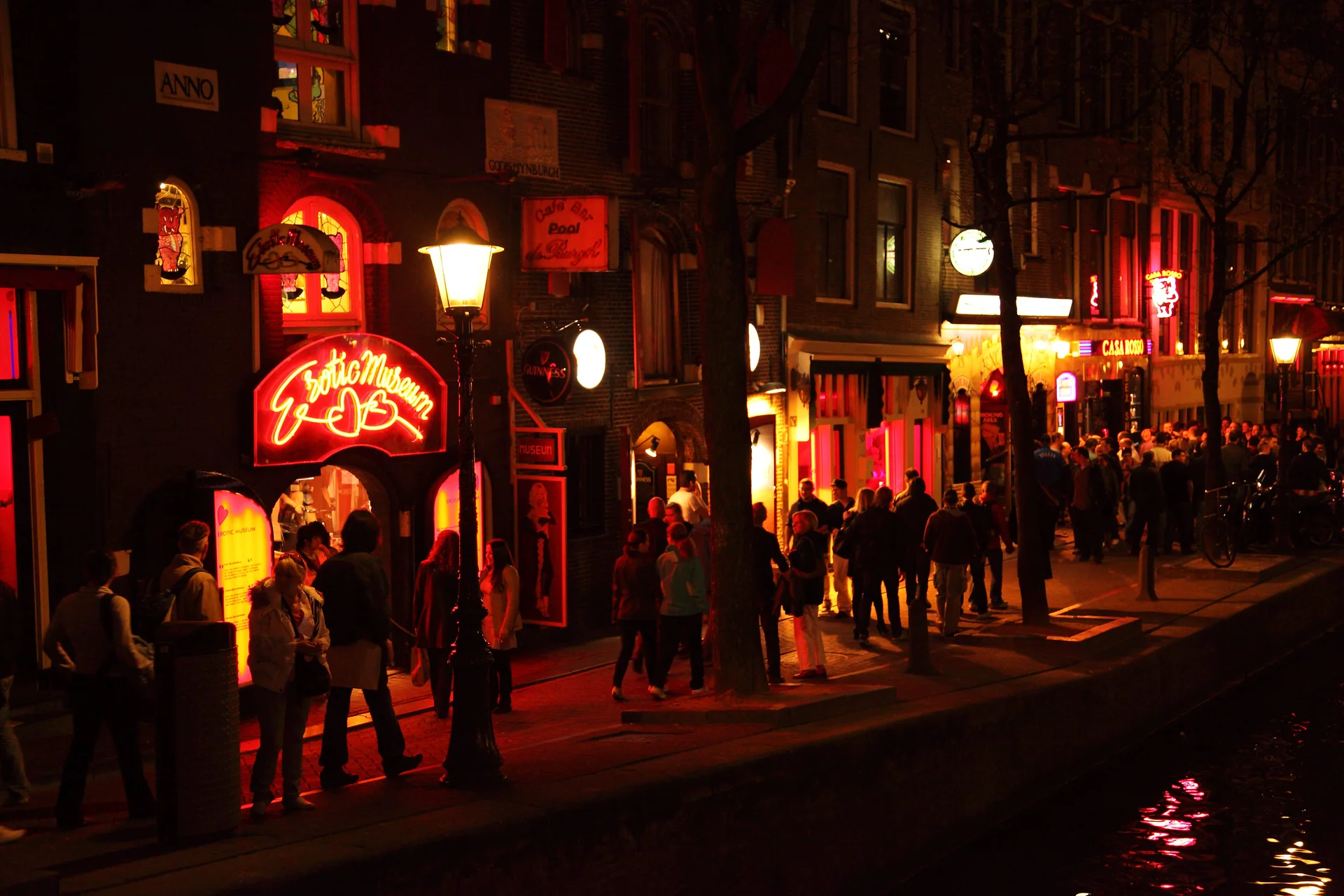
| Photographing the windows of the Red Light District | The women and security react; phones have ended up in the canal |
| Urinating in a canal or an alley | Fine ~$157 |
| Using a phone while cycling, riding without lights at night | Fines ~$180 and ~$68 |
| Walking or stopping on the red bike lane | A bell, then words |
- Dinner is early: restaurants fill at 6:30pm and kitchens close around 10pm; a table without a reservation is found at 9:30pm, not at 8pm on a Saturday.
- Shops open late on Mondays (1pm) and close at 6pm; Thursday is late night until 9pm; on Sundays the center opens from noon to 6pm.
- Coffeeshops are legal for over-18s, 5 grams at most, and sell no alcohol; you do not go in for a coffee, and you do not walk out smoking in the street.
- In a brown café you order at the bar or wait to be served, pay when you leave, and share a table with strangers when it is full: that is gezellig, the untranslatable word for the warmth of being together.
- On May 4 at 8pm, two minutes of silence across the city: trams, bikes and conversations stop; stop too.
Safety
Amsterdam is safe for a couple at any hour in the neighborhoods where you will sleep. The two dangers are the bike, other people's when you walk and your own when you ride, and the canal, for anyone who sits on the quay after a few drinks. Pickpockets work the station, the Dam and the museum trams.
- Look both ways before crossing, even a one-way street: bikes come silently, fast, and in both directions on the red lane; sidewalks are narrow, and the lane is not one of them.
- Phone and wallet in a front pocket at Centraal, on the Dam, on trams 2 and 12 and at the Albert Cuyp market: a group that jostles you as you board the tram is the most common technique.
- Buy nothing from anyone offering drugs in the street around the Red Light District and the Nieuwmarkt: fake cocaine has killed visitors here, and street dealing is illegal.
- The quays have no railings and no lighting on the water: do not sit on the edge of a canal after drinking, and do not try to relieve yourself into one; there are drownings every year.
- At the stations and on the Leidseplein, only taxis from the official rank, meter on, or a ride-hailing app: a driver who approaches you in the hall at Centraal asks $56 for a mile.
- In the bars of the Rembrandtplein and the Leidseplein, keep an eye on your drink, and never leave a bike locked by one wheel only: it leaves without it.
The mistakes couples make
Most disappointments come from a ticket you thought you could buy at the door, a hotel chosen on the Damrak, or a city reduced to its coffeeshops. Give the canals time: Amsterdam happens between two sights, on a bridge.
- Arriving at the Anne Frank House without a ticket: there is no desk and no line, nobody gets in, and the slots go six weeks ahead.
- Chaining the Rijksmuseum, the Van Gogh Museum and a cruise on the same day: two big museums five minutes apart still make six hours of galleries. One museum a day, then a neighborhood by bike.
- Sleeping on the Damrak, the Warmoesstraat or the Leidseplein to be "central": the party crowd passes under the window until 4am, and the Jordaan is ten minutes away.
- Dining on the Leidseplein, the Rembrandtplein or the Damrak: the illustrated "steak-pizza-paella" menus feed the tour buses, and the good tables are three streets away, on the Utrechtsestraat, in the Jordaan or in De Pijp.
- Taking the cruise at noon in a big glass boat: book the small open boat at dusk, when the bridges light up.
- Renting a bike on your first day at 5pm on a weekday, at rush hour: start on a Sunday morning or in the Vondelpark, and ride one behind the other.
- Coming for the tulips in June or for King's Day without a hotel: Keukenhof closes in mid-May, and April 27 is booked three months ahead.
Frequently asked questions
Is Amsterdam a good destination for a romantic trip?
Yes, and not for its coffeeshops: the canals by bike and by small boat, the brown cafés, the Jordaan, two of the finest museums in Europe and markets every day are lived as a couple and on foot. The only things to watch are hotel prices, the 12.5% tourist tax and the summer weekend crowds around the Dam.
How many days do you need in Amsterdam as a couple?
Three full days cover the Jordaan and the canals, the Anne Frank House, the Rijksmuseum, the Van Gogh Museum, the Vondelpark and De Pijp without rushing, at one big museum a day. A fourth day lets you visit the windmills of Zaanse Schans and Haarlem, or cycle through the villages of the Waterland.
Can you visit the Anne Frank House without booking?
No: tickets are sold online only, released six weeks ahead on Tuesdays at 10am Amsterdam time, and weekend slots go in under an hour. Without a ticket, watch for cancelled slots put back online in the days before, and visit the Westerkerk and the Resistance Museum.
Should we rent bikes in Amsterdam?
Yes if you already ride in a city at home, for at least one day: the Vondelpark, the Plantage, the northern waterfront by ferry and the Waterland are best discovered by bike. In the center, walk: the lanes are dense, trams and cobbles are unforgiving, and everything is within a twenty-minute walk.
When can you see the tulips around Amsterdam?
From late March to early May for the fields, with a peak in the second half of April; the Keukenhof gardens open from mid-March to mid-May, 40 minutes by bus from Schiphol or from RAI station, with a timed slot to book. In town, the flower market sells bulbs all year; the tulips there come in bouquets.
Should couples avoid the Red Light District?
It is safe to walk through, day or night, and its medieval lanes between the Oude Kerk and the Nieuwmarkt are among the oldest in the city; but the bachelor-party crowds on Friday and Saturday nights are anything but romantic. Go on a weekday in the late afternoon, without photographing the windows, then have dinner on the Zeedijk or the Nieuwmarkt.