

D1 Day 1: Osaka Castle, then Dōtonbori after dark
- D1·1Osaka Castle Castle
- D1·2Nishinomaru Garden Park
- D1·3Osaka Museum of History Museum
- D1·4Ebisu Bridge Bridge
- D1·5Dōtonbori Neighborhood
- D1·6Hōzen-ji Church

Plan short days and long evenings: in Osaka the museums close around 5 p.m., but the counters of Dōtonbori, Shinsekai and Umeda serve until midnight. Each morning has its sight, Osaka Castle, Shitennō-ji temple, the river island of Nakanoshima or Sumiyoshi shrine, then you eat in a different neighborhood every night, and twice you watch the sunset from high up, from the Umeda Sky Building and the Tempozan Ferris wheel.
© OpenStreetMap contributors
D1 Day 1: Osaka Castle, then Dōtonbori after dark
D2 Day 2: Kuromon, Shitennō-ji and Shinsekai, then a garden by night
D3 Day 3: Nakanoshima on foot, then the Umeda Sky Building at sunset
D4 Day 4: Sumiyoshi shrine, then the bay and the Tempozan Ferris wheel
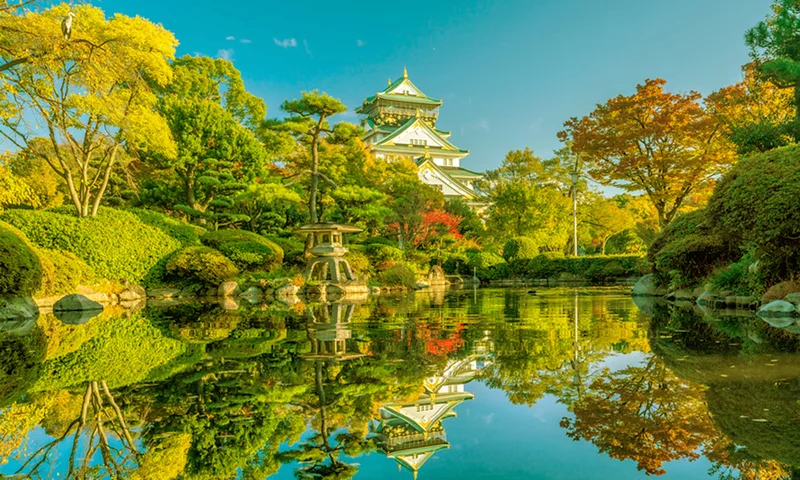
Be at Osaka Castle at 9 a.m., when the main tower opens: enter the park through the Ōte-mon gate on the west side and walk between the ramparts, where some stone blocks weigh over a hundred tons. The tower was rebuilt in concrete in 1931; its museum tells the story of Toyotomi Hideyoshi, the warlord who built the castle in the late 16th century, and the top floor has a balcony over the whole city (~$7.70).
Walk down to Nishinomaru Garden, a broad lawn planted with cherry trees below the tower, where you see the whole castle rising above the trees. Leaving to the southwest, cross the avenue to the Osaka Museum of History, closed on Tuesdays: the visit starts on the tenth floor, behind picture windows looking out over the moats and the tower.
Have lunch in the park at Jo-Terrace Osaka, near Osakajōkōen station, then head back to the hotel for a rest: the night will run late. If you still have energy, board the Aqua Liner, a sightseeing boat that leaves from the castle pier and loops along the rivers of the center, under the bridges of Nakanoshima.
After dark, reach Dōtonbori by Ebisu Bridge, under the neon Glico running man, then follow the canal east, past the giant crab waving its claws and the takoyaki counters. Eat standing up or on a stool: eight dumplings at Wanaka, on Sennichimae street, then an okonomiyaki at a table with its own griddle.
Finish in the stone-paved Hōzen-ji alley, two streets south of the canal: a small temple there shelters a moss-covered statue that passers-by splash with a ladle of water as they make a wish. Right next door, Meoto Zenzai has served a sweet red bean soup in two bowls since 1883: tradition says sharing it brings a couple luck (~$5.50).
Have breakfast at Kuromon Market, a covered street about 650 yards (600 m) long, a ten-minute walk from Namba, between 9 and 10 a.m., ahead of the tour groups: fishmongers grill scallops, beef skewers and sea urchin opened to order. Prices are those of a market that has gone touristy, $5.50 to $17 a serving: share every dish so you can try more stalls.
Take the subway or a taxi, about twenty minutes, to Shitennō-ji, founded in 593 by Prince Shōtoku, who championed Buddhism in its early days in Japan. The five-story pagoda and main hall were rebuilt as they were after the war, in their original alignment. Their precinct and the small Gokuraku-jōdo garden, with its ponds and waterfalls, each have their own ticket (~$2.20 each).
Walk twenty minutes through Tennōji Park to Shinsekai, the "New World", a district built in 1912 on the model of Paris and Coney Island and now covered in signs. Lunch on kushikatsu at the counter of Daruma, open since 1929, then go up Tsūtenkaku, the district's steel tower, where visitors rub the soles of the Billiken, a good-luck figure.
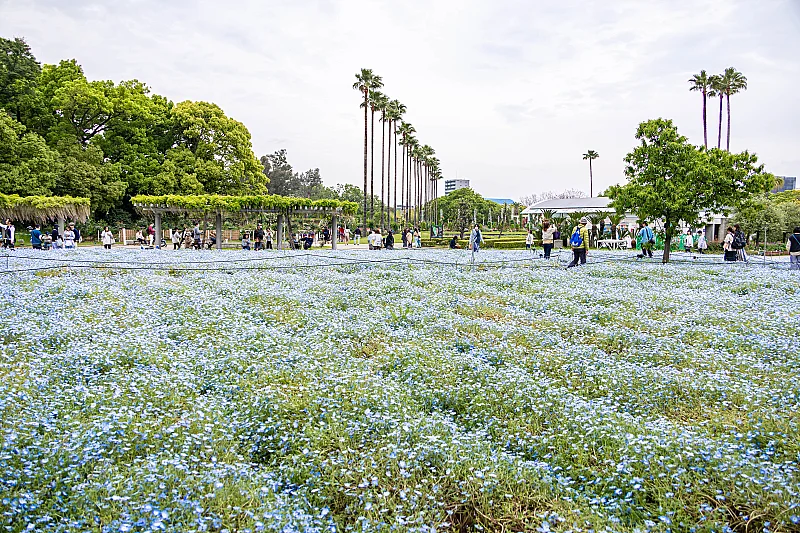
After a break at the hotel, take the Midōsuji subway to Nagai, about twenty minutes from Namba. At night, Nagai Botanical Garden hosts teamLab Botanical Garden: trees, pond and paths light up and change color as you pass, on an hour-long loop (~$14 per person, timed tickets). Then have dinner back in Namba, in the izakaya alleys east of Nankai station.
Start in Kitahama, the old stockbrokers' district on the south bank: have tea and scones at Kitahama Retro, an English tearoom in a small 1912 brick building, then cross the bridge to the island. The Central Public Hall, or Chūō Kōkaidō, a red-brick building completed in 1918, has a small free exhibition on its history in the basement.
Then walk east to Nakanoshima Park, at the tip of the island: its rose garden blooms from mid-May to early June and again in October, and its riverside benches face both arms of the river. Have lunch in a café in Kitahama, on the south bank, where several have river terraces from March to November.
Cross Tenjinbashi bridge to the north and walk to Osaka Tenmangū shrine, where the Tenjin Matsuri procession sets off on July 25. Behind it begins Tenjinbashisuji, a covered shopping street 1.6 miles (2.6 km) long, the longest in Japan: croquette stands, tea shops, secondhand kimono, and standing bars where locals have a drink from 4 p.m.
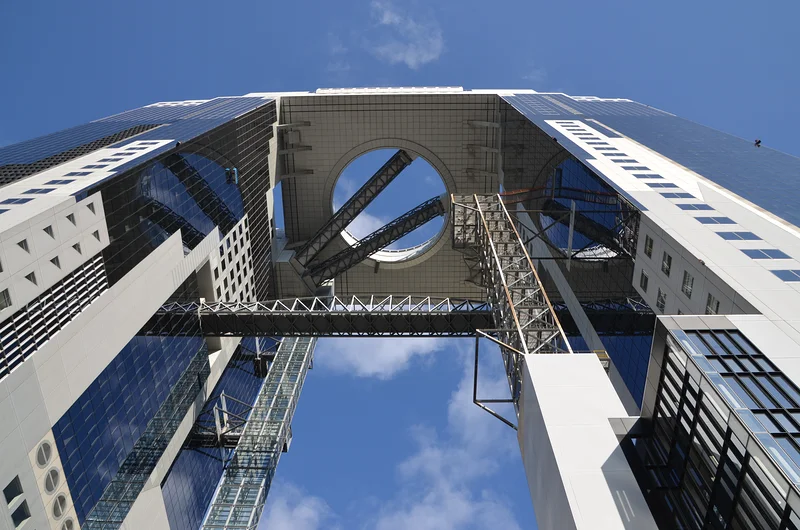
Head to Umeda by subway or taxi and go up the Umeda Sky Building half an hour before sunset: a glass escalator crosses the void between the two towers to the observatory, and the open-air rooftop deck circles the whole city, from the bay to the Ikoma mountains (~$14 per person).
Come back down for dinner in the tower's basement, in Takimi-kōji, an alley that recreates prewar Osaka: the okonomiyaki at Kiji has its regulars, and the line moves fast.
Take the Nankai train from Namba, ten minutes, or the Hankai tram, Osaka's last streetcar, from Tennōji, to Sumiyoshi Taisha, one of the oldest Shinto shrines in the country. Its halls, with cypress-bark roofs and vermilion beams, gave their name to an architectural style, and entry is free.
To go in, cross Sorihashi Bridge, a vermilion arched bridge so steep you almost climb it like a staircase: by tradition, crossing it purifies you. Allow an hour, then head back to Namba for lunch.
Ride the Chūō subway line to Osakakō, about half an hour from the center. At the Kaiyukan, one of the world's largest aquariums, you walk down a ramp around a central tank 30 ft (9 m) deep where a whale shark swims ($18 to $22 per person). Allow two hours, and come after 3 p.m., once the school groups have left.
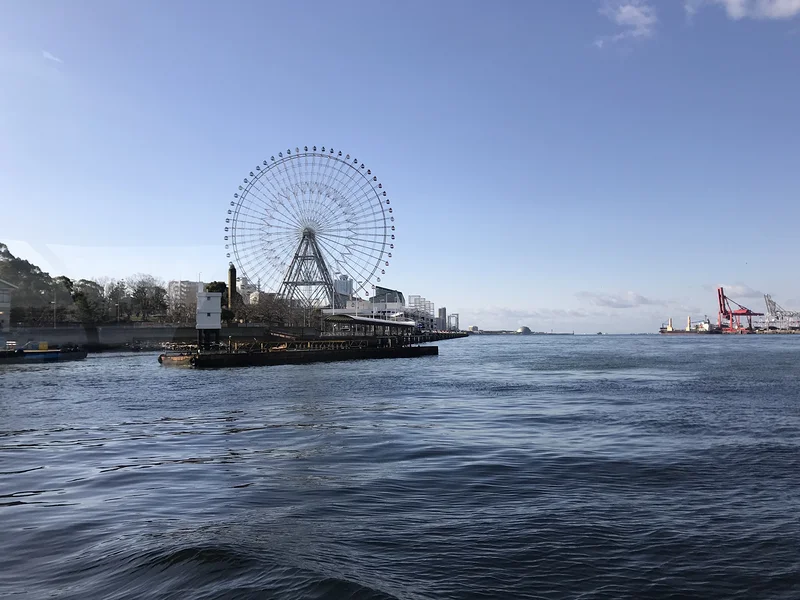
At dusk, ride the Tempozan Ferris Wheel, 367 ft (112 m) high, next to the aquarium: a turn takes fifteen minutes, and a few cabins have a see-through floor, at the same price, with their own line (~$5.50 per person). Then head back to Namba for your last evening, in Ura-Namba, the maze of izakaya alleys east of Nankai station.
In Osaka the best places are counters: no reservations, a twenty-minute line, and dinner for two at $22 to $44. Keep one or two evenings for a booked table, Kobe beef or seasonal cooking.
Okonomiyaki
Kiji, in the Takimi-kōji alley in the basement of the Umeda Sky Building: a pork okonomiyaki or a fried-noodle pancake, ~$8.80.
Kushikatsu
Daruma, the original Shinsekai shop, open since 1929: breaded skewers from $1.10, at the counter.
Kitsune udon
Usami-tei Matsubaya, in Minamisenba near Shinsaibashi, says it invented kitsune udon in 1893: a bowl of noodles with sweet fried tofu for ~$5.50.
Omurice
Hokkyokusei, in Nishishinsaibashi, claims to have invented the rice omelet, served here at low tables in a wooden house facing a small garden.
Zenzai
Meoto Zenzai, in the Hōzen-ji alley: sweet red bean soup served in two bowls, a single portion that tradition says a couple should share.
Kissaten
Marufuku Coffee, on Sennichimae street, a 1934 coffee house with leather banquettes: a strong drip coffee and a caramel pudding, before or after Dōtonbori.
In Osaka you drink standing or at a counter, with a skewer, often from 5 p.m. Izakaya serve until midnight, small bars until 2 a.m.
| Mood | Where | Our take |
|---|---|---|
| A drink up high | 40 Sky Bar & Lounge (Conrad, Nakanoshima) | Cocktails facing the river and the Umeda towers; book a table by the window |
| Under the railway | Shin-Umeda Shokudōgai (Umeda) | Around a hundred counters under the tracks, highballs and skewers |
| Izakaya alleys | Ura-Namba; Hōzen-ji alley | Bistros with six to ten seats, lit by lanterns |
| A standing bar | Tenjinbashisuji | A beer and a small plate for $5.50, among the locals, from 4 p.m. |
Bunraku
The puppet theater born in Osaka, on UNESCO's heritage list: three puppeteers per doll, a narrator and a shamisen player, at the National Bunraku Theatre in Nippombashi, next to Kuromon.
The Dōtonbori cruise
A short boat ride on the canal, under the bridges and the signs, leaving from the Tazaemon Bridge pier, a short walk from Ebisu Bridge: best after dark.
Manzai
Osaka's comedy double act, performed every night at Namba Grand Kagetsu, in Japanese only, without subtitles: book it if one of you speaks the language.
Tenjin Matsuri
On July 24 and 25, costumed processions, then about a hundred lit boats on the Ōkawa River and fireworks on the evening of the 25th.
Osaka is the most convenient base in Kansai: without changing hotels, you are less than an hour from Nara, Kyoto, Kobe and Himeji.
| Where | How to get there | Our take |
|---|---|---|
| Nara | Kintetsu from Namba, ~40 min. | The Great Buddha of Tōdai-ji and the deer in the park; leave before 9 a.m. |
| Kyoto | JR from Osaka Station, ~30 min.; Hankyu from Umeda, ~45 min. | Fushimi Inari and Higashiyama; in one day, stick to two neighborhoods |
| Kobe | JR from Osaka Station, ~22 min. | The port, the European houses of Kitano and a Kobe beef dinner |
| Himeji | Shinkansen from Shin-Osaka, ~30 min. | The UNESCO-listed white castle and its wooden keep; half a day |
| Minoh | Hankyu from Umeda, ~30 min. | Two miles of forest trail to a waterfall, and fried maple leaves sold along the way |
| Mount Kōya | Nankai from Namba, then cable car, ~2h | A night in a temple, a vegetarian dinner and the dawn prayer |
Osaka
Pick your dates and see the offers from the major booking sites side by side.
Compare live offers from Booking, Expedia, Agoda and other partners.
Osaka: find your hotel
For the essentials, yes: the castle and Dōtonbori on day one, Nakanoshima and the Umeda Sky Building on day two. With a third day, add Kuromon, Shitennō-ji and Shinsekai; with a fourth, Sumiyoshi and the bay, or Nara.
Rarely: takoyaki, okonomiyaki and kushikatsu counters take no reservations, and the line lasts twenty minutes to an hour. Book only a Kobe beef dinner or a seasonal-cooking table, one to two weeks ahead.
An ICOCA card covers every ride. The one-day Osaka Amazing Pass pays off on a day with three paid sights in a row; check the list of included sights before you buy.
The covered Shinsaibashi-suji and Tenjinbashisuji arcades, the Kaiyukan, the Osaka Museum of History and Kuromon Market keep you dry; save the Umeda Sky Building and the Nagai garden for a dry evening.