




Malta for couples: know before you go (2026)
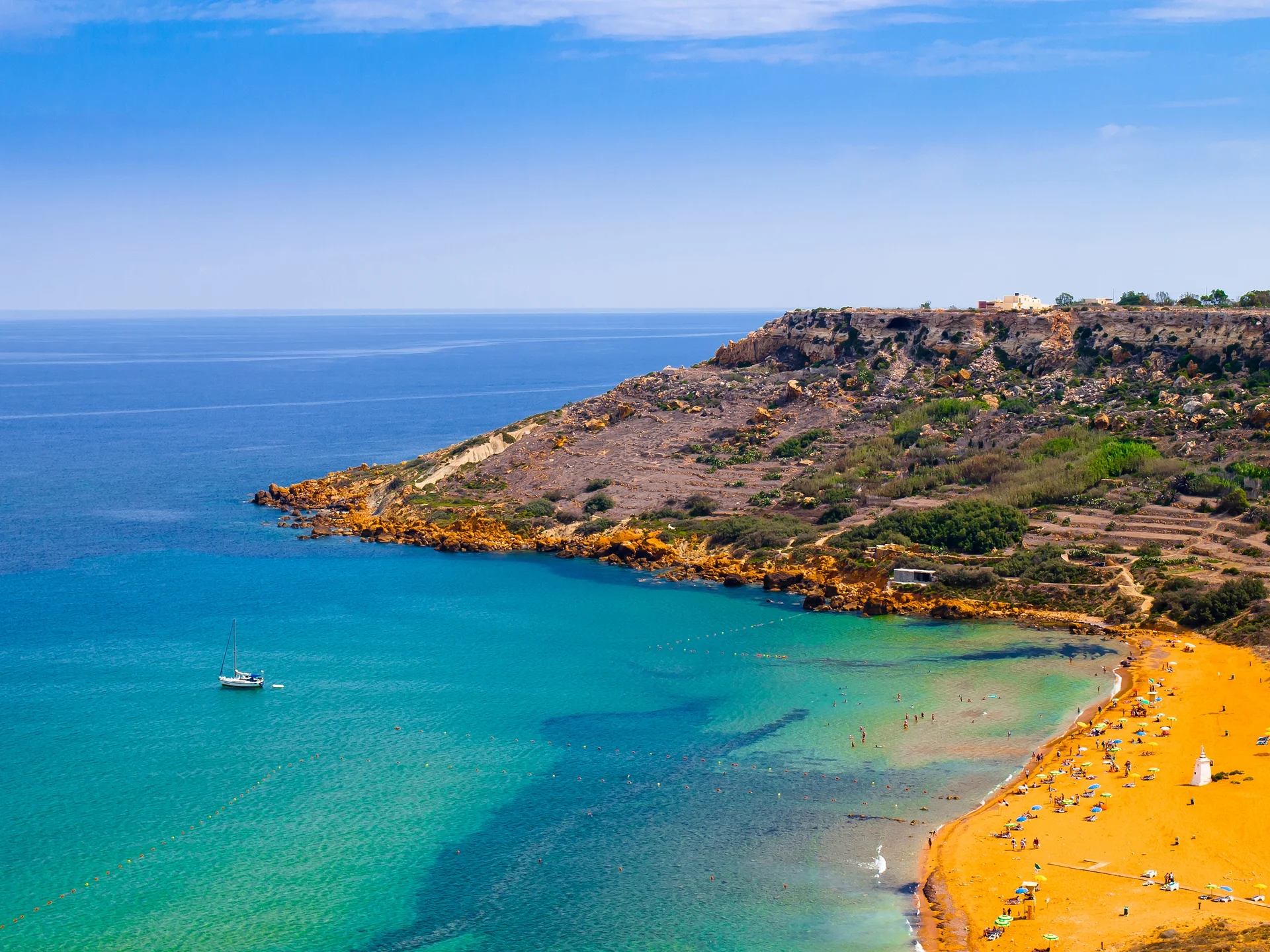
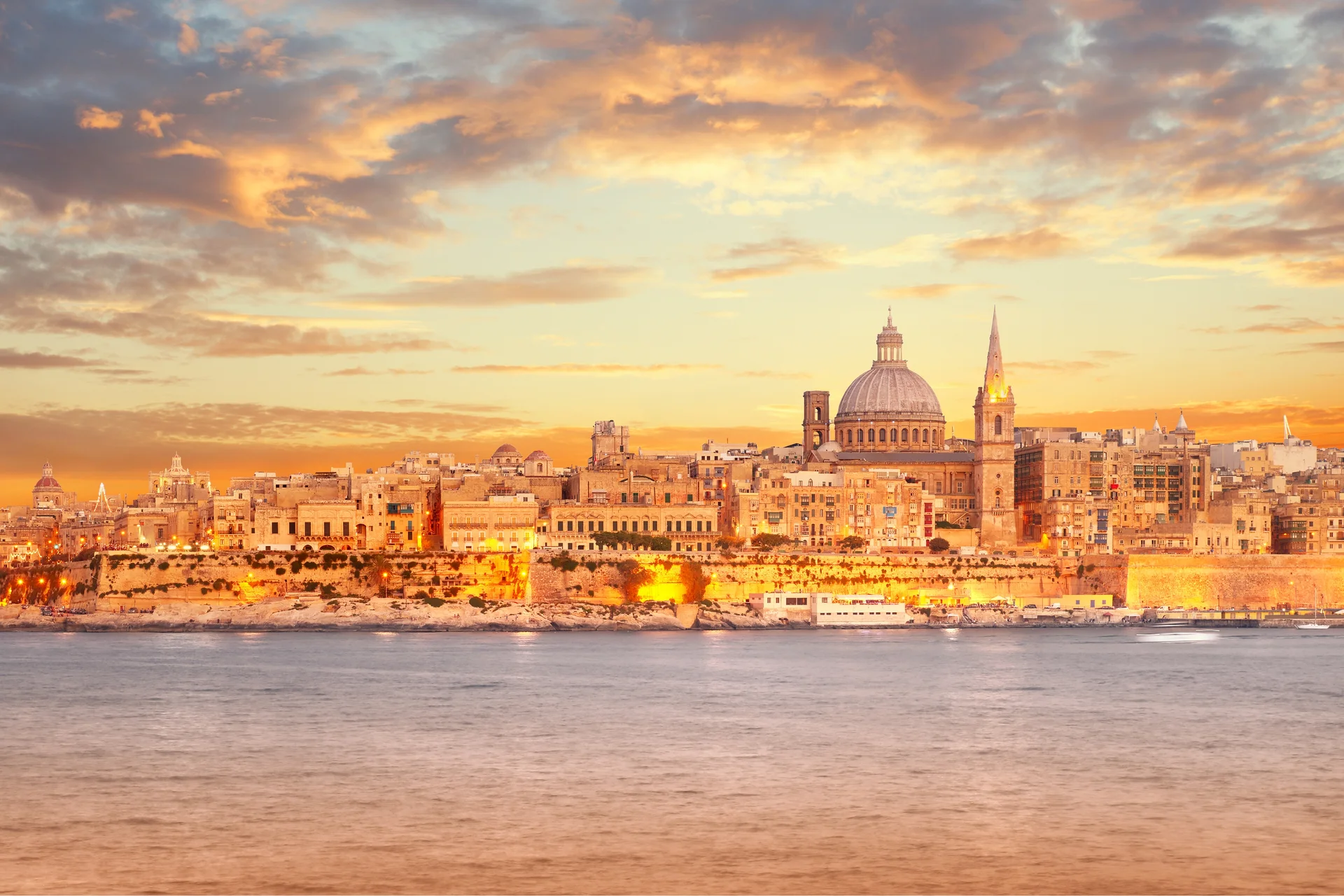
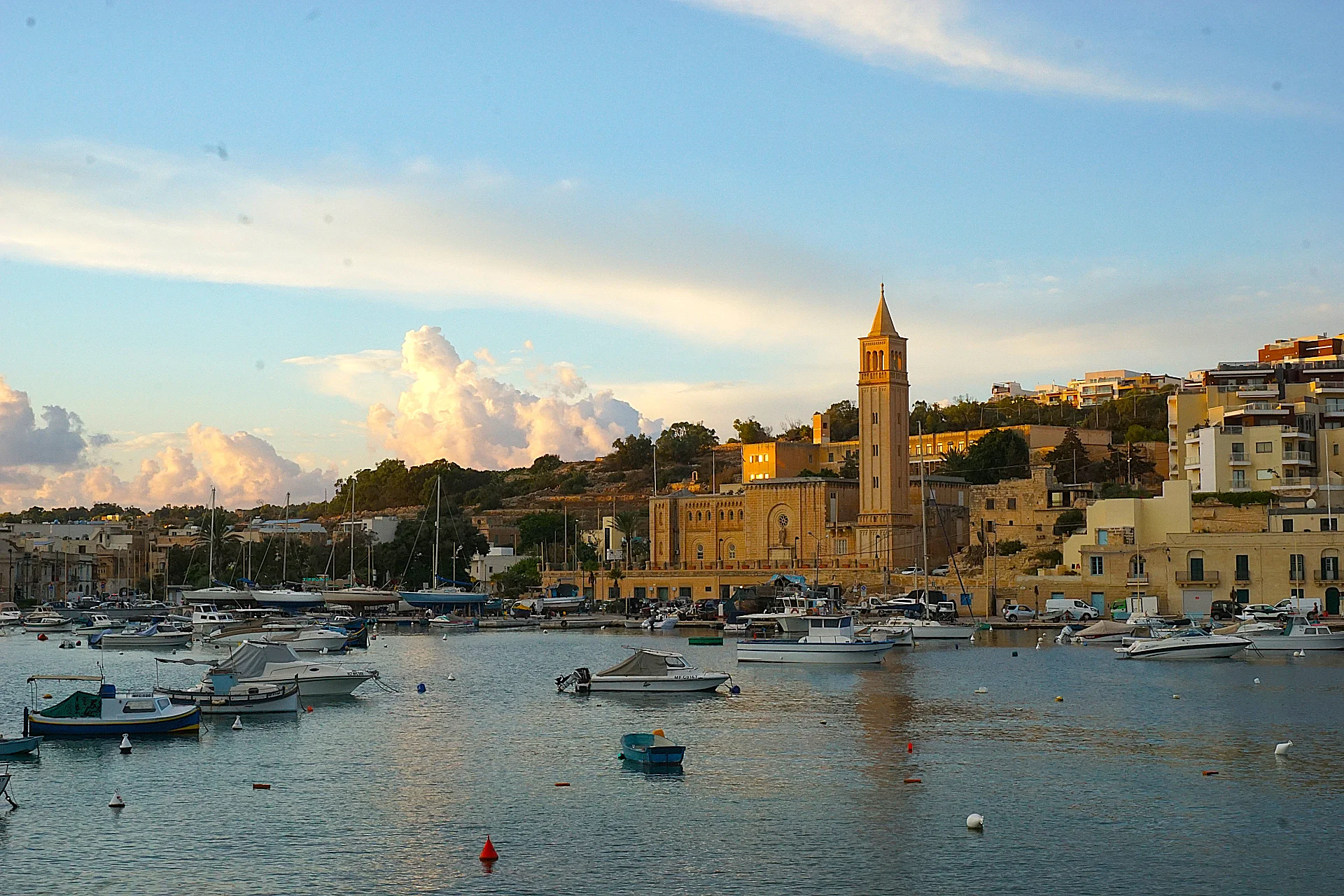
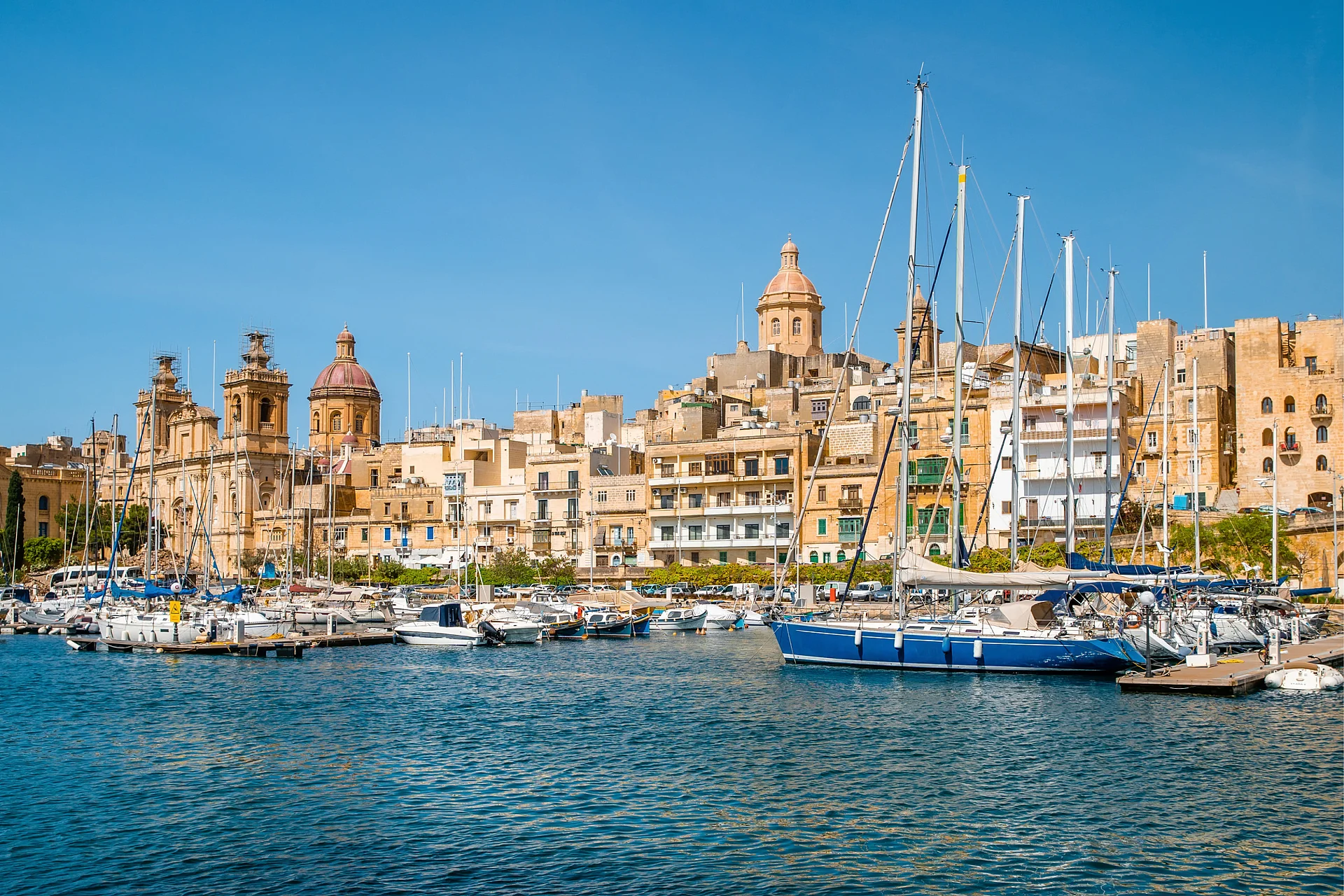
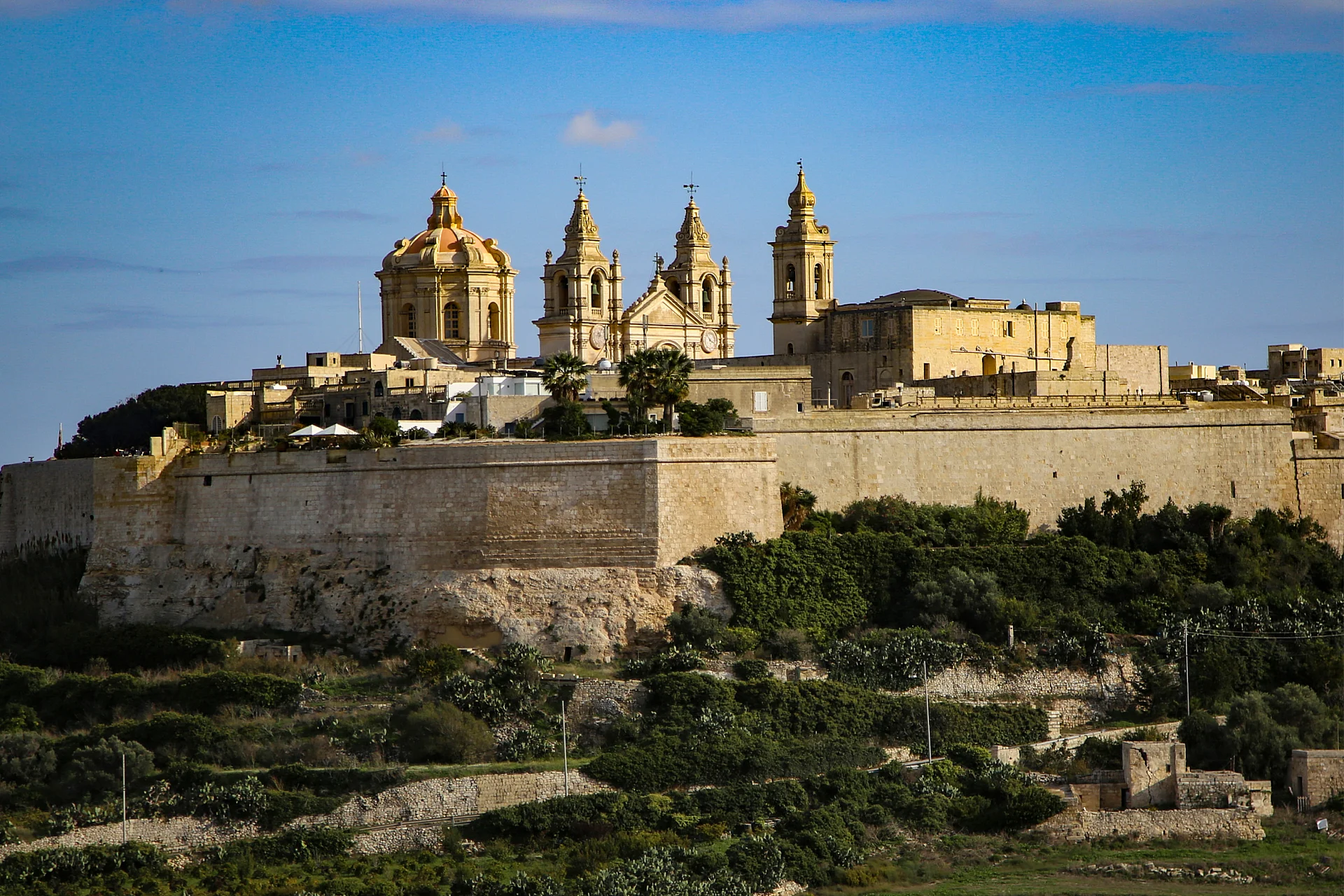
You have three decisions to make before you leave for Malta: the season, because the island has almost no shade: in July you will mostly be in the water, in April on foot; the base, Valletta for the bastions and the evenings, Sliema for the sea at the bottom of the hotel steps; and the car, which you can skip if you sleep in the capital, the ferries and the Tallinja buses doing the rest. The Ħal Saflieni Hypogeum, a five-thousand-year-old underground temple, sells out weeks ahead: it is the one line on the island you cannot get around.
At a glance
- When to go
- April to mid June, then late September and October: 68 to 79 °F (20 to 26 °C), a sea at 66 °F (19 °C) from May and still 73 °F (23 °C) in October, and an island without the crowds or the heat of July and August.
- How many days
- Five full days for Valletta, the Three Cities, Mdina and the south; seven to add Comino and a day on Gozo by ferry, without rushing.
- Which base
- Valletta for a first visit and evenings inside the bastions; Sliema for the sea, the boats and lower prices; the Three Cities for the view of the capital, in silence.
- Budget for two
- About $1,540 for four nights in comfort, hotel, meals, sights, buses and ferries included, flights excluded; a rental car adds $33 to $50 a day.
- The moment for two
- The Upper Barrakka Gardens at 4 pm, when the cannon on the bastion fires over the Grand Harbour, then the lift down to the Three Cities ferry for dinner across the water, facing Valletta lit up.
- Book ahead
- The Hypogeum (four to eight weeks ahead, ten visitors an hour), St John's Co-Cathedral the day before to skip the line, and the boat to Comino in July and August.
Why Malta as a couple
Three islands of honey-colored stone in the middle of the Mediterranean, where people speak Maltese and English, drive on the left and eat rabbit and fish, somewhere between Sicily and North Africa. As a couple, you will find a fortified capital where you spend your evenings on the bastions, turquoise coves twenty minutes from the hotel, and fishing villages where dinner costs less than in Valletta.
On Malta, everything is under an hour's drive away: on the same day, you can visit St John's Co-Cathedral in the morning, swim at St Peter's Pool in the afternoon and have dinner on the quay at Marsaxlokk.
When to go
| Period | Weather | Crowds | Our take |
|---|---|---|---|
| April to mid June | 68 to 82 °F (20 to 28 °C), sea 63 to 72 °F (17 to 22 °C), little rain | Moderate, heavy at Easter and on May holiday weekends | Fields still green, swimming from May, terraces without the crowds |
| Mid June to August | 86 to 95 °F (30 to 35 °C), sea 79 °F (26 °C), no rain, hot southerly wind | Very heavy, Comino and the Blue Lagoon packed from 10 am to 4 pm | An island without shade, Valletta at 95 °F at noon; only a 7 am swim and the evenings stay pleasant |
| September and October | 75 to 86 °F (24 to 30 °C), sea 73 to 75 °F (23 to 24 °C), first storms late September | Heavy in September, gentle in October | Our favorite: the warmest sea of the year, the crowds gone, prices coming down |
| November to March | 54 to 64 °F (12 to 18 °C), wind, rain in showers | Light, except Christmas, New Year and Carnival in February | Hotels at half price, Valletta to yourselves, but a sea at 61 °F (16 °C) and short days |
Two dates to know: Holy Week, when every village carries its statues in procession on Good Friday, and the village feasts from June to September, the festi, with fireworks every weekend; the one at Marsaxlokk in early August and the one at Mdina in late June are worth an evening. The northwesterly wind, the majjistral, blows several days a month and cancels the boats to Comino: keep a spare day.
Paperwork: passport, visa, health
| Documents | Visa | Health | |
|---|---|---|---|
| United States, Canada | Passport valid at least 3 months after you leave the Schengen area, issued within the last 10 years | None for stays up to 90 days | Travel insurance with medical cover |
| United Kingdom | Passport valid at least 3 months after you leave the Schengen area, issued within the last 10 years | None for stays up to 90 days in any 180 | Your free GHIC covers state healthcare in Malta; travel insurance for the rest |
| Ireland | Passport in date, shown at boarding and at the hotel | None | Free EHIC for public healthcare |
Entering the Schengen area from the US, Canada or the UK
On your first entry into the Schengen area, border police record your fingerprints and a photo (the EES system): allow a little more time at passport control, especially if you connect through Paris, Frankfurt or Rome rather than landing at Malta, where the lines are short.
Check before you leave whether the ETIAS travel authorization is required on your dates: you apply for it online on the official European Union site (travel-europe.europa.eu), costs a few euros and is valid for three years.
Getting there
By plane, one airport for the whole island
| From | Flight time | Good to know |
|---|---|---|
| London (Heathrow, Gatwick, Stansted, Luton) | ~3h15 | Several nonstops a day year round: KM Malta Airlines, British Airways, Ryanair, easyJet |
| Manchester, Birmingham, Bristol, Edinburgh | 3h30 to 3h50 | Nonstops with Ryanair, easyJet and Jet2, most frequent from April to October |
| Dublin | ~3h40 | Ryanair nonstops several times a week year round |
| New York, Boston, Chicago, Toronto, Montreal | 11 to 13 hours | No nonstop: one stop in London, Frankfurt, Rome or Istanbul; an overnight flight lands in Malta mid afternoon |
| Los Angeles, San Francisco | 15 to 17 hours | One stop in London, Frankfurt or Istanbul; two short nights are easier than one long one |
Malta International Airport (MLA) is at Luqa, in the center of the island, 5 miles (8 km) from Valletta and 6 miles (10 km) from Sliema: nothing is more than 40 minutes away. There is no train or subway on Malta; you reach your hotel by bus, taxi or rental car, see "From the airport to your hotel".
By ferry from Sicily
From Pozzallo, at the southern tip of Sicily, the Virtu Ferries catamaran reaches Valletta in 1h45, one to three times a day, from $66 per person one way, cars allowed. It is the right option if you are combining Sicily and Malta; in July and August, book two weeks ahead, as the crossings fill up.
Practical things to settle before you leave
Phone
US and Canadian plans charge roaming at full price, and most UK plans now charge for Europe too: turn on a travel pass or install a European eSIM before you leave. With an Irish plan, calls and data work as at home, Malta being in the European Union. Coverage reaches the whole island, Gozo and the ferries included; download an offline map anyway, the alleys of Mdina and Birgu cut the signal.
Outlets: British plugs
Money and tipping
- The euro everywhere, cards accepted in hotels, restaurants, buses and ferries; keep $33 in cash for the harbour boats, the Marsaxlokk market and neighborhood pastizzi shops. Prices include tax: what the menu says is what you pay.
- Tipping is not included and not expected at American levels: 5 to 10 % in a restaurant when the service was good, rounding up in a café or a taxi, nothing in a bar.
- ATMs of the Maltese banks (BOV, HSBC, APS) charge no fee of their own; those of the exchange bureaus in Sliema and Valletta apply their own rate. Whatever the machine, decline the conversion into dollars or pounds and let your own bank convert.
Language and water
Maltese and English are the two official languages, so you will understand every sign, menu and bus announcement; Maltese is what people speak among themselves, a Semitic language written in Latin letters, and a grazzi (thank you) or a bonġu (good morning) earns a smile. Tap water is safe but desalinated and flat: the Maltese drink bottled water.
What to book, and how far ahead
On Malta you have only one visit to book weeks ahead, and you will miss it otherwise: the Ħal Saflieni Hypogeum, a temple dug underground five thousand years ago, open to ten visitors an hour. Everything else you book the day before or on the spot, except the hotel, which you book two to three months ahead for April, May and October.
| Sight | Price per person | Book | Good to know |
|---|---|---|---|
| Ħal Saflieni Hypogeum | ~$39 | 4 to 8 weeks ahead | Timed 60 min. slots; a few last-minute tickets for the next day go on sale at Fort St Elmo and at Ġgantija at 9 am |
| St John's Co-Cathedral | ~$17 | The day before | The 9 am slot beats the line and the cruise groups; closed to visitors on Sundays |
| Grandmaster's Palace and Armoury | ~$14 | On the spot | The state rooms close on days of official ceremonies: check that morning |
| Boat to Comino and the Blue Lagoon | $28 to $39 | 2 to 3 days ahead in July and August | From Sliema, Bugibba or Ċirkewwa; the 8:30 am departure beats the crowd |
| Valletta to Gozo fast ferry | ~$8.80 | The day before in summer | 45 min. from the Grand Harbour, passengers only; the Ċirkewwa ferry takes cars without booking |
| Ħaġar Qim and Mnajdra temples | ~$11 | On the spot | One ticket covers both temples and the visitor center; go in the morning for the light on the sea |
From the airport to your hotel
© OpenStreetMap contributors
The airport and the bases it serves
- Malta Airport (MLA)
- 1Valletta
- 2Sliema
- 3The Three Cities
- 4Mdina and Rabat
- 5Marsaxlokk
| Destination | Transport | Time | Indicative fare |
|---|---|---|---|
| Valletta | Bus X4, every 20 to 30 min. | 30 to 40 min. | $2.20 / person |
| Valletta | White taxi, fixed fare shown at the desk | ~20 min. | $22 to $28 / taxi |
| Sliema | Bus X2, every 30 min. | 45 to 60 min. | $2.20 / person |
| Sliema | Taxi or app (eCabs, Bolt) | 25 to 35 min. | $22 to $33 / taxi |
| The Three Cities | Taxi | ~20 min. | $22 to $28 / taxi |
| Mdina and Rabat | Bus X3, every 30 min. | ~40 min. | $2.20 / person |
| Mdina and Rabat | Taxi | ~25 min. | $28 to $33 / taxi |
| Marsaxlokk | Taxi | ~15 min. | $17 to $22 / taxi |
What works best
For Valletta, the X4 bus drops you at the bus terminus outside the City Gate, and you do the rest on foot or by lift up to the Upper Barrakka Gardens; with suitcases and stepped streets, the white taxi from the arrivals desk, at a fixed fare posted by zone, is worth its $22. The eCabs and Bolt apps are 20 to 30 % cheaper, and their drivers wait in the taxi lot across the road.
Getting around
Tallinja buses, the whole island on one network
One public network, Tallinja, orange and white buses that serve the whole island from the Valletta terminus: Mdina in 35 minutes, Marsaxlokk in 40, Ċirkewwa and the Gozo ferry in 1h15. They run every 15 to 30 minutes by day, less often in the evening and on Sundays, and fall behind at rush hour: allow ten minutes of slack and a plan B for getting back late.
| Ticket | Price | Validity |
|---|---|---|
| Single, bought on board | $2.20 ($2.80 at night) | 2 hours, transfers included, cash to the driver |
| Explore card, 7 days | $24 | All buses on Malta and Gozo, day and night; loaded on the app or at the airport |
| Explore Plus card, 7 days | ~$43 | The same, plus two ferry crossings and a day on the sightseeing bus |
| Tallinja card, 12 rides | $17 | Can be shared by two, no expiry date: the right sum for four or five days |
The Valletta ferries
Two ferry lines leave from Valletta: Valletta to Sliema in ten minutes from Marsamxett Harbour, every 30 minutes from 7 am to midnight in summer ($1.70 one way, $3.10 round trip), and Valletta to the Three Cities in ten minutes from the Upper Barrakka Gardens, where a lift ($1.10 going up, free going down) links the garden to the quay. The dgħajsa, the motor boats of the Three Cities, cross for $2.20 per person, and their boatmen offer a 30-minute harbour tour for $11 to $17 per person.
Taxis, apps and car
White taxis have had meters only recently, and the eCabs and Bolt apps give the price before the ride: $11 to $17 between Valletta and Sliema, $22 to Mdina. In a rental car you drive on the left on narrow roads, roundabouts are everywhere and parking in Valletta is for residents only: leave the car at the Floriana Park and Ride, then take the free shuttle or walk ten minutes.
Budget for two
Malta costs less than Italy for eating and getting around, and as much as Rome for sleeping in Valletta, where the boutique hotels have taken on capital-city prices; against London or New York, dinner for two costs about half. What makes the budget vary is the hotel and the season; sights and ferries cost little. What four nights for two cost, flights excluded:
| Smart | Comfort | Treat | |
|---|---|---|---|
| Hotel, per night | $99 to $154 (Sliema, the south, a guesthouse) | $198 to $310 (a Valletta palazzo, a seafront hotel) | from $440 (Iniala, the Macina, the Xara Palace) |
| Meals, per day for two | $55 (pastizzi, ftira and a village dinner) | $121 (a simple lunch, dinner on the quay) | $250 (a fine-dining table in Valletta) |
| Sights for the stay | $66 | $132 with the Hypogeum and the co-cathedral | $330 with a private guide and a private boat |
| Transport for the stay | $44 with buses and ferries | $110 with a few taxis | $280 with a car and taxis |
| Total, four nights | ~$940 | ~$1,540 | from $3,080 |
Useful markers: a warm pastizz $0.55 to $1.10, a filled ftira $6.60 to $9.90, the fish of the day on the Marsaxlokk quay $25 to $33, a Cisk beer $3.30, a coffee $2.20. The bus costs $2.20 whatever the distance, and the ferry $1.70.
What to taste
Maltese cooking is that of an island that fed Sicilian sailors, French knights and British soldiers: fish, rabbit, sourdough bread and flaky pastries sold by the piece in shops open from 6 am. You will taste it in the villages and in neighborhood bars rather than in the seafront restaurants.
At the table
-
Pastizzi
Flaky pastry pockets filled with ricotta or mushy peas, served warm, $0.55 to $1.10 each in the pastizzerija: the Maltese breakfast, eaten standing, with a milky coffee.
-
Fenek
Rabbit, the national dish: stewed in wine and garlic, served with its pasta as a first course and then the meat, in the restaurants of Mġarr and Rabat on Sunday lunchtime. Order it for two.
-
Lampuki
Mahi-mahi, the fish of late summer, from September to November: in a pie (lampuki pie) with spinach and olives, or grilled on the Marsaxlokk quay.
-
Ftira
The round sourdough loaf baked in a wood oven, filled Maltese style with tuna, capers, tomatoes and olives, or baked like a thick pizza on Gozo (ftira għawdxija), topped with sliced potatoes.
-
Ġbejniet
The small goat or sheep cheeses of Gozo, fresh, dried or rolled in pepper, served with capers and Maltese bread rubbed with oil and tomato, the ħobż biż-żejt.
-
Kannoli and imqaret
Ricotta kannoli inherited from Sicily, and imqaret, date-filled pastries fried to order outside the Valletta City Gate: $1.10 each, to share on a bench.
To drink
Try Cisk, the national lager, and Kinnie, a bitter orange and herb soda you love or hate at the first sip. Maltese wines, above all the white from Girgentina and the red from Ġellewża, the island's two native grapes, are made by Marsovin and Delicata, $4.40 to $6.60 a glass. Coffee is taken the Italian way, short and at the counter.
Customs and rules to know
Malta is Catholic, family-minded and English-speaking, and its people have welcomed travelers since the days of the Knights: a few gestures show your respect for those who live here, and ignoring certain rules can cost you dearly.
| Rule | What to expect |
|---|---|
| Entering a church with bare shoulders or knees, above all the co-cathedral | Entry refused; a scarf or a sarong in the bag settles it |
| Walking around in swimwear or bare-chested away from beaches and coves | A possible fine in the villages and in Valletta, and disapproving looks everywhere |
| Smoking in an enclosed public place, bars and restaurants included | Fine of $55 to $280 |
| Drinking alcohol in the street in Paceville and Valletta between 9 pm and 4 am | A fine; the police check on weekend nights |
| Dropping a cigarette butt or litter, leaving trash on a beach | Fine of $55 to $165, cameras and wardens in the coves in summer |
| Honking, crossing away from the crosswalks | Cars come from the right: look right before crossing |
The Maltese dine late, between 8 and 10 pm, and village restaurants close the kitchen at 10:30 pm; on Sunday afternoons nearly everything is closed except the seaside restaurants; the Marsaxlokk market is held in the morning. On the bus, board at the front, greet the driver and leave the front seats to the elderly.
Safety
Malta is one of the safest countries in Europe for a couple, by day and by night: you can walk through Valletta, Sliema and the villages at midnight without a second thought.
- The swimming flags: under a red flag, do not swim, even at St Peter's Pool when the sea looks flat; the current and the slippery rocks injure people every summer. Purple jellyfish arrive in swarms with a southerly wind, and a sign at the entrance to the coves says so.
- Paceville on weekends after midnight: fights outside the clubs and pickpockets in the crowd on Triq San Ġorġ; never leave your drink unattended. Dine in St Julian's instead and head home before 11 pm.
- The road: the Maltese drive on the left, and fast, and scooters and pedestrians cross anywhere; in a car, the danger is the roundabout and the parking exit, on foot, the reflex of looking the wrong way if you are American.
- The sun from June to September: no shade at the temples, on the cliffs or at the Blue Lagoon; hat, water and sunscreen, and outdoor visits before 11 am or after 4 pm.
- Boat trips sold on the Sliema and Bugibba quays by touts: check the return time, the number of passengers and that the price includes the trip back; the companies with a fixed ticket office on the Strand keep to their schedules.
The mistakes couples make
Most disappointments on Malta come from the same mistake: believing you can see such a small island in two days, Gozo included, from a hotel chosen for its price.
- Sleeping in Paceville or Bugibba for the price: music until 4 am in the first, package tours in the second, and in both cases 40 minutes by bus to Valletta in the evening.
- Doing Gozo in half a day from Valletta: 1h15 by bus, 25 minutes by ferry, then an island you get around by car or bus; count on the whole day, or two nights.
- Going to the Blue Lagoon on Comino between 10 am and 4 pm in July and August: hundreds of people squeeze onto two hundred yards of sand. Go for the 8:30 am boat or the 4 pm one, or opt for Santa Marija Bay, twenty minutes' walk from the lagoon and almost empty.
- Turning up at the Hypogeum without a ticket: none are sold on the spot, and the last slots go a month ahead in season.
- Renting a car to sleep in Valletta: no parking inside the walls, $33 a day for a car left in a parking lot, for trips the ferry and the bus make for $2.20.
- Visiting Mdina at 11 am with the tour buses and leaving at 5 pm: the town shows its full charm at 8 am and after 6 pm, when the alleys are empty. Sleep there one night, or stay for dinner.
- Believing the sea is warm in April: 63 °F (17 °C), and the Maltese do not swim before June; the swimming season runs from mid May to the end of October.
Malta
Compare hotel prices
Pick your dates and see the offers from the major booking sites side by side.
Compare live offers from Booking, Expedia, Agoda and other partners.
Malta: find your hotel
Frequently asked questions
How many days do you need for Malta as a couple?
Four or five full days for Valletta, the Three Cities, Mdina and the south, without rushing; seven to add Comino and a day on Gozo by ferry. With more time, spend two nights on Gozo.
Do you need to rent a car in Malta?
No if you sleep in Valletta, Sliema or the Three Cities: the ferries and the Tallinja buses link everything for $2.20 a ride. Yes for two nights in Mdina, in the south or on Gozo, where buses thin out in the evening: rent a small automatic car, $33 to $50 a day; traffic drives on the left.
What is the best time of year for a couple in Malta?
Late September and October: a sea at 73 to 75 °F (23 to 24 °C), afternoons at 77 °F (25 °C), the summer crowds gone and hotel prices falling. Then April and May, for the green fields and the light, with a sea still cool until mid May.
Is Malta an expensive destination?
Less than Italy for eating and getting around, as much for sleeping in Valletta in season, and well below London or New York for dinner. Count on about $1,540 for four nights for two in comfort, hotel, meals, sights and transport included, flights excluded; $940 in the smart version with a guesthouse in Sliema or the south.
Is English spoken in Malta?
Yes, everywhere: English is an official language alongside Maltese, signs are bilingual, menus are in English and often in Italian too, and bus announcements are in both. You will never need a phrasebook; a grazzi for thank you is simply a courtesy.
Can you swim in Valletta?
Not in the city itself, which has neither a beach nor access to the water: the nearest swimming is in Sliema, on the flat rocks of Tower Road, ten minutes away by ferry, or at St Peter's Pool and Għar Lapsi, twenty minutes away by bus or car.