





D1 Day 1: Split, arrival and Diocletian's Palace
- D1·1Diocletian's Palace Landmark
- D1·2Peristyle Square
- D1·3St Domnius Cathedral Church
- D1·4Riva Neighborhood
- D1·5Marjan hill Viewpoint

Seven days are enough for Split, Hvar, Korčula and Dubrovnik, provided you travel in one direction only, north to south, with a one-way rental car and four ferry crossings. On day five, you drive four hours from Hvar to Korčula, broken up by two ferries; on day seven, you climb onto the walls of Dubrovnik at opening time, before the cruise ships. For July and August, book the island and Dubrovnik hotels from spring.
© OpenStreetMap contributors
D1 Day 1: Split, arrival and Diocletian's Palace
D2 Day 2: Trogir and Klis fortress
D3 Day 3: the ferry to Hvar, the town and the fortress
D4 Day 4: the Pakleni islands and inland Hvar
D5 Day 5: across the island, Pelješac and Korčula
D6 Day 6: Ston and its walls, then Dubrovnik
D7 Day 7: the walls of Dubrovnik, Lovrijenac and Mount Srđ
| Day | Stops of the day | Driving | Night in |
|---|---|---|---|
| Day 1 | Split | No driving | Split |
| Day 2 | Trogir, Klis, Split | 65 km, 1h30 | Split |
| Day 3 | Split, Stari Grad, Hvar | 20 km, 30 min | Hvar |
| Day 4 | Pakleni islands, Palmižana, Vrboska | 60 km, 1h20 | Hvar |
| Day 5 | Sućuraj, Drvenik, Orebić, Korčula | 210 km, 4h | Korčula |
| Day 6 | Orebić, Ston, Mali Ston, Dubrovnik | 125 km, 2h30 | Dubrovnik |
| Day 7 | Dubrovnik | No driving | Dubrovnik |
| Total | 480 km, 9h50 |
To get there and pick your season, see When to go and Getting there.
From Split airport, take the shuttle bus or a taxi to the harbor: times and fares are in the "good to know" tab. The harbor, the bus station and the train station sit side by side, a five-minute walk from the Riva, the waterfront promenade: drop your bags and walk into the palace.
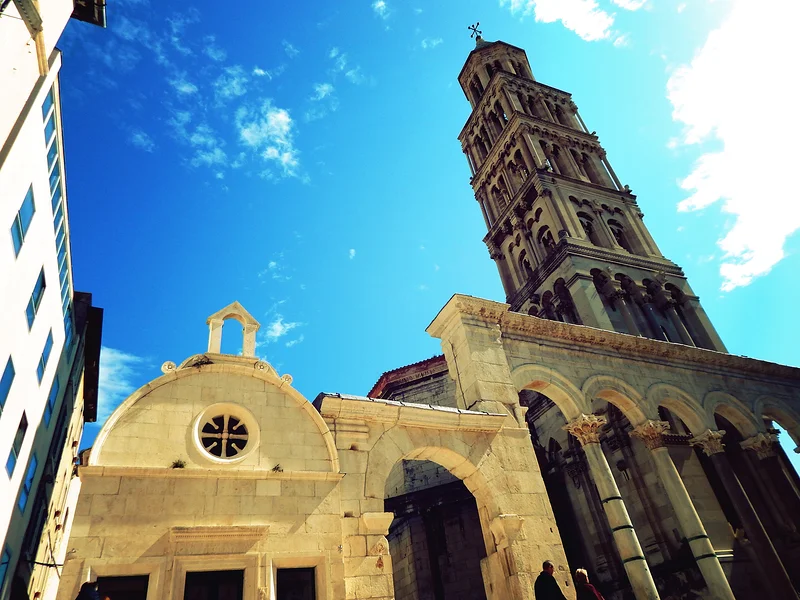
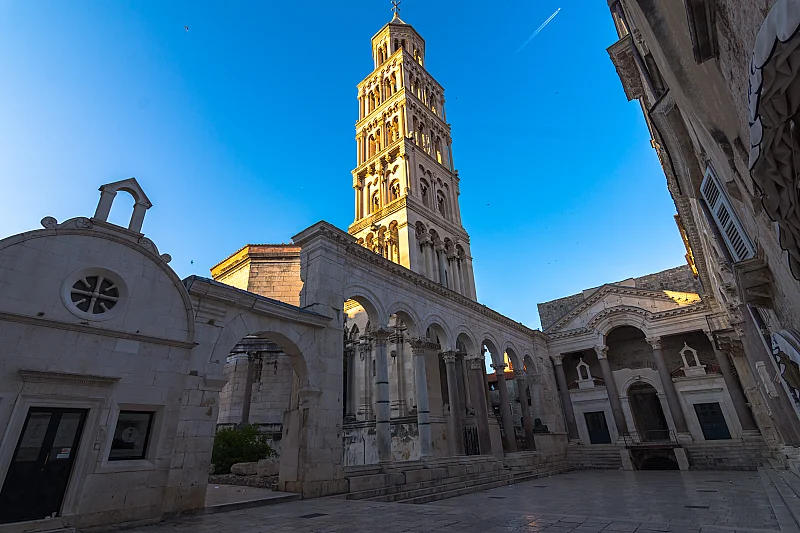
You walk into Diocletian's Palace freely, it is a lived-in neighborhood: enter through the Bronze Gate, on the Riva side, cross the vaulted cellars (about $8.80 per person, ticket on the spot) and come out on the Peristyle, the emperor's court of honor, lined with columns, with an Egyptian sphinx in black granite.
Diocletian's mausoleum became St Domnius Cathedral: climb its bell tower (about $7.70, combined ticket with the cathedral) to see the roofs and the harbor.
At sunset, climb the steps of Marjan hill, the wooded park west of the center: from the terrace of the first lookout, fifteen minutes from the Riva, you see the palace, the harbor and the islands. Walk back down for dinner at Villa Spiza (Petra Kružića 3), market cooking on a chalkboard menu, no reservations, or at Konoba Fetivi (Tomića stine 4), a tavern in the Varoš district, at the foot of Marjan, for grilled fish.
Pick up the car at 9am at the bus station or the airport, and follow the coast road west: Trogir is 17 miles (28 km) away, half an hour, just past the airport. The old town sits on an islet linked to the mainland by a bridge: park in the lot on the shore, before the bridge, and walk in.
Trogir is a Venetian town of white stone, a Unesco World Heritage site. Visit St Lawrence Cathedral, whose Romanesque portal was carved by Master Radovan in the 13th century (about $11, bell tower included: climb it for the view over the roofs), pass the loggia, then walk to the end of the quay to Kamerlengo fortress, a Venetian fort: from its rampart walk, you see the whole harbor.
Allow two hours, then have lunch at Konoba Trs (Matije Gupca 14), on a terrace in a shady lane.
Head back toward Split inland: Klis fortress is 25 km (15 miles) from Trogir, set on a ridge between two mountains, above Split. It held out against the Ottomans for a quarter of a century before falling in the 16th century, and the series Game of Thrones filmed there; the drive up is free, entry costs about $11 per person, and the view reaches the islands. Allow an hour and a half.
Split is 13 km (8 miles) below, twenty minutes: leave the car in the parking lot for the night and go back to the Riva, the palm-lined promenade along the palace, where the locals have their evening drink. Dine at Bokeria (Domaldova 8), near the fish market, on a seafood risotto and a glass of Pošip, the white wine of Korčula.
The Jadrolinija ferry leaves from Split harbor, five minutes from the palace, for Stari Grad, the port of the island of Hvar: a two-hour crossing, several departures a day, about $72 for the car and two passengers in summer. Take the morning one and, in July and August, show up an hour early with your ticket: cars board in order of arrival.
Stari Grad is the oldest town on the island, founded by the Greeks: a quay, stone lanes and, behind the town, the Stari Grad Plain, a Greek field system listed by Unesco, still planted with vines and olive trees. Have lunch on the quay, then take the road over the island's ridge: 20 km (12 miles), half an hour, and below you see the town of Hvar, facing the Pakleni islands.
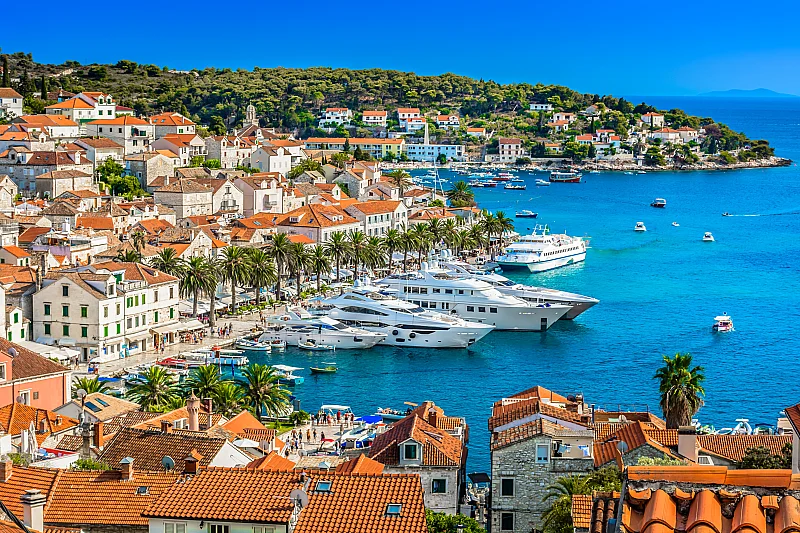
Park in the lot at the entrance to town and walk down to St Stephen's Square, the largest square in Dalmatia, open onto the harbor, with its Venetian cathedral at the far end and its arsenal to one side. Then climb to the fortress, known as the Spanish fortress, by the stairways of the upper town: twenty minutes uphill under the pines, about $14 per person.
Get there before sunset: from its ramparts, you see the town, the harbor and the wooded archipelago of the Pakleni islands.
Dine at Konoba Menego (Kroz Grodu 26), on the stairways of the old town, a family tavern serving Dalmatian dishes, no reservations possible, or at Dalmatino (Sveti Marak 1), more elegant, to book the day before in summer.
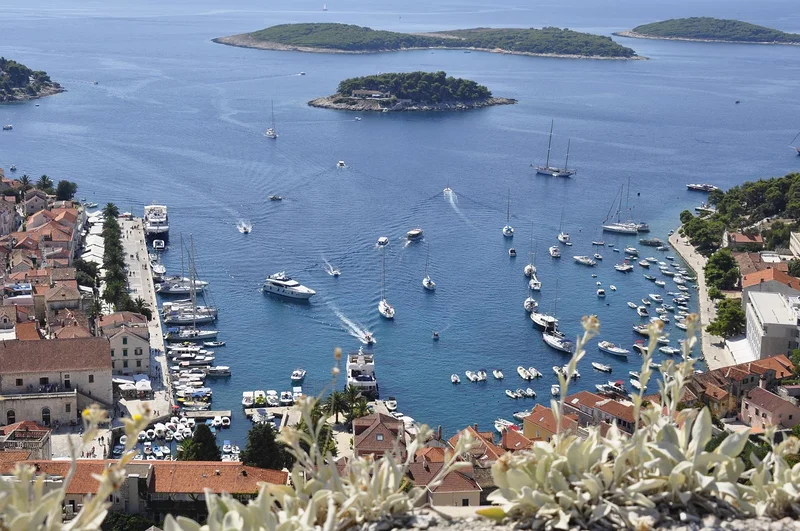
The Pakleni islands are the chain of wooded islets facing Hvar harbor: water taxis leave from the harbor every half hour from 9am in season (about $17 per person round trip, no booking) and drop you at Palmižana, on the island of Sveti Klement, in twenty minutes. You find a marina, a botanical garden planted in the 19th century and, ten minutes along the path, pebble coves on both sides of the island.
Have lunch at Meneghello, the restaurant of the family that planted the garden, above the cove, for grilled fish or an octopus salad, then go back to the cove: the water is above 22 °C (72 °F) from June, and the water taxis run back until 6pm.
In the late afternoon, take the car inland: Vrboska, 30 km (19 miles) along the ridge road, about forty minutes, is a fishing village built at the end of a long, narrow inlet, with stone bridges that earned it the nickname of little Venice, and a fortified church.
Jelsa, five minutes further, has a square shaded by plane trees and the Tomić winery, which pours Plavac Mali, the island's red wine, by the glass. Allow an hour in each village, and drive back to Hvar for dinner.
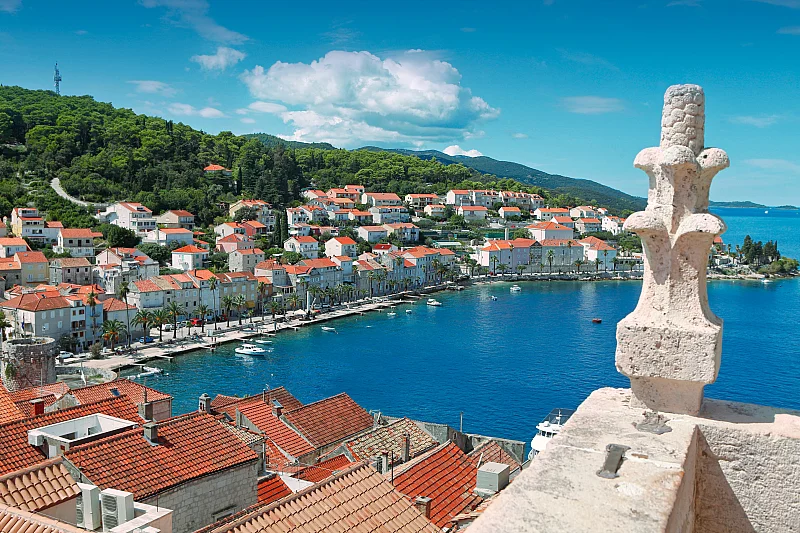
This is the longest day at the wheel, four hours in all, broken up by two ferries: leave at 8am. The road runs the full length of the island of Hvar, 77 km (48 miles) of ridge and bends to Sućuraj, the port at the eastern tip, in 1h50; after Jelsa, you will find almost no village to stop in.
At Sućuraj, the Jadrolinija ferry to Drvenik, on the mainland, has about ten departures a day in summer and crosses in thirty minutes (about $28 for the car and two passengers). From Drvenik, the coast road heads south; have lunch on the way, then leave it for the Pelješac peninsula.
Pelješac is a 65 km (40-mile) peninsula of terraced vineyards above the sea: the road passes the Dingač and Postup vineyards, the most renowned sites for Plavac Mali, the red wine of Dalmatia, before Orebić, facing Korčula. The ferry to Dominče, on the island, leaves every half hour in summer and crosses in twenty minutes (about $28 for the car and two passengers); Korčula town is 3 km (2 miles) away.
Park in the lot below the ramparts and climb the stairway of the Land Gate: you cross the old town of Korčula in ten minutes, from St Mark's Cathedral and its bell tower (about $4.40 to climb) to the so-called Marco Polo house, where local tradition has the Venetian merchant born.
Dine at Konoba Adio Mare (Ulica svetog Roka 2), near the Marco Polo house, on grilled fish and a glass of Grk, the white wine from Lumbarda, the neighboring village.
Keep the morning for the quays of Korčula while they are quiet, before the first catamaran of day-trippers arrives: the walk around the ramparts from outside takes twenty minutes, and the cafés on the west quay serve breakfast facing Pelješac. Then take the Dominče ferry back to Orebić, and the peninsula road in the other direction: 65 km (40 miles), 1h10, to Ston.
Ston closes the entrance to the peninsula with a 5 km (3-mile) wall, the longest in Europe, which climbs from the town to the hilltop and comes down on Mali Ston, the harbor on the other side: allow an hour one way on the rampart walk (about $11 per person); take water, the path has no shade. Below, the Ston salt pans have produced salt since the Middle Ages.
Have lunch in Mali Ston, whose bay has farmed oysters since antiquity: at Kapetanova kuća (Obala dr. Ante Starčevića 9), on the quay, order a plate of Ston oysters, then a black cuttlefish risotto.
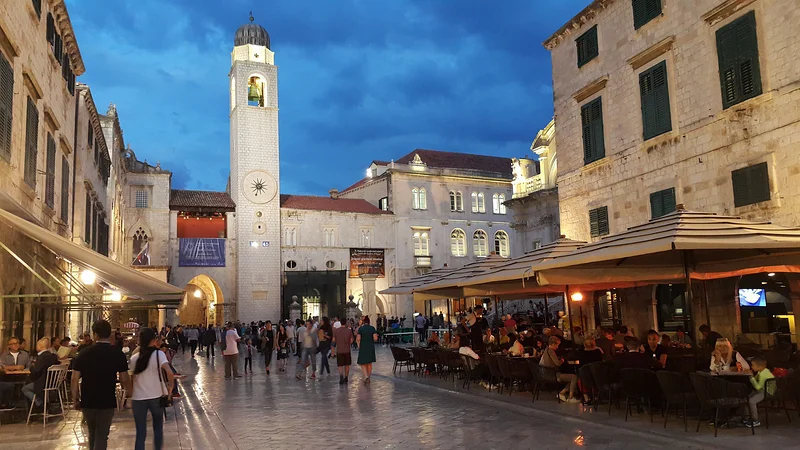
Dubrovnik is 55 km (34 miles) away, an hour on the coast road, which follows the Dubrovnik riviera and its villages. Leave the car in your hotel's parking lot or in the public Ilijina Glavica garage, above the old town, and walk down to the Pile Gate: the Stradun, the main street of polished stone, starts behind it and leads to the clock tower.
Walk the Stradun after 7pm, once the cruise ships have left: follow it to Luža Square, at the far end, have a drink under Orlando's Column, then dine at Proto (Široka 1), a fish restaurant open since 1886, or at Nishta (Prijeko 30), a vegetarian restaurant, one of the few good tables on Prijeko street. Book them the day before in summer.
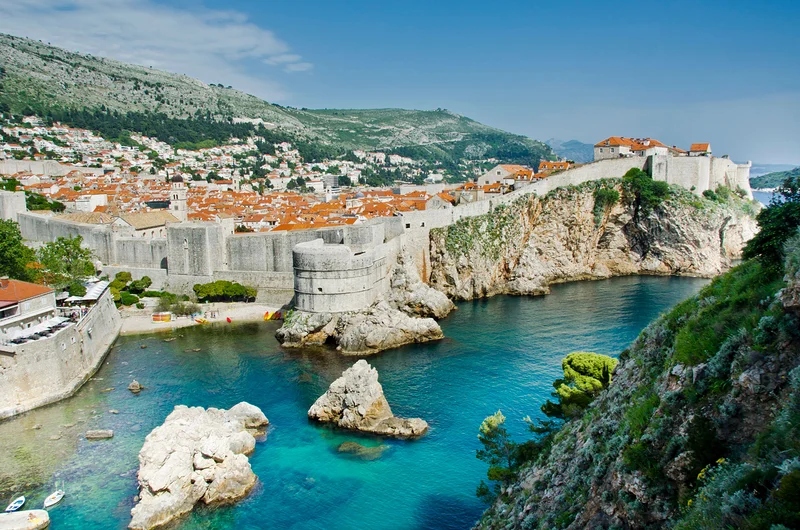
Be at the entrance to the walls, just right of the Pile Gate, at opening time, 8am from April to October: the rampart walk is 2 km (1.2 miles) long, climbs to Fort Minčeta, the round tower at the highest point of the town, and comes back down on the sea side above the red roofs. Allow two hours, about $44 per person, ticket on the spot or online; from 10am, the cruise-ship groups fill the one-way rampart walk.
The walls ticket also covers Fort Lovrijenac, the fortress set on its rock outside the walls, facing the Pile Gate: a ten-minute climb; from its terrace, you see the whole town and its walls above the sea.
Walk back down the Stradun to the Rector's Palace, the seat of the Republic of Ragusa, Dubrovnik's former name, which governed itself for more than four centuries, and have lunch around the old harbor, sheltered by the walls.
The cable car leaves from Petra Krešimira IV street, five minutes above the Ploče Gate, and climbs Mount Srđ in four minutes (about $33 per person round trip, ticket on the spot): from the top, you see the whole old town, the island of Lokrum opposite and the Elaphiti islands in the distance.
Go up an hour before sunset and have a drink on the terrace of the restaurant at the top; expect a line for the ride down, at nightfall.
For a flight the next day, return the car at Dubrovnik-Čilipi airport, 20 km (12 miles) to the south, on the last evening: the shuttle bus (about $11) brings you back to the Ploče Gate, a taxi (about $44) to your hotel. You can also return it on the morning of the flight, as the agencies open before the first departures, but you pay for an extra day of rental.
Choose where to pick up the car and your dates: rental companies' offers appear side by side.
Compare rental companies on Kayak in real time: Hertz, Avis, Europcar, Sixt and more.
A compact car costs $44 to $77 a day in June, more in August; book it a month ahead for that price, and even earlier for an automatic, which is rare with Croatian rental companies and the default for most North American drivers: ask for one when you book.
You pick the car up in Split and return it in Dubrovnik: most rental companies allow it between two Croatian cities against a one-way fee, which varies threefold from one agency to another. Compare it when booking: it costs as much as two days of rental.
A credit card in the driver's name is required for the deposit. Check when booking that the insurance covers the ferry crossings.
| Line | Crossing | Summer frequency | Fare, car + 2 |
|---|---|---|---|
| Split - Stari Grad (Hvar) | ~2h | 4 to 6 / day | ~$72 |
| Sućuraj (Hvar) - Drvenik | ~30 min. | ~10 / day | ~$28 |
| Orebić - Dominče (Korčula) | ~20 min. | Every 30 min., approx. | ~$28 |
Only the first line takes bookings: in July and August, buy the Split - Stari Grad ticket online a few days ahead. You take the Orebić line both on the way there and on the way back. The other two lines are shuttles with no booking: check the day's timetable the evening before, it changes with the season, and arrive half an hour early in August.
The itinerary follows the coast road, the Magistrala, and the island roads, which are narrow and winding: to take a photo, stop at the pull-offs provided, never on the roadway. No toll is compulsory; the A1 highway, which runs inland parallel to the coast between Split and Ploče, is tolled and only saves half an hour. Fuel costs about $1.70 a liter (roughly $6.30 a US gallon).
| Stop | Parking | Rate | On foot |
|---|---|---|---|
| Split | Harbor and bus station lots | ~$2.20 to $3.30 / h | 5 min. to the palace |
| Trogir | Shore, before the bridge | ~$2.20 / h | 3 min. to the cathedral |
| Hvar | Lot at the entrance to town | ~$3.30 to $5.50 / h in summer | 10 min. to the square |
| Korčula | Below the ramparts, by the bus stop | ~$2.20 / h | 5 min. to the cathedral |
| Ston | Entrance to town | Free or ~$1.10 / h | 3 min. to the wall |
| Dubrovnik | Ilijina Glavica garage, or the hotel | ~$4.40 to $6.60 / h | 10 min. to the Pile Gate |
The four towns on this itinerary are pedestrian inside their walls; hotels in the old centers have no parking, those on the edge of town do: it is the first question to ask when booking, above all in Dubrovnik, where a garage space costs more than a dinner. Pay at the meter or by app, by card almost everywhere.
| What | When to book | Price |
|---|---|---|
| Split - Stari Grad ferry in summer | A few days ahead | ~$72 car + 2 |
| Hotels in Hvar and Dubrovnik, July-Aug. | From spring | Up to double the June price |
| The car, one way | 1 month ahead | $44 to $77 / day |
| Kapetanova kuća, Mali Ston | The day before | ~$55 / pers. |
| Proto or Nishta, Dubrovnik | The day before | ~$44 to $66 / pers. |
| Walls of Dubrovnik | On the spot or online | ~$44 / pers. |
| Mount Srđ cable car | On the spot | ~$33 / pers. |
| Item | Mid-range | With a little more |
|---|---|---|
| Car, 6 days, one-way fee included | $390 to $550 | $720 with an automatic |
| Ferries, fuel and parking | ~$270 | ~$330 with hotel garages |
| Hotels, 7 nights | $1,210 to $1,650 | $2,090 with the Palace Elisabeth and Lešić Dimitri |
| Meals, 7 dinners and 7 lunches | ~$940 | ~$1,210 with the oysters and a fine-dining table |
| Visits, walls, water taxis | ~$280 | ~$330 with wine tastings |
| Total for two | ~$3,300 | ~$4,620 |
The hotel is what makes the budget vary: room prices town by town are in the "good to know" tab, and they double in August. Visits cost little, apart from the walls and the cable car in Dubrovnik, about $154 for two for both.
Skip Korčula and the long ferry day: from Hvar, go back to Split on the Stari Grad ferry on the fourth morning, take the A1 highway to Ploče then the coast to Ston for lunch, and sleep in Dubrovnik that same evening: 230 km (145 miles), 3h30 of driving. Split and Dubrovnik keep two nights, Hvar only one.
Add a night in Korčula to spend a day in Lumbarda, the village of the Grk vines, ten minutes from town: the grape grows only in its sand, and the village has a sandy beach, rare in Dalmatia.
Also add a day from Dubrovnik to visit Cavtat, a small harbor town twenty-five minutes to the south, or the island of Mljet, whose national park surrounds two saltwater lakes in a pine forest: the catamaran leaves from Gruž harbor, 3 km (2 miles) from the old town, and crosses in an hour and a half.
You can do the same route by catamaran, without a car: Krilo and Jadrolinija link Split, Hvar, Korčula and Dubrovnik from April to October, one or two departures a day on each leg, one to two and a half hours per leg, about $28 to $55 per person depending on the leg, tickets online a few days ahead in summer.
Reach Trogir by bus or boat from Split, Ston and Mali Ston by bus from Dubrovnik; only inland Hvar and the Pelješac wine road stay out of reach.
From Dubrovnik, follow the itinerary backwards: the walls on the first morning, then Ston, Korčula, Hvar and Split. Choose this direction if you find a cheaper arrival flight into Dubrovnik, which is often the case from the UK; pick up the car at Dubrovnik airport, 20 km (12 miles) from town, and return it at Split airport.
Dalmatia
Pick your dates and see the offers from the major booking sites side by side.
Compare live offers from Booking, Expedia, Agoda and other partners.
Dalmatia: find your hotel
Yes, by catamaran: Krilo and Jadrolinija link Split, Hvar, Korčula and Dubrovnik from April to October, for foot passengers, in one to two and a half hours per leg. You give up inland Hvar and the Pelješac road, but you visit the four towns and Ston without hunting for parking.
Only Split - Stari Grad, in July and August: the ticket is bought online a few days ahead, and the car boards in order of arrival, an hour before departure. The Sućuraj - Drvenik and Orebić - Dominče lines are shuttles with no booking; check the day's timetable the evening before.
From Split if you find a cheaper arrival flight into Split; the route then runs north to south, and Dubrovnik closes the trip. From Dubrovnik, which often has the cheaper flights from the UK, follow the itinerary backwards, with the walls on the first morning. Either way, you return the car at the other end, one way.
No: since the Pelješac bridge opened, the coast road bypasses Neum, and the rental car never leaves the European Union. No border, no green card, no permission to ask the rental company for.