Dubrovnik for couples: things to know before you go (2026)
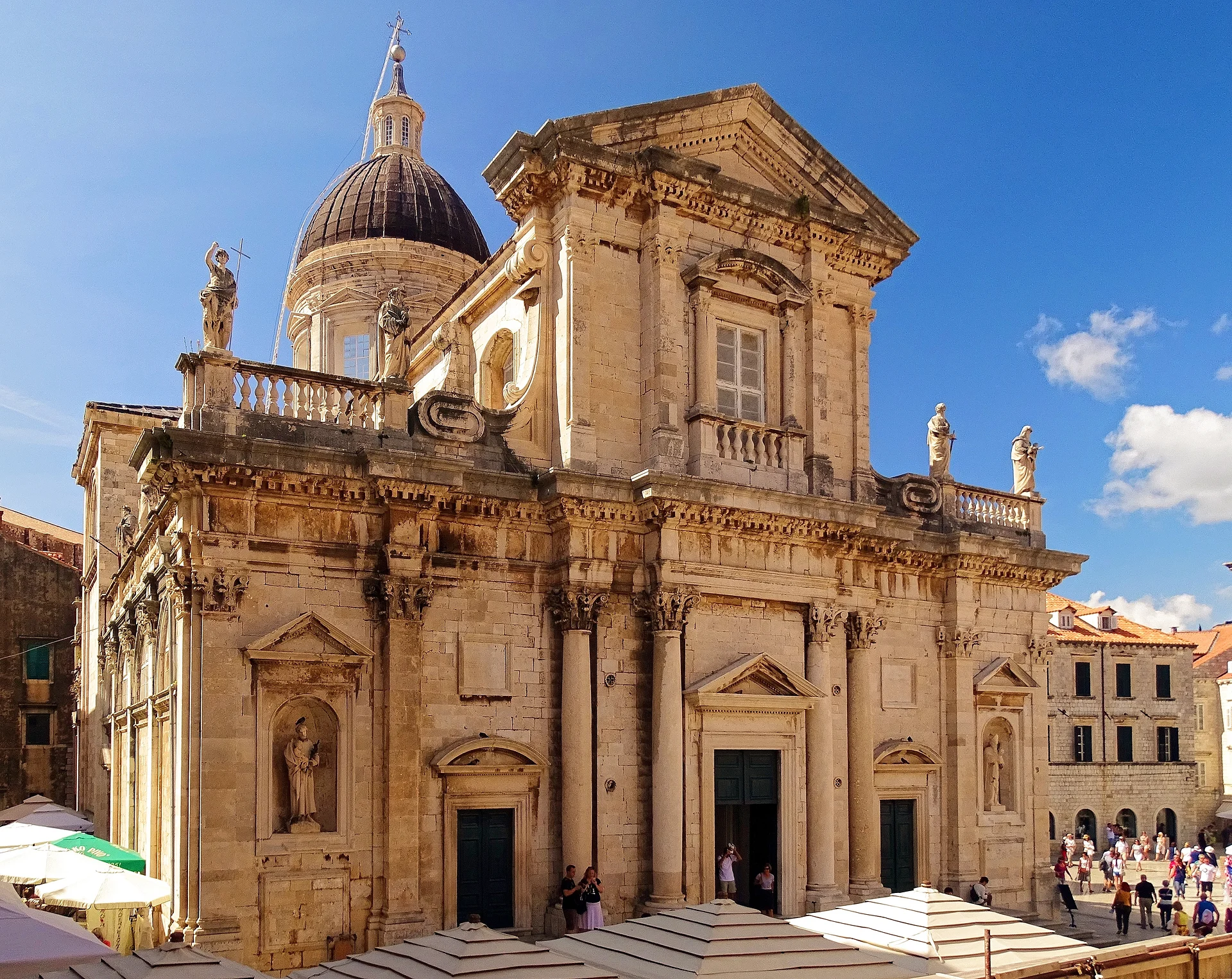
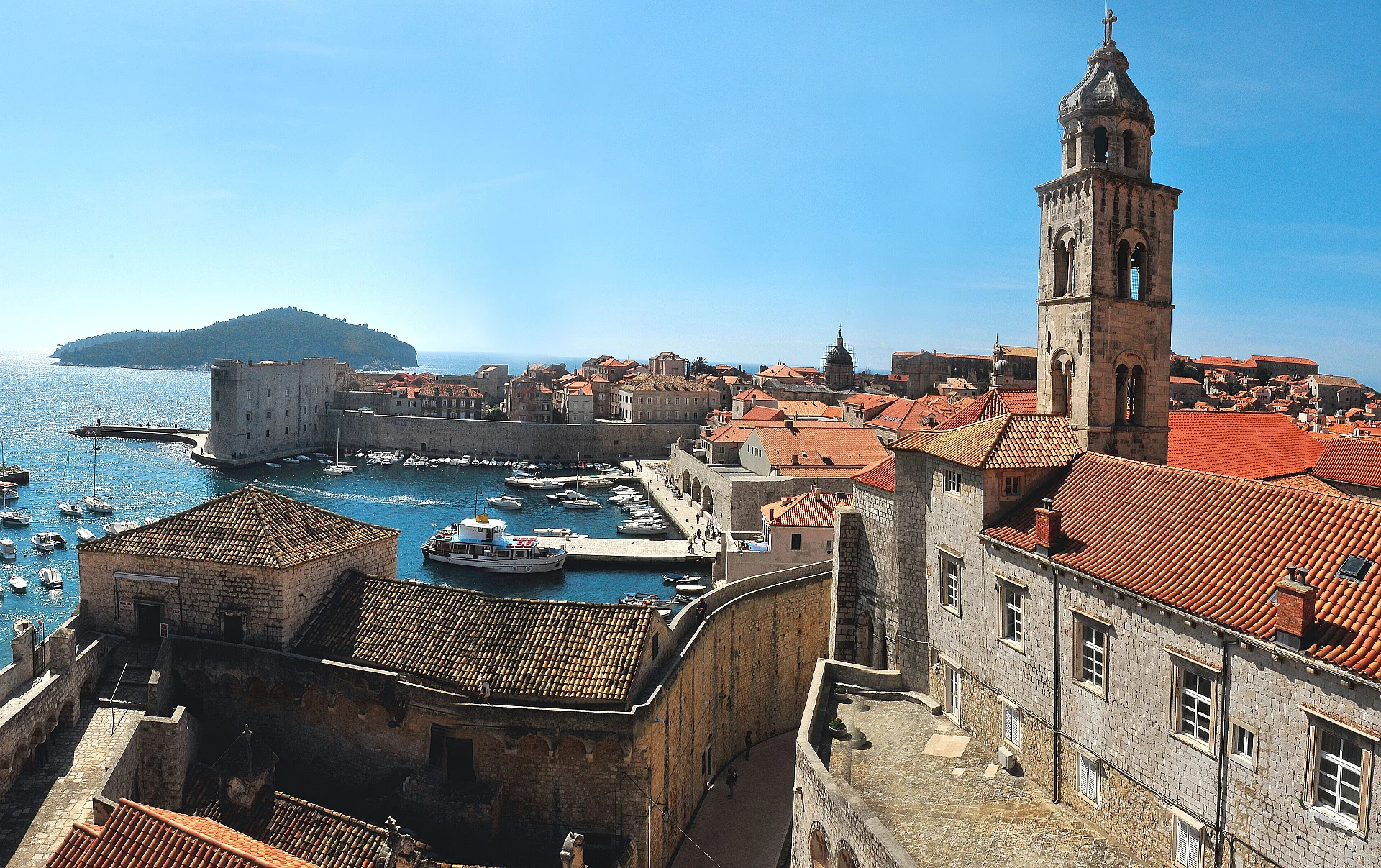
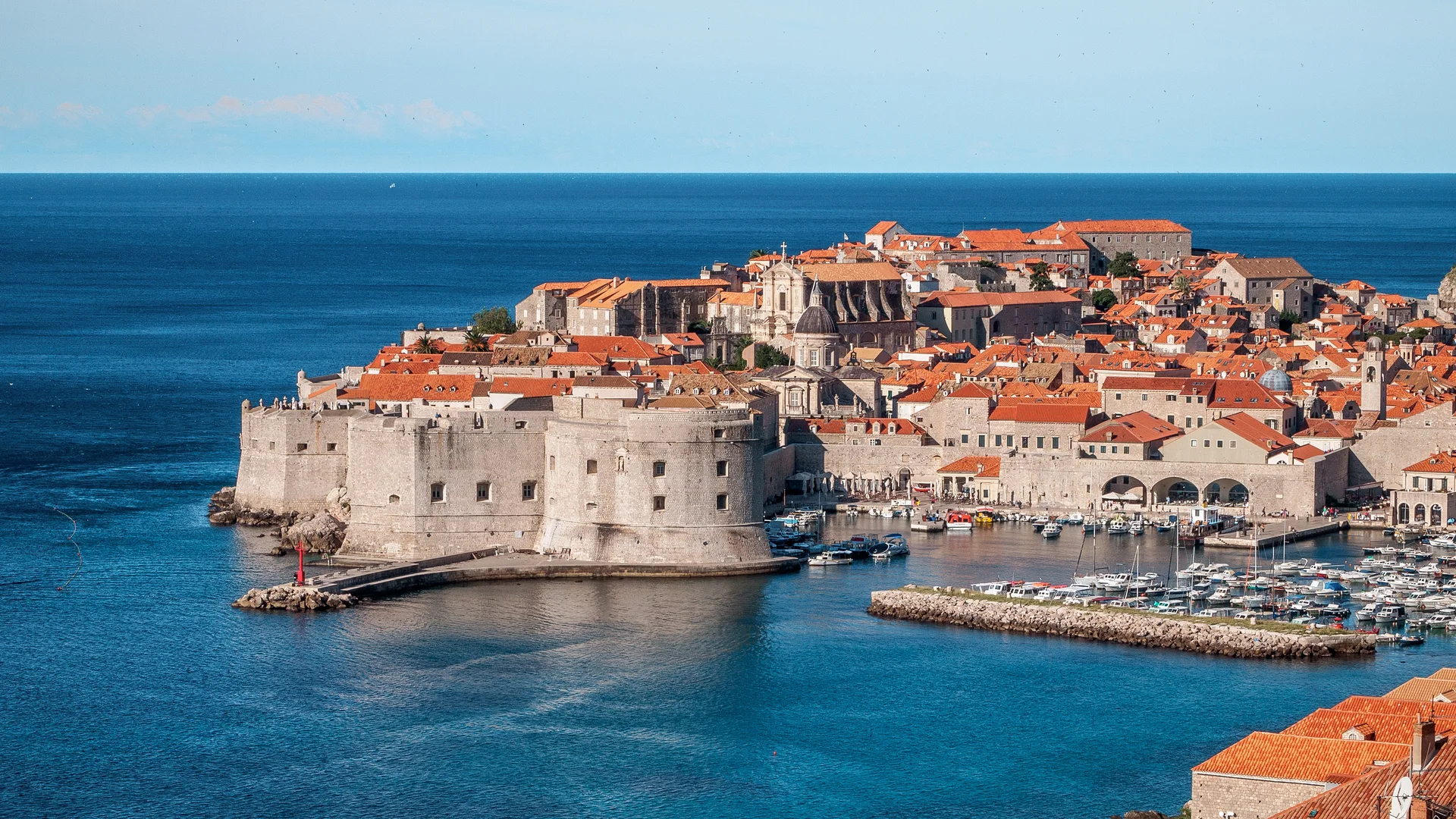
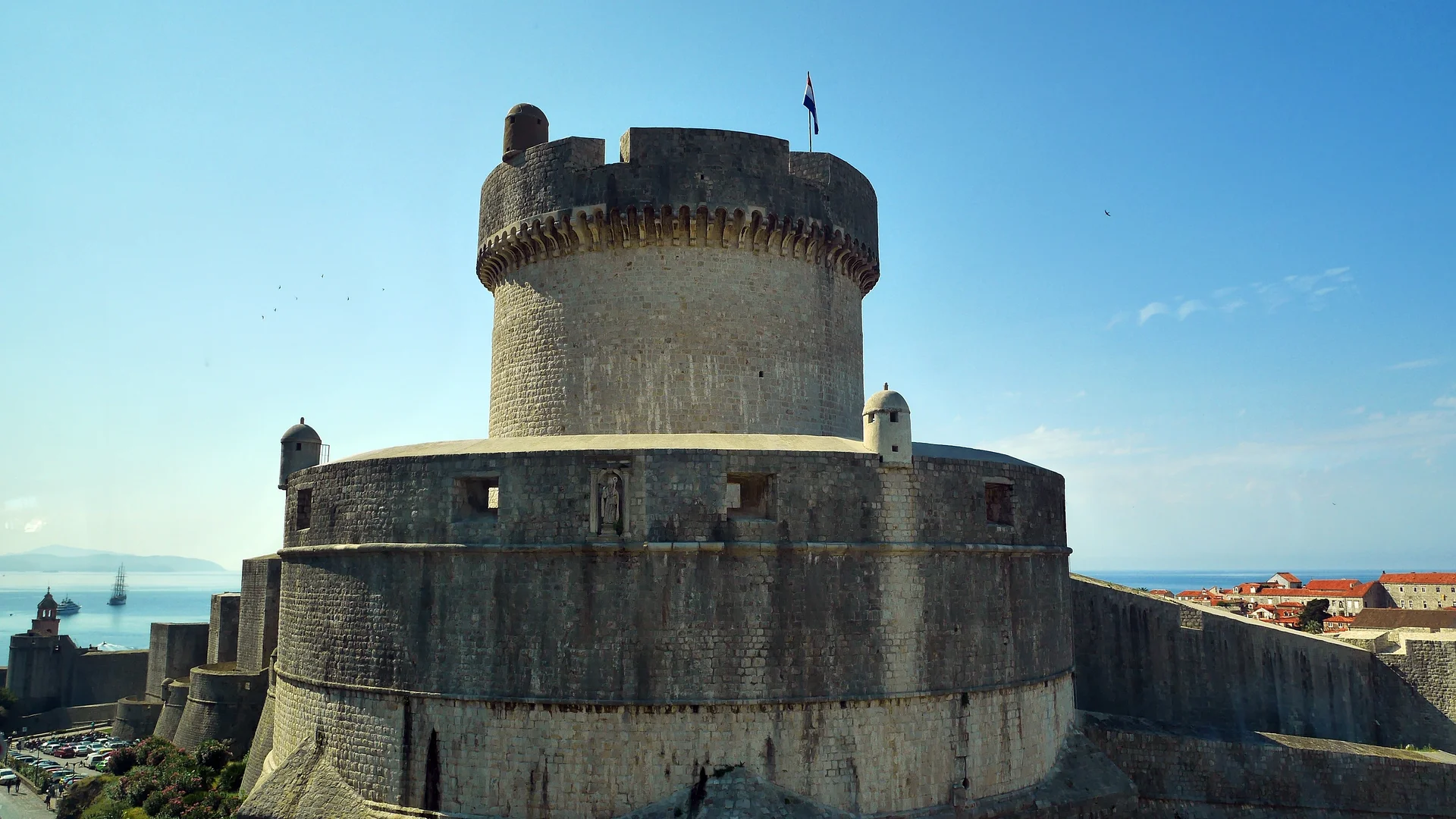
Dubrovnik is shared by two crowds: cruise passengers, who pour in by the thousand around 10am, and couples who sleep inside the walls and get the city to themselves before 9am and after 6pm. The City Walls at opening time, the Stradun almost empty at nightfall, a drink on the rocks at Buža Bar as the sun goes down: the quiet hours make the trip. In between, July and August heat pushes you toward the sea, Lokrum and the Elaphiti Islands, and the shade of a museum.
At a glance
- When to go
- Late May and June, then September and early October: 77 to 82°F (25 to 28°C), a sea of 68°F (20°C) or more, and walls without the furnace of July and August.
- How many days
- Three full days for the walls, Lokrum and an evening on the rocks; four to add a day among the Elaphiti Islands, or in Cavtat and Ston.
- Which neighborhood
- The Old Town for a first visit, Ploče for views of the walls and quiet evenings, Lapad for the beach and softer prices.
- Budget for two
- Around $2,130 for three nights in comfort, hotel, meals, walls and boats included, flights excluded: the priciest stretch of the Croatian coast.
- The moment for two
- Buža Bar, on the rocks below the walls, an hour before sunset, or the cable car up Mount Srđ at the same hour.
- Book ahead
- A July or August hotel, three to four months out; a table with a view, two to four weeks; the evening cable car, the day before. The walls are paid for at the gate.
Why Dubrovnik for two
Dubrovnik fits inside its walls: 1.2 miles (1.9 km) of ramparts, a main street of 330 yards, the Stradun, and stepped lanes where no car can go. A couple crosses the Old Town in twenty minutes, and every lane that drops downhill opens onto the Adriatic. Outside the walls the sea does the rest: the rocks of Buža Bar, Banje Beach facing the ramparts, the island of Lokrum ten minutes away by boat.
The price of this beauty is the crowd. From 10am to 5pm, especially June to September, cruise ships moored at Gruž unload thousands of passengers into the Old Town, and the Stradun takes small steps. Before 9am and after 6pm the city belongs again to people who sleep there: the same pale stone, terraces with a table for two, and the sea darkening beyond the walls. Sleeping inside the walls or ten minutes away on foot, and getting up early, matters more than any fancy address.
The series Game of Thrones turned the city into King's Landing: Lovrijenac Fortress plays the Red Keep, and the stairs of the Jesuit church are the setting of the Walk of Atonement.
When to go
| Period | Weather | Crowds | Our verdict |
|---|---|---|---|
| April to mid-May | 59 to 72 °F (15 to 22 °C), sea ~59 °F (15 °C), a few showers | Moderate, heavier at Easter and on May holiday weekends | The walls without the heat, but the water is too cold to swim; some restaurants reopen only in May |
| Late May and June | 75 to 86 °F (24 to 30 °C), sea 68 to 72 °F (20 to 22 °C) | Heavy, cruise ships every day | The longest days, a sea you can swim in, walls bearable before 9am |
| July and August | 86 to 95 °F (30 to 35 °C), sea 75 °F (24 °C) | Very heavy: several cruise ships a day, the Old Town packed from 10am to 5pm | Stifling walls from 10am and top hotel prices; in return, the Summer Festival |
| September to mid-October | 72 to 82 °F (22 to 28 °C), sea 72 to 75 °F (22 to 24 °C) | Heavy in September, calmer in October | Our favorite: the warmest sea of the year, low light, cheaper hotels |
| November to March | 46 to 59 °F (8 to 15 °C), rain, bora wind | Light | A city without crowds, but closed restaurants, the cable car shut and few boats |
A few dates change the city. The Summer Festival, from July 10 to August 25, brings open-air concerts and theater to the squares of the Old Town and fills the hotels. St. Blaise's Day, on February 3, honors the patron saint with a procession through the streets. The bora, a cold north-easterly wind, can ground the cable car and delay boats; July and August heat, for its part, makes the walls punishing from 10am.
The cruise ship calendar is public, on the port's website and on ship-tracking sites: before you pick the day for the walls and the Stradun, look for the day with the fewest ships, and put the two busiest visits there.
Entry requirements: passports, visas, health
| Documents | Visa | Health | |
|---|---|---|---|
| United States | Passport valid 3 months beyond your departure from the Schengen area, issued within the last 10 years | None for stays up to 90 days in any 180 | Travel insurance with medical cover: US health plans rarely pay abroad |
| United Kingdom | Passport valid 3 months beyond your departure from the Schengen area, issued within the last 10 years | None for stays up to 90 days in any 180 | The free GHIC card, plus travel insurance |
| Canada, Australia | Passport valid 3 months beyond your departure, issued within the last 10 years | None for stays up to 90 days in any 180 | Travel insurance with medical cover |
Croatia is in the Schengen area and the eurozone: no currency exchange, and no checks when you arrive from another Schengen country.
If you are flying in from the US, UK, Canada or Australia
On your first entry to the Schengen area, border police record your fingerprints and a photo (the EES system): allow a little extra time at passport control. Check before you leave whether the ETIAS travel authorization is required on your dates: you apply online on the European Union's website (travel-europe.europa.eu), it costs a few euros and lasts three years.
Getting there
By air, the only practical option
| From | Flight time | Good to know |
|---|---|---|
| New York (JFK, Newark) | ~9h | Seasonal direct flights, usually May to October; otherwise via London, Frankfurt or Paris |
| Other US cities | 11h to 15h with one stop | Connect through London, Frankfurt, Munich or Paris |
| London (Heathrow, Gatwick, Stansted, Luton) | ~2h45 | Several flights a day in summer, fewer in winter |
| Manchester, Edinburgh, Dublin | 2h50 to 3h10 | Direct flights from spring to fall, usually with budget airlines |
| Toronto, Montreal, Sydney | 11h to 24h | No regular direct flight: connect through London, Frankfurt or a Gulf hub |
One airport: Ćilipi (DBV), 12 miles (20 km) south-east of the city, on the sea. The trips to your hotel are detailed below, in “From the airport to your hotel.”
By road and by sea
Dubrovnik has no train station. From Split, the bus takes 4.5 to 5 hours for $23 to $34 and follows the coast; from Zagreb, count about ten hours, and a domestic flight makes more sense. From Bari, in Italy, an overnight ferry reaches the port of Gruž in about ten hours, a way to combine Italy and Croatia. On the Split road, the bus crosses a short strip of Bosnia or takes the Pelješac Bridge: keep your passport within reach.
Practical things to know before you go
Phone
Most US carriers sell a daily international pass or include some roaming data in their premium plans: check before you fly. UK carriers have reintroduced roaming charges, some after a set number of days or for a daily fee, so check yours too. A local or European eSIM installed before departure is the cheapest fix. A trap on this coast: toward Cavtat, toward Ston and on boats along the southern shore, your phone can latch onto a Bosnian or Montenegrin network, outside the European Union and billed as roaming. Pick your network by hand, or switch mobile data off during these trips.
Money and tipping
- Cards work in hotels, museums and almost every restaurant; keep $56 in small bills for beach kiosks, the bus and the bars on the rocks.
- A coffee costs $2.80 to $4.50 in the Old Town, a draft beer $5.60 to $7.90, a glass of wine $5.60 to $9: this is the priciest town on the Croatian coast.
- Service is not always included: round up, or leave about 10% after a good dinner, nothing is required. The US habit of 18 to 20% is not expected here.
- The yellow Euronet ATMs in the tourist lanes charge steep fees; those of banks (Zagrebačka banka, PBZ, Erste) charge less.
Plugs, water and what to wear
- Plug types C and F, 230 volts: US and UK plugs need an adapter, and US devices must be dual-voltage (phone and laptop chargers usually are; hair dryers are not).
- Tap water is safe, and the large Onofrio Fountain near Pile Gate serves it free: a bottle you refill avoids $3.40 water on the Stradun.
- Shoes with grip: the limestone steps and paving, polished by centuries, are slippery, especially after rain. For the sea, water shoes: the rocks at Lokrum, Banje and Buža Bar carry sea urchins.
- Shoulders and knees covered in churches, even in August.
What to book, and how far ahead
The walls, the main attraction, are paid for at the gate, with no time slot: what you set is the hour, not the booking. What goes fast in summer is the hotel, the table with a view, the boat to the islands and the sunset cable car.
| Site | Price per person | Book | Good to know |
|---|---|---|---|
| City Walls | ~$45, Lovrijenac Fortress included | At the gate, no time slot | Open from 8am in summer; the 1.2-mile (1.9 km) loop takes 1h30 to 2h, with no shade |
| Mount Srđ cable car | ~$34 round trip | The day before; 2 to 3 days ahead in July and August for the evening | 4 min. ride; closed in high wind, not covered by the Dubrovnik Card |
| Boat to Lokrum | ~$34, reserve entry included | No booking needed | Departures from the Old Port every 30 min.; check the last return when you arrive |
| Elaphiti Islands excursion | $56 to $90, lunch often included | 3 to 5 days ahead in July and August | Leaves around 9:30am, back around 5pm; the public ferry leaves from Gruž, much cheaper |
| Dubrovnik Card | Depends on length: 1, 3 or 7 days | On the spot or online | Walls, several museums and city buses; worth it with three museums |
| A table with a view | 2 to 4 weeks ahead | 360, on the walls above the Old Port, and Proto: often full from June to September | |
| Hotel in July and August | 3 to 4 months ahead | Rooms with a view of the walls go first |
From the airport to your hotel
© OpenStreetMap contributors
The airport and the neighborhoods it serves
- Ćilipi (DBV)
- 1Pile, Old Town
- 2Ploče
- 3Lapad, Babin Kuk
| Destination | Transport | Time | Typical fare |
|---|---|---|---|
| Pile, Old Town | Atlas shuttle | ~30 min. | $12 / pers. |
| Pile, Old Town | Taxi | 25 to 35 min. | $45 to $56 / taxi |
| Ploče | Shuttle to Pile, then on foot | ~50 min. | $12 / pers. |
| Ploče | Taxi | 25 to 35 min. | $45 to $56 / taxi |
| Lapad, Babin Kuk | Shuttle to Gruž, then city bus | ~1h | $14 / pers. |
| Lapad, Babin Kuk | Taxi | 30 to 40 min. | $51 to $62 / taxi |
The shuttle meets every flight, stops at Pile Gate and then at the Gruž bus station, and is paid to the driver or at a desk in the arrivals hall. No car climbs into the walls: by taxi or shuttle, you get out at Pile Gate or Ploče Gate and finish on foot, bags included, over cobbles and steps. Hotels in the Old Town will send a porter to the gate if you ask beforehand.
Agree the taxi fare before you get in: the airport rate is fixed, and the Bolt and Uber apps, sometimes unreliable outside arrivals, quote a price in advance. If you arrive by bus from Split or by ferry, you get off at Gruž, 2 miles (3 km) north-west of the Old Town: a city bus reaches Pile in 20 minutes for a few euros.
Getting around
On foot, inside the walls and around them
The Old Town can be crossed in twenty minutes: Pile Gate is ten minutes on foot from Ploče Gate along the Stradun, and Banje Beach fifteen more. The lanes crossing the Stradun are stairways, some steep: a soft bag carries better than a wheeled suitcase, which rattles on the stone.
Buses, boats and taxis
- The city bus (Libertas) leaves Pile Gate for Ploče, Lapad, Babin Kuk and Gruž; a ticket costs $2.30 to $3.40, cheaper at a kiosk than from the driver, and buses are packed in summer.
- Boats leave the Old Port for Lokrum, Cavtat and the Elaphiti Islands; the public ferry to the islands leaves from Gruž.
- A taxi costs $12 to $17 to cross town, more at night; set the price first, or order through an app.
- The cable car climbs Mount Srđ in 4 minutes; it is not included in the Dubrovnik Card.
Budget for two
Dubrovnik is the most expensive town in Croatia for a bed and for a seat on a terrace, and prices climb by half in July and August. Sights weigh more than elsewhere, because every monument, every boat and the cable car has a ticket; meals weigh less, thanks to the konobe outside the walls. Here is what three nights for two cost, flights excluded.
| Smart | Comfort | Treat yourselves | |
|---|---|---|---|
| Hotel, per night | $146 to $220 | $280 to $430 | from $620 |
| Meals, per day for two | $101 | $191 | $400 |
| Sights for the stay | $210 walls, Lokrum, cable car | $340 with the Elaphiti | $680 with a private boat |
| Transport for the stay | $45 shuttle and bus | $135 with taxis | $340 with private transfers |
| Total for three nights | $1,120 | $2,130 | $4,260 |
A hotel in Lapad or Boninovo costs 30 to 50% less than one inside the walls or in Ploče, and May or October 30 to 40% less than August. The tourist tax ($1.70 to $3.40 per person per night) is paid on the spot.
Benchmark prices
| Item | Price |
|---|---|
| Coffee at the counter, on a Stradun terrace | $2.80, $4.50 |
| Draft beer, 0.5 l | $5.60 to $7.90 |
| Glass of local wine | $5.60 to $9 |
| Dinner for two with wine in a konoba | $90 to $146 |
| Grilled fish, by weight | $68 to $101 / kilo |
| One scoop of ice cream | $2.80 to $3.40 |
| Walls, Lokrum, cable car | ~$45, ~$34, ~$34 |
| City bus, one ride | $2.30 to $3.40 |
Specialties to taste
Dubrovnik cooking comes from the sea and the islands: fish, shellfish, Ston oysters, and slow-simmered home dishes with a touch of Venice and the hinterland. It is best tasted in a konoba, a stone tavern, far from Prijeko street and its picture menus.
At the table
-
Crni rižot
Black risotto colored with cuttlefish ink, briny, served all along the coast; the black teeth are part of the fun.
-
Pašticada
Beef marinated, then simmered for hours in a wine and prune sauce, served with gnocchi: the Dalmatian festive dish.
-
Buzara
Mussels or scampi cooked in white wine, garlic and breadcrumbs, with bread for the sauce; excellent at the Old Port.
-
Ston oysters
Flat oysters from Mali Ston, raised in the bay, best from fall to spring: $1.70 to $2.80 each, better on the spot, with no lemon or sauce.
-
Octopus or lamb under the peka
An iron bell (the peka) covered in embers cooks meat or octopus for hours: order two to three hours ahead, for two or more.
-
Ham and Pag cheese
Dalmatian pršut, a thin slice dried in the bora wind, with sheep's cheese from the island of Pag; the starter that goes with red wine.
-
Rožata
The dessert of Dubrovnik, a crème caramel flavored with rose liqueur, served warm or cold in every restaurant.
-
Arancini
Sticks of candied orange peel with almonds: a specialty of the town, sold in bags in the shops of the Old Town.
In the glass
-
Pošip
The dry white of the islands, fruity and round, from Korčula; the wine for fish and for the aperitif, $5.60 to $7.90 a glass.
-
Dingač and plavac mali
Dingač is an appellation of the Pelješac peninsula, plavac mali the grape: powerful, tannic reds for beef or ham.
-
Dubrovnik Malvasia
The local white of Konavle, rare and dry: ask for it at a wine bar such as D'Vino.
-
Prošek
A sweet Dalmatian dessert wine with dried-fruit notes: a small glass with the rožata.
-
Travarica and rakija
House brandy, plain or herbal (travarica), often offered after dinner in many konobe.
-
Croatian beer
Ožujsko and Karlovačko, light lagers, $5.60 to $7.90 on draft, best drunk facing the sea.
Local customs and rules
About a thousand residents still live inside the walls, surrounded by visitors in every season, and the city has set its rules. A Dobar dan (good day) on entering a shop and a hvala (thank you) on leaving are met with a smile.
- Shirtless or in a swimsuit in the streets of the Old Town: forbidden, and fined. Keep beachwear for the beaches.
- Lunch runs from noon to 3pm and dinner starts at 7pm; from November to March, many restaurants close, and boats to the islands run less often.
- The walls are walked in one direction only, with no turning back; do not sit on the battlements for a photo.
- In a konoba, fish by weight is weighed in front of you: ask the price per kilo before you choose.
- On Lokrum, part of the rocks is clothing-optional; signs mark it, and photos are off limits there.
- Shoulders and knees covered in churches.
Safety
Dubrovnik is one of the safest cities in Europe for a couple, by day and by night. The risks are heat, slippery steps, the sea and the bill, far more than thieves.
- On the walls there is no shade for 1.2 miles (1.9 km): start before 9am with 1.5 l of water and a hat. At 95°F (35°C), heat stroke comes quickly, especially around noon.
- The polished limestone steps are slippery, especially wet, and the rocks at Buža Bar have no railing: no swimming or cliff edges after a few drinks.
- Sea urchins cover the rocks at Lokrum, Banje and Buža: wear water shoes, and do not walk barefoot into the water.
- On Prijeko street and around the Stradun, touts and picture menus signal pricey tables; for fish by weight, fix the price per kilo before ordering.
- At Pile Gate, some taxi drivers inflate fares: pick a taxi whose price is set before you get in, or order through an app.
- In the crowd on the Stradun, at Pile Gate and on packed summer buses, pickpockets exist but are rare: phone in a front pocket.
Mistakes couples make
Almost every disappointment comes from the same script: the walls at noon in July, a dinner at the first terrace on Prijeko street, and a hotel outside town for the price. Dubrovnik works the other way round: the walls at 8am, dinner far from the Stradun, the night inside the walls or ten minutes away on foot.
- Climbing the City Walls after 10am in July and August: heat and groups turn it into two hours of ordeal without shade. At 8am they are almost empty.
- Sleeping in Cavtat, Mlini or Srebreno to save money: every evening ends with a 45-minute bus, and the evening is when the Old Town gives the most.
- Dining on Prijeko or on the Stradun at the first picture menu: quality is low and the bill high. The good tables are in Ploče, Lapad or at the Old Port.
- Doing Lokrum, Banje Beach and Mount Srđ on the same day, between noon and 4pm: that is when the heat peaks, and each stop has its lines.
- Visiting the Old Town on days with three or four cruise ships: the port's calendar is public, and a calmer day is within reach.
- Taking the cable car at midday: the light is white and the line long. An hour before sunset, the panorama is golden.
- Missing the last boat from Lokrum: a water taxi costs much more, and the island has no rooms.
Frequently asked questions
Is Dubrovnik a good destination for a romantic trip?
Yes, as long as you sleep inside the walls or ten minutes away on foot and use the quiet hours: before 9am and after 6pm, the Stradun, the walls and the lanes belong to people who stay the night, and a drink on the rocks at Buža Bar at sunset compares to nothing. The watch-outs are the cruise crowd between 10am and 5pm, the heat of July and August and hotel prices.
How many days do you need in Dubrovnik as a couple?
Three full days cover the walls, the Stradun, the Mount Srđ cable car, Lokrum and an evening at Banje, with time for the beach. A fourth day lets you go to Cavtat, to Ston for oysters, or out to the Elaphiti Islands, Koločep, Lopud and Šipan, by boat.
How much does a trip to Dubrovnik for two cost?
Count about $2,130 for three nights in comfort, with a hotel inside the walls or in Ploče, meals, the walls, Lokrum and the cable car, flights excluded. A smart budget stays around $1,120 by sleeping in Lapad or Pile and eating in konobe; a treat trip with a starred table and private boats goes beyond $4,260.
What time should you climb the walls to avoid the crowds?
At 8am, when they open: the 1.2-mile (1.9 km) loop takes 1h30 to 2h and ends before the cruise passengers arrive, around 10am. In the evening, an hour before closing, the light is lovely and the crowd thins, but the stone holds the day's heat. The ticket is paid at the gate, with no time slot.
Is the Dubrovnik Card worth it?
If you visit the walls and at least three museums, yes: the card (1, 3 or 7 days) bundles them, with city buses, and pays for itself fast. If you only do the walls, Lokrum and the beach, the walls ticket is enough. The cable car and the boat to Lokrum are not included.
Do you need a car in Dubrovnik?
No: the Old Town, Ploče, Pile, Lapad and the port are covered on foot, by bus or by boat, and parking is expensive. Rent a car only for a day, for Ston or an excursion to Bosnia or Montenegro, and check that the green card is included.