

D1 Day 1: the Old Town, the Royal Castle and the walls
- D1·1St. Anne's Church Church
- D1·2Castle Square Square
- D1·3Royal Castle Castle
- D1·4Market Square Square
- D1·5Barbican Landmark
- D1·6New Town Neighborhood

With two days, keep the Old Town and the Royal Castle for the first, and the Royal Route down to Łazienki Park for the second, ideally on a summer Sunday: a pianist plays Chopin there at noon. The third day belongs to memory, at the Warsaw Rising Museum, then to the sunset from the terrace of the Palace of Culture; on the fourth, cross the Vistula to Praga and come back for the opera. Check the closing days before you place each day: Monday and Tuesday decide the order.
© OpenStreetMap contributors
D1 Day 1: the Old Town, the Royal Castle and the walls
D2 Day 2: the Royal Route, the National Museum and Łazienki Park
D3 Day 3: the Warsaw Rising Museum, POLIN and the Palace of Culture
D4 Day 4: Praga, the Vistula embankments and a night at the opera
Start up high: climb the bell tower of St. Anne's Church, at the start of Krakowskie Przedmieście, in a few minutes; from the top you see the whole Old Town, the Vistula and the stadium across the river. Come back down to Castle Square, with Sigismund's Column, the city's favorite meeting point.
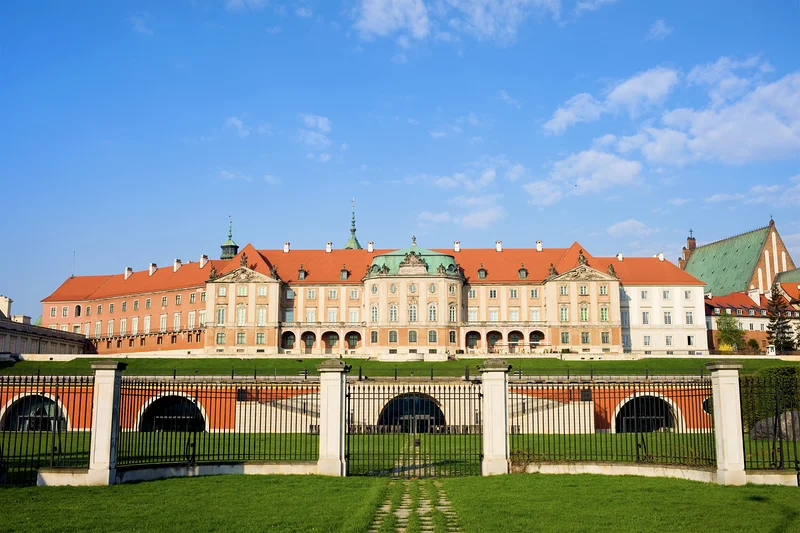
Enter the Royal Castle at opening time: the apartments and the throne room were rebuilt from fragments saved in 1939, and two Rembrandts hang in the gallery. Allow two hours, and start with the exhibition in the cellars, “From Destruction to Reconstruction”: without it, the visit feels like any other palace.
Have pierogi for lunch on Freta street, then head to the Market Square, with its bronze mermaid and painted façades. The Museum of Warsaw, on the north side, shows a short film on the destruction and rebuilding of the city: twenty minutes that change how you see the houses you have just walked past.
Then follow the walls to the Barbican, the red-brick fortified gate, and enter the New Town, with Marie Curie's birthplace at Freta 16 and the round New Town Square, calmer than the Market Square.
Walk down through the gardens below the New Town to the Vistula embankments for sunset, then climb back up for dinner on Freta or Piwna street, away from the terraces on the square.
Come back to the Market Square around 10 p.m., when the groups have gone and the lanterns light the façades: the Old Town is at its most beautiful then.
Walk down Krakowskie Przedmieście from Castle Square: the Presidential Palace, the gates of the University of Warsaw, which you can walk through to the courtyards, then Holy Cross Church, where Chopin's heart is sealed in a pillar of the nave, on the left as you enter.
Then carry on along Nowy Świat, the street of cafés, for a rose pączek at Blikle, at number 35. At the bottom of the street, the National Museum holds the great Polish painters, from Matejko to Malczewski, and the Faras Gallery, the frescoes of a Nubian cathedral saved from the waters of the Nile: allow an hour and a half.
Continue south via Three Crosses Square and Ujazdowskie Avenue, half an hour on foot, or take bus 116 if your legs ask for it.
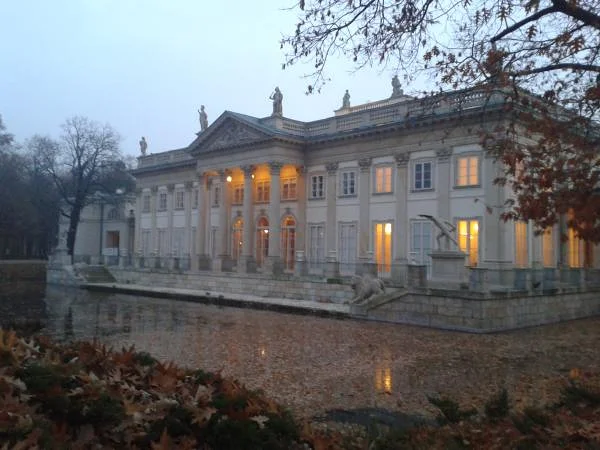
Enter Łazienki Park by the Ujazdowskie Avenue gate, in front of the Chopin Monument: on Sundays from mid-May to late September, the recital starts at noon and 4 p.m. Then follow the paths to the Palace on the Isle, the summer residence of Poland's last king, set on its lake, and the stone amphitheater by the water.
Leave the park by the north side and walk ten minutes to Zbawiciela Square: a drink on a terrace facing the Church of the Holy Saviour, then a modern Polish dinner on Mokotowska or Poznańska street, booked for the weekend.
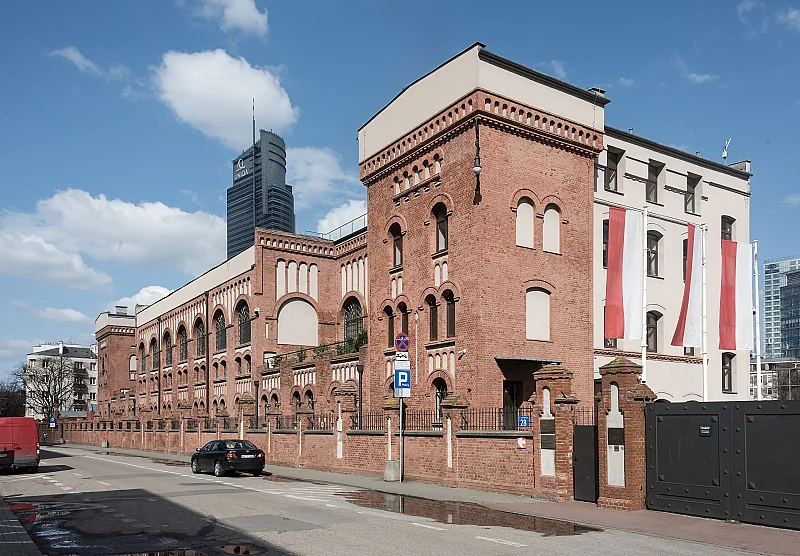
Arrive at opening time at the Warsaw Rising Museum, in a former tram power station in the Wola district: it tells the story of the sixty-three days of the summer 1944 Uprising and of the city razed afterward, with objects, voices and a 3D film flying over the ruins. Allow three hours, and a moment of silence afterward in the memorial garden.
Go on a weekday: on Saturdays, the lines at the entrance grow long, even with a ticket bought online.
Take the tram back to the center for lunch at Koszyki Hall, an early 20th-century covered market where some twenty counters serve Polish food, wine and coffee.
If you still have the energy for a museum, the POLIN Museum, in the former ghetto, traces a thousand years of Jewish history in Poland in a building of rippling glass, facing the Monument to the Ghetto Heroes; otherwise, stroll in the Saxon Garden, with the Tomb of the Unknown Soldier under the arcades.
Before you go up, stop at the Neon Museum, inside the Palace of Culture, where communist-era signs that once lit the avenues glow again (closed Thursdays). Then go up to the 30th-floor terrace of the Palace of Culture, Stalin's gift to the city, an hour before sunset: the whole of Warsaw lies below you, from the glass towers to the Vistula.
Then have dinner ten minutes away on foot, on Hoża or Wilcza street, and end with a drink in one of the bars on Poznańska.
Cross the Vistula on foot over the Śląsko-Dąbrowski Bridge, with the Old Town behind you, to St. Florian's Cathedral and its two spires. Then walk up Ząbkowska street, one of the few prewar streets left in the city, and push open the carriage doors: in the courtyards, small shrines to the Virgin date from the war.
At the end, the old Koneser distillery has kept its red-brick buildings, with the Polish Vodka Museum and its tasting tours, cafés and shops.
Have lunch at Koneser, then walk back down to the Vistula through Praski Park: the right bank has stayed wild, with willows and sand beaches facing the Old Town, where the beach bars open from May to September.
Then cross back to the left bank on metro M2, from Dworzec Wileński to Centrum Nauki Kopernik station, and go up to the free rooftop garden of the University Library, open from April to October, where you look over the Vistula and its bridges among the plants. Walk along the embankments below until sunset.
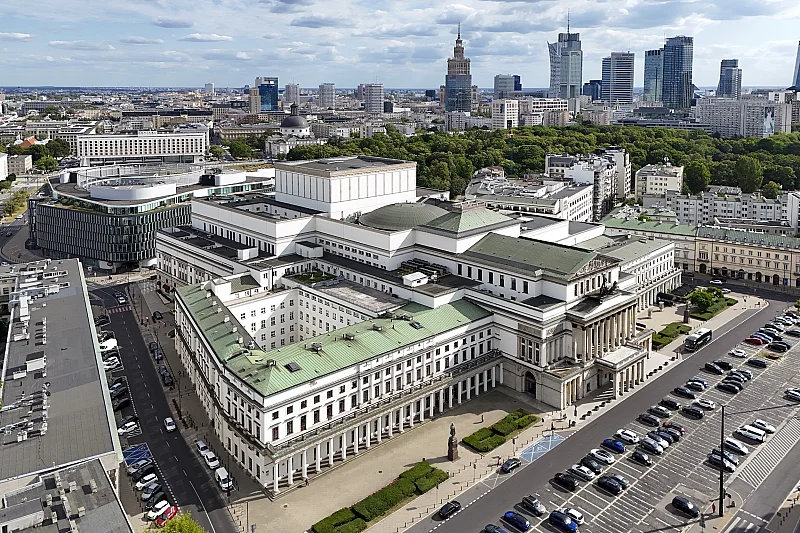
End at the Grand Theatre, the national opera, on Theatre Square: behind its 19th-century colonnade is one of the largest stages in Europe, and an opera or ballet costs $11 to $99, with seats to book two to three weeks ahead.
After the show, have a last drink five minutes away, in the Old Town or on Krakowskie Przedmieście.
Warsaw eats well at every price: the milk bars serve a full meal for $7.70 at lunch, Polish restaurants a plate of pierogi for $11, and the chefs of South Śródmieście and Powiśle a tasting menu at a gentle price for a top table. Book dinner from Thursday to Saturday, and steer clear of the terraces on the Market Square.
Milk bars
Bar Prasowy (Marszałkowska 10/16), a renovated 1950s canteen, and Bar Bambino (Krucza 21): soup, pierogi and breaded pork cutlet, ordered at the counter, at lunchtime.
Classic Polish cooking
Stary Dom (Puławska 104/106), a big brasserie-style dining room in Mokotów, for żurek and duck; Zapiecek on Freta street for simple pierogi in the Old Town.
Food halls
Koszyki Hall (Koszykowa 63) and Elektrownia Powiśle (Dobra 42), in a former power station: some twenty counters each, from ramen to Polish dishes.
Breakfast and an afternoon treat
The pączki at Blikle (Nowy Świat 35), the hot chocolate at the Pijalnia Czekolady E. Wedel (Szpitalna 8), and the cafés of Zbawiciela Square for breakfast on a terrace.
In the evening, Warsaw drinks by the water in summer, in vodka and nalewka bars all year round, and in the cocktail bars of South Śródmieście.
| Mood | Where | Our verdict |
|---|---|---|
| A drink by the water | The left-bank embankments, and the beach bars on the right bank facing the Old Town | From May to September, at sunset |
| Vodka or nalewka | The Polish Vodka Museum and the bars of Koneser, in Praga | To taste rye vodkas and homemade liqueurs |
| A drink in a courtyard | The Pawilony passage (Nowy Świat 22), a courtyard of tiny bars | Lively and cheap on weekends; noisy |
| Coffee on a terrace | Zbawiciela Square and Mokotowska street | The locals' Saturday meeting point |
Drinking in the street or a park is forbidden: have your drink on a bar terrace; the beach bars on the right bank have their own licensed areas.
Chopin
Free on summer Sundays in Łazienki, at noon and 4 p.m.; the rest of the year, one-hour recitals are given almost every evening in small halls on the Royal Route, for $22 to $33.
Opera and ballet
The Grand Theatre (plac Teatralny 1), the national opera, from September to June: $11 to $99, two to three weeks ahead.
A symphony concert
The National Philharmonic (Jasna 5), two streets from the Palace of Culture: orchestra and recitals on Friday and Saturday evenings.
The fountain show by the Old Town
From May to September, on weekend evenings, the Multimedia Fountain Park, below the Old Town, puts on a free show of water, music and light.
| Destination | Journey | What for | Our verdict |
|---|---|---|---|
| Wilanów | Bus 116 or 180, ~40 min. | The Baroque palace of King John III Sobieski, its gardens and the orangery | A half day, worth it even with three days |
| Żelazowa Wola | Bus or car, ~1h | Chopin's birthplace in its park, Sunday concerts in summer | For Chopin lovers, a half day |
| Łódź | Train, ~1h20 | Piotrkowska street, brick factories turned hotels and museums | A day for fans of industrial architecture |
| Kraków | Express train, ~2h30 | The Main Square, Wawel Castle, the Kazimierz district | For one or two nights there, not a round trip |
Warsaw
Pick your dates and see the offers from the major booking sites side by side.
Compare live offers from Booking, Expedia, Agoda and other partners.
Warsaw: find your hotel
For the essentials, yes: the Old Town and the castle on the first day, the Royal Route and Łazienki on the second. The Warsaw Rising Museum, the Palace of Culture and Praga need a third and a fourth day.
A Sunday from mid-May to late September, for the free Chopin recital at noon or 4 p.m. at the foot of the monument. On other days, go in the morning, when the paths are empty and the peacocks wander around the Palace on the Isle.
Yes, it is the visit that explains the city: why the Old Town is new, and why Praga is not. Allow three hours, buy your ticket online, avoid Tuesdays (closed) and plan something light afterward.
Pierogi, żurek and bigos in a milk bar or a Polish brasserie, herring with ice-cold vodka, a pączek at Blikle and a hot chocolate at Wedel, and modern Polish cooking once in South Śródmieście.
Wilanów, yes: the palace is forty minutes away by bus and takes half a day. Kraków deserves one or two nights there; as a day trip, you would spend five hours on the train.