




Madeira for couples: know before you go (2026)
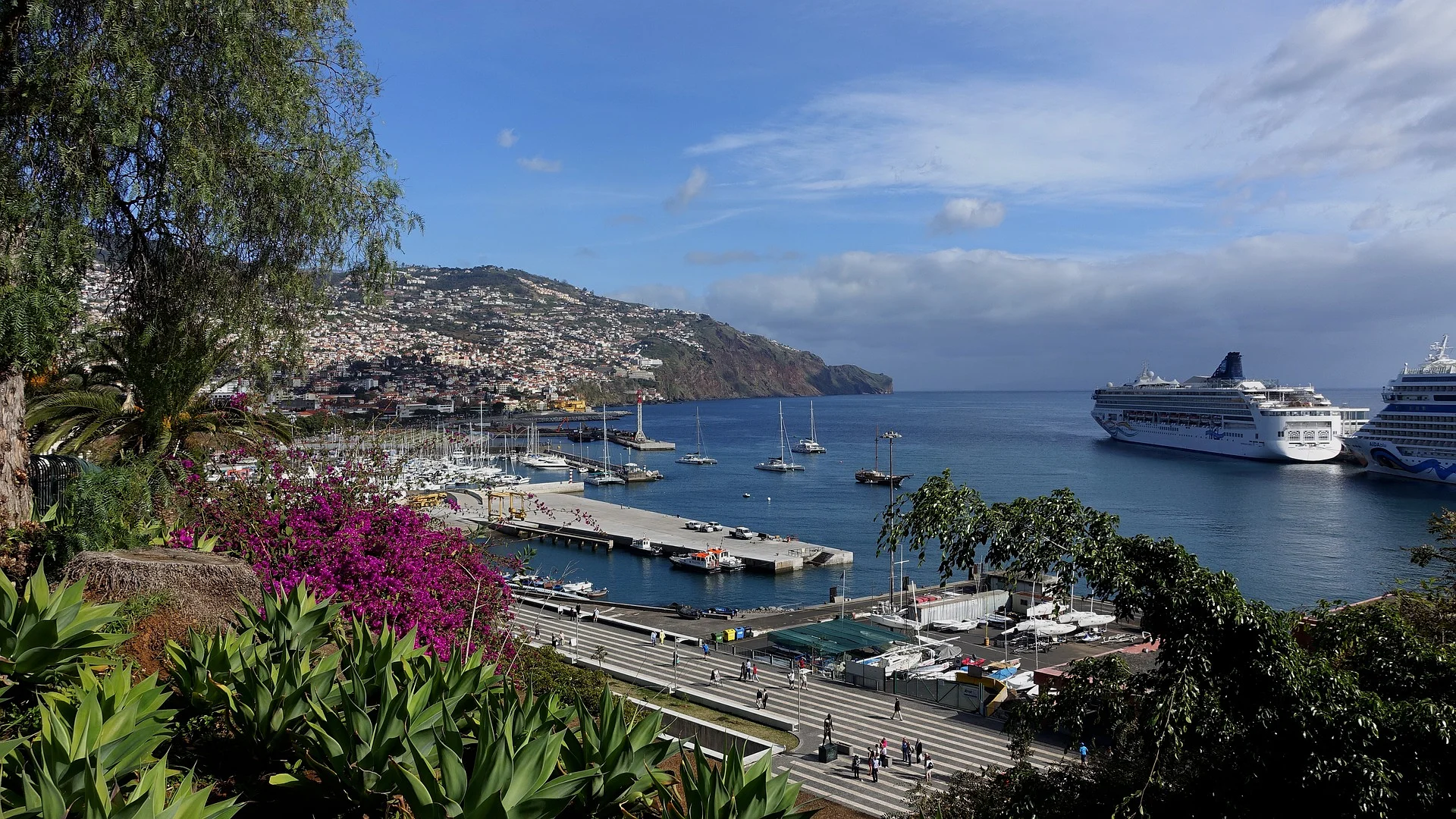
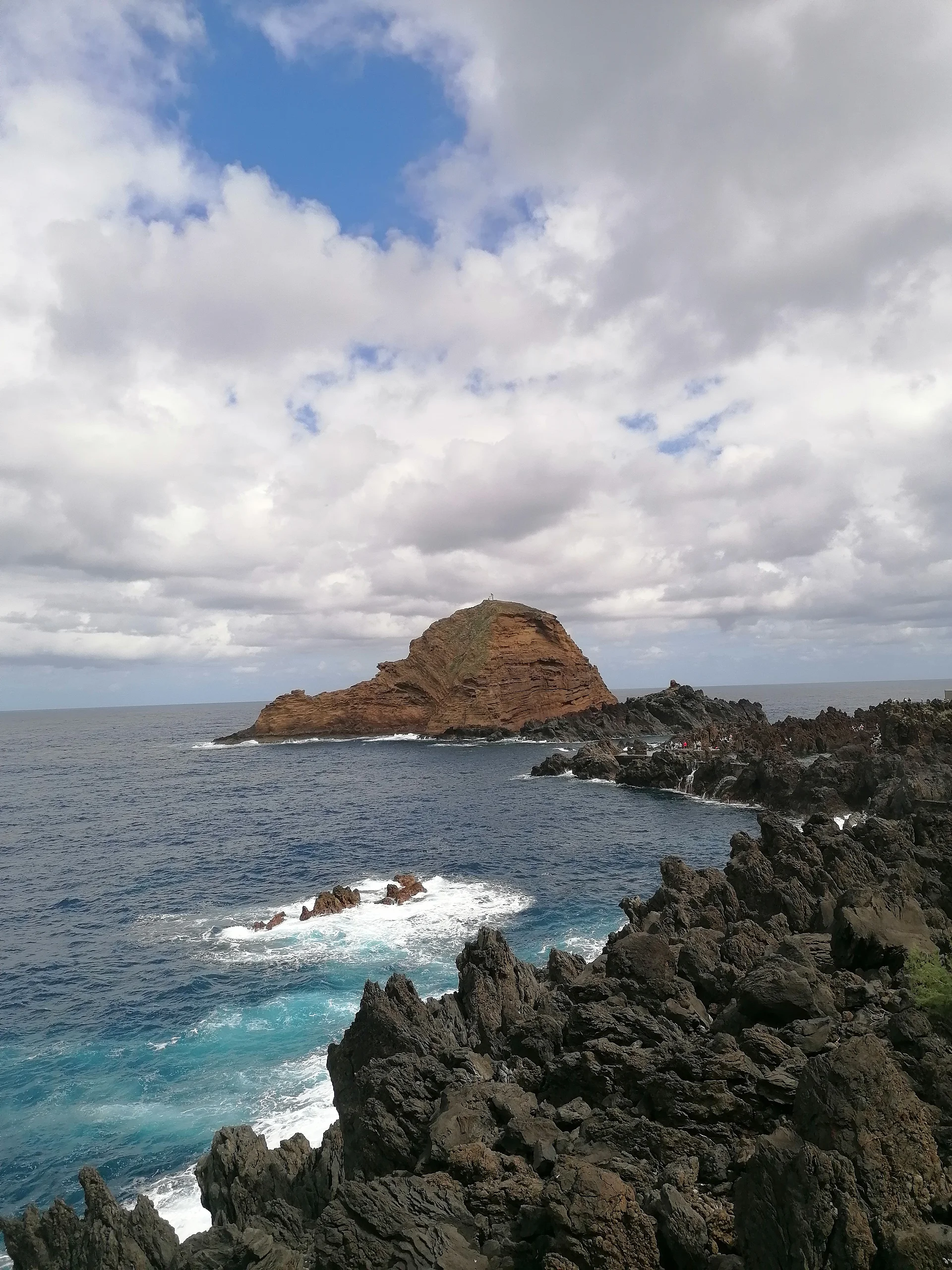
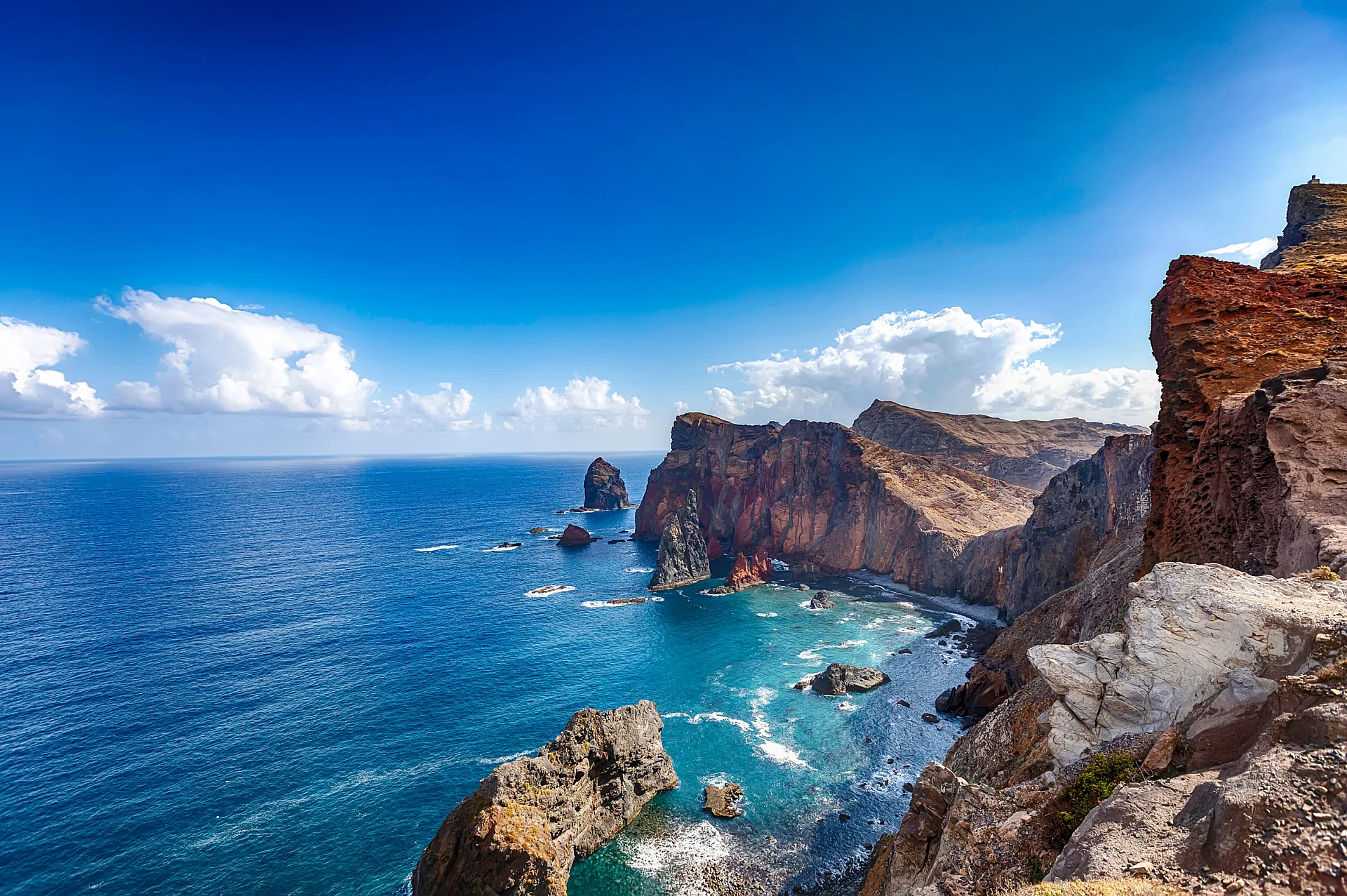
On Madeira, two decisions matter more than the hotel. Rent a car for at least three days: the levadas, irrigation channels with footpaths running along the mountainsides, sunrise on Pico do Arieiro and the natural pools of Porto Moniz are all within an hour of Funchal, and buses rarely go there. Leave yourselves some slack for the flight home too: when a strong crosswind blows across the runway, planes can neither land nor take off.
At a glance
- When to go
- Go from April to June, or in September and October: 20 to 25 °C (68 to 77 °F) in Funchal, dry trails, fewer people than in August. Winter stays mild on the south coast, around 19 °C (66 °F) by day, but it rains more in the mountains and up north.
- How many days
- Plan seven days for Funchal, the north coast, Pico do Arieiro and two hikes, sleeping in Funchal and then in Machico; four days are enough if you stay in Funchal with a single day by car.
- Where to stay
- Stay in Funchal on a first visit: the old town, the market and the Monte cable car are all within walking distance. Add two nights in Santana, on the north coast, or in Machico, to the east, so you can hike without driving back from the city.
- Budget for two
- Count on about $2,300 for a week in comfort, with hotels, meals, five days of car rental and sights, flights excluded; about $1,210 on a tighter budget.
- Your moment together
- Drive up Pico do Arieiro, at 1,818 meters (5,965 ft), to watch the sun rise, often above the clouds, then head back down to Funchal for breakfast.
- Book ahead
- Book the car with your flights, an automatic if steep hills worry you, the hotel several months ahead for New Year's Eve and the Flower Festival, and pay online for the official hiking trails before you set off.
Why Madeira for two
Madeira is a Portuguese island in the Atlantic, closer to Morocco than to Lisbon: a volcanic mountain 57 km (35 miles) long, with peaks above 1,800 meters (5,900 ft). The south coast, around Funchal, is sunny and farmed in terraces; the wetter north coast is covered in a laurel forest, the laurissilva, a UNESCO World Heritage site.
You will find trails along the levadas, cliffs dropping straight into the sea, natural pools carved into the lava, a city where you can dine outdoors all year, and a fortified wine, Madeira, which you can taste in the wine lodges of Funchal. The island has almost no sandy beaches: you swim from equipped rocks, pebble coves or seawater pools.
When to go
| Period | Weather in Funchal | Crowds | Our take |
|---|---|---|---|
| April to June | 19 to 23 °C (66 to 73 °F), sea 18 to 20 °C (64 to 68 °F) | Moderate, heavy during the Flower Festival | Dry trails, gardens in bloom, hotels still available; the sea is still cool |
| July and August | 24 to 27 °C (75 to 81 °F), sea 22 to 23 °C (72 to 73 °F), little rain | Heavy | The warmest sea, but peak hotel prices and busy trails; a wildfire can close some of them |
| September and October | 23 to 26 °C (73 to 79 °F), sea 22 to 23 °C (72 to 73 °F), first rain in October | Moderate | Our favorite time: a warm sea, the grape harvest, fewer people on the trails |
| November to March | 16 to 20 °C (61 to 68 °F) by day, sea 18 °C (64 °F), rain in the mountains | Light, except at New Year | Mild in Funchal, but trails close after storms |
On New Year's Eve, the fireworks over Funchal bay draw visitors from all over Europe: book a room facing the bay several months ahead. In spring, a few weeks after Easter, the Flower Festival sends floats covered in flowers through the center; at the end of summer, the Wine Festival takes place during the grape harvest.
Paperwork: passport, visa, health
| Documents | Visa | Health | |
|---|---|---|---|
| United States, Canada | Passport valid at least 3 months after you leave the Schengen area, issued within the last 10 years | None for stays up to 90 days | Travel insurance with medical and evacuation cover |
| United Kingdom | Passport valid at least 3 months after you leave the Schengen area, issued within the last 10 years | None for stays up to 90 days in any 180 | Your free GHIC covers state healthcare in Portugal; travel insurance for the rest |
| Ireland | Passport in date, checked at boarding and at the hotel | None | Free EHIC for public healthcare |
Entering the Schengen area from the US, Canada or the UK
Madeira is part of Portugal, so of the Schengen area. On your first entry, border police record your fingerprints and a photo (the EES system). From North America, that usually happens in Lisbon or Porto: allow at least two hours for the connection to Madeira. On a nonstop flight from the UK, it happens on arrival in Funchal.
Check before you leave whether the ETIAS travel authorization is required on your dates: you apply for it online on the European Union site (travel-europe.europa.eu).
Getting there
By plane, to Madeira Airport
| From | Flight time | Good to know |
|---|---|---|
| London (Gatwick, Heathrow, Stansted, Luton) | ~3h50 | Several nonstops a day in summer: British Airways, easyJet, Jet2, Ryanair, TUI |
| Manchester, Bristol, Edinburgh | ~4h | Nonstops with easyJet and Jet2, most frequent from April to October |
| Dublin | Depends on the stop | One stop in Lisbon or Porto |
| New York, Boston, Chicago | 10 to 13 hours | One stop in Lisbon or Porto; an overnight flight reaches Madeira around midday |
| Los Angeles, San Francisco | 15 to 18 hours | One or two stops, usually including Lisbon |
| Toronto, Montreal | 10 to 13 hours | One stop in Lisbon or Porto |
Madeira Airport (FNC), named after Cristiano Ronaldo, is on the east coast at Santa Cruz: twenty-five minutes from Funchal on the expressway and ten minutes from Machico. Lisbon and Porto have flights to it several times a day, in about 1h45.
Wind on the runway: what it means for you
The runway, extended on pillars over the sea, is exposed to crosswinds. When they exceed the permitted limits, planes circle while waiting for a lull, divert to Porto Santo, Lisbon or the Canary Islands, or stay on the ground at departure. It can happen in any season, summer included.
Do not plan a tight connection on the day you fly home, keep a spare night before an important appointment or a long-haul flight, and choose insurance that covers unplanned nights. If your flight is diverted, the airline arranges the rest of the trip: keep your meal and hotel receipts.
Practical things to settle before you leave
Phone
US and Canadian plans charge roaming at full price, and most UK plans now charge for Europe too: turn on a travel pass or install a European eSIM before you leave. With an Irish plan, calls and data work as at home, Madeira being part of Portugal and of the European Union. Download an offline map of the island: the signal drops in the valleys and on the levada trails.
Outlets
Portugal uses the round two-pin European plugs (types C and F), at 230 volts. British, Irish, American and Canadian plugs do not fit: bring one adapter per person. North American 110-volt appliances only work if they are dual voltage, which is the case for almost all phone and laptop chargers, rarely for hair dryers.
Money and the check
- The euro; cards work almost everywhere in Funchal, but small village cafés and poncha kiosks prefer cash: keep $44 on you. At an ATM, decline the conversion into dollars or pounds and let your own bank convert.
- In restaurants, the bread, garlic butter and olives set on the table before the meal, the couvert, are charged if you touch them; send them back if you do not want them.
- Tipping is not expected at American levels: leave 5 to 10 % if you liked the service.
In the suitcase
Pack hiking shoes with a good tread, a rain jacket and a headlamp: several levada trails go through unlit tunnels. For swimming from the rocks, water shoes keep you from cutting your feet on the lava.
What to book, and how far ahead
You can visit Madeira's sights without booking. What runs out in season are automatic cars, rooms facing Funchal bay and hotels on the north coast, where there are few. Since the region started charging for its official trails, book your hikes online too.
| What | Price | Book | Good to know |
|---|---|---|---|
| Rental car | $33 to $66 / day | With your flights | Automatics go first; take zero-deductible insurance |
| Official trails (PR) | A few euros / pers. | Online, before you hike | On SIMplifica, the regional portal; checks and fines on the trails |
| Monte cable car | ~$17 / pers. one way | On the spot | A line at the old town station by mid-morning |
| Monte toboggans | ~$44 for two | On the spot | Monday to Saturday; a ~10 min. ride |
| Porto Moniz pools | $3.30 / pers. | On the spot | Open all year; the parking lot fills by noon in summer |
From the airport to your hotel
© OpenStreetMap contributors
The airport and the bases it serves
- Madeira Airport (FNC)
- 1Funchal
- 2Machico
- 3Santana
- 4Ponta do Sol
| Destination | Transport | Time | Typical fare |
|---|---|---|---|
| Funchal | Taxi, outside the terminal | ~25 min. | $33 to $44 / taxi |
| Funchal | Aerobus, to the big hotels | ~50 min. | ~$6.60 / pers. |
| Funchal | Rental car, on the expressway | ~25 min. | $33 to $66 / day |
| Machico | Taxi | ~10 min. | Ask the fare before you get in |
| Santana | Rental car, through the Porto da Cruz tunnels | ~35 min. | $33 to $66 / day |
| Ponta do Sol | Rental car, on the expressway | ~45 min. | $33 to $66 / day |
What works best
If you start with Funchal, take a taxi or the Aerobus on arrival, and pick up the car on the day you leave the city: Funchal's streets are steep and parking spaces are rare. If you are staying in Machico, Santana or Ponta do Sol, pick up the car at the airport, where all the major rental companies have a desk.
Getting around
By car, for everything outside Funchal
The VR1 expressway runs along the south coast from the airport to Ribeira Brava, almost entirely through tunnels and over viaducts; other tunnels link it to the north coast. As soon as you leave it, the roads climb in tight hairpins on very steep grades: going downhill, stay in second gear rather than riding the brakes. Allow an hour and a quarter from Funchal to Porto Moniz, forty minutes to Pico do Arieiro.
In Funchal, on foot and by bus
You can walk the center, the old town and the seafront, but the streets climb quickly once you move away from the harbor. The city's yellow buses serve the hillside neighborhoods and the big-hotel area to the west; the taxis, yellow with a blue stripe, wait at stands in the center.
Without a car
Buses link Funchal with the island's villages, but they run infrequently and take two to three hours to reach the north coast. Without a car, book day tours by minibus instead, with pickup at the Funchal hotels, for the north coast and for sunrise on Pico do Arieiro.
Budget for two
Meals stay affordable on Madeira, well below what you would pay in a big city in North America, the UK or Ireland: your biggest expense will be the hotel, especially with a sea view.
| Smart | Comfort | Treat | |
|---|---|---|---|
| Hotel, per night | $77 to $110 (a simple hotel in Funchal or Machico) | $154 to $220 (a boutique hotel in the old town, a quinta on the north coast) | from $440 (Reid's Palace, The Cliff Bay) |
| Meals, per day for two | $44 | $88 | $197 |
| Car, five days, fuel included | $220 | $310 | $500 |
| Cable car, hikes and sights | $66 | $165 | $440 with a private boat trip |
| Total, seven days | ~$1,210 | ~$2,300 | from $4,930 |
Useful markers: an espresso, the bica, about $1.10; a poncha about $3.30 to $5.50; an espetada about $14 to $20 per person.
Specialties to try
Madeira's cooking comes from an island of fishermen and terrace farmers: deep-sea fish, beef grilled over a wood fire, flatbread baked on stone, and tropical fruit growing halfway up the slopes.
At the table
-
Espetada
Cubes of beef rubbed with garlic and salt, skewered on a bay laurel stick and grilled over a wood fire, then served hanging above the table: order it for two.
-
Bolo do caco
A sweet potato flatbread baked on a stone and served warm with garlic butter: it comes with almost every meal, and you can also eat it as a sandwich at the counter.
-
Espada com banana
Black scabbardfish, a deep-sea fish caught off Câmara de Lobos, as a breaded fillet with fried banana: you will find it on almost every menu on the island.
-
Lapas
Limpets, small shellfish from the rocks, grilled in their shells with garlic butter and lemon, and served still sizzling in their pan.
-
Market fruit
Several kinds of passion fruit, white-fleshed custard apple and the island's dwarf banana, at the Mercado dos Lavradores in Funchal: ask the price per kilo before tasting.
-
Bolo de mel
A dense, spiced cake made with sugarcane molasses, which keeps for months: take one home.
To drink
Taste Madeira wine, a fortified wine aged in warmth: from driest to sweetest, sercial, verdelho, boal and malmsey. Funchal's wine lodges pour it by the glass. Drink poncha, sugarcane spirit whisked with honey and lemon juice, at the counter, and go easy: it is stronger than it tastes.
Customs and rules to know
A few rules will spare you a fine on the trails or being turned away at a church door.
| Rule | What happens |
|---|---|
| Hiking an official trail without paying | A fine if you are checked; pay on SIMplifica before you set off |
| Picking plants or flowers in the nature park | Forbidden; the laurel forest is protected |
| Entering a church with bare shoulders or knees | Entry refused; a scarf in your bag is enough |
| Walking in the channel of a levada | Frowned upon: the water is for irrigation, stay on the path |
Madeirans have lunch around 1 pm and dinner around 8 pm. Greet people with a bom dia or a boa tarde when you walk into a shop or a café: most will answer you in English.
Safety
Madeira is very safe for a couple, day and night; the risks come mostly from the mountains, the sea and the roads.
- The levada trails: some run along sheer drops with no railing, others go through dark, slippery tunnels; turn back if vertigo gets the better of you, and do not hike after heavy rain.
- Mountain weather: fog can cover the peaks within half an hour; set off early, and turn around if you can no longer see the trail.
- The sea: the Atlantic swell can be strong, even in good weather; swim in the natural pools and at access points with ladders, not from isolated rocks.
- Tastings at the Mercado dos Lavradores: some vendors offer you fruit to taste, then weigh it at a very high price; ask the price per kilo before you accept.
- Your parked car at trailheads: leave nothing in sight.
Mistakes to avoid as a couple
Two mistakes spoil most trips to Madeira: trying to do everything by bus from Funchal, and booking the flight home too tight.
- Coming without a car if you want to hike: the levada and summit trailheads are poorly served, and north coast buses run only a few times a day.
- Booking a tight connection on the day you fly home: a flight held back by the wind can leave several hours late.
- Coming for the beach: the island has mostly pebbles and rocks; for sand, take the ferry to Porto Santo, the neighboring island.
- Going up Pico do Arieiro in a T-shirt for sunrise: it is often below 10 °C (50 °F) before dawn.
- Hiking an official trail without paying online first: checks are frequent on the best-known trails.
Madeira
Compare hotel prices
Pick your dates and see the offers from the major booking sites side by side.
Compare live offers from Booking, Expedia, Agoda and other partners.
Madeira: find your hotel
Frequently asked questions
How many days do you need for Madeira as a couple?
Four days are enough for Funchal, Monte and a day by car on the north coast. With seven days, add sunrise on Pico do Arieiro and two hikes, the Caldeirão Verde levada and the São Lourenço peninsula, sleeping the last two nights in Machico.
Do you need to rent a car on Madeira?
Yes, for at least three or four days: buses serve the north coast and the trailheads poorly. In Funchal, you do not need one: pick it up on the day you leave the city, for $33 to $66 a day depending on the season.
Are flights to Madeira often canceled because of the wind?
Cancellations are rarer than delays and diversions, which happen in any season when the wind blows across the runway; a storm can still ground planes for a whole day. Keep some slack on the day you fly home and insurance that covers an unplanned night.
Can you swim on Madeira?
Yes, mostly from June to October, when the sea is above 20 °C (68 °F): in the natural pools of Porto Moniz and Seixal, at the equipped access points along the Funchal seafront, or on the pebbles of Ponta do Sol. The golden sand of Machico was brought in from Morocco; for a long natural sand beach, take the ferry to Porto Santo.
What is the best time for a couple to visit Madeira?
April to June and September to October: 20 to 25 °C (68 to 77 °F) in Funchal, dry trails and fewer people than in summer. Winter stays mild on the south coast, but the mountains are more often in the clouds.