

D1 Day 1: the Norman kings and the Capo market
- D1·1Norman Palace Castle
- D1·2San Giovanni degli Eremiti Church
- D1·3Cathedral Church
- D1·4Capo market Market
- D1·5Teatro Massimo Landmark

Plan your days in Palermo around opening hours rather than distances: churches close at lunchtime, market fry shops close by mid-afternoon, and Palermitans eat dinner after 9pm. So see the mosaics in the morning, the Palatine Chapel on the first day, the Martorana on the second, Monreale on the third, and have lunch at the Capo or Ballarò. Keep late afternoons for the sea, at Mondello or along the Foro Italico, and evenings for the Kalsa.
© OpenStreetMap contributors
D1 Day 1: the Norman kings and the Capo market
D2 Day 2: the Quattro Canti, the Martorana and Ballarò
D3 Day 3: Monreale in the morning, Mondello in the evening
D4 Day 4: the Kalsa and the seafront
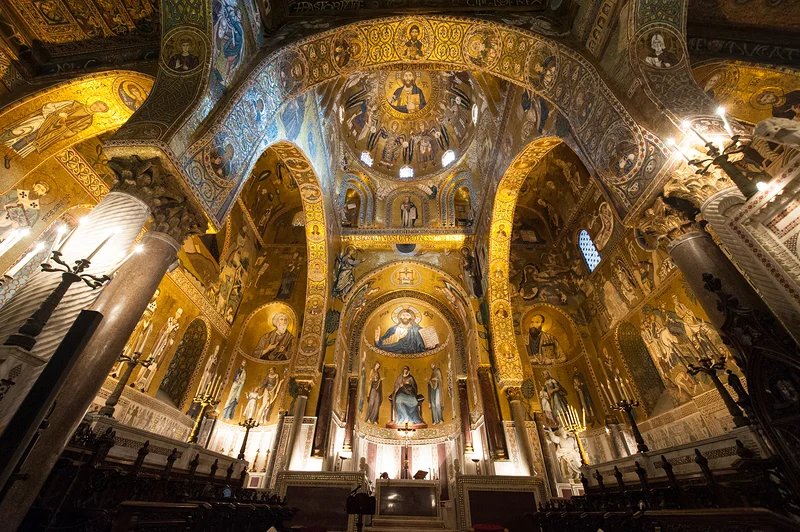
Be at the Norman Palace, the former royal palace on the west side of the center, at 8:30am with your booked ticket. Start with the Palatine Chapel, King Roger II's private chapel: gold mosaics on every wall, and above the nave a painted wooden ceiling carved into honeycomb cells by Arab craftsmen. Allow an hour and a half with the palace rooms, which are closed on Tuesdays and Wednesdays.
Five minutes south, the church of San Giovanni degli Eremiti has five red domes above a small cloister planted with lemon trees and bougainvillea: twenty minutes are enough. On the way, try a slice of setteveli, a seven-layer chocolate cake, at the Cappello pastry shop (Via Colonna Rotta 68).
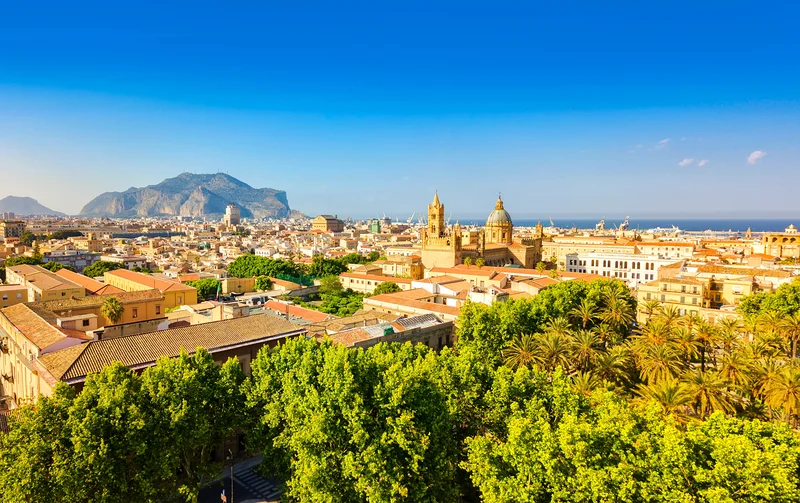
Walk down the Corso Vittorio Emanuele to the cathedral, five minutes further: a Norman building, altered in every century, with the tombs of the kings and of Emperor Frederick II. Climb to its rooftops by the tower staircase for the view over the domes of the center and Monte Pellegrino; on weekdays, the last climb is at 2:30pm.
Behind the cathedral, enter the Capo market by Via Porta Carini: stalls of fish, olives and citrus until early afternoon, and fry shops where you can have an arancina and a panelle sandwich for lunch. The market runs up to the edge of the Teatro Massimo.
Take the guided tour of the Teatro Massimo, the largest opera house in Italy, in the late afternoon, or book a performance. Then have a drink on the terrace of La Rinascente, on Via Roma, and eat dinner at Ferro di Cavallo (Via Venezia 20), a family trattoria opened in 1944, known for its pasta con le sarde.
Start at the Quattro Canti, the crossroads of the Corso and Via Maqueda, whose four baroque facades each carry a fountain, a season and a king of Spain. Just behind is the Fontana Pretoria, a Florentine marble basin ringed with nude statues, which Palermitans long called the Fountain of Shame.
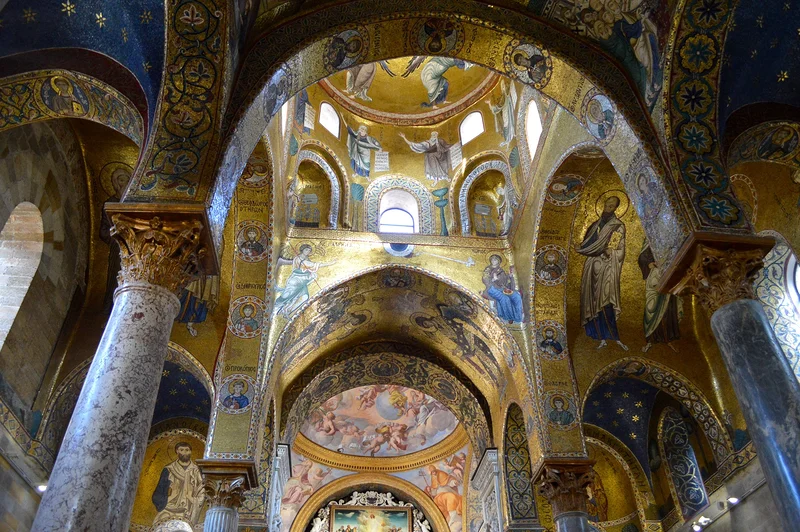
On the next square, the Martorana is the most intimate church in the city: 12th-century Byzantine mosaics, including King Roger II crowned by Christ. Then step into San Cataldo, its neighbor with three red domes, bare inside. On your way out, try a pastry made to the nuns' old recipes at I Segreti del Chiostro, in the convent of Santa Caterina (entrance on Piazza Bellini).
Head south through the lanes to the Ballarò market, the oldest in the city: vendors call out the prices of fish, eggplant and oranges. Have lunch standing up, with sfincione, boiled octopus and panelle, or at a plastic table in the middle of the stalls.
At the edge of the market, the Gesù church, the Jesuit church, is covered from floor to vault in colored marble and white stucco. Then go back to your hotel for the hottest hours: the churches of the center reopen in the late afternoon.
The old Vucciria market, around Piazza Caracciolo, has become the neighborhood of cheap bars: have a drink standing up at Taverna Azzurra (Via Maccheronai 9). For dinner, book at Osteria dei Vespri (Piazza Croce dei Vespri 6), for inventive Sicilian cooking at a table out on a small square, ten minutes further south.
Go up to Monreale, on the hill 8 km (5 miles) southwest, on bus 389 from Piazza Indipendenza, or by taxi in twenty minutes. Monreale Cathedral, built by King William II at the end of the 12th century, has its walls covered in gold mosaics that tell the Bible, and at the back of the apse, an immense Christ with open arms.
Climb to the rooftops for the view over the Conca d'Oro valley and Palermo down to the sea. Then enter the Monreale cloister, beside the cathedral: more than two hundred paired columns, each carved or inlaid with different mosaics, around a garden and a fountain.
Head back down to the city, then take bus 806 from the Politeama, or a taxi, to Mondello beach, a curve of fine sand and clear water between Monte Pellegrino and Monte Gallo. The beach is split between free stretches and private beach clubs, which rent loungers and umbrellas by the day or the afternoon.
At sunset, walk to the 1912 bathing pavilion, a Liberty building on stilts in the middle of the bay, then along the waterfront to the old fishing harbor. For dinner, book at Bye Bye Blues (Via del Garofalo 23), Mondello's fine-dining table, or pick the catch of the day from the displays of the restaurants on the square.
In the heart of the Kalsa, Palazzo Abatellis houses the regional gallery of Sicilian painting: the great fresco of the Triumph of Death, a skeleton on horseback mowing down the powerful, and the Annunciation by Antonello da Messina, a Virgin alone who raises her hand. Allow an hour and a half.
Five minutes away, Santa Maria dello Spasimo is a Gothic church that was never finished, its nave open to the sky: a tree now grows in the choir. Then have a panelle sandwich for lunch at the Chiluzzo fry shop, on Piazza della Kalsa, standing up or on the steps of the church opposite.
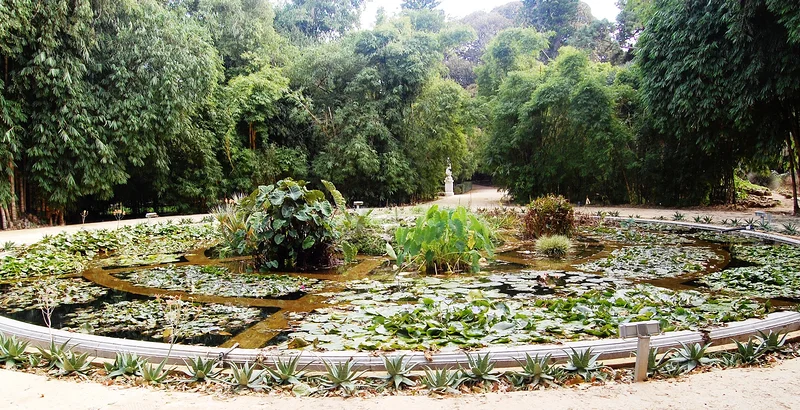
Enter the botanical garden from Via Lincoln: paths of bamboo, palms and cactus, water lily ponds, and a giant fig tree with aerial roots. Right next door, Villa Giulia, an 18th-century public garden, has paths lined with benches and a fountain where the Genius of Palermo holds a snake.
In the late afternoon, walk around the Garibaldi garden on Piazza Marina, where a fig tree planted in the 19th century spreads over part of the square, then along the Foro Italico, the great lawn on the waterfront, facing Monte Pellegrino. For your last dinner, book at Buatta (Corso Vittorio Emanuele 176), Palermo home cooking with a Michelin Bib Gourmand, and finish with gelato at Cappadonia (Corso Vittorio Emanuele 401).
Have lunch at the markets or the fry shops, with no booking; book dinner the day before from Thursday to Saturday, and expect it to start no earlier than 8:30pm.
Fry shops and street food
Chiluzzo (Piazza della Kalsa) for panelle sandwiches, Nino u Ballerino (Corso Finocchiaro Aprile 76) for pani ca' meusa, and the stalls of Ballarò and the Capo until early afternoon.
Antica Focacceria San Francesco
An institution since 1834 (Via Alessandro Paternostro 58), facing the church of San Francesco: arancine, panelle and pasta con le sarde, indoors or at tables out on the square.
Trattorias
Ferro di Cavallo (Via Venezia 20) for low-priced daily specials, Buatta (Corso Vittorio Emanuele 176) for everyday Palermo cooking, with a Michelin Bib Gourmand.
For a special evening
Osteria dei Vespri (Piazza Croce dei Vespri 6) in the center, Bye Bye Blues (Via del Garofalo 23) in Mondello: book a few days ahead.
Pastry shops
The setteveli at Cappello (Via Colonna Rotta 68), and the sweets of the Santa Caterina convent at I Segreti del Chiostro (entrance on Piazza Bellini).
Gelato and granita
Cappadonia (Corso Vittorio Emanuele 401) for seasonal fruit gelato; for a summer breakfast, an almond granita and a brioche at any bar in the center.
Aperitivo starts around 7pm: a spritz, a glass of Grillo or Nero d'Avola, often served with a few olives and chips.
| Where | For | Good to know |
|---|---|---|
| La Rinascente terrace, Via Roma | A drink on the top floor, facing the domes | Take the department store's elevator |
| Bocum, Via dei Cassari 6 | Carefully made cocktails near the Vucciria | Small: book on weekends |
| Taverna Azzurra, Via Maccheronai 9 | A drink standing up in the Vucciria | Cheap, for aperitivo: the bar closes around 10pm |
| Enoteca Picone, Via Marconi 36 | Sicilian wines by the glass, at a wine shop | Near the Politeama |
| Piazza Sant'Anna, Kalsa | Aperitivo at a table out on a square | Lively on Fridays and Saturdays |
Teatro Massimo
Opera and ballet during the season, in Italy's largest opera house; seats in the upper boxes stay affordable.
The puppet theater
The pupi, wooden marionettes in armor, replay the battles of Charlemagne's knights at the theater of Mimmo Cuticchio (Via Bara all'Olivella 95), in Italian and Sicilian dialect, and easy to follow even if you understand neither.
The Oratory of Santa Cita
A hall entirely covered in white stucco by Giacomo Serpotta, angels and miniature scenes, near the Vucciria (Via Valverde 3), open in the daytime.
Teatro Politeama
Concerts by the Sicilian Symphony Orchestra, in the theater on Piazza Ruggero Settimo.
| Destination | How to get there | Travel time | Why go |
|---|---|---|---|
| Cefalù | Regional train from the central station | ~1h | The Norman cathedral and the beach below the old town |
| Bagheria | Regional train from the central station | ~15 min. | The baroque villas of Palermo's nobles, including Villa Palagonia and its monster statues |
| Segesta | Car or organized tour | ~1h | An intact Greek temple among the hills, and the theater at the top |
| Erice | Car, then cable car from Trapani | ~1h30 | A medieval village perched 750 m (2,460 feet) above the sea |
| Zingaro nature reserve | Car to the Scopello entrance | ~1h15 | A coastal trail and coves with no road, for swimming |
Palermo
Pick your dates and see the offers from the major booking sites side by side.
Compare live offers from Booking, Expedia, Agoda and other partners.
Palermo: find your hotel
Two days are enough for the Palatine Chapel, the cathedral, the Martorana and the Capo and Ballarò markets. You will have to skip Monreale and Mondello: add a third day if you can, as Monreale Cathedral is Palermo's other great set of mosaics.
Take city bus 389 from Piazza Indipendenza, behind the Norman Palace, about 35 minutes, or a taxi in about twenty minutes. Go on a weekday morning: the cathedral closes from 12:45pm to 2pm, and on Sundays it only opens to visitors in the afternoon.
At the Ballarò and Capo markets, in the morning and until early afternoon, and at fry shops such as Chiluzzo, on Piazza della Kalsa. In the evening, most stalls have closed: save dinner for a trattoria.
Allow an hour and a half with the rooms of the Norman Palace, which are closed on Tuesdays and Wednesdays. Book the 8:30am slot one to two weeks ahead to see the mosaics before the groups.
For a walk and a seafood lunch, yes, even in winter, when the bay is empty. For swimming, come from June to October: the water is above 20 °C (68 °F), and the beach clubs are open.