





Costa del Sol for couples: what to know before you go (2026)
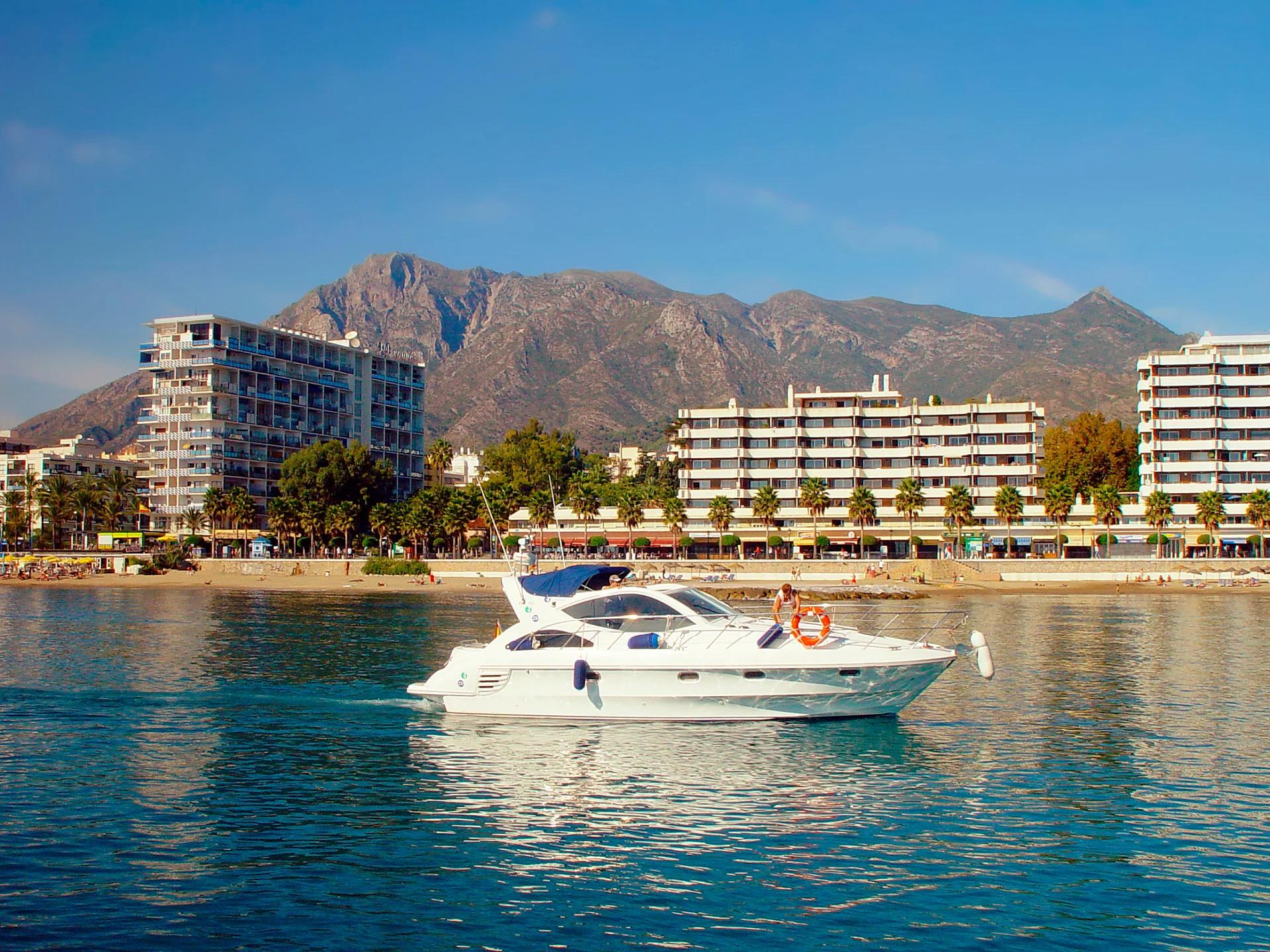
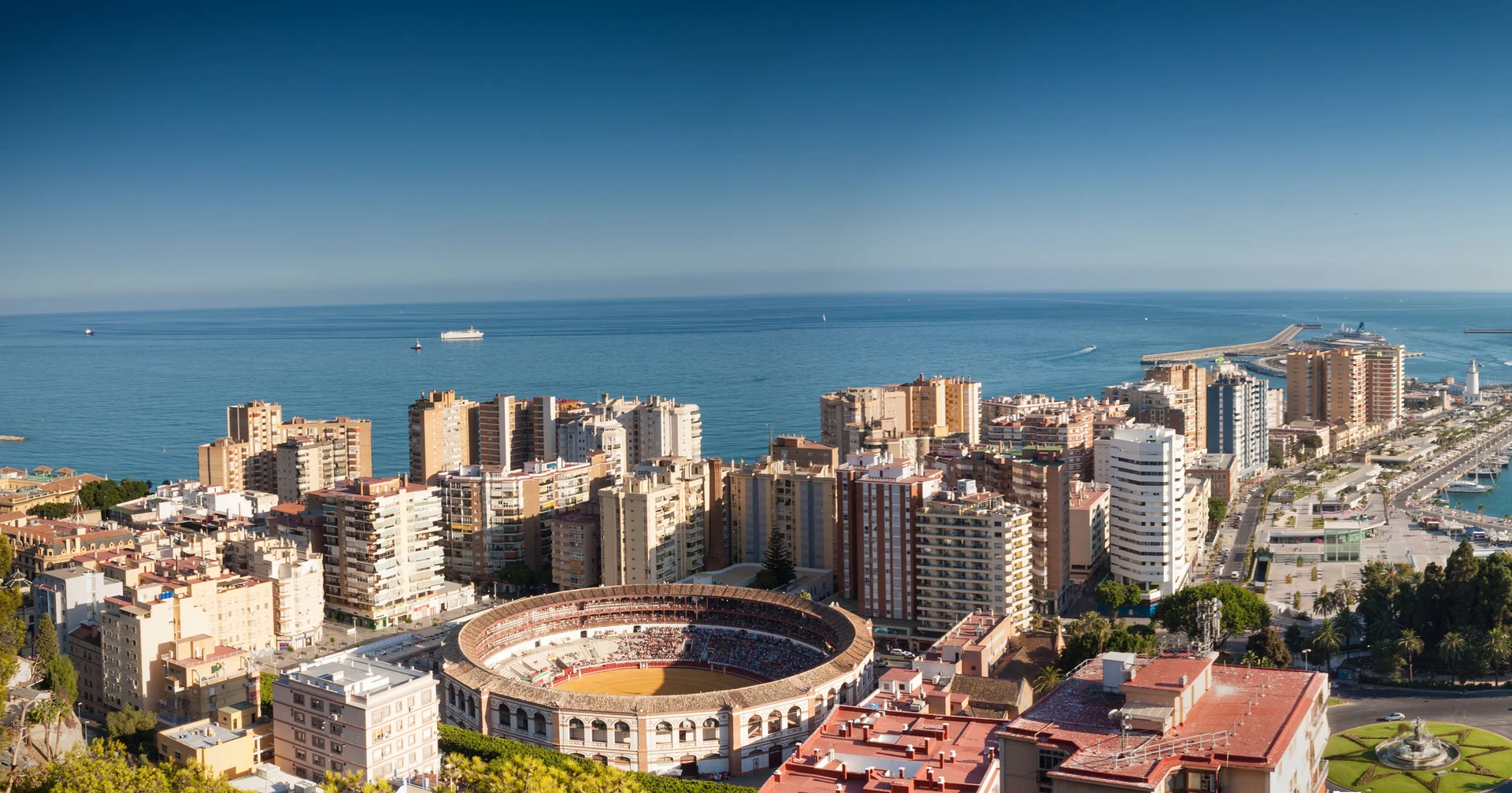
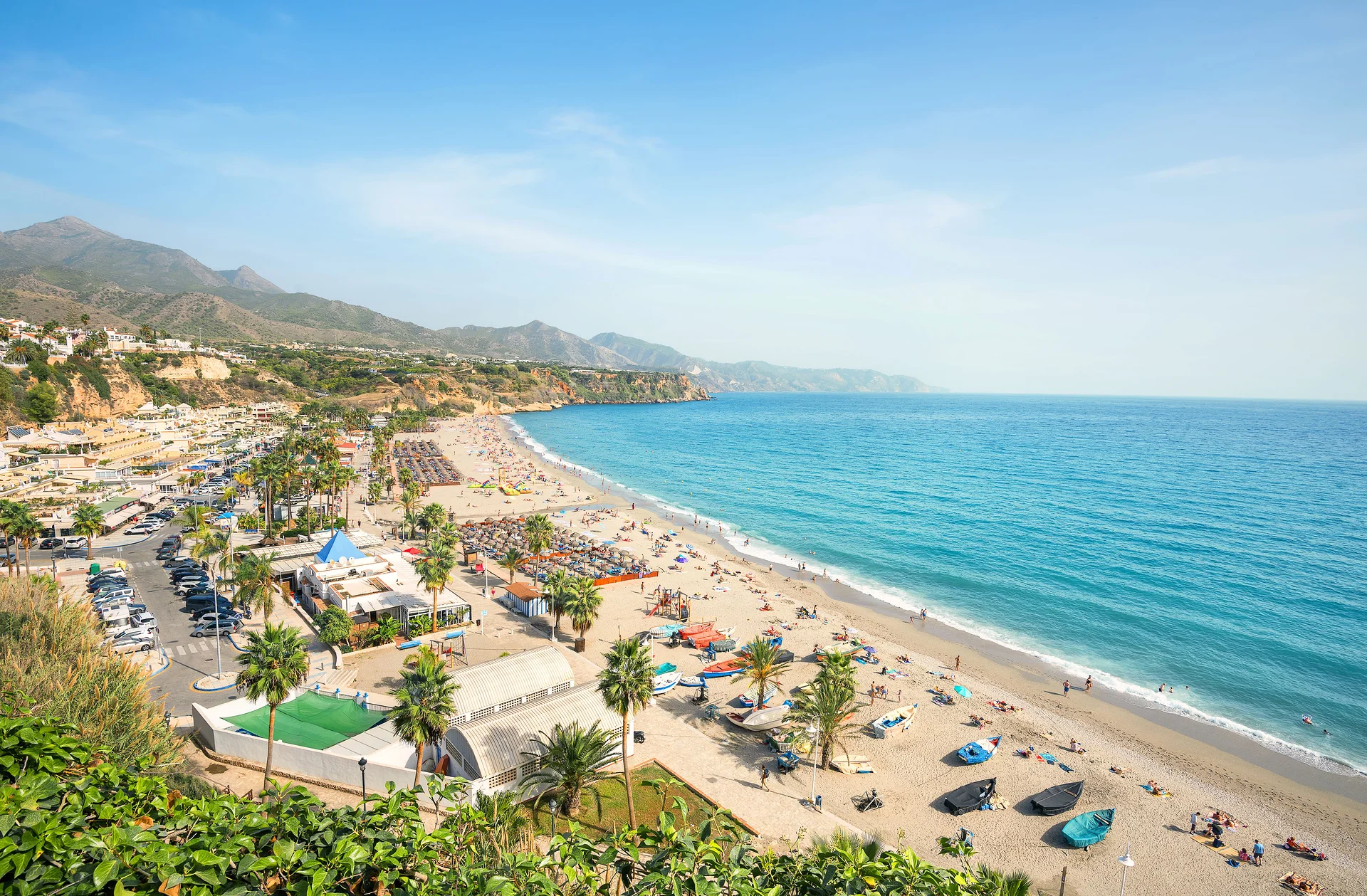
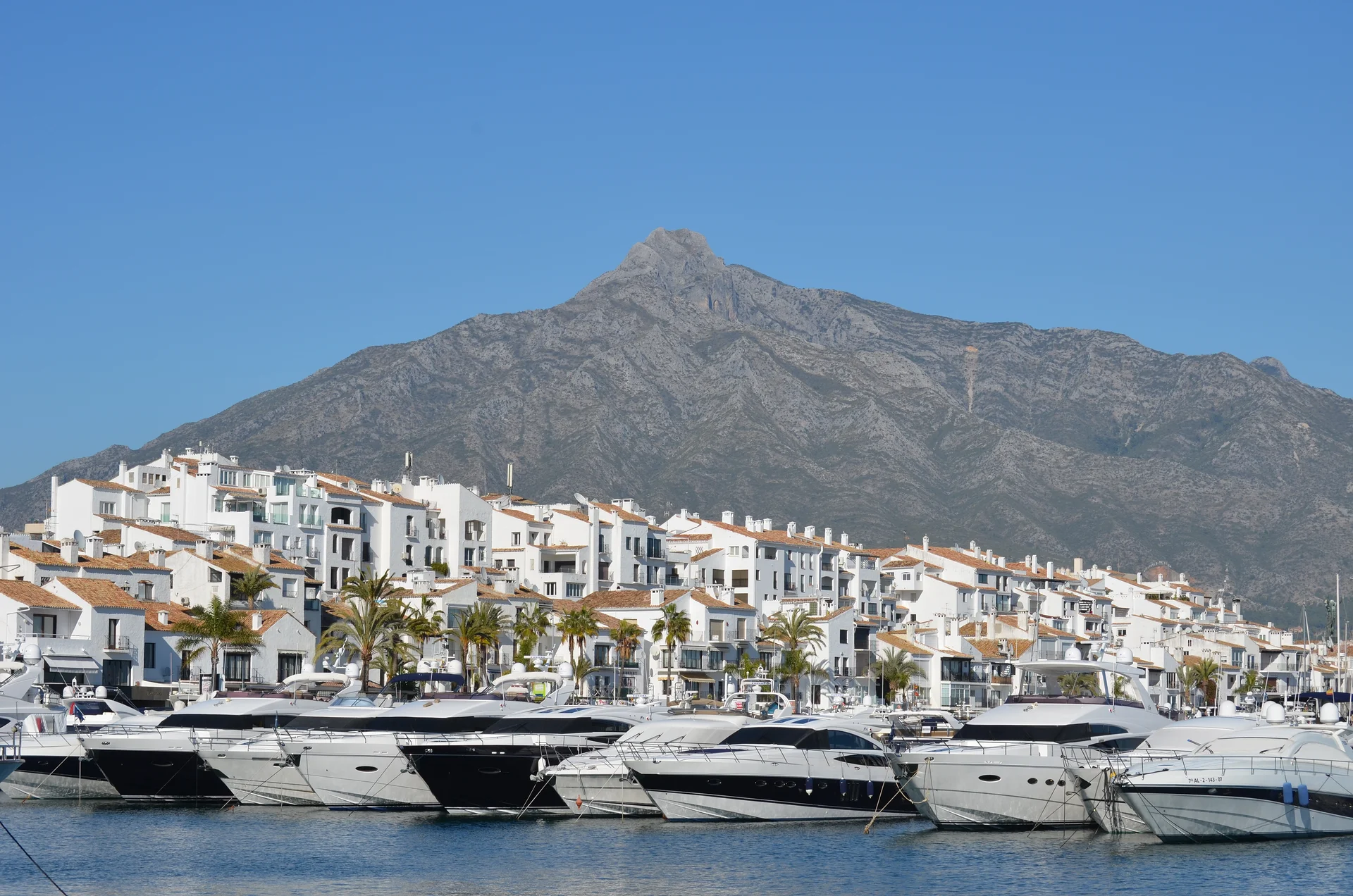
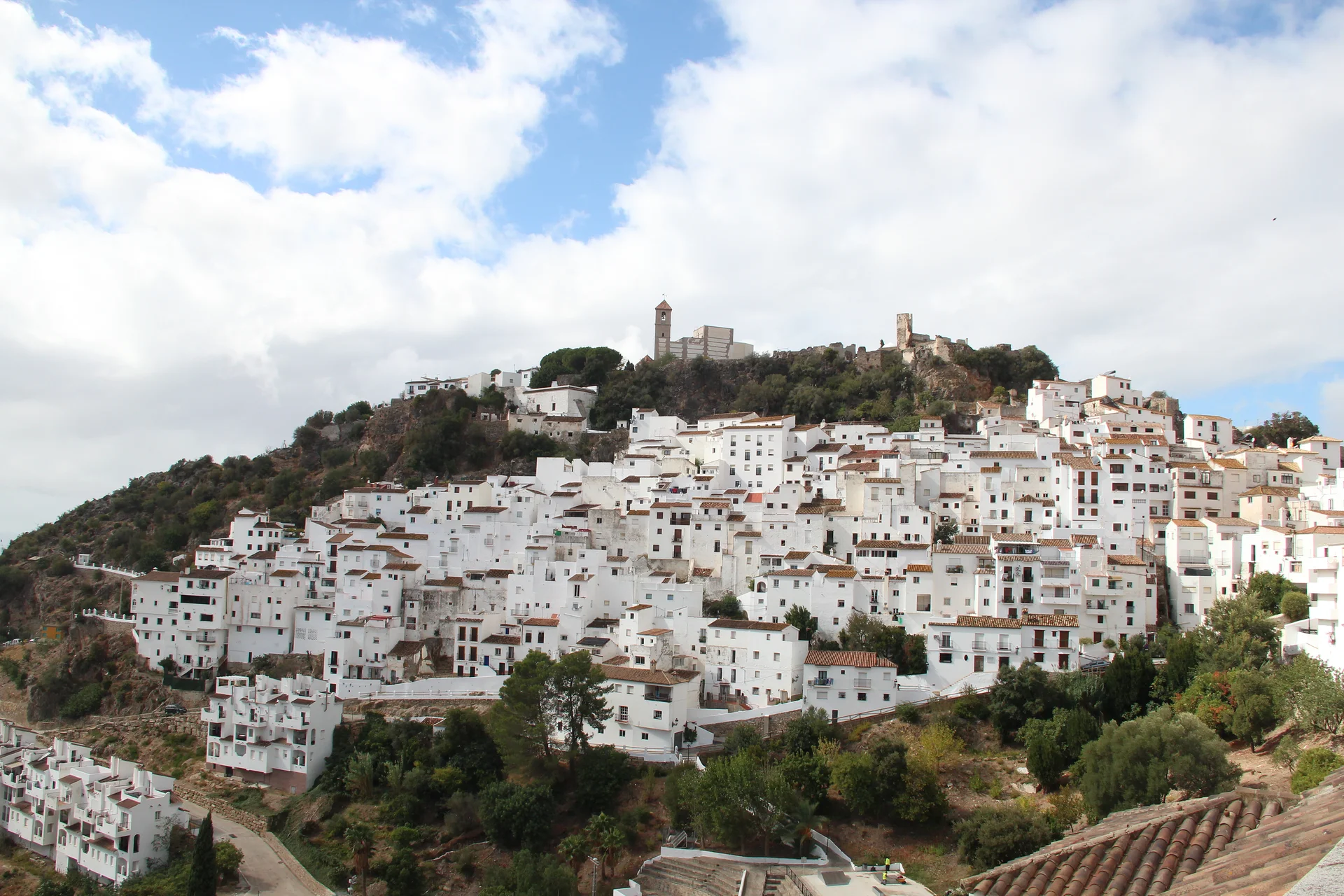
The Costa del Sol runs for nearly 150 kilometers (93 miles), from Nerja in the east to Estepona and Casares in the west, and it changes from one end to the other: choose the stretch where you will sleep before you choose the hotel. Stay in the old town of Marbella for the white alleys and the beach on foot, in Nerja for the cliffs and the coves, in Casares for a hilltop village. And if you want sun without the crowds, come between November and March: afternoons reach 17 °C (63 °F), and the café terraces stay open.
At a glance
- When to go
- Come in May, June, September or October to swim: 24 to 28 °C (75 to 82 °F), sea at 18 to 22 °C (64 to 72 °F). From November to March, come for the sun and the walks: 16 to 19 °C (61 to 66 °F), but the sea is at 15 or 16 °C (59 or 61 °F).
- How many days
- Plan a week for Marbella, Estepona, Casares, Nerja and a day in Ronda, the town perched on its gorge in the mountains; four days are enough if you keep a single base, Marbella or Nerja.
- Which base
- Choose Marbella for the old town and the beach on foot; Nerja for the cliffs and the coves; Estepona for an old town full of flowers, quieter than Marbella in the evening.
- Budget for two
- About $2,640 for a week in comfort, with hotels, meals, car and visits, flights not included; about $1,320 on a smart budget, outside July and August.
- The moment for two
- Sunset from the ruins of Casares Castle, at the top of the village: on a clear day, you can see the Rock of Gibraltar and, across the strait, the mountains of Morocco.
- Book ahead
- Your rental car at Malaga Airport three to four weeks ahead in summer, the Nerja Cave online a few days ahead in July and August, and the kayak trip along the Maro cliffs, east of Nerja, the day before.
Why the Costa del Sol for two
The Costa del Sol is the coast of the province of Malaga, backed by mountains that shelter it from the north wind: it has the mildest winters in mainland Europe, and some of the most sunshine. Between the beaches, you will find white towns and villages: the old town of Marbella around the Plaza de los Naranjos, the flower-lined streets of Estepona, Casares on its rock, and Nerja on its cliff.
It also has its concrete towers, from Torremolinos to Fuengirola, between Malaga and Marbella: that is where the package tours concentrate, and that is the stretch we advise against for your hotel. West of Marbella and east of Malaga, you will sleep in an old town center or above a cove, with the mountains twenty minutes away by car.
When to go
| Period | Weather | Crowds | Our take |
|---|---|---|---|
| April to June | 20 to 28 °C (68 to 82 °F), sea 17 to 21 °C (63 to 70 °F) | Moderate, heavy at Easter | Long days, swimming from late May, beaches still uncrowded |
| July and August | 28 to 32 °C (82 to 90 °F), sea 22 or 23 °C (72 or 73 °F) | Very heavy, peak prices | Beaches full by 11 am, busy roads and hotels at twice the price |
| September and October | 23 to 29 °C (73 to 84 °F), sea 21 or 22 °C (70 or 72 °F) | Heavy in September, light in October | Our favorite: the sea still warm, the families gone home |
| November to March | 15 to 19 °C (59 to 66 °F) in the afternoon, a few rainy days | Light, except at Christmas | Winter sun, lunch on a terrace and walks; the sea at 16 °C (61 °F) in midwinter, cool evenings |
Three dates to know: Holy Week, before Easter, with processions in every town and fully booked hotels; the night of San Juan, June 23, when locals light bonfires on the beaches until dawn; and the Marbella feria, the week of Saint Barnabas, around June 11. In summer, the terral, a hot wind from inland, pushes the temperature above 35 °C (95 °F) for a day or two in a row: stay by the water on those days.
Paperwork: passport, visa, health
| Documents | Visa | Health | |
|---|---|---|---|
| United States, Canada | Passport valid 3 months after you leave the Schengen area, issued less than 10 years ago | None for up to 90 days | Travel insurance that covers medical costs |
| United Kingdom | Passport valid 3 months after you leave the Schengen area, issued less than 10 years ago | None for up to 90 days in 180 | A free GHIC for state healthcare, plus travel insurance |
| Ireland | Valid passport or passport card | None | A free EHIC for public healthcare |
Arriving from the US, Canada or the UK
On your first entry into the Schengen area, border police take your fingerprints and a photo (the EES system): allow extra time at passport control, in Malaga or wherever you first land in Europe, such as Madrid or Lisbon. Before you leave, also check whether the ETIAS travel authorization is required on your dates: you apply for it online, on the European Union's website.
Getting there
By plane, through Malaga Airport
| From | Flight time | Good to know |
|---|---|---|
| New York, Boston, Chicago | 10h to 13h | Usually one stop, in Madrid, Lisbon or London; a seasonal summer nonstop from the New York area |
| Los Angeles, San Francisco | 14h to 18h | One stop, usually in Madrid or London |
| Toronto, Montreal | 9h to 12h | One stop, usually in Madrid, Lisbon, London or Paris |
| London | ~2h45 | Nonstops year-round, from all the London airports |
| Manchester, Birmingham, Bristol, Edinburgh, Glasgow | 2h30 to 3h15 | Nonstops year-round, more frequent from April to October |
| Dublin | ~3h | Nonstops year-round |
Malaga-Costa del Sol Airport (AGP) serves the whole coast: it is 45 minutes from Marbella, an hour from Estepona and 55 minutes from Nerja on the highway. It is the fourth-busiest airport in Spain, and flights stay frequent in winter, when the coast fills with retirees from northern Europe.
By train, from Madrid to Malaga
If you fly into Madrid, you do not need a second flight: the high-speed train reaches Malaga in 2h30 to 2h45. The line ends in Malaga: Marbella has no train station, so you will need a bus or a car for the rest of the way.
Practical things to know before you leave
Phone
US and Canadian plans charge high roaming rates, and most UK plans now charge for Europe as well: turn on your carrier's travel pass or install a European eSIM before you leave. With an Irish plan, calls and data work as they do at home, since Spain is in the European Union.
Outlets
Spanish outlets run at 230 volts and take European plugs with two round pins. American, Canadian, British and Irish plugs do not fit: bring an adapter. North American devices must accept 230 volts, which almost all phone and laptop chargers do, but few hair dryers.
Money, meal times and tipping
- You pay in euros, by card almost everywhere, including at the chiringuitos, the beach restaurants; keep a few coins for the parking meters in the villages. At ATMs and card terminals, decline the conversion into dollars or pounds and let your own bank convert.
- Spaniards have lunch between 2 pm and 4 pm and dinner from 9 pm; on the coast, kitchens in tourist restaurants open earlier, but the good tables keep Spanish hours.
- Tipping is not expected the way it is in North America: leave a few coins at the bar, or round up the bill at a restaurant if you liked the service.
Language and water
On the coast, home to many British and Scandinavian residents, English is spoken in hotels and most restaurants; in the inland villages, such as Casares or Frigiliana, a few words of Spanish help: buenos días (good morning), gracias (thank you), la cuenta, por favor (the check, please). Tap water is safe to drink.
What to book, and how far ahead
On the Costa del Sol, you have few sights to book: what sells out first are the rental cars at the airport and the beachfront hotels in July and August. Book your hotel two to three months ahead for summer and for Holy Week; the rest of the year, three or four weeks ahead is enough.
| What | Price per person | Book | Good to know |
|---|---|---|---|
| Nerja Cave | ~$17 | A few days ahead in summer | Timed tickets, cheaper online; opens at 9:15 am |
| Kayaking the Maro cliffs | $28 to $39 | The day before, earlier in August | Leaves from Burriana beach in Nerja, 2h to 2h30 with a guide; canceled in rough seas |
| Caminito del Rey | ~$11, ~$20 guided | 3 to 6 weeks ahead | A boardwalk trail through the El Chorro gorge, 1h15 from Marbella; timed slots |
| Rental car | $28 to $66 / day | 3 to 4 weeks ahead for summer | At Malaga Airport; prices double in July and August |
| Beach restaurants | $28 to $50 | The day before on weekends | On Sunday at lunchtime, Spanish families fill the chiringuitos |
From the airport to your hotel
© OpenStreetMap contributors
The airport and the bases it serves
- Malaga Airport (AGP)
- 1Marbella
- 2Estepona
- 3Nerja
| Destination | Transport | Time | Typical fare |
|---|---|---|---|
| Marbella | Avanza direct bus, outside Terminal 3 | ~45 min. | ~$8.80 / pers. |
| Marbella | Taxi, from the arrivals line | ~45 min. | $88 to $110 / taxi |
| Estepona | Rental car, on the A-7 or the AP-7 | ~1h | $28 to $66 / day |
| Nerja | Rental car, on the A-7 | ~55 min. | $28 to $66 / day |
What works best
Pick up the car at the airport: the rental companies have desks in the terminal or a shuttle to their lot, and you will need it for Casares, Ronda and the villages. If you are staying only in Marbella, the Avanza bus drops you at the bus station, at the top of town, fifteen minutes' walk from the old town; take a taxi for the last stretch with your bags.
Getting around
By car, the only way to see it all
To get between Nerja, Marbella and Estepona, and up to the villages of Casares and Mijas or to Ronda, rent a car. Allow 30 minutes from Marbella to Estepona, 1h20 from Marbella to Nerja, and an hour of winding mountain road from Marbella to Ronda. In town, park in an underground garage or at your hotel: street spaces are in paid blue zones, and the old towns are pedestrian.
By bus, along the coast
Without a car, Avanza buses run along the coast from Malaga to Marbella and Estepona, and ALSA buses link Malaga with Nerja and Nerja with Frigiliana; they are punctual but slow, and rare in the evening to the villages. The C1 commuter train links the airport with Malaga, Torremolinos and Fuengirola, but goes no farther west.
On foot and by taxi
You will explore the old towns of Marbella and Estepona and the center of Nerja on foot. In the evening, take a taxi to Puerto Banús, the yacht marina, fifteen minutes west of Marbella, rather than hunting for a parking space: taxis are plentiful on the coast, and the Uber and Cabify apps work there.
Budget for two
On the Costa del Sol, you will eat well without spending much, especially in the tapas bars and the chiringuitos. What moves the budget is the hotel and the season: a sea-view room costs twice as much in August as in November, and the hotels of the Milla de Oro, the strip of beach between Marbella and Puerto Banús, are among the most expensive in Spain.
| Smart | Comfort | Splurge | |
|---|---|---|---|
| Hotel, per night | $88 to $132 (a simple hotel in Estepona or Frigiliana) | $176 to $280 (a boutique hotel in the old town, a parador) | from $550 (Marbella Club, Finca Cortesín) |
| Meals, per day for two | $55 (tapas and the set menu) | $110 (lunch at a chiringuito, a sit-down dinner) | $250 (a chef's table in Marbella) |
| Car, per day | $28 plus fuel | $50 plus fuel and parking | $88 for an automatic and the AP-7 |
| Sights and activities | $66 | $165 with the kayak and the Caminito del Rey | $390 with a private boat |
| Total, seven days | ~$1,320 | ~$2,640 | from $5,500 |
A useful benchmark: in August, two sunbeds with an umbrella cost $22 to $44 a day on the private beaches of Marbella.
Dishes to try
The food of the Malaga coast comes from fishermen and mountain farmers: grilled or fried fish, cold soups, vegetables from the Vélez-Málaga plain, between Malaga and Nerja, and cane honey from Frigiliana. Try it at the chiringuitos at lunchtime and in the tapas bars of the old towns in the evening.
To eat
-
Espetos
Sardines threaded on a skewer and grilled over a wood fire in an old boat filled with sand, in front of the chiringuitos: the dish of the coast, from May to October, eaten with your fingers.
-
Ajoblanco
Malaga's cold soup of almonds, garlic, bread and olive oil, served with muscat grapes: milder than gazpacho, a summer starter.
-
Gazpachuelo
A hot soup of fish and potatoes, thickened with mayonnaise: the winter dish of Malaga's fishermen, served in traditional bars from November to March.
-
Fritura malagueña
The fried fish of the coast: anchovies (boquerones), baby squid, red mullet and cuttlefish, fried in olive oil. Order a ración for two, with a glass of white wine.
-
Berenjenas con miel de caña
Fried eggplant drizzled with cane honey, the dark syrup a factory in Frigiliana still makes: a common tapa in the bars of Nerja.
-
Churros and tostadas
For breakfast, churros dipped in thick hot chocolate, or a tostada with olive oil and grated tomato, at the counter of a café in the old town.
To drink
Try the sweet Malaga wine, made from muscat grapes and served by the glass after a meal, and the dry wines of the Serranía de Ronda, the hills inland. For coffee, bars in the province have their own words, from darkest to lightest: solo, largo, mitad (half milk), sombra and nube, almost all milk.
Customs and rules to know
The coast has lived on tourism since the 1960s and its people are used to visitors; a few simple habits will still save you a fine or a hard look.
| Rule | What happens |
|---|---|
| Walking around in swimwear or shirtless away from the beach | Banned by local bylaw in several towns on the coast; you may be fined |
| Parking on a blue line without a ticket, or on a yellow line | A fine, or towing in the centers of Marbella and Nerja |
| Leaving a towel at dawn to save your spot | Frowned upon, and removed by beach staff on some beaches |
| Entering a church in swimwear or with bare shoulders | Entry refused; a scarf in your bag is enough |
| Going topless | Accepted on most beaches; full nudity only on signposted beaches, such as Cabopino, east of Marbella |
At a bar, pay at the end, and ask for the check: the server will not bring it until you do. Between 2 pm and 5 pm, the small shops in the villages close; on Sunday, most shops are closed, but the beach restaurants are packed.
Safety
The Costa del Sol is safe for a couple, day and night; the trouble comes from car break-ins, the sea and the sun.
- Your car in a beach parking lot or at a viewpoint: leave nothing in sight, not even in the trunk when you arrive; a broken window costs you the rental company's deductible.
- Expensive watches and jewelry in Puerto Banús at night: snatch thefts there target luxury watches, on foot and at café tables.
- The beach flags: on a red flag, do not swim; the current is strong on the open beaches west of Marbella, and jellyfish arrive on some summer days, flagged or signposted.
- The sun from June to September and on terral days: bring a hat, water and sunscreen, and walk in the villages before 11 am or after 6 pm.
- The sunglasses sellers and the club touts in Puerto Banús: say no once, and check the price of a bottle before you sit down at a club table.
Mistakes to avoid as a couple
Most disappointments on the Costa del Sol come down to distance: the coast is long, and the wrong base or the wrong season costs you hours on the road or crowded beaches.
- Booking a hotel for its price without looking at the map: the municipality of Marbella covers 27 km (17 miles) of coast, many hotels sit in resorts by the highway, and those in Torremolinos or Fuengirola are package-tour towers; our where-to-stay page covers each area.
- Coming in August for a quiet swim: the beaches are full by 11 am, and the coast roads jammed in the evening.
- Doing without a car: buses to Casares and Ronda are poor, and each village will cost you half a day of travel.
- Driving from Marbella to Nerja and back in a day: 2h40 on the road for a town worth two nights; change hotels instead.
- Expecting a warm sea in winter: 15 or 16 °C (59 or 61 °F) from January to March; come for the sun and the walks then, and book a hotel with a heated pool if you want to swim.
Costa del Sol
Compare hotel prices
Pick your dates and see the offers from the major booking sites side by side.
Compare live offers from Booking, Expedia, Agoda and other partners.
Costa del Sol: find your hotel
Frequently asked questions
How many days do you need for the Costa del Sol as a couple?
Plan a week for Marbella, Estepona, Casares, Nerja and Frigiliana, with a day in Ronda, changing hotels once. With four days, keep a single base: Marbella for the western coast, or Nerja for the cliffs and the villages in the east.
Do you need a rental car on the Costa del Sol?
Yes, as soon as you want to see more than one town: the white villages, Ronda and the coves of Maro are poorly served by bus. Rent it at Malaga Airport, and choose a hotel with parking: the old towns are pedestrian.
Is the Costa del Sol worth it in winter?
Yes, for the sun and the walks: 16 to 18 °C (61 to 64 °F) in the afternoon from December to February, café terraces open at lunchtime and hotels cheaper than in summer. The sea is at 15 or 16 °C (59 or 61 °F): do not come to swim, and pack a sweater for the evening.
Is Marbella expensive?
It is on the Milla de Oro and in Puerto Banús, where the big hotels go above $550 a night in summer. In the old town, you will find boutique hotels at $165 or $220, and tapas at the same prices as the rest of Andalusia.
Where can you swim in peace on the Costa del Sol?
Swim around Nerja, on Burriana beach and in the coves of Maro, below the cliffs, and west of Estepona, toward Casares, where the beaches are less built up. In July and August, get there before 10 am.