





Sardinia for couples: know before you go (2026)
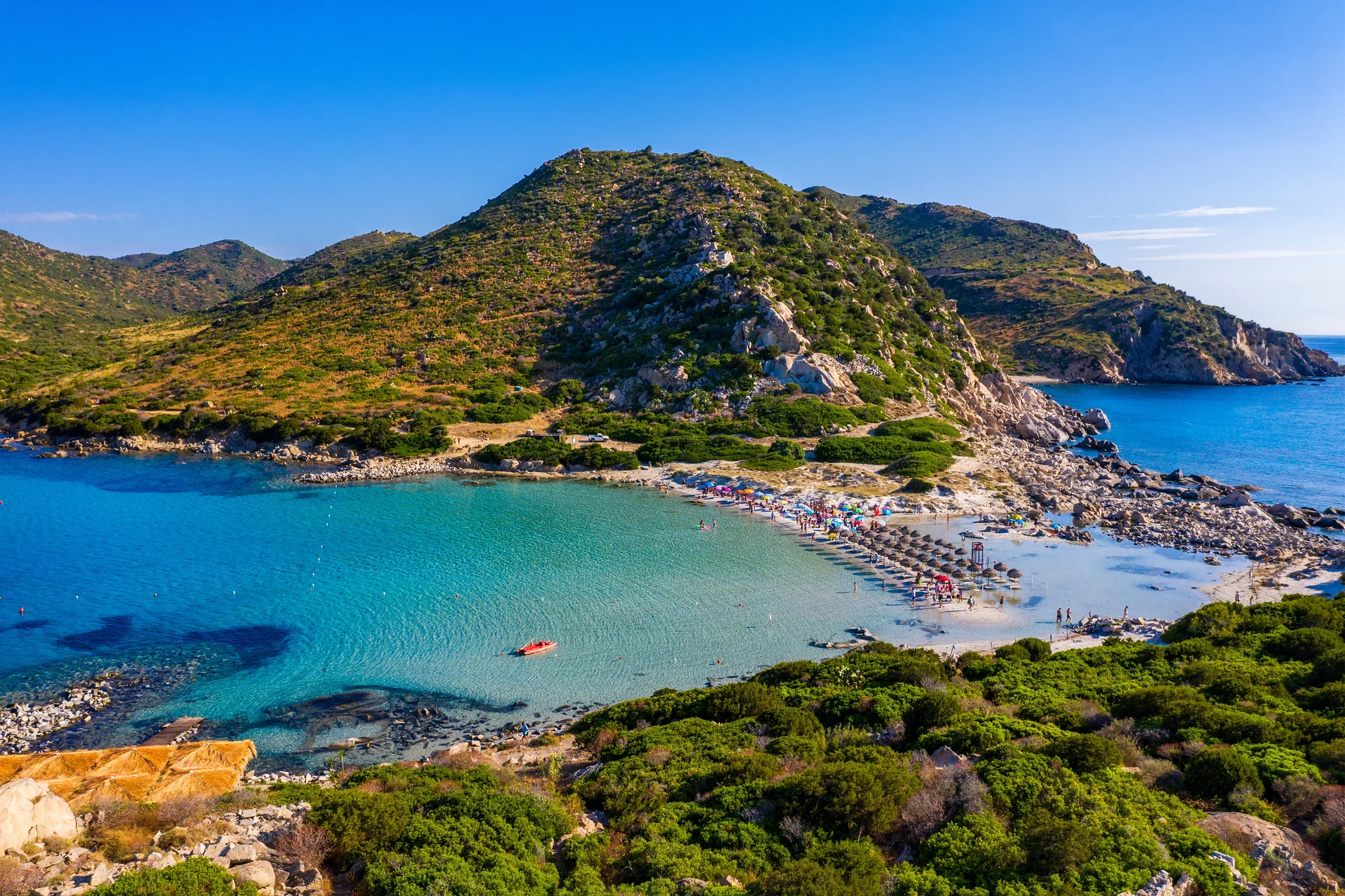
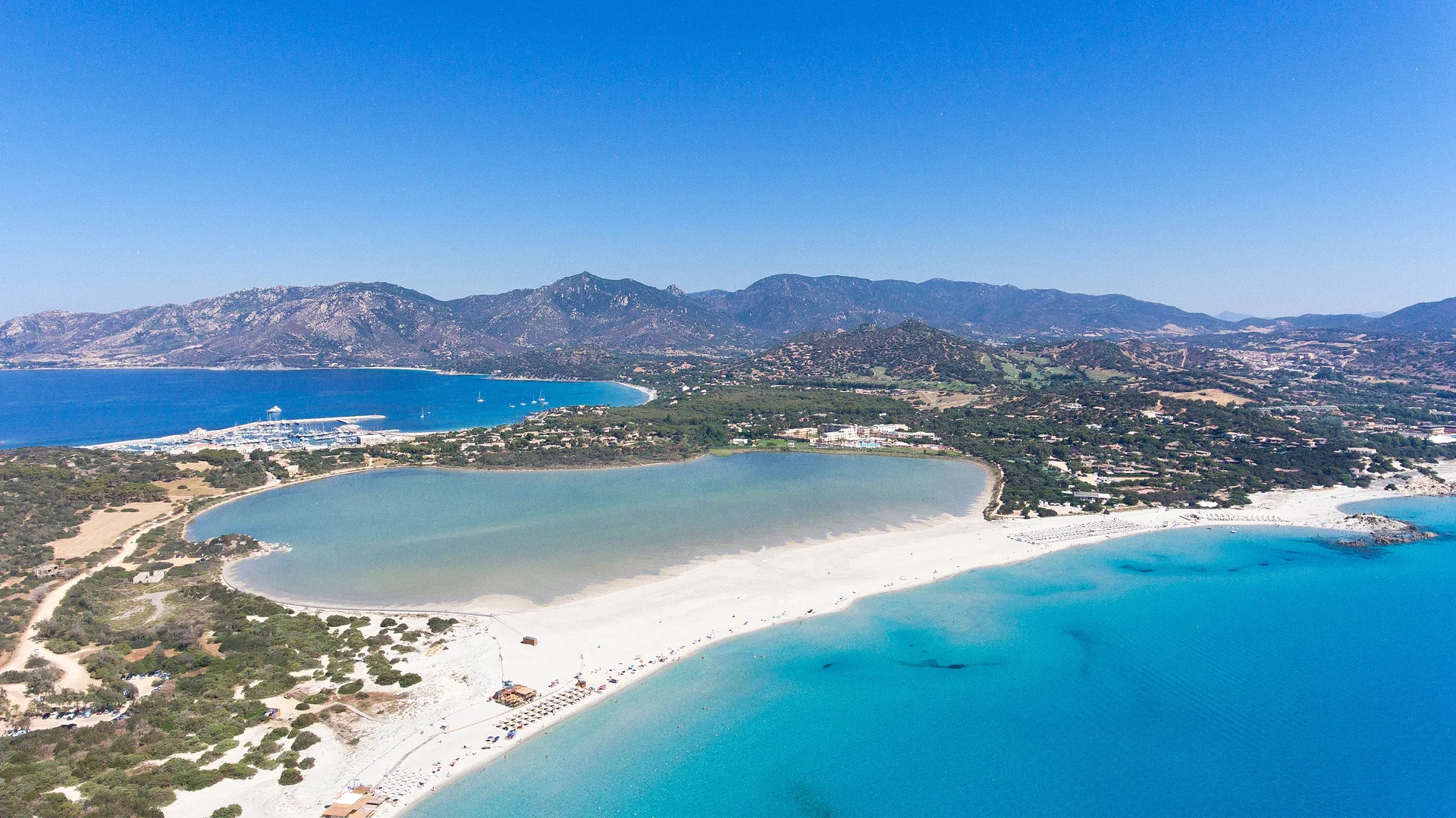
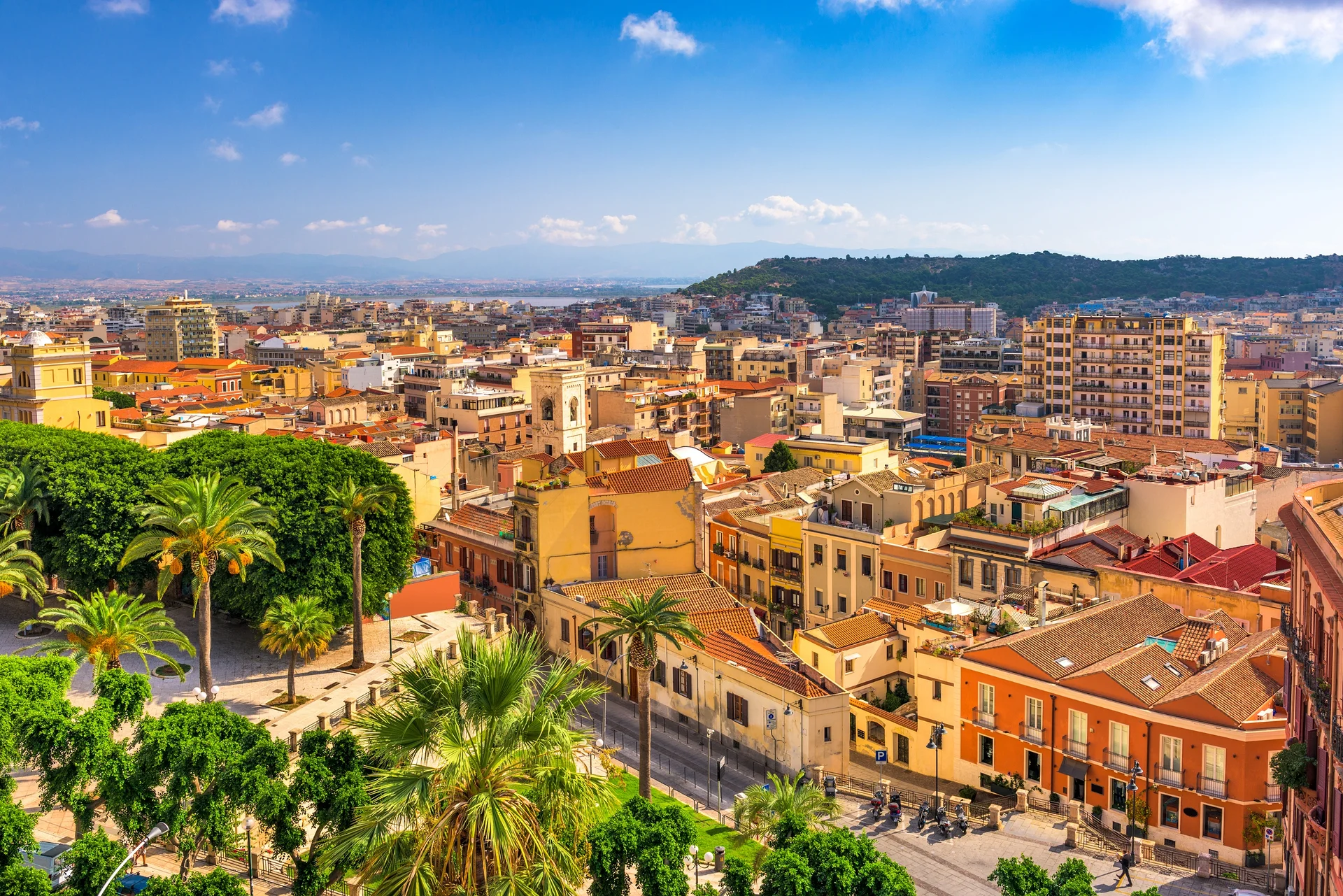
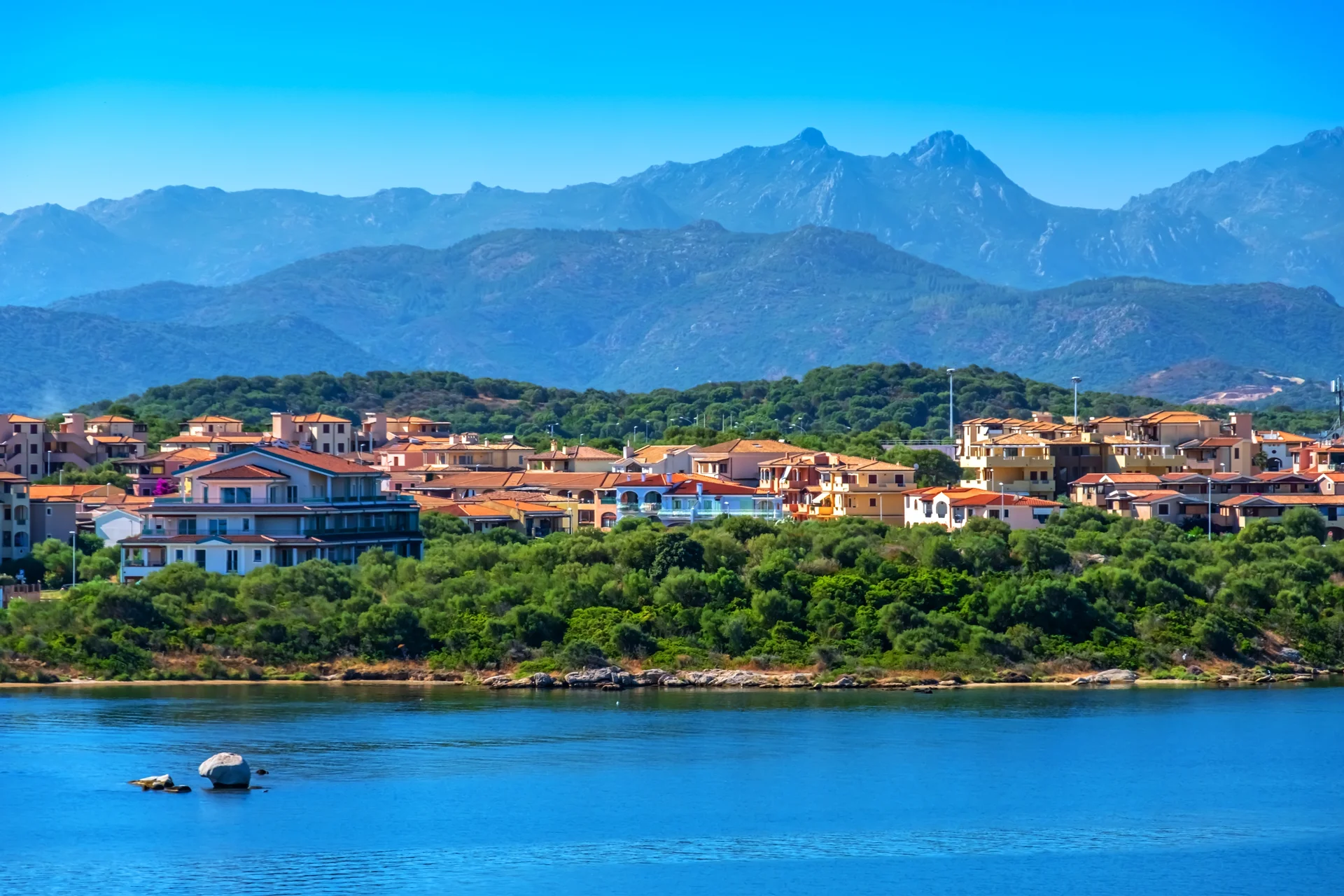
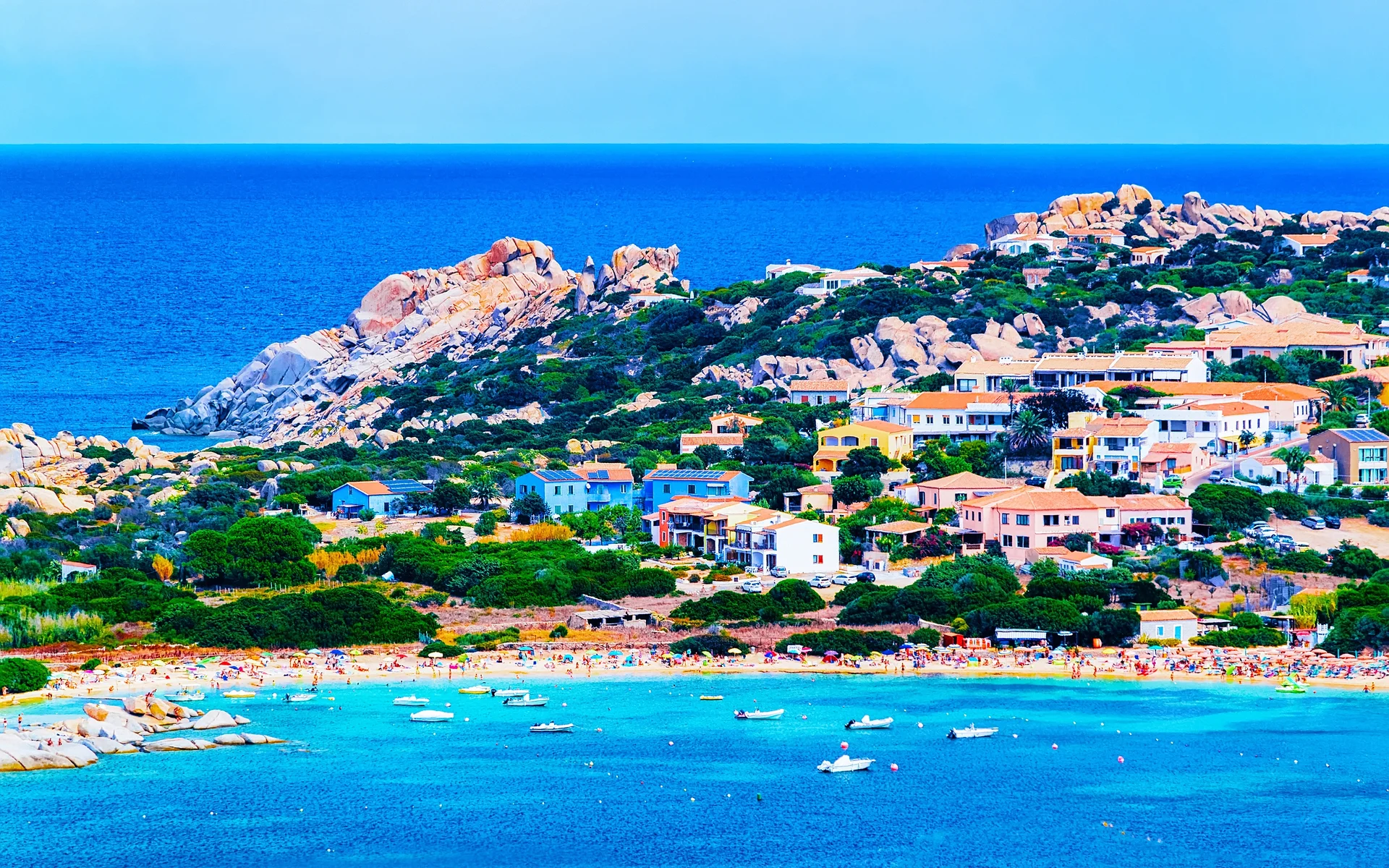
Before you book, pick your coast: between Santa Teresa Gallura, at the northern tip, and Cagliari, in the south, you will drive for more than four hours. In the north, you get the La Maddalena archipelago and its coves between granite boulders, an hour from Olbia airport; in the south, Cagliari and its old town on the hill, with the beaches of Villasimius and Chia an hour away on either side. In a week, you can do both, flying into one airport and home from the other. Rent a car: outside the towns, almost no buses go to the beaches.
At a glance
- When to go
- June and September: the sea between 22 and 25 °C (72 and 77 °F), the archipelago boats running and the beaches without the August crowds. Choose May or early October for walking and sightseeing; in May, the sea is still cool.
- How many days
- Seven days for the north and the south, with one day on the road between the two; five days for a single coast, without changing hotels.
- Where to base yourselves
- Santa Teresa Gallura for the La Maddalena archipelago, Cagliari for the south and its two coasts, Villasimius or Chia if you want the beach right outside your hotel.
- Budget for two
- About $2,310 for five nights on one coast at the comfort level, with the hotel, meals, a car and a day on a boat, flights excluded. In August, beachfront hotels cost up to twice as much.
- The moment for two
- Sunset over the granite boulders of Capo Testa, fifteen minutes from Santa Teresa Gallura, with the cliffs of Corsica across the strait, about 12 km (7 miles) away.
- Book ahead
- The car as soon as you have your flights, entry to La Pelosa and Punta Molentis in summer, the guided hike to Cala Coticcio, and the archipelago boat in July and August.
Why Sardinia as a couple
The second-largest island in the Mediterranean after Sicily runs 270 km (168 miles) from north to south, and it has two sides. In the northeast, in Gallura, you will find pink granite boulders, coves and the islands of the La Maddalena archipelago; in the south, long white sand beaches line lagoons where flamingos live. In between, the interior is a land of shepherds, cork oaks and nuraghi, more than seven thousand Bronze Age stone towers.
You will find coves with clear water, villages where you will dine on sheep's cheese and spit-roasted suckling pig, and a capital, Cagliari, where you will spend your evenings on the ramparts. You will not see the whole island in a week: choose one coast, or two at most.
When to go
| Period | Weather | Crowds | Our take |
|---|---|---|---|
| April and May | 20 to 25 °C (68 to 77 °F), sea 17 to 20 °C (63 to 68 °F) | Light, except Easter and May 1 in Cagliari | The scrubland in bloom, sightseeing without the heat; swimming becomes pleasant in late May |
| June and September | 26 to 30 °C (79 to 86 °F), sea 22 to 25 °C (72 to 77 °F), little rain | Moderate, heavy on weekends | Our favorite: a warm sea, the archipelago boats running, prices below August |
| July and August | 30 to 35 °C (86 to 95 °F), mistral on some days | Very heavy, Italians on vacation from August 10 | Packed beaches, booked entries sold out, hotels twice the price |
| October to March | 14 to 22 °C (57 to 72 °F), fall rain | Very light | Cagliari and the interior stay open; most beachfront hotels close from November to March |
Two festivals are worth planning your dates around: Sant'Efisio in Cagliari on May 1, when thousands of Sardinians in traditional dress walk the saint's statue in procession to Nora, and the Cavalcata Sarda in Sassari, a parade of costumes and riders in mid-May. On August 15, Ferragosto, all of Italy is on vacation: avoid the week around it.
Entry requirements: documents, visa, health
| Documents | Visa | Health | |
|---|---|---|---|
| United States, Canada | Passport valid at least 3 months after you leave the Schengen area, issued within the last 10 years | None for stays up to 90 days | Travel insurance with medical cover |
| United Kingdom | Passport valid at least 3 months after you leave the Schengen area, issued within the last 10 years | None for stays up to 90 days in any 180 | Your free GHIC covers state healthcare in Italy; travel insurance for the rest |
| Ireland | Valid passport or passport card, checked at boarding and at the hotel | None | Free EHIC for public healthcare |
Entering the Schengen area from the US, Canada or the UK
On your first entry into the Schengen area, border police record your fingerprints and a photo (the EES system). From North America, you will change planes in Europe: if you connect in Rome, Milan, Frankfurt or Paris, you go through this check there, and your flight to Sardinia has no further control, so allow at least two hours for the connection. If you fly in from the UK, or connect in London, you go through it on arrival in Sardinia.
Check before you leave whether the ETIAS travel authorization is required on your dates: you apply for it online on the European Union website (travel-europe.europa.eu).
Getting there
By plane: three airports, one per coast
Choose the airport by the coast where you will stay: Olbia (OLB) for the northeast and the La Maddalena archipelago, Alghero (AHO) for the northwest and Stintino, Cagliari (CAG) for the south. For a week on both coasts, book an open-jaw ticket, into Olbia and out of Cagliari: it saves you a four-hour drive back to where you started.
| From | Flight time | Good to know |
|---|---|---|
| New York, other US and Canadian cities | 11 to 14 hours with a stop | No nonstop flights: connect in Rome, Milan, Frankfurt, Munich or London |
| London | ~2h30 | Seasonal nonstops, mostly from April to October, to one or more of the three airports depending on the London airport |
| Other UK airports | 2h30 to 3h | A few nonstops in summer from some regional airports; otherwise connect in London, Rome or Milan |
| Dublin | ~3h | Some seasonal nonstops in summer; otherwise connect in London, Rome or Milan |
Rome and Milan have flights to all three Sardinian airports all year, about an hour long: if no nonstop works for your dates, this is the simplest connection.
By ferry, from Corsica or mainland Italy
If you combine Corsica and Sardinia, take the ferry from Bonifacio to Santa Teresa Gallura: 50 minutes to an hour across, with your car. Moby sails all year, Ichnusa Lines from April to October. If you are already touring Italy by car, ferries leave Genoa, Livorno and Civitavecchia, the port of Rome, for Olbia; from the south of France, Corsica Ferries sails overnight from Toulon to Porto Torres, in the northwest of the island, in 10.5 to 12.5 hours depending on the ship.
Practical things to know before you go
Phone
US and Canadian plans charge roaming at full price, and many UK plans now charge for Europe too: turn on a travel pass or install a European eSIM before you leave. With an Irish plan, calls and data work as they do at home. The signal covers the towns and the coasts but drops out in the inland valleys and in some coves: download an offline map of the island before you hit the road.
Outlets
Italian outlets run at 230 volts and come in three types, C, F and L, the last with three pins in a row. American, Canadian, British and Irish plugs fit none of them: pack one adapter per person. A 110 volt appliance only works if it is dual voltage, which phones and laptops are, hair dryers rarely.
Money and tipping
- The euro everywhere; cards work in hotels and most restaurants, but keep $55 in cash for beach kiosks, paid parking lots and small villages. At an ATM or a card terminal, decline the conversion into dollars or pounds and pay in euros.
- In restaurants, the coperto, a cover charge, adds $2.20 to $4.40 per person to the bill: it is legal and shown on the menu.
- Tipping is not expected at American levels: round up, or leave a few euros if you enjoyed the service.
Language and water
Italian is the everyday language, and Sardinian is still spoken at home, especially inland; in coastal hotels, English is enough. Tap water is safe to drink in the towns, but its chlorine taste leads most Sardinians to drink bottled water.
What to book, and how far ahead
In Sardinia, what runs out first in summer is rental cars and rooms by the water. Then book entry to the protected beaches and coves: you do it online, and the number of visitors is capped each day.
| What | Price | Book | Good to know |
|---|---|---|---|
| Rental car | $39 to $99 / day | As soon as you buy your flights | In July and August, small automatics go first, and prices double as the date approaches |
| Beachfront hotel | See the budget | 2 to 3 months ahead; 5 to 6 for August | Many only open from April or May to October |
| La Pelosa beach, Stintino | ~$3.90 / pers. | As early as you can, or 2 days ahead at 9am | 1,500 entries / day, mid-May to mid-October; a mat under your towel is required |
| Punta Molentis beach, Villasimius | A few euros, plus parking | The day before in summer | People and cars capped each day; ticket tied to the parking lot, online |
| Cala Coticcio, Caprera island | Guide, plus ~$3.30 for the park | Several weeks ahead in summer | On foot only with a guide licensed by the park, some sixty visitors a day |
| Boat trip in the La Maddalena archipelago | $55 to $66 / pers. | 2 to 3 days ahead in July and August | Leaves Palau or La Maddalena around 10am, back around 5pm |
| Su Nuraxi di Barumini | ~$17 / pers. | On site | Guided tour only, one every 30 min., ticket also valid for Casa Zapata, the village museum |
From the airport to your hotel
© OpenStreetMap contributors
The three airports and the bases they serve
- Olbia (OLB)
- Alghero (AHO)
- Cagliari (CAG)
- 1Santa Teresa Gallura
- 2Palau, La Maddalena ferry
- 3Stintino
- 4Cagliari
- 5Villasimius
- 6Chia
| Destination | Transport | Time | Approximate fare |
|---|---|---|---|
| Santa Teresa Gallura | Rental car | ~1h20 | See car rental |
| Santa Teresa Gallura | Turmo Travel bus, a few departures a day | ~1h30 | $4.40 to $8.80 / pers. |
| Palau, La Maddalena ferry | Rental car | ~55 min. | See car rental |
| Destination | Transport | Time | Approximate fare |
|---|---|---|---|
| Stintino | Rental car | ~45 min. | See car rental |
| Destination | Transport | Time | Approximate fare |
|---|---|---|---|
| Cagliari | Train, roughly every 20 min. on weekdays | ~7 min. | $1.50 / pers. |
| Cagliari | Taxi | ~15 min. | $22 to $33 / taxi |
| Villasimius | Rental car | ~1h10 | See car rental |
| Chia | Rental car | ~1h10 | See car rental |
What works best
Pick up the car at the airport: the rental desks are in the terminal or a few minutes away by shuttle, and every base on the map is less than an hour and a half away. The one exception is Cagliari: if you stay there for the first few days, take the train into the center, from a station 300 meters (1,000 feet) from the terminal, and rent the car on the day you leave the city.
Getting around
The car, on toll-free roads
Sardinia has no toll roads: the SS131, a free four-lane highway, crosses the island from Cagliari to Sassari, and its branch, the SS131 DCN, runs to Olbia. Elsewhere, the roads are narrow and winding: expect to average 50 to 60 km/h (30 to 37 mph) along the coasts, and rent a small car, easier to park near the beaches.
- You drive on the right; if you drive on the left at home, take your time on the first roundabouts, where traffic circulates counterclockwise.
- Speed limits are 50 km/h (31 mph) in towns, 90 km/h (56 mph) on main roads and 110 km/h (68 mph) on the SS131; fixed speed cameras are common.
- The old centers of Cagliari and several villages are ZTL, limited traffic zones: a camera photographs every unauthorized car, and the fine reaches you months later through the rental company.
- Blue lines mark paid parking; in summer, almost all beach parking lots charge, by the day or by the hour.
Without a car
Buses run by ARST, the regional company, link the towns but rarely the beaches, and few run on Sundays. In Cagliari, CTM city buses go from the center to Poetto beach. The train links Cagliari to Sassari and Olbia, slowly: it does not replace a car for a stay by the sea.
Budget for two
What sets your budget in Sardinia is the date: a sea-view room costs twice as much between July 20 and August 25 as in June or September, and the car follows the same curve. Meals and sights stay cheap. Here is what five nights on one coast cost for two, flights excluded:
| Smart | Comfort | Treat | |
|---|---|---|---|
| Hotel, per night | $99 to $143 (a village hotel) | $176 to $290 (a hotel near the beach) | from $440 (a beachfront resort) |
| Meals, per day for two | $61 (a panino at lunch, a pizzeria at night) | $121 (lunch at the beach, a seafood dinner) | $250 (a fine dining restaurant) |
| Car, five days, fuel included | $220 | $310 | $440 |
| Outings and sights for the stay | $88 (booked entries, Su Nuraxi) | $220 with a day on a boat in the archipelago | $550 with a private boat |
| Total, five nights | ~$1,270 | ~$2,310 | from $4,400 |
Useful prices: an espresso at the counter $1.40 to $1.70, a pizza $8.80 to $14, a plate of culurgiones $14 to $18, a glass of Vermentino $5.50 to $7.70, an umbrella and two loungers on a serviced beach $28 to $44 a day in summer.
Specialties to try
Sardinian cooking comes from shepherds more than fishermen: sheep's cheese, roast meat, handmade pasta and a dry bread that keeps for weeks. On the coast, fish and seafood have found their place, and bottarga, dried mullet roe, is grated over pasta.
At the table
-
Culurgiones
Ravioli from Ogliastra, on the east coast, pleated shut like an ear of wheat, filled with potato, pecorino and mint, and served with tomato sauce.
-
Malloreddus and fregola
Malloreddus, small ridged semolina gnocchi, come with sausage and saffron; fregola, toasted semolina pearls, is cooked with clams on the south coast.
-
Porceddu
Suckling pig slow-roasted on a spit, with crackling skin, served on myrtle leaves. In the inland restaurants, order it the day before: it takes hours to cook.
-
Pane carasau and pecorino
The shepherds' bread, thin crisp sheets, served with Sardinian pecorino, the island's sheep's milk cheese, fresh or aged; pane guttiau is the same bread drizzled with oil and salt.
-
Seadas
A large fritter filled with fresh, slightly tangy cheese, fried to order and drizzled with bitter strawberry tree honey; you will find it on almost every restaurant menu.
To drink
Try the Vermentino di Gallura, the white wine of the north and the only wine on the island with DOCG status, and Cannonau, the most widely grown red wine, full-bodied and fruity, $5.50 to $7.70 a glass. The meal ends with a small glass of mirto, a myrtle berry liqueur, served ice cold and often on the house.
Customs and rules to know
Sardinians are reserved at first and very welcoming afterward; a few simple gestures, a buongiorno when you walk into a shop, patience at the table, are met with a smile. On the beaches, strict rules apply, and some fines are steep.
| Rule | What happens |
|---|---|
| Taking sand, pebbles or shells, even a handful | Fine of $550 to $3,300; luggage is checked at the island's airports |
| Landing or walking on the pink beach of Budelli, in the La Maddalena archipelago | Forbidden, swimming included: boats stay behind the buoys, ~70 m (230 ft) out, and park rangers issue fines |
| Laying your towel without a mat at La Pelosa | Entry refused or a fine: the mat protects the sand |
| Lighting a fire or a barbecue, throwing a cigarette butt into the scrub in summer | Heavy fines; the fire risk peaks from June to September |
| Entering a church with bare shoulders or knees | Entry refused; keep a scarf in your bag |
| Sleeping in a camper van or a tent on a beach | Forbidden and fined, even off season |
Sardinians have lunch around 1:30pm and dinner from 8:30pm; between 1 and 4:30pm, village shops close, and many inland restaurants close in the evening on weekdays off season. On Sunday at lunchtime, families fill the country restaurants: book a table.
Safety
Sardinia is a very safe island for a couple, day and night, in the towns as in the villages. The dangers come from nature and the road.
- The sea when the mistral blows: waves and rip currents make swimming dangerous on the west coast; obey the red flag, even when the water looks calm near the shore.
- Beach parking lots: leave nothing in sight in the car, no bag, no camera; break-ins happen there in summer.
- Driving at night: unlit bends, fast drivers, and cows, sheep or wild boar on the road inland; drive long stretches in daylight.
- Summer wildfires: if smoke rises near the road, turn around and follow the instructions of the fire service or civil protection.
- The sun from June to September: little shade on the beaches and at the archaeological sites; visit Su Nuraxi in the morning or late afternoon.
Mistakes to avoid as a couple
Most disappointments in Sardinia come from the map: the island looks small, and you end up spending your vacation behind the wheel.
- Trying to do the north and the south in four days: the drive from Santa Teresa Gallura to Cagliari takes more than four hours. With less than a week, choose one coast.
- Flying in and out of the same airport for a stay on both coasts: you lose a day on the road. Fly into Olbia and home from Cagliari, or the other way around.
- Choosing a base in the middle of the island to see everything: from Nuoro or Oristano, La Maddalena, La Pelosa, Villasimius and Chia are more than two hours away.
- Showing up at La Pelosa or Punta Molentis in summer without a booking: entry is capped, and the spots go fast.
- Counting on the pink beach of Budelli: you will see it from the boat, without setting foot on it.
- Booking the car at the last minute in July and August: sometimes only large cars are left, at twice the price.
- Taking home a jar of sand or a pebble as a souvenir: the fine starts at $550.
Sardinia
Compare hotel prices
Pick your dates and see the offers from the major booking sites side by side.
Compare live offers from Booking, Expedia, Agoda and other partners.
Sardinia: find your hotel
Frequently asked questions
How many days do you need for Sardinia as a couple?
Five days for a single coast, either the north with the La Maddalena archipelago or the south with Cagliari, Villasimius and Chia. Seven days for both, with one day on the road between Santa Teresa Gallura and Cagliari; ten to add Stintino and the northwest coast.
Do you need a rental car in Sardinia?
Yes, as soon as you leave Cagliari: buses link the towns, almost never the beaches or the coves. Rent a small car, as soon as you have your flights if you travel in July or August; the roads are toll-free and the SS131 crosses the island on four lanes. You drive on the right.
North or south Sardinia for a couple?
The north for coves between granite boulders, the La Maddalena archipelago by boat and villages that come alive at night, like Santa Teresa Gallura. The south for Cagliari, its old town and its restaurants, and the long beaches of Villasimius and Chia, with hotels that stay open for more of the year.
What is the best time to go?
June and September: the sea between 22 and 25 °C (72 and 77 °F), the archipelago boats running and prices below August. Avoid the week of August 15, when all of Italy is on vacation, and winter if you want the sea: most beachfront hotels close from November to March.
Is Sardinia expensive?
For hotels, yes in July and August, when beachfront hotels double their prices; much less in June and September. Expect about $2,310 for five nights for two at the comfort level, with the hotel, meals, a car and a day on a boat, flights excluded; meals and sights stay cheap.
Can you combine Corsica and Sardinia?
Yes: the ferry links Bonifacio to Santa Teresa Gallura in 50 minutes to an hour, all year, with your car. In that case, plan on the north of Sardinia, where the boat arrives, rather than the south, four hours' drive away.