




Puglia for couples: what to know before you go (2026)
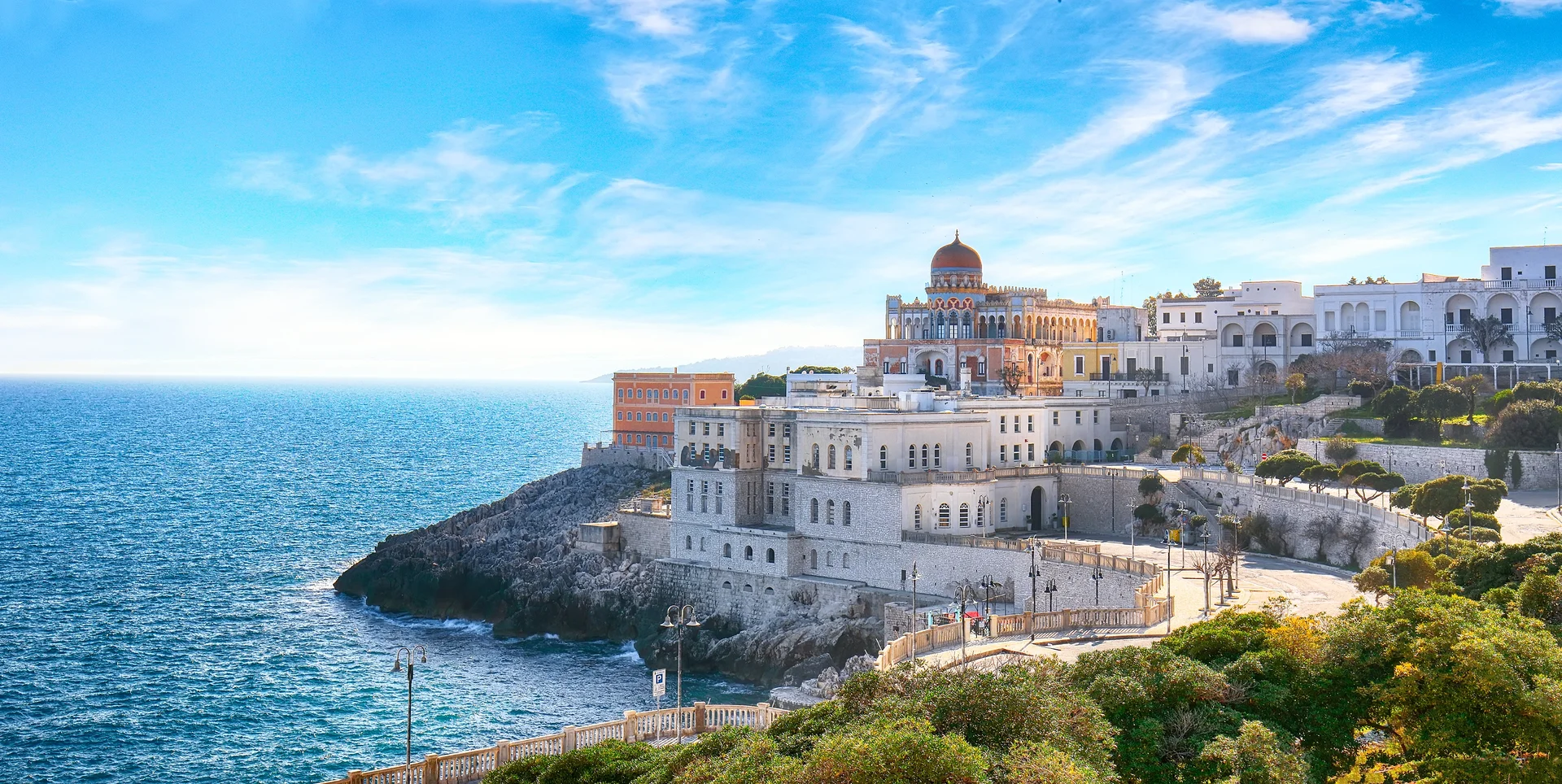
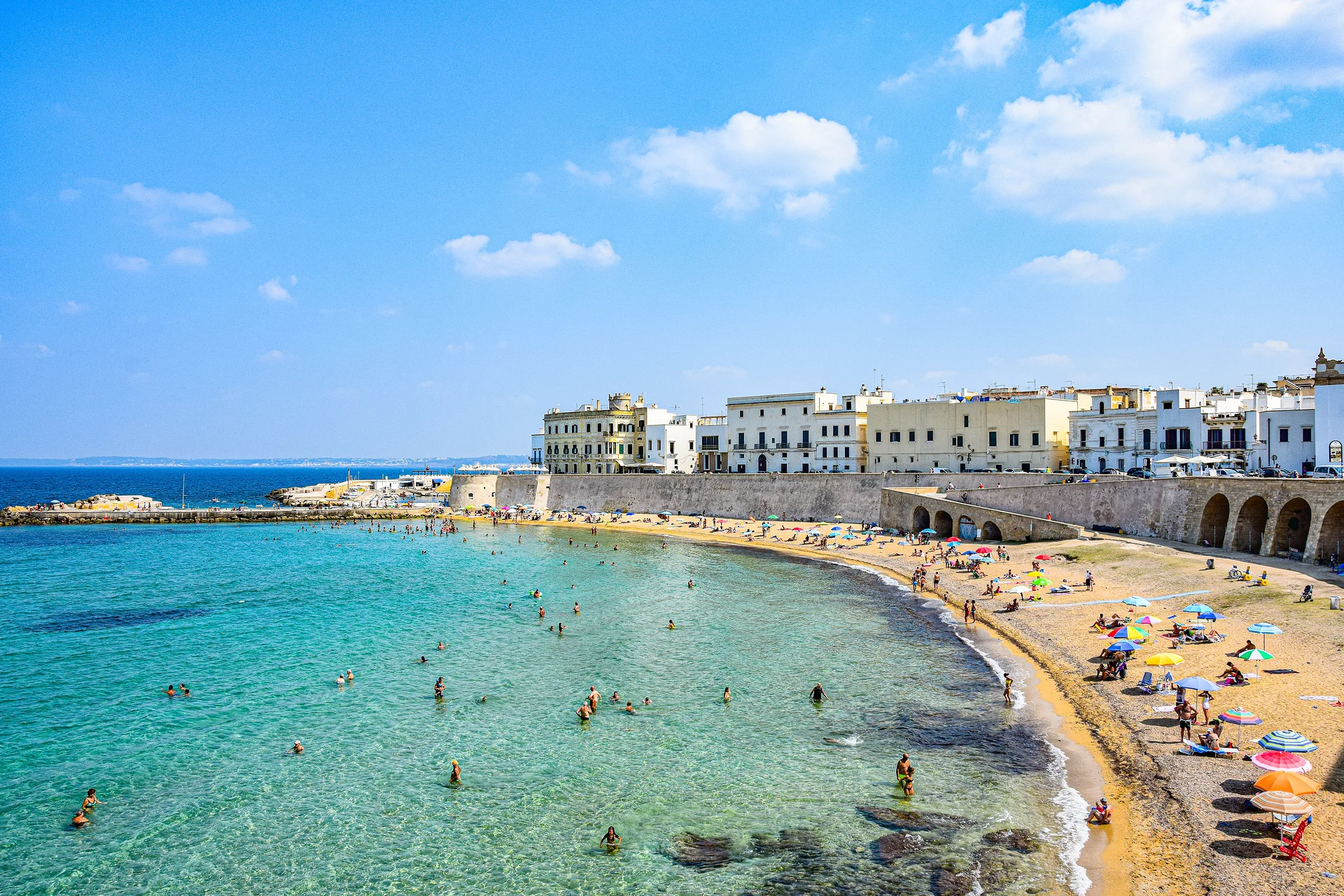
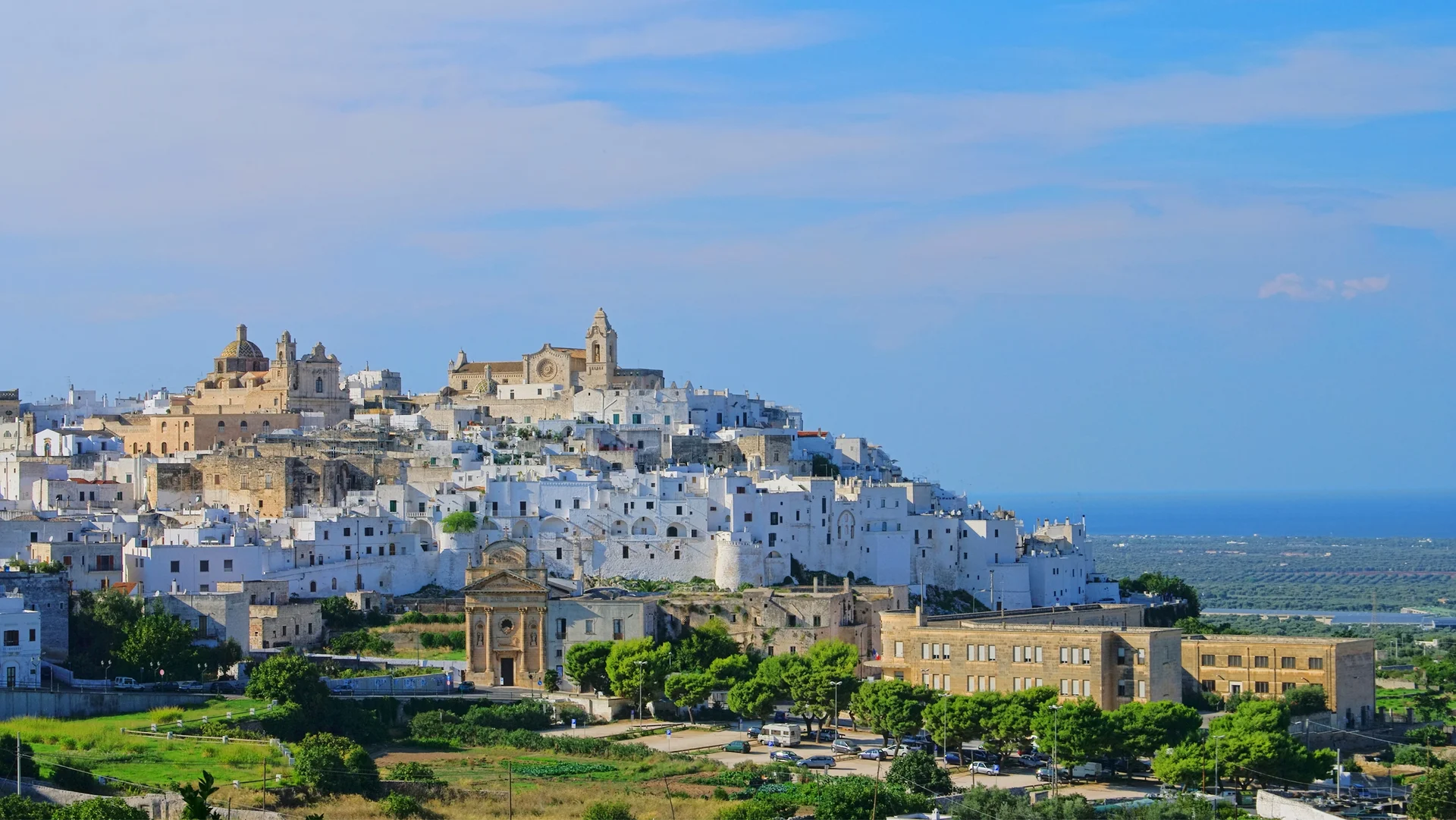
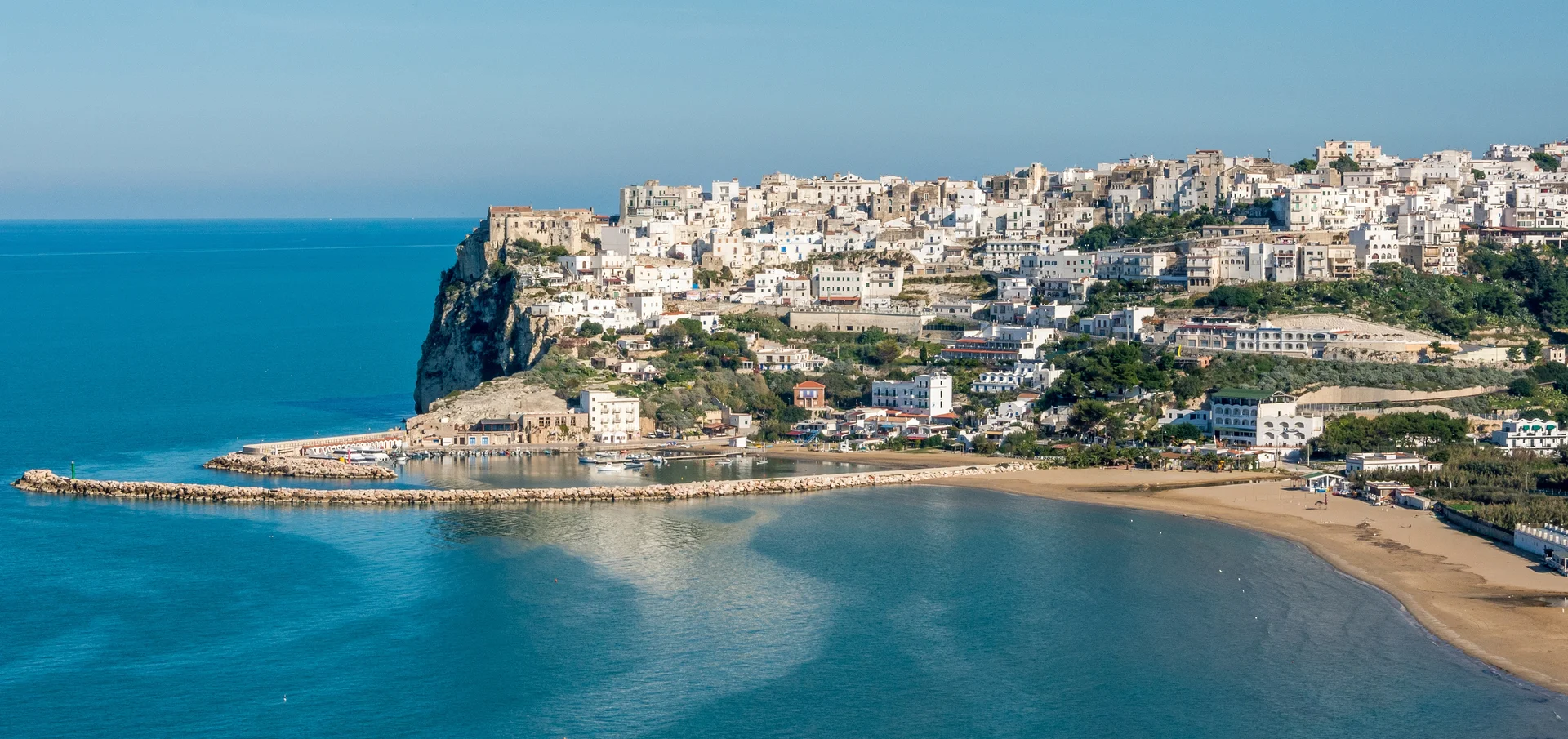
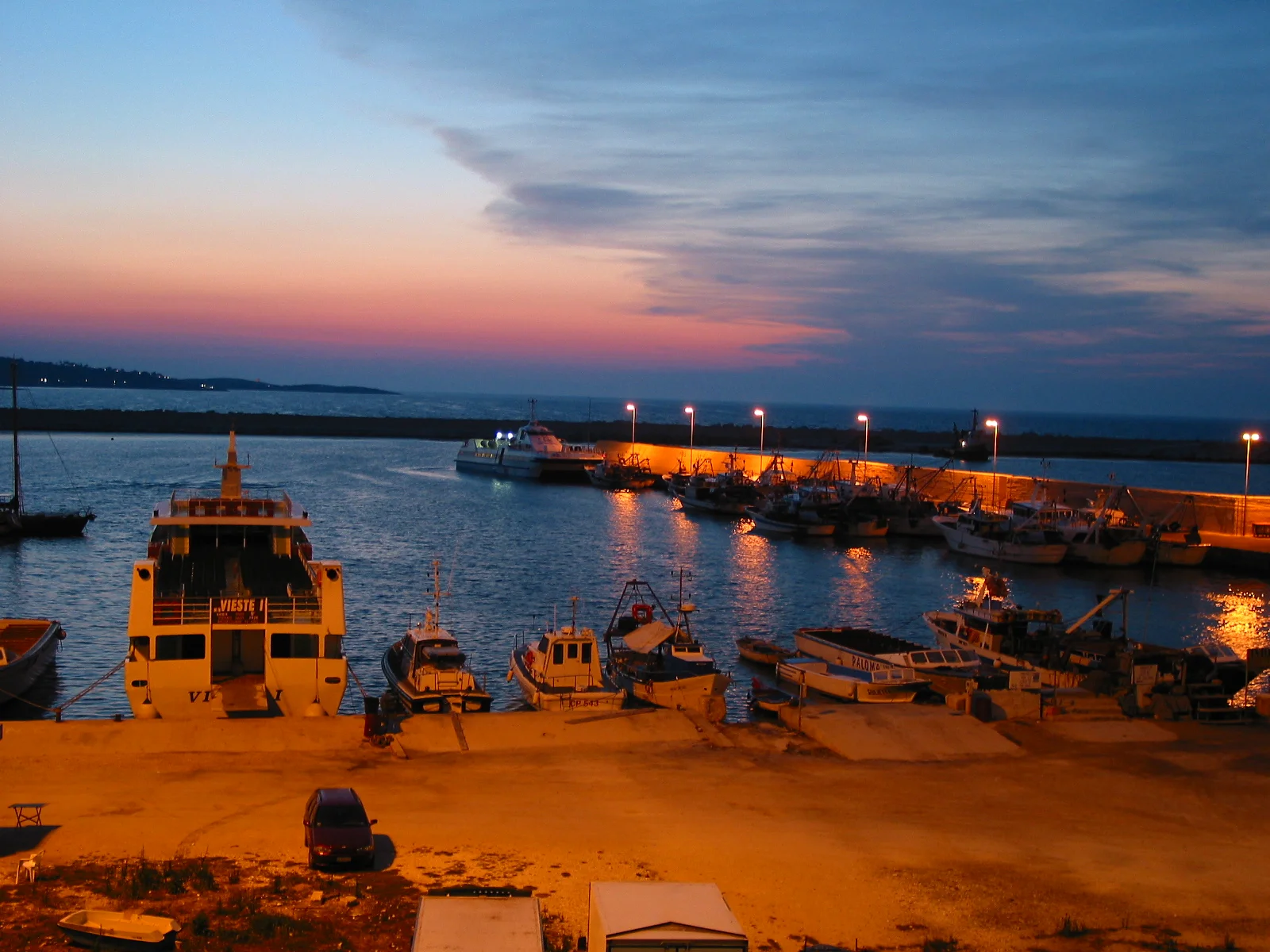
Puglia stretches 400 km (250 miles), from the Gargano, the headland in the north, to Cape Leuca, the southern tip of Italy: before you leave, decide which half you will see. Most couples choose the center and the south, the trulli of Alberobello, the cliffs of Polignano a Mare, the white town of Ostuni and the coves of the Salento, the southern peninsula, flying into Bari and out of Brindisi. Rent a car at the airport: without one, you will spend your days waiting for regional trains. And skip August: Italians are on vacation and fill the beaches.
At a glance
- When to go
- Mid-May to late June, then September: 24 to 30 °C (75 to 86 °F), the sea already at 22 °C (72 °F) in June and still 25 °C (77 °F) in September, beach clubs open and quiet roads.
- How many days
- Seven days for the Bari coast, the Itria Valley, Ostuni and the Salento, by car; ten to add the Gargano, in the north, 2h30 by road from Bari.
- Where to base yourselves
- The Itria Valley to sleep in a trullo in the middle of everything; Polignano a Mare for the sea below your windows; Otranto for the Salento and its coves.
- Budget for two
- About $2,530 for six nights mid-range, hotels, meals, sights and car included, flights excluded; in August, the same rooms cost up to twice as much.
- The moment for two
- Evening on the lookout of Locorotondo, above a valley dotted with trulli, then dinner at a fornello pronto in Cisternino, where the butcher grills the meat you pick.
- To book
- The rental car three to six weeks ahead, hotels in Polignano and Ostuni two to three months ahead for June and September, and in August a table every night.
Why Puglia for two
Puglia is the heel of the Italian boot, between the Adriatic and the Ionian Sea: centuries-old olive trees, whitewashed villages, round dry-stone houses topped with cones, the trulli, and 800 km (500 miles) of coastline, cliffs in the north and sand in the south. The food is simple and inexpensive, and you can sleep in a masseria, an old fortified farmhouse turned hotel, among the olive groves.
You will get around by car, and distances in the center are short: in one day, you can see the trulli of Alberobello in the morning, have lunch in Locorotondo and dinner facing the sea in Polignano a Mare, 40 minutes away by road.
When to go
| Period | Weather | Crowds | Our view |
|---|---|---|---|
| April and early May | 18 to 24 °C (64 to 75 °F), sea 16 to 19 °C (61 to 66 °F) | Light, except Easter and May 1 | Fields in bloom and quiet villages, but the sea is too cool and the lidi still closed |
| Mid-May to late June | 24 to 30 °C (75 to 86 °F), sea 20 to 24 °C (68 to 75 °F) | Moderate, heavy on weekends | Swimming weather, long days, hotels without August prices |
| July and August | 30 to 38 °C (86 to 100 °F), sea 26 °C (79 °F), hot wind | Very heavy, especially August 1 to 25 | Packed beaches, top prices, Salento roads jammed toward the coves; only the evenings stay pleasant |
| September | 25 to 30 °C (77 to 86 °F), sea 24 to 25 °C (75 to 77 °F) | Heavy at first, then lighter | Our favorite: the sea still warm, the Italian crowds gone home after the school year starts |
| October to March | 10 to 22 °C (50 to 72 °F), autumn rain | Light | Quiet white towns and the olive harvest, but most lidi and beach hotels closed |
On August 15, Ferragosto, a public holiday when all of Italy is on vacation, beaches and restaurants are full. In Bari, during the feast of Saint Nicholas, May 7 to 9, the saint's statue is carried out to sea on a fishing boat. In late August, the Notte della Taranta, in Melpignano in the Salento, is a huge free concert of pizzica, the traditional music and dance, drawing more than a hundred thousand people.
Entry requirements: documents, visa, health
| Documents | Visa | Health | |
|---|---|---|---|
| United States, Canada | Passport valid at least 3 months after you leave the Schengen area, issued within the last 10 years | None for stays up to 90 days | Travel insurance with medical cover |
| United Kingdom | Passport valid at least 3 months after you leave the Schengen area, issued within the last 10 years | None for stays up to 90 days in any 180 | Your free GHIC covers state healthcare in Italy; travel insurance for the rest |
| Ireland | Valid passport, checked at boarding and at the hotel | None | Free EHIC for public healthcare |
Entering the Schengen area from the US, Canada or the UK
On your first entry into the Schengen area, border police record your fingerprints and a photo (the EES system): allow an extra half hour at the first Schengen airport you land in: Bari or Brindisi on a nonstop, otherwise your connection in Rome, Frankfurt, Munich or Paris, where you clear passport control before the flight to Puglia.
Check before you leave whether the ETIAS travel authorization is required on your dates: you apply for it online on the official European Union site (travel-europe.europa.eu).
Getting there
Two airports: Bari in the north, Brindisi in the south
Bari Airport (BRI) serves the Bari coast, Polignano a Mare and the Itria Valley; Brindisi Airport (BDS), 40 km (25 miles) from Lecce, serves Ostuni and the Salento. For a week, fly into one and out of the other: you save two hours of driving on the last day.
| From | Flight time | Good to know |
|---|---|---|
| London | ~2h45 | Nonstops from Stansted (Ryanair) and Gatwick (easyJet) to Bari and Brindisi all year, more flights from April to October |
| Manchester, Dublin | ~3h | Manchester to Brindisi all year (Ryanair) and to Bari in summer (easyJet); Dublin to both in summer (Ryanair, Aer Lingus) |
| New York | ~9h | United flies nonstop from Newark to Bari in summer; the rest of the year, one stop in Rome |
| Boston, Chicago, Toronto, Montreal | 12 to 14 hours | No nonstop: one stop in Rome, the simplest connection, or in Frankfurt, Munich or London |
| Los Angeles, San Francisco | 16 to 19 hours | One or two stops, via Rome, Frankfurt or Munich; an overnight flight lands in Puglia in the afternoon |
By train
From Rome, the Frecciarossa high-speed trains reach Bari in 4h to 4h30; from Milan, the Adriatic line gets to Bari in about 7h and continues to Lecce. If you are combining Puglia with Rome or Naples, come by train and pick up the car at Bari Centrale station.
Practical things to know before you go
Phone
US and Canadian plans charge roaming at full price, and most UK plans now charge for Europe too: turn on a travel pass or install a European eSIM before you leave. With an Irish plan, calls and data work as at home, Italy being in the European Union. Download an offline map of the region: the signal drops in the Itria countryside and along the Gargano coast.
Outlets and voltage
Italian outlets run at 230 volts and take round two-pin or three-pin plugs: American, Canadian, British and Irish plugs do not fit, so bring one adapter per person. North American 110-volt appliances only work if they are dual voltage, which is the case for phones and laptops, rarely for hair dryers.
Money, cover charge and tipping
- The euro everywhere, cards accepted in hotels, restaurants and gas stations; keep $44 in cash for the lidi, beach parking, village bars and markets.
- The coperto, the cover charge, is added to the restaurant bill: $1.70 to $3.30 per person, shown on the menu. It is not a tip.
- Tipping is not expected at American levels: round up or leave a few euros if the service was good.
- At an ATM or a card terminal, decline the conversion into dollars or pounds and pay in euros: your own bank converts at a better rate.
Language and opening hours
Outside the hotels, few people speak English: a buongiorno when you walk in and a grazie on the way out always go down well. In the villages, shops close from about 1 pm to 5 pm, and so do the churches: visit them in the morning or late afternoon.
What to book, and how far ahead
In Puglia, what runs out first is cars and rooms, not sights: you can walk into most monuments without booking. Reserve the car as soon as you have your flights, and boutique hotels two to three months ahead for June and September, four to six months for August.
| What | Price | Book | Good to know |
|---|---|---|---|
| Rental car, Bari or Brindisi airport | $39 to $77 / day | 3 to 6 weeks ahead | Small automatics go first, and most cars are manual; dropping off at the other airport can cost extra, ask in the quote |
| Hotels in Polignano, Ostuni and the masserie | See "Where to stay" | 2 to 3 months ahead | Few rooms per property; in August, many require a three-night minimum |
| Boat trip to the Polignano sea caves | ~$44 / pers. | The day before | Departs from Cala Ponte Marina, the marina; 1h30 to 2h on a shared boat, canceled in rough seas |
| Castel del Monte | ~$11 / pers. | Online in summer | Parking at the foot of the hill, then a shuttle ($2.20 round trip) |
| Restaurants in Polignano, Lecce and Gallipoli | Depends on the menu | 1 to 3 days ahead | In July and August, a table without a reservation is rare after 8:30 pm |
| Grotta della Poesia, at Roca Vecchia | ~$5.50 / pers. | On site | Paid entry in summer; swimming and diving prohibited |
From the airport to your hotel
© OpenStreetMap contributors
The two airports and the bases they serve
- Bari Airport (BRI)
- Brindisi Airport (BDS)
- 1Bari
- 2Polignano a Mare
- 3Alberobello
- 4Ostuni
- 5Lecce
- 6Otranto
- 7Gallipoli
| Destination | Transport | Travel time | Good to know |
|---|---|---|---|
| Bari | Airport train to Bari Centrale | ~20 min. | ~$5.50 / pers., 5 am to 11:30 pm |
| Polignano a Mare | Rental car | ~45 min. | On the SS16, toll-free |
| Polignano a Mare | Train to Bari Centrale, then regional train | ~1h15 | Change at Bari Centrale |
| Alberobello | Rental car | ~55 min. | Give your plate number to the hotel for the ZTL |
| Ostuni | Rental car | ~1h10 | On the SS16, toll-free |
| Destination | Transport | Travel time | Good to know |
|---|---|---|---|
| Ostuni | Rental car | ~35 min. | On the SS16, toll-free |
| Lecce | Direct bus | ~40 min. | Several companies, a few euros / pers. |
| Otranto | Rental car | ~1h10 | On the Lecce expressway, toll-free |
| Gallipoli | Rental car | ~1h15 | Via Lecce, toll-free |
Getting around
By car, and the ZTL zones
In Italy you drive on the right: if you are used to the left, take the first roundabouts slowly. The expressways, the SS16 from Bari to Brindisi and the road from Brindisi to Lecce, are free; for the Gargano, in the north, you will take the A14 highway, which has tolls. Elsewhere, expect narrow, well-kept roads between dry-stone walls, and a roundabout at the entrance to every village.
Train and bus
Trenitalia regional trains run along the coast from Bari to Lecce, stopping at Polignano a Mare, Monopoli, Ostuni and Brindisi: it is the only practical line. The Ferrovie del Sud Est, the regional company, serves Alberobello, Locorotondo, Martina Franca, Otranto and Gallipoli, but slowly, often with replacement buses, and hardly at all on Sundays.
Parking near the beaches
Near the Salento coves and the Polignano beaches, you park in attended fields, $5.50 to $11 a day in summer, paid in cash. Arrive before 10 am in July and August: after that, only the roadside is left, sometimes 1 km (half a mile) from the beach.
Budget for two
Eating in Puglia costs less than in Tuscany or on the Amalfi Coast; sleeping in a masseria or in Polignano in summer costs about the same. The season and the type of hotel make the budget swing; food and sights cost little. Here is what six nights for two cost, flights excluded:
| Smart | Comfort | Treat | |
|---|---|---|---|
| Hotel, per night | $88 to $132 (a guesthouse, a simple hotel) | $165 to $280 (a trullo, a boutique hotel) | from $440 (a luxury masseria, the Grotta Palazzese) |
| Meals, per day for two | $55 (focaccia, panzerotti, a trattoria) | $110 (a simple lunch, a seafood dinner) | $220 (a fine-dining restaurant) |
| Car, for the stay | $330 with gas | $440 with zero-deductible insurance | $610 with a bigger car |
| Sights, beaches and parking | $66 | $165 with two days at a lido | $390 with a private boat |
| Total, six nights | ~$1,430 | ~$2,530 | from $4,950 |
Useful benchmarks: an espresso at the counter $1.40, a slice of focaccia barese $2.20 to $3.30, a plate of orecchiette $11 to $16, a pizza $8.80 to $14, two loungers and an umbrella at a lido $22 to $44 a day, more in August, a liter of gas around $2.10.
Specialties to try
Puglia's food is peasant cooking: durum wheat semolina, vegetables, olive oil, fresh cheese and, on the coast, fish and shellfish served raw. You will taste it best in village trattorie and at the bakeries, at lunchtime.
At the table
-
Orecchiette
Pasta shaped like little ears, rolled by hand, served with cime di rapa, bitter turnip greens, or with tomato sauce and salted ricotta. In Bari, women shape them in front of their doors, in the alleys of Bari Vecchia.
-
Focaccia and panzerotti
Focaccia barese, thick and topped with cherry tomatoes and olives, and panzerotti, fried turnovers filled with tomato and mozzarella: lunch on the go, $2.20 to $4.40 each.
-
Burrata
The specialty of Andria, north of Bari, a pouch of mozzarella filled with cream and shreds of cheese: order it made that day, to share, with bread and olive oil.
-
Crudo di mare
Sea urchins, mussels, oysters and shrimp served raw with lemon, in Bari and Polignano: pick a place where the fish comes in that morning, and skip them in August in the heat.
-
Bombette
Small pork rolls stuffed with cheese and bacon, grilled over embers: the specialty of Cisternino and Martina Franca, at the butcher's fornello pronto, with the smoked capocollo of Martina Franca.
-
Pasticciotto
A small shortcrust pastry filled with custard, the specialty of Lecce and the Salento: have it warm for breakfast, with a coffee.
To drink
Puglia makes powerful red wines, Primitivo di Manduria and Negroamaro from the Salento, and rosés to drink chilled all summer, $4.40 to $6.60 a glass. In the Salento, try a caffè leccese, an espresso poured over ice and almond milk.
Customs and rules to know
Puglia is Catholic and family-minded, and people warm up quickly as soon as you reach out: a few customs will spare you a fine or a refusal.
| Rule | What happens |
|---|---|
| Entering a church with bare shoulders or knees | Entry refused; a scarf in your bag is enough |
| Driving into a ZTL without a permit | A fine for each camera you pass, sent on by the rental company |
| Leaving a cigarette butt, trash or a bottle on a beach | A fine, and patrols on the free beaches in summer |
| Paying a parking attendant with no uniform or ticket | Nothing official: these improvised parcheggiatori have no right to charge you |
Locals have lunch around 1:30 pm and dinner after 8:30 pm, later in summer; a restaurant open from 7 pm mostly serves visitors. On the beaches, the lido rents loungers and umbrellas, the spiaggia libera is free: regional law keeps 60% of each town's shoreline for free beaches.
Safety
Puglia is safe for a couple, day and night, including Bari's old town, restored and lively in the evening. The risks are the road, the sun and thefts from cars parked near the beaches.
- Parked cars near the coves and beaches: leave no bag, suitcase or phone in sight, even for an hour; smashed windows are common in summer.
- The cliffs and rocks of Polignano, Roca Vecchia and Santa Cesarea: jumping from the rocks injures people every summer; only jump where the locals do, and never in rough seas.
- The sun from June to September: no shade on the rocks or in the white alleys at noon; bring a hat and water, and sightsee before 11 am or after 5 pm.
- The road in the evening in August: fast drivers on the expressways and heavy beach traffic around 7 pm; drive the small, poorly lit country roads by day.
- Jellyfish, some summers: look at the water before going in; the lifeguards at the lidi flag them.
Mistakes to avoid
Most disappointments in Puglia come from the same mistake: trying to see everything, from the Gargano to Cape Leuca, in one week, and spending your days on the road.
- Going in August by default: hotel prices double, the Salento beaches are full by 10 am and every dinner needs a reservation.
- Putting the Gargano and the Salento in the same week: more than 300 km (190 miles) apart, nearly four hours of driving; save the Gargano for a ten-day stay or another trip.
- Driving into an old town by following the GPS: the ZTL camera records you, and the fine arrives months later.
- Seeing Alberobello between 11 am and 4 pm with the tour buses, then leaving: the trulli alleys are almost empty at 9 am and after 6 pm. Stay the night, or come at one of those times.
- Booking an isolated masseria without a car: most are ten minutes' drive from the nearest village, and a taxi there is expensive at night.
- Expecting only sandy beaches: the Bari coast and the coast south of Otranto are rocky; bring water shoes for the coves.
Apulia
Compare hotel prices
Pick your dates and see the offers from the major booking sites side by side.
Compare live offers from Booking, Expedia, Agoda and other partners.
Apulia: find your hotel
Frequently asked questions
How many days do you need for Puglia as a couple?
Seven days by car for the Bari coast, the Itria Valley, Ostuni, Lecce and the Salento, without rushing. Ten days to add the Gargano, in the north, or Castel del Monte and Trani. With four days, keep to the Itria Valley and Polignano a Mare.
Do you need to rent a car in Puglia?
Yes, unless you stay in Bari and Polignano a Mare, which are linked by train. The Itria villages, the masserie and the coves are only easy to reach by car. Rent it at the airport, and always park outside the ZTL zones of the old towns.
Which airport should you choose, Bari or Brindisi?
Bari to start with Polignano a Mare, the Itria Valley or the Gargano; Brindisi for Ostuni, Lecce and the Salento. For a week, fly into one and out of the other, and check the rental company's fee for dropping off at the other airport.
What is the best time of year for a couple?
September: the sea at 24 to 25 °C (75 to 77 °F), the Italian crowds gone and prices coming down. Then June, for the long days and a sea already pleasant. Avoid August, especially around the 15th, the most expensive and crowded time of the year.
Is Puglia an expensive destination?
Less than Tuscany or the Amalfi Coast for food and getting around, about the same for a masseria or a hotel in Polignano in summer. Count on about $2,530 for six nights for two mid-range, car included, flights excluded, and $1,430 on a tight budget.
Where can you swim in Puglia?
In the rocky coves of Polignano a Mare and south of Otranto, off the rocks of Torre Sant'Andrea, and on the sand of the Ionian coast around Gallipoli. The Adriatic side of the Salento is rocky, with clear water; the Ionian side is sandy, and the water there is warmer.