




Crete for couples: what to know before you go (2026)
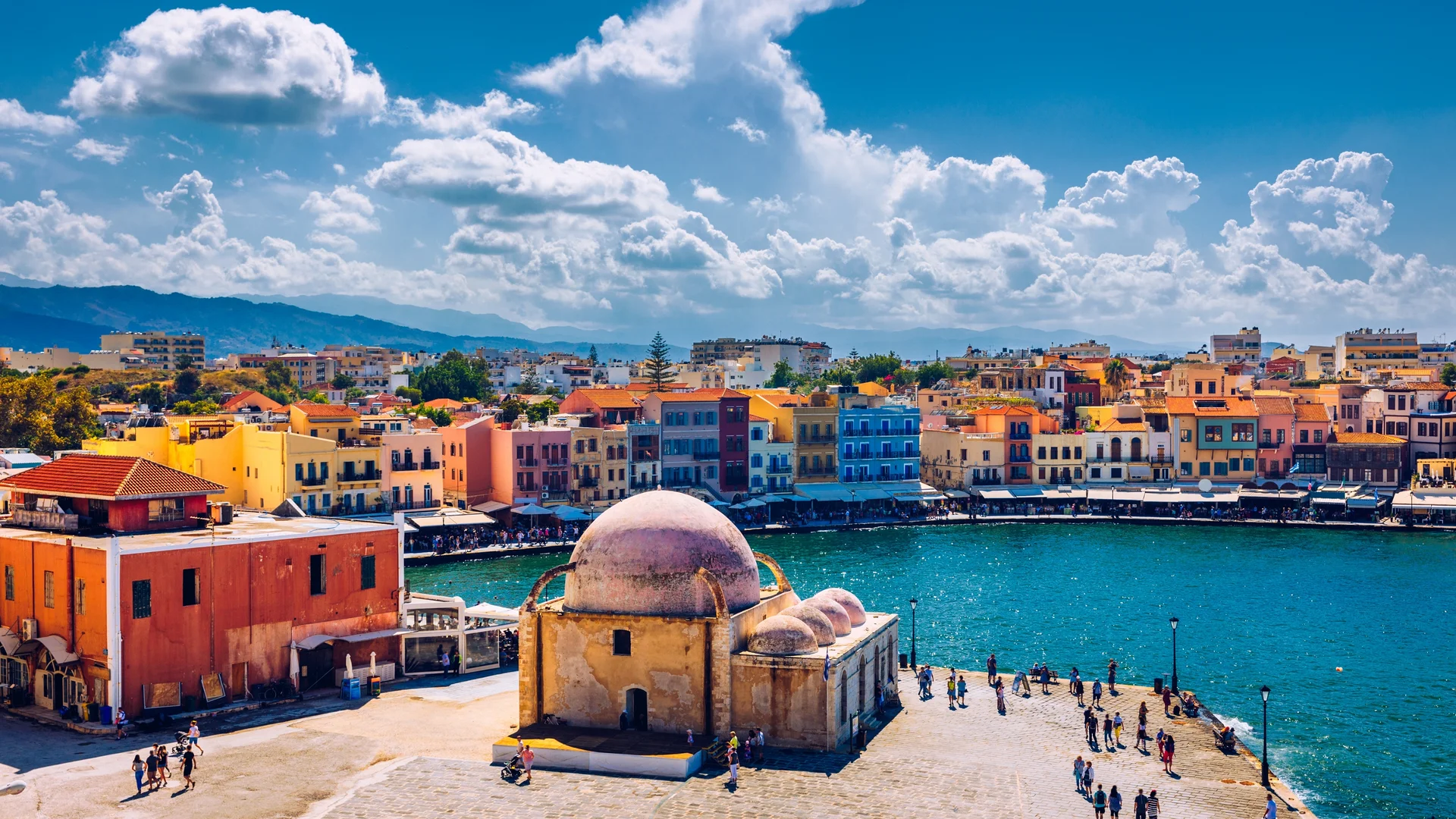
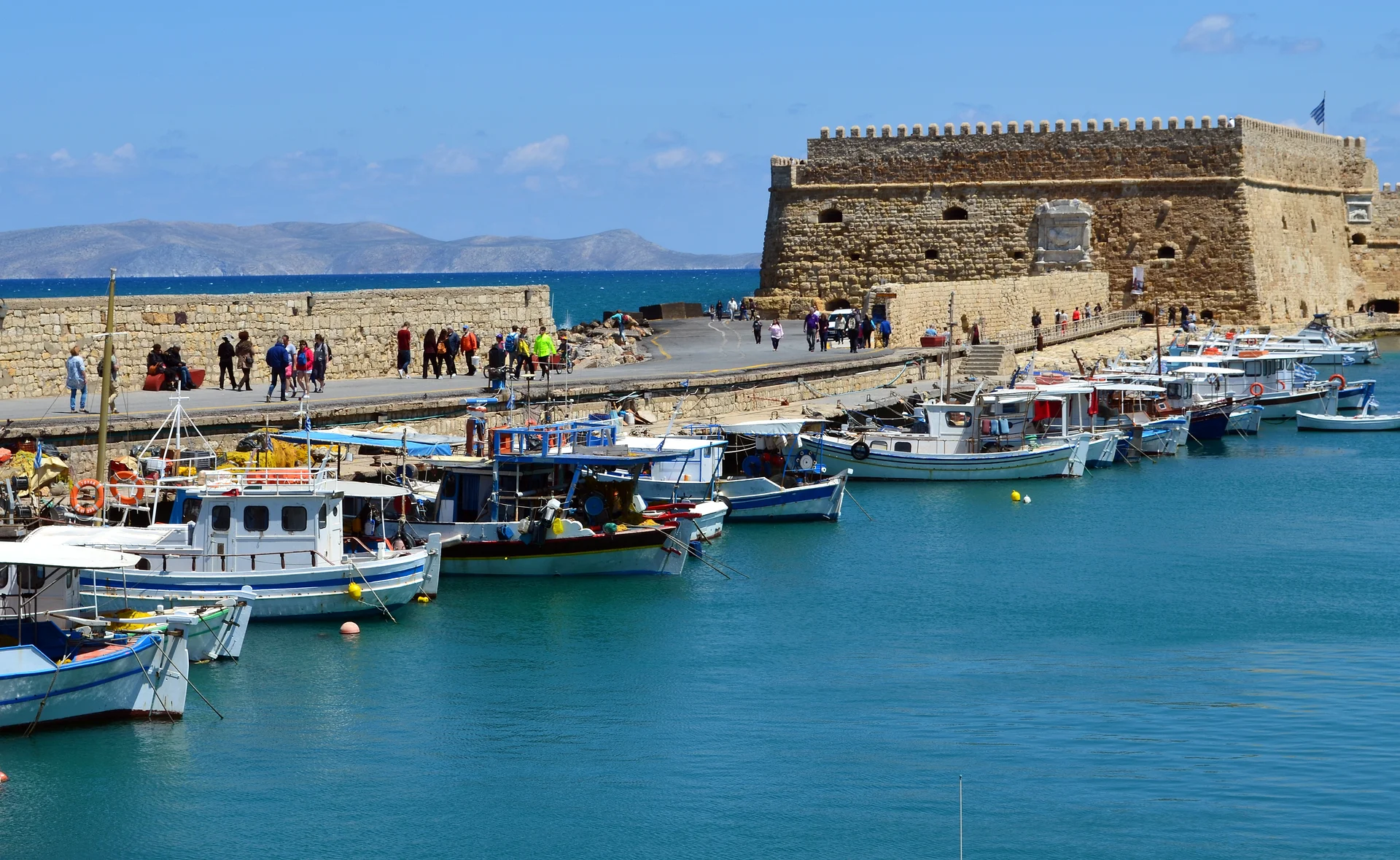
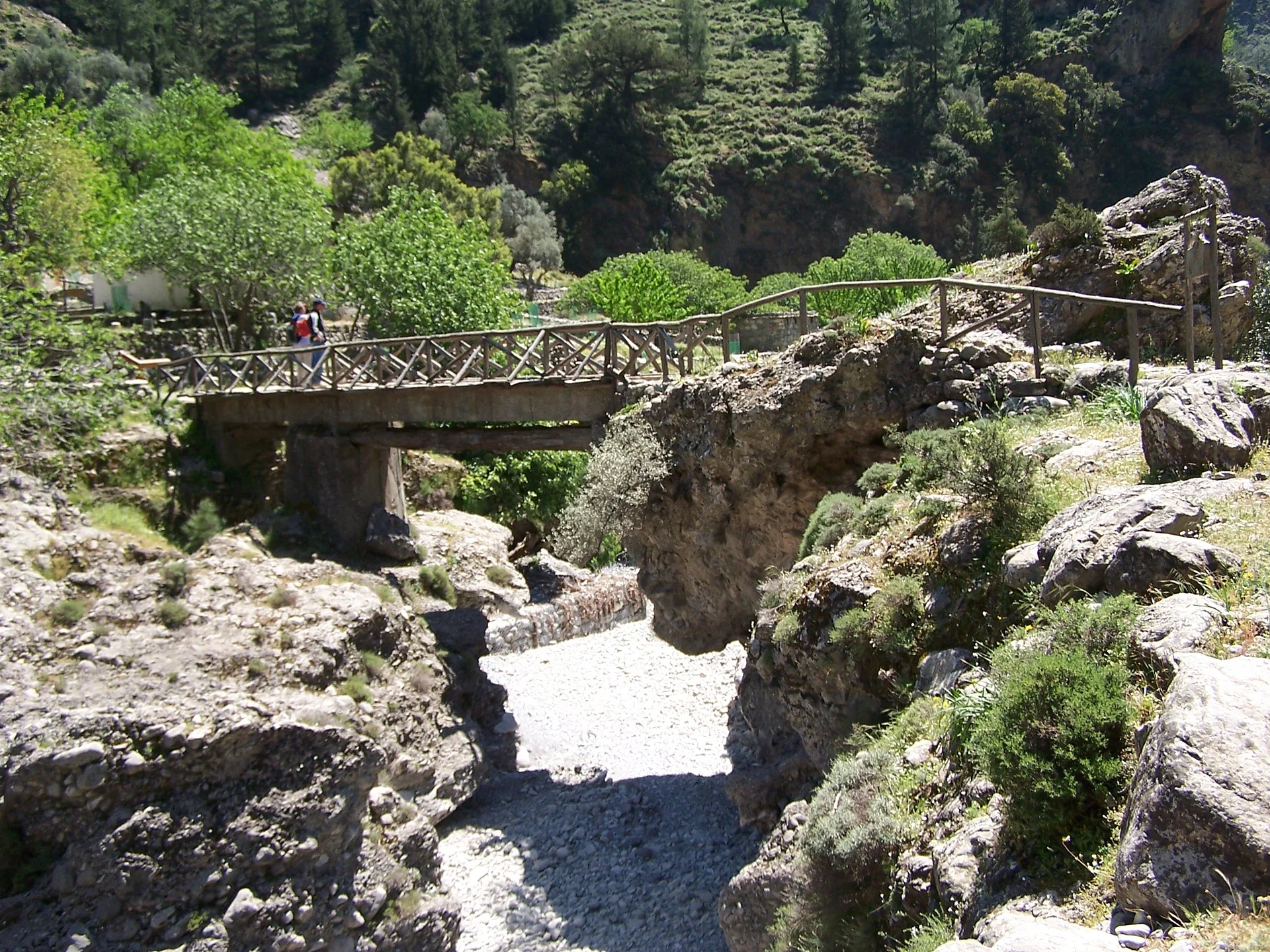
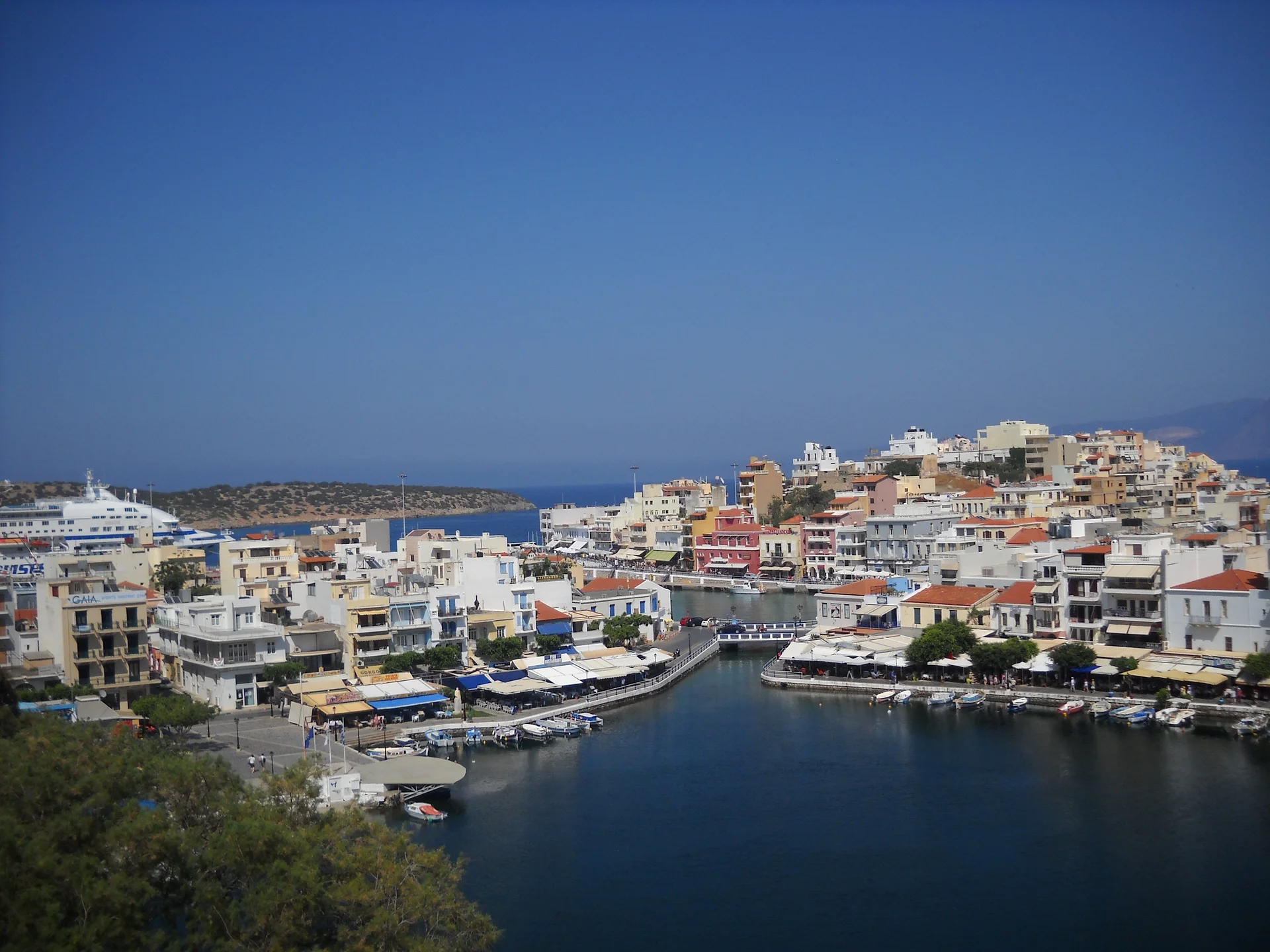
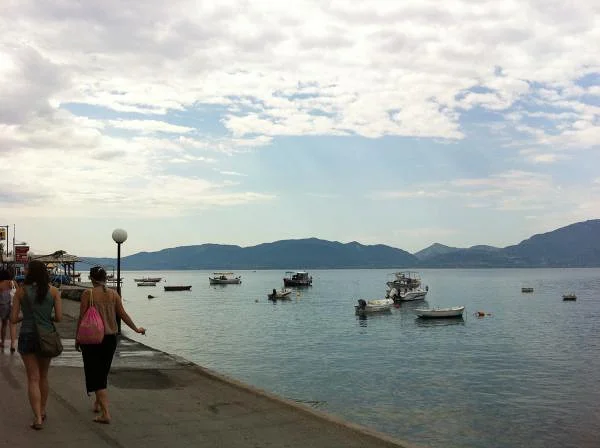
Crete is the largest Greek island, 260 km (160 miles) from end to end: pick your airport by the half of the island you want to see. Fly into Chania for the west, the beaches of Balos and Elafonissi and the Samaria Gorge; into Heraklion for the east, the Palace of Knossos, the islet of Spinalonga and the Gulf of Mirabello. With a week, you can land at one and fly home from the other, crossing the island by car.
At a glance
- When to go
- Go from mid-May to late June or in September: 24 to 28 °C (75 to 82 °F), the sea at 20 to 25 °C (68 to 77 °F), and the Samaria Gorge open. In July and August, it tops 30 °C (86 °F), and a strong north wind blows on the north coast.
- How many days
- Plan four or five days for the west alone, around Chania, and a week to ten days for the west and the east, with two hotels.
- Where to base yourself
- For a first trip, stay in Chania, in the old town. For the east, choose Elounda or Agios Nikolaos, on the Gulf of Mirabello.
- Budget for two
- Outside August, allow about $2,750 for a comfortable week, with hotels, meals, car and sights, flights not included, and about $1,430 if you travel smart.
- A moment for two
- Stay on Falasarna beach, west of Kissamos, until sunset: it faces due west, and the sun goes down into the sea.
- Book ahead
- Book the rental car when you book your flights, especially an automatic, then the hotels in Chania and Elounda for summer, and the Balos boat a day or two before.
Why Crete for two
Crete is an island of mountains: four ranges cross it, two of them above 2,400 meters (7,900 feet), and their gorges run down to the Libyan Sea, on the south coast. You will find pink-sand beaches and lagoons in the west, at Elafonissi and Balos, coves on the south coast, and the Palace of Knossos, the center of the Minoan civilization almost 4,000 years ago.
The Venetians, who held the island for more than four centuries, left harbors and old towns behind: have dinner on the harbor in Chania or Rethymno, below Venetian facades and Ottoman minarets. In the villages, the tavernas serve their own olive oil, cheese and vegetables from the farm.
When to go
| Period | Weather | Crowds | Our take |
|---|---|---|---|
| April and early May | 20 to 24 °C (68 to 75 °F), sea 16 to 18 °C (61 to 64 °F) | Light, except Easter | Wildflowers and trails, but a cool sea, and the Samaria Gorge is not always open |
| Mid-May to late June | 24 to 28 °C (75 to 82 °F), sea 20 to 23 °C (68 to 73 °F) | Moderate | Our favorite time: a warm sea, Samaria open, beaches still quiet |
| July and August | 30 °C (86 °F) on average, highs of 35 °C (95 °F), sea 26 °C (79 °F) | Very heavy | Heat, strong wind and full beaches; Balos and Elafonissi packed at midday |
| September and October | 23 to 27 °C (73 to 81 °F), sea 23 to 25 °C (73 to 77 °F) | Moderate, light in late October | A sea still warm and quieter beaches, but beach hotels close in late October |
| November to March | 14 to 20 °C (57 to 68 °F), rain, snow in the mountains | Very light | Town hotels and tavernas stay open, most beach hotels are closed |
In July and August the meltemi blows, a north wind that can last several days: the sea gets rough on the north coast, and the Balos boats sometimes stay in port. Keep a spare day for Balos, and head for the more sheltered south coast on the windy day. Orthodox Easter, on the same Sunday as Western Easter or up to five weeks later depending on the year, is the island's biggest holiday: hotels fill up, and many shops close on Sunday and Monday.
When to go: the climate in Chania
The best months: April, May, June, July, August, September.
- Jan 15° 9° 12 rainy days Sea 16°
- Feb 16° 9° 10 rainy days Sea 15°
- Mar 18° 10° 9 rainy days Sea 16°
- Apr 21° 12° 6 rainy days Sea 17° best month
- May 25° 16° 4 rainy days Sea 19° best month
- Jun 29° 20° 2 rainy days Sea 23° best month
- Jul 32° 23° 1 rainy day Sea 25° best month
- Aug 32° 23° 1 rainy day Sea 26° best month
- Sep 29° 20° 2 rainy days Sea 25° best month
- Oct 26° 17° 5 rainy days Sea 23°
- Nov 21° 14° 7 rainy days Sea 21°
- Dec 17° 11° 10 rainy days Sea 18°
Monthly averages, in degrees Celsius.
Paperwork: passport, visa, health
| Documents | Visa | Health | |
|---|---|---|---|
| United States, Canada | Passport valid at least 3 months after you leave the Schengen area, issued within the last 10 years | None for stays up to 90 days | Travel insurance with medical cover |
| United Kingdom | Passport valid at least 3 months after you leave the Schengen area, issued within the last 10 years | None for stays up to 90 days in any 180 | Your free GHIC covers state healthcare; travel insurance for the rest |
| Ireland | Passport or passport card in date, checked at boarding and at the hotel | None | Free EHIC for public healthcare |
Entering the Schengen area from the US, Canada or the UK
On your first entry into the Schengen area, often in Athens or at another European airport before your flight to Crete, border police record your fingerprints and a photo (the EES system): leave extra time for your connection. Check too whether the ETIAS travel authorization is required on your dates, and apply for it online on the European Union site (travel-europe.europa.eu).
To rent a car with a US or Canadian license, also bring an International Driving Permit, issued by AAA in the US and by CAA in Canada: many rental companies require it from drivers licensed outside the European Union.
Getting there
By plane: Chania or Heraklion
The island has two main airports: Heraklion, in the middle of the north coast and the larger of the two, and Chania, in the west, on the Akrotiri peninsula. If you are crossing the island, fly into one and out of the other: you save more than two hours of driving on your last day.
| From | Flight time | Good to know |
|---|---|---|
| London | ~3h45 | Nonstops to Heraklion and Chania from Gatwick and Stansted, April to October; in winter, one stop in Athens |
| Manchester, Birmingham, Edinburgh | 4h to 4h30 | Nonstops mostly in summer, to Heraklion and Chania; otherwise one stop in Athens or London |
| Dublin | ~4h | Nonstops in summer; the rest of the year, one stop in Athens or London |
| New York, Boston, Chicago | 13 to 17 hours | No nonstop: one stop in Athens, or in a European hub such as Frankfurt or Paris |
| Toronto, Montreal | 13 to 16 hours | One stop, usually in Athens, reached nonstop from both cities in summer |
By ferry from Athens or the Cyclades
Overnight ferries leave Piraeus, the port of Athens, every evening for Heraklion and for Souda, the port near Chania, in eight to nine hours: book a cabin, sleep on board and step off in the morning. In summer, fast boats also link Santorini to Heraklion in about two hours, if you want to combine Crete with the Cyclades.
Practical things to know before you leave
Phone and signal
US and Canadian plans charge roaming at full price, and most UK plans now charge for Europe too: turn on a travel pass or install a European eSIM before you leave. With an Irish plan, calls and data work as at home, Greece being in the European Union. Download an offline map of the island: the signal drops in the gorges and along part of the south coast.
Outlets and money
- Greek outlets, at 230 volts, take plugs with two round pins. American, Canadian, British and Irish plugs do not fit: bring an adapter, one per person. North American appliances must accept 230 volts, which almost all phone and laptop chargers do, but rarely hair dryers.
- The currency is the euro. Cards work in hotels and most restaurants, but keep about $55 in cash for village tavernas, beach parking lots and boats. At ATMs and card terminals, decline the conversion into dollars or pounds and let your own bank convert.
- At the hotel, a tax per room and per night is added to the price and paid on the spot: from a few euros at a simple hotel to about $17 at a five-star in summer.
- In tavernas, tipping is not expected the way it is in the US: leave a few euros, or round up the check, if the service pleased you.
Language and alphabet
Greek is written in the Greek alphabet, but road signs also give place names in Latin letters, with spellings that vary: Chania or Hania, Rethymno or Rethimno, Heraklion or Iraklio. English is spoken in every hotel and restaurant; saying kalimera (good morning) and efcharistó (thank you) always goes down well.
What to book, and how far ahead
You can visit most sites in Crete without booking, except Knossos, where you buy your ticket online the day before. In summer, what runs out is rental cars, automatics above all, rooms in the old towns of Chania and Rethymno and at the Elounda hotels, and seats on the Balos boats on calm days.
| What | Book | Good to know |
|---|---|---|
| Rental car, July and August | With your flights, 2 to 3 months ahead | Automatics go first; take the zero-deductible insurance |
| Hotels in Elounda and Chania in summer | 3 to 5 months ahead | Beach hotels open from April to October |
| Gramvousa and Balos boat | 1 to 2 days ahead | Leaves in the morning from Kissamos port; canceled in strong wind |
| Knossos ticket | The day before, online | Arrive at opening time, 8 am, before the tour buses |
| Bus to the Samaria Gorge | On the spot, the day before | The first bus leaves very early from the Chania bus station |
From the airport to your hotel
© OpenStreetMap contributors
The airports and the bases they serve
- Heraklion Airport (HER)
- Chania Airport (CHQ)
- 1Heraklion
- 2Elounda
- 3Agios Nikolaos
- 4Rethymno
- 5Chania
- 6Kissamos
| Destination | Transport | Time | Good to know |
|---|---|---|---|
| Heraklion | City bus | ~20 min. | Stops at Eleftherias Square, in the center |
| Heraklion | Taxi | ~15 min. | Ask the fare before you get in |
| Elounda | Rental car | ~1h05 | East on the national road |
| Agios Nikolaos | KTEL bus | ~2h | Change at the Heraklion bus station |
| Rethymno | Rental car | ~1h15 | West on the national road |
| Destination | Transport | Time | Good to know |
|---|---|---|---|
| Chania | KTEL bus | ~30 min. | Arrives at the bus station, 10 min. on foot from the old town |
| Chania | Taxi | ~25 min. | Ask the fare before you get in |
| Kissamos | Rental car | ~1h | West on the national road |
| Rethymno | Rental car | ~1h10 | East on the national road |
What works best
Pick up the car at the airport, where international and Cretan rental companies have a desk or an agent waiting for you. If you fly home from the other airport, ask for that one-way return when you book: most companies accept it, sometimes for a fee. Without a car, take the bus: in Chania, KTEL buses, the island's coach company, run from the airport to the bus station; in Heraklion, a city bus drops you at Eleftherias Square.
Getting around
By car, on the national road
A national road runs along the north coast, from Kissamos to Agios Nikolaos through Chania, Rethymno and Heraklion: you will use it to cross the island. It often has one lane each way and a wide shoulder, and Cretans pull onto the shoulder to let faster cars pass. Do the same, and never overtake on a bend.
The roads to the south coast and to Elafonissi cross the mountains: count on an average of 40 km/h (25 mph), goats on the road and blind bends. The track to the Balos parking lot is dirt: drive slowly, and check that your insurance covers that kind of road.
By KTEL bus
KTEL buses, the island's coach company, link the towns of the north coast several times a day, and serve Omalos, the entrance to the Samaria Gorge, Kissamos, Elafonissi in summer, Elounda and Plaka. They are enough for a stay around one town, not for beaches and villages.
By boat
On the south coast, several villages have no road: coastal ferries run from Chora Sfakion to Loutro and Agia Roumeli, at the end of the Samaria Gorge, then on to Sougia and Paleochora. In the east, boats leave Elounda, Plaka and Agios Nikolaos for the islet of Spinalonga.
Budget for two
Cretan tavernas stay affordable, even on the coast. The hotel is your big expense, above all in Elounda, where the large resorts are among the most expensive in Greece. Here is what a week for two costs, flights not included:
| Smart | Comfort | Treat | |
|---|---|---|---|
| Hotel, per night | $77 to $110 (a simple hotel in Heraklion or Kissamos) | $165 to $250 (a boutique hotel in Chania or Rethymno) | from $500 (a large resort in Elounda) |
| Meals, per day for two | $55 (a pita, a simple taverna) | $99 (lunch at the beach, dinner on the harbor) | $198 (a chef's restaurant and a bottle of Cretan wine) |
| Car, per day | $39 plus gas | $55 plus gas | $88 for a large automatic |
| Boats, parking and sights | $88 | $165 | $550 with a private boat |
| Total, seven days | ~$1,430 | ~$2,750 | from $5,500 |
In August, hotel prices run about one and a half times higher. Useful benchmarks: an iced frappé coffee $3.30 to $4.40, a gyros pita $4.40, a dakos salad $6.60 to $8.80, a grilled fish dish $22 to $33.
What to eat and drink
Cretan cooking is built on vegetables, wild greens, sheep and goat cheese, and olive oil, which goes into almost every dish. Order several small plates to share, the mezedes, rather than a main course each.
At the table
-
Dakos
A barley rusk softened with olive oil, topped with grated tomato and mizithra, a fresh sheep's cheese: the starter in every taverna.
-
Kalitsounia
Small pastries filled with fresh cheese or greens, fried or baked, served as a starter or with honey.
-
Gamopilafo
The Cretan wedding rice, cooked in goat or rooster broth, served in the mountain tavernas.
-
Boureki
A bake of zucchini and potatoes with cheese, a specialty of the Chania area.
-
Chochlioi boubouristi
Snails seared face down in a pan covered with salt, then doused with olive oil, vinegar and rosemary.
-
Sfakiani pita
A thin flatbread filled with fresh cheese and served with thyme honey, from the Sfakia area on the south coast.
To drink
Raki, also called tsikoudia, is a grape-pomace spirit served ice-cold in small glasses. Try the island's wines too, made from Cretan grapes: white wine from vidiano or vilana, red wine from liatiko or kotsifali, produced mostly around Peza, south of Heraklion.
Customs and rules to know
Cretans take pride in their hospitality: at the end of the meal, the owner often brings a glass of raki and a dessert on the house. Accept them, even if you only take a sip. A few rules spare you a refusal or a fine:
| Rule | What happens |
|---|---|
| Taking sand or shells from Elafonissi or Balos | Forbidden: both beaches are protected sites, with fines |
| Entering a monastery or church with bare shoulders or knees | You are turned away; a scarf or sarong in your bag is enough |
| Flushing toilet paper | The pipes clog: put it in the bin provided |
| Lighting a fire or barbecue outside a designated spot in summer | Forbidden, with heavy fines; the wildfire risk is real |
Cretans eat lunch late and dinner late, from 8 or 9 pm in summer. In the villages, shops often close in the afternoon, between 2 and 5 pm.
Safety
Crete is safe for a couple, in towns and villages, by day and by night. The risks come mostly from the road, the sun and the sea.
- The national road: overtaking from the shoulder, drivers in a hurry, scooters; slow down, and avoid driving it at night after a dinner with raki.
- Heat in the gorges: at Samaria, start at opening time, with two liters (half a gallon) of water each, good shoes and a hat; the hike takes five to seven hours.
- The sea when the meltemi blows: waves and currents on beaches facing north and west; follow the lifeguard flags.
- The rental car: photograph it from every angle at pickup, so you do not pay for a scratch that was already there.
- A car parked near the beaches: leave nothing in sight.
Mistakes to avoid
- Planning Balos and Elafonissi on the same day: both beaches are in the west, but an hour and a half's drive apart.
- Setting off for the Samaria Gorge in sandals, or without checking the day before that it is open: it closes in extreme heat, strong wind or rain.
- Arriving at Knossos or Elafonissi at midday in summer, with the tour buses and the heat.
- Booking a hotel in Elounda or Kissamos in April or after mid-October without checking its opening dates.
Crete
Compare hotel prices
Pick your dates and see the offers from the major booking sites side by side.
Compare live offers from Booking, Expedia, Agoda and other partners.
Crete: find your hotel
Frequently asked questions
How many days do you need for Crete as a couple?
Four or five days for the west alone, around Chania: the old town, Balos, Elafonissi and the Samaria Gorge. A week to ten days for the west and the east, with Knossos and Spinalonga, and two hotels. With more time, add the south coast and its villages.
Do you need a car in Crete?
Yes, for the beaches and villages: KTEL buses link the north coast towns well, but rarely the beaches, apart from Elafonissi in summer. Rent it at the airport and take the zero-deductible insurance: mountain roads and beach parking lots are narrow.
Which airport should you choose, Chania or Heraklion?
Chania for the west, Heraklion for the east and Knossos. For a week or more, use both: fly into one and out of the other.
What is the best time for a couple to visit Crete?
Mid-May to late June and September: the sea is warm, the Samaria Gorge is open and the beaches are less crowded than in summer. In July and August, the heat and the north wind make day trips more tiring.
Is Crete expensive?
Less so than the Cyclades: outside August, allow about $2,750 for a comfortable week for two, flights not included. Tavernas stay affordable everywhere; only the large Elounda resorts reach Santorini prices.