





The Camargue for couples: what to know before you go (2026)
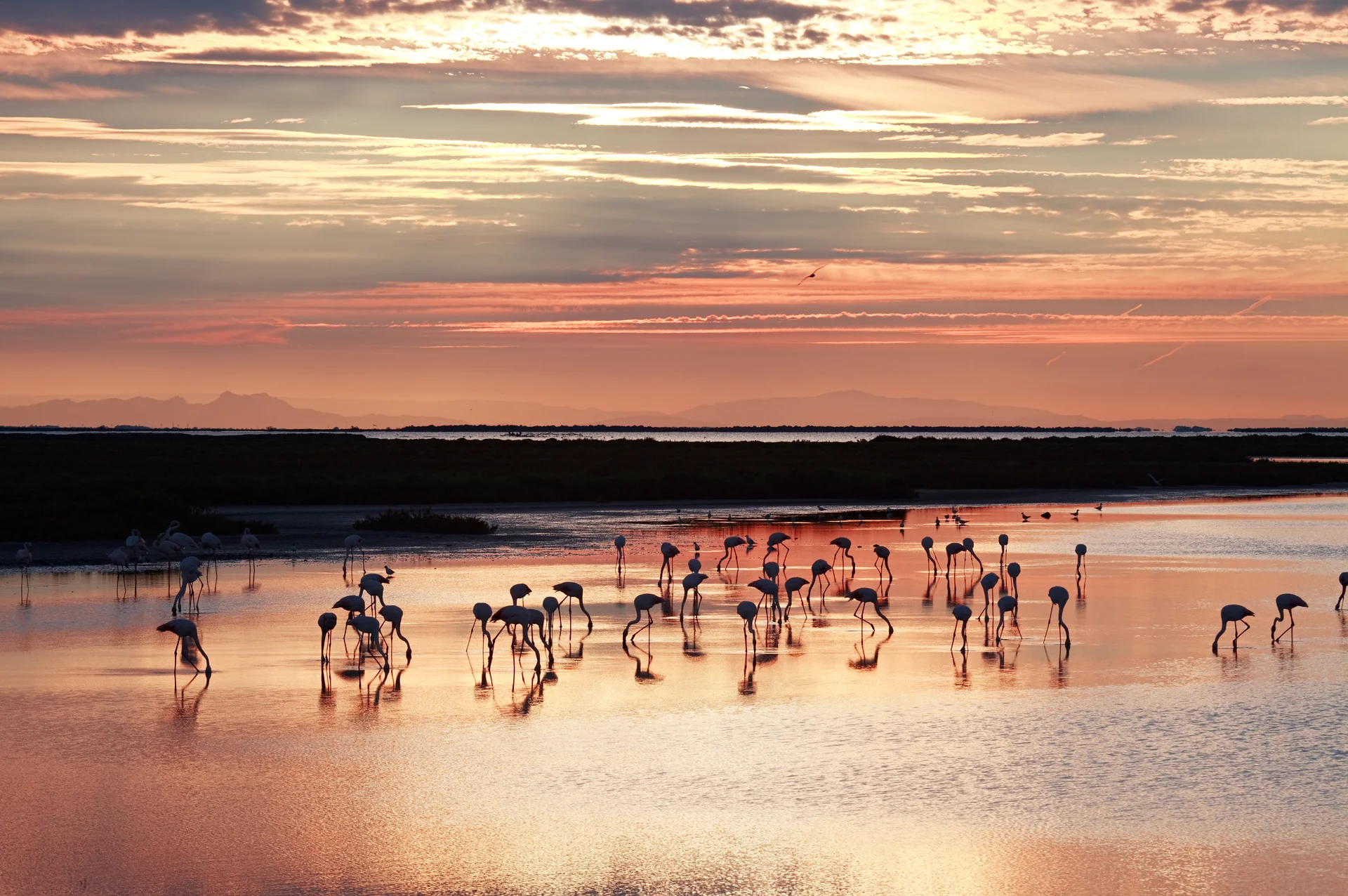
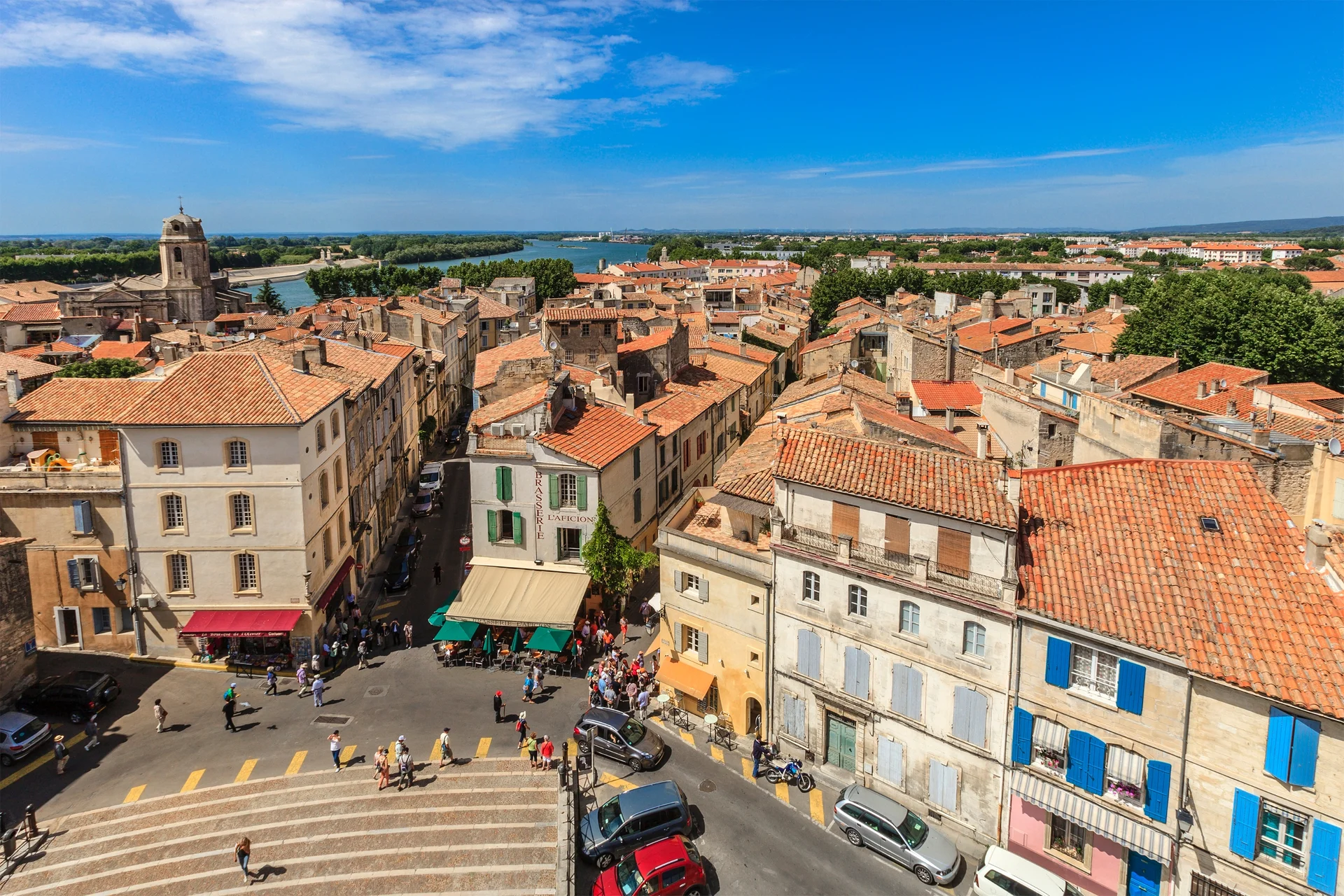
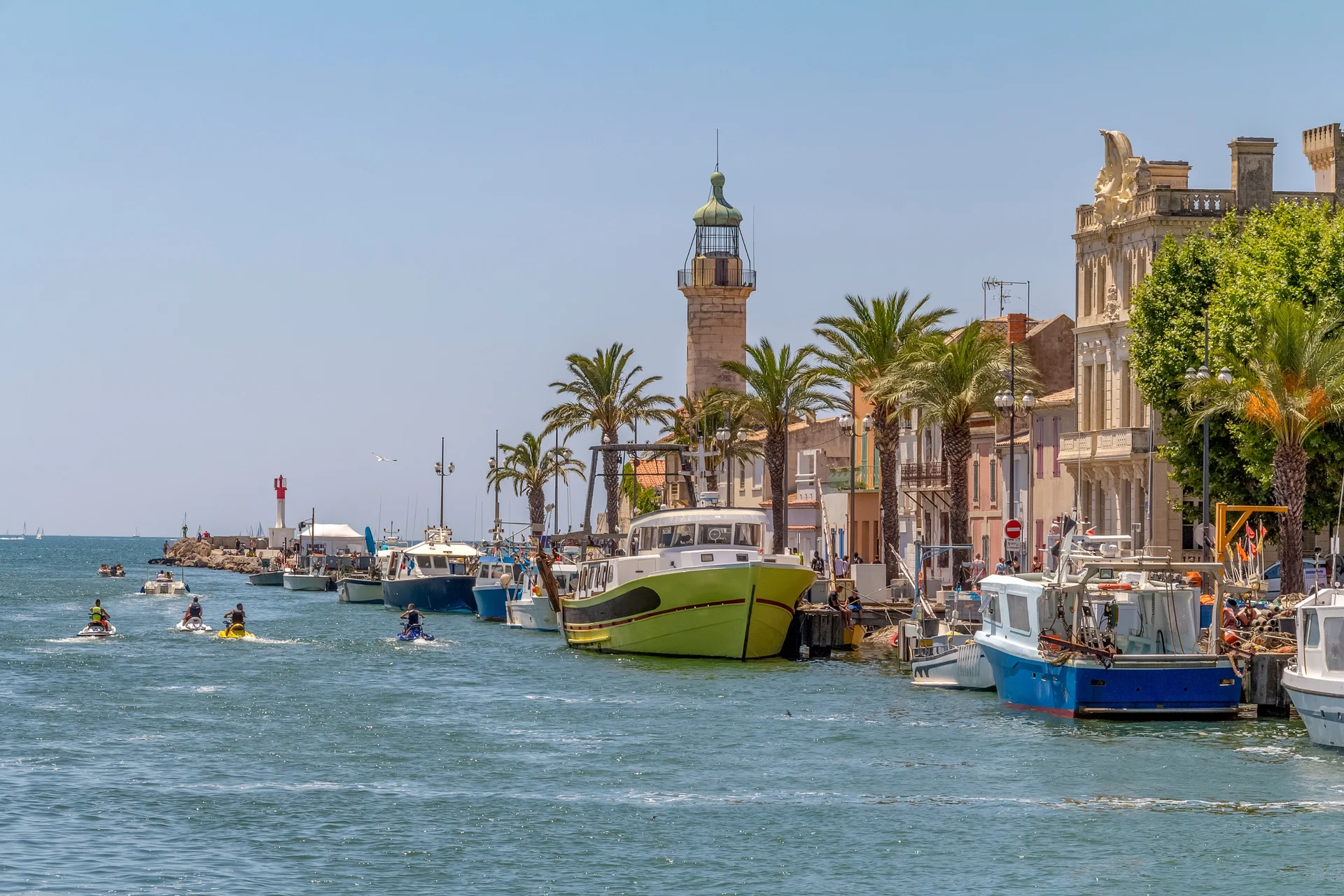
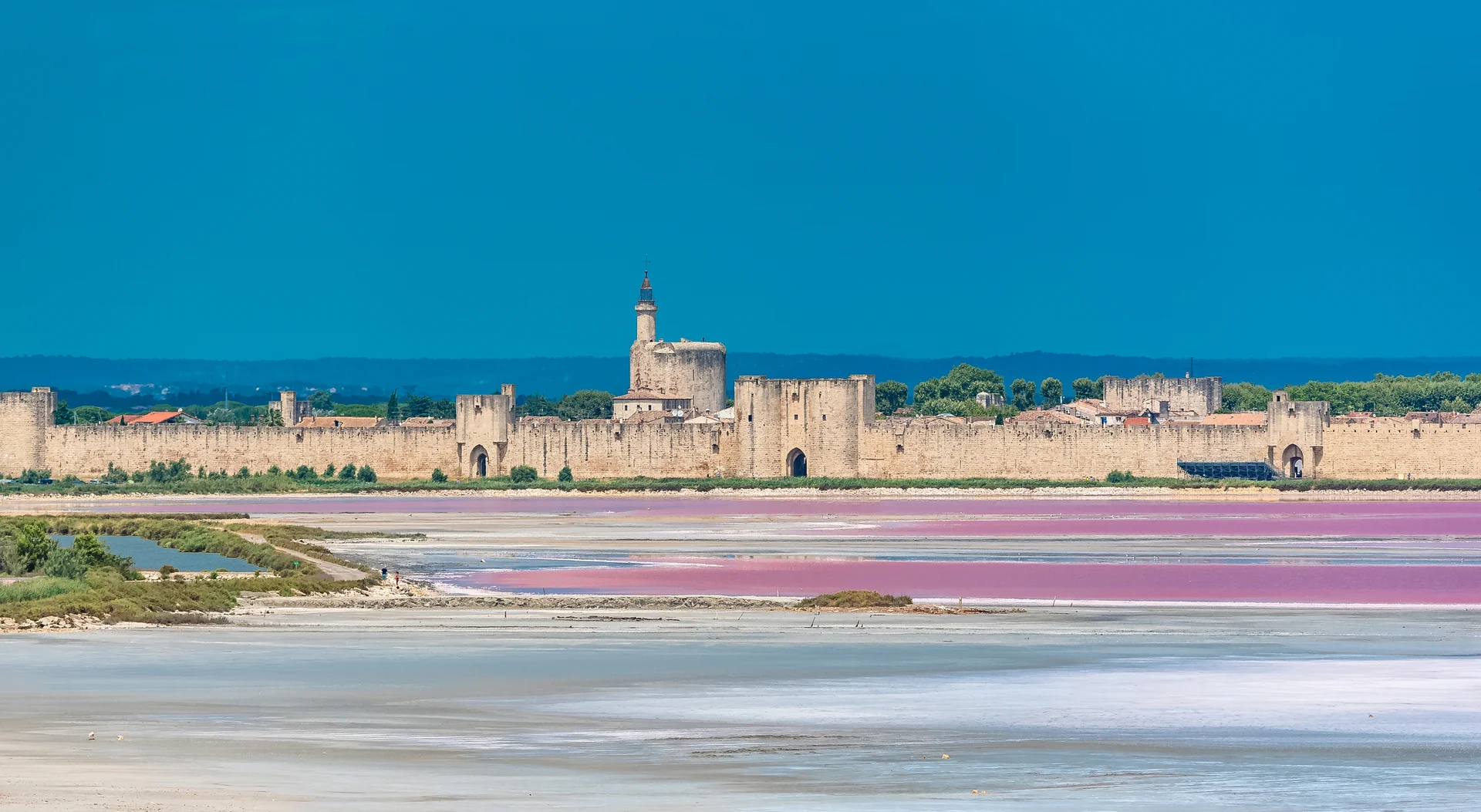
Pick your dates first: in April, May and September, you will see the pink flamingos of the Pont de Gau bird park and the white horses and black bulls of the manades, the local ranches, without the heat or the swarms of mosquitoes that come out on summer evenings. Then plan on a car: the lagoons, Beauduc and Espiguette beaches and the ramparts of Aigues-Mortes are far apart, and buses barely serve them. Stay in a mas, a Camargue farmhouse out in the marshes, rather than in town.
At a glance
- When to go
- Go from April to June or in September: 18 to 27 °C (64 to 81 °F), flamingos on the lagoons and fewer mosquitoes than in July and August, when they swarm in the evening.
- How many days
- Plan three or four days: one for the delta around the Étang de Vaccarès and Beauduc beach, one or two for Saintes-Maries-de-la-Mer and the horses, one for Aigues-Mortes and Espiguette.
- Which base
- Stay in Saintes-Maries-de-la-Mer or in a mas nearby: the bird park, the horseback rides and the beach are less than ten minutes away by car.
- Budget for two
- Count on about $1,650 for four nights in comfort, with hotel, meals, car and sights, not counting the trip to the Camargue; about $940 in simple hotels.
- The moment for two
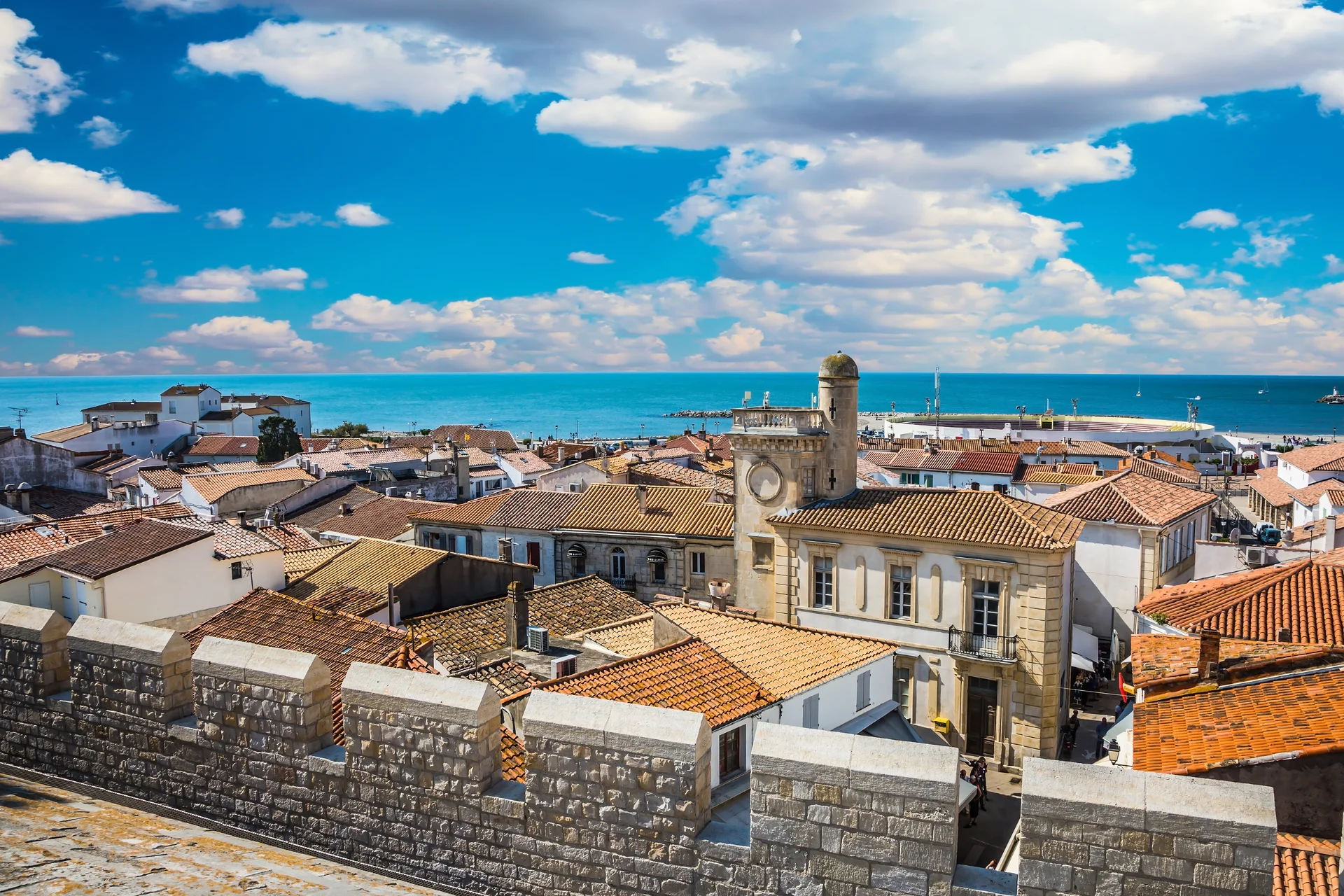
- Climb onto the roof of the church in Saintes-Maries to see the sea and the lagoons from above, then stay on the beach next door for the sunset before a dinner of tellines, tiny clams raked from the sand along this coast.
- Book ahead
- Book the mas two to three months ahead for May and September, the car at the same time, and the horseback ride the day before in season.
Why the Camargue for two
The Camargue is the Rhône delta, south of Arles: a plain of marshes, rice fields and salt lagoons between the two arms of the river, with about 60 km (37 miles) of beaches along the sea. In the middle, the Étang de Vaccarès, the largest lagoon, is home to the flamingos; around it, the manades, the ranches that raise Camargue bulls and horses, graze their herds, and the gardians, the local cowboys, still work on horseback.
You will find few monuments but plenty of space: horseback rides along the lagoons, sandy beaches with no buildings, sunsets over the water, and two small towns you can each visit in a day: Saintes-Maries-de-la-Mer, with its fortified church facing the sea, and Aigues-Mortes, the town founded by Louis IX, inside ramparts that still stand complete, on the western edge of the delta.
When to go
| Period | Weather | Mosquitoes and crowds | Our take |
|---|---|---|---|
| April to June | 18 to 27 °C (64 to 81 °F), little rain | Few mosquitoes before June; crowds on May weekends | Flamingos displaying on the lagoons, green grass, hotels still available |
| July and August | 28 to 32 °C (82 to 90 °F), sea at 23 °C (73 °F) | Many mosquitoes in the evening; full beaches and roads | Easy swimming, but mosquitoes at night and peak prices; stay near the sea |
| September and October | 20 to 27 °C (68 to 81 °F), first rains in October | Fewer mosquitoes; light crowds on weekdays | Our favorite time: a sea still warm in September and the rice harvest |
| November to March | 8 to 15 °C (46 to 59 °F), frequent mistral | No mosquitoes, few visitors | Winter birds and low light, but many mas closed |
Saintes-Maries-de-la-Mer fills up twice a year. On May 24 and 25, for the Roma pilgrimage, Roma, Gitan and traveler communities from all over Europe carry the statue of Sara, their patron saint, into the sea, followed by the boat of Saints Mary Jacobe and Mary Salome, who gave the town its name; a second pilgrimage takes place on a weekend around October 22. To attend, book your hotel several months ahead; otherwise, avoid those days.
Paperwork: passport, visa, health
| Documents | Visa | Health | |
|---|---|---|---|
| United States, Canada | Passport valid at least 3 months after you leave the Schengen area, issued within the last 10 years | None for stays up to 90 days | Travel insurance with medical cover |
| United Kingdom | Passport valid at least 3 months after you leave the Schengen area, issued within the last 10 years | None for stays up to 90 days in any 180 | Your free GHIC covers state healthcare; travel insurance for the rest |
| Ireland | Valid passport, checked at boarding and at the hotel | None | Free EHIC for public healthcare |
Coming from the US, Canada or the UK
On your first entry into the Schengen area, border police record your fingerprints and a photo (the EES system): allow extra time at passport control at your arrival airport. Check before you leave whether the ETIAS travel authorization is required on your dates: you apply for it online on the European Union site (travel-europe.europa.eu).
Getting there
By plane: Marseille-Provence or Montpellier
| From | Time | Good to know |
|---|---|---|
| London | ~2h | Nonstops to Marseille-Provence (MRS) all year |
| Dublin | ~2h15 | Nonstops to Marseille-Provence with Aer Lingus and Ryanair, more in summer |
| Montreal | ~7h30 | Air Transat nonstops to Marseille-Provence, daily in summer, less often otherwise |
| New York, Boston, Toronto | 10 to 13h | One stop in Europe; or a nonstop to Paris, then the TGV |
| Chicago, Los Angeles | 13 to 17h | One stop in Europe, or a flight to Paris, then the TGV |
Marseille-Provence Airport (MRS) is an hour from Arles and has the most routes. Montpellier-Méditerranée Airport (MPL), half an hour from Aigues-Mortes, is closer to the western delta but has fewer flights, mostly from Paris-Orly and a few other European cities. If you land at Paris-Charles de Gaulle, take a TGV from the airport station to Nîmes or Montpellier rather than a connecting flight.
By train: Nîmes or Montpellier
| From | Time | Good to know |
|---|---|---|
| Paris | ~3h | Direct TGVs from Gare de Lyon to Nîmes; ~3h30 to Montpellier Saint-Roch |
| Paris-CDG Airport | 3h30 to 4h | Direct TGVs from the airport station to Nîmes and Montpellier |
| London | 6h30 to 7h30 | Eurostar to Paris, then from Gare du Nord to Gare de Lyon for the TGV |
Nîmes Centre station is the most practical: the rental companies are right outside, and Arles is half an hour away on the A54 highway. From Nîmes, regional trains also reach Aigues-Mortes in about 45 minutes, and Le Grau-du-Roi a few minutes farther, a few times a day.
By car
From Paris, the A7 toll highway runs down the Rhône valley to Orange, then the A9 leads to Nîmes: allow seven hours to Arles, and about ten from the Channel ports. On Saturdays in July and August, the A7 is jammed: leave before 7 am or pick another day.
Practical things to know before you leave
Phone and signal
US and Canadian plans charge roaming at full price, and most UK plans now charge for Europe too: turn on a travel pass or install a European eSIM before you leave. With an Irish plan, calls and data work as at home, France being in the European Union. Download an offline map of the Camargue: the signal fades at the end of the dirt tracks, at Beauduc in particular.
Outlets
French outlets, at 230 volts, take plugs with two round pins. American, Canadian, British and Irish plugs do not fit: bring an adapter. North American appliances must accept 230 volts, which phone and laptop chargers almost always do, hair dryers rarely.
In your bag
- Mosquito repellent and long sleeves for the evening, from June to September.
- Binoculars: from the observation hides and the roadside, you will often see the flamingos and herons from a distance.
- Long pants and closed shoes for a horseback ride; the stables lend riding helmets.
- Water and a hat: there is almost no shade on the beaches or on the marsh trails.
Money and tipping
- France uses the euro. Cards work almost everywhere, but keep some cash for the beach shacks, the roadside fruit and rice stands, and the beach parking lots that do not always take cards.
- At ATMs and card terminals, decline the conversion into dollars or pounds and let your own bank convert.
- In restaurants, service is included in the bill: tipping as in the US is not expected; leave a few euros if you were well looked after.
What to book, and how far ahead
In the Camargue, what runs short in spring and summer is rooms: a mas has fifteen to twenty of them, and the best ones are full months ahead for May and September weekends. Most sights you pay for on the spot.
| What | Price | Book | Good to know |
|---|---|---|---|
| Mas or hotel, May and September | $165 to $390 / night | 2 to 3 months ahead | Six months ahead for the May pilgrimage |
| Rental car | $44 to $77 / day | With the hotel | Pick-up in Nîmes, Montpellier or Arles |
| Horseback ride | ~$44 / pers. for 1h to 2h | The day before in season | Morning or late-afternoon rides, when it is cooler |
| Little train of the Aigues-Mortes salt marshes | ~$16 / pers. | Online, the day before in summer | ~1h15 tour of the salt pans |
| Fine-dining table | $110 to $220 / pers. | 2 to 3 weeks ahead | La Chassagnette, in Le Sambuc, serves dinner only at the end of the week |
From the airport or the station to your hotel
© OpenStreetMap contributors
The airports and the bases they serve
- Montpellier Airport (MPL)
- Marseille-Provence Airport (MRS)
- 1Aigues-Mortes
- 2Le Grau-du-Roi
- 3Saintes-Maries-de-la-Mer
- 4Le Sambuc
| Destination | Transport | Time | Typical fare |
|---|---|---|---|
| Aigues-Mortes | Rental car | ~30 min. | $44 to $77 / day |
| Le Grau-du-Roi | Rental car | ~30 min. | $44 to $77 / day |
| Saintes-Maries-de-la-Mer | Rental car | ~1h10 | $44 to $77 / day |
| Destination | Transport | Time | Typical fare |
|---|---|---|---|
| Le Sambuc | Rental car, via Arles | ~1h30 | $44 to $77 / day |
| Saintes-Maries-de-la-Mer | Rental car, via Arles | ~1h30 | $44 to $77 / day |
| Destination | Transport | Time | Typical fare |
|---|---|---|---|
| Aigues-Mortes | Regional train | ~45 min. | Ticket at the station or online |
| Aigues-Mortes | Rental car | ~40 min. | $44 to $77 / day |
| Saintes-Maries-de-la-Mer | Rental car, via Arles | ~1h05 | $44 to $77 / day |
| Le Sambuc | Rental car, via Arles | ~1h | $44 to $77 / day |
What works best
Pick up the car as soon as you arrive, at Nîmes station or Montpellier Airport, and return it to the same place: without it, you will reach neither the mas nor the lagoons. Without a car, stay in Aigues-Mortes or Le Grau-du-Roi, both linked to Nîmes by train, and rent bikes there.
Getting around
By car, between the lagoons
Camargue roads are flat, straight and narrow, with no shoulder, along the canals: drive slowly, as horses and cyclists use them too. Allow 45 minutes from Arles to Saintes-Maries-de-la-Mer, half an hour from Arles to Le Sambuc, and 40 minutes from Saintes-Maries to Aigues-Mortes.
Crossing the Rhône
No bridge crosses the Grand Rhône between Arles and the sea: at Salin-de-Giraud, the Bac de Barcarin, a paying car ferry, takes you to Port-Saint-Louis-du-Rhône and on toward Marseille. On the Petit Rhône, west of Saintes-Maries, you can choose between the Sylvéréal bridge, to the north, and the Bac du Sauvage, a free ferry that crosses about every half hour with eight cars at most: both get you to Aigues-Mortes in the same time.
By bike and on horseback
From Saintes-Maries, the Digue à la Mer, a sea dike closed to cars, runs east along the coast and the lagoons for about 20 km (12 miles): rent bikes in town for half a day. Horseback rides leave from the stables on the Arles road, on the edge of Saintes-Maries, on Camargue horses used to beginners.
Budget for two
Your biggest expense is the mas, especially from May to September; meals and sights cost little. Here is what four nights for two cost, not counting the trip to the Camargue:
| Smart | Comfort | Treat | |
|---|---|---|---|
| Hotel, per night | $99 to $132 (a simple hotel in Saintes-Maries or Salin-de-Giraud) | $176 to $250 (a mas with a pool, a hotel inside the ramparts) | from $330 (Mas de la Fouque, Le Mas de Peint) |
| Meals, per day for two | $55 (a dish of the day and a picnic) | $99 (a beach lunch, a fish dinner) | $280 (a fine-dining dinner) |
| Car, per day | $44 plus gas | $55 plus gas | $77 plus gas |
| Sights and activities, whole stay | $66 | $220 with a horseback ride | $440 with a private ride |
| Total, four nights | ~$940 | ~$1,650 | from $3,080 |
Useful benchmarks: a plate of tellines $17 to $22, a bull gardiane $20 to $28, entry to the Pont de Gau bird park about $9.90, and to the towers and ramparts of Aigues-Mortes about $11.
What to eat and drink
Camargue cooking comes from the ranches, the rice fields and the sea: bull meat, rice, shellfish and salt from the salt pans. The restaurants of the delta serve it simply, often on a terrace.
At the table
-
Bull gardiane
The gardians' stew: Camargue bull meat slowly simmered in red wine, served with Camargue rice. You will find it on almost every menu in the delta.
-
Tellines
Tiny clams raked from the sand at the water's edge, between Le Grau-du-Roi and Beauduc: pan-fried with garlic and parsley, with a glass of white wine.
-
Camargue rice
Rice grown in the delta, white, red or brown: as a side, in a salad or in a dessert. Growers sell it at roadside stands and in grocery stores.
-
Aigues-Mortes fougasse
A flat brioche flavored with orange blossom and topped with sugar: buy one at a bakery in Aigues-Mortes for breakfast.
-
Fleur de sel
The thin layer of crystals raked by hand from the surface of the salt pans of Aigues-Mortes and Salin-de-Giraud, in summer: take a jar home, it fits in a carry-on.
To drink
Try the vins des sables, wines from vineyards planted in the sand between Aigues-Mortes and the sea, especially the gris, a very pale rosé, to drink chilled with tellines.
Customs and rules to know
The ranches and the marshes are working land and protected areas: a few rules will spare you a fine or a face-off with a bull.
| Rule | What happens |
|---|---|
| Walking into a pasture to photograph the bulls or horses | Dangerous, and private land; stay on the road, behind the fences |
| Driving on the Digue à la Mer or in the dunes | Forbidden and fined; use the parking lots |
| Getting close to the flamingos and lagoon birds | They fly off; watch them from the trails and the hides |
| Bringing a dog to the bird park or to La Capelière | Not allowed in |
In the arenas, the course camarguaise does not kill the bull: raseteurs dressed in white try to snatch a rosette tied between its horns. During village festivals, bulls run through the streets, flanked by gardians on horseback: watch from behind the barriers.
Safety
The Camargue is safe for a couple; the risks come from the sun, the wind and the car parked by the beaches.
- The sun: almost no shade on the beaches, the dikes and the trails; set out early and bring water.
- The mistral: when it blows, the sea gets rough and the wind pushes offshore; stay close to the shore on an inflatable or a paddleboard.
- The parked car at the beach parking lots, at Beauduc or Espiguette: leave nothing in sight.
- The dirt tracks to Beauduc and around the lagoons: full of potholes, muddy after rain; drive at walking pace and turn back if water covers the track.
Mistakes to avoid as a couple
- Coming in July or August and eating dinner out in the marshes: the mosquitoes ruin the evenings; choose spring or September, and a terrace by the sea.
- Coming without a car: buses serve neither the mas, nor Beauduc, nor the Vaccarès hides.
- Staying in Arles and thinking you are in the Camargue: Saintes-Maries and the sea are 45 minutes away by car, and you would have to leave before dawn to see the lagoons at sunrise.
- Arriving in Saintes-Maries on May 24 or 25 without knowing it: the town is packed for the pilgrimage and the roads are jammed.
- Trying to see everything in one day: Beauduc and Espiguette are more than two hours apart by road; give each part of the delta its own day.
Camargue
Compare hotel prices
Pick your dates and see the offers from the major booking sites side by side.
Compare live offers from Booking, Expedia, Agoda and other partners.
Camargue: find your hotel
Frequently asked questions
How many days do we need for the Camargue?
Three days are enough for Saintes-Maries-de-la-Mer, the Pont de Gau bird park, a horseback ride and Aigues-Mortes. With four, add the delta around the Vaccarès, Salin-de-Giraud and Beauduc beach.
When can we see the flamingos in the Camargue?
All year: they gather on the lagoons in every season. In spring, from February to April, you will see them display in tight groups before nesting. The Pont de Gau bird park is the surest place to see them up close.
Do the mosquitoes spoil the trip?
In July and August, yes, in the evening and near the lagoons, especially when the wind drops. In spring and from late September, there are far fewer. Bring repellent and long sleeves, and pick an air-conditioned room.
Can we visit the Camargue without a car?
Partly: Aigues-Mortes and Le Grau-du-Roi are linked to Nîmes by train, and you can bike to Espiguette beach. For the mas, Beauduc and the delta around the Vaccarès, you need a car.
Do we need riding experience for a horseback ride?
No: the stables in Saintes-Maries offer rides at a walk for beginners, one or two hours long, on calm Camargue horses. Tell them your level when you book, and go in the morning or late afternoon.