




Corsica for couples: what to know before you go (2026)
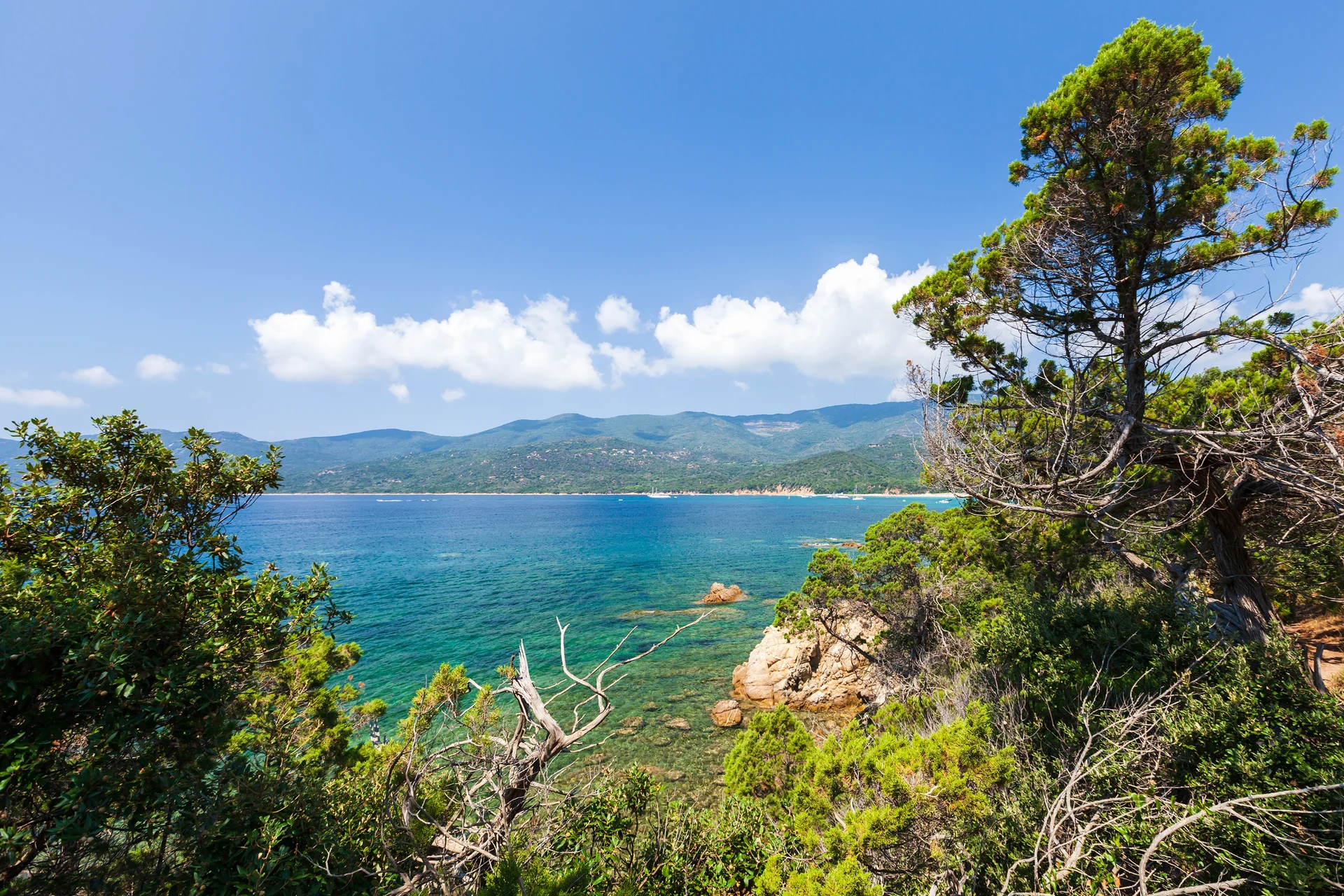
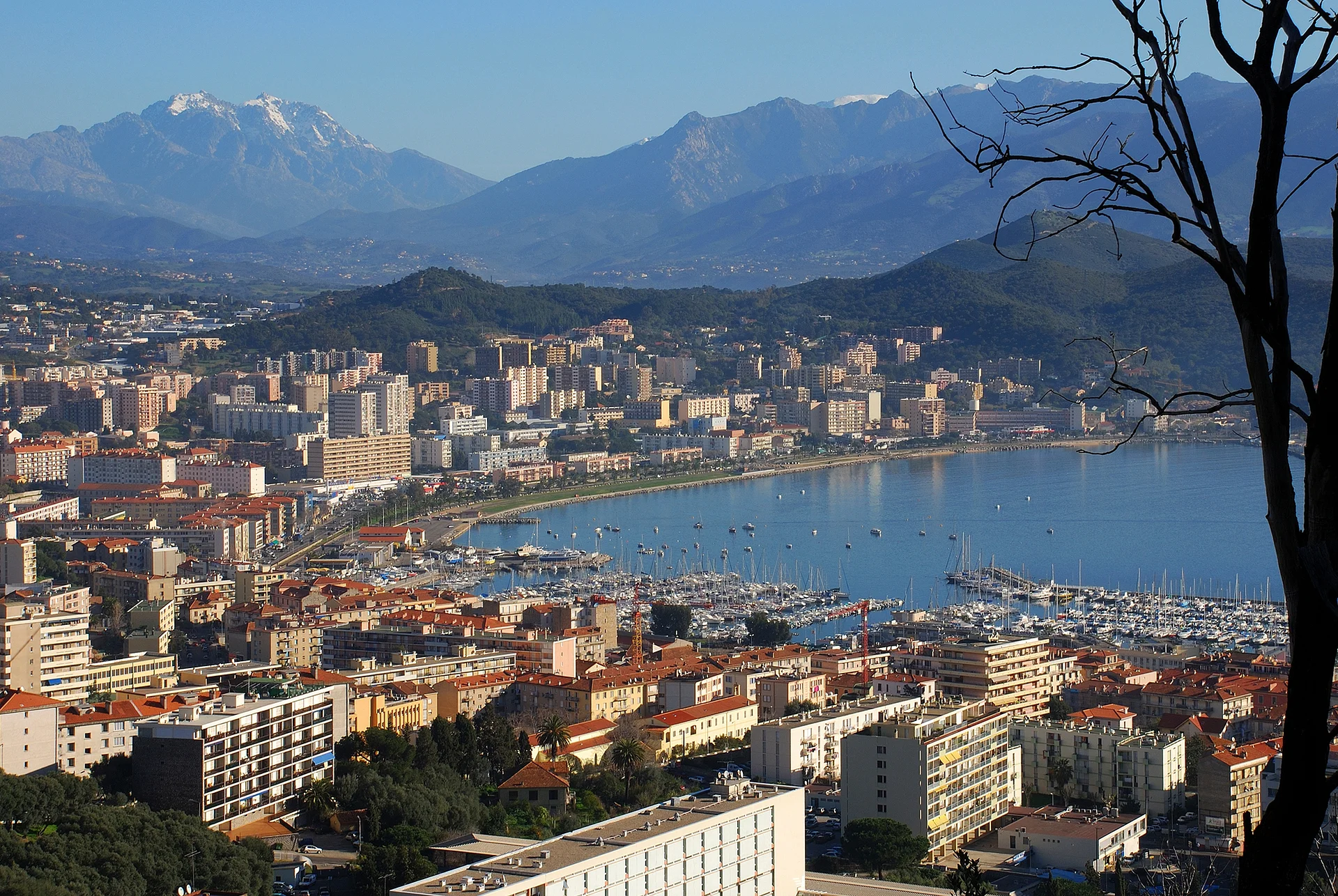
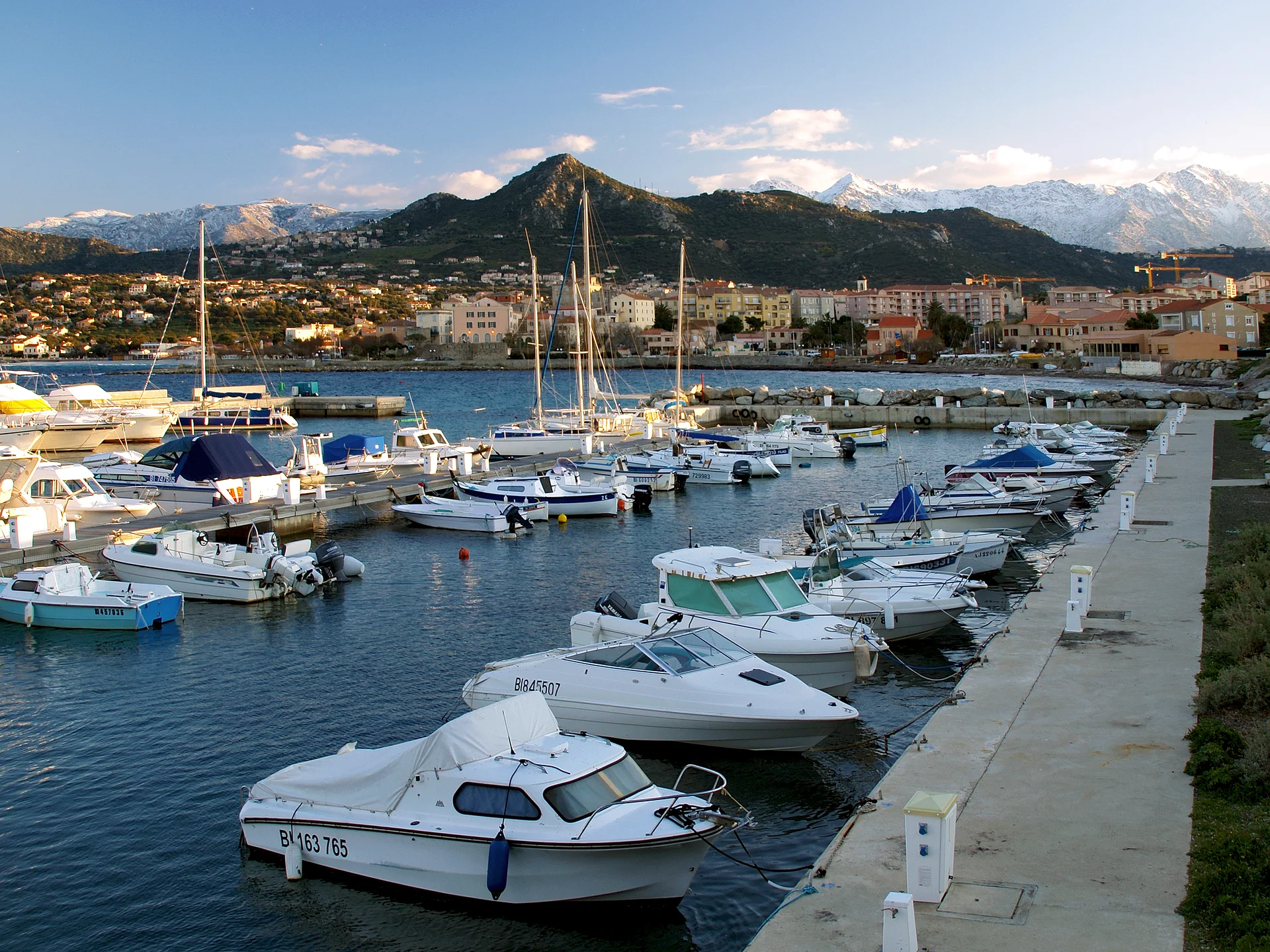
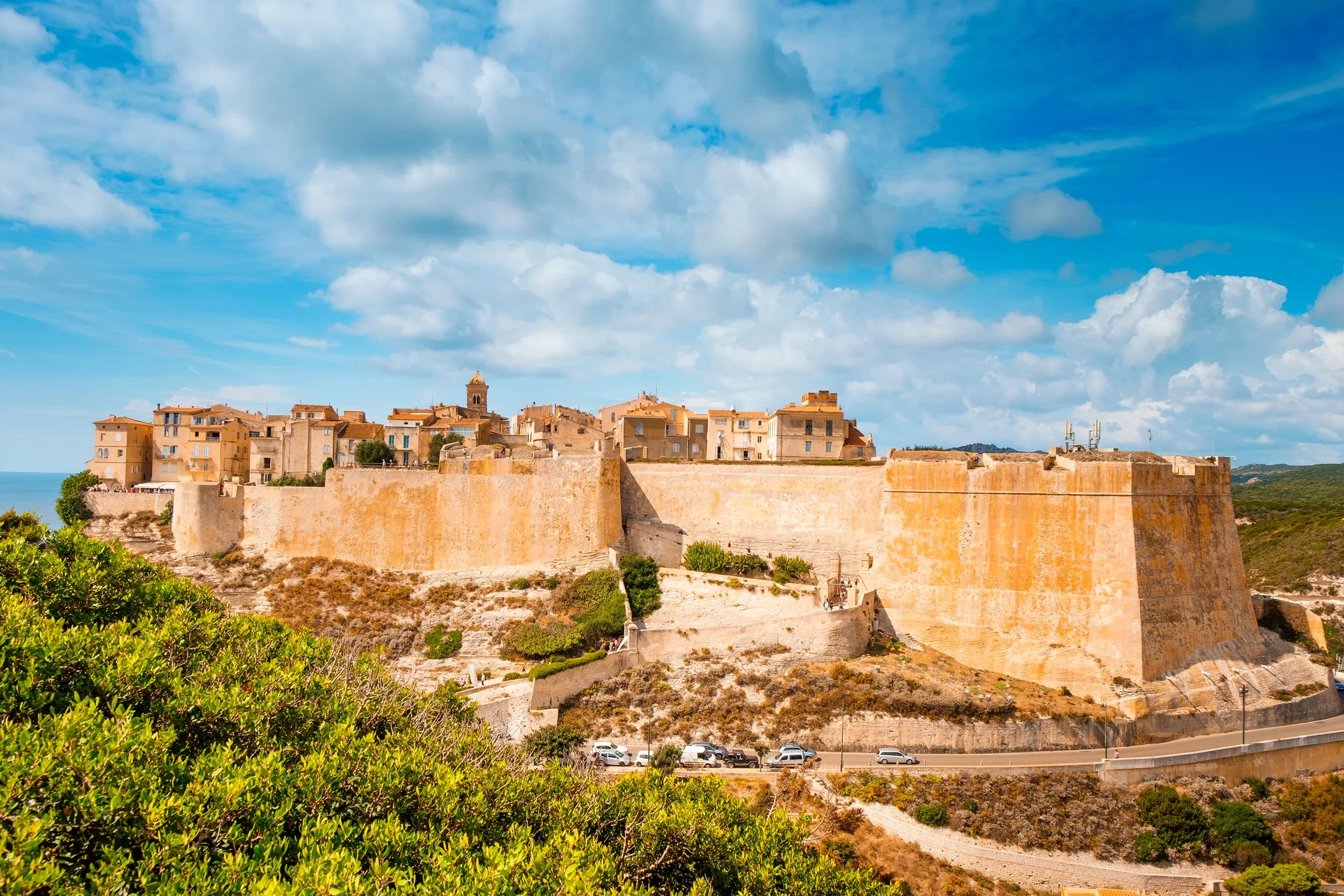
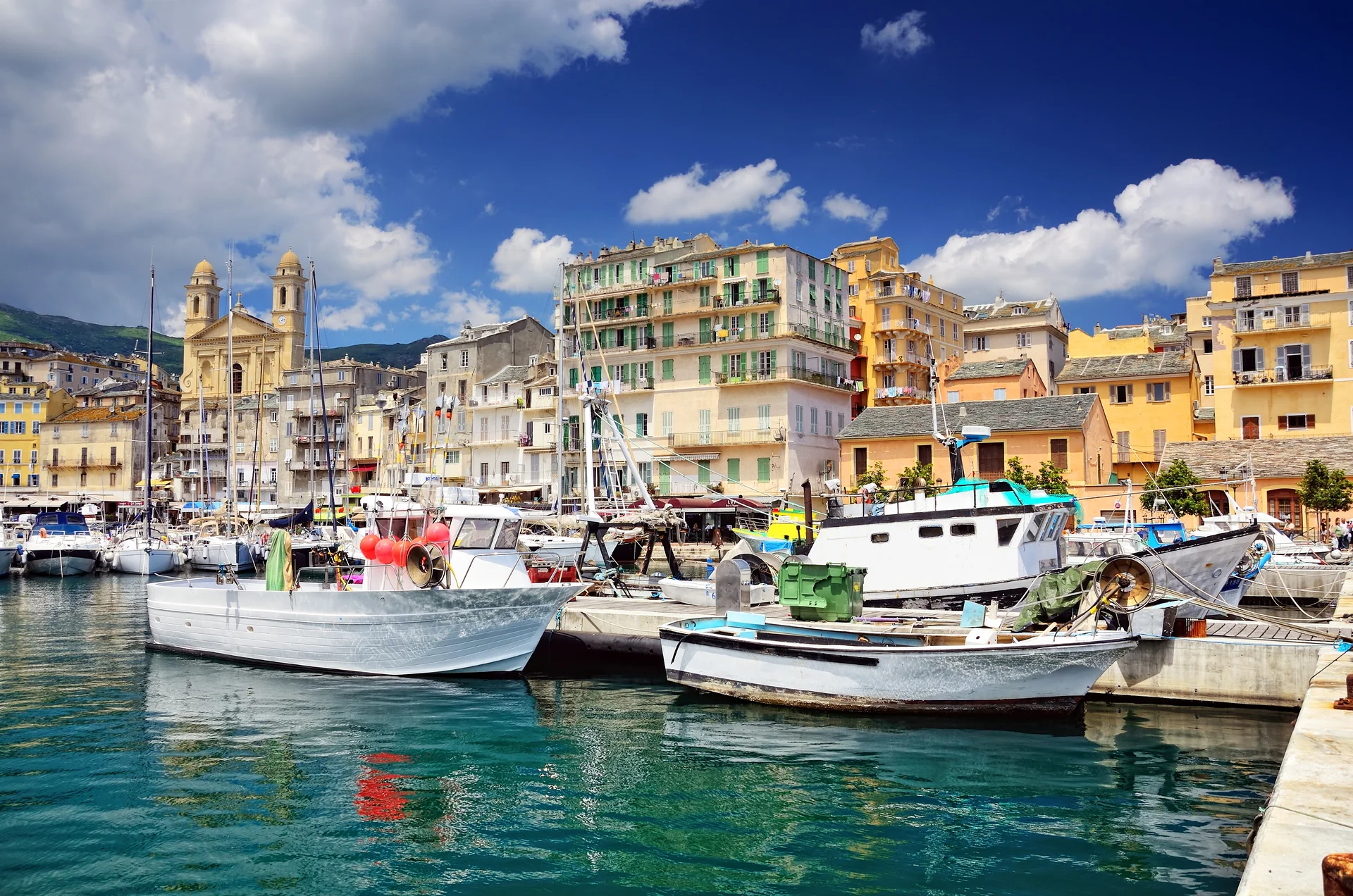
In Corsica, count your drives in hours, not miles: Bonifacio, at the southern tip, and Calvi, in the northwest, are only 135 km (84 miles) apart as the crow flies, but more than four hours apart by road, on mountain bends. So first decide which half of the island you want to see: the south for the beaches of Palombaggia and Santa Giulia and the cliffs of Bonifacio, the west for the Calanques de Piana, the Scandola reserve and the villages of the Balagne. With nine or ten days, you can do both, with three hotels.
At a glance
- When to go
- Go in June or September: 25 to 28 °C (77 to 82 °F), the sea between 22 and 25 °C (72 to 77 °F), and roads that still flow. In July and August, beaches, parking lots and ferries are full, and prices are at their highest.
- How many days
- Plan a week for one half of the island, the south or the northwest, with one or two hotels. Plan nine or ten days to loop around through Piana, Calvi, Porto-Vecchio and Bonifacio.
- Where to stay
- On a first trip, stay in Porto-Vecchio: the best beaches on the island are twenty minutes away and Bonifacio half an hour. For the west, choose Calvi and Piana.
- Budget for two
- Outside August, plan on about $3,300 for a week in comfort, with hotels, meals, the car and boat trips, flights not included, and about $1,870 if you keep costs down.
- A moment for two
- Pull over on the road between Piana and Porto an hour before sunset: below you, the granite of the calanques turns red above the sea.
- What to book
- Book the rental car with your flights, then the hotels in Porto-Vecchio and Bonifacio for July and August, and the boats to Scandola or the Lavezzi Islands a few days ahead.
Why Corsica for two
Corsica is a mountain in the sea: peaks above 2,000 m (6,500 ft) less than 30 km (19 miles) from the beaches, and some 1,000 km (620 miles) of coastline, from the white-sand beaches of the south to the red granite cliffs of the west.
On the coast, you will sleep in fortified towns by the water, Bonifacio on its limestone cliffs, Calvi behind its citadel; in the stone villages inland, you will taste cured pork, sheep's cheese and the wines of Patrimonio, the vineyard in the north of the island. With a car, you will see the whole island; without one, you will stay in a single town.
When to go
| Period | Weather | Crowds | Our take |
|---|---|---|---|
| May | 20 to 24 °C (68 to 75 °F), sea at 18 °C (64 °F) | Light, except long weekends | Villages and trails in the sun, the maquis in bloom, but the sea is still cool |
| June and September | 25 to 28 °C (77 to 82 °F), sea 22 to 25 °C (72 to 77 °F) | Moderate | Our favorite time: a warm sea, hotels and boats open, roads that flow |
| July and August | 28 to 32 °C (82 to 90 °F), sea at 25 °C (77 °F) | Very heavy, above all around August 15 | Beaches and parking lots full by 10am, ferries and hotels at peak prices; book months ahead |
| October | 20 to 24 °C (68 to 75 °F), sea at 21 °C (70 °F), first rains | Light | You can still swim, but some hotels and boats close during the month |
| November to April | 10 to 17 °C (50 to 63 °F), snow in the mountains | Very light | Most seaside hotels are closed; the towns stay open |
In summer, watch the wind as much as the sun: when the southwest wind, the libeccio, blows, the boats to Scandola and the Lavezzi Islands often stay in port, and the sea is rough on the west coast. Keep a spare day for these boat trips, and book them early in your stay.
Paperwork: passport, visa, health
| Documents | Visa | Health | |
|---|---|---|---|
| United States, Canada | Passport valid at least 3 months after you leave the Schengen area, issued within the last 10 years | None for stays up to 90 days | Travel insurance with medical cover |
| United Kingdom | Passport valid at least 3 months after you leave the Schengen area, issued within the last 10 years | None for stays up to 90 days in any 180 | Your free GHIC covers state healthcare; travel insurance for the rest |
| Ireland | Passport in date, checked at boarding of the plane and the ferry | None | Free EHIC for public healthcare |
Entering the Schengen area from the US, Canada or the UK
Corsica is part of France. On your first entry into the Schengen area, border police record your fingerprints and a photo (the EES system): if you connect in Paris or Nice, it happens there, before your flight to Corsica, so allow extra time for the connection; on a nonstop from London, it happens on landing in Corsica.
Check before you leave whether the ETIAS travel authorization is required on your dates: you apply for it online, on the European Union site.
Getting there
By plane: four airports
The island has four airports: Ajaccio and Figari in the south, Bastia and Calvi in the north. Choose the one in the half of the island where you are staying: Figari is half an hour from Porto-Vecchio and Bonifacio, and Calvi airport ten minutes from town.
| From | Flight time | Good to know |
|---|---|---|
| London | 2h10 to 2h30 | Nonstops in summer, roughly May to October: easyJet from Gatwick and British Airways, to Bastia and Figari |
| Manchester, Edinburgh, Dublin | 4 to 7 hours | Usually one stop in Paris, Nice or Marseille |
| New York, Boston, Chicago | 10 to 14 hours | No nonstop: one stop in Paris, Nice or Marseille |
| Los Angeles, San Francisco | 15 to 20 hours | One or two stops, usually including Paris |
| Toronto, Montreal | 10 to 13 hours | One stop in Paris, Nice or Marseille |
| Paris, Nice, Marseille | 45 min. to 1h35 | Year-round nonstops to the island, the usual connection |
Connecting in Paris, check which airport your flight to Corsica leaves from: many leave from Orly, not Charles de Gaulle, which means crossing the city between the two. Summer nonstops from London change from year to year: check the route with the airline before you plan around it.
By ferry, if you are driving through Europe
If you are touring Europe by car, the ferry saves you a second rental and you arrive with your bags in the trunk. From the Italian ports, you cross by day in four to six hours; from Marseille, the crossing is often overnight, in a cabin: you sleep on board and drive off in the morning.
| From | Arrival ports | Crossing |
|---|---|---|
| Livorno | Bastia, with Corsica Ferries and Moby | By day, ~4h30 |
| Genoa | Bastia, with Moby, mostly in summer | By day, 5h15 to 5h30 |
| Savona | Bastia, with Corsica Ferries | 5h15 to 10h depending on the ship |
| Nice | Bastia year-round; L'Île-Rousse and Ajaccio in summer | By day, 5 to 8 hours |
| Toulon | Ajaccio, Bastia, L'Île-Rousse | By day or overnight, 6 to 10 hours |
| Marseille | Ajaccio, Bastia, L'Île-Rousse, Porto-Vecchio, Propriano | Overnight, 10 to 14 hours |
For July and August, book a crossing with a car as soon as sales open (see the calendar below). From Sardinia, ferries link Santa Teresa Gallura to Bonifacio in about an hour.
Practical things to know before you leave
Phone and signal
US and Canadian plans charge roaming at full price, and most UK plans now charge for Europe too: turn on a travel pass or install a European eSIM before you leave. With an Irish plan, calls and data work as at home, France being in the European Union. Download an offline map of the island: the signal drops in the gorges, on the passes and on part of Cap Corse.
Outlets
French outlets, at 230 volts, take plugs with two round pins. American, Canadian, British and Irish plugs do not fit: bring an adapter, one per person. North American appliances must accept 230 volts, which almost all phone and laptop chargers do, but rarely hair dryers.
Money, fuel and language
- The euro; cards work in hotels and most restaurants, but keep about $55 in cash for beach shacks, markets and the rare ATMs of mountain villages. At ATMs and card terminals, decline the conversion into dollars or pounds and let your own bank convert.
- Service is included in restaurant prices, and tipping is not expected as it is in the US: round up or leave a few euros if the service pleased you.
- Fill up as soon as the gauge drops below half: inland and on the west coast, gas stations are few and often close on Sundays and at lunchtime.
- French is spoken everywhere, and a few words help in the villages: bonjour (hello), merci (thank you), l'addition (the check). Road signs also give the Corsican name of each village, sometimes alone: Portivechju for Porto-Vecchio, Bunifaziu for Bonifacio.
What to book, and how far ahead
You can visit Corsica's sights without booking. What runs out in summer are rental cars, car spaces on the ferries, rooms in Porto-Vecchio, Bonifacio and Calvi, and seats on the boats to Scandola and the Lavezzi Islands.
| What | Book | Good to know |
|---|---|---|
| Rental car | With your flights | A small car for the mountain roads; automatics are scarce, request one early |
| Ferry with a car, July and August | As soon as sales open, the winter before | Cabins and car spaces go first |
| Hotels in Porto-Vecchio and Bonifacio in August | 4 to 6 months ahead | Beach hotels open from April to October |
| Boat to Scandola and Girolata | 2 to 3 days ahead, the day before off season | Departures from Porto, Calvi and Galéria; canceled in rough seas |
| Boat to the Lavezzi Islands | 1 to 2 days ahead | Departures from Bonifacio and Porto-Vecchio, with a swimming stop |
From the airport to your hotel
© OpenStreetMap contributors
The airports and the bases they serve
- Ajaccio Airport (AJA)
- Figari Airport (FSC)
- Calvi Airport (CLY)
- Bastia Airport (BIA)
- 1Ajaccio
- 2Piana
- 3Porto-Vecchio
- 4Bonifacio
- 5Calvi
- 6L'Île-Rousse
- 7Bastia
- 8Saint-Florent
| Destination | Transport | Time | Good to know |
|---|---|---|---|
| Ajaccio | Airport bus | ~20 min. | Stops at the train station and the port |
| Ajaccio | Taxi | ~15 min. | Ask the fare before you get in |
| Piana | Rental car, via Sagone and Cargèse | ~1h45 | Winding road after Cargèse |
| Porto-Vecchio | Rental car, via Sartène | ~2h30 | Better to land at Figari |
| Destination | Transport | Time | Good to know |
|---|---|---|---|
| Porto-Vecchio | Rental car | ~30 min. | The simplest option |
| Bonifacio | Rental car | ~25 min. | Paid parking below the upper town |
| Destination | Transport | Time | Good to know |
|---|---|---|---|
| Calvi | Taxi or rental car | ~10 min. | No regular bus |
| L'Île-Rousse | Rental car | ~30 min. | Along the coast road |
| Destination | Transport | Time | Good to know |
|---|---|---|---|
| Bastia | Airport shuttle | ~35 min. | Drops you near the train station |
| Saint-Florent | Rental car, over the Col de Teghime | ~45 min. | Mountain pass, narrow at the top |
What works best
Pick up the car at the airport, where all the major rental companies have a desk, and return it there: a drop-off at another airport on the island often costs extra. Without a car, only Ajaccio and Bastia are linked to their airport by bus; elsewhere, book a taxi before you land, above all at Figari and Calvi.
Getting around
By car, at 40 km/h (25 mph) on average
Apart from the two fast roads, the east coast road between Bastia and Porto-Vecchio and the road from Ajaccio to Bastia through Corte, Corsican roads wind constantly: count on an average of 40 km/h (25 mph), less on the road through the Calanques de Piana or around Cap Corse. Cows, pigs and goats roam freely across them, day and night.
You drive on the right, a point to keep in mind if you come from the UK or Ireland. On narrow mountain roads, Corsicans give a short honk before a blind bend; do the same, keep to the right, and pull over to let faster drivers pass. Avoid driving small roads after dark: you will see the animals too late.
The Corsican railway
The Chemins de fer de la Corse, the island's railway, links Bastia to Ajaccio through Corte and the Vizzavona forest, and Ponte-Leccia to Calvi through L'Île-Rousse. Between Calvi and L'Île-Rousse, the Tramway de la Balagne, a small coastal train, stops at the beaches in summer: take it for a day without the car. Elsewhere, the train does not replace a car.
Boats and buses
Buses link the main towns one to four times a day, rarely the beaches and villages. In summer, boats leave from Porto, Calvi and Galéria for the Scandola reserve, from Bonifacio and Porto-Vecchio for the Lavezzi Islands, and from Saint-Florent for the beaches of the Désert des Agriates, a wild coast with no road between Saint-Florent and L'Île-Rousse.
Budget for two
The hotel will be your biggest expense, above all in the south and in August, and restaurants on the coast charge beach-resort prices. Here is what a week for two costs, flights not included:
| Budget | Comfort | Treat | |
|---|---|---|---|
| Hotel, per night | $99 to $143 (a simple hotel in Ajaccio, Piana or Calvi) | $198 to $310 (a boutique hotel, often with a pool) | from $500 (Casadelmar, La Villa Calvi, the Genovese) |
| Meals, per day for two | $66 (pizzas, sandwiches and a simple dinner) | $121 (lunch at a beach shack, a fish dinner) | $250 (a chef's table and a bottle of Patrimonio) |
| Car, per day | $44 plus gas | $66 plus gas | $99 for a large automatic |
| Boats, beach parking and sights | $110 | $220 | $660 with a private boat |
| Total, seven days | ~$1,870 | ~$3,300 | from $6,600 |
In August, expect hotel prices one and a half to two times higher. Useful benchmarks: an espresso at the bar $2.20, a pizza $14 to $18, a plate of Corsican charcuterie $18 to $25, a fish dish $28 to $39.
What to eat and drink
Corsican food is mountain food: pigs raised free in the maquis and the chestnut groves, sheep's and goat's cheese, wild herbs. On the coast, restaurants also serve grilled fish and spiny lobster.
At the table
-
Corsican charcuterie
Lonzu (cured pork loin), coppa (cured neck) and prisuttu (dry-cured ham) all year; figatellu, a liver sausage for grilling, only in winter.
-
Brocciu
A fresh whey cheese from sheep's or goat's milk, served from November to June: in omelets, fritters, cannelloni or desserts.
-
Fiadone
A crustless cake of brocciu and lemon, the dessert you will find on every Corsican table.
-
Veal with olives
A Corsican veal stew slow-cooked with olives and wine, often served with chestnut-flour polenta.
-
Canistrelli
Dry cookies flavored with anise, lemon or white wine, good to bring home: they travel well.
-
Chestnut
Chestnut flour goes into polenta, fritters, cakes and even beer: Corsicans call the chestnut tree the bread tree.
To drink
Taste the wines of Patrimonio, near Saint-Florent: reds from nielluccio and whites from vermentinu, the island's two grapes, and a sweet muscat. The estates along the wine road welcome you for a tasting. Order a Pietra too, a beer brewed with chestnut flour, and as an aperitif a Cap Corse, a wine flavored with quinine.
Customs and rules to know
Corsicans care deeply about their island, its nature and their language: a few simple gestures, like saying bonghjornu (good morning) when you walk into a village grocery, are met with a smile. Ignoring the rules below can earn you a fine.
| Rule | What to expect |
|---|---|
| Lighting a fire or a barbecue, or throwing a cigarette into the maquis | Banned, heavy fine; the fire risk is real all summer |
| Camping or sleeping in your car outside a campground | Banned, fine |
| Walking the streets of Calvi, Bonifacio or Porto-Vecchio in swimwear | Frowned upon; put on a T-shirt when you leave the beach |
| Entering a church with bare shoulders or knees | Frowned upon; a scarf in your bag is enough |
In the villages, grocery stores and restaurants often close between 2pm and 7pm, and dinner is served from 7:30pm. On the beaches, the cows that come to lie on the sand belong to a farmer: leave them alone.
Safety
Corsican towns and villages are safe for a couple, day and night. The risks come mainly from the road, the sea, fire and the heat in the mountains.
- The road: blind bends, drops with no guardrail, animals on the road and camper vans that take up the whole width; slow down and only pass on straight stretches.
- The sea in strong wind: currents and waves on the exposed beaches of the west; follow the lifeguard flags, and do not swim far out when the wind blows offshore.
- Wildfires in summer: on some windy days, access to trails and mountain areas is closed by order; if you see smoke, call 18 and move away.
- Hiking: set off early, with two liters (half a gallon) of water each; in August, storms often break in the mountains in the afternoon.
- Your parked car near the beaches: leave nothing in sight.
Mistakes to avoid
- Trying to see the whole island in a week: you will spend your days at the wheel; choose the south or the northwest.
- Working out drive times as you would on a highway: between Piana and Calvi, 85 km (53 miles), allow two and a half hours.
- Coming in August without a car or hotel booked: few places are left, at peak prices.
- Driving mountain roads at night, with animals on the road.
- Booking a beach hotel for Easter or the fall without checking its opening dates: many close from October to April.
Corsica
Compare hotel prices
Pick your dates and see the offers from the major booking sites side by side.
Compare live offers from Booking, Expedia, Agoda and other partners.
Corsica: find your hotel
Frequently asked questions
How many days do you need in Corsica as a couple?
Plan a week for one half of the island: the south around Porto-Vecchio and Bonifacio, or the northwest between Calvi and Piana. Plan nine or ten days to loop through the west and the south, with three hotels, and two weeks to add Cap Corse and Corte.
Do you need a car in Corsica?
Yes: buses and the train link the towns, but almost never the beaches, the passes and the villages. Rent one at the airport, small if possible, for the mountain roads and the beach parking lots.
What is the easiest way to get to Corsica?
Fly: from North America, Dublin or a UK regional airport, with one stop in Paris, Nice or Marseille; from London, nonstop in summer. Take a ferry only if you are already driving through France or Italy: from Nice, Toulon or Marseille, or from Livorno, Genoa or Savona.
What is the best time for a couple in Corsica?
June and September: the sea is between 22 and 25 °C (72 to 77 °F), hotels and boats are open, and you will find room on the beaches. Avoid the two weeks around August 15, when the island has the most visitors.
Is Corsica expensive?
Yes: outside August, plan on about $3,300 for a week for two in comfort, flights not included, and one and a half to two times more for the hotel in August. In June and September, hotel prices drop clearly, and Bastia, Ajaccio and Corte stay cheaper than the southern beaches.
Can you combine Corsica and Sardinia?
Yes: ferries cross the Strait of Bonifacio, between the two islands, in about an hour, between Bonifacio and Santa Teresa Gallura. Check first that your rental company allows the car on the ferry, or rent another one on the other side.