




Normandy for couples: what to know before you go (2026)
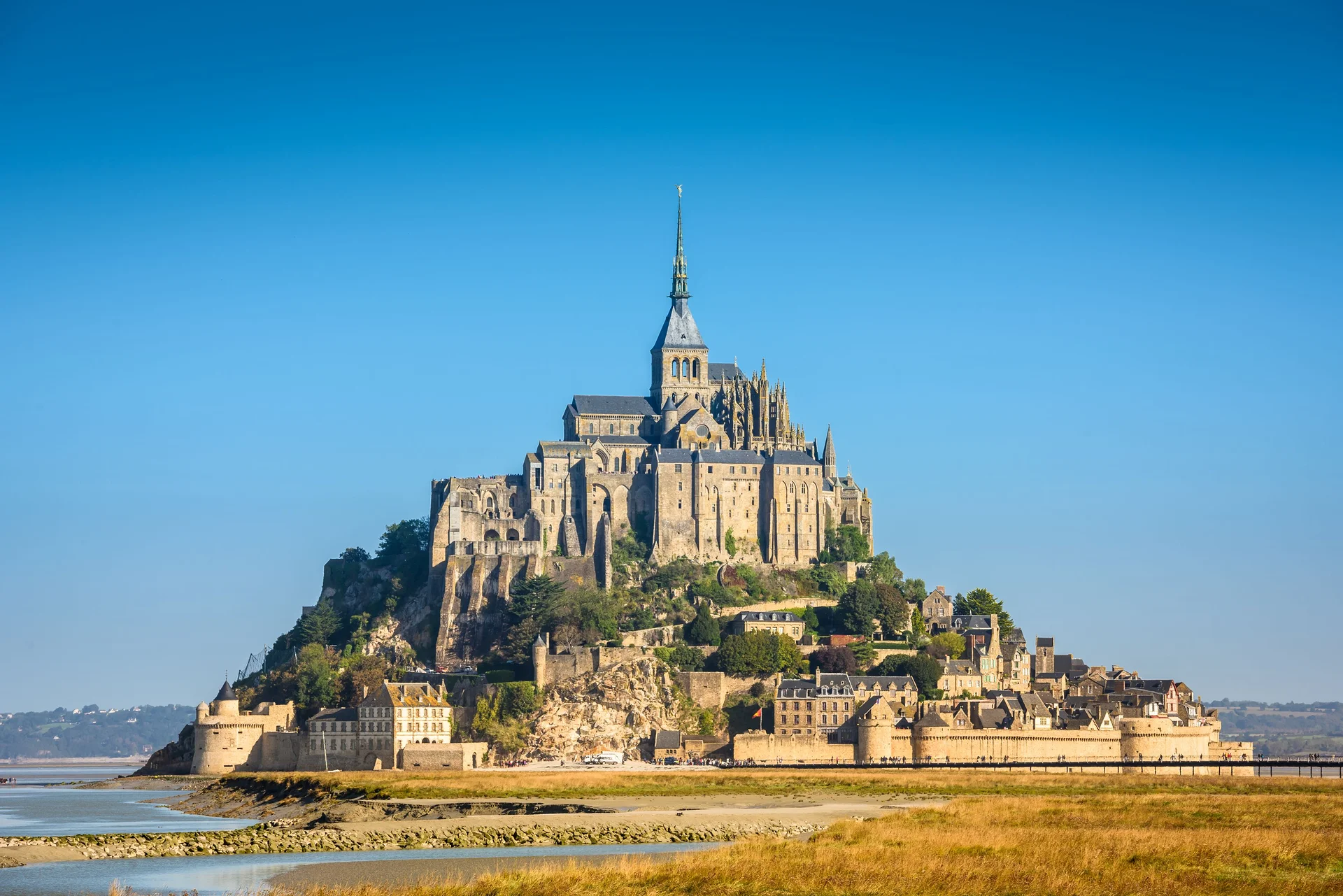
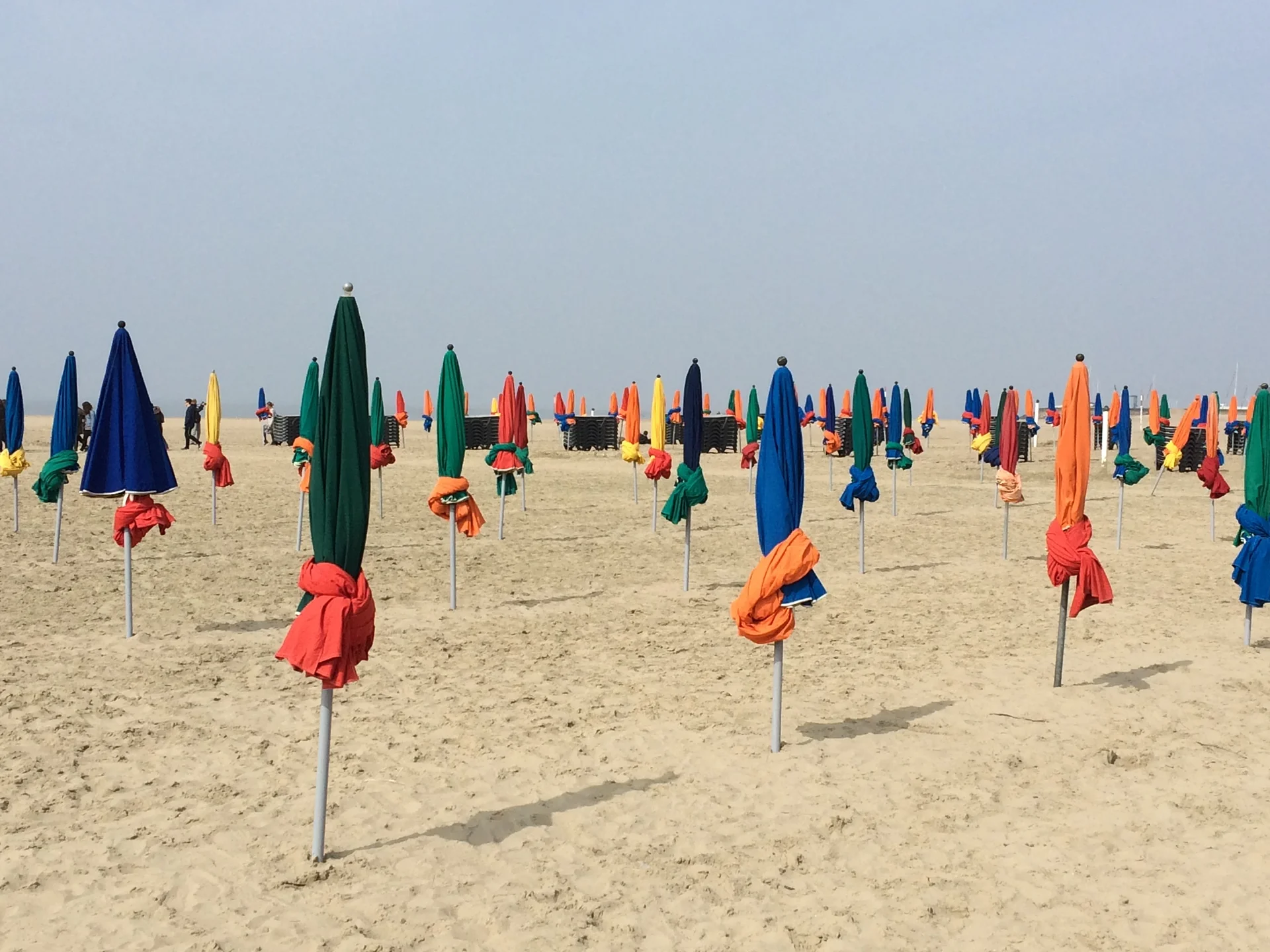
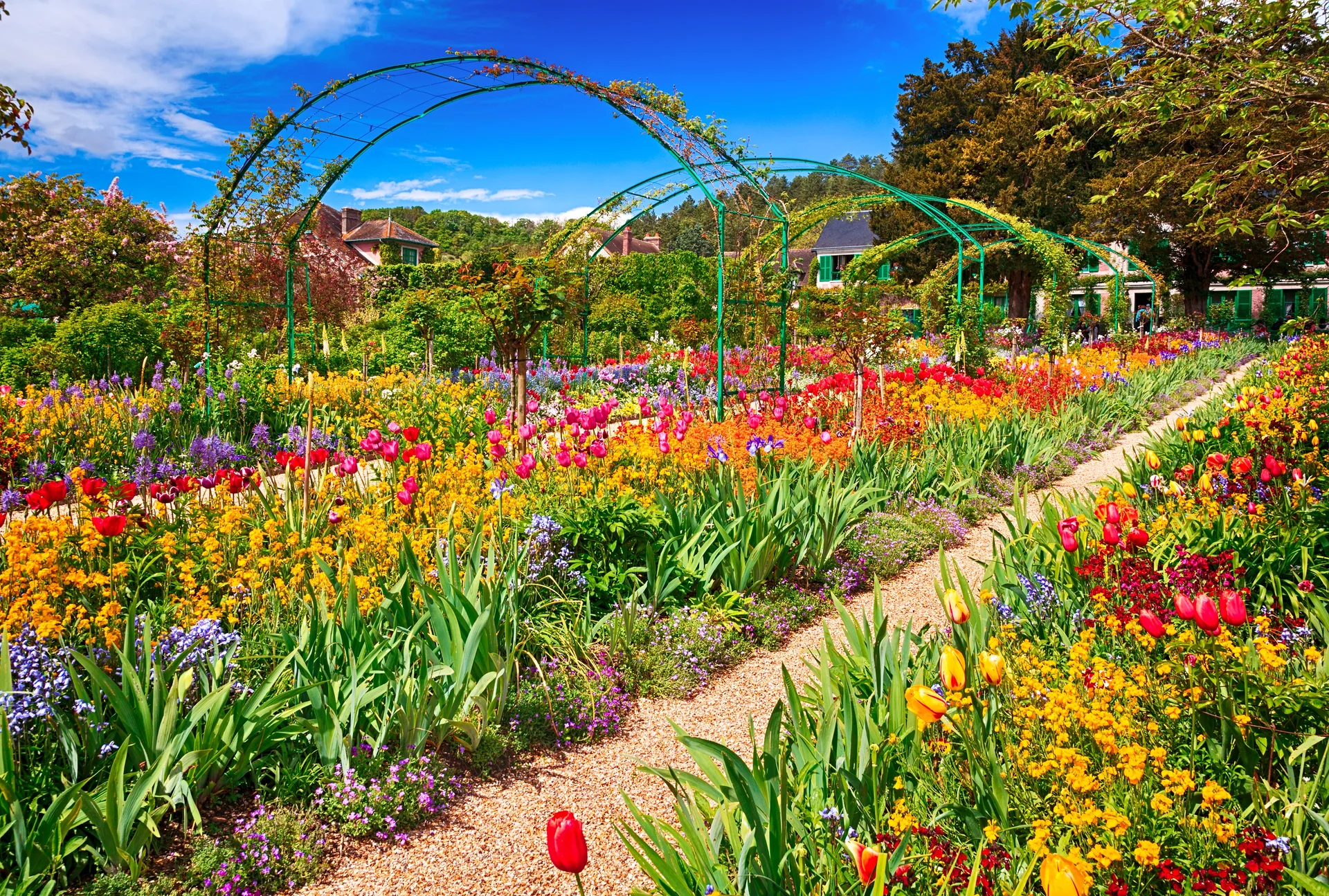
Honfleur is a 2h15 drive from Paris, Bayeux and the D-Day beaches 3 hours, Mont-Saint-Michel 4 hours: before you book, decide how far west you will go. For a long weekend, stay on the Côte Fleurie, between Honfleur and Deauville, with the cliffs of Étretat 45 min away across the Pont de Normandie. With a week and a car, drive from Rouen to the Mont along the coast and change hotels three times. Before each day on the coast, check the tide times: at low tide, you can walk at the foot of the Étretat cliffs; on the days of the highest tides, the sea surrounds the Mont.
At a glance
- When to go
- Go between May and September: 16 to 22 °C (61 to 72 °F) in the afternoon, long evenings and Monet's gardens open in Giverny. If you are visiting the D-Day beaches, avoid the days around June 6: Bayeux hotels are full.
- How many days
- Plan seven days to drive from Giverny and Rouen to Mont-Saint-Michel by way of Étretat, Honfleur and the D-Day beaches; three days are enough for Honfleur, Deauville and Étretat.
- Where to base yourselves
- Stay in Honfleur on a first trip: you eat dinner around the Vieux Bassin, Deauville is 20 min away and Étretat 45 min. For the D-Day beaches, spend two nights in Bayeux.
- Budget for two
- Count on about $2,530 for a comfortable week, with hotels, meals, car and sights, not counting your trip to Normandy; about $1,600 if you keep costs down.
- The moment for two
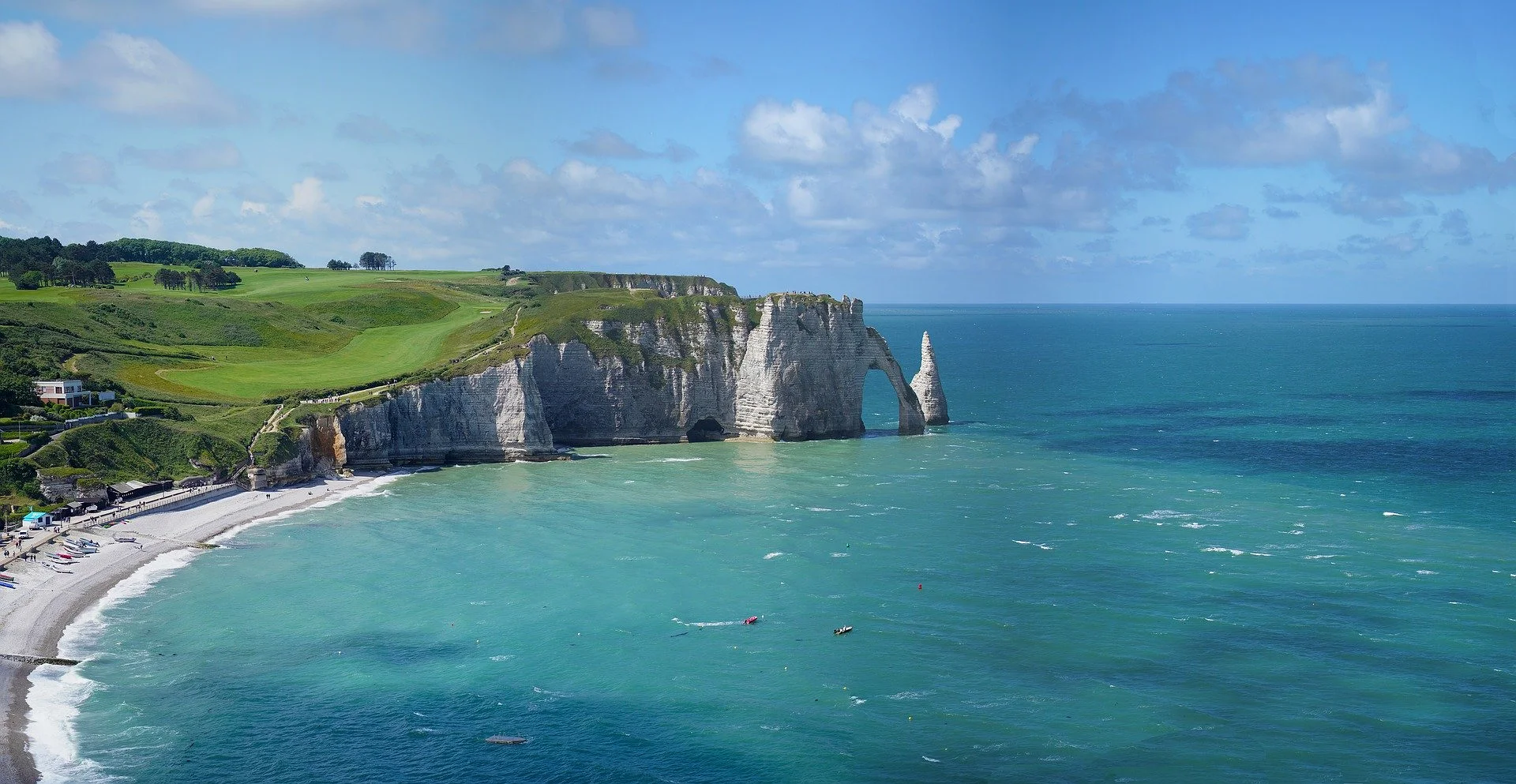
- Climb the Falaise d'Amont in Étretat at sunset, near the chapel of Notre-Dame-de-la-Garde: across the bay, you see the arch of the Falaise d'Aval and the Aiguille, the pointed rock that rises from the sea.
- What to book
- Book your room on Mont-Saint-Michel several months ahead for summer, buy tickets for Monet's gardens before you leave for a May or June weekend, and reserve your car when you book your flights.
Why Normandy for two
Normandy runs for more than 600 km (370 miles) along the English Channel, two hours from Paris, and in a single trip you can follow its three coasts: the white chalk cliffs of the Alabaster Coast, at Étretat and Fécamp; the harbors and seaside resorts of the Côte Fleurie, from Honfleur to Cabourg; then, to the west, the beaches of the D-Day landings of June 6, 1944, and the bay of Mont-Saint-Michel.
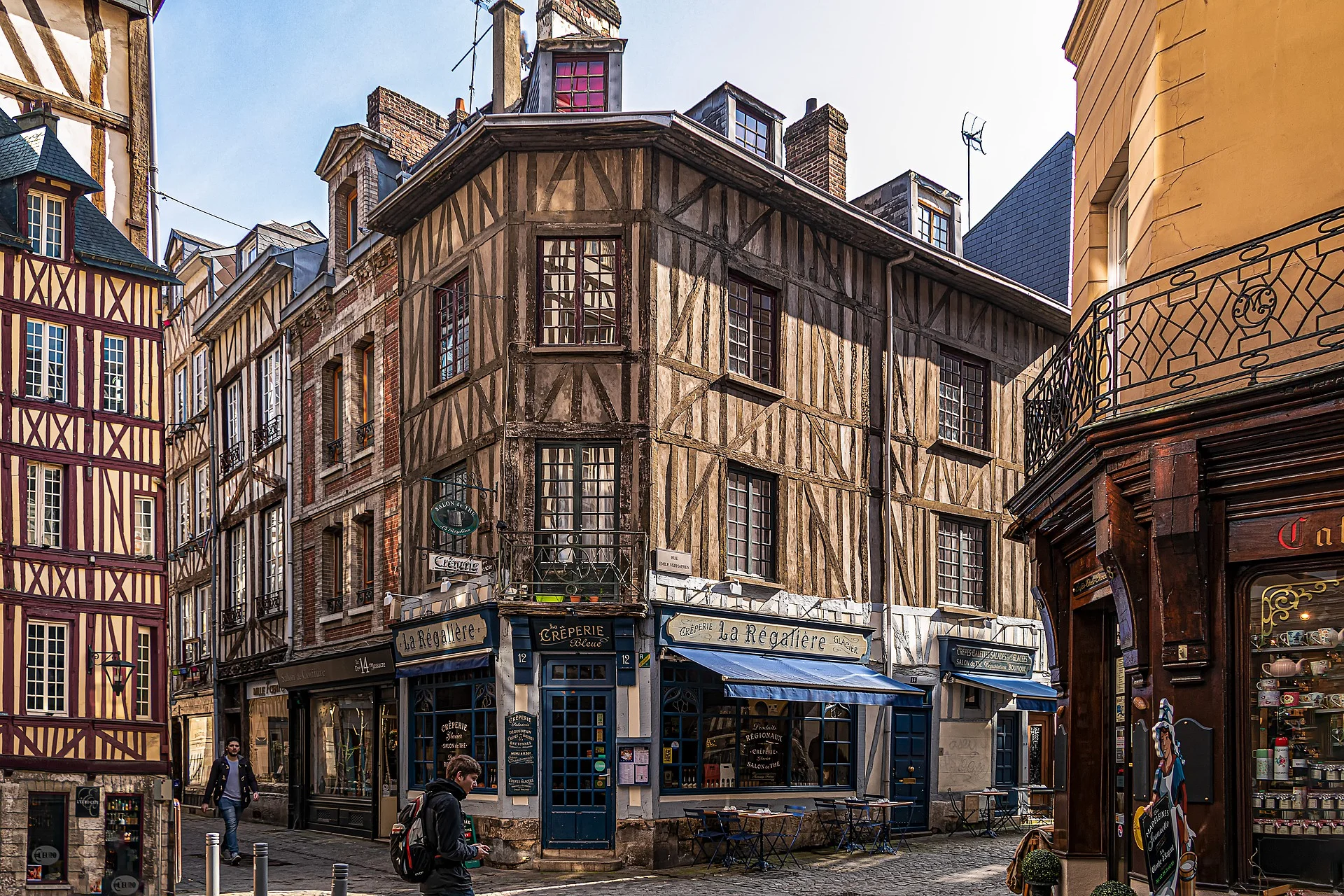
You will find half-timbered houses, oysters and mussels on the harbors, cider and farmhouse cheeses. Distances are short: on the same day, you can walk through Monet's gardens in Giverny in the morning and have dinner on Place du Vieux-Marché, in Rouen, that evening.
When to go
| Period | Weather | Crowds | Our take |
|---|---|---|---|
| April and May | 13 to 17 °C (55 to 63 °F), frequent showers | Moderate, heavy on May long weekends | Apple trees in bloom and Giverny open, but the sea is too cold for swimming |
| June and September | 18 to 21 °C (64 to 70 °F), sea at 15 to 18 °C (59 to 64 °F) | Heavy around June 6 and on weekends | Our favorite time: long days, and hotels still free midweek |
| July and August | 20 to 23 °C (68 to 73 °F), sea around 18 °C (64 °F) | Very heavy on the coast, in Étretat and at the Mont | The swimming season, but parking lots full by 11am and prices at their peak |
| October | 13 to 16 °C (55 to 61 °F), rain and wind | Light, except during the French autumn school break | Autumn colors and cheaper hotels; Giverny closes in early November |
| November to March | 6 to 10 °C (43 to 50 °F), rain and storms | Very light | Giverny closed and short days, but Rouen and the Mont without the crowds |
Around June 6, the anniversary of D-Day, ceremonies and parades of vintage military vehicles draw thousands of visitors to the beaches: book Bayeux months ahead, or move your trip by a week. In early September, the Deauville American Film Festival fills the hotels of the Côte Fleurie, and the equinox high tides, in March and September, bring crowds to the bay of Mont-Saint-Michel.
Paperwork: passport, visa, health
| Documents | Visa | Health | |
|---|---|---|---|
| United States, Canada | Passport valid at least 3 months after you leave the Schengen area, issued within the last 10 years | None for stays up to 90 days | Travel insurance with medical cover |
| United Kingdom | Passport valid at least 3 months after you leave the Schengen area, issued within the last 10 years | None for stays up to 90 days in any 180 | Your free GHIC covers state healthcare; travel insurance for the rest |
| Ireland | Passport or passport card in date | None | Free EHIC for public healthcare |
Entering the Schengen area from the US, Canada or the UK
On your first entry into the Schengen area, border police record your fingerprints and a photo (the EES system): at Paris Charles de Gaulle airport, or at passport control at the port if you come by ferry, allow extra time before you pick up your car or catch your train.
Check before you leave whether the ETIAS travel authorization is required on your dates: you apply for it online on the European Union site (travel-europe.europa.eu), and it is valid for three years. With a US or Canadian license, carry an International Driving Permit as well, which serves as a translation; a UK or Irish license is enough on its own.
Getting there
By plane from North America, Britain or Ireland
Nonstop flights from New York, Boston, Washington, Atlanta, Chicago and many other US cities reach Paris Charles de Gaulle in 7 to 9 hours from the East Coast, 10 to 11 hours from the West Coast; from Montreal and Toronto, about 7 hours. From London, Manchester, Edinburgh or Dublin, flights to Paris take 1h15 to 2 hours. From the airport, pick up your rental car, or take the RER B into Paris, then the train from Saint-Lazare. Caen and Deauville airports only have a handful of domestic and seasonal routes.
By ferry with your own car, from Britain or Ireland
| Crossing | Duration | Good to know |
|---|---|---|
| Portsmouth to Caen (Ouistreham) | ~6h by day, ~7h overnight | Brittany Ferries, several sailings a day; Bayeux 40 min. and Honfleur 1h from the port |
| Portsmouth to Cherbourg | ~5h30 by day, ~8h overnight | Brittany Ferries, sailings depending on the season; Bayeux 1h15 and the Mont 2h from the port |
| Newhaven to Dieppe | ~4h | DFDS, up to three sailings a day; Rouen 1h and Étretat 1h15 from the port |
| Rosslare to Cherbourg | ~18h, overnight | Brittany Ferries, several sailings a week |
| Dublin to Cherbourg | ~19h, overnight | Irish Ferries, a few sailings a week |
Timetables change with the seasons: check the sailings for your dates before you plan the itinerary around them. You can also cross from Dover to Calais by ferry, or take Le Shuttle through the Channel Tunnel from Folkestone, then drive to Rouen in about 2h30. Once off the boat, drive on the right, and at roundabouts give way to cars already on them; French law requires a UK sticker on the car, headlamp beam adjusters, a hi-vis vest for each of you and a warning triangle.
By train from Paris or London
| Arrival | Duration | Good to know |
|---|---|---|
| Rouen | 1h10 to 1h30 | Several trains an hour at peak times |
| Trouville-Deauville | ~2h | Direct mostly on weekends; otherwise one change in Lisieux |
| Caen | ~2h | Then the train to Bayeux, ~20 min. |
| Bayeux | ~2h20 | Direct or via Caen |
From London, the Eurostar reaches Paris Gare du Nord in about 2h20; from there, take the RER E to Saint-Lazare in a few minutes. Honfleur, Étretat and Mont-Saint-Michel have no station. For the Mont, take the TGV from Paris Montparnasse to Rennes, in 1h30, then the bus from the Rennes bus station, several times a day, in about 1h10: book it when you book the train.
Practical things to know before you leave
Phone and outlets
US and Canadian plans charge roaming at full price, and most UK plans now charge for Europe too: turn on a travel pass or install a European eSIM before you leave. With an Irish plan, calls and data work as at home, France being in the European Union. French outlets, at 230 volts, take plugs with two round pins: American, Canadian, British and Irish plugs need an adapter, and North American appliances must accept 230 volts, which almost all phone and laptop chargers do, but rarely hair dryers.
Tides, weather and shoes
- Check the tide times before each day on the coast: the SHOM, the French hydrographic service, publishes them online, and tourist offices post them. In Étretat, you can only walk at the foot of the cliffs at low tide.
- Pack a windbreaker and a sweater even in August: the wind off the Channel cools the evenings, and a shower can come at any time of year.
- Wear closed shoes for Mont-Saint-Michel, which is all stairs, and for the cliff paths, slippery after rain.
Money, tipping and water
Cards work almost everywhere; keep $33 in cash for markets and cider farms. At ATMs and card terminals, decline the conversion into dollars or pounds and let your own bank convert. Service is included in restaurant prices: no 15 or 20 percent tip is expected, leave a few euros if you enjoyed the meal. Tap water is safe to drink.
What to book, and how far ahead
What runs short in Normandy is rooms: there are few hotels on the rock of Mont-Saint-Michel, and Honfleur, Étretat and Deauville are full on summer weekends and on the May long weekends, when the French take extra days off. Book those nights as soon as your dates are set.
| What | Price | Book | Good to know |
|---|---|---|---|
| Monet's house and gardens, Giverny | ~$14 / pers. | 1 to 2 weeks ahead in May and June | Open from April to November 1; arrive at opening time |
| Mont-Saint-Michel Abbey | ~$15 / pers. | The day before in summer | Go up before 10am, before the tour buses arrive |
| Caen Memorial | ~$24 / pers. | On site, or online in summer | Allow half a day; closed three weeks in January |
| Rental car | $44 to $77 / day | When you book your flights or ferry | Ask early for an automatic |
From the airport to your hotel
© OpenStreetMap contributors
The Paris airports and the bases they serve
- Paris Charles de Gaulle (CDG)
- Paris Orly (ORY)
- 1Rouen
- 2Honfleur
- 3Bayeux
- 4Mont-Saint-Michel
| Destination | Transport | Time | Typical fare |
|---|---|---|---|
| Rouen | Rental car | ~1h45 | $44 to $77 / day |
| Rouen | RER B into Paris, then train from Saint-Lazare | ~2h45 | $33 to $55 / pers. |
| Honfleur | Rental car | ~2h30 | $44 to $77 / day |
| Bayeux | Rental car | ~3h15 | $44 to $77 / day |
| Bayeux | RER B into Paris, then train from Saint-Lazare | ~4h | $50 to $83 / pers. |
| Mont-Saint-Michel | Rental car | ~4h | $44 to $77 / day |
| Destination | Transport | Time | Typical fare |
|---|---|---|---|
| Rouen | Rental car | ~1h45 | $44 to $77 / day |
| Honfleur | Rental car | ~2h30 | $44 to $77 / day |
| Bayeux | Rental car | ~3h | $44 to $77 / day |
| Mont-Saint-Michel | Rental car | ~3h30 | $44 to $77 / day |
Without a car
Without a car, stay in Rouen or Bayeux, both linked to Paris by train, and for the D-Day beaches book a guided minibus tour from Bayeux. For Honfleur, take the bus on the Le Havre-Deauville-Caen line, which stops in town.
Getting around
A car, almost essential
For the D-Day beaches, Étretat, Giverny and the villages of the Pays d'Auge, rent a car: buses rarely go there. The A13 and A29 highways are toll roads, as is the Pont de Normandie, the bridge between Le Havre and Honfleur; the A84, from Caen to Mont-Saint-Michel, is free.
Parking
The paid parking lots in Honfleur, Étretat and Deauville are full by 11am on summer weekends: arrive earlier, or park at the edge of town and walk. At Mont-Saint-Michel, leave the car in the mainland parking lots, 2.5 km (1.5 miles) from the rock, then take the free shuttles: the road to the Mont is reserved for them.
Trains and buses
Trains link Paris to Rouen, Caen, Bayeux, Le Havre and Trouville-Deauville, and Caen to Rennes via Pontorson, the station closest to the Mont. On the coast, the buses of the regional Nomad network take over: check the Sunday timetables, often reduced.
Budget for two
Prices go up on weekends, when Parisians drive out to the coast: in Honfleur, Deauville and at Mont-Saint-Michel, the same room costs noticeably more on Friday and Saturday than midweek. If you have the choice, put those nights between Sunday and Thursday.
| Item | Typical price |
|---|---|
| Double room in summer, midweek | $99 to $198 |
| A dozen oysters on a harbor | $14 to $22 |
| Moules-frites in a restaurant | $18 to $25 |
| Set lunch in a bistro | $22 to $33 |
| A bowl of cider | ~$4.40 |
Count on about $280 a day for two in comfort, hotel and meals included, car not included, and about $165 if you keep costs down.
What to eat and drink
Norman cooking is built on cream, butter, apples and the sea: you will eat oysters and mussels on the harbors and farmhouse cheeses in the Pays d'Auge, and you will drink cider rather than wine.
At the table
-
Mussels in cream
Mussels from Barfleur or the bay, cooked in cider and cream and served with fries: the dish of the Côte Fleurie harbors.
-
Oysters
From Isigny and Saint-Vaast-la-Hougue, served by the dozen on the harbors, with bread and salted butter.
-
The four cheeses
Camembert, Livarot, Pont-l'Évêque and Neufchâtel, the last one shaped like a heart: buy them at a cheese shop or at the market.
-
Teurgoule
Rice pudding with cinnamon, baked for hours in the oven, served in the bistros and crêperies of Calvados.
To drink
Order cider, dry or sweet, served in a bowl, with mussels or a buckwheat galette. Also taste pommeau, an aperitif of apple juice and calvados, and calvados itself, the apple brandy aged in casks, at the farms of the Pays d'Auge, between Honfleur and Lisieux, which sell on site.
Customs and rules to know
On the D-Day beaches you walk through places of remembrance, and in the countryside you visit farmers at work: a few habits matter to the people who live there.
| Situation | What to do |
|---|---|
| War cemeteries | Speak quietly, keep to the paths between the graves, and come dressed: no swimsuits straight from the beach |
| D-Day beaches and sites | Pick nothing up from the sand or the craters of Pointe du Hoc: report any wartime object to the police |
| Restaurants | Lunch service often ends around 2pm and dinner starts at 7pm; out of season, many close one or two days a week |
| Farms and producers | Check the opening hours before you go, or call: most sell on site, but not always all day |
Safety
Normandy is a safe region: the risks come from the sea, the cliffs and the parking lots.
- The edge of the Étretat cliffs: the chalk collapses without warning; stay behind the barriers and do not sit at the edge.
- The rising tide at the foot of the cliffs: check its time before you go down to the shingle beaches, so you do not get cut off.
- Cars parked near the beaches and the D-Day sites: leave nothing visible inside.
Mistakes to avoid
- Trying to see Étretat, the D-Day beaches and Mont-Saint-Michel from a single hotel: the Mont is a 2h30 drive from Honfleur.
- Going up Mont-Saint-Michel in the early afternoon in summer: come before 10am, or after 5pm, when the tour buses leave.
- Planning Giverny between November and March: Monet's house and gardens are closed.
- Giving the D-Day beaches only an hour: between Arromanches, Omaha Beach, the American Cemetery and Pointe du Hoc, plan the whole day.
Normandy
Compare hotel prices
Pick your dates and see the offers from the major booking sites side by side.
Compare live offers from Booking, Expedia, Agoda and other partners.
Normandy: find your hotel
Frequently asked questions
How many days do you need to visit Normandy?
Allow seven days to go from Giverny to Mont-Saint-Michel along the coast, with four hotels. Three days are enough for Honfleur, Deauville and Étretat, and two days for Mont-Saint-Michel alone, with one night there.
Do you need a car in Normandy?
For the coast, yes. Rouen, Caen, Bayeux and Trouville-Deauville are on the rail network, and Mont-Saint-Michel is reached by bus from Rennes; for the D-Day beaches without a car, book a guided minibus tour from Bayeux. For Étretat, Giverny and the villages of the Pays d'Auge, a car is much simpler.
When can you see the highest tides at Mont-Saint-Michel?
Around the equinoxes, in March and September, and for a few days each month after the new and full moon. On the days of the very highest tides, the sea surrounds the Mont: the tourist office publishes the dates and times in advance.
Is the sea warm enough for swimming?
From July to September, the Channel reaches 17 to 18 °C (63 to 64 °F). Swim on the sandy beaches of the Côte Fleurie, at Deauville, Trouville, Houlgate and Cabourg, which have lifeguards in summer; on the shingle at Étretat, wear water shoes.
Do you have to pay to enter Mont-Saint-Michel?
No, access to the rock is free. You pay for the mainland parking lot and, if you go up to the abbey, its ticket, to buy online the day before in summer.