




Brittany for couples: what to know before you go (2026)
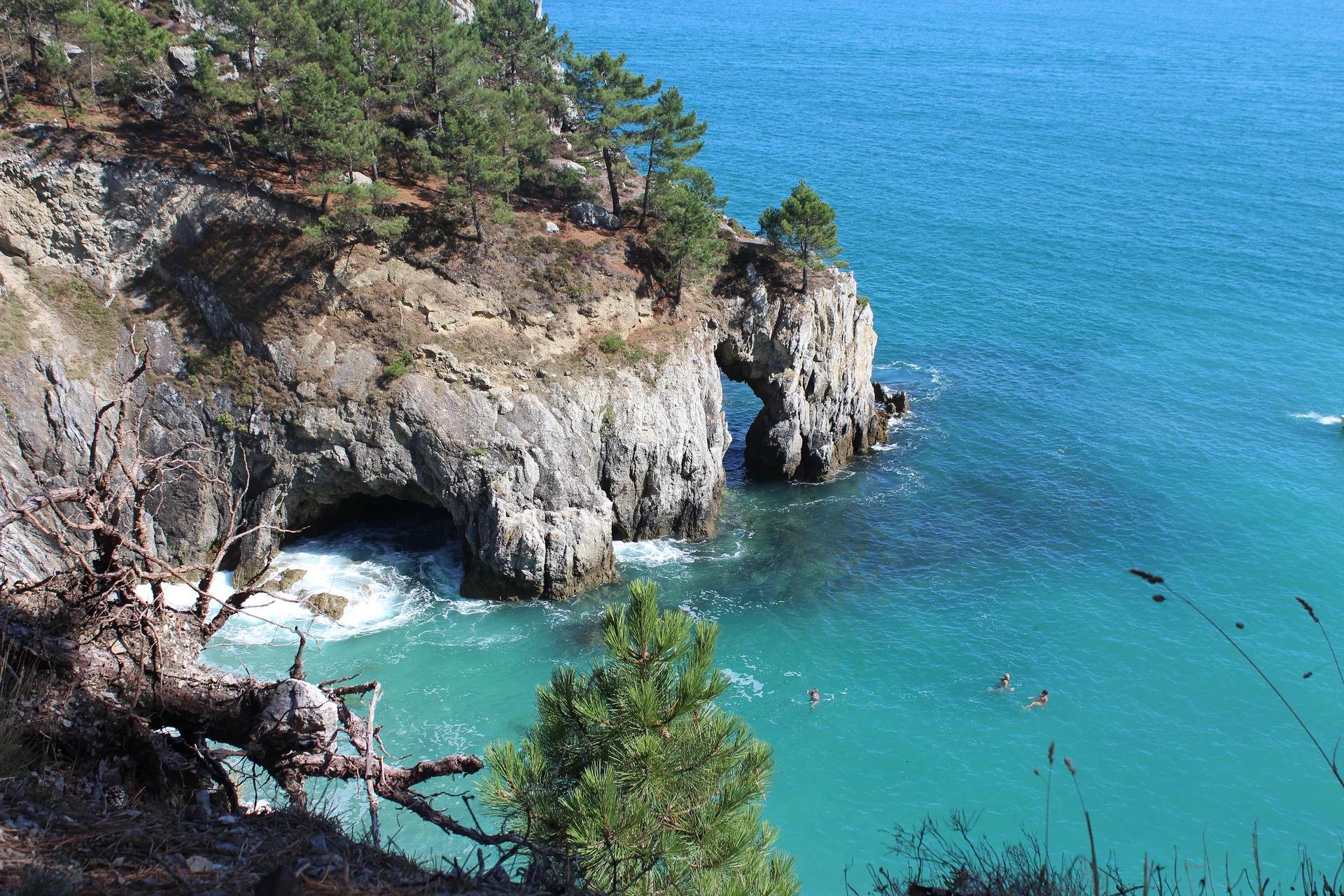
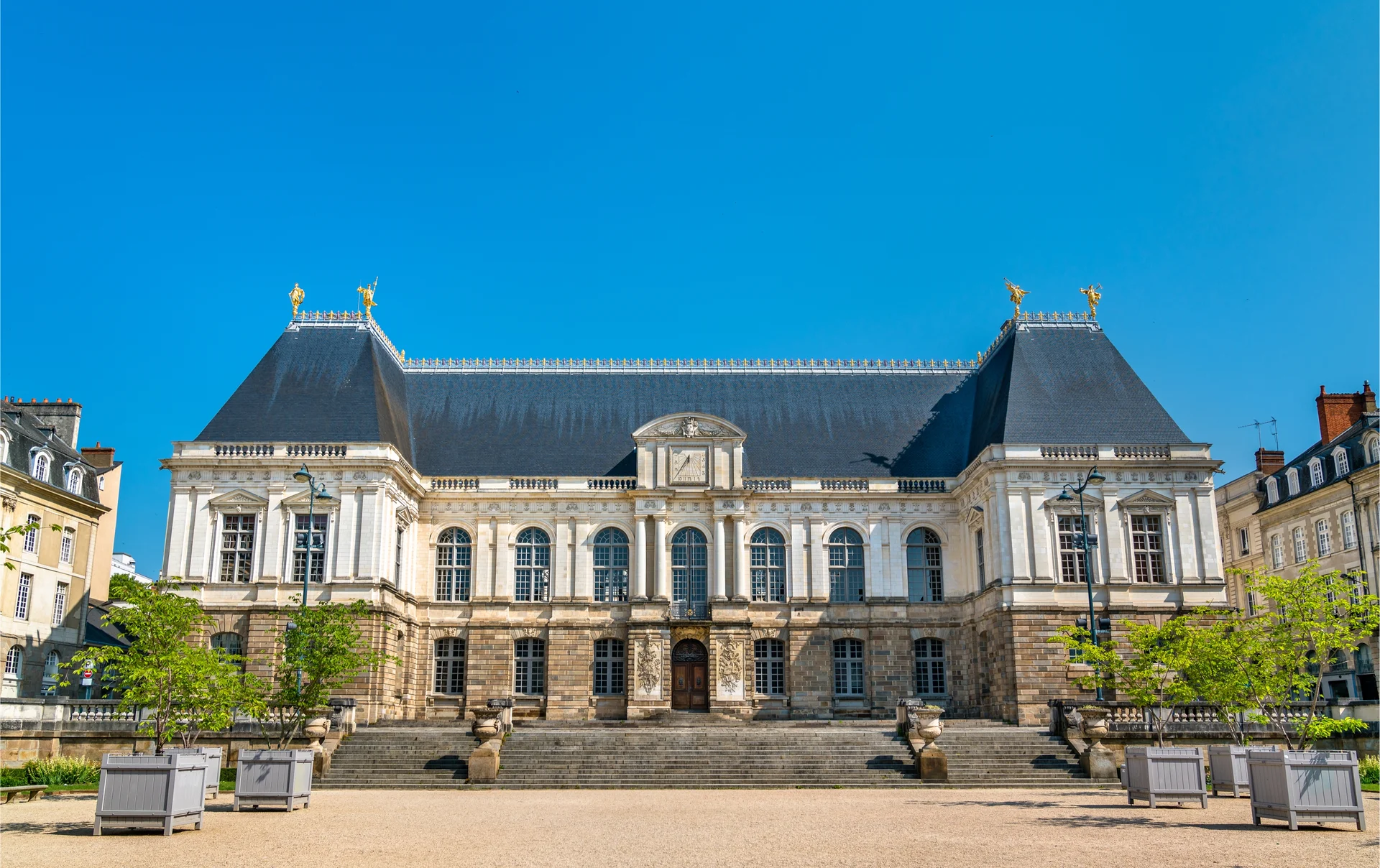
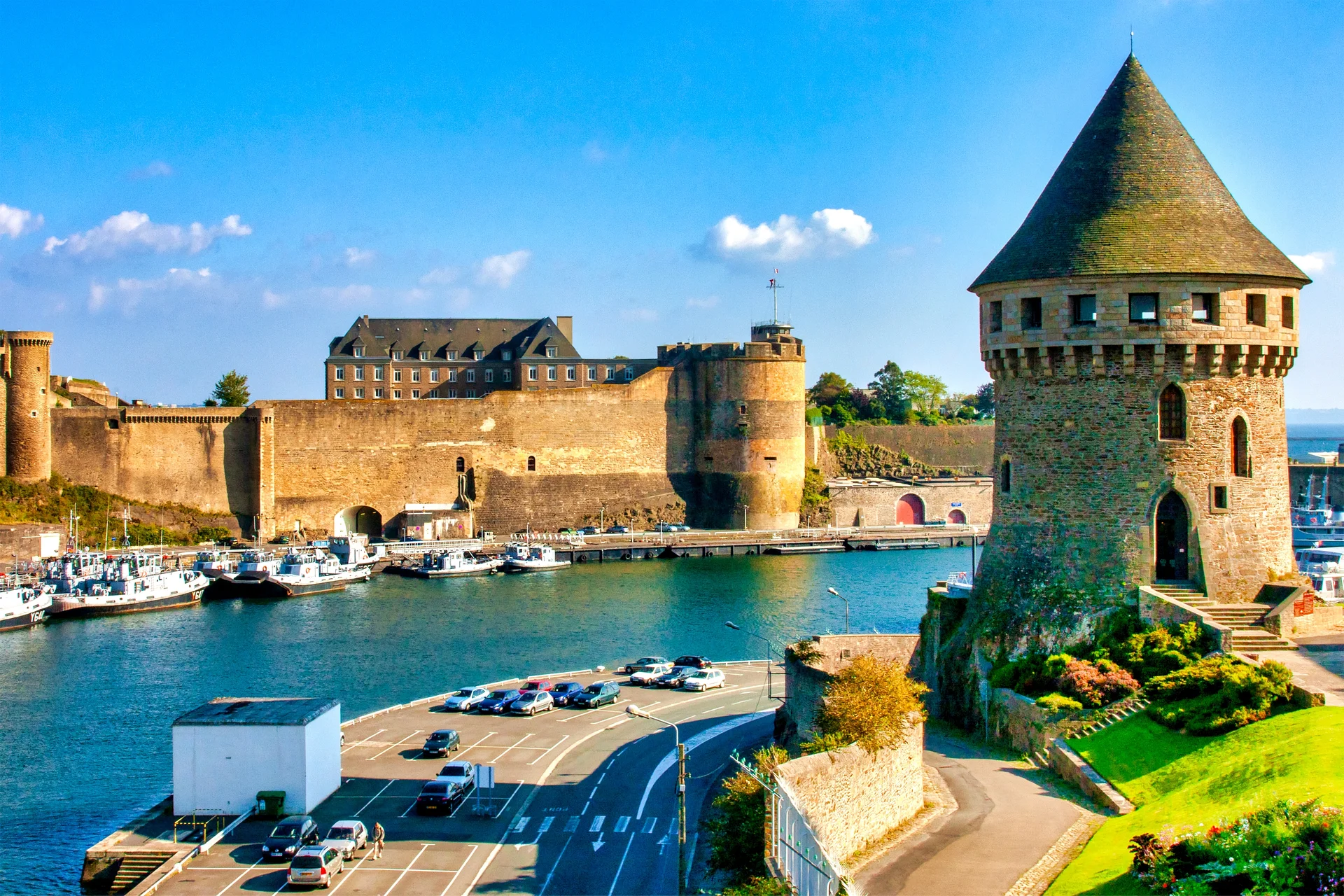
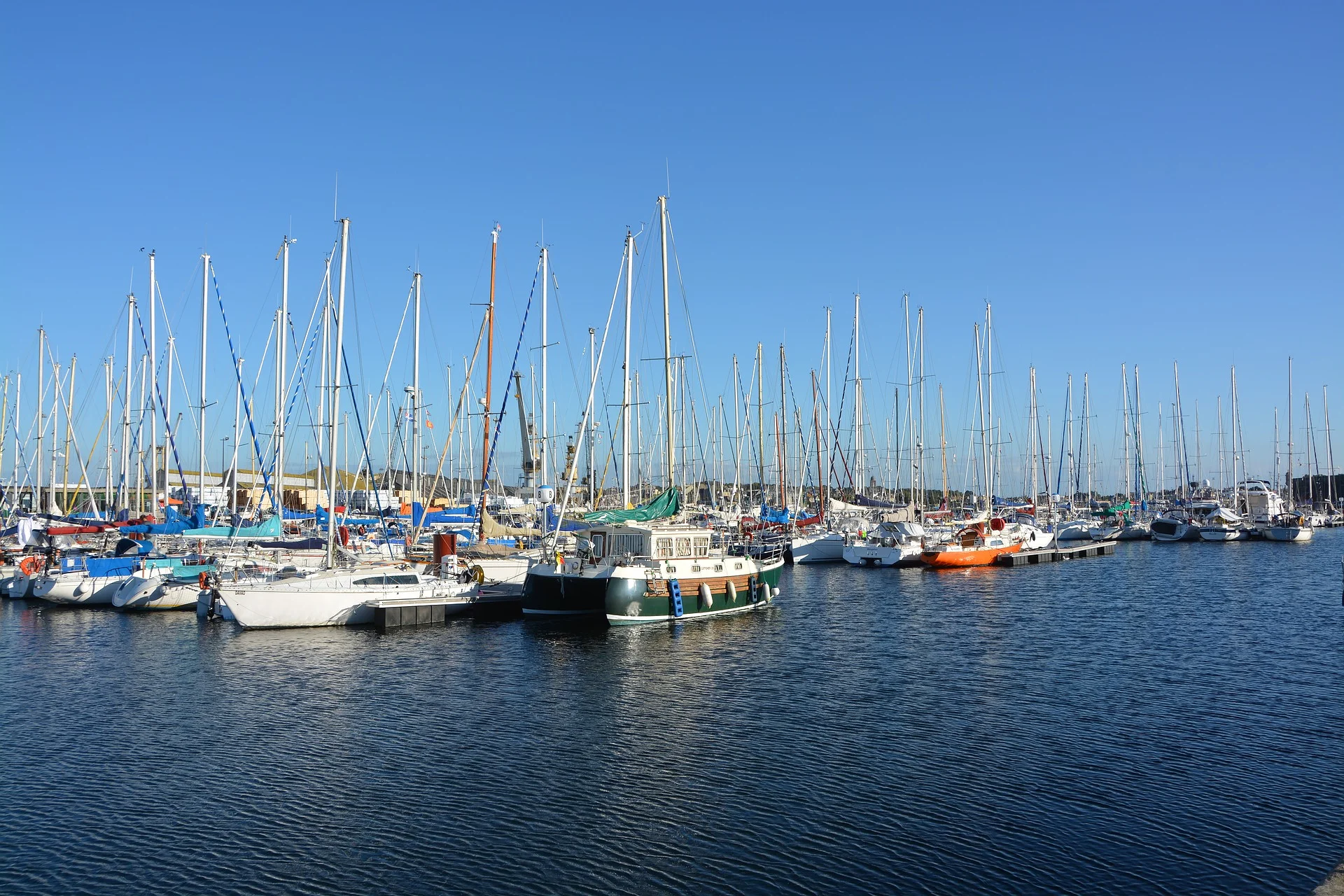
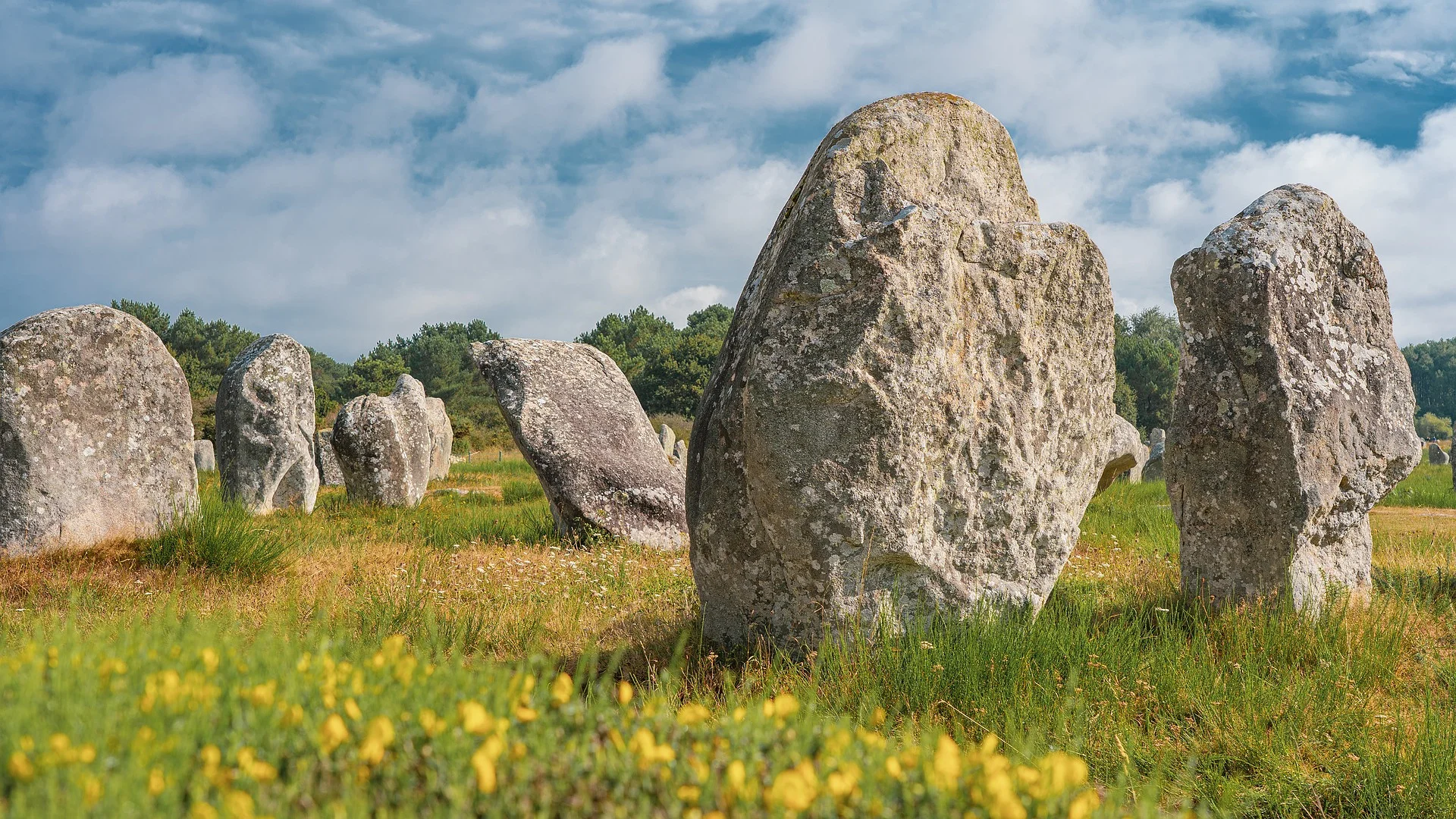
Look at the map before you book: Brittany stretches nearly 300 km (185 miles) from Rennes to the tip of Finistère, and you will not see the whole coast in a week. Choose between the north, with Saint-Malo, its ramparts and the pink granite rocks of Ploumanac'h, and the south, with the Gulf of Morbihan, an inland sea dotted with islands, the standing stones of Carnac and the walled old town of Concarneau. For both, plan ten days. Check the tide tables too: in Saint-Malo, the sea rises more than 10 m (33 ft) on the days of the biggest tides.
At a glance
- When to go
- Go in June or September: 18 to 22 °C (64 to 72 °F), long days and beaches without the August crowds. The sea stays cool, 15 to 18 °C (59 to 64 °F), and a shower can come in any month.
- How many days
- Plan four days for a single coast (Saint-Malo and the Emerald Coast, the shoreline around the town, or the Gulf of Morbihan), and ten days to go around Brittany, with four hotels.
- Which base
- For a first trip, stay inside the ramparts of Saint-Malo. For the south, pick Vannes, on the Gulf of Morbihan, half an hour from Carnac.
- Budget for two
- Count on about $2,310 for a comfortable week, with hotels, meals, car and boat trips, travel to Brittany not included; about $1,320 on a tighter budget.
- The moment for two
- Walk the sentier des douaniers, the coastal path at Ploumanac'h, at sunset, when the granite rocks turn a pinkish orange, then have dinner on the harbor in Perros-Guirec.
- Book ahead
- Book your Saint-Malo hotel three to four months ahead for July and August, the rental car with your train ticket, and, if you take the car, the ferry to Belle-Île, the island off Quiberon, several weeks ahead.
Why Brittany for two
Brittany is the peninsula of western France, with the English Channel to the north and the Atlantic to the south and west. Along some 2,700 km (1,700 miles) of coastline, you will find fishing ports, walled towns such as Saint-Malo and Concarneau, headlands where the sea breaks on the rocks, and a coastal footpath, the GR34, that runs almost all the way around.
You come here to walk by the sea, eat oysters and buckwheat crêpes, sleep in a hotel facing the water, and watch places change with the tide. You do not come for guaranteed sunshine or warm water: the weather changes quickly, and even in August the sea rarely goes above 19 °C (66 °F).
When to go
| Period | Weather | Crowds | Our take |
|---|---|---|---|
| April and May | 13 to 18 °C (55 to 64 °F), frequent showers, sea at 12 °C (54 °F) | Light, except May public holiday weekends | Flowers along the paths and good hotel rates, but the sea is too cold for most |
| June and September | 18 to 22 °C (64 to 72 °F), the driest days, sea at 15 to 18 °C (59 to 64 °F) | Moderate | Our favorite time: long evenings in June, warmer sea in September, hotels still available |
| July and August | 20 to 24 °C (68 to 75 °F), sea at 17 to 19 °C (63 to 66 °F) | Very heavy on the Emerald Coast and in the Gulf | High summer, but full parking lots, busy roads and peak hotel prices |
| October | 14 to 17 °C (57 to 63 °F), more rain and wind | Light | Big tides and storms to watch from the headlands; some hotels close during the month |
| November to March | 7 to 12 °C (45 to 54 °F), rain and wind | Very light | Many seaside hotels and restaurants closed, short days |
The weather often changes during the day: a gray morning can end in sunshine, and the tip of Finistère gets more rain than the Gulf of Morbihan. Keep an indoor visit in your plans, a museum or a town, for a rainy day.
On the days of the biggest tides, the grandes marées, mostly in spring and autumn, the sea goes out very far and comes back fast: that is when you can watch the waves crash against the ramparts of Saint-Malo, but also when the paths to the islets are cut off most quickly. In early August, the Festival Interceltique in Lorient, a week of music and dance from the Celtic nations, fills the hotels of Morbihan.
Paperwork: passport, visa, health
| Documents | Visa | Health | |
|---|---|---|---|
| United States, Canada | Passport valid at least 3 months after you leave the Schengen area, issued within the last 10 years | None for stays up to 90 days | Travel insurance with medical cover |
| United Kingdom | Passport valid at least 3 months after you leave the Schengen area, issued within the last 10 years | None for stays up to 90 days in any 180 | Your free GHIC covers state healthcare; travel insurance for the rest |
| Ireland | Passport or passport card in date | None | Free EHIC for public healthcare |
Entering the Schengen area from the US, Canada or the UK
On your first entry into the Schengen area, border police record your fingerprints and a photo (the EES system): allow more time at passport control, at the Paris airport or at the ferry port in the UK. Check before you leave whether the ETIAS travel authorization is required on your dates: you apply for it online on the European Union site (travel-europe.europa.eu).
Getting there
By ferry from the UK and Ireland
| Route | Crossing | Good to know |
|---|---|---|
| Portsmouth to Saint-Malo | ~11h, overnight | You arrive at the foot of the ramparts, the first stop of our program; the return sails by day |
| Plymouth to Roscoff | From 5h15, mostly overnight | Roscoff is on the north coast of Finistère, about an hour and a quarter from Perros-Guirec |
| Cork to Roscoff | ~14h | Twice a week, overnight, with a cabin |
Book the car space early for July and August. With your own car, you skip the rental, but remember to drive on the right from the moment you leave the port.
By plane
From London, easyJet flies from Gatwick to Rennes airport (RNS) and to Brest airport. From Dublin, Aer Lingus has summer flights to Rennes and Brest. There is no nonstop flight from North America to Brittany: fly to Paris-Charles de Gaulle, then take the TGV, France's high-speed train, from the airport station straight to Rennes, in about 2h30. From Montreal, Air Transat also flies to Nantes, an hour and a quarter by car from Vannes.
By train
| To | Time | Good to know |
|---|---|---|
| Rennes | ~1h30 | The most departures; the station where you pick up the car |
| Saint-Malo | ~2h15 | A few direct TGVs a day, more in summer |
| Vannes | ~2h30 | On the Quimper line, for the Gulf of Morbihan |
| Quimper | ~3h30 | For Concarneau and southern Finistère |
| Lannion | ~3h15 | For Perros-Guirec, often with a change in Guingamp |
From London, take the Eurostar to Paris-Gare du Nord, then the metro to Montparnasse: allow an hour for the change between stations. If you are flying into Paris, the direct TGV from Charles de Gaulle airport saves you crossing the city.
Practical things to know before you leave
Phone and outlets
US and Canadian plans charge roaming at full price, and many UK plans now charge for Europe too: turn on a travel pass or install a European eSIM before you leave. With an Irish plan, calls and data work as at home. French outlets, at 230 volts, take plugs with two round pins: American, Canadian, British and Irish plugs need an adapter.
The tides
Download a tide table app, or ask your hotel for the times: they decide when you walk out to the Grand Bé, the islet in Saint-Malo you reach on foot at low tide, and when you swim on the northern beaches, where the sea sometimes goes out more than 1 km (0.6 mile).
Meals, money and clothes
- Restaurants serve from 12pm to 2pm and from 7pm to 9pm, often no later in small towns; many close on Sunday evening and Monday out of season.
- Cards work almost everywhere, markets included; at card terminals, decline the conversion into dollars or pounds and pay in euros. Service is included in the prices, and tipping is not expected as it is in North America: leave a few euros if the service pleased you.
- Pack a waterproof windbreaker and a sweater for the evenings, even in July, and closed shoes for the coastal path.
What to book, and how far ahead
You will have almost no sights to book in Brittany: in summer, what runs out are rooms on the Emerald Coast and around the Gulf, rental cars at Rennes station and car spaces on the island ferries.
| What | Book | Good to know |
|---|---|---|
| Hotel in Saint-Malo or Dinard in July and August | 3 to 4 months ahead | Rooms inside the ramparts go first |
| Rental car at the station | With your train ticket | The desks at Rennes station keep short hours on Sunday; check the return time |
| Ferry to Belle-Île with a car | Several weeks ahead in summer | Without a car, the day before is enough; rent bikes in Le Palais, the arrival port |
| Mont-Saint-Michel Abbey | Online, a few days ahead in summer | A timed ticket; arrive before 10am |
| Gulf of Morbihan cruise | The day before | Departures from Vannes and Locmariaquer |
From the airport to your hotel
© OpenStreetMap contributors
The airports and the bases they serve
- Rennes Airport (RNS)
- Brest Airport (BES)
- 1Rennes
- 2Saint-Malo
- 3Brest
- 4Concarneau
| Destination | Transport | Time | Typical fare |
|---|---|---|---|
| Rennes | Taxi | ~20 min. | ~$33 |
| Saint-Malo | Rental car, via the expressway | ~1h | $44 to $77 / day |
| Destination | Transport | Time | Typical fare |
|---|---|---|---|
| Brest | Taxi | ~20 min. | Ask the fare before you get in |
| Concarneau | Rental car, via the expressway | ~1h20 | $44 to $77 / day |
What works best: the TGV, then the car
Arrive by TGV and pick up the car at Rennes station, where the major rental companies have a desk: Saint-Malo is an hour's drive away, Vannes an hour and a quarter. For a stay in Saint-Malo alone, take the TGV to Saint-Malo station, a twenty-minute walk from the ramparts, and do without a car.
Getting around
By car, for the coast
Toll-free four-lane expressways link Rennes to Saint-Malo, to Brest along the north and to Quimper along the south; from there, small roads lead to the headlands and harbors. Allow two hours from Saint-Malo to Perros-Guirec, two and a half hours from Perros-Guirec to Concarneau, and an hour and a quarter from Concarneau to Carnac.
Parking
Inside the ramparts of Saint-Malo, leave the car at your hotel's parking or in a paid lot near the gates. The cheaper Paul Féval park-and-ride, at the entrance to town, has a shuttle to the ramparts. In summer, beach and headland parking lots fill up by 11am: arrive early, or late in the day.
Without a car
Regional trains and BreizhGo buses, the region's network, link the towns, Rennes to Saint-Malo, Vannes, Quimper and Brest; they barely serve the headlands and small harbors. Without a car, pick a single base, Saint-Malo or Vannes, and explore the surroundings by bus, by bike or by boat.
Budget for two
Crêperies and markets let you eat well for little; your biggest expense will be a seaside hotel in summer. Here is what a week for two costs, travel to Brittany not included:
| Budget | Comfort | Treat | |
|---|---|---|---|
| Hotel, per night | $88 to $121 (a simple hotel, a B&B) | $154 to $220 (a hotel facing the sea, inside the ramparts) | from $330 (Castelbrac, L'Agapa) |
| Meals, per day for two | $50 (buckwheat crêpes, oysters from the market) | $99 (lunch in a crêperie, a fish dinner) | $220 (a seafood platter, a Michelin-starred table) |
| Car, per day | $44 plus gas | $61 plus gas | $88 for a large automatic |
| Boats and sights | $44 | $132 with a cruise and Belle-Île | $440 with a private boat or a day of thalassotherapy |
| Total, seven days | ~$1,320 | ~$2,310 | from $4,400 |
For reference: a galette complète, a buckwheat crêpe with ham, egg and cheese, $11 to $15; a bolée of cider $3.30 to $4.40; a dozen oysters at the Cancale market $6.60 to $9.90; a kouign-amann $3.30 to $4.40.
Specialties to try
Breton cooking is built on salted butter, buckwheat and seafood. In a crêperie, order a savory galette, made with buckwheat flour, first, then a sweet wheat crêpe for dessert.
To eat
-
Buckwheat galette
The savory crêpe made with buckwheat flour, filled with ham, egg and cheese for the complète, or with andouille de Guémené, a smoked sausage from Morbihan.
-
Cancale oysters
They are farmed in the bay below the village: at the harbor market, the oyster farmers open them in front of you, and you eat them on the sea wall, facing the oyster beds.
-
Seafood platter
Oysters, langoustines, brown crab, whelks and periwinkles, to order for two in the harbor restaurants of Saint-Malo, Cancale or Concarneau.
-
Kouign-amann
A cake of laminated bread dough with butter and sugar, caramelized in the oven, first made in Douarnenez: eat it warm, at the bakery.
-
Far breton
A thick custard flan with prunes, sold by the slice in bakeries. Try the gâteau breton there too, a dense, buttery cake.
-
Salted butter caramel
As candies, as a spread or poured over a crêpe: the specialty of Quiberon, where several confectioners make it on site.
To drink
With galettes, drink cider, dry (brut) or sweet (doux), served in a bolée, an earthenware bowl. Try chouchen too, a fermented honey drink, as an aperitif, and lambig, cider brandy, after the meal.
Customs and rules to know
Bretons are attached to their region, their language and their festivals, and on the beaches and paths alike, rules protect the coast.
| Rule | What to expect |
|---|---|
| Collecting shellfish without checking the rules | Minimum sizes and limited quantities, posted at beach entrances; a fine if you are checked |
| Walking on the dunes or picking flowers along the coastal path | Forbidden in protected areas; stay on the marked path |
| Entering a church during a pardon | A pardon is a religious procession held in summer: stay discreet, and follow it if you wish |
Breton, the region's Celtic language, appears on road signs next to French: kenavo means goodbye, degemer mat welcome. In the evening, a fest-noz, a dance night with Breton chain dances, is open to everyone: join the circle, and the dancers will show you the steps.
Safety
Brittany is a safe region for a couple, day and night; the dangers come from the sea and the cliffs.
- The rising tide: on the way to the Grand Bé, the islets and the tidal flats, the sea comes back fast and cuts off the path; check the time of high tide before you set out, and head back at least an hour before.
- The Côte Sauvage of Quiberon and the west-facing beaches: currents and breakers make swimming dangerous there, and it is forbidden; swim on beaches with lifeguards.
- The coastal path along the cliffs: stay on the trail, especially in strong wind, and do not climb down onto wet rocks.
- Your parked car at beach and headland parking lots: leave nothing in sight.
Mistakes to avoid as a couple
The two most common mistakes in Brittany are underestimating the distances and forgetting the tide.
- Trying to cover the whole coast in a week: Saint-Malo to Concarneau is more than two and a half hours' drive; choose the north or the south, or take ten days.
- Keeping the same hotel for the whole region: from Saint-Malo, the Gulf of Morbihan is two hours away by car.
- Heading out to the Grand Bé or an islet without checking the tide times: the path closes within minutes.
- Turning up at 9:30pm without a reservation for dinner in a small town: most kitchens have closed.
- Driving to Quiberon around 11am on an August Saturday: the peninsula's only road is jammed; leave before 9am.
Brittany
Compare hotel prices
Pick your dates and see the offers from the major booking sites side by side.
Compare live offers from Booking, Expedia, Agoda and other partners.
Brittany: find your hotel
Frequently asked questions
How many days do you need for Brittany as a couple?
Four days are enough for a single coast, Saint-Malo and the Emerald Coast, or the Gulf of Morbihan and Carnac. To go around, from Saint-Malo to the Pink Granite Coast, then to Concarneau and the Gulf, plan ten days and four hotels.
Do you need a car in Brittany?
Yes, as soon as you leave the towns: buses barely serve the headlands, small harbors and beaches. Rent one at Rennes station when you get off the TGV, or bring your own on the ferry from the UK. For a stay in Saint-Malo alone, you can do without.
What is the best time for a couple in Brittany?
June and September: the days are long in June, the sea is warmer in September, and hotels still have rooms. In July and August, the Emerald Coast and the Gulf of Morbihan are very busy.
North or south coast of Brittany?
Choose the north for Saint-Malo, its ramparts, the Emerald Coast and the pink granite rocks of Ploumanac'h. Choose the south for the Gulf of Morbihan, Carnac and its standing stones, Concarneau, more sheltered beaches and slightly drier weather.
Can you swim in Brittany?
Yes, in July, August and September, when the sea is between 16 and 19 °C (61 and 66 °F); the sheltered beaches of the south, in the Gulf of Morbihan and around Concarneau, are the most pleasant. On the northern beaches, the sea goes out far at low tide: swim around high tide.