





D1 Day 1: Pelourinho and its baroque churches
- D1·1Terreiro de Jesus Square
- D1·2Cathedral Church
- D1·3São Francisco Church
- D1·4Largo do Pelourinho Square
- D1·5Rosário dos Pretos Church

In Salvador, the heat sets the shape of your days: the churches of Pelourinho in the morning, a swim at Porto da Barra in the afternoon, music and acarajé in Rio Vermelho at night. Four days give you time to ride the Elevador Lacerda down to the lower city, tie a ribbon at the church of Bonfim, watch the sun set over the sea from Farol da Barra and join a capoeira circle in Santo Antônio Além do Carmo. Every evening ends with a ride-hail car, from the restaurant door to your hotel's.
© OpenStreetMap contributors
D1 Day 1: Pelourinho and its baroque churches
D2 Day 2: Elevador Lacerda, Bonfim and Rio Vermelho
D3 Day 3: Barra, a swim and sunset at the lighthouse
D4 Day 4: Santo Antônio Além do Carmo and capoeira
Start at 9am on Terreiro de Jesus, the main square of the historic center, ahead of the heat and the tour groups. Step into the cathedral, the former Jesuit church, with its carved wooden ceiling, then walk two minutes to the church of São Francisco.
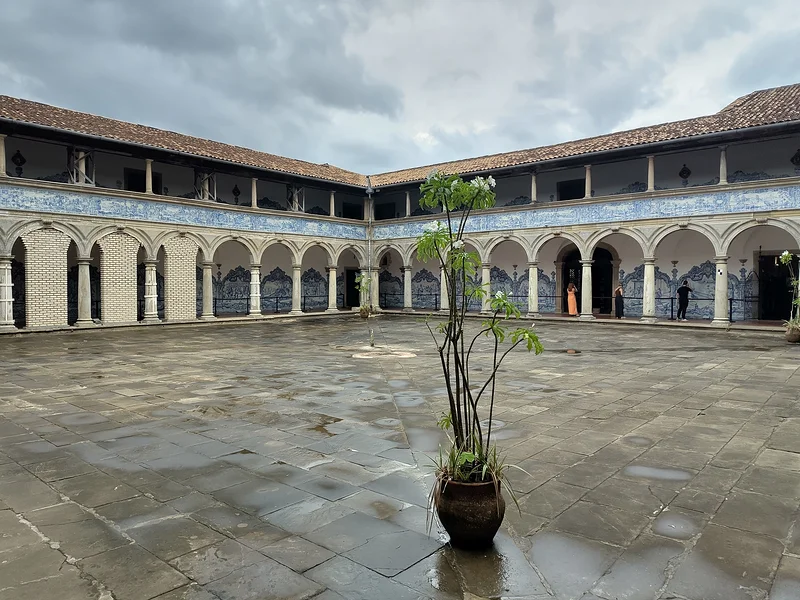
Inside São Francisco, carved and gilded wood covers everything from the walls to the ceiling; the convent cloister next door is lined with azulejos, blue and white tiles from Portugal. There is an entrance fee; cover your shoulders.
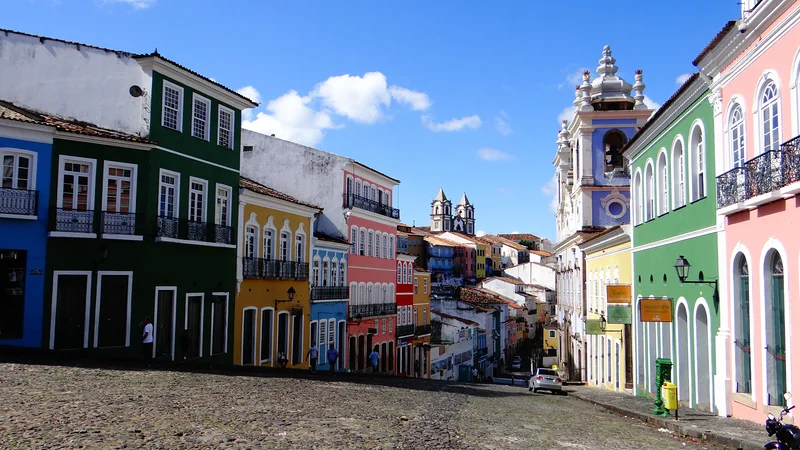
Have lunch at the buffet of the Senac cooking school restaurant (Largo do Pelourinho 13), an all-you-can-eat spread of Bahian dishes. Then walk down Largo do Pelourinho, the sloping square lined with blue, yellow and pink houses, to the blue church of Rosário dos Pretos, built by brotherhoods of enslaved Black people in the 18th century.
On the same square, the Casa de Jorge Amado Foundation tells the life of the writer who made Salvador known to the world. Around 4pm, when the heat eases, head back to the hotel or take a break in a shaded café.
See the Balé Folclórico da Bahia at the Miguel Santana theater, right in Pelourinho: Afro-Brazilian dance, samba de roda and capoeira. The show runs a few nights a week; buy your tickets at the theater that afternoon. Have dinner nearby and walk back across the lit squares, or take a car.
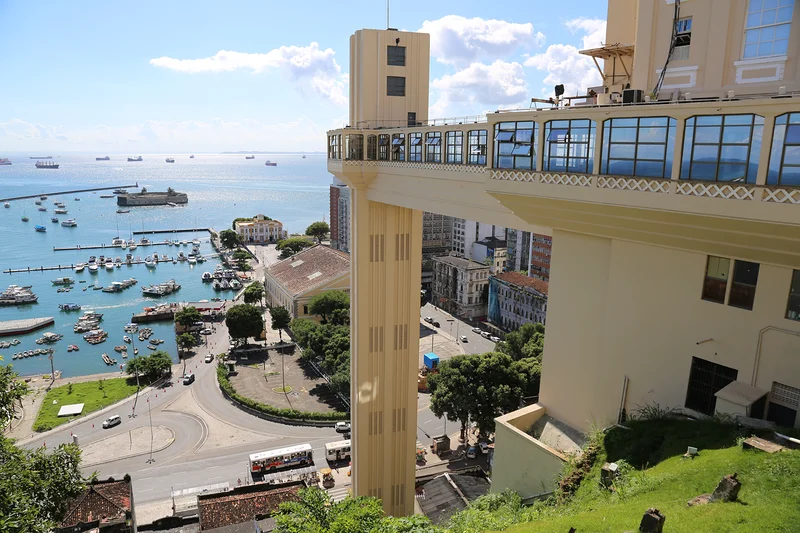
From Praça Tomé de Sousa, take in the bay, the port and the São Marcelo fort sitting on the water, then ride down in the Elevador Lacerda: a 72 m (236 ft) Art Deco tower that links the upper and lower city in half a minute.
At the bottom, the Mercado Modelo, the old customs house, gathers Bahian craft stalls: musical instruments, jewelry, capoeira gear. Agree on the price before you buy. From there, take a ride-hail car to the Itapagipe peninsula, 15 minutes away.
The church of Bonfim, on its hill, is Salvador's best-loved shrine: its railings are covered in colored ribbons. Buy one and have it tied around your wrist with three knots, one wish per knot: tradition says it falls off by itself when the wish comes true. Inside, the room of miracles is lined with ex-votos.
Then head down to Sorveteria da Ribeira (Largo da Ribeira 87), an ice cream parlor open since 1931, for a cajá or tapioca scoop. End at Ponta de Humaitá, a point with a small lighthouse and the church of Monte Serrat, where you can watch the sun set over the bay.
Ride to Rio Vermelho, 25 minutes by car. On Largo de Santana, line up at Acarajé da Dinha, or on Largo da Mariquita at Acarajé da Cira, two baianas known all over the city. Have a drink at a bar on the square, then dinner at Casa de Tereza (Rua Odilon Santos 45), booked by WhatsApp.
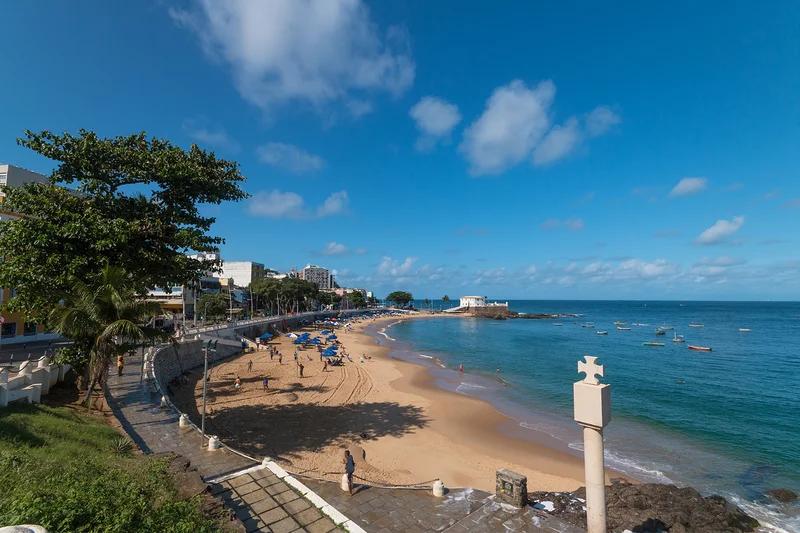
Get to Porto da Barra before 10am, while the sand is still cool: the beach faces the bay, the water is calm and warm, and you swim facing the small Santa Maria fort at the end of the beach. Rent two chairs and an umbrella from a barraca, a beach stall, and order a coconut water.
Have lunch in Barra, then walk along the sea to Farol da Barra, the lighthouse on top of the Santo Antônio da Barra fort. The nautical museum inside the fort tells the story of the bay's shipwrecks; then climb onto the ramparts for the ocean view.
Around 4pm, climb the steps of Morro do Cristo, a hill east of the lighthouse crowned by a statue of Christ: from the top, you see the whole of Barra beach and the lighthouse point. Go back to the hotel to rest through the heat.
Return to the lighthouse half an hour before sunset and sit on the grass or the ramparts: the sun drops into the bay, and the crowd often applauds as it disappears. Then have dinner at Pereira (Avenida Sete de Setembro 3959), a terrace facing Porto da Barra, and walk back along the seafront sidewalk.
From Largo do Pelourinho, walk up Rua do Carmo to the church of the Ordem Terceira do Carmo, whose museum holds a Christ carved by an enslaved man, Francisco das Chagas, with rubies in place of drops of blood. Continue along Rua Direita to Santo Antônio Além do Carmo.
In the neighborhood, have a coffee facing the bay at Cafélier (Rua do Carmo 50), then wander among the restored houses and workshops to Largo de Santo Antônio.
At the end of the largo, the Forte de Santo Antônio houses schools of capoeira angola, the oldest form of this martial art danced to the berimbau, a musical bow. Circles, or rodas, are held mostly in the late afternoon and evening: ask your hotel for times, enter quietly and leave a few reais.
If no roda is on at your time, head down instead to Solar do Unhão, a former sugar estate house on the bay that holds the Bahia Museum of Modern Art (closed Mondays), ten minutes away by car; its sculpture gardens face the water.
Stay at Solar do Unhão until sunset, then have dinner at Amado (Avenida Lafayete Coutinho 660), a terrace on stilts above the bay, five minutes away by car: grilled fish and moqueca. Book a table by the water, and ride back by car.
In Salvador, eat Bahian: moqueca, bobó de camarão and acarajé are served in neighborhood places and at chefs' tables alike. Dinner for two with a drink costs $39 to $66 in a good restaurant; book by WhatsApp for Friday and Saturday nights.
A chef's table
Casa de Tereza (Rua Odilon Santos 45, Rio Vermelho): Bahian cooking reinvented by chef Tereza Paim, in a house decorated with folk art.
By the bay
Amado (Avenida Lafayete Coutinho 660): a dining room on stilts above the water, on the way to Solar do Unhão, for fish and the sunset.
The Bahian buffet
The Senac cooking school restaurant (Largo do Pelourinho 13): forty Bahian dishes at lunch, at a fixed price, to taste a little of everything.
Evening acarajé
Acarajé da Dinha (Largo de Santana) and Acarajé da Cira (Largo da Mariquita), in Rio Vermelho: a few reais each, and the line tells you where to go.
Coffee facing the bay
Cafélier (Rua do Carmo 50, Santo Antônio): a small room full of antiques and a terrace above the bay, for a coffee or a fruit juice.
Ice cream
Sorveteria da Ribeira (Largo da Ribeira 87): an ice cream parlor from 1931 near Bonfim, with fruit flavors from Brazil's northeast.
Salvador's bars serve ice-cold beer in 600 ml bottles, for sharing. At night, they fill up in Rio Vermelho and on the squares of Pelourinho.
| In the mood for | Where | Our take |
|---|---|---|
| A drink facing the bay | Roof terrace of Casa do Amarelindo (Rua das Portas do Carmo 6, Pelourinho) | The church towers and the bay at sunset |
| A caipirinha with your feet in the sand | A barraca on Porto da Barra | Sunset over the bay, for little money |
| A beer and an acarajé | The bars on Largo de Santana (Rio Vermelho) | Where locals go out, in the open air |
| A rooftop cocktail | Rooftop restaurant of the Fera Palace (Rua Chile 20) | The pool and the bay at sunset |
Balé Folclórico da Bahia
An Afro-Brazilian dance company at the Miguel Santana theater in Pelourinho: Candomblé orixás, samba de roda and capoeira, a few nights a week.
Tuesday in Pelourinho
Mass at Rosário dos Pretos, then concerts on the squares: the liveliest night in the historic center.
Capoeira
The schools at Forte de Santo Antônio hold rodas in the late afternoon; on Terreiro de Jesus, groups put on demonstrations for passersby.
Drumming
Pelourinho's percussion groups, such as Olodum, rehearse in public before Carnival: ask your hotel for the dates.
After every night out, ride home by ride-hail car from the venue door: the lanes around the squares empty fast after the concerts.
| Destination | Getting there | Why go | Our take |
|---|---|---|---|
| Morro de São Paulo | Catamaran from the ferry terminal, ~2h20 | A car-free island, numbered beaches, clear water and evenings on the sand | Two nights there; the boat rocks when the sea is rough |
| Praia do Forte | Car, ~1h30 | A fishing village, natural pools and a sea turtle conservation center | The easiest beach to reach, for a day or a night |
| Itaparica Island | Boat from the ferry terminal, ~40 min. | Calm beaches across the bay, and Salvador seen from the sea | Half a day, no booking needed |
| Cachoeira | Bus, ~2h30 | A small colonial town on a river, the cradle of Candomblé | A day for history, without the beach |
Salvador
Pick your dates and see the offers from the major booking sites side by side.
Compare live offers from Booking, Expedia, Agoda and other partners.
Salvador: find your hotel
Two days are enough for Pelourinho and its churches, then Barra with a swim and sunset at the lighthouse. A third day adds the Elevador Lacerda, Bonfim and the acarajé of Rio Vermelho; a fourth, Santo Antônio and capoeira.
Pelourinho on day one, while you are fresh, the lower city and Bonfim on day two, Barra on day three, Santo Antônio last. If you are there on a Tuesday, keep that evening for Pelourinho.
An acarajé from a baiana, a fish or shrimp moqueca for two, a bobó de camarão, a cocada on a square and an ice cream at Sorveteria da Ribeira. Go easy on palm oil on your first day.
At the schools in Forte de Santo Antônio, in Santo Antônio Além do Carmo, in the late afternoon and evening, and at the Balé Folclórico da Bahia show in Pelourinho. On Terreiro de Jesus, groups put on demonstrations for passersby.
Morro de São Paulo, 2h20 away by catamaran, for two nights on a car-free island. For a single day, Praia do Forte and its natural pools, an hour and a half by road, or Itaparica Island by boat.
Yes, especially on Tuesdays and weekends, when music plays on the squares. Stay on the lit squares and ride home by ride-hail car; don't walk down to the lower city.