Bora Bora for couples: what to know before you go (2026)
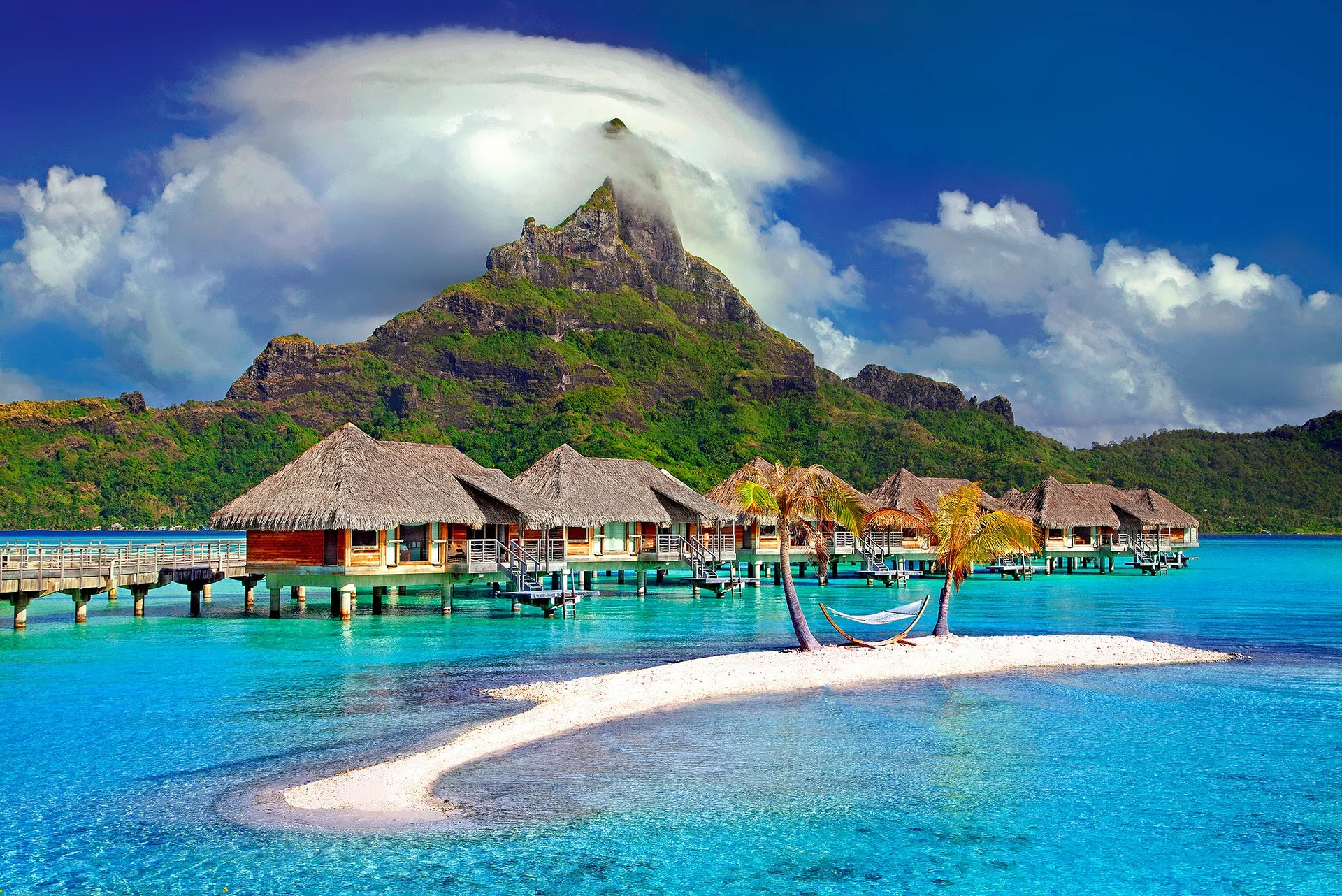
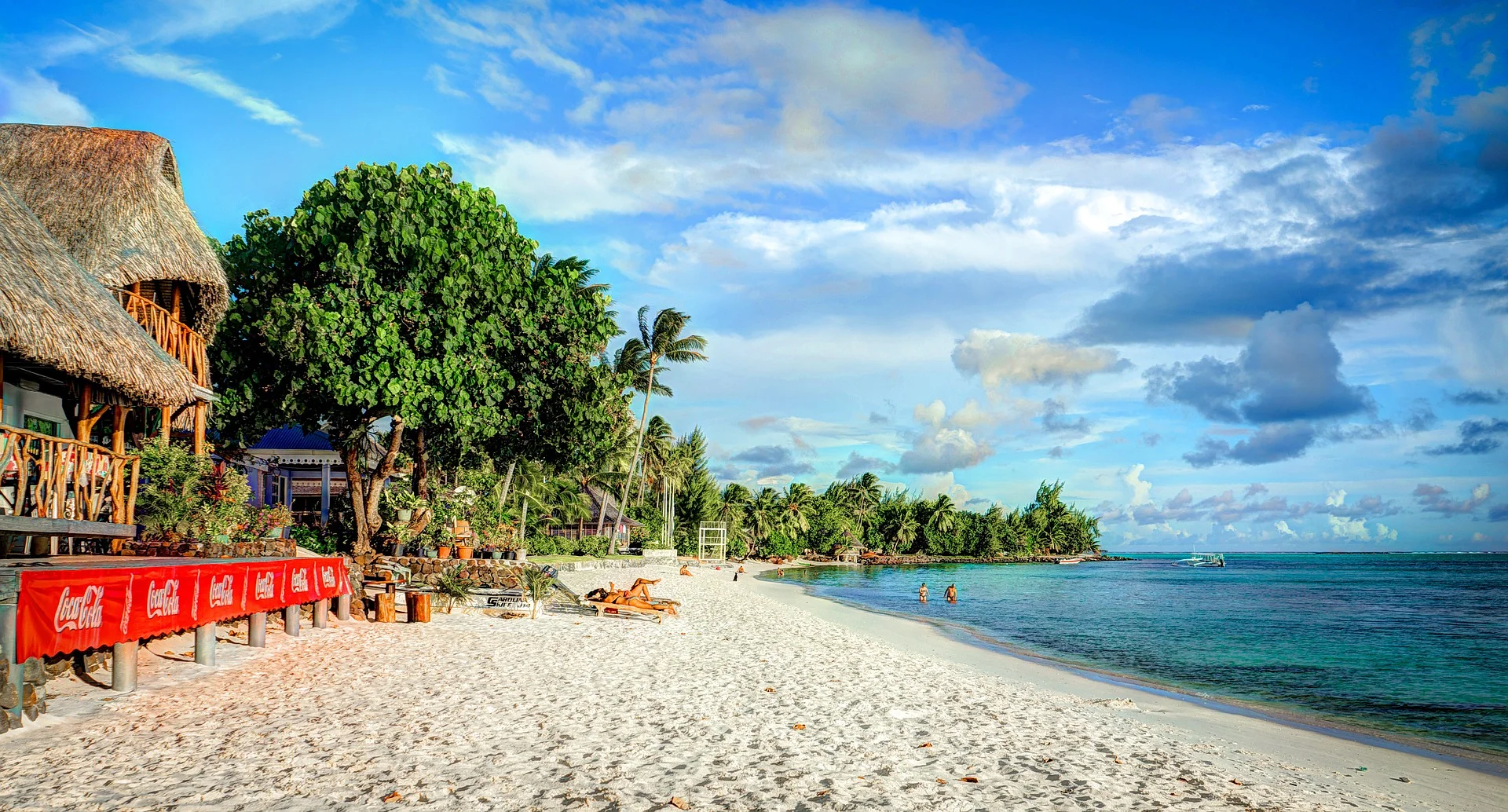
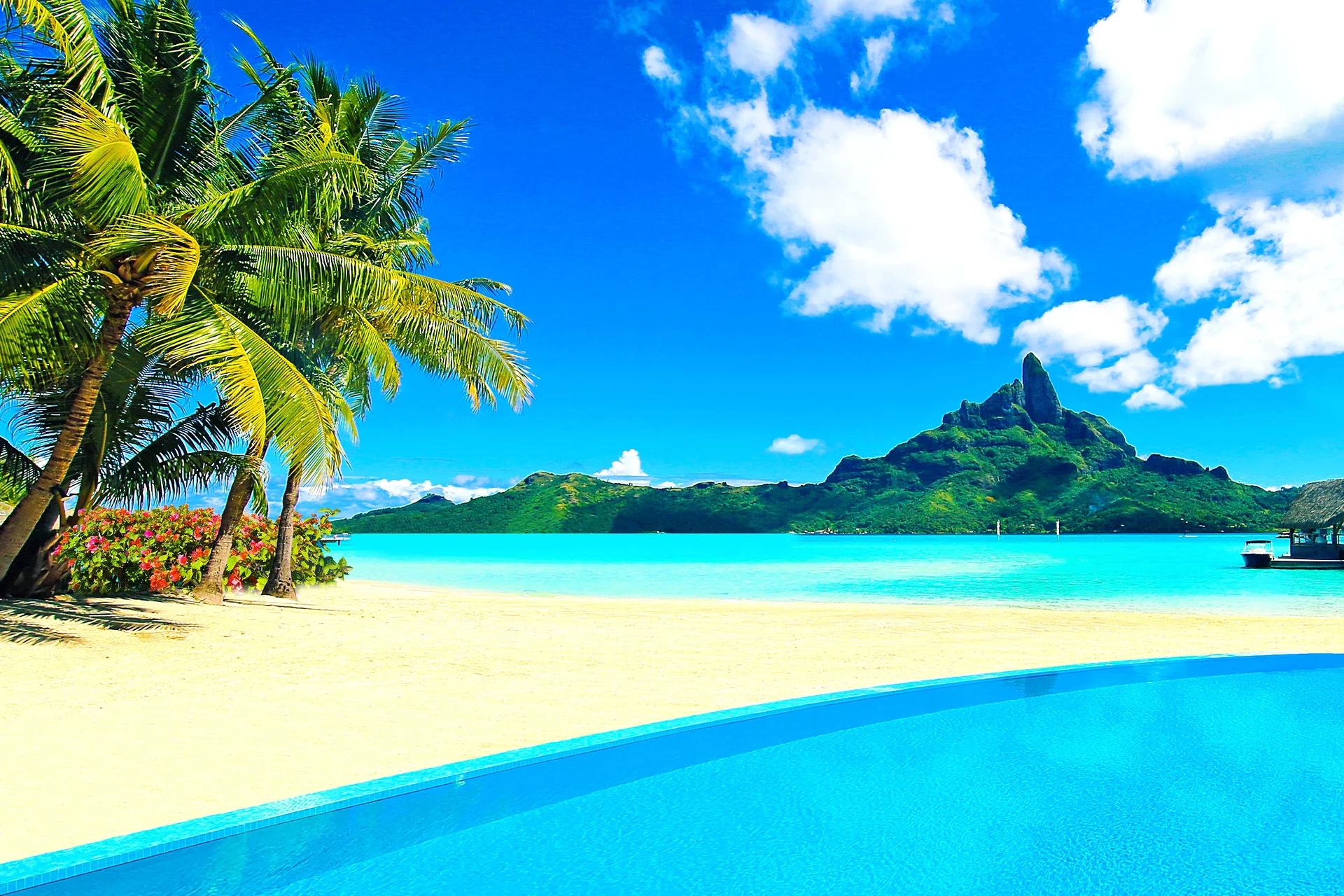
In Bora Bora, everything is decided on the water: you cross the lagoon by boat, Mount Otemanu frames the sunset from an overwater bungalow or from Matira beach, and every trip between airport, hotel and dinner is a boat ride. Four choices shape the trip: the season, a night in Papeete, a private motu or the main island, and a budget counted in thousands. The rest, diving among the rays, biking around the island, choosing a black pearl in Vaitape, can wait until you arrive.
At a glance
- When to go
- May to October is the dry season: 75 to 84°F (24 to 29°C), little rain, a clear lagoon. December to March is hot and sticky (82 to 90°F), with heavy showers, but prices drop.
- How many days
- Four full days on the island, so five or six nights with the 10 to 11 hour time difference from London (5 to 6 from New York), plus a night in Papeete on the way out if your long flight lands late.
- Where to stay
- Matira for the public beach, restaurants within walking distance and softer prices; a private motu for the overwater bungalow and the quiet, with a boat for every outing.
- Budget for two
- About $4,370 for four nights at comfort level, not counting long-haul flights: hotel, meals, excursions and local flights. A guesthouse in Matira brings it down to about $2,130.
- The moment for two
- Sunset on the lagoon, when Mount Otemanu turns from ochre to violet, from your bungalow terrace or from the sand at Matira.
- Before you go
- Flights to Papeete and the hotel, six to nine months ahead for July and August; then the honeymoon upgrade request, made when you book.
Why Bora Bora for two
Bora Bora is an island of about 11 square miles (30 km²) set in a lagoon closed off by a reef, and a couple spends the days moving from one turquoise shade to the next, by boat, in fins or in a kayak, with the silhouette of Mount Otemanu (2,385 ft, or 727 m) as a landmark everywhere. The public beach at Matira, a 20-mile (32 km) loop of the island, diving among rays and blacktip sharks, a sunset on the lagoon: the list fits in a few lines, and it is the water, the light and the empty hours that make the trip.
Three facts set the island apart from other beach destinations. The airport is on a motu, so every arrival ends on a boat; prices are among the highest in the Pacific; and a time difference of 10 to 11 hours from the UK, and 5 to 6 from New York, calls for easy first days. Better to know it before booking than to discover it on the dock.
When to go
| Period | Weather | Crowds | Our verdict |
|---|---|---|---|
| May, June, September, October | 75 to 84°F (24 to 29°C), little rain, trade winds; lagoon at 79°F | Moderate | Our favorite: clear skies, clear water, quieter resorts |
| July and August | 75 to 82°F (24 to 28°C), clear skies, cooler wind | Very high, summer holidays | Near-certain sun, but prices and bookings at their peak |
| November, April | 79 to 88°F (26 to 31°C), first rains or last of the rains | Low to moderate | A good compromise if your dates are fixed; showers possible |
| December to March | 82 to 90°F (28 to 32°C), humid, violent but short showers | Low, except Christmas and New Year | Lagoon at 84°F, lower rates, easier upgrades; moody skies |
A few dates change the trip. The Heiva, a festival of Polynesian dance and song, enlivens July; humpback whales pass offshore from August to October; cyclones are rare and fall between November and April. The trade winds cool the dry season but roughen the lagoon: an excursion canceled for wind moves to the next day, so keep a spare day.
Paperwork: entry, health, insurance
| Documents | Entry rules | Health | |
|---|---|---|---|
| United States | A passport valid for your stay; check the official French government website for exact rules before booking | French Polynesia is French territory: check the official site for the permitted length of stay | Check whether your plan covers care abroad; medical evacuation to Papeete costs thousands |
| United Kingdom | A passport valid for your stay; check the official French government website before booking | Check the official site; a US connection requires an ESTA | Travel insurance with evacuation cover is essential |
| Canada | A valid passport | Check the official French government website before booking | Travel insurance: provincial plans cover little abroad |
The US connection
Flights from Europe to Papeete often connect through Los Angeles, San Francisco or Seattle. A US stopover, even without leaving the airport, requires an ESTA for travelers from the UK and most of Europe: an online authorization requested on the official US government website, with your passport, at least three days before departure (check the fee there). US citizens and Canadians need none. A flight with no US stop needs none either. The ESTA covers only that connection: French Polynesia itself does not ask for one.
Health and insurance
No vaccine is required from the US or Europe, but dengue circulates: use repellent, wear long sleeves in the evening, and ask for a mosquito net if the hotel has one. Bora Bora has only a small medical center, and serious cases are flown to Papeete.
Getting there: a long flight, then Tahiti
Two flights and a boat
No flight links the US or Europe directly to Bora Bora. You fly first to Papeete, on Tahiti, then an Air Tahiti domestic flight of ~50 min reaches Bora Bora's airport, which occupies Motu Mute, a small island north of the lagoon. From there, a boat is mandatory to reach the main island or a hotel.
| From | Duration | Good to know |
|---|---|---|
| Los Angeles, San Francisco | ~8h | Nonstop on several airlines; the shortest route from the US |
| New York, Chicago | 14 to 18h | One stop, usually in California |
| London | 22 to 30h | One or two stops, often via the US (ESTA required) |
Flights to Bora Bora land in daylight: after a long flight that reaches Papeete late or at night, plan a night there rather than a connection of a few hours. The baggage allowance on domestic flights is lower than on the long-haul flight (often 44 lb, or 20 kg, per person): check it before packing.
Practical things to know before you go
The 10 to 11 hour time difference
Bora Bora is 5 hours behind New York in winter and 6 in summer, 2 to 3 hours behind Los Angeles, and 10 to 11 hours behind London, because French Polynesia does not change its clocks. For the first two days you will wake at 4 or 5am and be sleepy by 8pm: enjoy the sunrise over the lagoon, keep the first evening for a simple dinner and plan no excursion before day three. Flying home, you arrive the next day or the day after: keep a free day before going back to work.
Money and tipping
- The currency is the Pacific franc (CFP). Cards work at hotels, restaurants and the shops of Vaitape; guesthouses, the food trucks (roulottes), pearl sellers and taxis sometimes prefer cash, which an ATM in Vaitape or Papeete provides.
- Tipping is not practiced: service is included, and a kind word is enough. That is a change from the US, so leave the habit at home.
- Almost everything is imported and therefore expensive: a beer or a bottle of water costs several times the US price, and a hotel meal weighs heavily on the budget.
- Booking sites often show a price before tax: check whether VAT and the tourist tax are included before paying.
Phone and network
Check your carrier's international plan before you leave, or install an eSIM: roaming is expensive in French Polynesia. Hotel wifi is often slow, and sometimes paid outside the lobby.
Plugs, water and sun
- The current is 220 volts and 60 Hz, unlike the 120 volts of the US: phone and laptop chargers accept 100 to 240 volts, but a US hair dryer will not survive. Plug types vary by hotel (A, B and E): a universal adapter covers it; UK visitors need one too.
- Drink bottled water, or the water your hotel declares safe.
- The sun is strong all year: mineral sunscreen reapplied every 2 hours, a hat, and a UV shirt for snorkeling.
- Plastic water shoes protect against coral cuts and sea urchins on the reefs.
What to book, and how far ahead
In Bora Bora, the room goes first, then the domestic flight and the dry-season boat trips. The rest is settled on the spot, depending on the weather.
| What | Price | Book | Good to know |
|---|---|---|---|
| Hotel, overwater bungalow | $560 to $2,470 / night | 6 to 9 months ahead for July and August, 3 to 4 otherwise | The categories with a view of Otemanu go first |
| Papeete-Bora Bora flight | ~$280 / person, round trip | 4 to 6 months ahead | Dry-season flights fill first |
| Day on the lagoon by boat | $112 to $210 / person | 1 to 2 weeks ahead | Rays, blacktip sharks, lunch on a motu; postponed if the wind rises |
| Diving with rays and sharks | $90 to $146 / person | A few days ahead | An intro dive needs no certification; the pass is dived with a club |
| Dinner with toes in the sand | $79 to $168 / person | A few days ahead | The sunset table goes first |
| Bike or car | $17 to $112 / day | The day before | The rental fleet is small in high season |
| Hotel boat transfer | Included or charged, depending on the hotel | When you book | Ask for the time of the last evening return |
From the airport to the hotel
© OpenStreetMap contributors
The airports of Bora Bora, Raiatea and Maupiti, and the island's destinations
- Bora Bora (BOB)
- Raiatea (RFP)
- Maupiti (MAU)
- 1Vaitape
- 2Matira
- 3Resort motus
| Destination | Transport | Duration | Indicative fare |
|---|---|---|---|
| Vaitape | The airline's boat shuttle | ~15 min. | Included in the ticket |
| Matira | Shuttle to Vaitape, then taxi | ~45 min. | ~$23 / taxi |
| Resort motus | Hotel boat, from the airport or the Vaitape dock | 10 to 30 min. | Depends on the hotel |
| Destination | Transport | Duration | Indicative fare |
|---|---|---|---|
| Vaitape | Air Tahiti flight to Bora Bora, then shuttle | ~20 min. flight | Inter-island ticket price |
| Destination | Transport | Duration | Indicative fare |
|---|---|---|---|
| Vaitape | Air Tahiti flight to Bora Bora (some days), then shuttle | ~20 min. flight | Inter-island ticket price |
In Bora Bora, your hotel's boat waits at the terminal exit on Motu Mute, or the airline's shuttle drops you at the Vaitape dock, the village on the main island. The resort motus send their own boats and set the pickup time; for a Matira hotel, a taxi or the hotel car covers the 4 miles (7 km) from Vaitape. Raiatea and Maupiti serve only those combining several islands: each Air Tahiti flight there is short.
Getting around the island and the lagoon
Around the island
The road around the island is 20 miles (32 km) long and almost flat: by bike allow 3 to 4 hours with stops, in the morning before the heat; by car, 1h30. Rental shops are in Vaitape and Matira, and the fleet is small: book the day before. Taxis are scarce and expensive, and the public bus runs rarely and stops early: do not count on it to get home in the evening.
| Option | Price | Good to know |
|---|---|---|
| Taxi | ~$23 / ride Vaitape-Matira | Call the day before, scarcer at night |
| Bike | $17 to $34 / day | Electric or not; start before 8am |
| Car | $68 to $112 / day | Small fleet, book the day before |
| 4x4 safari | $56 to $90 / person | 3 to 4 hours, up to the American guns |
| Water taxi | By distance, negotiate beforehand | To dine on another motu |
On the lagoon
The lagoon is covered by motorboat with a guide (rays, blacktip sharks, a coral garden, lunch on a motu), by kayak or paddleboard, which hotels lend or rent. In the evening, Mount Otemanu can be seen from the boat as from the beach: it is the landmark of every outing.
Budget for two
The hotel is the biggest expense by far: an overwater bungalow costs $560 to over $2,470 a night, and on a private motu meals, drinks and outings are billed at hotel prices. Here is what four nights for two cost, not counting long-haul flights.
| Smart | Comfort | Treat | |
|---|---|---|---|
| Hotel, per night | $191 to $280 | $450 to $680 | from $1,350 |
| Meals, per day for two | $101 | $230 | $450 |
| Excursions, for the stay | $168 | $450 | $1,010 |
| Local flights and transfers, for the stay | $620 | $790 | $1,010 |
| Total for four nights | $2,130 | $4,370 | $10,640 |
Rooms cost 20 to 40% less from January to March than in July and August, and a Matira guesthouse costs up to five times less than an overwater bungalow on a motu. Booking-site prices are often before tax: add VAT and the tourist tax.
Reference prices
| Item | Price |
|---|---|
| Raw fish at a food truck | $14 to $21 |
| Dinner for two at a Matira restaurant, with a drink | $135 to $230 |
| Dinner for two at a motu hotel restaurant | $280 to $450 |
| Local beer, cocktail | $5.60, $16 to $23 |
| Simple black pearl, set as jewelry | from $68 |
| Couples' massage | $168 to $340 |
What to eat and drink
Polynesian food comes down to a few ingredients: fish, coconut milk, lime and fruit. You eat better and cheaper at a food truck in Vaitape than at most hotels, and the fish of the day is chosen at market time.
At the table
-
Raw fish in coconut milk
Raw tuna marinated in lime and coconut milk, with cucumber and carrot: the dish of Polynesia, $14 to $21 at a food truck.
-
Grilled mahi-mahi
Firm white flesh, grilled with vanilla butter or coconut sauce: the fish of dinner, shared on the beach.
-
Chicken fafa
Chicken simmered with taro leaves and coconut milk, served with rice or breadfruit.
-
The ahima'a, the Tahitian oven
An earth oven where pork, fish and plantains cook, served at lunch in several hotels or on a Sunday.
-
Poe
A banana or papaya dessert cooked into a paste, topped with coconut milk: served warm, it ends a meal for a few dollars.
-
Tropical fruit
Pineapple, papaya, mango, giant grapefruit: a roadside stall sells it all cheaply, and Tahitian vanilla is bought by the pod.
In the glass
-
Hinano
Tahiti's light lager, cold at about $5.60 at a food truck; the hotel charges double.
-
Fresh coconut
Opened in front of you with a machete: the morning's water, for a few dollars.
-
The fruit cocktail
Rum, pineapple or passion fruit juice, coconut: the beach cocktail, $16 to $23 at a hotel bar.
-
Polynesian coffee
Grown on Tahiti and its islands, served by the cup in a few cafés; vanilla scents the desserts.
Customs and rules to know
The island lives at its residents' pace: people greet each other, take their time, and nobody hurries a customer. A few habits show your respect for those who live here.
- Say ia ora na when entering a shop or passing someone on the road, and maururu to say thank you.
- Sunday is a day of rest: many shops are closed, and the morning hymns at the Vaitape church are followed in silence, in modest dress.
- The marae, ancient sacred sites of stone, are not climbed on, and no stone is taken away.
- Touch neither the coral nor the rays, and leave it to the guide to feed the fish; do not collect coral or living shells.
- Shoes come off at the door of a house or guesthouse, and you cover up away from the beach, in villages and shops.
- The Matira beach is public; the beaches of the motu hotels are reserved for their guests.
Safety
Bora Bora is a safe island: crime is low and theft rare. The risks come from nature, the sun first, and from swimming away from the group.
- The sun burns in 30 minutes, even under cloud: mineral sunscreen every 2 hours, a UV shirt in the water and a hat on the boat.
- Coral cuts and urchins sting, and stonefish hide in the sand: water shoes in shallow water, and clean every cut.
- The blacktip sharks and stingrays of the excursions are met with a guide: outside an excursion, do not approach them, and do not swim at dusk.
- Currents are strong in the Teavanui pass and offshore from the motus: stay in the lagoon, and keep your fins on if you swim away from the shore.
- Dengue is spread by day-biting mosquitoes: repellent, especially in the morning and late afternoon.
- Do not leave a bag unattended on Matira beach, and lock the bungalow door when you go out.
Mistakes couples make
Disappointment almost always comes from a misunderstood transfer, an underestimated budget or an overfull schedule. Keep some mornings free: the lagoon rewards those who take their time.
- Booking a bungalow without knowing the boat's price and schedule: on a motu every outing depends on it, and the last evening return is early.
- Underestimating the budget of a private motu: the hotel's meals, drinks and excursions weigh as much as the room, and a dinner costs $280 to $450 for two.
- Chaining the long flight and the Bora Bora flight without a night in Papeete: flights land in daylight, and a missed connection costs a day.
- Scheduling an excursion on day one or the morning you leave: the time difference sets your alarm at 4am, and wind can postpone a trip.
- Booking in February hoping for cloudless skies: the rainy season brings violent showers, sometimes for days.
- Forgetting the ESTA for a US connection: without it the airline refuses boarding, even for a two-hour layover.
- Asking for the honeymoon upgrade only on arrival: mention it when you book, then again at check-in.
Frequently asked questions
Is Bora Bora worth the price for a honeymoon?
Yes, if the budget allows: an overwater bungalow facing Mount Otemanu, a lagoon at 81°F (27°C) and days with no schedule make a trip few destinations match. The price is high, from $4,370 for four nights at comfort level to $10,640 for a treat, not counting flights; a guesthouse in Matira brings it to $2,130.
How many days do you need in Bora Bora as a couple?
Four full days cover the lagoon, the loop of the island and the diving, so five or six nights with the time difference. Many couples add another island (Moorea, Tahiti, Rangiroa) and keep three or four nights in Bora Bora.
Do you need a visa for Bora Bora?
Check the official French government website for your nationality before booking: entry rules and the permitted stay depend on your passport. A US connection requires an ESTA for UK and most European travelers, but not for US citizens or Canadians.
Private motu or main island: which to choose?
The motu for quiet, the view of Otemanu and the overwater bungalow, on a budget counted in thousands. The main island, at Matira, for the public beach, restaurants within walking distance and softer prices. The question comes down to the boat: every outing from a motu depends on it.
What is the best month to go to Bora Bora?
May, June or September: the dry season, a clear lagoon and prices lower than in July and August. From December to March the heat is heavy and showers strong, but the water is 84°F (29°C) and hotels upgrade more readily.
Can you visit Bora Bora without sleeping in an overwater bungalow?
Yes: a guesthouse or garden bungalow in Matira, the public beach on foot, a day by boat on the lagoon and dinner at a food truck give you most of the trip for half the price. Keep the overwater bungalow for the last night or two.