Sydney for couples: things to know before you go (2026)
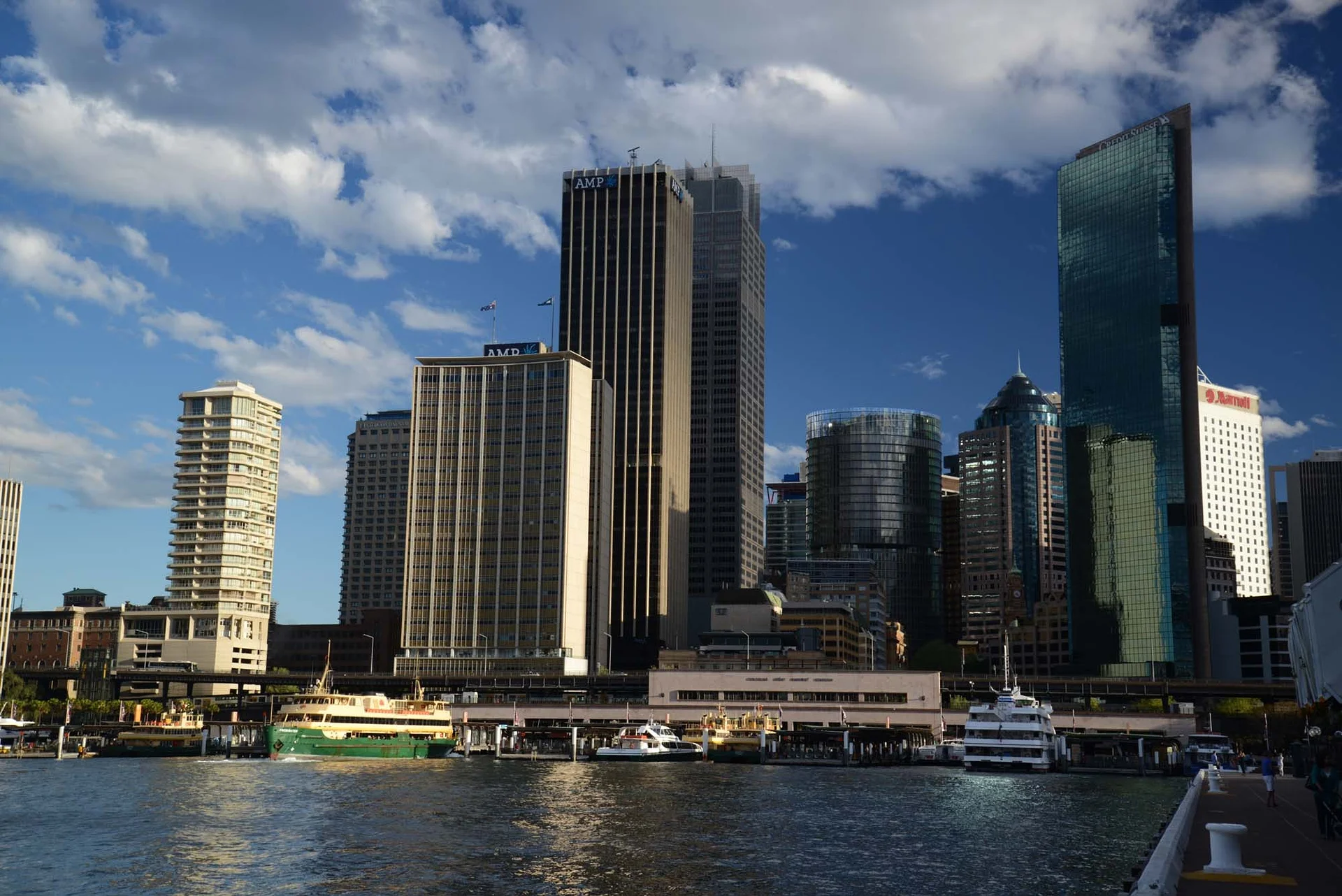
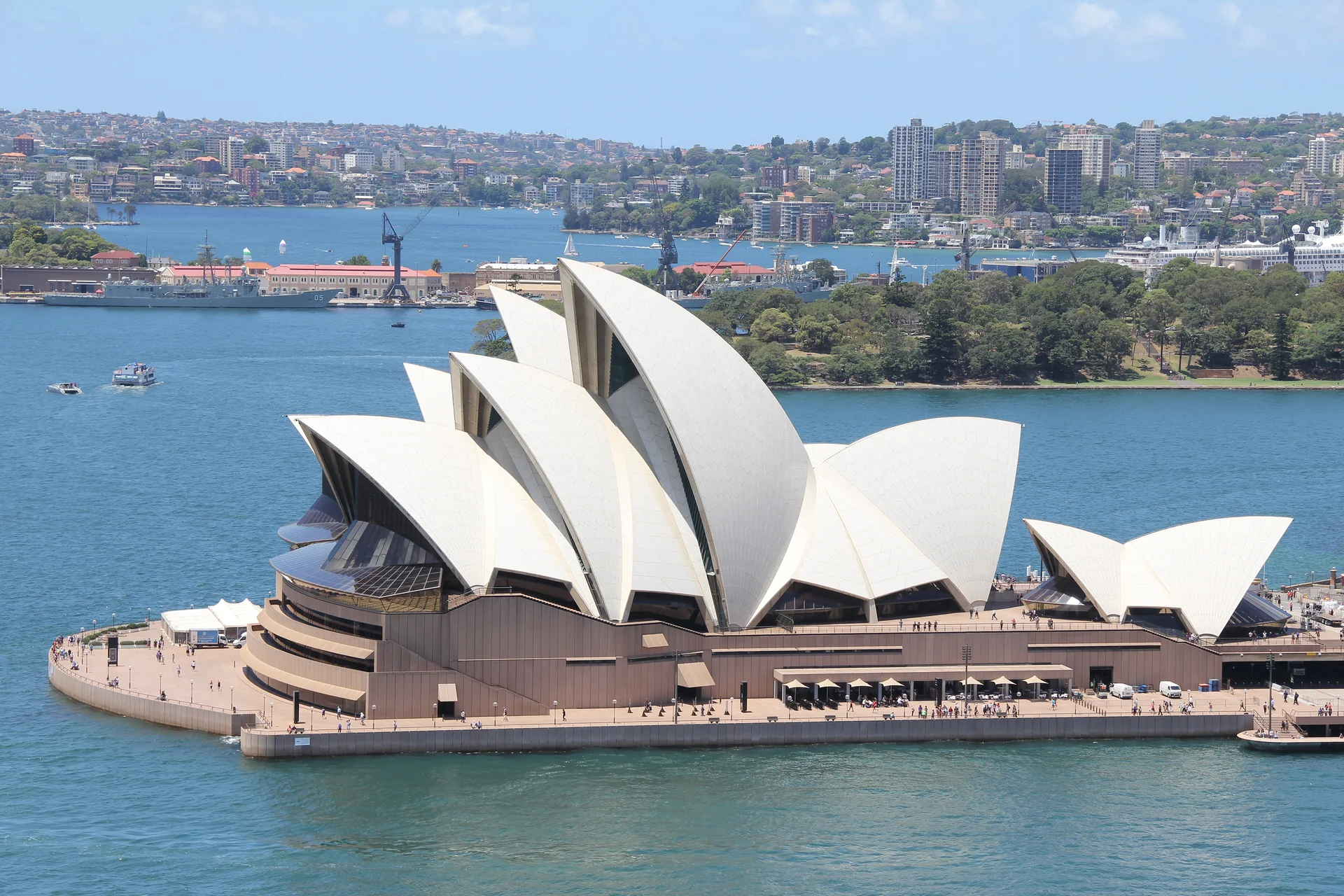
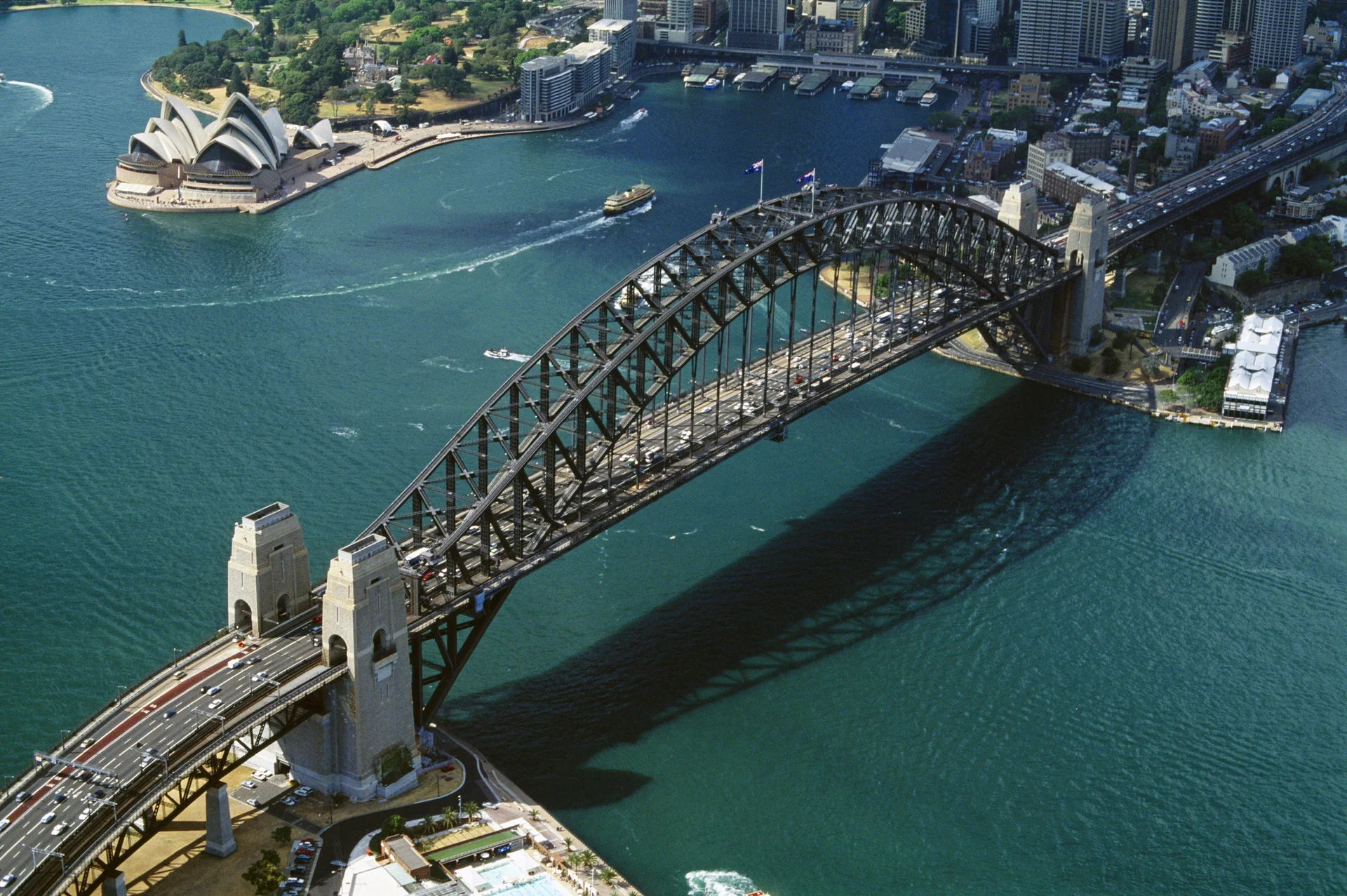
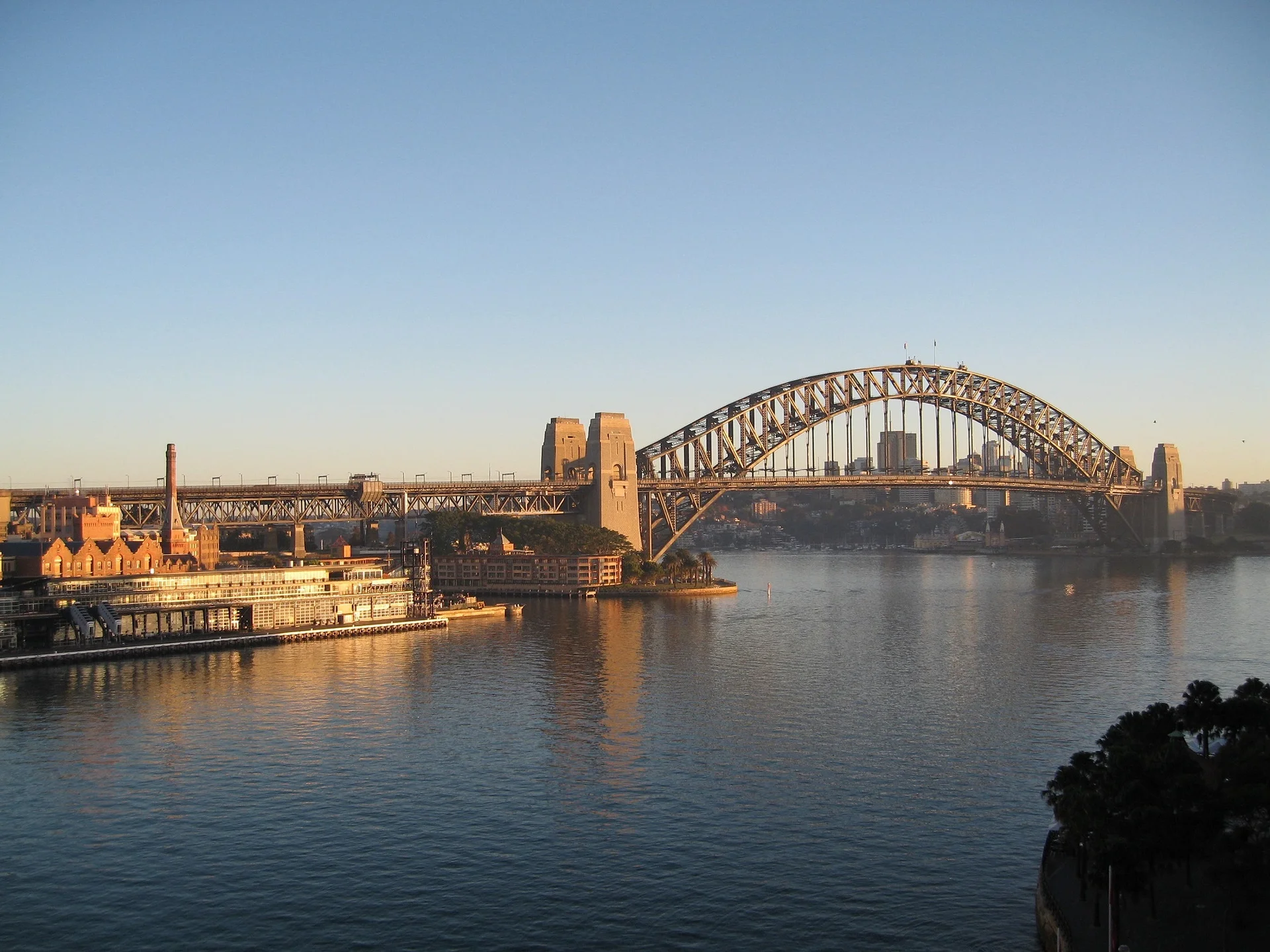
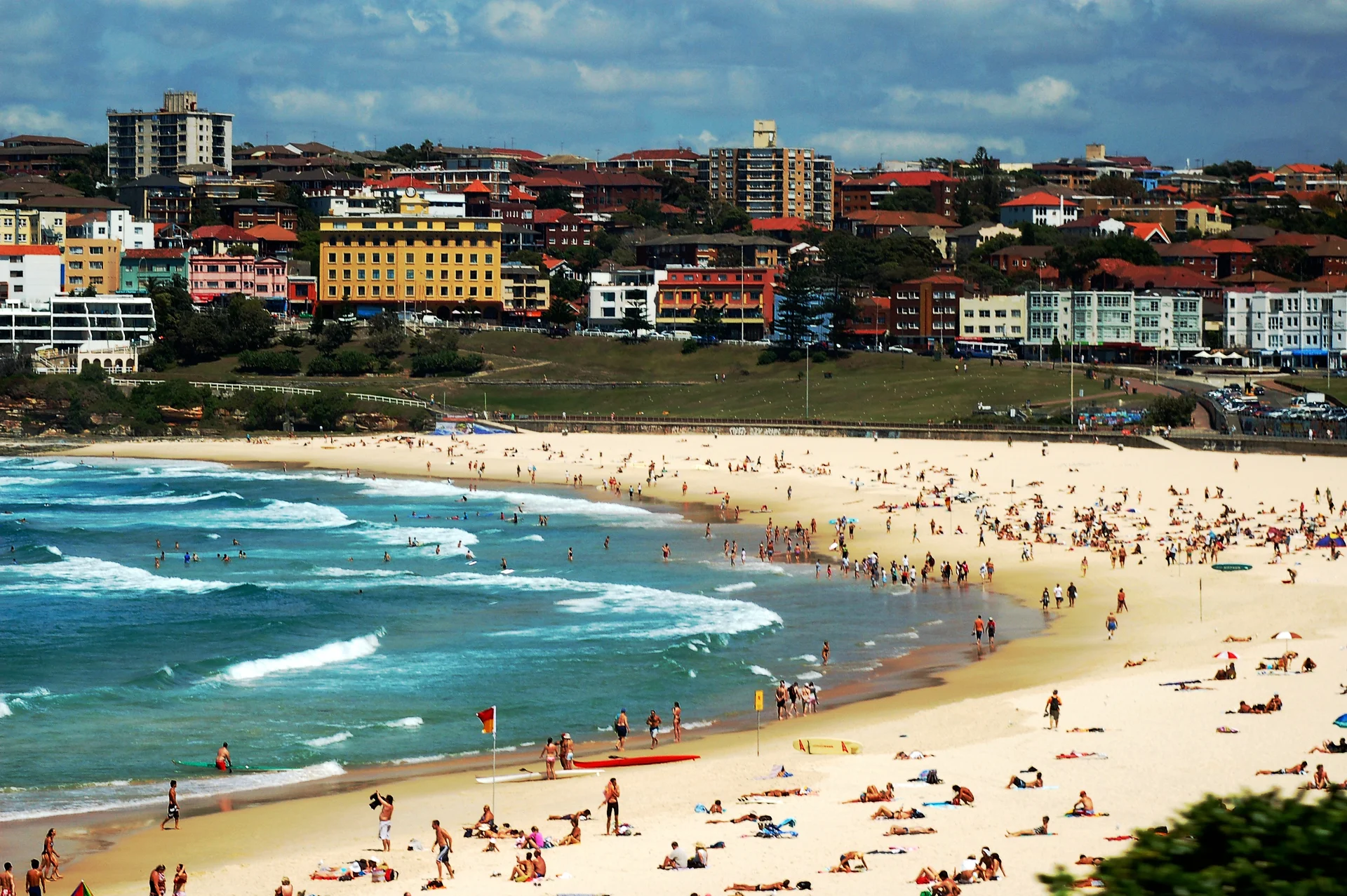
Sydney is best seen from the water: the Manly ferry at sunset, the Opera House and the Harbour Bridge at dawn, the coastal walk from Bondi to Coogee strung between beaches. Three things need settling before you go: your entry authorization, a flight of 22 hours or more with a stop, and the hotel, the biggest line in the budget. The sun asks for a daily habit, sunscreen, because it burns in fifteen minutes even under cloud. And the seasons are flipped: Australian summer runs from December to February.
At a glance
- When to go
- March to May and September to November: 64 to 79 °F (18 to 26 °C), uncrowded beaches and cheaper hotels. December to February, the Australian summer, is hot (up to 104 °F / 40 °C in a heatwave) and the priciest.
- How many days
- Four full days in town, and six nights at least to make a 22-hour flight and a big time difference worth it. Add a day for the Blue Mountains.
- Which area
- The Rocks for a first visit, Potts Point for dinners and quiet, Manly or Bondi to sleep by the beach.
- Budget for two
- About $3,140 for five nights at a comfortable level, hotel, meals, sights and transit included, flights excluded: the hotel is more than half.
- The moment for two
- Sunset from the Manly ferry: the Opera House and the bridge in golden light, then the ride back with the skyline lit up.
- Before you go
- Your entry authorization (free on a European passport, an app fee on a US one), then the BridgeClimb and a harbor-view dinner, four to eight weeks ahead.
Why Sydney for two
Sydney works for couples because of its water: a harbor cut into bays where a commuter ferry beats most cruises, the Opera House and the Harbour Bridge reappearing at every quay, and beaches twenty minutes from downtown. A couple who picks one area a day and takes the boat instead of the bus comes home with more than a ten-stop checklist.
Two facts change the planning. Australia is far: the flight takes 22 hours at best, and a stay of under a week hardly repays the trip. And the sun is harsher than at home, especially from November to February: sunscreen, a hat and sunglasses are part of the luggage.
When to go
| Period | Weather | Crowds | Our take |
|---|---|---|---|
| December to February | 77 to 86 °F (25 to 30 °C), humid, storms; heatwaves to 104 °F (40 °C) | Very high: Christmas, school holidays, New Year's | Long evenings and full beaches, but harsh sun and the highest prices |
| March to May | 64 to 77 °F (18 to 25 °C), sea at 72 °F (22 °C) in March, clear skies | Medium, high at Easter | Our favorite: warm water, soft light, cheaper hotels |
| June to August | 55 to 64 °F (13 to 18 °C), nights at 46 °F (8 °C), a few showers | Medium, high during Vivid | Whales offshore and a lit-up Opera House; sea at 63 °F (17 °C) |
| September to November | 64 to 79 °F (18 to 26 °C), windy, sea still cool | High from October | Jacarandas bloom in late October, terraces open, beaches uncrowded |
A few dates change the city. New Year's Eve (fireworks over the harbor on December 31) fills the hotels and closes quays, and Australian school holidays, from mid-December to the end of January, raise every price. The Vivid festival, from late May to mid-June, lights up the Opera House and the quays each night; its dates change every year, so check them before you book. From June to November humpback whales migrate up the coast, and jacarandas bloom from late October into November.
Paperwork: passport, entry authorization, insurance
| Documents | Entry authorization | Health | |
|---|---|---|---|
| United States, Canada | A passport valid for your whole stay | ETA, requested in the official app; service fee ~$14 | Travel insurance with medical cover and evacuation: your home plan will not pay in Australia |
| United Kingdom, Ireland | A passport valid for your whole stay | eVisitor (free) or ETA, depending on the passport: confirm on the official Home Affairs site | A limited healthcare agreement exists, without repatriation: still take travel insurance |
The entry authorization, step by step
No visa at an embassy for a tourist stay of under three months, but an electronic authorization before the flight. US and Canadian passports use the ETA, requested in the official Australian ETA app, with a service fee of about $14; European passports use the free eVisitor, requested on the Australian Department of Home Affairs website. The ETA is valid for a year, the eVisitor for three, each for stays of up to three months per entry, and each is tied to the passport number. The answer usually arrives within hours, sometimes in three working days: apply as soon as you book the flight. Check on the official Home Affairs site which scheme applies to your passport before booking, and beware of sites that charge for the same form.
On arrival
You fill in an arrival card (the incoming passenger card), handed out on board or completed online depending on the airline: it asks you to declare any food, plant or animal product, wooden items and dirty hiking boots. Australia polices its biosecurity border harder than almost any country: sniffer dogs, scanners, on-the-spot fines for an undeclared apple. Declaring costs nothing and almost never costs you the item.
Getting there
By air, the only way
| From | Time | Good to know |
|---|---|---|
| Los Angeles, San Francisco | 14 to 16h | Nonstop flights, usually overnight; you cross the date line and land two calendar days after leaving |
| Dallas | ~17h | Nonstop, among the longest flights from the US |
| Vancouver | ~15h | Nonstop |
| New York, Chicago, Boston | 22 to 27h | One stop, usually on the West Coast or in Dallas |
| Toronto, Montréal | 21 to 26h | One stop, usually in Vancouver or Los Angeles |
| London | 22 to 25h | One stop, usually in the Gulf or in Singapore; no nonstop |
Flying west from North America, you lose a calendar day: leave Tuesday night, land Thursday morning. Book the hotel from the night before you land (Wednesday) if you want a room at 7 am; otherwise check-in is around 2 pm. From the East Coast and from Europe, a stop of under three hours is tight, over ten hours earns a hotel night, and a two-day stopover in Honolulu, Singapore or Dubai breaks the trip in two. Many flights land between 6 and 8 am, because the airport has an 11 pm to 6 am curfew.
Long-haul flights land at Sydney Kingsford Smith (SYD), 5 miles (8 km) from downtown. A second airport, Western Sydney International, lies 28 miles (45 km) west of the city: it mainly serves domestic flights, and your ticket from overseas should read SYD. The trip to your hotel is covered below, in "From the airport to your hotel".
Practical things to know before you leave
Phone
Check your carrier's international plan or buy a travel eSIM before the flight, or a prepaid Telstra, Optus or Vodafone SIM on arrival (ID required). Coverage is good in town and on the coast, patchy in the Blue Mountains outside the villages. Install the Transport NSW app or Google Maps for ferries and trains, and OpenTable for tables.
Money and tipping
- Contactless cards work everywhere, from ferries to cafés; cash is almost never needed.
- Shelf prices include the 10% sales tax (GST): nothing is added at the register, unlike in the US. On Sundays and public holidays many restaurants add a 10 to 15% surcharge, and some cafés 1 to 2% on cards.
- Tipping is not expected: servers earn a full wage. Leave 10% for outstanding service, round up the cab fare, leave nothing at the bar.
- The hotel often holds $56 to $112 a night on your card, released after checkout: check your limit before you book.
Time difference: 9 to 19 hours
Sydney is 14 to 16 hours ahead of New York, 17 to 19 ahead of Los Angeles and 9 to 11 ahead of London, depending on daylight saving on each side. You land in the morning and the room is not ready until about 2 pm: leave your bags at the front desk, walk in the sun until 8 pm without lying down (the Botanic Garden, a swim at Bondi), and go to bed at 9. For two or three nights you will wake around 4 am, which is sunrise over the harbor and the first ferry. Keep the first evening for a simple dinner. Coming home, leave the day after landing free.
Plugs, water and what to wear
- Australia uses Type I plugs (two or three flat pins in a V), 230 volts: you need an adapter, and US 120 V devices must be dual-voltage. Phone and laptop chargers are, but a US hair dryer or straightener is not and will burn out: the hotel lends one.
- Tap water is safe everywhere, tastes good, and restaurants serve it free.
- The sun sets the dress code: a wide-brimmed hat, sunglasses, a light long-sleeved shirt for hiking, closed shoes. A windbreaker is enough for evenings and the ferry deck.
What to book, and how far ahead
In Sydney what sells out is what has a time slot: the bridge climb, harbor-view tables, evenings at the Opera House and year-end hotels. Everything else can be bought the day before, or the same day.
| What | Price / pers. | Book | Good to know |
|---|---|---|---|
| BridgeClimb, climbing the Harbour Bridge | $191 to $300 | 4 to 8 weeks ahead | ~3h30; no phone or camera at the top, photos are sold afterward; the sunset slot sells first |
| Pylon Lookout, on the bridge | ~$20 | Same day | 200 steps and a view of the Opera House: the cheaper version of the BridgeClimb |
| Opera House guided tour | ~$28 | A few days ahead | 1h, the halls and the foyers; times are listed online |
| An evening at the Opera House (opera, ballet, concert) | $45 to $230 | 2 to 3 months ahead | Opening nights and weekends go first |
| Harbor-view tables | 2 to 4 weeks ahead | Friday and Saturday first; kitchens close around 9:30 pm | |
| Hotel for New Year's Eve | 6 to 9 months ahead | Rooms with a view of the fireworks go first | |
| Manly or Watsons Bay ferry | ~$6.20 | Not needed | Tap a contactless card at the gates |
From the airport to your hotel
© OpenStreetMap contributors
The airport and the areas it serves
- Sydney Kingsford Smith (SYD)
- 1Circular Quay, The Rocks
- 2Central, Surry Hills
- 3Potts Point, Woolloomooloo
- 4Manly
- 5Bondi Beach
| Destination | Transport | Time | Typical fare |
|---|---|---|---|
| Circular Quay, The Rocks | Airport train | ~25 min. | ~$14 / pers. |
| Circular Quay, The Rocks | Taxi | 25 to 45 min. | ~$43 / taxi |
| Central, Surry Hills | Airport train | ~15 min. | ~$14 / pers. |
| Potts Point, Woolloomooloo | Train, change at Central | ~35 min. | ~$14 / pers. |
| Potts Point, Woolloomooloo | Taxi | 25 to 40 min. | ~$45 / taxi |
| Manly | Train, then ferry from Circular Quay | ~1h15 | ~$20 / pers. |
| Manly | Taxi | 45 to 75 min. | ~$79 / taxi |
| Bondi Beach | Train, then bus from Bondi Junction | ~1h | ~$16 / pers. |
| Bondi Beach | Taxi | 25 to 40 min. | ~$51 / taxi |
The airport train links the terminals to Central and Circular Quay in 15 to 25 minutes, with a train every ten minutes or so by day; the fare includes an airport station fee. You pay by tapping a contactless card at the gates. For Bondi, get off at Bondi Junction, where a bus reaches the beach in 15 minutes.
Taxis queue at the official rank outside each terminal; ride-hailing cars have a pickup zone signposted in the hall. Tunnel tolls are added to the fare. Between 7 and 9:30 am and 4 and 7 pm the roads clog, and the train beats a taxi.
Getting around
On foot and by ferry first
Circular Quay, The Rocks, the Opera House and the Royal Botanic Garden are a fifteen-minute walk from one another, as are Barangaroo and Darling Harbour. For the rest, the ferry is the best transport in the city: the Manly and Watsons Bay lines leave from Circular Quay and each beats a cruise. The eastern beaches are reached by bus (the 333 links Circular Quay to Bondi), downtown and the stations by train.
The Opal system and fares
| Fare | Price | Validity |
|---|---|---|
| Opal daily cap | ~$13 | After that, the day's trips are free, on every mode |
| Sunday cap | ~$6.20 | Half of a weekday cap |
| Ferry (Manly, Watsons Bay) | $5.10 to $6.20 | By distance; departures from Circular Quay |
| Airport train | ~$14 | Airport station fee included |
You pay with a contactless bank card or a phone tapped on the reader when you enter and when you leave (tap on, tap off), with no card to buy. Each of you taps your own card, so the daily cap is calculated per traveler. Traffic drives on the left: at a crosswalk, look right first, as the paint on the ground at Circular Quay reminds you.
Budget for two
The hotel is the biggest line, by far: Sydney is one of the priciest cities in the Pacific, and a harbor-view room costs twice the one next door. Listed prices include the 10% tax. Here is what five nights cost for two, flights excluded.
| Smart | Comfort | Treat | |
|---|---|---|---|
| Hotel, per night | $157 to $230 | $260 to $410 | from $510 |
| Meals, per day for two | $90 | $180 | $400 |
| Sights and a show for the stay | $112 | $510 | $1,010 |
| Transit for the stay | $79 | $124 | $340 |
| Total for five nights | $1,570 | $3,140 | $6,160 |
Rooms cost 20 to 30% less in June and July, outside Vivid, than in December or January, and weeknights are cheaper than weekends.
Reference prices
| Item | Price |
|---|---|
| A flat white (coffee with milk) | ~$3.40 |
| Café breakfast (eggs, avocado toast) | $14 to $18 |
| Fish and chips by the sea | $14 to $21 |
| Dinner for two with a drink, neighborhood restaurant | $107 to $157 |
| Cocktail | $16 to $21 |
| Draft beer (a 15-ounce schooner) | $5.60 to $7.90 |
| Glass of wine | $9 to $14 |
What to taste
Sydney eats what the sea provides and what Asia and the Mediterranean brought. A couple eats well by following the season and the neighborhood, not by hunting for "the Australian dish".
At the table
-
Oysters and prawns
Sydney rock oysters and big prawns, at Watsons Bay or on a wharf, with lemon and a glass of white wine.
-
Barramundi
A firm white fish, grilled or in fish and chips, on almost every seaside menu.
-
The meat pie
A pie you eat standing up, at Harry's Café de Wheels in Woolloomooloo since 1938, for $5.60 to $7.90.
-
Pavlova and lamington
Meringue with fruit and cream, a national dessert Australia disputes with New Zealand; a cube of sponge dipped in chocolate and rolled in coconut.
-
Breakfast
Eggs, avocado toast, ricotta hotcakes and a flat white in a neighborhood café: the morning ritual, from 7 to 11 am.
-
Asian food
Chinatown and Surry Hills line up Thai, Vietnamese, Korean and Japanese at gentle prices, often better than the wharf restaurants.
In the glass
-
The schooner
The 15-ounce (425 ml) draft glass (a middy holds 10), for $5.60 to $7.90; the craft breweries of Marrickville and Newtown pour more variety.
-
Australian wine
Hunter Valley semillon, Barossa shiraz, fresh coastal chardonnays: $9 to $14 a glass.
-
The flat white
Coffee with microfoam milk, born here or in New Zealand depending on whom you ask: at $3.40, a roaster's coffee is the best deal in town.
-
BYO
Bring your own: many neighborhood restaurants have no liquor license, so you bring your wine and pay a few euros of corkage.
-
Tap water
Served free and iced at the table: ask for tap water.
Local rules and customs
Sydney is relaxed and direct: people use first names quickly, thank the bus driver when stepping off, and answer thanks with no worries. Australians shorten everything: arvo for afternoon, brekkie for breakfast, servo for gas station.
- Traffic drives on the left, and people stand on the left on escalators to let others pass.
- In a pub you order and pay at the bar, with no table service; the drinking age is 18, and ID is asked even at 30.
- Drinking in a park, on a beach or in a signposted alcohol-free zone, or crossing within 66 feet (20 m) of a crosswalk, earns an on-the-spot fine.
- Smoking is banned on train platforms, in restaurant terraces and on several beaches.
- Bottles of alcohol are sold only in a liquor store (a bottle shop), not in supermarkets.
Safety
Sydney is one of the safest big cities in the world: the dangers come from nature more than from people, and a few habits prevent them.
- The sun: a UV index above 11 from November to February, sunburn in fifteen minutes, even under cloud. SPF 50 at least, reapplied every two hours, a hat and sunglasses; stay off the beach between 11 am and 3 pm.
- The sea: swim only on a patrolled beach, between the red and yellow flags. Rip currents, invisible from shore, cause most drownings; leave the water if the siren sounds. Bluebottles sting after a northeasterly wind: rinse in hot water, without rubbing.
- Hiking: stay on the trails, wear closed shoes, carry two quarts (2 liters) of water per person. From November to February the Fires Near Me NSW app reports bushfires, and the Blue Mountains close trails when the risk is extreme.
- Nights out: on Friday and Saturday after midnight, Kings Cross and George Street fill with a drunk crowd; never leave your drink unattended and take a cab home.
- Bags and phones: theft happens mostly at beaches and in rental cars; leave nothing visible in a trunk, and do not leave a bag alone on the sand while you swim.
Mistakes couples make
Disappointment comes from a stay that is too short, a sun underestimated and a badly placed hotel. Leave gaps in your days: Sydney gives itself away in the bays you were not looking for.
- Boarding without an entry authorization: the airline refuses to board you, and the ticket is lost.
- Planning four nights for a 22-hour flight: the first day goes to jet lag; plan six nights at least.
- Sleeping in Bondi to see the harbor: downtown is 40 to 60 minutes away, and the ride is paid for every day.
- Booking the BridgeClimb or a harbor-view restaurant the day before: sunset slots sell weeks ahead.
- Doing the Blue Mountains in half a day: the train takes two hours each way, so leave before 8 am and keep the whole day.
- Walking in the midday sun without water or a hat, especially from December to February.
Frequently asked questions
Is Sydney a good destination for a romantic trip?
Yes: the harbor, the Opera House, the ferries, the beaches and the coastal walk are all made for two, and the city is safe. The points to watch are the price of the hotel, the sun and the length of the flight.
How many days do you need in Sydney as a couple?
Four full days cover the Opera House, the Harbour Bridge, Manly and the Bondi to Coogee walk, one area a day. Plan six nights at least to make the 22-hour flight worthwhile, and add a day for the Blue Mountains.
Do you need a visa to visit Sydney?
No visa for a tourist stay of under three months, but an electronic authorization before the flight: the ETA, in the official app, for a US or Canadian passport, or the free eVisitor for a European one. Confirm the scheme for your passport on the official Home Affairs site.
How much does a trip to Sydney cost for two?
Plan on about $3,140 for five nights at a comfortable level, with a central hotel, meals, sights and transit, flights excluded. A smart budget runs about $1,570; a treat trip tops $6,160.
Can you swim in Sydney all year?
From November to April the sea is 68 °F (20 °C) or warmer. In winter it drops to 63 °F (17 °C): swimmers then use the seawater pools cut into the rock, like Bondi Icebergs.
Do you tip in Sydney?
No: servers earn a full wage, unlike in the US. Leave 10% for outstanding service, round up the cab fare, leave nothing at the bar.