Istanbul for couples: what to know before you go (2026)
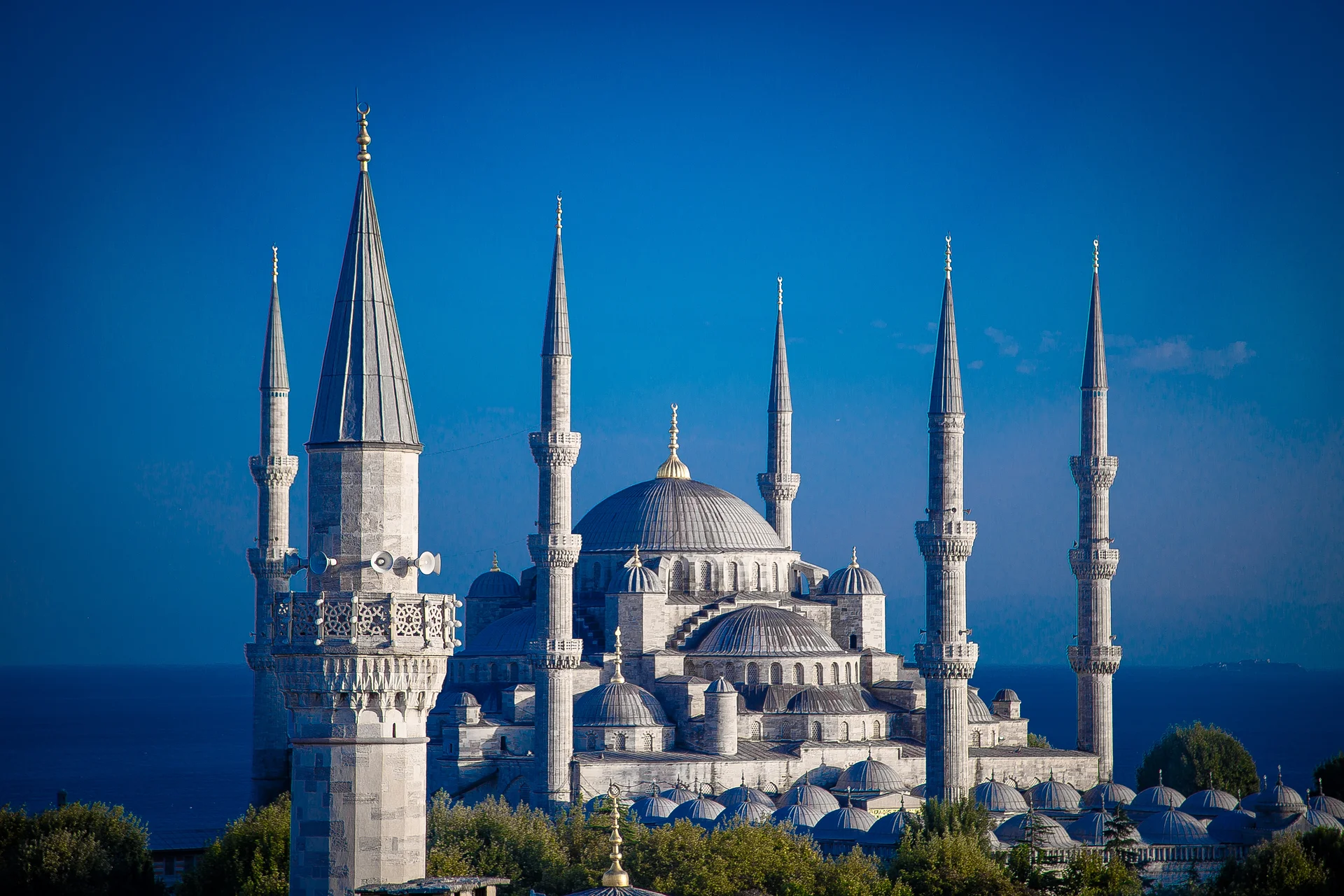
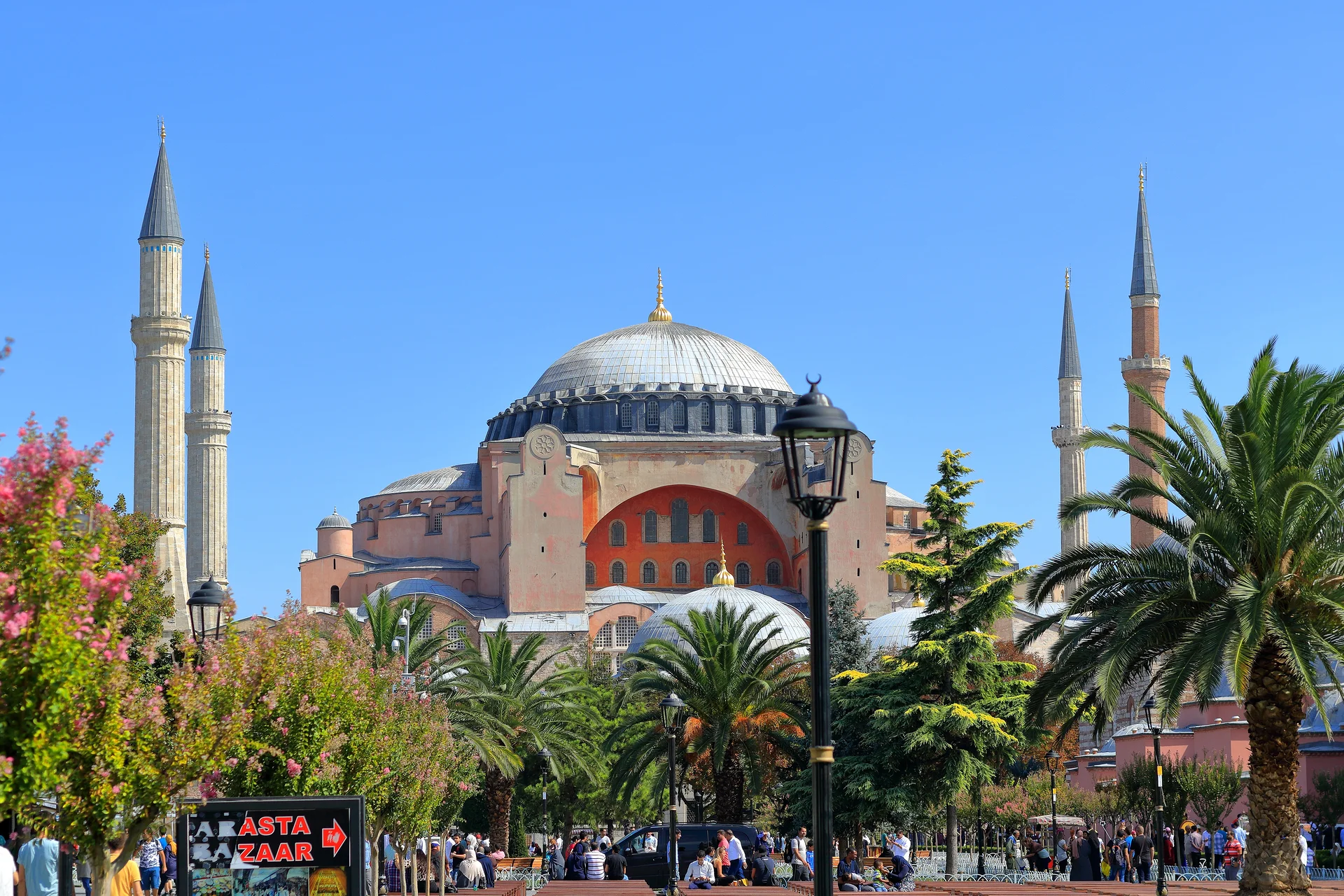
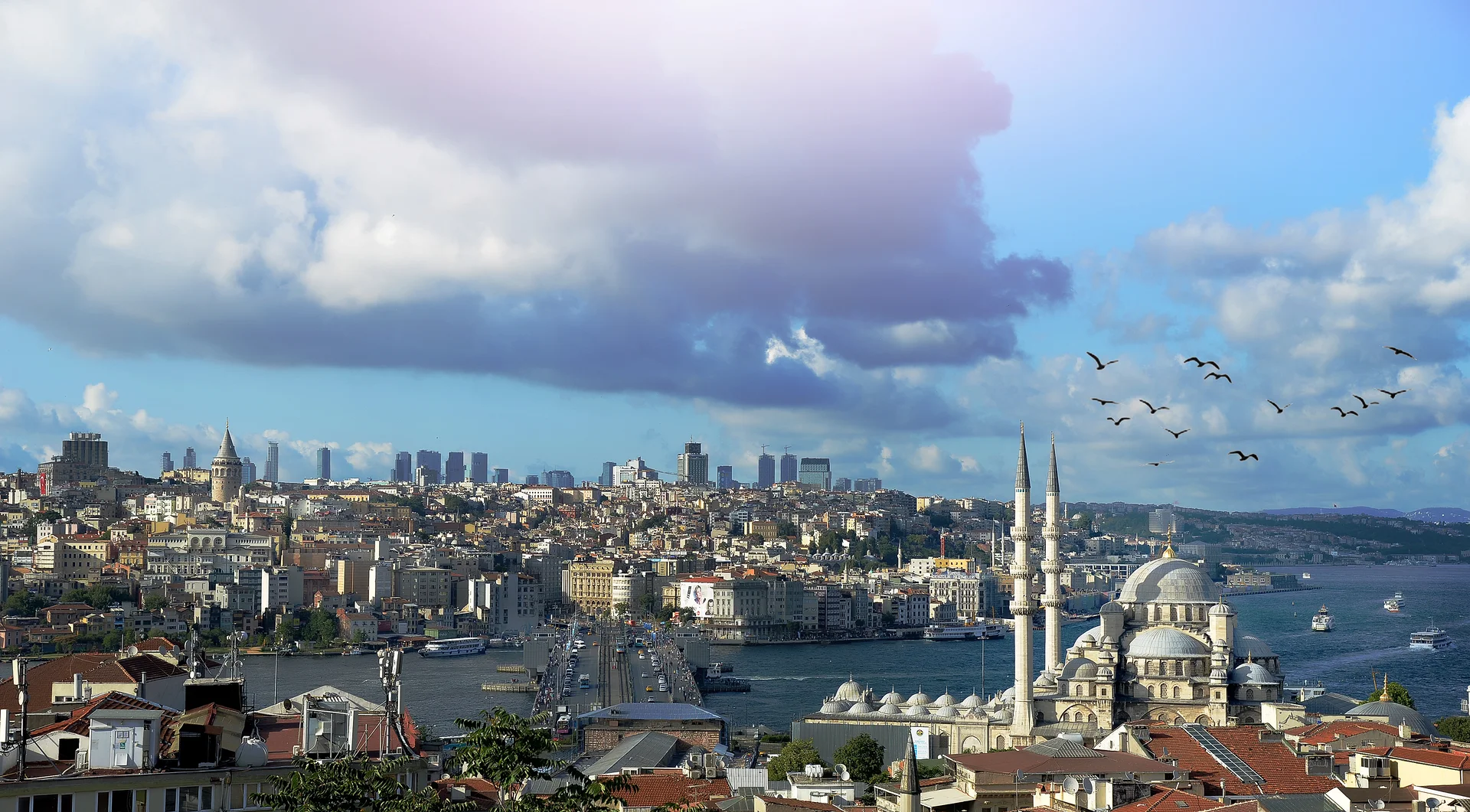
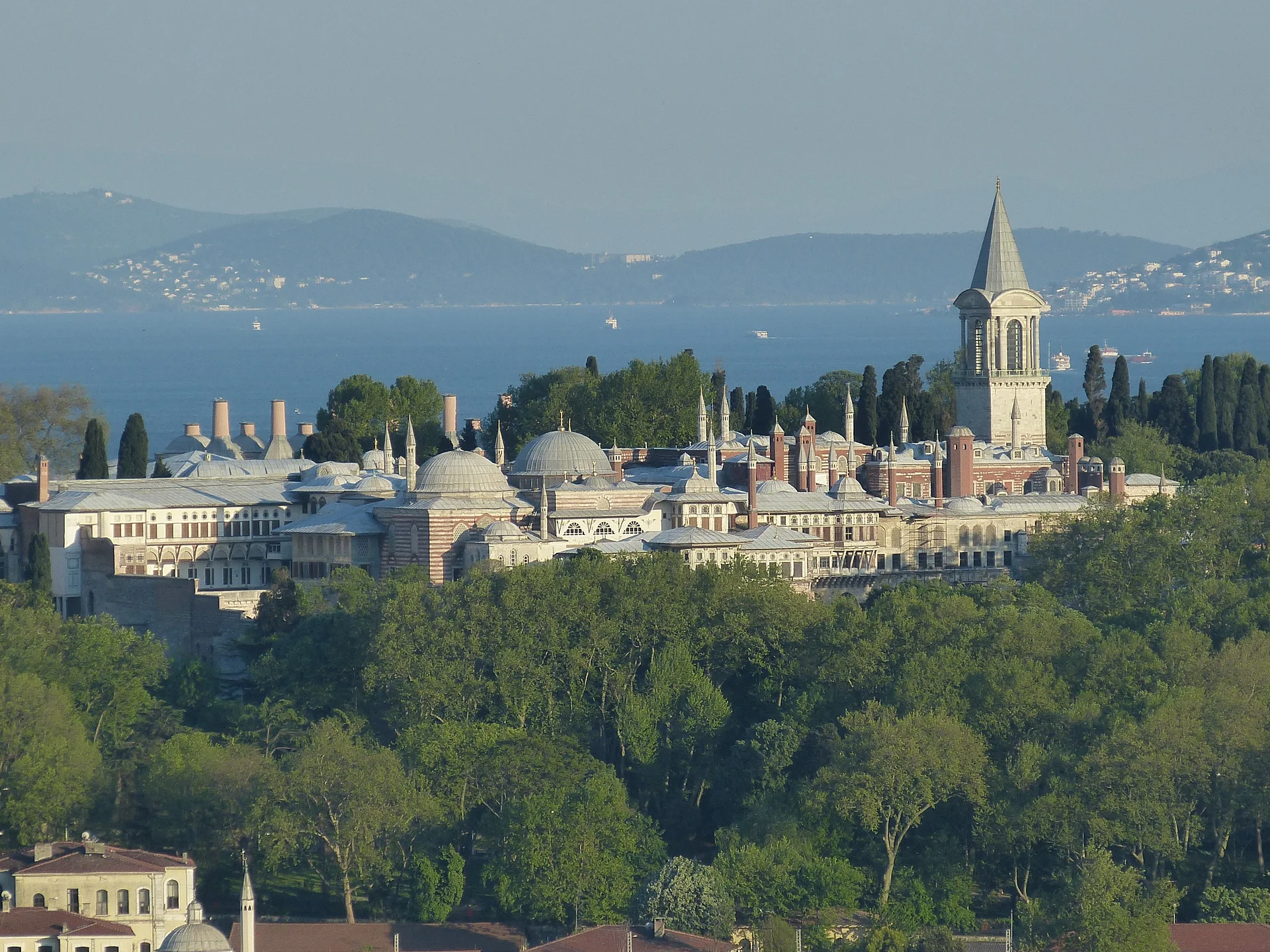
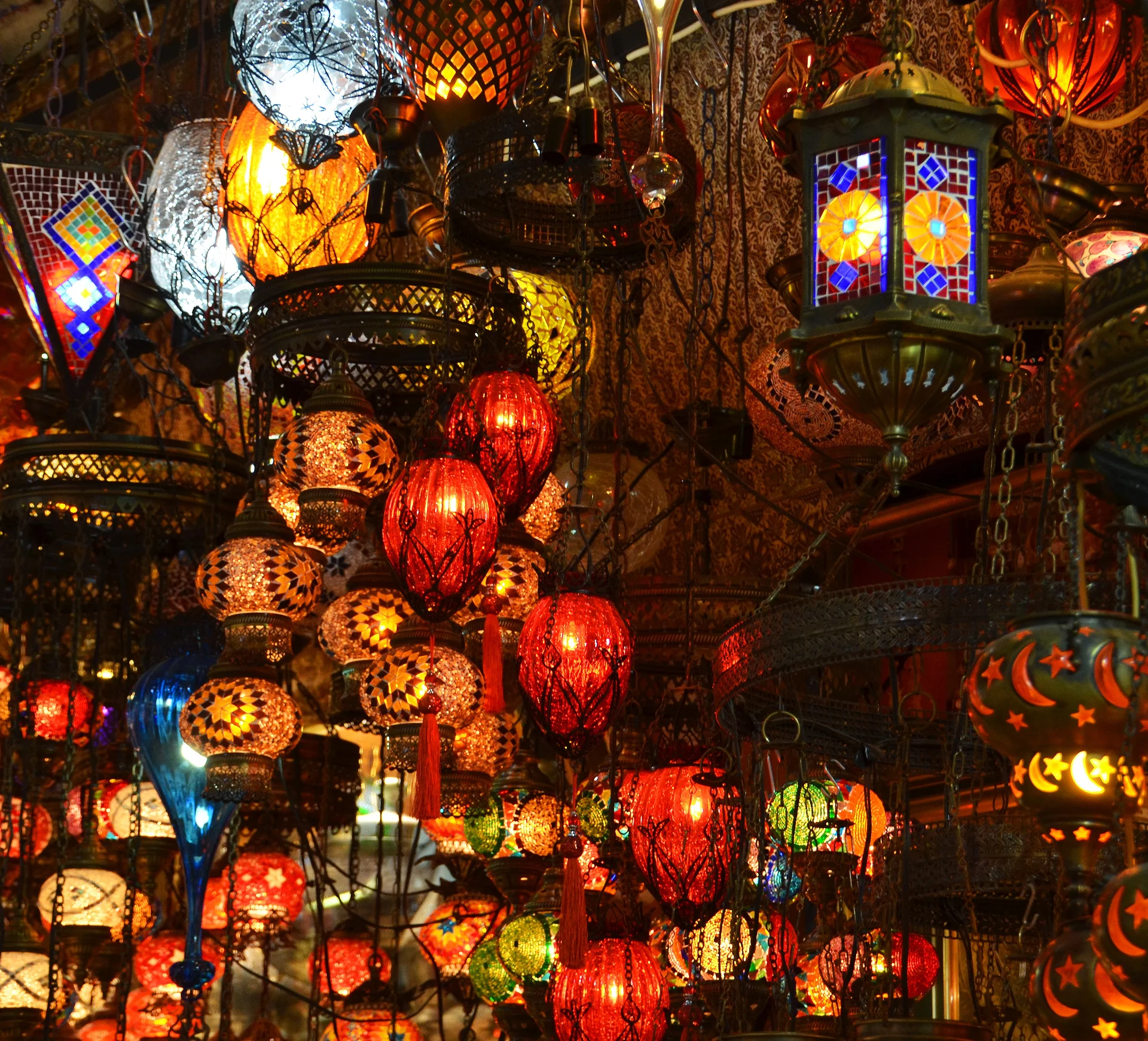
Istanbul runs on two clocks: the call to prayer, which closes the Blue Mosque to visitors five times a day, and the ferry, which changes continents in twenty minutes for about $1.20. A couple who know both see Hagia Sophia, Topkapi Palace and the Grand Bazaar without the line, dine facing the Golden Horn and cross the Bosphorus for breakfast on the Asian side. What needs sorting out before you leave: a Turkish lira that keeps losing value, tickets for Hagia Sophia and Topkapi, a booked hammam, and the scams of Sultanahmet, which start the moment you step off the tram.
At a glance
- When to go
- April, May, September and October: 59 to 81 °F (15 to 27 °C), long days, tulips in the parks in April. July and August reach 88 °F (31 °C) and more, and feel humid; November to March is cool, gray and almost free of lines.
- How many days
- Three full days for the Old City, Galata, Balat and the Bosphorus; a fourth adds Kadıköy on the Asian side, or the Princes' Islands. With two days, half the neighborhoods drop out.
- Which neighborhood
- Sultanahmet for the monuments on foot, Karaköy and Galata for romance and rooftop terraces, Beyoğlu for the evenings, Beşiktaş for the Bosphorus, Balat and Kadıköy for quiet and lower prices.
- Budget for two
- About $1,120 for three nights in comfort, hotel, meals, sights and transport included, flights excluded: the hotel is over half of it, and a ferry across the Bosphorus costs about $1.20.
- The moment for two
- Sunset from a Galata rooftop, the domes of Hagia Sophia and the minarets of the Blue Mosque lit up across the Golden Horn, then a dinner of meze in Karaköy.
- Book ahead
- Hagia Sophia and Topkapi (the Harem separately) a week ahead, a hammam three to seven days ahead, the Bosphorus cruise the day before. The Grand Bazaar needs nothing, but it closes on Sundays.
Why Istanbul for two
Istanbul spreads across two continents, and a ferry for about $1.20 takes you from one to the other: it is the most romantic ride in the city, with tea on board, gulls in the wake, and the domes of Hagia Sophia and the Blue Mosque sliding away behind you. The city comes in three settings: the imperial Old City of Sultanahmet, with its bazaars and mosques; the hills of Galata and Beyoğlu, with terraces over the Golden Horn; and the Bosphorus, with its palaces and waterside villages.
Evening gives Istanbul its other face: a Karaköy terrace at sunset, a dinner of meze and fish in a meyhane (the Turkish tavern), a glass of rakı in Beyoğlu, then a sixteenth-century hammam the next day. The price of it all: the big monuments are packed from 10 am to 4 pm, the hills make every evening a climb, and touts prowl the streets of Sultanahmet.
When to go
| Period | Weather | Crowds | Our take |
|---|---|---|---|
| April and May | Mild, 57 to 73 °F (14 to 23 °C), short showers | Heavy at Easter and in May | Our favorite: tulips in the parks in April, open terraces, days already long |
| June to August | Hot and humid, 79 to 88 °F (26 to 31 °C), spikes to 95 °F (35 °C) | Very heavy | Evenings on the water and cruises, but hour-long lines and heat from 2 to 6 pm |
| September and October | Warm then mild, 63 to 81 °F (17 to 27 °C) | Heavy in September | Still-warm sea, golden light on the Golden Horn, prices falling from mid-October |
| November to March | Cool and rainy, 39 to 54 °F (4 to 12 °C), rare snow | Light, except at Christmas | Monuments without lines and discounted hotels, but rain and dark by 5 pm |
Three things change a visit. Ramadan, whose dates move about eleven days earlier each year, does not close the monuments or the restaurants in tourist districts: the city comes alive at sunset, and the dinners that break the fast (iftar) need a reservation. The two big religious holidays (the end of Ramadan and the Feast of the Sacrifice) close banks and bazaars for several days and fill ferries, roads and hotels. October 29 (Republic Day) and April 23 are public holidays.
Paperwork: passport, visa and health
| Documents | Visa | Health | |
|---|---|---|---|
| United States | Passport valid for at least 150 days after you arrive | No visa for a tourist stay of up to 90 days, in most cases: check the rule for your dates | Travel insurance with medical cover: your US plan does not follow you, and private hospitals bill visitors in full |
| United Kingdom | Passport valid for at least 150 days after you arrive | No visa for a tourist stay of up to 90 days, in most cases: check the rule for your dates | Travel insurance with medical cover: the GHIC does not cover Turkey |
| Canada, Australia, New Zealand | Passport valid for at least 150 days after you arrive | Rule to confirm before you book, on the official site evisa.gov.tr | Travel insurance with medical cover: private hospitals bill visitors |
No middleman for a visa
When an electronic visa is required, you apply on the Turkish government's official site, evisa.gov.tr, in a few minutes, with the passport you will travel on and a bank card. Look-alike sites copy the page and add fees on top of the visa: apply only on the official site, and keep the result on your phone or printed.
How to get there
By air from the US and the UK
| From | Duration | Good to know |
|---|---|---|
| New York, Boston, Washington | 9h30 to 10h30 | Nonstops all year to Istanbul (IST), mostly with Turkish Airlines |
| Chicago, Atlanta, Miami, Houston | 11h to 12h30 | Nonstops all year to Istanbul (IST) |
| Los Angeles, San Francisco, Seattle | 12h to 13h30 | Nonstops to Istanbul (IST), an overnight flight that lands in the afternoon |
| London, Manchester, Edinburgh | ~4h | Nonstops several times a day to Istanbul (IST) and Sabiha Gökçen (SAW) |
Two airports serve the city: Istanbul (IST), the big international hub, on the European side, and Sabiha Gökçen (SAW), smaller and on the Asian side, where most budget airlines land. Pick the one closer to your hotel: crossing from one side to the other can take two hours. The trip to your hotel is detailed below, under “From the airport to your hotel”.
By car
Practical things to know before you go
Phone
Turkey sits outside the EU roaming zone and outside most US plan bundles: depending on your carrier, a daily pass or a per-megabyte charge applies, and UK plans rarely include it. A travel eSIM for the week costs less. Wi-Fi is free in most cafés and hotels.
Money and tipping
- The currency is the Turkish lira (TRY), which has been losing value for years: a price in lira climbs fast, and tourist prices are often posted in euros. The amounts on this page are guides, converted for you.
- Contactless cards work almost everywhere, from restaurants to ferries; keep a little cash in lira for public toilets, a simit or a street vendor's tea. Take it out of a bank's ATM, inside the branch, not on the street. Bring a card with no foreign transaction fees.
- Many traders in the Grand Bazaar, in Sultanahmet and in tourist restaurants accept euros or dollars, but at a rate well below your bank's: pay in lira. If the card terminal offers to charge you in euros or dollars, choose lira.
- In restaurants, tipping is lighter than in the US: leave about 10% if service is not included, in cash on the table. Round up a taxi fare; at a hammam, tip the attendants 10 to 15%.
- Prices are negotiable in the bazaars, never in restaurants or in shops with posted prices.
Plugs, water and what to wear
- Type C and F outlets, at 230 volts, as in continental Europe: you need an adapter. Phone and laptop chargers accept 230 volts, but most US hair dryers and curling irons do not, and they can burn out: leave them home.
- Tap water is not safe to drink: buy bottled water, under $1.20 for 1.5 liters (about 50 oz).
- In a mosque, knees and shoulders covered for everyone, hair covered for women (a scarf is lent at the entrance), shoes off. Elsewhere dress is free, and Beyoğlu, Karaköy and Kadıköy dress as in Europe or the US.
- The streets are cobbled and steep: walking shoes beat sandals, even in summer.
What to book, and how far ahead
Istanbul needs almost nothing booked, except five things: tickets for Hagia Sophia and Topkapi, the hammam, the sunset cruise and dinners with a view. Lock those in first, then place the rest of the program around them.
| Site | Price per person | Book | Good to know |
|---|---|---|---|
| Hagia Sophia | ~$28 | 1 to 2 weeks ahead | Online ticket for foreign visitors, separate entrance; the visit follows the gallery, the ground floor stays for prayer |
| Topkapi Palace | ~$34 | 1 week ahead | Closed Tuesdays; the Harem costs extra (~$17), buy it with the palace ticket |
| Basilica Cistern | ~$28 | The day before | The line passes 45 min. around 11 am: arrive at opening or after 4 pm |
| Galata Tower | ~$34 | 3 to 5 days ahead | The 5 to 7 pm slots go first in season |
| Historic hammam | $68 to $135 | 3 to 7 days ahead | Çemberlitaş, Cağaloğlu or Süleymaniye: you choose the treatment when you book |
| Bosphorus cruise | $12 to $56 | The day before | Public boat by day for ~$12, a sunset cruise with a drink costs more |
| Dinner with a view | $56 to $135 for two | 1 week ahead | Terrace tables at sunset go first |
| Grand Bazaar | Free | Nothing to book | Closed on Sundays and public holidays |
From the airport to your hotel
© OpenStreetMap contributors
The two airports and the neighborhoods they serve
- Istanbul (IST)
- Sabiha Gökçen (SAW)
- 1Sultanahmet
- 2Karaköy, Galata
- 3Taksim, İstiklal
- 4Beşiktaş, Ortaköy
- 5Balat, Fener
- 6Kadıköy
| Destination | Transport | Duration | Indicative fare |
|---|---|---|---|
| Sultanahmet | Taxi | ~1h | $40 to $56 / taxi |
| Sultanahmet | Metro M11 and M2, then a walk | ~1h30 | $2.30 / pers. |
| Karaköy, Galata | Metro M11 and M2 | ~1h15 | $2.30 / pers. |
| Taksim, İstiklal | Havaist shuttle | ~1h15 | $9 / pers. |
| Taksim, İstiklal | Metro M11 and M2 | ~1h10 | $2.30 / pers. |
| Beşiktaş, Ortaköy | Taxi | ~50 min. | $40 to $56 / taxi |
| Balat, Fener | Taxi | ~1h | $40 to $56 / taxi |
| Kadıköy | Havaist shuttle | 1h30 to 2h | $9 / pers. |
| Destination | Transport | Duration | Indicative fare |
|---|---|---|---|
| Kadıköy | Metro M4 | ~1h | $2.30 / pers. |
| Kadıköy | Havabus shuttle | ~1h15 | $5.60 / pers. |
| Taksim, İstiklal | Havabus shuttle | ~1h30 | $5.60 / pers. |
| Sultanahmet | Taxi | 1h15 to 2h | $51 to $68 / taxi |
| Beşiktaş, Ortaköy | Taxi | 1h15 to 2h | $51 to $68 / taxi |
Istanbul (IST), about 28 miles (45 km) from the center, is easiest by metro: the M11 line reaches Gayrettepe in half an hour, then the M2 serves Taksim, Şişhane (at the top of Galata, a ten-minute walk down to Karaköy) and Vezneciler, a twenty-minute walk from Sultanahmet. The Havaist shuttle (a comfortable coach, an hour and a quarter) runs to Taksim and Kadıköy. A taxi takes an hour, a good deal more at rush hour.
For a taxi, two habits: go to the official rank in arrivals and insist on the meter (taksimetre), or order with a taxi app that shows the price before the ride. A driver who approaches you in the hall with a “fixed price for the whole city” almost always asks for double.
Sabiha Gökçen (SAW), about 31 miles (50 km) away on the Asian side, is reached by M4 metro, direct to Kadıköy, or by Havabus shuttle to Kadıköy and Taksim. To Sultanahmet a taxi saves two changes, but the bridges jam at rush hour. From Kadıköy a twenty-minute ferry reaches Eminönü, next to Sultanahmet.
Sirkeci station, next to the Galata Bridge, is a stop on Marmaray, the commuter line that runs under the Bosphorus to Halkalı in the west and Gebze in the east: handy for changing sides, not a place to arrive.
Getting around
Istanbulkart, tram, metro and ferry
| Ticket | Price | Validity |
|---|---|---|
| Istanbulkart | ~$2.30 for the card, ~$0.79 a ride | Sold at machines in stations; valid on tram, metro, bus, ferry and Marmaray; one card can serve two travelers, tapped twice |
| Public ferry | ~$1.20 a crossing | Eminönü, Karaköy, Kabataş, Beşiktaş, Üsküdar, Kadıköy; a departure every 15 to 20 min. by day |
| T1 tram | ~$0.79 | From Kabataş to Karaköy, Eminönü, Sultanahmet and the Grand Bazaar; packed from 10 am to 7 pm |
| Taxi | $4.50 to $9 for 2 miles | On the meter only; a night fare costs a little more |
The T1 tram covers the Old City: it runs every two or three minutes from Kabataş to Karaköy, Eminönü, Sultanahmet and the Grand Bazaar. The F1 funicular climbs from Kabataş to Taksim. On İstiklal, the nostalgic tram covers less than a mile, from Taksim to Tünel: it is scenery, not transport. Between Sultanahmet and Karaköy, the tram takes five minutes, a walk twenty-five.
The ferries
The ferry is the best ride in the city: from Eminönü, Karaköy or Beşiktaş to Kadıköy or Üsküdar, twenty minutes for about $1.20, open deck, tea on board, gulls snatching the simit people toss them. Departures thin out in the evening: check the time of your return before you set off.
Budget for two
Istanbul is still affordable for eating and getting around, but the hotel and the monument tickets weigh more than people expect. On the spot, prices are posted in lira, which keeps losing value: a lira amount written here would be wrong in six months, so these euro figures are guides, converted for you. Here is what three nights cost for two, flights excluded.
| Savvy | Comfort | Splurge | |
|---|---|---|---|
| Hotel, per night | $68 to $112 | $168 to $280 | from $450 |
| Meals, per day for two | $40 | $79 | $168 |
| Sights for the stay | $90 | $230 | $450 with a hammam and a cruise |
| Transport for the stay | $17 | $34 | $112 with taxis |
A room can cost twice as much in June as in February; Easter, the religious holidays and late December are priced as peak season.
Benchmark prices
| Item | Price |
|---|---|
| Turkish tea in a café | $0.56 to $1.20 |
| Turkish coffee in a central café | $2.30 to $4.50 |
| A simit on the corner | $0.56 |
| Fish sandwich in Eminönü | $4.50 to $7.90 |
| Kebab or pide in a neighborhood restaurant | $9 to $16 |
| Dinner of meze and fish in a meyhane, for two | $68 to $135 |
| Draft beer in a central bar | $4.50 to $7.90 |
| Cocktail on a rooftop terrace | $14 to $21 |
| Baklava, a portion | $3.40 to $6.80 |
What to taste
A couple eats in Istanbul in three acts: a breakfast with a full table (kahvaltı), a standing lunch by the water, a dinner of meze in a meyhane or of fish on the Bosphorus.
At the table
-
Turkish breakfast
Cheeses, olives, tomatoes, eggs, honey and kaymak (thick cream), all the bread you want and tea in a pot: $9 to $23 for two, in Karaköy, Cihangir or Kadıköy, served until 1 pm on weekends.
-
Meze and meyhane
Cold meze (eggplant, white cheese, octopus), then grilled fish, with rakı: the taverns behind Nevizade Sokak, in Beyoğlu, and those of Kadıköy are liveliest at night, $34 to $68 per person.
-
Balık ekmek
A grilled mackerel fillet in half a baguette, with onion and salad, sold on the quays at Eminönü for ~$5.60: eat it standing, facing the water.
-
Pide, lahmacun, İskender
Pide (a long filled flatbread), lahmacun (a thin flatbread with minced meat, rolled up) and İskender (sliced meat on bread, melted butter and yogurt): $6.80 to $16 in a neighborhood lokanta.
-
Lentil soup
Mercimek çorbası, at lunch or breakfast in any lokanta: a bowl for ~$2.30, with lemon and bread.
-
Baklava and lokum
Baklava with pistachio and lokum (Turkish delight) are best bought in a specialist shop: Karaköy Güllüoğlu for baklava, Hacı Bekir in Eminönü, open since 1777, for lokum.
In the glass
-
Tea
Çay, black tea served in a small tulip-shaped glass, ~$0.56: what Istanbul drinks from dawn to dusk.
-
Turkish coffee
Served in a small cup, with the grounds: order it sade (no sugar), orta (medium) or şekerli (sweet), ~$3.40.
-
Rakı
An anise spirit watered down until it turns cloudy: the aperitif of the meyhane, ~$6.80 a glass.
-
Turkish wine
Wines from Thrace and Anatolia (öküzgözü, kalecik karası), $28 to $56 a bottle in a restaurant.
-
Beer
Efes, the national beer, $4.50 to $7.90 on draft in a central bar.
-
Ayran and boza
Ayran, yogurt thinned with water and salt, goes with a kebab; in winter, boza, a fermented millet drink, is sold in the streets of the center.
Customs and rules to know
Hospitality counts for more than punctuality: a cup of tea offered is rarely refused, and a few words of Turkish (merhaba, teşekkürler) open more doors than a smile.
- Mosques: knees and shoulders covered for everyone, hair covered for women (a scarf is lent at the entrance), shoes off and carried in the bag provided, voices low. Couples do not kiss inside.
- Five calls to prayer set the rhythm of the day, the first before dawn and the last after sunset. Hagia Sophia and the Blue Mosque stop visits during the service (~30 to 45 min.), and longer on Friday at noon: check the day's times.
- Holding hands is normal in Beyoğlu, Karaköy, Beşiktaş and Kadıköy; in devout districts (Fatih, Eyüp, Üsküdar), stay discreet, since a kiss in public draws stares.
- During Ramadan, avoid drinking, eating or smoking while walking in devout streets before sunset; tourist restaurants serve as usual.
- In the Grand Bazaar, you haggle: offer half the first price, accept a tea, walk away if the price doesn't drop. Elsewhere, prices are fixed.
- Street cats and dogs are fed and looked after by locals: don't shoo them away.
Safety
Istanbul is safe for a couple, including in the evening in the neighborhoods where you will sleep. The risk comes from scams and pickpockets in the busiest tourist districts, far more than from violent crime.
- The shoe-shiner who drops his brush in front of you: if you pick it up, he thanks you, cleans your shoes without being asked, then demands $23 to $56. Pick nothing up, or ask the price first, and walk on.
- Taxis that refuse the meter or quote a “flat fare” outside a monument: insist on the meter before you get in, check that it runs, or order with a taxi app.
- In the evening, around Taksim, on İstiklal and in Kadıköy, a friendly stranger invites you to a bar “for a drink”: the bill runs to several hundred euros for two drinks, and men at the door make you pay it. Pick the bar yourselves, ask for the menu with prices, and never leave a drink unattended.
- The fake guides of Sultanahmet: “I'm a student, I'll show you the city,” “Hagia Sophia is closed, come have tea”: the path ends in a carpet shop. A firm “no, thank you” and keep walking.
- Carpet sellers, in the Grand Bazaar and around Sultanahmet: a tea offered commits you to nothing, but pay nothing in the first hour or under pressure, and refuse shipping abroad without an invoice.
- Pickpockets work the T1 tram, the Galata Bridge, Eminönü and İstiklal at crowded times: wallet and phone in an inside pocket, bag zipped and in front of you.
- In a restaurant that posts no prices, ask for the menu before ordering, and check the bill (cover charge, bread, service) before paying.
Mistakes couples make
Istanbul disappoints mostly through its opening hours and its hills: a monument closed on the day you picked, too many neighborhoods crammed together, a dinner in a tourist street. The rest can be fixed.
- Planning the Grand Bazaar on a Sunday: it is closed, as on public holidays; the Spice Bazaar, by contrast, opens every day.
- Putting Topkapi on a Tuesday, the Blue Mosque on a Friday morning or Dolmabahçe on a Monday or Thursday: they are closed to visitors.
- Paying in euros or dollars in the Grand Bazaar or a Sultanahmet restaurant: the trader's rate is poor. Pay in lira, by card.
- Dining at a Sultanahmet restaurant where a waiter calls out to you in the street: the good tables are in Karaköy, Galata, Beyoğlu and Kadıköy, and prices there are lower.
- Choosing a “Bosphorus view” hotel in Sultanahmet: the water you can see from there is the Sea of Marmara; the Bosphorus shows from Galata, Karaköy, Beyoğlu and Beşiktaş.
- Crossing the Bosphorus by taxi: the ferry costs $1.20, a taxi $17, and the bridge jams at rush hour.
Frequently asked questions
Is Istanbul a good destination for a romantic trip?
Yes, for three concrete reasons: terraces over the Golden Horn at sunset, a ferry for about $1.20 that changes continents, and evenings of meze and fish. The cautions are the Sultanahmet scams, the crowds from 10 am to 4 pm at the big monuments, and the hills: pick one side of the water per day.
How many days do you need in Istanbul as a couple?
Three full days give the right pace: Sultanahmet and Galata, then the bazaars and the Bosphorus cruise, then Balat, Karaköy and Beyoğlu with a hammam. A fourth day adds Kadıköy on the Asian side, or the Princes' Islands; two days force you to drop half the neighborhoods.
Do Americans and Britons need a visa for Istanbul?
In most cases, no: US and UK citizens can stay up to 90 days as tourists without a visa, with a passport valid for at least 150 days after arrival. The rule depends on your passport and changes: check it for your dates, and apply for an electronic visa only on the official site, evisa.gov.tr.
Can you pay in euros or dollars in Istanbul?
Many tourist traders accept euros and dollars, but at the seller's rate, well below your bank's. Pay in lira, by contactless card almost everywhere, and keep a little cash in lira; if the terminal offers to charge you in euros or dollars, decline.
Are Istanbul taxis safe?
Yes, with one habit: insist on the meter before you get in, or order with a taxi app that shows the price. Drivers who refuse the meter or quote a flat fare outside a monument often ask for double.
What should you wear to visit the mosques?
Knees and shoulders covered for everyone, a scarf over the hair for women (it is lent at the entrance), and shoes that come off easily. Visits stop during the five daily prayers and for longer on Friday at noon: check the day's times.