Seville for Couples: What to Know Before You Go (2026)
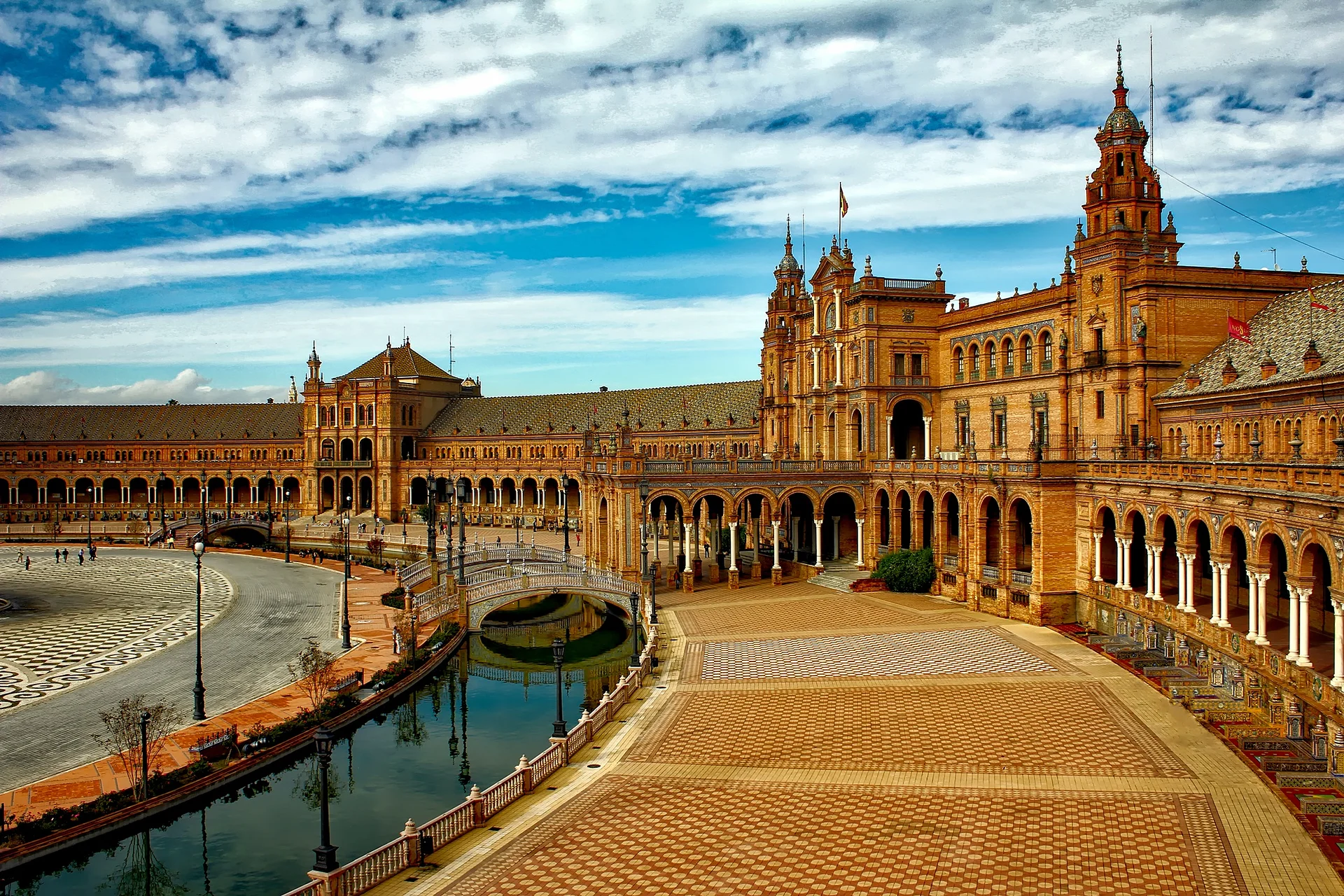
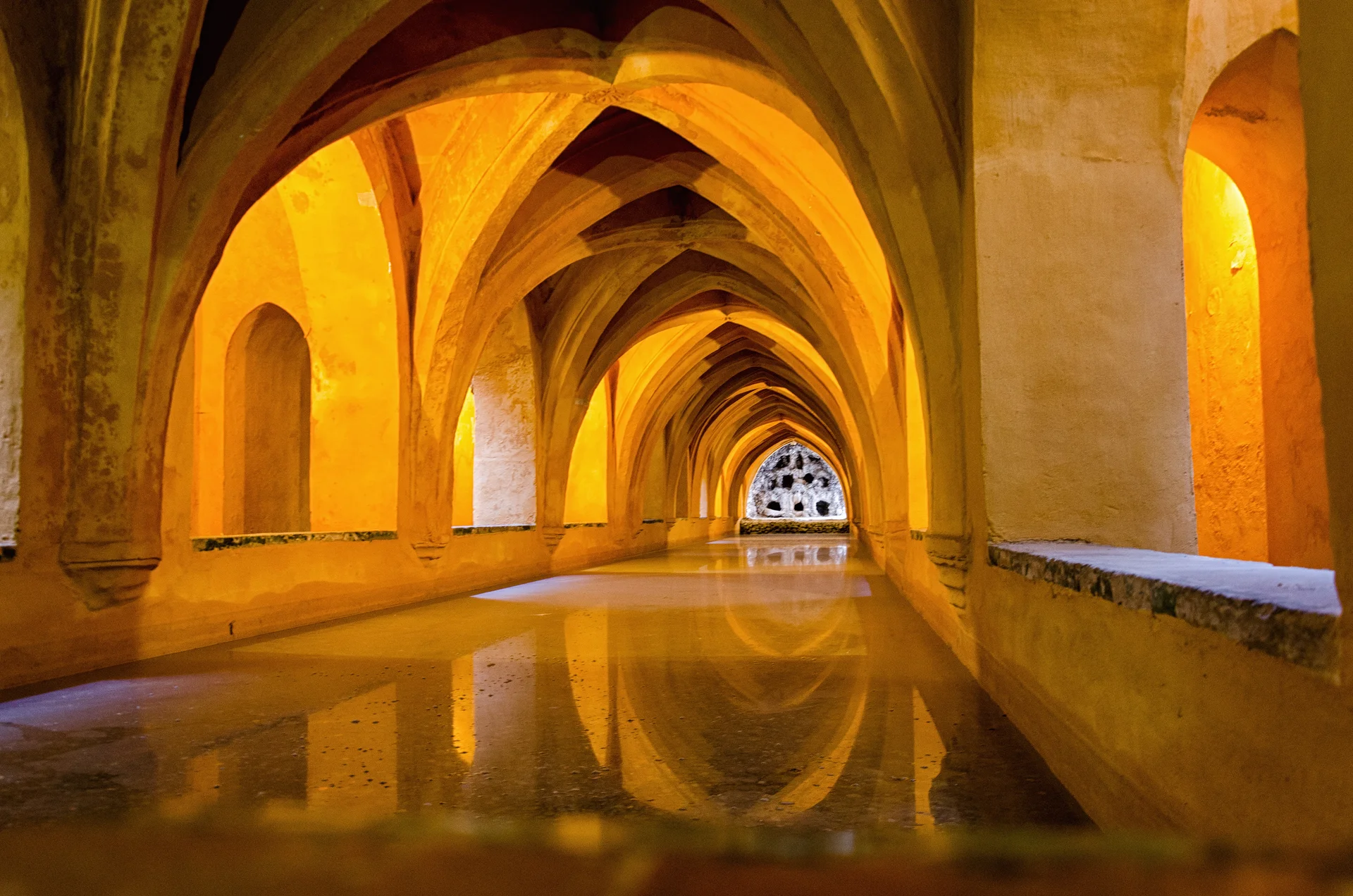
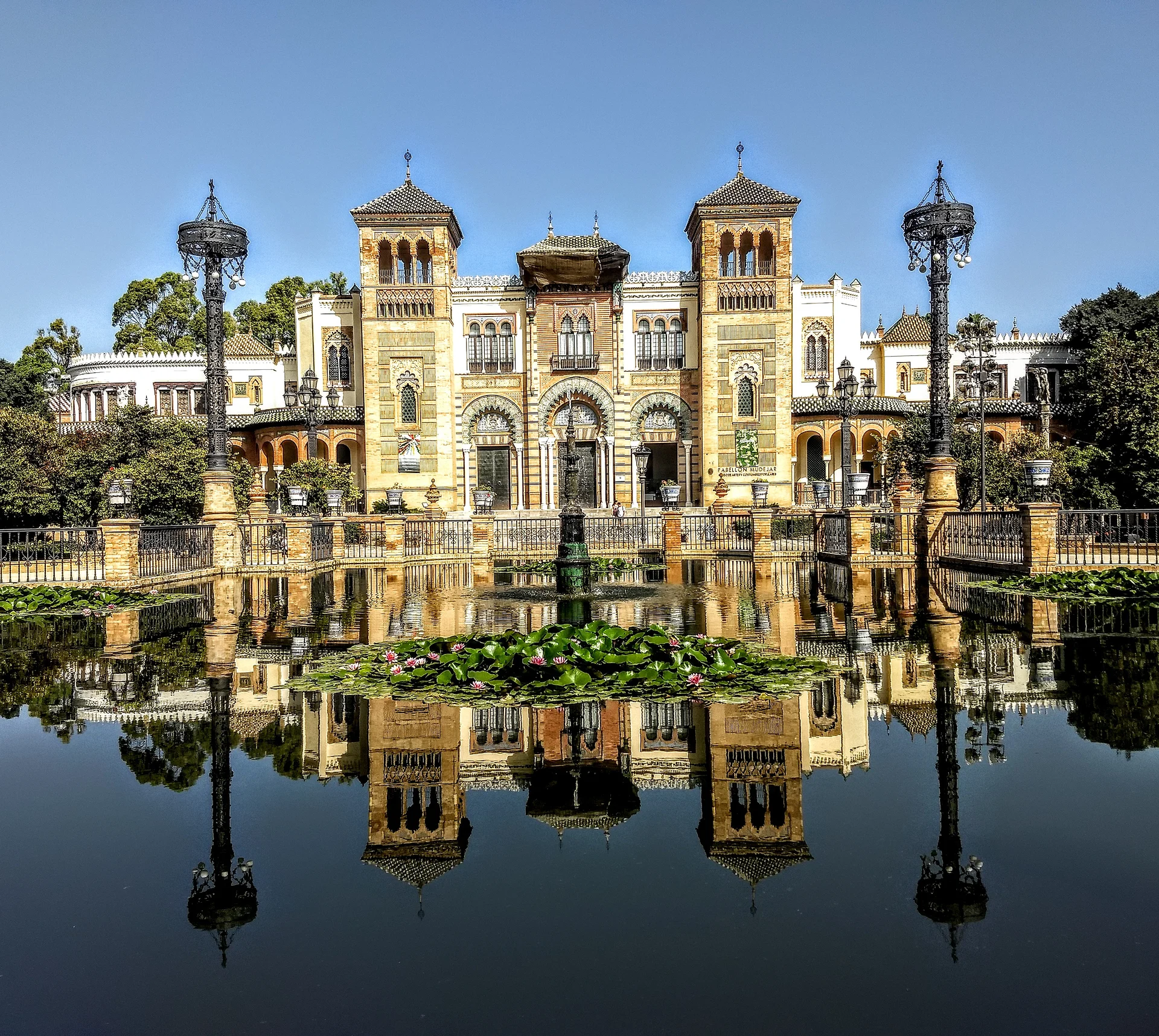
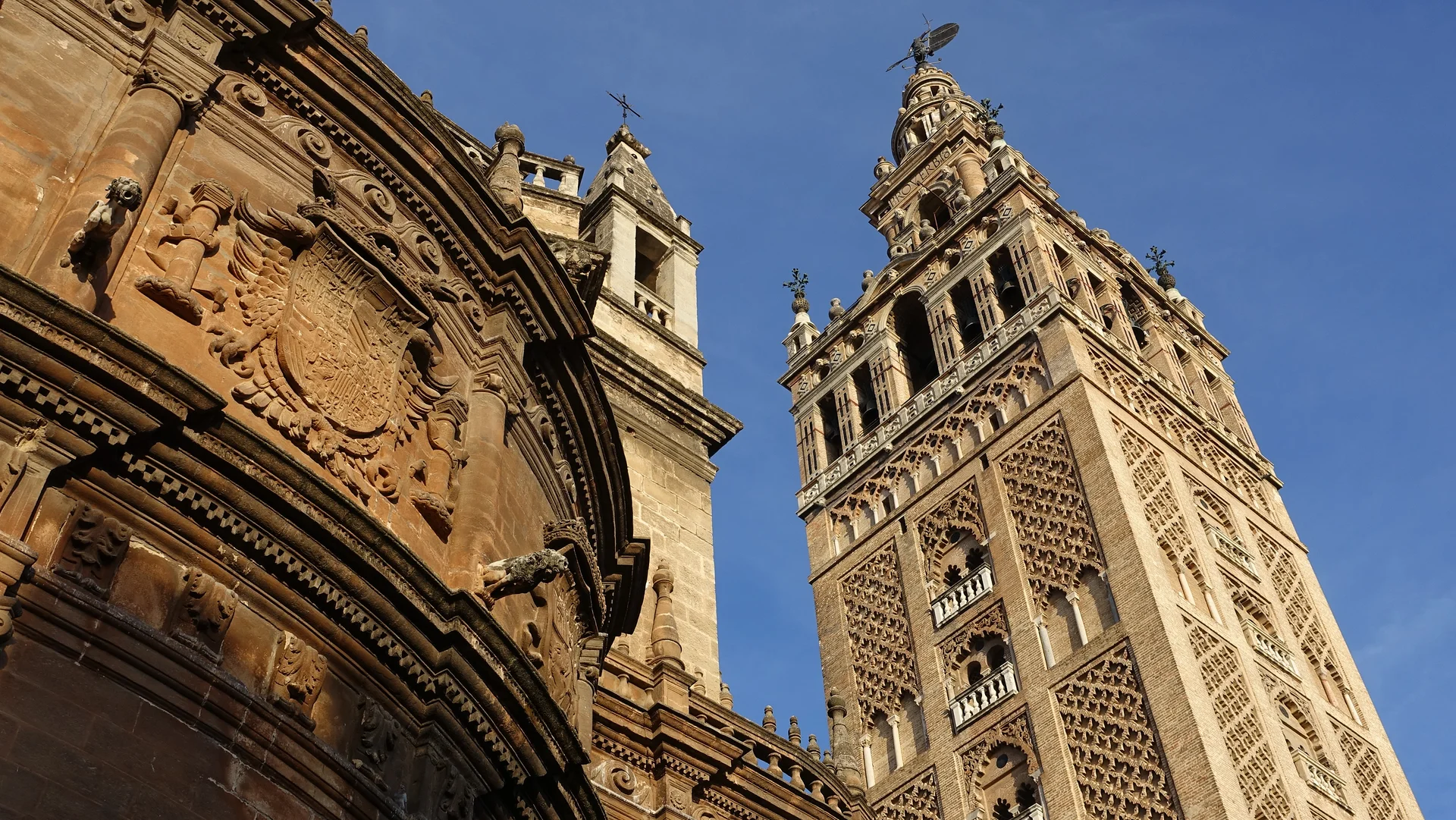
Seville is visited back to front: from June to September the days belong to the shade of a patio, a Santa Cruz lane or an air-conditioned room, and the city only wakes up at 9 pm, when the Giralda lights up and the terraces of Triana fill. Only the Alcázar and the cathedral have to be booked weeks ahead, on timed tickets; the rest, the orange trees, the flamenco of a tablao or a peña, tapas eaten standing until midnight, turns up around the next corner, for a few euros.
At a glance
- When to go
- March to May and October to November: 68 to 82 °F (20 to 28 °C), orange blossom in spring. June to September brings 95 to 108 °F (35 to 42 °C): the city lives at night.
- How many days
- Three full days for the Alcázar, the cathedral, Santa Cruz, Triana and a night of flamenco; four to add Italica, or Córdoba, 45 minutes away by high-speed train.
- Which neighborhood
- Santa Cruz for a first visit, Triana for the river at sunset, the Alameda for nightlife and softer prices, the Murillo Gardens for quiet.
- Budget for two
- About $1,120 for three nights in comfort, hotel, meals, sights and transport included, flights excluded: tapas at $3.40 to $5.10 keep the bill down.
- The moment for two
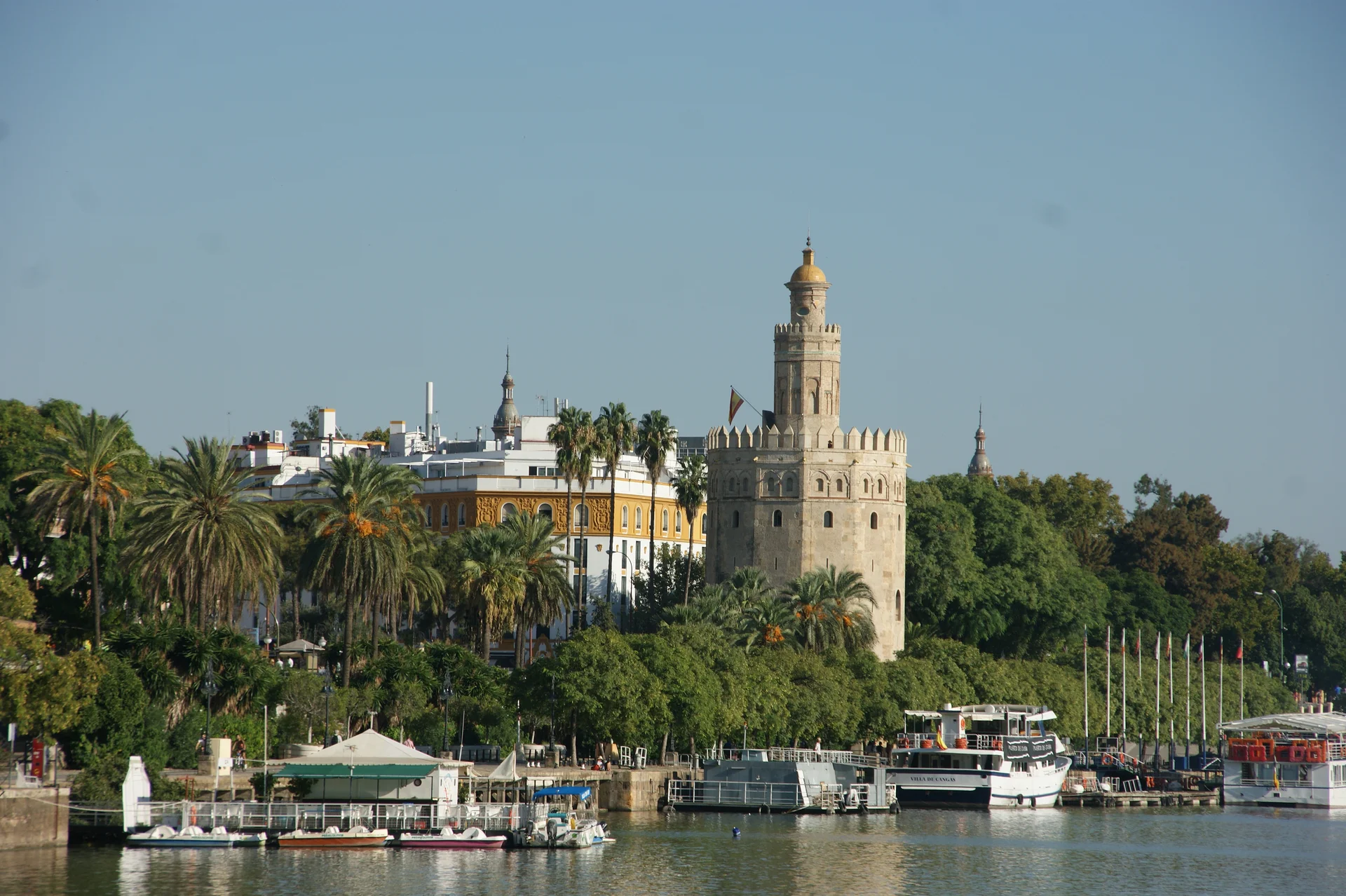
- The Torre del Oro turning gold at sunset, seen from Calle Betis, then tapas eaten standing in a lane that smells of orange blossom, until midnight.
- Book ahead
- The Alcázar and the cathedral: timed tickets, 2 to 4 weeks ahead in April, May and October; flamenco, 2 to 3 days ahead; your hotel, 3 to 4 months ahead for Holy Week.
Why Seville for two
Seville is a city of patios and orange trees: behind every carriage door in Santa Cruz, a courtyard of azulejos, a fountain and a lemon tree where you sit down at 3 pm, when the street is baking. The Royal Alcázar and its gardens, the cathedral and its Giralda, the Plaza de España curving around its canal all fit in a center you cover on foot, with no metro and no car, and the orange trees lining the streets, in bloom in March and April, perfume the evenings.
Then comes the night. You eat dinner at 9:30 pm, standing at the bar of a place several centuries old, you hear a guitarist and a singer from six feet away in a forty-seat room, and you cross Triana Bridge for a last drink facing the lit Torre del Oro. Summer sets the pace: it is 104 °F (40 °C) at 4 pm, and a couple who accept the siesta and the late evenings find a city made for two.
When to go
| Period | Weather | Crowds | Our take |
|---|---|---|---|
| March to May | Mild to warm, 68 to 82 °F (20 to 28 °C) | Heavy at Holy Week and the April Fair | Orange blossom, long days, full terraces: our season |
| June | Hot, 90 to 97 °F (32 to 36 °C) | Moderate | Long evenings, but the afternoon already calls for shade |
| July and August | 95 to 108 °F (35 to 42 °C), nights at 72 °F (22 °C) | Moderate, the city empties in August | One sight before 11 am, a siesta, the city from 9 pm: only if the heat does not bother you |
| September | Hot, 86 to 95 °F (30 to 35 °C) | Moderate | The evenings come back, with the Flamenco Biennial in even years |
| October and November | Mild, 64 to 81 °F (18 to 27 °C), showers possible | Moderate in October, light in November | Golden light, tables outside, cheaper hotels |
| December to February | Cool, 59 to 64 °F (15 to 18 °C) by day, 41 °F (5 °C) at night | Light | Clear skies, no line at the Alcázar, a jacket for the evenings |
Three moments change the city. Holy Week (Semana Santa), from Palm Sunday to Easter, fills the streets with processions: hooded nazarenos, pasos carried on shoulders, brass bands, and on the night from Thursday to Friday, the Madrugá, which lasts until morning. Hotels cost two to three times their price, book three to four months ahead, and crossing the center takes twice as long. The April Fair (Feria de Abril) lasts a week, one to two weeks after Easter, and moves to May when Easter is late: about a thousand casetas, decorated tents, on the fairground across the Guadalquivir, where people drink rebujito, the women in traje de flamenca. Most casetas are private, a few are open to all, and hotel prices triple here too.
Finally, from June to September the heat rules everything: you sightsee in the morning, retreat to the hotel from 2 to 6 pm, and go out again at night. That rhythm is worth planning before you book, in the choice of room (air conditioning, pool, patio) as much as in the dates.
Paperwork: passport, visa, health
| Documents | Visa | Health | |
|---|---|---|---|
| United States, Canada | Passport valid at least 3 months after you leave the Schengen area, issued within the last 10 years | None for stays up to 90 days | Travel insurance with medical cover; Medicare does not pay abroad |
| United Kingdom | Passport valid at least 3 months after you leave the Schengen area, issued within the last 10 years | None for stays up to 90 days in any 180 | Your free GHIC covers state healthcare; travel insurance for the rest |
| Ireland | Passport or passport card in date | None | Free EHIC for public healthcare |
Entering the Schengen area
On your first entry, border police record your fingerprints and a photo: leave yourself a margin at passport control in Madrid or Seville. Check before you leave whether the ETIAS travel authorization is required on your dates: it is requested online on the European Union's site, costs a few euros and lasts several years.
Getting there
By plane
| From | Flight time | Good to know |
|---|---|---|
| New York, Boston, Washington, Miami | 7h to 9h | No nonstop to Seville: fly nonstop to Madrid, then the 2h30 high-speed train, or connect via Lisbon |
| Toronto, Montreal | 8h to 10h | No nonstop to Seville either: Madrid, then train or a short flight |
| London | ~2h45 | Nonstops from several airports, several flights a day |
| Manchester, Dublin | ~3h | Nonstops, more frequent in spring and fall: check your dates |
| Paris, Frankfurt, Amsterdam | 2h30 to 3h15 | Nonstops year round, handy if you are already in Europe |
Flights land at San Pablo (SVQ), 6 miles (10 km) from the center. For couples coming from the US, the simplest route is a nonstop to Madrid and the AVE high-speed train, which reaches Seville in 2h30, with your hotel booked from the Santa Justa station. Book six to eight weeks ahead for April, May and October, when weekend couples fill the planes; the trip to your hotel is covered below, in "From the airport to your hotel".
By train
For a trip that links several cities, the AVE high-speed train connects Seville to Madrid, Barcelona, Málaga and Córdoba from Santa Justa station, a 25-minute walk from the center. Tickets go on sale two to three months ahead and cost less the earlier you buy.
| From | Time | Good to know |
|---|---|---|
| Madrid | 2h30 | High-speed trains all day from Atocha station |
| Barcelona | 5h30 | High-speed line via Madrid; flying is faster |
| Málaga | ~2h | High-speed train toward the Costa del Sol |
| Córdoba | ~45 min | Many departures a day, the Mezquita a 20-minute walk from the station |
| Cádiz | ~1h45 | Regional train, the Atlantic coast |
By car
Practical things to know before you go
Phone
US plans (T-Mobile, Verizon, AT&T) charge a daily fee in Spain or need an international pass; an eSIM bought before you leave costs less. British plans often charge roaming now, and some do not: check yours. Download your Alcázar and cathedral tickets before you arrive, because the signal weakens inside thick-walled patios.
Money and tipping
- Cards work almost everywhere; keep $34 to $45 in small bills for neighborhood bars that take cash only.
- Tipping is not expected, and 15 to 20 percent would be a lot: round up at the bar, leave 5 to 10 percent after a sit-down dinner.
- At the bar you pay at the end and you ask for the bill: the waiter adds it up in his head, sometimes in chalk on the counter.
- A tapa costs $3.40 to $5.10, a ración to share $12 to $18, a caña, the small draft beer, $2.30 to $3.40: the same dish costs more at a table or on a terrace than at the bar.
- Bread is charged at $1.20 to $2.30 whether you touch it or not: ask for "sin pan" when you order and the line disappears.
Plugs, water and what to wear
- Type C and F plugs at 230 volts: American plugs need an adapter, and so do British ones; check that your chargers accept 230 volts, most phone and laptop chargers do.
- Tap water is safe to drink; in summer count on two liters (a half gallon) per person per day, and a bottle for morning outings.
- A hat, sunscreen and flat shoes: the cobbles of Santa Cruz and the lanes of Triana wear out heels. In the cathedral shoulders and knees are covered; from December to February, bring a jacket for the evening.
What to book, and how far ahead
Seville needs little booking, but early: the Alcázar and the cathedral sell timed tickets that go weeks ahead in April, May and October, while the rest, patios, tapas, churches, can be done on arrival. Start by choosing your Alcázar day; everything else slots in around it.
| Site | Price / person | Book | Good to know |
|---|---|---|---|
| Royal Alcázar | $17 to $23 | 2 to 4 weeks ahead | 30-minute slots, first at 9:30 am before the heat; the royal apartments cost extra |
| Cathedral and Giralda | $15 to $18 | 1 to 2 weeks ahead | Timed ticket; the Giralda is climbed by ramps, no stairs; late opening on Sunday |
| Casa de Pilatos | ~$12 | The day before | No time slot; the patio is empty at opening, full by noon |
| Flamenco show | $28 to $51 | 2 to 3 days ahead | Forty-seat rooms sell out first on weekends |
| High-speed train (AVE) | 2 to 3 months ahead | Fares rise as the date approaches | |
| Well-known restaurants | 2 to 4 weeks ahead | Weekend tables go first; at the bar, nobody takes reservations | |
| Hotel | 3 to 4 months ahead for Holy Week and the April Fair | 6 to 8 weeks ahead for the rest of spring; two weeks is enough in November or January |
From the airport to your hotel
© OpenStreetMap contributors
The airport, the station and the areas they serve
- San Pablo (SVQ)
- 1Santa Justa
- 2Plaza de Armas
- 3Santa Cruz, Cathedral
- 4Triana
- 5Alameda, Macarena
| Destination | Transport | Time | Indicative fare |
|---|---|---|---|
| Santa Justa | EA bus | ~20 min | $6.80 / person |
| Santa Justa | Fixed-fare taxi | ~15 min | $28 to $34 / taxi |
| Plaza de Armas | EA bus, last stop | ~35 min | $6.80 / person |
| Santa Cruz, Cathedral | Fixed-fare taxi | 20 to 25 min | $28 to $34 / taxi |
| Santa Cruz, Cathedral | EA bus, then a 20-min walk | ~55 min | $6.80 / person |
| Triana | Fixed-fare taxi | 20 to 25 min | $28 to $34 / taxi |
| Triana | EA bus, then a 10-min walk | ~45 min | $6.80 / person |
| Alameda, Macarena | Fixed-fare taxi | 15 to 20 min | $28 to $34 / taxi |
The EA bus leaves from outside the terminal every 12 to 20 minutes, from about 4:30 am to 1 am: it stops at Santa Justa station, crosses the center and ends at Plaza de Armas, on the river, a ten-minute walk from Triana and twenty from the cathedral. The ticket costs $6.80.
Taxis charge a fixed fare from the airport, $28 to $34 for anywhere in the center, more at night, on weekends and during the April Fair; the fare is posted on the window, and a driver who quotes another price is one to avoid. From Santa Justa station, the center is a 25-minute walk or a ten-minute taxi ride for $9 to $14.
Getting around
On foot, in the shade
The center is flat and can be crossed in twenty minutes: cathedral to Alcázar, five minutes; to the Plaza de España, twenty; to Triana, over the bridge, twenty-five. From June to September the lane beats the avenue: walk on the shaded side, and know that shopping streets like Calle Sierpes are covered with stretched canvas, the toldos, which drop the temperature by several degrees.
Tram, bus and bike
Tram T1 links Plaza Nueva to San Bernardo in a quarter of an hour, with no overhead wires; Tussam buses crisscross the city for under $2.30 a ride, and the metro, which has a single line, mostly serves Santa Justa and the southern districts. The city is flat, the bike lanes are many, and the public bike scheme, Sevici, suits evening rides at 9 pm, when the temperature drops.
Taxi and horse carriage
A taxi is picked up at a rank or by phone; a ride in the center comes to $6.80 to $12.
Budget for two
Seville stays affordable for a destination this popular: food and transport cost little, and hotels vary from simple to triple between July and April. Three nights for two, flights excluded, break down like this.
| Smart | Comfort | Treat | |
|---|---|---|---|
| Hotel, per night | $90 to $135 | $168 to $260 | from $400 |
| Meals, per day for two | $51 | $101 | $230 |
| Sights for the stay | $68 | $112 | $280 with a guide and a private excursion |
| Transport for the stay | $23 | $40 | $112 by taxi |
| Total for three nights | $620 | $1,120 | $2,470 |
Hotels cost 30 to 50 percent less in July and August than in April, and Holy Week and the April Fair are priced like New Year's Eve. A tapas dinner eaten standing, six or seven dishes to share and two cañas, comes to $28 to $40.
Reference prices
| Item | Price |
|---|---|
| Café con leche at the bar | $1.70 to $2.30 |
| Caña, small draft beer | $2.30 to $3.40 |
| Tapa at the bar | $3.40 to $5.10 |
| Ración to share | $12 to $18 |
| Tinto de verano or glass of wine | $3.40 to $5.60 |
| Dinner for two with wine, in a good restaurant | $68 to $101 |
| Cocktail on a rooftop terrace | $12 to $16 |
| Flamenco show | $28 to $51 / person |
What to taste
Seville cooking is tasted in small portions: you stop at a bar, order two or three tapas and a caña, then move on to the next. Here is what turns up on every slate, and what you drink with it.
At the table
-
Salmorejo and gazpacho
Cold tomato soup: salmorejo, thick, topped with ham and hard-boiled egg, comes from Córdoba but is ordered everywhere; gazpacho is drunk from a glass in summer.
-
Espinacas con garbanzos
Spinach with chickpeas, cumin and garlic, a Lenten dish of Moorish origin, served as a tapa all year.
-
Pringá and montadito
Pringá, shredded pork and beef from the stew, fills a small warm roll, the montadito, for $2.80 to $4.
-
Solomillo al whisky
Pork tenderloin simmered in whisky and garlic: the city's meat tapa, on almost every slate.
-
Pescaíto frito
Fried fish, hake, anchovies, chocos (small cuttlefish), served in a paper cone, to eat with a manzanilla or a caña.
-
Jamón ibérico
Ibérico ham is sliced by hand, thinly, and sold by the ración; the bellota, from acorn-fed pigs, costs twice as much as the cebo.
-
Torrijas and convent sweets
Torrijas, honey French toast, arrive with Holy Week; convents sell their yemas, sweet egg yolks, all year through a turntable window.
-
Bitter oranges
The orange trees in the streets bear fruit too sour to eat: the city hall harvests it in January for marmalade, and the blossom perfumes the city in March and April.
In the glass
-
Caña
A small draft beer, about seven ounces, ice cold; Cruzcampo, brewed in Seville since 1904, is the city's beer, at $2.30 to $3.40.
-
Tinto de verano
Red wine lengthened with fizzy lemonade, over ice: the drink of summer terraces, at $3.40 to $4.50.
-
Fino and manzanilla
The dry wines of Jerez and Sanlúcar, served chilled, which go with olives, anchovies and fried fish.
-
Rebujito
Fino or manzanilla lengthened with lemon soda, mint and ice: the drink of the April Fair, also ordered in bars in spring.
-
Vermut
House vermouth, served with an ice cube, an orange slice and an olive: the Sunday lunchtime aperitif.
-
Tostada and café con leche
The breakfast of the bar: a milky coffee and a tostada with olive oil, grated tomato or manteca colorá, for $3.40 to $4.50.
Customs and rules to know
In Seville people talk without hurrying, and a few manners will be appreciated: a "buenas" when you walk into a bar, a "gracias" on the way out, and above all the time you give the waiter. Spanish, even hesitant, is always welcome; English is spoken in hotels and in the restaurants of the center.
- Lunch runs from 2 to 4 pm and dinner from 9 to 11 pm; at 7 pm many kitchens are still closed, and it is not the restaurant that is late.
- At the bar a tapa costs less than at a table, and you ask for the bill without waiting for it to arrive: "la cuenta, por favor".
- At a flamenco show you stay quiet during the song, you photograph without flash, you applaud at the end, and a discreet "olé" at the right moment is received with a smile.
- In the cathedral and in churches, shoulders and knees are covered, and you stay quiet during Mass; during Holy Week, you do not cross a procession, you wait for it to pass.
- Shops close from 2 to 5 pm in summer; on Monday most museums and Italica are closed, and the Alcázar opens almost every day, except a few holidays including Good Friday.
- Lively streets do not go quiet until after 1 am: pack earplugs for sleeping in a lane in summer.
Safety
You can walk Seville without worry, late into the night. A couple has three things to watch: crowds, small scams at monument entrances, and the heat.
- In the lanes of Santa Cruz, in the cathedral line and on the Plaza de España, pickpockets work in groups when the crowd tightens: wallet in the front pocket, bag closed in front of you.
- Near the cathedral, the Alcázar and the Plaza de España, women hold out a sprig of rosemary, take your hand to read your fortune, then ask for money: do not take the sprig, keep your hands in your pockets and keep walking.
- In monument lines, men offer a guided tour or an entrance with "no waiting": without a time slot on your ticket, you do not get in at the promised hour; walk on.
- From June to September the heat is the first danger: between 2 and 6 pm, stay indoors, drink two liters of water, cover your head, and push an outdoor visit back a day if the temperature passes 108 °F (42 °C).
- At the airport, take only the taxis at the rank, on the fixed fare: a driver who approaches you in the hall or quotes a higher flat rate is overcharging.
- The Alameda, late at night, draws a crowd and a few drunks, and María Luisa Park is closed and empty after dark: walk home on busy streets or take a taxi.
Mistakes to avoid as a couple
In Seville, people get the hour wrong more often than the address: the Alcázar at 2 pm in July, dinner at 7 pm, a whole day with no shade.
- Visiting the Alcázar or the cathedral between noon and 5 pm from June to September: the line is in the sun, the gardens are a hot plate. First slot, or late afternoon.
- Showing up at the cathedral without a ticket on a Saturday in April or October: the day's slots are full. Book before you leave.
- Having dinner at 7 pm: the room is empty, the kitchen has not opened, and the atmosphere has not arrived. At 9 pm, the city is outside.
- Discovering Holy Week or the April Fair on arrival: hotels triple, central streets are closed by processions, and taxis stop running. Choose these dates or avoid them, but do not endure them.
- Booking the first flamenco show you find: in a large hall the song is lost at fifty feet, while in a forty-seat room the singer is six feet from your table.
- Sleeping under the roof without air conditioning from June to September: 104 °F (40 °C) by day, 75 °F (24 °C) at night. Check the air conditioning before you book.
- Planning Italica on a Monday: the site is closed, and the bus drops you in front of a gate.
Frequently asked questions
Is Seville made for a romantic trip?
Yes, for three concrete reasons: the patios and the gardens of the Alcázar, which two people can enjoy in the calm of the morning; evenings that last, from flamenco to tapas eaten standing; and prices that leave room, a tapas dinner for two coming in under $40. The only limits are the summer heat and the Holy Week crowds.
How many days to plan for Seville as a couple?
Three full days cover the Alcázar, the cathedral and Santa Cruz on the first, the Plaza de España and Triana on the second, the Alameda, the Macarena and the Metropol Parasol on the third. A fourth day lets you visit Italica, or take the train to Córdoba in 45 minutes.
What is the best time of year for a couple's trip to Seville?
March, April outside Holy Week and the April Fair, May, then October and November: 68 to 82 °F (20 to 28 °C), orange blossom in spring, evenings on terraces. Skip July and August if heat wears you down: 95 to 108 °F (35 to 42 °C) by day.
Is it too hot in Seville in summer?
From June to September, yes for anyone who wants to sightsee in the afternoon: 95 to 108 °F (35 to 42 °C), and nights at 72 °F (22 °C). Those who plan around it do fine: monuments at opening, a siesta in an air-conditioned hotel, a rooftop pool, the city from 9 pm. Otherwise pick March to May or October.
Do you need to book the Alcázar in advance?
Yes: entry is by 30-minute slot, and the morning slots go several weeks ahead in April, May and October. From November to February, a few days to a week is enough.
Do you need to rent a car in Seville?
No: the center is walkable, Triana is over the bridge, the rest is by tram or taxi, and Córdoba, Cádiz or Jerez are by train. A car is only worth it for Ronda and the white villages, on departure day.