Lisbon for couples: things to know before you go (2026)
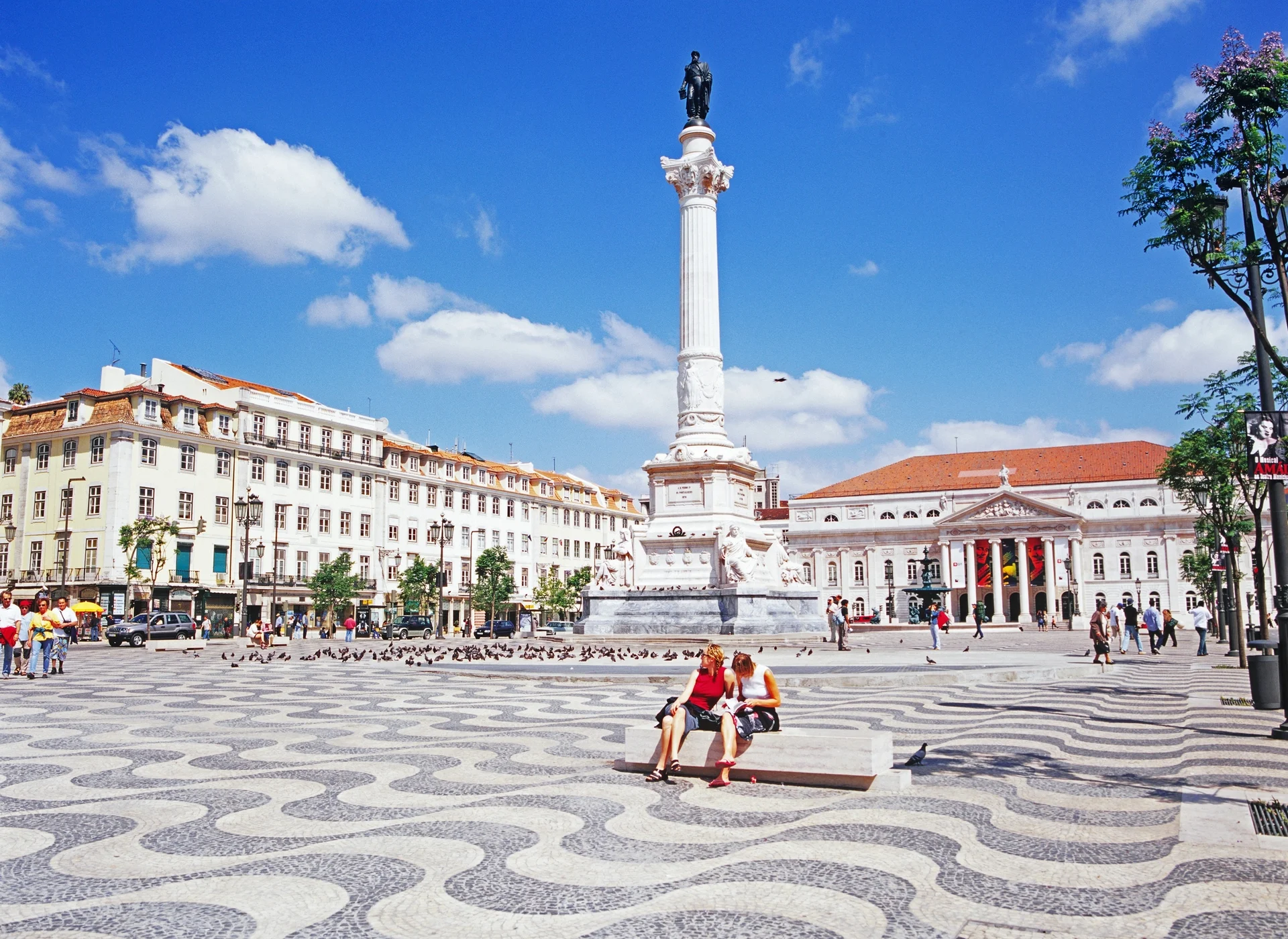
Lisbon is visited uphill: every hill ends in a miradouro, a terrace where the city tumbles down to the Tagus, and that is where a couple spends its late afternoons, from Santa Luzia above the Alfama to São Pedro de Alcântara facing São Jorge Castle. In between, tram 28, the elevadores and the funiculars do the work of your legs. Only the Jerónimos Monastery and Pena Palace, in Sintra, need booking before you leave; the rest, the tascas, the fado, the custard tarts still warm from the oven, turns up along the way, and costs less than in Paris or Rome.
At a glance
- When to go
- April to June and mid-September to October: 68 to 79 °F (20 to 26 °C), low light on the Tagus, terraces full in the evening and half the crowds of August.
- How many days
- Three full days for the Alfama, Chiado and Belém without rushing; four to add Sintra and its palaces, or the beach at Cascais.
- Which neighborhood
- Chiado for a first visit, the Alfama to sleep in the village, Príncipe Real for the evenings, Lapa for quiet and the view.
- Budget for two
- About $1,120 for three nights in comfort, hotel, meals, sights and transport included, flights excluded: a third less than Paris.
- The moment for two
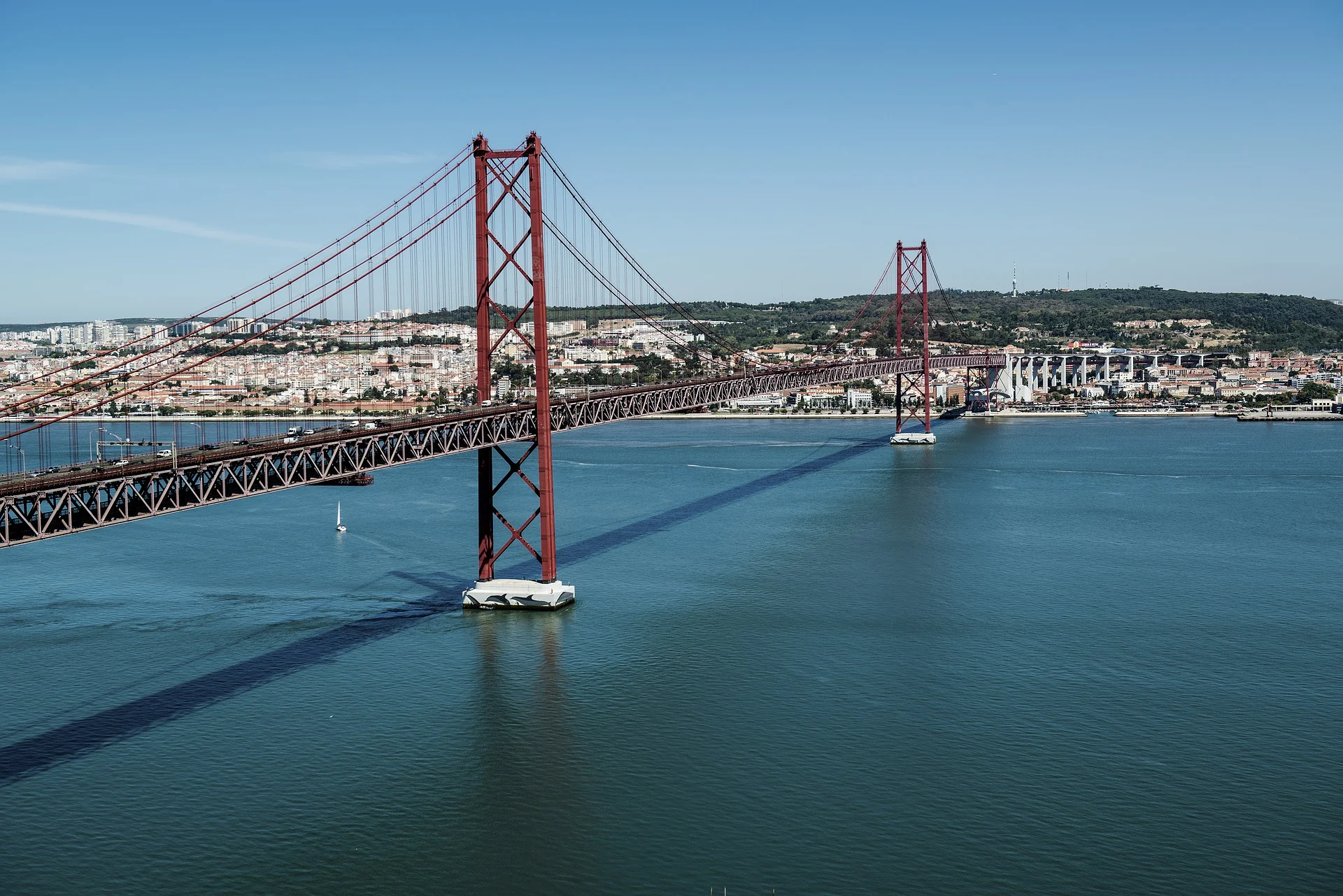
- Sunset at the Miradouro de Santa Catarina, a drink in hand, the 25 de Abril Bridge turning red, then the ride down the Bica funicular to dinner.
- Book ahead
- The Jerónimos Monastery and Pena Palace in Sintra: timed tickets, one to two weeks ahead; a fado house, three days ahead.
Why Lisbon as a couple
Lisbon is a city of hills set on a river as wide as a sea, and its light, bounced off the Tagus and the azulejo tiles, makes the end of each day the main event: you climb to a miradouro, sit on the wall, and the whole city, from São Jorge Castle to the 25 de Abril Bridge, turns the color of apricots. In between, tram 28 rattles through lanes as narrow as a hallway, the elevadores haul you from one neighborhood to the next, and a pastel de nata is eaten standing at the counter for a little over a euro.
What the city adds is time: you dine at 9 pm in a twelve-table tasca, listen to fado until midnight in the Alfama, cross the river by ferry for a drink facing the lights, and the bill comes to half of what Paris charges. A capital where a couple can live outdoors until late without counting.
When to go
| Period | Weather | Crowds | Our take |
|---|---|---|---|
| March to May | Mild, 61 to 72 °F (16 to 22 °C), showers in March | Moderate, heavy at Easter | Jacarandas in bloom in May, terraces already open |
| June | Warm, 75 to 82 °F (24 to 28 °C) | Heavy, especially June 12 | The night of Santo António: sardines and street dances in the Alfama |
| July and August | Hot, 82 to 90 °F (28 to 32 °C), breeze at night | Very heavy | Fine evenings, but lines in Belém and Sintra, hotels at their peak |
| September and October | Mild, 68 to 79 °F (20 to 26 °C), sea still warm | Heavy in September | Our favorite: low light, Cascais without the crowds |
| November to February | Cool and rainy, 50 to 61 °F (10 to 16 °C) | Light | Lowest prices, clear days between two rains |
A few dates change the city. On the night of June 12, the eve of Santo António, the Alfama, Graça and Mouraria fill with garlands, sardine grills and street dances until morning: the finest night of the year for two, provided you booked the hotel two months ahead. In May, the jacarandas turn the avenues and Largo do Carmo blue. From November to February, sunny days are still frequent, but expect showers two or three days in a row and slippery cobbles.
Paperwork: passport, visa, health
| Documents | Visa | Health | |
|---|---|---|---|
| United States, Canada | Passport valid at least 3 months after you leave the Schengen area, issued within the last 10 years | None for stays up to 90 days | Travel insurance with medical cover |
| United Kingdom | Passport valid at least 3 months after you leave the Schengen area, issued within the last 10 years | None for stays up to 90 days in any 180 | Your free GHIC covers state healthcare; travel insurance for the rest |
| Ireland | Passport in date | None | Free EHIC for public healthcare |
Entering the Schengen area
On your first entry, border police record your fingerprints and a photo: allow a little more time at passport control, and Lisbon's airport is known for long lines on summer mornings. Check before you leave whether the ETIAS travel authorization is required on your dates: it is requested online on the European Union's site (travel-europe.europa.eu), costs a few euros and lasts three years.
Getting there
By plane
| From | Flight time | Good to know |
|---|---|---|
| New York, Newark, Boston | 6h30 to 7h15 | Overnight nonstops year round, landing in the morning |
| Washington, Miami, Chicago | 7h30 to 8h30 | Nonstops year round; Lisbon is the shortest hop to Europe from the East Coast |
| San Francisco, Los Angeles | 11 to 12 hours | Nonstops in summer, otherwise one stop |
| Toronto, Montreal | ~7 hours | Nonstops year round, more frequent from May to October |
| London | 2h40 to 2h50 | Many flights a day from all London airports |
| Manchester, Edinburgh, Bristol, Dublin | 2h45 to 3 hours | Nonstops year round, more in summer |
Everyone lands at Humberto Delgado (LIS), the closest airport to a city center of any European capital: 4 miles (7 km) from the Baixa, one metro ride. Book six to eight weeks ahead for May, June and September, when flights from the US and the UK fill with weekend couples; the trip to your hotel is covered below, in "From the airport to your hotel".
By train
No train links London or Paris to Lisbon in a day: the route runs through Hendaye and Madrid, then a night train or bus, two days of travel. Trains are useful once you are here: Porto is 2h50 from Santa Apolónia or Oriente station on the Alfa Pendular, Faro 3 hours, Évora 1h30, and Sintra or Cascais 40 minutes by commuter train.
By car
Practical things to settle before you leave
Phone
US and Canadian plans charge roaming at full price, and most UK plans now charge for Europe too: turn on a travel pass or install an eSIM before you leave. With an Irish plan, calls and data work as at home. Download the Jerónimos and Pena tickets and the Sintra train times before you go: the signal fades in the lanes of the Alfama and under the palaces of Sintra.
Money and tipping
- Cards work almost everywhere, but a neighborhood tasca, a ginjinha kiosk or the chestnut seller take cash only: keep $45 to $56 in small bills.
- Tipping is not expected: round up at a café, leave $3.40 to $5.60 after a good dinner for two, 10 percent in a special-occasion restaurant. There is no sales tax added at the register: the price shown is the price paid.
- The couvert (bread, butter, olives, sometimes cheese) lands on the table unasked and costs $1.20 to $4.50 per person: a "não, obrigado" as it arrives, and it goes back at no charge.
- The lunchtime prato do dia, a full plate, costs $11 to $16 in a tasca: dinner from the menu costs twice that.
- Pay in euros when the card terminal offers dollars or pounds: the conversion the machine proposes costs 5 to 8 percent more than your bank's.
Plugs, water and dress
- Type F outlets, 230 volts: US, Canadian, UK and Irish plugs all need an adapter. Most chargers accept 230 volts; check hair dryers and curling irons, which may not.
- Tap water is safe to drink; it tastes of chlorine, and restaurants bring bottled water by default: ask for "água da torneira" for tap.
- Shoes with grip: the calçada, the white cobbled sidewalk, turns to glass in the rain, and a day in the Alfama has as many staircases as streets. In the evening, even in August, the river wind drops the temperature by 15 °F: pack a jacket.
What to book, and how far ahead
Lisbon needs little booking, Sintra a lot: Pena Palace sells timed entry slots and sells out on spring weekends, while the castle and the city's viewpoints are taken as you arrive. Fix the Sintra day first, then book around it.
| Site | Price per person | Book | Good to know |
|---|---|---|---|
| Pena Palace, Sintra | ~$23 palace and park | 1 to 2 weeks ahead | Open daily; first slot of the morning, the ticket is timed |
| Jerónimos Monastery | ~$14 for the cloister, church free | 1 week ahead | Closed Monday; without a ticket, an hour's line from 11 am |
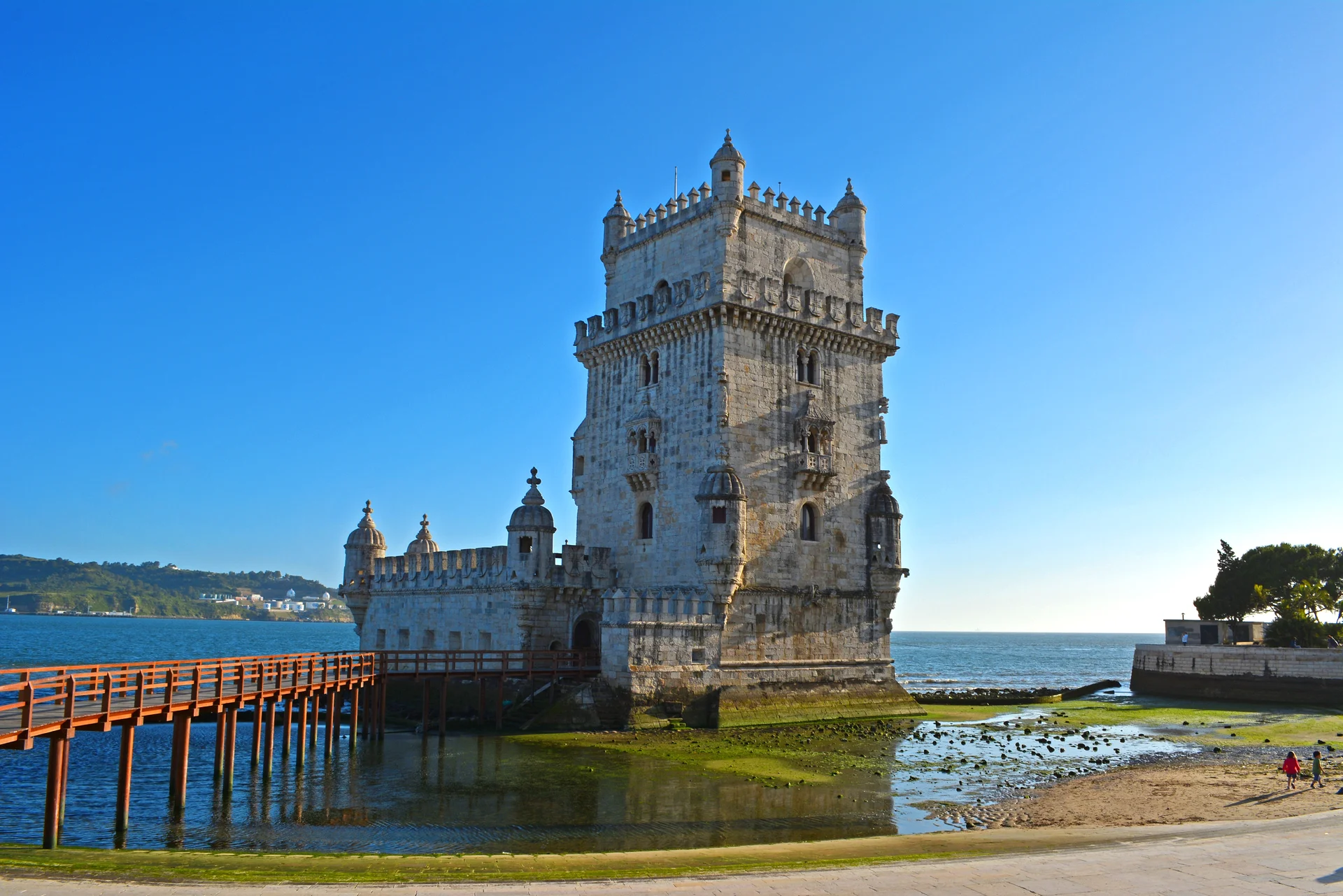
| Belém Tower | ~$9 | A few days ahead | Closed Monday; the narrow staircase limits entries, line from 10 am |
| São Jorge Castle | ~$17 | The day before | Open daily; the online ticket skips the cashier, not the climb |
| Quinta da Regaleira, Sintra | ~$17 | A few days ahead | The initiation well at opening time, before the groups |
| Fado house | $45 to $79 with dinner | 3 days ahead | The good rooms seat thirty; Friday and Saturday go first |
| Well-known restaurants | 2 to 4 weeks ahead | Belcanto, Alma, Prado, Ponto Final on the terrace: weekend tables go early | |
| Oceanário | ~$28 | The day before | Timed ticket online, short line on weekdays |
From the airport to your hotel
© OpenStreetMap contributors
The airport, the stations and the neighborhoods served
- Humberto Delgado (LIS)
- 1Baixa, Chiado
- 2Alfama, Santa Apolónia
- 3Príncipe Real, Bairro Alto
- 4Lapa, Santos
- 5Belém
| Destination | Transport | Time | Indicative fare |
|---|---|---|---|
| Baixa, Chiado | Metro, red line then green | ~30 min | $2.10 / person |
| Baixa, Chiado | Taxi or Bolt | 20 to 30 min | $17 to $25 / ride |
| Príncipe Real, Bairro Alto | Metro, red line then blue, Restauradores stop | ~35 min | $2.10 / person |
| Alfama, Santa Apolónia | Metro, red line then blue, end of the line | ~40 min | $2.10 / person |
| Alfama, Santa Apolónia | Taxi or Bolt | ~20 min | $17 to $23 / ride |
| Lapa, Santos | Taxi or Bolt | 20 to 30 min | $21 to $28 / ride |
| Belém | Taxi or Bolt | 25 to 40 min | $28 to $40 / ride |
The metro leaves from terminal 1 every 6 to 10 minutes, from 6:30 am to 1 am: the red line reaches Alameda in fifteen minutes (change for the green line, Baixa-Chiado, Rossio) or São Sebastião (blue line, Restauradores, Santa Apolónia). Buy a Viva Viagem card ($0.56) at the machine and load it in zapping mode: the airport ride costs the same as any other. Some interchanges have no escalators: for two with two suitcases, the taxi is worth the difference in the evening.
Taxis are cream or black and green, taken at the rank outside arrivals, on the meter, with a luggage supplement of a few euros: $17 to $25 to the Baixa or Chiado, a little more at night. Bolt and Uber have their pickup zone at terminal 1 departures and charge $12 to $21 to the center. For Belém, the taxi is simplest; by metro, count the change at Cais do Sodré and the commuter train, 50 minutes. Between 1 am and 5:30 am, night bus 208 links the airport to Cais do Sodré through the Baixa.
Getting around
On foot, with the city's lifts
The center fits in a mile and a quarter, but on a slope: the Baixa is flat, Chiado and the Bairro Alto sit 130 feet higher to the west, the Alfama and the castle as much to the east. Three elevadores spare you the stairs for the price of a tram ticket: the Glória funicular climbs from Restauradores to the Miradouro de São Pedro de Alcântara, the Bica from Rua de São Paulo toward the Bairro Alto, and the Santa Justa Lift, the iron elevator of 1902, joins the Baixa to Largo do Carmo. For that last one the line takes an hour; the upper walkway, behind the Carmo ruins, is a five-minute walk and gives the same view.
Metro, tram and bus
| Ticket | Price | Valid for |
|---|---|---|
| Viva Viagem card | $0.56 | The card itself, bought once for each of you |
| Zapping ride (metro, tram, bus, elevadores) | ~$2 | One ride; credit loads in $5.60 steps at least |
| Ticket bought on board a tram or bus | ~$3.40 | One ride, double the zapping fare |
| Navegante 24h pass | ~$7.90 | 24 hours on metro, trams, buses, elevadores and Santa Justa |
| 24h pass with commuter trains | ~$13 | The same, plus the Sintra and Cascais trains |
| Ferry Cais do Sodré to Cacilhas | ~$1.80 by zapping | Ten min across, the whole city in view |
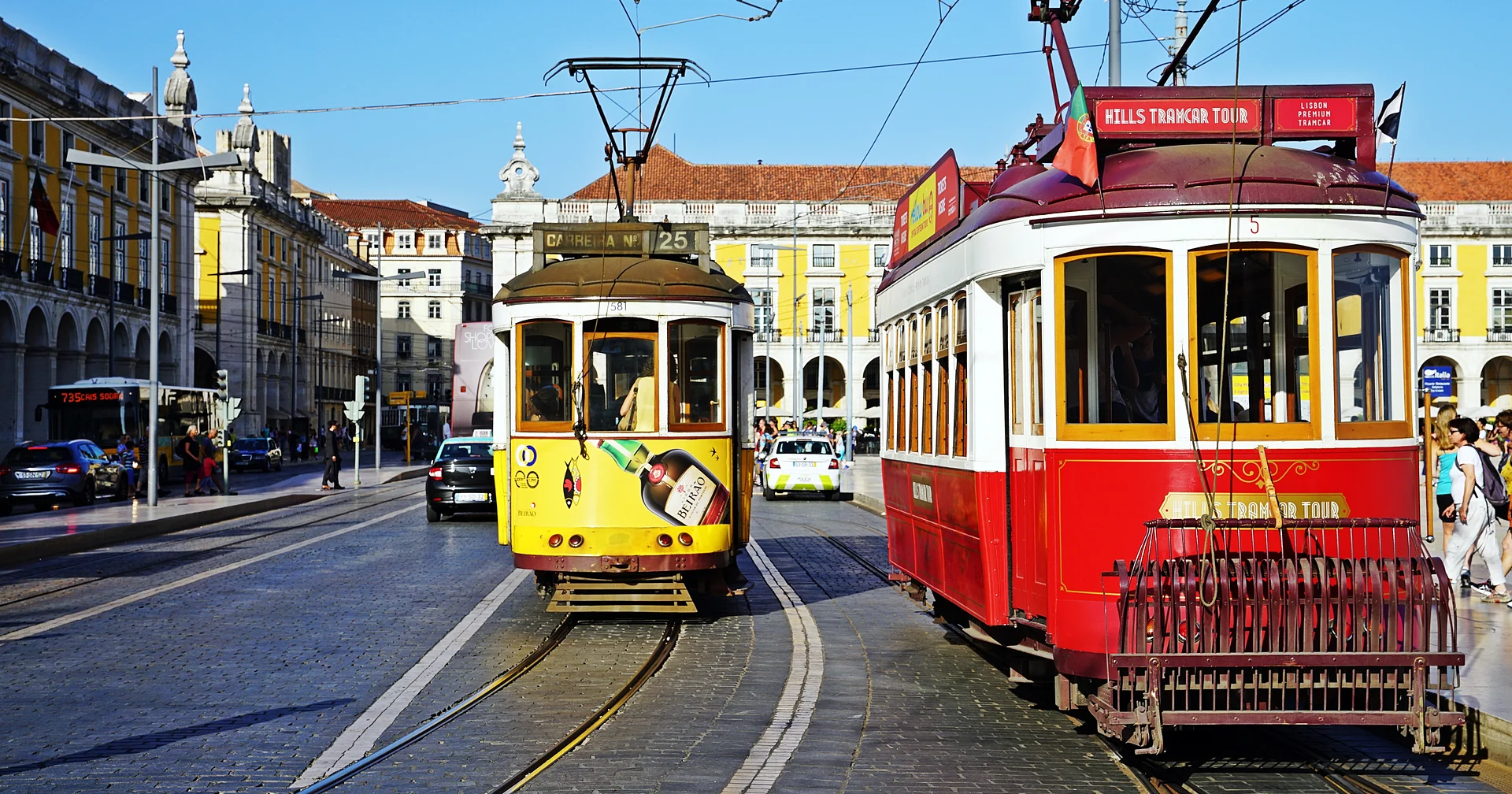
The metro has four lines, runs from 6:30 am to 1 am and is mostly useful for the airport, Oriente and the Parque das Nações; the rest is done on foot and by tram. Tram 28 crosses Graça, the Alfama, the Baixa, Chiado and Estrela to Campo de Ourique: the loveliest line in the city and the fullest, to ride early or in the opposite direction. Tram 15 runs from Praça da Figueira to Belém in 30 minutes; the train from Cais do Sodré does the same trip in 7. After 1 am, Bolt costs $5.60 to $9 from one end of the center to the other.
Budget for two
Lisbon has become dearer, above all the hotel: a double room in Chiado now costs what Barcelona charged a few years ago. But food, coffee and transport remain among the cheapest of any Western European capital, and dinner for two with a bottle of Alentejo wine stays under $68 in a good tasca. Here is what three nights for two cost, flights excluded.
| Smart | Comfort | Treat | |
|---|---|---|---|
| Hotel, per night | $101 to $146 | $180 to $260 | from $400 |
| Meals, per day for two | $62 | $124 | $250 |
| Sights for the stay | $56 | $101 | $280 with a guide and Sintra by private car |
| Transport for the stay | $28 | $45 | $135 by taxi |
| Total for three nights | $680 | $1,120 | $2,690 |
A hotel costs 30 to 40 percent less from November to February than in June or September, and the night of Santo António (June 12) is priced like New Year's Eve. The tourist tax, $4.50 per person per night, is paid on the spot.
Reference prices
| Item | Price |
|---|---|
| Bica (espresso) at the counter | $0.90 to $1.40 |
| Pastel de nata | $1.50 to $1.80 |
| Prato do dia in a tasca, at lunch | $11 to $16 |
| Dinner for two with wine, in a good restaurant | $68 to $101 |
| Glass of wine at a bar | $3.40 to $5.60 |
| Imperial (20 cl draft beer) | $1.70 to $2.80 |
| Cocktail in a bar with a view | $11 to $15 |
| Ginjinha at the kiosk | $1.70 to $2.30 |
| Fado evening, dinner included | $45 to $79 / person |
What to taste
Lisbon's cooking comes from the sea and the neighboring Alentejo: salt cod in every form, grilled sardines from June to September, clams with garlic, black pork, and egg-yolk desserts invented in convents. It is eaten in a tasca, a tiled room of ten tables where the chalkboard changes daily, rather than in the picture-menu restaurants of Rua Augusta.
At the table
-
Bacalhau à Brás
Shredded salt cod with matchstick potatoes and eggs, the everyday dish; the country counts more cod recipes than days in the year.
-
Sardinhas assadas
Sardines grilled on bread, from June to September only: out of season they come from the freezer, and you leave them.
-
Amêijoas à Bulhão Pato
Clams with garlic, cilantro and white wine, shared as a starter while dipping bread in the juice.
-
Bifana and prego
The marinated pork sandwich and the garlic steak one, at the counter with an imperial, $3.40 to $5.60: lunch on walking days.
-
Polvo à lagareiro
Octopus roasted in olive oil with crushed potatoes, the dish of the great tasca tables; arroz de marisco, a seafood rice, is shared between two.
-
Pastel de nata
The custard tart with a scorched top, eaten warm with cinnamon; those of Belém are eaten on the spot, those of the Manteigaria in Chiado come out every twenty minutes.
In the glass
-
Vinho verde
A young, lightly sparkling white from the north, $3.40 a glass: the wine of clams and lunchtime terraces.
-
Alentejo or Douro red
The bottles under $23 on a tasca list match the $45 ones of Paris; ask for the house wine, often served in a jug.
-
Ginjinha
Sour-cherry liqueur served at a kiosk counter, "com ou sem" (with or without the fruit), standing, for $1.70: the ritual of Largo de São Domingos.
-
Bica
Lisbon's espresso, short and strong, under a euro at the counter; the galão is the morning milky coffee, served in a glass.
-
Porto tónico and moscatel
White port lengthened with tonic is the terrace aperitif; moscatel de Setúbal, sweet and amber, ends the dinner.
-
Imperial
The 20 cl draft, Sagres or Super Bock, at $1.70; ask for an imperial, never a beer, and it arrives ice cold.
Customs and rules to know
Lisboners are reserved and welcoming, and a few gestures earn a warm reception: a "bom dia" on the way in, an "obrigado" ("obrigada" if you are a woman) on the way out, and no Spanish, which comes across as careless; English is understood almost everywhere in the center.
- Lunch runs from 12:30 to 2:30 pm and dinner starts at 8 pm; an empty room at 7:30 pm says nothing about the restaurant, and many kitchens close at 11 pm.
- In a fado house, you keep silent during the songs, never use a flash, and applaud between them: the singers stop if the room talks.
- The couvert placed on the table is charged if you touch it; a dessert or coffee is never on the house, and the check is asked for, it does not come on its own.
- On tram 28, seats go to the elderly residents who take it home: it is their bus before it is an attraction.
- On Monday, the Jerónimos, Belém Tower, the MAAT and most museums are closed; on Sunday morning, churches are visited between masses.
- Smoking is banned in bars and restaurants, covered terraces included; in the Bairro Alto, bars close at 2 am (3 am on Friday and Saturday) and drinks are had inside or at the door, no further: the night carries on at Cais do Sodré.
Safety
Lisbon is one of the safest capitals in Europe, by day and by night in the neighborhoods where you will sleep. A couple's two annoyances here are pickpockets in crowded trams and the street sellers of the Baixa, insistent but harmless.
- On tram 28, the Glória funicular and the airport metro, phone and wallet go in a front pocket or a closed bag held in front: pickpockets work in groups as people board and squeeze in.
- On Rua Augusta and around Rossio, men murmur "hash, coke" to every passerby: it is bay leaves and sugar, and the only answer is to keep walking.
- On the cobbles, especially in the Alfama, falls claim more victims than thieves: shoes with grip, and a hand on the rail on wet staircases.
- Late at night, the upper Mouraria, Largo do Intendente and the surroundings of Santa Apolónia are less pleasant than the rest of the center: go home through the Baixa or by Bolt.
- At the airport and the stations, only taxis from the official rank, meter running: a driver who approaches you in the hall or refuses the meter charges triple.
The mistakes couples make
Almost every disappointment in Lisbon comes from the wrong day or the wrong hour: Belém on a Monday, tram 28 at noon, Sintra in half a day. The rest forgives everything.
- Scheduling Belém on a Monday: the Jerónimos, the tower and the MAAT are closed, leaving only the line for custard tarts.
- Boarding tram 28 at Martim Moniz between 10 am and 6 pm: an hour's line, then a car where you see nothing. Before 9 am, or from Campo de Ourique.
- Doing Sintra in half a day, or on a Saturday in summer: between the train, the 434 shuttle and the line at Pena, the whole day goes, and the palace is booked a week ahead.
- Sleeping on the party streets of the Bairro Alto (Rua do Norte, Rua da Atalaia, Rua do Diário de Notícias) without meaning to: the bars play until 2 am under the window. The neighborhood is slept in at Príncipe Real, three streets up.
- Dining on Rua Augusta or under the arcades of Praça do Comércio: menus in six languages, thawed sardines, a $5.60 couvert. The tascas are two streets away, in the Baixa or toward Santos.
- Packing flip-flops or heels: the cobbles and stairs of the Alfama are climbed in walking shoes, and the evening wind at the viewpoint calls for a jacket.
- Paying for the Santa Justa Lift after an hour's line: Largo do Carmo reaches the walkway in a five-minute walk, for the same view.
Frequently asked questions
Is Lisbon a good destination for a romantic trip?
Yes, for three concrete reasons: the miradouros at sunset, which cost nothing and crown every hill; a life outdoors until late, from the fado of the Alfama to the bars of Cais do Sodré; and prices that leave room, with dinner for two with wine under $68. The only things to watch are the hills, the cobbles and the pickpockets on tram 28.
How many days do you need in Lisbon as a couple?
Three full days cover the Baixa, Chiado and the Alfama on the first, Belém on the second, Príncipe Real, LX Factory and a crossing of the Tagus on the third, without rushing. A fourth day lets you take a day trip to Sintra or spend an afternoon on the beach at Cascais.
When is the best time for a trip for two to Lisbon?
Late September to October, then April to June: 68 to 79 °F (20 to 26 °C), the sea still or already warm at Cascais, terraces open in the evening and hotels 20 to 30 percent cheaper than in July. The night of June 12, Santo António, is the finest of the year for two, provided you book the hotel two months ahead.
Is Lisbon expensive?
The hotel has caught up with Barcelona's prices, but the rest has not: a pastel de nata at $1.70, a dish of the day at $14, a glass of wine at $4.50, a tram ride under $2.30. Count about $1,120 for three nights for two in comfort, hotel, meals, sights and transport included, flights excluded.
Do you need to speak Portuguese?
No: English is understood throughout the center, and menus come in English in most restaurants. A "bom dia", an "obrigado" and the polite refusal of the couvert ("não, obrigado") are enough; avoid Spanish, which goes down badly.
Can you manage Lisbon without a car?
Yes, and you should: the center is done on foot, by tram and by elevador, Belém by tram 15 or train, Sintra and Cascais by commuter train from Rossio and Cais do Sodré. Rent a car only on the day you leave the city for the Alentejo or the Algarve.