Budapest for couples: what to know before you go (2026)
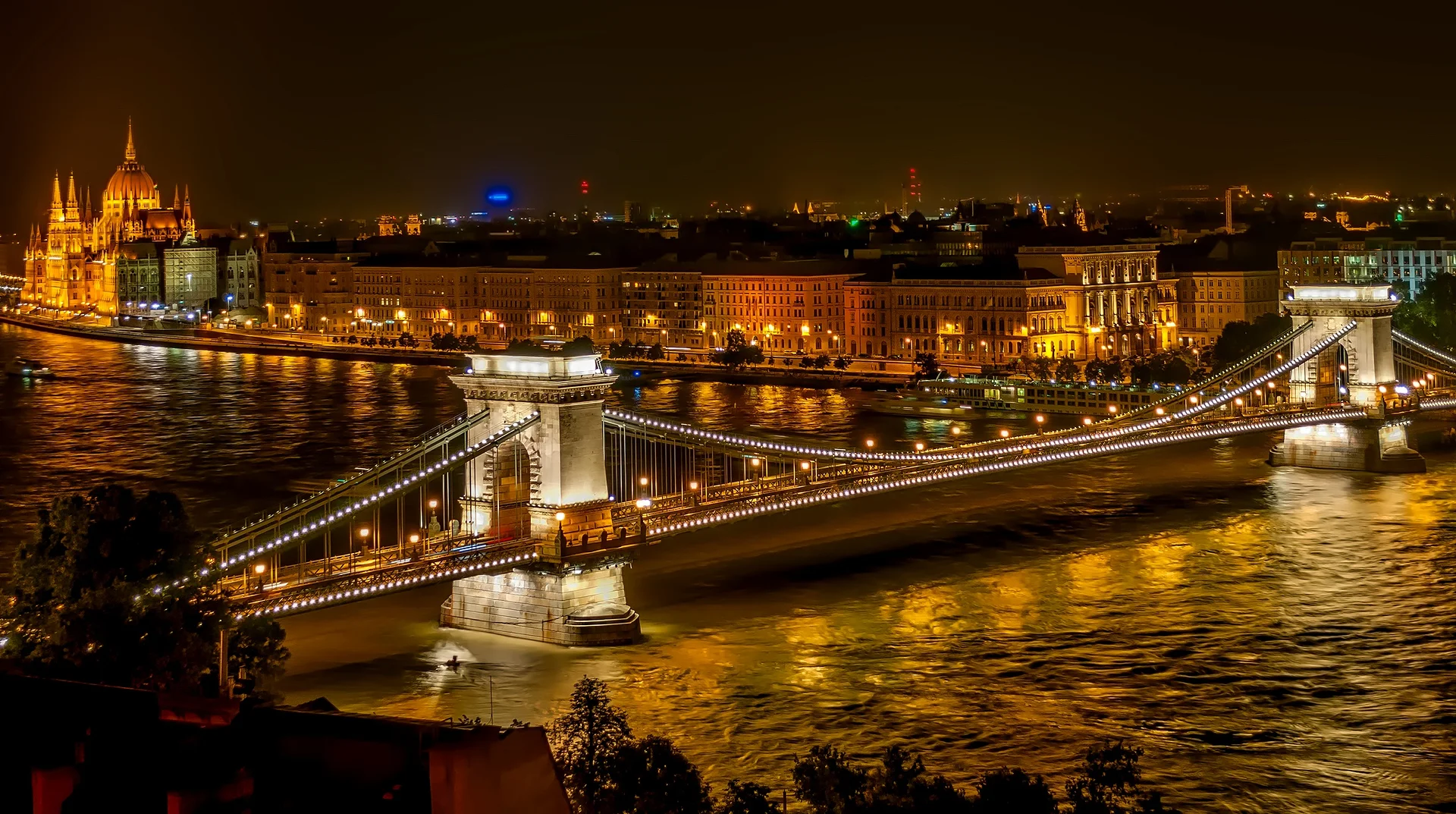
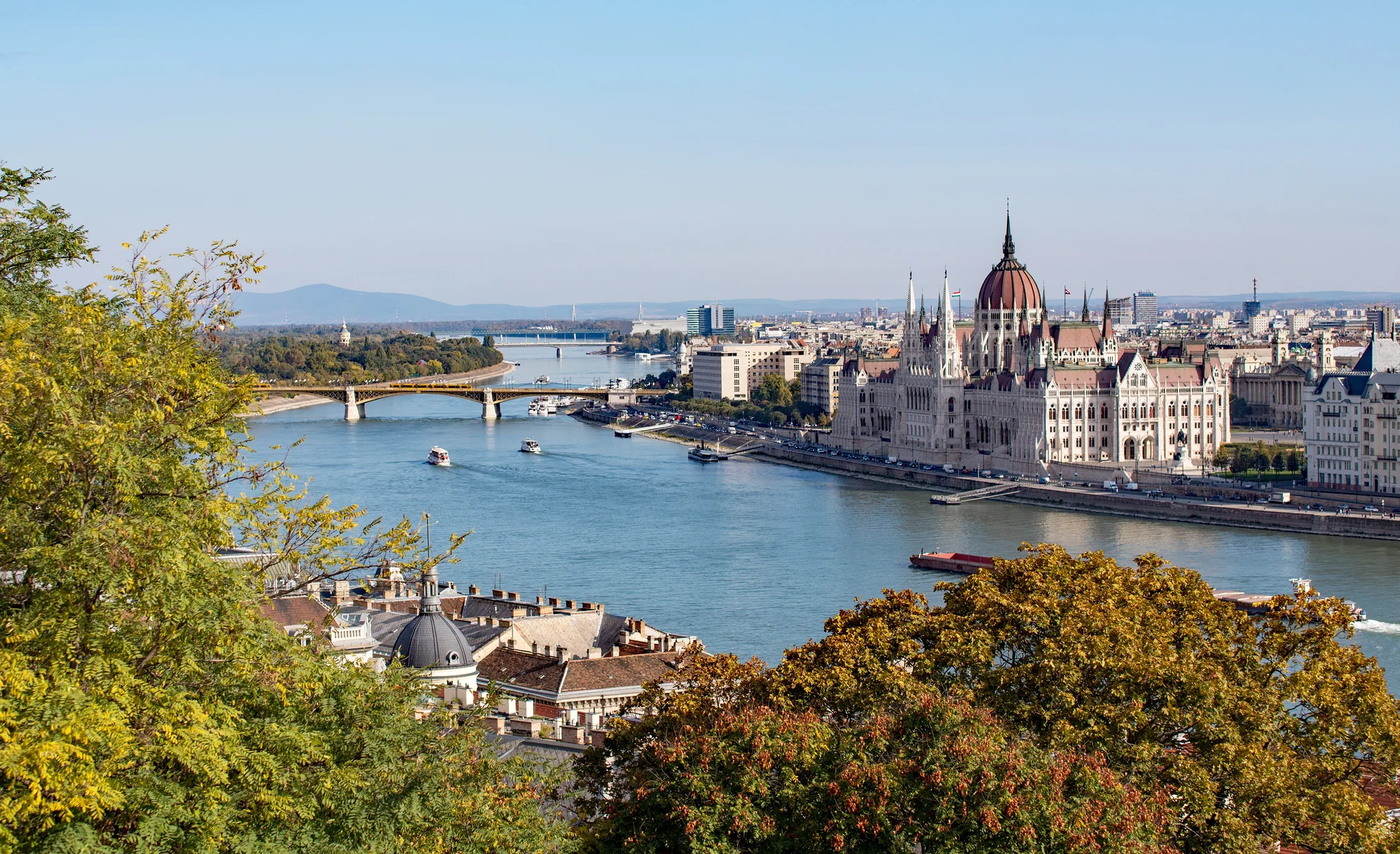
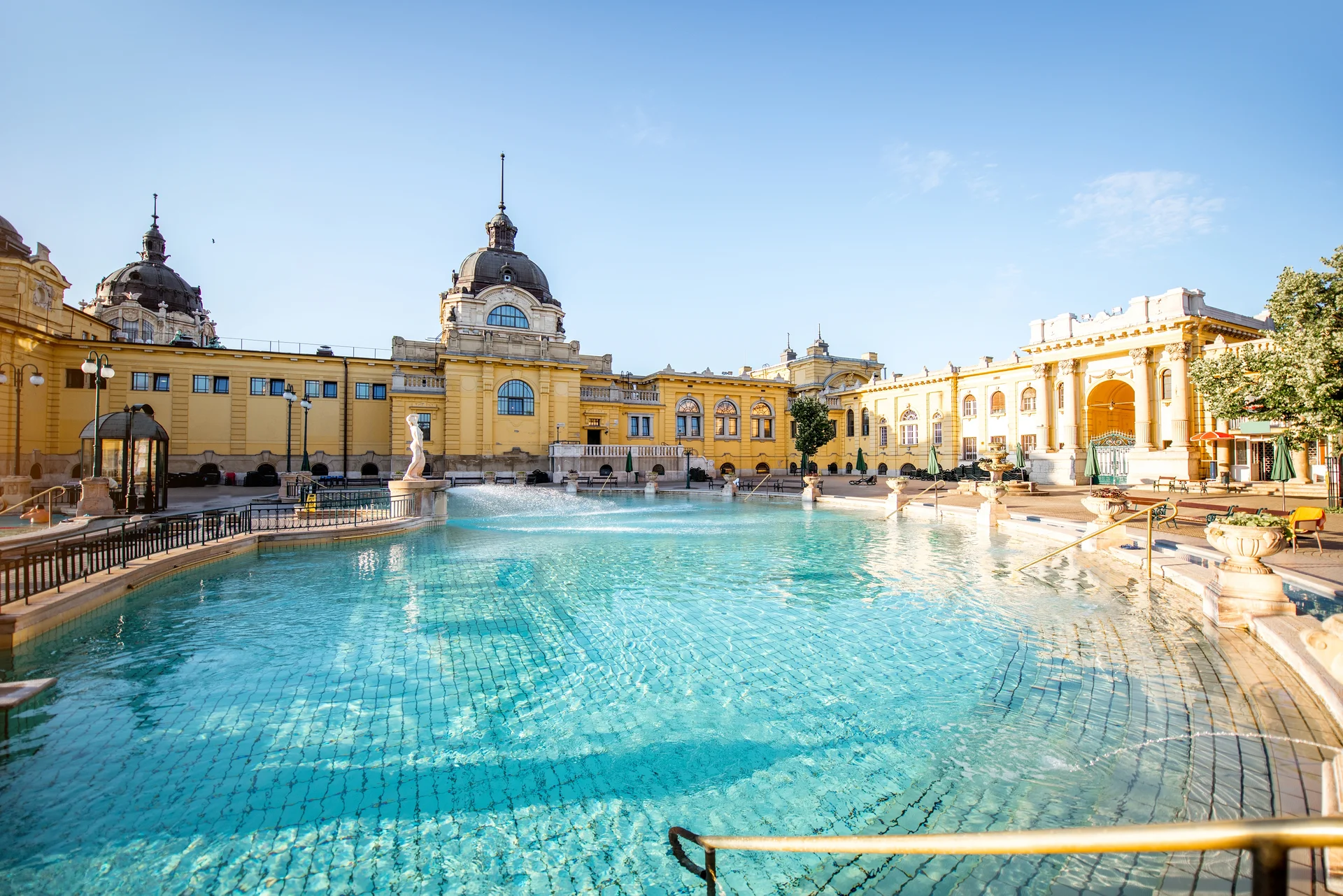
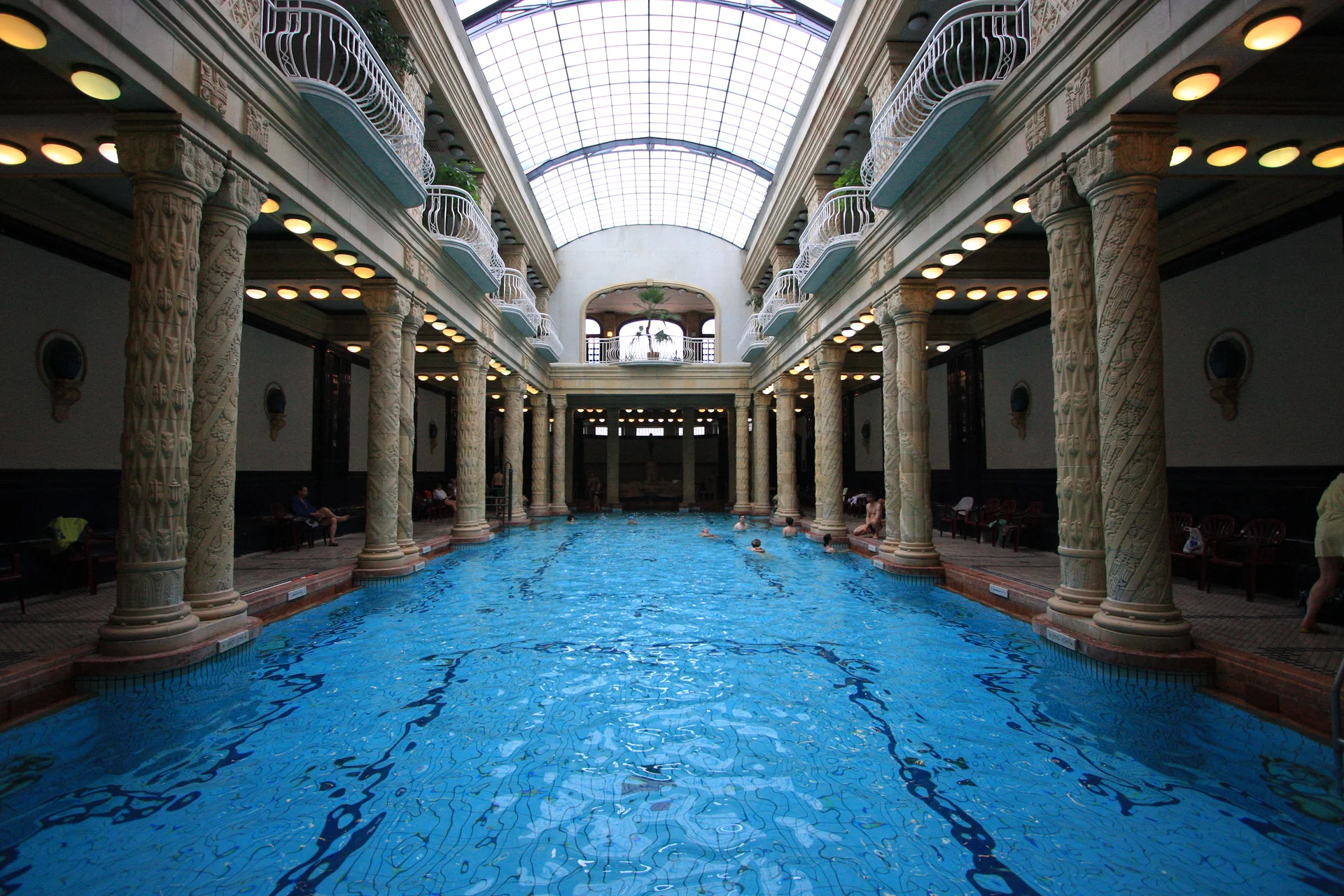
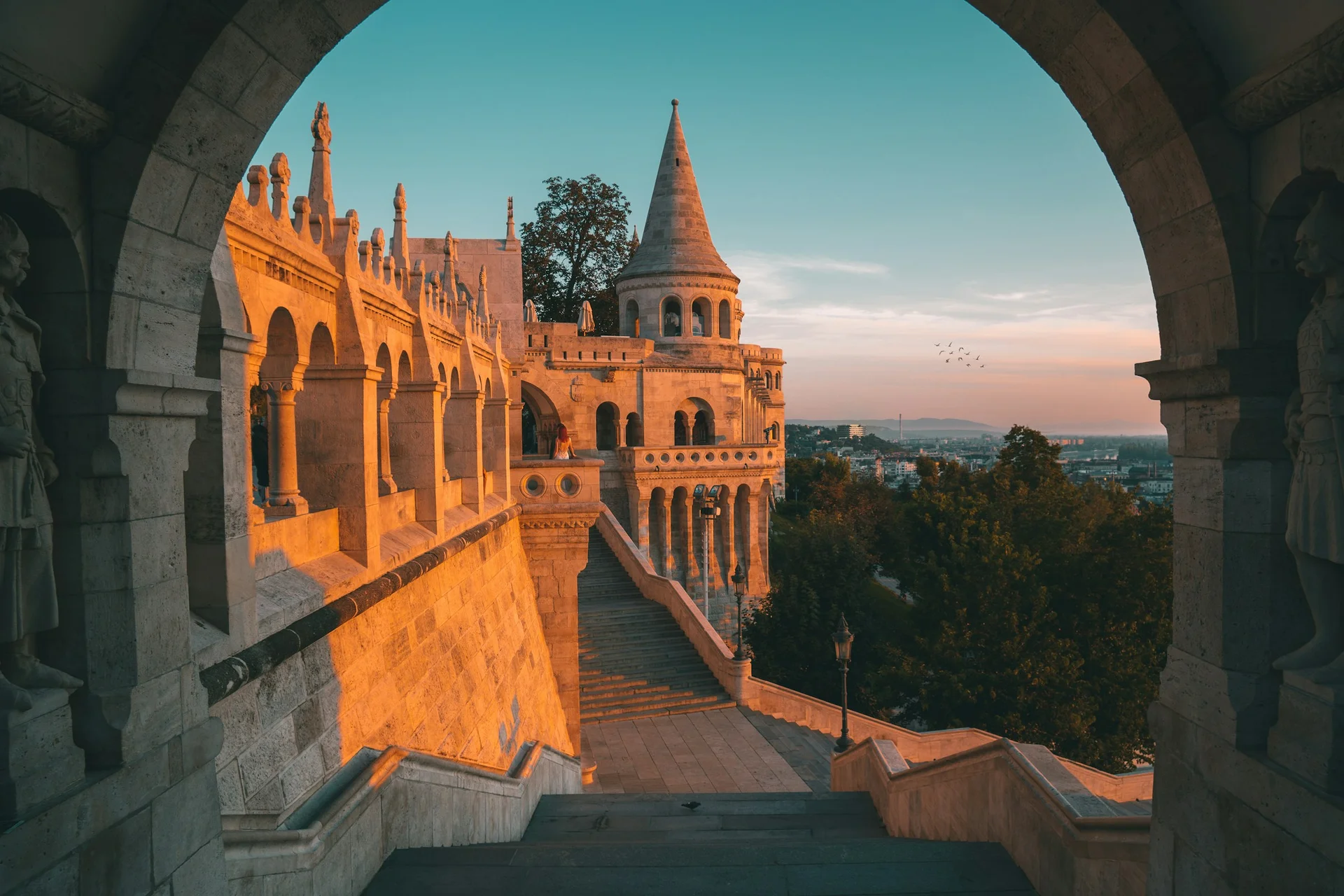
Budapest is two cities on two banks: Pest, the lively one, with the Parliament, chandelier cafés and ruin bars, and Buda, the quiet one, with the Fisherman's Bastion and Gellért Hill. Between them runs a Danube lit up by its bridges at night, and under the city, hot springs feed the baths, from Széchenyi to Rudas, where a couple can spend an evening in 100 °F water. Prices stay gentle, and only the Parliament and one evening bath need booking before you fly.
At a glance
- When to go
- May, June, September and early October: 64 to 81 °F (18 to 27 °C), open terraces, pleasant baths. December for the Christmas markets, at 32 to 41 °F, with a steaming outdoor soak.
- How many days
- Three full days for Pest, Buda and a bath each evening; four to add Szentendre and the Danube Bend, or one more day of baths and cafés.
- Which district
- Belváros-Lipótváros for a first visit, Víziváros for quiet and views, Erzsébetváros for the ruin bars, Palotanegyed for lower prices.
- Budget for two
- About $960 for three nights at comfort level, meals, baths and transport included, flights excluded. Cards work everywhere: never change money on the street.
- The moment for two
- The Danube at night: the Parliament lit up from a sunset cruise, then the rooftop pool at Rudas with the bridges glowing in front of you.
- What to book
- The Parliament 2 to 4 weeks ahead; the cruise and the evening bath the day before; a Friday or Saturday table 3 to 5 days before.
Why Budapest for two
Budapest gives a couple three things few capitals combine: baths where you spend an evening, a river you cross every day, and cafés where you linger for two hours. The baths come from the Ottomans and from Art Nouveau: at Széchenyi, people play chess in 100 °F water in front of yellow facades; at Gellért, a columned pool under a glass roof; at Rudas, a rooftop pool facing the Danube as night falls.
The Danube does the rest. From the Pest bank, the Gothic Revival Parliament lights up at dusk; from the Fisherman's Bastion or Gellért Hill, on the Buda side, the whole opposite bank sparkles, and the Chain Bridge links the two in a ten-minute walk. Two moods to alternate: Buda is in bed by 9 pm on its cobbled streets, while Pest opens its ruin bars at noon and closes them at dawn.
When to go
| Period | Weather | Crowds | Our verdict |
|---|---|---|---|
| March to May | Cool then mild, 46 to 68 °F (8 to 20 °C), showers | Medium, high at Easter | May: terraces reopen, baths almost empty on weekdays |
| June | Hot, 72 to 82 °F (22 to 28 °C) | High | Long evenings on the embankments, cruises at 9 pm |
| July and August | Very hot, 81 to 95 °F (27 to 35 °C), storms | Very high, peak around August 20 | Evening baths cool you down, but hotels at their highest |
| September and October | Mild, 57 to 72 °F (14 to 22 °C), golden light | High in September | Our favorite: harvest season, soft evenings, no queues at the baths |
| Mid-November to December | Cold, 32 to 46 °F (0 to 8 °C), misty | High around Christmas | Christmas markets, mulled wine, a steaming outdoor bath |
| January and February | Cold, 27 to 39 °F (-3 to 4 °C), snow possible | Low | Lowest prices, short days, baths almost to yourselves |
A few dates change the city. On August 20, St. Stephen's Day, fireworks light up the Danube: the embankments are packed and hotels are full months ahead. In August too, the Sziget festival fills the rooms in Pest. From mid-November to early January, the Christmas markets on Vörösmarty tér and at St. Stephen's Basilica serve mulled wine and kürtőskalács, a sweet dough wound around a spit and baked over embers; a light show animates the basilica's facade every evening.
Entry requirements: passport, visa, health
| Documents | Visa | Health | |
|---|---|---|---|
| United States | Passport valid at least 3 months after you leave the Schengen area, issued within the last 10 years | None for stays up to 90 days in any 180 | Travel insurance with medical cover: visitors pay for care up front |
| United Kingdom | Passport valid at least 3 months after you leave the Schengen area, issued within the last 10 years | None for stays up to 90 days in any 180 | Your free GHIC covers state healthcare in Hungary; travel insurance for the rest |
| Canada, Australia, New Zealand | Passport valid at least 3 months after you leave the Schengen area | None for stays up to 90 days | Travel insurance with medical cover |
If you are coming from outside Europe
On your first entry to the Schengen area, border police take a photo and fingerprints at the Entry/Exit System kiosks: allow extra time at passport control. Check before you fly whether the ETIAS travel authorization is required for your dates: you apply online on the European Union website, it costs a few euros, and it is valid for three years.
Getting there
By air, the simplest way
| From | Time | Good to know |
|---|---|---|
| London | ~2h30 | Wizz Air, Ryanair, easyJet and British Airways from Heathrow, Gatwick, Luton and Stansted |
| Manchester, Edinburgh, Birmingham, Dublin | 2h30 to 3h | Direct flights on low-cost airlines, some seasonal |
| New York, Boston, Chicago | 10 to 13h | Usually one stop via Frankfurt, Munich, Amsterdam, Paris, London or Warsaw |
| Toronto, Montreal | 10 to 13h | One stop via Frankfurt, Amsterdam, Paris or London |
All flights land at Ferenc Liszt (BUD), 10 miles (16 km) from the center; the ride to your hotel is covered below in « Airport to hotel ». Wizz Air and Ryanair fly to most European cities; book six to eight weeks ahead for May, June and September, when weekend breaks fill the planes.
By train
Train is the right choice from central Europe: Vienna is 2h40 away on the Railjet, with a departure every hour, Prague about 7h direct, Munich about 6h. From Paris, Brussels or Zurich, count a full day with a change in Vienna or Munich; Nightjet sleeper trains link Budapest with Switzerland, Germany and Austria. Keleti station, in the east, receives Vienna, Prague and most international trains; Nyugati, built in 1877 by Gustave Eiffel's workshop, serves the north of the city and the country.
By car
Practical details before you go
Phone
US plans usually offer an international day pass or a monthly travel add-on: activate it before you land or buy an eSIM. UK plans may charge roaming in Hungary depending on your operator, so check your tariff. Before leaving, download the BudapestGO app, which sells transport tickets, and an offline map of the city.
Money and tipping
- The currency is the forint (HUF), not the euro: prices run in the thousands, and 4,000 forints is roughly $12. Contactless cards work almost everywhere, restaurants, baths, markets, transport tickets; keep $23 to $34 in forints for public toilets, kiosks and tips.
- Never change money on the street, nor at exchange offices advertising « 0 % commission »: their rate is the worst in the city. Withdraw from a bank ATM (OTP, K&H) rather than an independent Euronet machine, yellow and blue, with high fees.
- When a card terminal or ATM offers to charge you in dollars, pounds or euros, decline and choose forints: the terminal's conversion adds 5 to 10 percent.
- In restaurants, check whether the service charge (szervizdíj, 10 to 15 percent) is already on the bill: it often is in the center, and then you add nothing. Otherwise leave 10 percent, not the 20 percent American habit; round up taxi fares, and leave $1.20 at a bar.
Plugs, water and what to wear
- Type F sockets at 230 volts: you need an adapter from the US (and check that your charger is dual-voltage), and from the UK. Most phone and laptop chargers accept 230 volts.
- Tap water is safe to drink. For the baths, bring swimsuit, flip-flops and a towel (rented on site for ~$4.50); the lap pool at Széchenyi requires a swim cap.
- Comfortable shoes: the castle cobbles and the Bastion stairs tire the legs, and in winter a hat and gloves help when you step out of a bath at 32 °F (0 °C).
What to book, and how far ahead
Budapest needs little booking, except one monument: the Parliament only offers guided tours at fixed times, and the morning ones sell first from May to October. Settle it first, then plan the rest around it.
| Site | Price per person | Book | Good to know |
|---|---|---|---|
| Parliament, guided tour | $20 to $34 | 2 to 4 weeks ahead | 45 min, in English at set hours; closed on session days |
| Széchenyi Baths | $34 to $40 | The day before, online | An online ticket skips the cashier; on Saturday the queue passes 30 min |
| Rudas Baths, rooftop pool | $23 to $34 | 2 to 3 days ahead | Weekend evenings sell first; mixed days on weekends |
| Evening cruise | $17 to $34 | The day before | 1h at sunset; boats with a drink included fill up in summer |
| Great Synagogue | ~$23 | On site or the day before | Closed on Saturday; the queue is short before 11 am |
| St. Stephen's Basilica, dome | ~$6.80 | Same day | Elevator to the top; short queue before 10 am |
| Café New York | ~$17 / person | Same day, before 10 am | No reservations: the afternoon queue passes 45 min |
| Well-known restaurants | 1 to 2 weeks ahead | Borkonyha, Mazel Tov, Gundel: Friday and Saturday tables go first |
Airport to hotel
© OpenStreetMap contributors
The airport, the stations and the districts served
- Ferenc Liszt (BUD)
- 1Belváros, Lipótváros
- 2Erzsébetváros, Astoria
- 3Palotanegyed, Kálvin tér
- 4Víziváros, Castle District
- 5Újlipótváros, Margaret Island
- 6Terézváros, Opera
| Destination | Transport | Time | Indicative fare |
|---|---|---|---|
| Belváros, Lipótváros | Bus 100E, terminus Deák tér | ~40 min | ~$6.20 / person |
| Belváros, Lipótváros | Taxi or Bolt | 30 to 40 min | $23 to $34 / taxi |
| Erzsébetváros, Astoria | Bus 100E, Astoria stop | ~35 min | ~$6.20 / person |
| Palotanegyed, Kálvin tér | Bus 100E, Kálvin tér stop | ~30 min | ~$6.20 / person |
| Palotanegyed, Kálvin tér | Taxi or Bolt | 25 to 35 min | $23 to $32 / taxi |
| Víziváros, Castle District | Bus 100E, then metro M2 to Batthyány tér | ~1h | ~$7.90 / person |
| Víziváros, Castle District | Taxi or Bolt | 35 to 45 min | $28 to $40 / taxi |
| Újlipótváros, Margaret Island | Bus 200E, then metro M3 to Lehel tér | ~1h | ~$2 / person |
| Terézváros, Opera | Bus 100E, then metro M1 from Deák tér | ~50 min | ~$7.90 / person |
| Terézváros, Opera | Taxi or Bolt | 30 to 40 min | $25 to $34 / taxi |
The 100E bus links arrivals to Kálvin tér, Astoria and Deák tér with no other stop, every 20 to 30 minutes from dawn until past midnight; its special ticket, ~$6.20, is sold at the stop's machine or in the BudapestGO app. The 200E bus and the M3 metro cost an ordinary ticket ($1.30 a ride) but need a change at Kőbánya-Kispest.
Official taxis wait outside arrivals and quote the fare before you leave: $23 to $40 for the center. Refuse any driver who approaches you in the hall. Bolt also serves the airport (Uber no longer operates in Hungary) and costs $17 to $25 to Pest, with the price shown in the app before the ride.
By train, arrivals at Keleti go down to the M2 line, which passes Deák tér and Batthyány tér; those at Nyugati take the M3 to Deák tér or Lehel tér.
Getting around
On foot, by tram and by metro
Central Pest fits in an hour's walk, from the basilica to the Great Market Hall. For the rest, four metro lines, including the yellow M1, the oldest on the continent (1896), which runs under Andrássy Avenue to the Széchenyi Baths; tram 2 follows the Pest embankment facing the castle, trams 19 and 41 the Buda side, and trams 4 and 6 circle the Grand Boulevard.
| Ticket | Price | Validity |
|---|---|---|
| Single ticket | ~$1.30 | One ride, no transfers |
| Book of 10 tickets | ~$12 | Ten rides, to share between two |
| 24-hour pass | ~$7.30 | Unlimited metro, tram, bus and scheduled boat |
| 72-hour pass | ~$16 | Unlimited for three days |
| 7-day pass | ~$18 | Unlimited for a week |
| Airport bus 100E | ~$6.20 | One ride, special ticket |
Validate your ticket at the metro entrance and on the tram: inspectors are frequent and the on-the-spot fine reaches ~$45. The 24-hour or 72-hour pass loads onto BudapestGO. To glide on the river with an ordinary ticket, from spring to autumn, take the BKK scheduled boat, for the price of a tram ride against $23 for a cruise.
Budget for two
Budapest costs less than Vienna for food, transport and baths, but good hotels have caught up with the neighboring capitals. A dinner for two with a bottle of Hungarian wine often comes in under $68. Here is what three nights for two cost, flights excluded.
| Budget | Comfort | Splurge | |
|---|---|---|---|
| Hotel, per night | $79 to $112 | $135 to $210 | from $340 |
| Meals, per day for two | $40 | $79 | $168 |
| Sights and baths for the stay | $101 | $180 | $400 with a dinner cruise and a spa treatment |
| Transport for the stay | $17 | $28 | $90 by taxi |
| Total for three nights | $510 | $960 | $2,130 |
Hotels cost 30 to 40 percent less from January to March than in August, and nights around August 20 or the Sziget festival cost double. The 4 percent city tax is added to the bill.
Reference prices
| Item | Price |
|---|---|
| Metro or tram ticket | ~$1.30 |
| Daily special in an étkezde, a neighborhood canteen | $6.80 to $11 |
| Lángos at the Great Market Hall | $6.80 to $9 |
| Draft beer in a ruin bar | $3.40 to $4.50 |
| Glass of Tokaj or Eger wine | $3.40 to $6.80 |
| Coffee and a slice of cake in a historic café | $9 to $16 / person |
| Dinner for two with wine, in a good restaurant | $68 to $112 |
| Entry to the Széchenyi Baths | $34 to $40 |
| Evening cruise, 1h | $17 to $34 / person |
What to eat and drink
Hungarian food is paprika, lard and sour cream, thick soups and slow stews; you eat it in an étkezde, a neighborhood canteen with oilcloth tablecloths, or in the restaurants that have lightened it. It ends with a cake, under the chandelier of a historic café.
At the table
-
Gulyás
Beef, potato and paprika soup, served in a bowl with bread: the lunch dish of the country, $6.80 to $11. The thick stew Americans call goulash is pörkölt here.
-
Paprikás csirke
Chicken stewed in paprika and cream, with nokedli, small irregular dumplings; its cousin, pörkölt, is a stew without cream.
-
Lángos
A flat disc of fried dough, rubbed with garlic and topped with sour cream and grated cheese, at a market counter: the snack of walking days, made for sharing.
-
Halászlé
Fiery red river-fish soup with paprika, a Christmas dish and a Danube-side classic, often served with pasta.
-
Dobos and Eszterházy
The Dobos stacks six thin sponge layers under a shiny caramel top; the Eszterházy fills them with hazelnut cream. Both are ordered at a café.
-
Kürtőskalács
Sweet dough wound on a wooden cylinder and baked over embers, rolled in cinnamon or walnut, sold on the street for ~$4.50 and made for sharing.
In the glass
-
Tokaji aszú
The golden sweet wine of Tokaj that European kings drank: one glass, $5.60 to $12, finishes a dinner for two.
-
Egri Bikavér
The red of Eger, a blend of kékfrankos and merlot, whose name means « bull's blood »; bottles at $17 to $28.
-
Fröccs
White wine topped up with sparkling water, the refresher of summer terraces; the házmester is the strongest, the hosszúlépés the lightest.
-
Pálinka
Fruit brandy (apricot, plum, pear), served in a small glass for $2.30 to $4.50; it is drunk before the meal.
-
Unicum
The bitter herbal liqueur from the Zwack house, 40 percent, the national digestif; the taste needs a second glass to grow on you.
-
Hungarian beer
Dreher and Soproni are poured on draft everywhere for $2.30 to $3.40 a glass, and the Jewish Quarter's microbreweries have their own lists.
Customs and rules to know
Hungarians are reserved at first and warm at the table: a jó napot (good day) when you walk in, a köszönöm (thank you) when you leave, and you are welcomed, even by those who speak no English.
- In restaurants, you keep your table until the end and you ask for the bill (« fizetek, legyen szíves »), it does not arrive on its own; dinner runs from 7 pm to 9 pm, and many kitchens close at 10 pm.
- In the baths, swimwear is required, you shower first, you keep your flip-flops on, and you leave the hot pools every twenty minutes: 100 °F water tires you more than it seems. Photos are taken outside the pools.
- Older Hungarians do not clink beer glasses (a memory of 1849, tied to the execution of thirteen Hungarian generals); a glass of wine or pálinka, however, is raised while looking the other person in the eye, with an « egészségedre », to your health.
- At the Great Synagogue as in churches, shoulders and knees are covered; the synagogue closes on Saturday, the Sabbath.
- In the Jewish Quarter's ruin bars, keep your voice down as you leave: courtyard windows open onto neighbors' bedrooms.
Safety
Budapest is safe by day and by night in the districts where you will sleep. A couple's troubles come down to a few precise points, all avoidable.
- On trams 4 and 6, the M1 metro, Váci utca and in bath changing rooms, pickpockets work in groups as people board: phone and wallet in a front pocket or a closed bag in front of you, and nothing valuable in a changing room without a locked locker.
- The bar scam: a woman alone, or two, approaches a tourist near the Opera or on Váci utca to invite him for a drink in a nearby bar; the bill reaches $230 to $680, and two men make you pay. Do not follow anyone who offers a drink.
- On the terraces of Váci utca and around the basilica, check that the menu shows prices and that service is not counted twice; a beer with no listed price costs triple.
- At the airport, outside stations and bars, take only official taxis or ones ordered by app: a driver who approaches you in the hall or refuses to show the fare charges three to four times as much.
- Late at night, the area around Keleti station, Blaha Lujza tér and the streets of the 8th district south of the Grand Boulevard are less pleasant: take the metro until 11 pm, then a Bolt.
Mistakes couples make
Disappointments in Budapest almost always come from a counter, a bill or a badly chosen hour: money changed on the street, the Parliament without a ticket, a bath on Saturday at 2 pm. Everything else forgives.
- Changing money on the street or at a « 0 % commission » office: the gap with the card rate reaches 10 to 15 percent.
- Paying in dollars, pounds or euros at a restaurant or ATM terminal: the conversion adds 5 to 10 percent, and the forint is always the right choice.
- Turning up at the Parliament without a ticket: May to October slots go 2 to 4 weeks ahead, and the same-day desk is empty by 10 am.
- Going to Széchenyi on Saturday at 2 pm: the queue passes 30 minutes and the pools are full. Go on a weekday, or in the evening after 7 pm.
- Sleeping on a ruin-bar street without meaning to: Kazinczy utca, Akácfa utca and Dob utca echo until 4 am. Pick a room on the courtyard, or a hotel on the Grand Boulevard.
- Dining on Váci utca: menus in eight languages, high prices, service added. The good tables are two streets away, around the basilica and the Jewish Quarter.
- Climbing to the Fisherman's Bastion at noon, when the coaches arrive: go at 8 am or after 9 pm, when it is free and empty and the light is better.
Frequently asked questions
Is Budapest a good destination for a romantic trip?
Yes, for three concrete reasons: the baths, where you spend an evening in 100 °F water, the lit-up Danube, crossed on foot from bridge to bridge, and prices that leave room, with a dinner for two with wine under $68. The only watch-outs are pickpockets on trams 4 and 6 and the bar scam.
How many days do you need in Budapest as a couple?
Three full days cover Pest and the Parliament on the first, Buda and Gellért Hill on the second, the Jewish Quarter, the Great Market Hall and a cruise on the third, with a bath every evening. A fourth day lets you head to Szentendre, on the Danube Bend, or spend a day on baths and cafés.
When is the best time to visit Budapest as a couple?
May, June and September to mid-October: 64 to 81 °F (18 to 27 °C), mild evenings and baths without crowds. December has its Christmas markets and steaming baths, at 32 to 41 °F; July and August are hot, 81 to 95 °F, and hotels hit their highest prices.
Is Budapest expensive?
Not really, hotels aside: a meal for two runs $40 to $79 a day, a metro ticket costs ~$1.30, a beer $3.40. Count about $960 for three nights for two at comfort level, hotel, meals, baths and transport included, flights excluded.
Can you pay in dollars, pounds or euros in Budapest?
Some shops in the center accept euros, at a poor rate: the currency is the forint. Pay by contactless card, choose forints if the terminal offers to convert, and keep $23 to $34 in cash for toilets and kiosks.
Do you need to book the baths?
Rarely: buy an online ticket the day before, with no time slot, which skips the cashier line. Go on a weekday or after 7 pm for Széchenyi, and two or three days ahead for the Rudas rooftop pool, with weekend evenings going first.