Nice for couples: things to know before you go (2026)
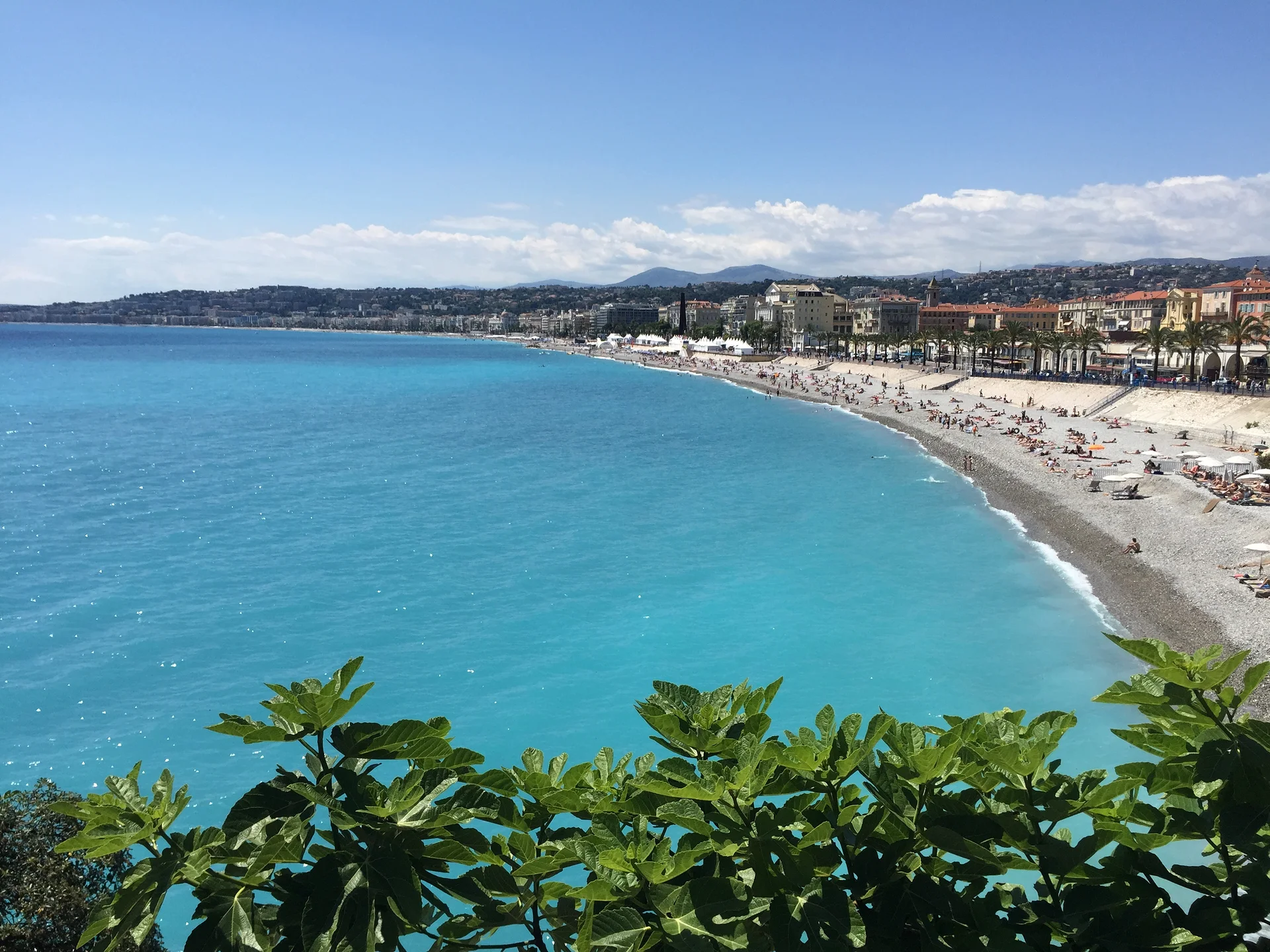
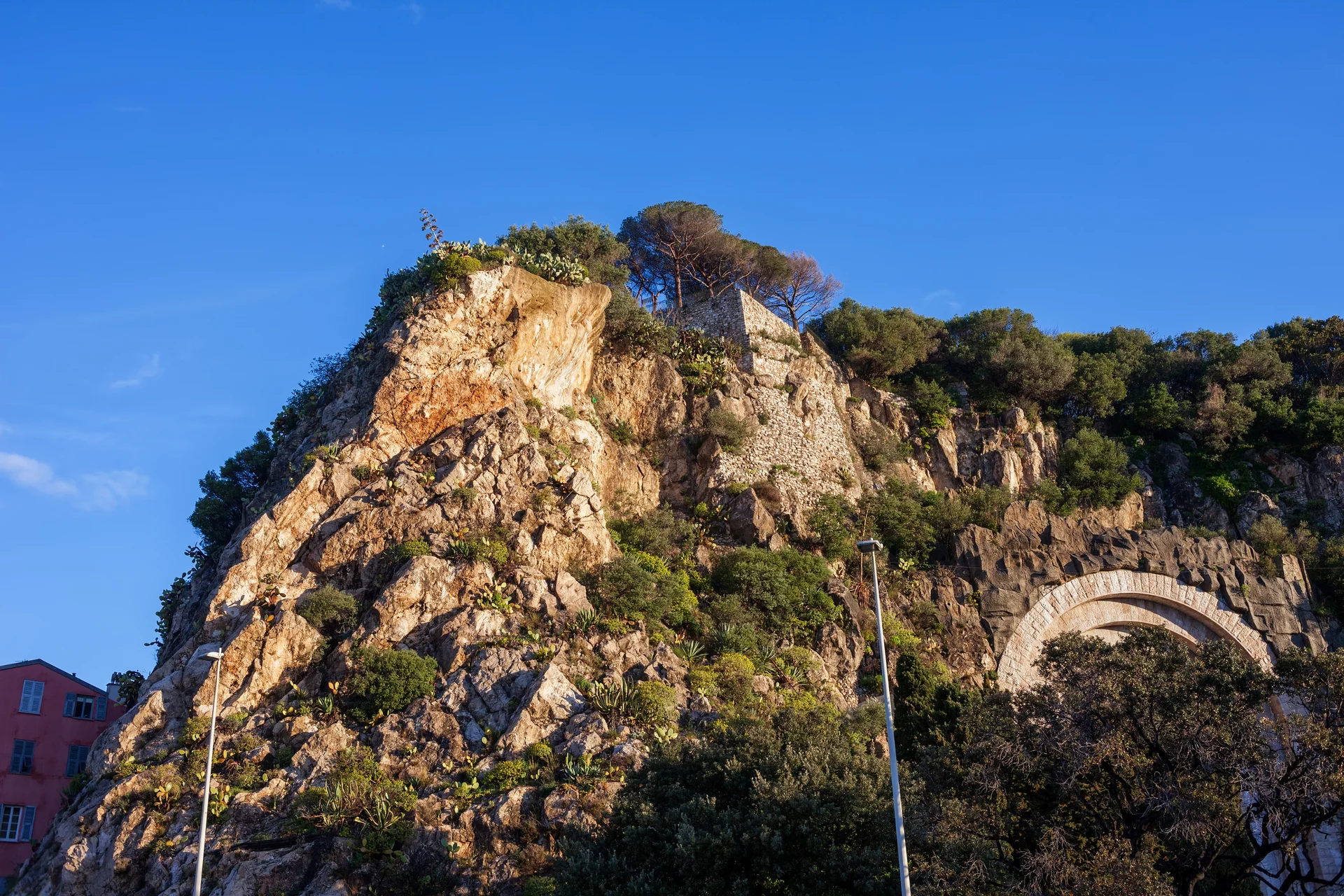
Nice comes down to three places: the Promenade des Anglais at sunrise, Castle Hill when the bay turns orange, and the train station, where a ticket of a few euros takes you along the coast to Monaco, Menton or Antibes. Three things are worth settling before you leave: the season (February's Carnival and the Monaco Grand Prix double hotel prices, July and August are stifling), the beach (pebbles, either public and free or private at $23 a lounger) and leaving the rental car at home.
At a glance
- When to go
- June, and September to mid-October: sea at 70 to 73°F (21 to 23°C), air near 77°F (25°C), and rooms cheaper than in August. Skip mid-February (Carnival) and Monaco Grand Prix weekend.
- How many days
- Three days: one for Old Nice and Castle Hill, one for the Promenade and Cimiez, one for the coast by train. A fourth adds Antibes and Cannes.
- Which area
- Old Nice for a first visit, Cimiez for calm and gardens, the port for lower prices and tables where locals eat.
- Budget for two
- About $1,460 for three nights in comfort, hotel, meals, sights and transport included, flights excluded; $790 if you sleep near the port or the station.
- The moment for two
- Sunrise on the Promenade des Anglais, when the pebbles are empty; in the evening, sunset from the terrace on Castle Hill.
- Book ahead
- Your hotel, three to five months ahead for Carnival and the Monaco Grand Prix; a lounger at a private beach, the day before in July and August.
Why Nice for two
Nice combines what the Riviera splits apart elsewhere: a big city, with a market from 6 a.m., ocher lanes and museums, and the sea at the end of every street. For two, a day fits on a pebble beach, a bench on the Promenade des Anglais and dinner in Old Nice, with no taxi and no car.
The rest of the coast is a train ride away: Villefranche-sur-Mer in ten minutes, Monaco in twenty, Menton in forty, for $1.70 to $4.50 a ticket. Coming back to sleep in Nice each night avoids the far pricier hotels of Monaco and Cannes, and leaves time for dinner on a terrace when you return.
When to go
| When | Weather | Crowds | Our verdict |
|---|---|---|---|
| December to February | Mild, 46 to 57°F (8 to 14°C), clear skies | Low, except at Carnival | Rooms at their cheapest, but the sea is 57°F (14°C) |
| March to May | 55 to 72°F (13 to 22°C), some showers | Medium, high in late May | Gardens in bloom, terraces open; sea at 59 to 64°F (15 to 18°C) |
| June | 72 to 81°F (22 to 27°C), sea at 68°F (20°C) | High on weekends | Long evenings, a warming sea, before August prices |
| July and August | 81 to 86°F (27 to 30°C), peaks of 95°F (35°C) | Very high, beaches and lanes packed | Heavy heat and top prices, but the sea is 77°F (25°C) |
| September and October | 68 to 79°F (20 to 26°C), sea at 72°F (22°C) | High in September, calmer in October | Our favorite: warm sea, free pebbles, mild evenings |
| November | 54 to 63°F (12 to 17°C), autumn rain | Low | Frequent storms, several places close |
Two events change the city. Nice Carnival, two weeks from mid-February to early March, fills the streets: float parades in the afternoon, where flowers are thrown to the crowd (the Bataille de fleurs), and a lit-up evening parade, with paid grandstands around Place Masséna. Menton's lemon festival falls at the same time, forty minutes away by train. The Monaco Grand Prix, in late May or early June, doubles hotel rates as far as Nice: if you are not coming for the race, pick another weekend.
Paperwork: passport, visa, health
| Documents | Visa | Health | |
|---|---|---|---|
| United States, Canada | Passport valid at least 3 months after you leave the Schengen area, issued within the last 10 years | None for stays up to 90 days in any 180 | Travel insurance with medical cover: visitors pay for care up front |
| United Kingdom | Passport valid at least 3 months after you leave the Schengen area, issued within the last 10 years | None for stays up to 90 days in any 180 | Your free GHIC covers state healthcare in France; travel insurance for the rest |
| Australia, New Zealand | Passport valid at least 3 months after you leave the Schengen area, issued within the last 10 years | None for stays up to 90 days | Travel insurance with medical cover |
Entering the Schengen area
On your first entry, border police record your fingerprints and a photo (the EES system): allow a little extra time at passport control in Nice. Check before you leave whether the ETIAS travel authorization is required on your dates: it is applied for online on the European Union site (travel-europe.europa.eu), costs a few euros and is valid for three years. British travelers go through the same checks as Americans.
Getting there
By plane from North America
| From | Flight time | Good to know |
|---|---|---|
| New York, Newark | ~8h | Nonstops in season, roughly spring to autumn; otherwise change in Paris or a European hub |
| Boston, Washington, Chicago, Atlanta, Miami | Via Paris or London | No year-round nonstop: connect at Roissy, Heathrow or Frankfurt |
| Montreal | ~8h | Nonstops mostly from May to October |
From the United Kingdom and Ireland
| From | Flight time | Good to know |
|---|---|---|
| London | ~2h | Heathrow, Gatwick, Luton and Stansted, dozens of flights a day |
| Manchester, Edinburgh, Birmingham, Bristol | 2h15 to 2h40 | Year round, with more flights in summer |
| Dublin | ~2h40 | Several a day in summer |
From Australia and New Zealand there is no nonstop: count on 22 to 25 hours with one stop in Singapore, Dubai, Doha or Abu Dhabi, then a short hop from Paris or Rome.
Nice Côte d'Azur (NCE), the biggest airport in France outside Paris, is 7 km (4 miles) west of the center, with two terminals linked by tram. Getting to your hotel is covered below, in "From the airport to your hotel".
By train from Paris and Italy
| From | Time | Good to know |
|---|---|---|
| Paris | ~5h30 | Direct high-speed train from the Gare de Lyon; book two to three months ahead for the lowest fares |
| Marseille | 2h30 to 2h45 | About one train an hour, high-speed and regional combined |
| Genoa | ~3h30 | One change at Ventimiglia; the regional train crosses the border without checks |
Nice-Ville station is a twenty-minute walk from Old Nice and ten from Place Masséna; the coastal regional trains leave from the same platforms. Arriving by train saves the airport transfer: hotels in the center are on foot or a tram stop away.
By car
Practical things to know before you leave
Phone
US, Canadian and Australian plans charge roaming at full price unless you turn on a daily travel pass, and most UK plans now charge for Europe too: check yours, or install an eSIM before you leave. Download your train tickets and the tram map in advance.
Money and tipping
- Cards and contactless payment work everywhere, even for a coffee at the counter; keep a few coins for the stalls at the Cours Saleya market.
- Service is included in the bill by law: there is no 15 to 20 percent to add. Leave a few coins on the table, $5.60 to $12 after a good dinner for two; nothing is expected.
- Tap water is safe, and a carafe is free in any restaurant: ask for une carafe d'eau.
- The plat du jour costs $20 to $28 in Old Nice; the same meal costs more at dinner on a Cours Saleya terrace.
Plugs, beach and dress
- Type E outlets, 230 volts: US, UK and Australian plugs all need an adapter. UK and Australian appliances already run on 230 volts; American ones need to accept it (nearly every phone and laptop charger does, hair dryers often do not).
- Beach shoes: the pebbles burn at noon, and the seabed drops away two meters (6 feet) from the shore. Sandals with a thick sole will do.
- Sunscreen and a hat from 11 a.m. to 4 p.m.: in August the sun is fierce on the Promenade des Anglais.
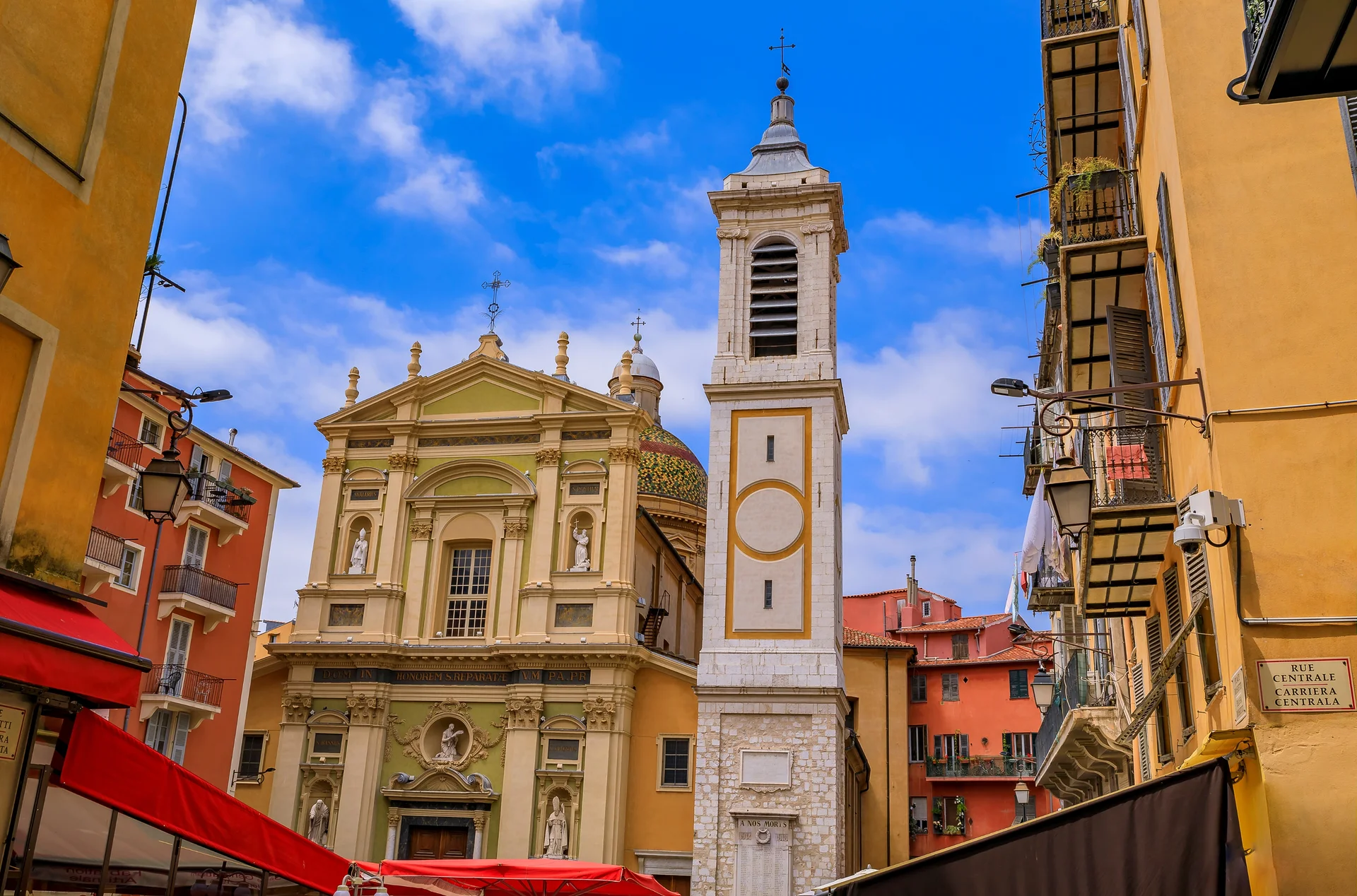
- Swimwear is not worn in restaurants or churches; Sainte-Réparate Cathedral is visited with shoulders covered.
What to book, and how far ahead
In Nice, three things need booking well ahead: a hotel for mid-February and late May, a lounger at a private beach in summer and a weekend dinner on a terrace. Everything else, museums, the market, the train, is bought on the day.
| What | Price | Book | Good to know |
|---|---|---|---|
| Hotel, Carnival (mid-February) | Up to double | 3 to 4 months ahead | Grandstand seats for the lit-up parade are sold online; the street stays open |
| Hotel, Monaco Grand Prix | Often double | 4 to 5 months ahead | Nice is full: Monaco is only ~20 min. away by train |
| Lounger at a private beach | $23 to $34 | The day before in July and August | The public beaches next door stay free |
| Dinner on a terrace, Old Nice | 2 to 3 days ahead, on weekends | The small tables on Rue Droite fill up by 8 p.m. | |
| Chagall Museum | ~$12 | On the spot | Closed Tuesday, like the Matisse Museum |
From the airport to your hotel
© OpenStreetMap contributors
The airport and the areas it serves
- Nice Côte d'Azur (NCE)
- 1Promenade, Carré d'Or
- 2Masséna, Old Nice
- 3Nice-Ville station, Jean-Médecin
- 4Port, Mont Boron
- 5Cimiez
| Destination | Transport | Time | Indicative fare |
|---|---|---|---|
| Promenade, Carré d'Or | Tram T2 + walk | ~35 min. | $2 / pers. |
| Promenade, Carré d'Or | Taxi, flat fare | 15 to 30 min. | ~$40 / taxi |
| Masséna, Old Nice | Tram T2 + walk | ~35 min. | $2 / pers. |
| Masséna, Old Nice | Taxi, flat fare | 15 to 30 min. | ~$40 / taxi |
| Nice-Ville station, Jean-Médecin | Tram T2, Jean-Médecin stop | ~30 min. | $2 / pers. |
| Nice-Ville station, Jean-Médecin | Taxi, flat fare | 15 to 30 min. | ~$40 / taxi |
| Port, Mont Boron | Tram T2, Port terminus | ~40 min. | $2 / pers. |
| Port, Mont Boron | Taxi, flat fare | 20 to 35 min. | ~$45 / taxi |
| Cimiez | Taxi | 20 to 35 min. | ~$51 / taxi |
From the airport, the T2 tram is the simplest: it leaves both terminals every 5 to 10 minutes and reaches the center in half an hour for a $2 ticket; Lignes d'Azur buses 8 and 9 also serve the airport, at the same price. Taxis wait at the official rank at each terminal, at a flat fare: a driver who approaches you in the hall charges more. For two with suitcases, in the evening, a taxi is worth the difference.
At Nice-Ville station, Avenue Jean-Médecin runs down to Place Masséna in ten minutes and to Old Nice in twenty. Cimiez is reached by taxi, or by a bus from the center: the climb takes a quarter of an hour.
Getting around
On foot first
The center fits into half an hour on foot: from the Cours Saleya to the Negresco, twenty minutes along the Promenade (1.5 miles); from Place Masséna to the port, twenty minutes too; Castle Hill is five minutes from the Cours Saleya. The tram is only for the station, the airport and Cimiez.
Tram, bus and regional train
| Ticket | Price | Valid for |
|---|---|---|
| Tram or bus ticket | $2 | One trip, transfers included |
| 10-trip card | ~$12 | Can be shared by two |
| 1-day pass | ~$5.60 | Tram and bus, unlimited trips |
| 7-day pass | ~$17 | Tram and bus, unlimited trips |
| Regional train, Cannes to Menton | $1.70 to $4.50 | One trip, depending on distance |
Regional train tickets are sold at the machines in the station or in the SNCF Connect app; keep them until you exit, since inspections are frequent. Trains to Monaco and Menton run every 15 to 20 minutes during the day, those to Antibes and Cannes every 15 to 30 minutes.
Bus 100 and bikes
Bus 100 follows the sea along the lower corniche to Menton for $2: an hour, slower than the train, but with the sea at the window and the villas of Villefranche and Cap-d'Ail. Bike-share bikes (Vélo Bleu) are found at stations along the seafront.
Budget for two
The hotel is the biggest item, and the season can double it: a seafront room costs twice as much in August as in January. Here is what three nights for two cost, flights excluded.
| Smart | Comfort | Treat | |
|---|---|---|---|
| Hotel, per night | $124 to $180 | $250 to $390 | from $560 |
| Meals, per day for two | $68 | $135 | $300 |
| Sights for the stay | $45 | $101 | $230 with a boat trip |
| Transport for the stay | $34 | $56 | $168 by taxi |
| Total for three nights | $790 | $1,460 | $3,030 |
Rooms run 30 to 40 percent cheaper from January to March, Carnival aside, and in November than in July and August; Sunday to Thursday costs less than weekends.
Benchmark prices
| Item | Price |
|---|---|
| Coffee at the counter, on a terrace | $2.30 to $2.80, $4 to $5.60 |
| Slice of socca | $4.50 to $6.80 |
| Pan bagnat | $6.80 to $11 |
| Plat du jour in Old Nice | $20 to $28 |
| Dinner for two with wine, at a neighborhood table | $90 to $135 |
| Glass of rosé at a bar | $5.60 to $9 |
| Cocktail | $14 to $18 |
| Ice cream, two scoops | $4.50 to $5.60 |
| Lounger at a private beach | $23 to $34 |
Specialties to taste
Cooking in Nice sits between Provence and neighboring Italy: olive oil, anchovies, stuffed vegetables and fresh pasta. Eat at the market in the morning, at the counter at noon, and keep dinner for a table in Old Nice booked ahead.
At the table
-
Socca
A chickpea-flour pancake baked in a wood oven, peppered and eaten hot with your fingers, a slice for $4.50 or $5.60.
-
Pissaladière
A thin tart of caramelized onions, anchovies and black olives, sold by the slice at Old Nice bakeries in the morning.
-
Pan bagnat
A round roll filled with tuna, hard-boiled egg, tomato, fava beans, onion and olive oil: the beach lunch, to eat on the pebbles.
-
Salade niçoise
Tomatoes, fava beans, peppers, eggs, anchovies and olives, with no potato or rice, dressed in olive oil: a table in Old Nice does it better than a snack bar.
-
Petits farcis and daube
Stuffed zucchini, eggplant and tomatoes, then beef daube simmered in wine and served with ravioli or gnocchi.
-
Swiss chard tart
A tart of chard with raisins and pine nuts, dusted with sugar: the sweet surprise Nice serves for dessert.
-
Ice cream, Nice flavors
Lavender, tomato-basil, olive or fig: Old Nice's ice cream makers offer about a hundred flavors, two scoops for $4.50 or $5.60.
In the glass
-
Provence rosé
The wine of the beach and the aperitif, served well chilled, $5.60 to $9 a glass at a bar.
-
Bellet
Nice's only vineyard, on the hills west of the city: a white from rolle and a red from braquet, both rare, which Old Nice wine merchants will recommend.
-
Pastis
Aniseed diluted in ice water, the aperitif of the south of France at sunset, with olives and socca.
Customs and rules to know
In Nice, manners come into play on the beach and at the table. A few simple gestures go down well: saying bonjour when you walk into a café or a shop, rinsing off at the beach showers before leaving the pebbles, leaving no trash behind.
- Lunch is from noon to 2 p.m. and dinner starts around 7:30 p.m.; many kitchens close at 10 p.m., and several small Old Nice tables close on Sunday and Monday.
- The Cours Saleya market runs Tuesday to Sunday, in the morning; on Monday, antique dealers take the place.
- On the tram, give up seats to older passengers and validate your ticket every time you board, even for a transfer.
Safety
Nice is safe for a couple, by day and at night in the areas where you will sleep. Trouble comes from quick hands in the crowd and on the pebbles, not from violence.
- On the tram, at Nice-Ville station and on the regional train platforms, keep your phone and wallet in a front pocket: pickpockets target open bags and suitcases at rush hour.
- At the beach, leave no bag or phone on the towel while you swim: one of you stays on shore, in turns.
- The sea drops off two meters (6 feet) from the edge, and currents are uncommon but do occur: green flag, swimming is free; orange, it is supervised but dangerous; red, it is forbidden. Some summers, jellyfish show up.
- The streets around the station and the lower end of Avenue Jean-Médecin are the least pleasant after midnight: take a taxi rather than walking.
- On the Promenade des Anglais, bikes and scooters ride fast in the lane beside the beach: do not stop there for a photo.
Mistakes couples make
Most disappointments come from a badly chosen season, a beach that does not look like the photo, or a schedule that is too full. Leave free hours: Nice rewards wandering.
- Coming during Carnival or the Monaco Grand Prix without a booked hotel: free rooms cost double, or sit an hour from the city.
- Expecting sand: the beach is pebbles, and walking into the water without beach shoes hurts.
- Taking a lounger without asking the price: it runs from $23 to $34 between two neighboring beaches, and the front row costs the most.
- Dining on the Cours Saleya at market time, from a laminated menu: the good tables are on Rue Droite and around the port.
- Planning the Matisse Museum on a Tuesday: it is closed.
- Putting Èze, Monaco and Menton on the same day: three towns, three hours of trains and climbing, no stroll. Two at most per day.
- Sleeping without air-conditioning in July and August: nights stay at 75°F (24°C).
Frequently asked questions
Is Nice a good destination for a romantic trip?
Yes: the Promenade des Anglais at sunrise, the lanes of Old Nice, sunset on Castle Hill and the coast by train are all made for two, and for walking. The only cautions are room prices in summer and at Carnival, and the pebbles for anyone dreaming of sand.
How many days do you need in Nice as a couple?
Three days: one for Old Nice and Castle Hill, one for the Promenade des Anglais and Cimiez, one for a train trip to Villefranche, Èze and Monaco. A fourth day lets you visit Antibes and Cannes.
Do you pay for the beaches in Nice?
The public beaches are free and run along the Promenade des Anglais, with showers and restrooms. Private beaches rent a lounger and parasol for $23 to $34 and serve food; they are calmer, and the water is the same.
When is the best time to swim in Nice?
From June to early October: the sea reaches 70°F (21°C) in June, 77°F (25°C) in August and stays at 72°F (22°C) in September. In May it rarely passes 64°F (18°C), which suits only the brave.
Do you need a rental car on the French Riviera?
No: the regional train serves Villefranche, Monaco, Menton, Antibes and Cannes all day for $1.70 to $4.50, and bus 100 follows the corniche. A car is only useful for the hills inland, toward the Gorges du Loup and Gourdon.
Can you do Monaco from Nice in a day?
Yes, it is the easiest day trip: twenty minutes by train, no border, and three hours are enough for the rock, the harbor and the casino. Combine it with Èze in the morning, or Villefranche-sur-Mer at the end of the day.