Jaipur for couples: what to know before you go (2026)
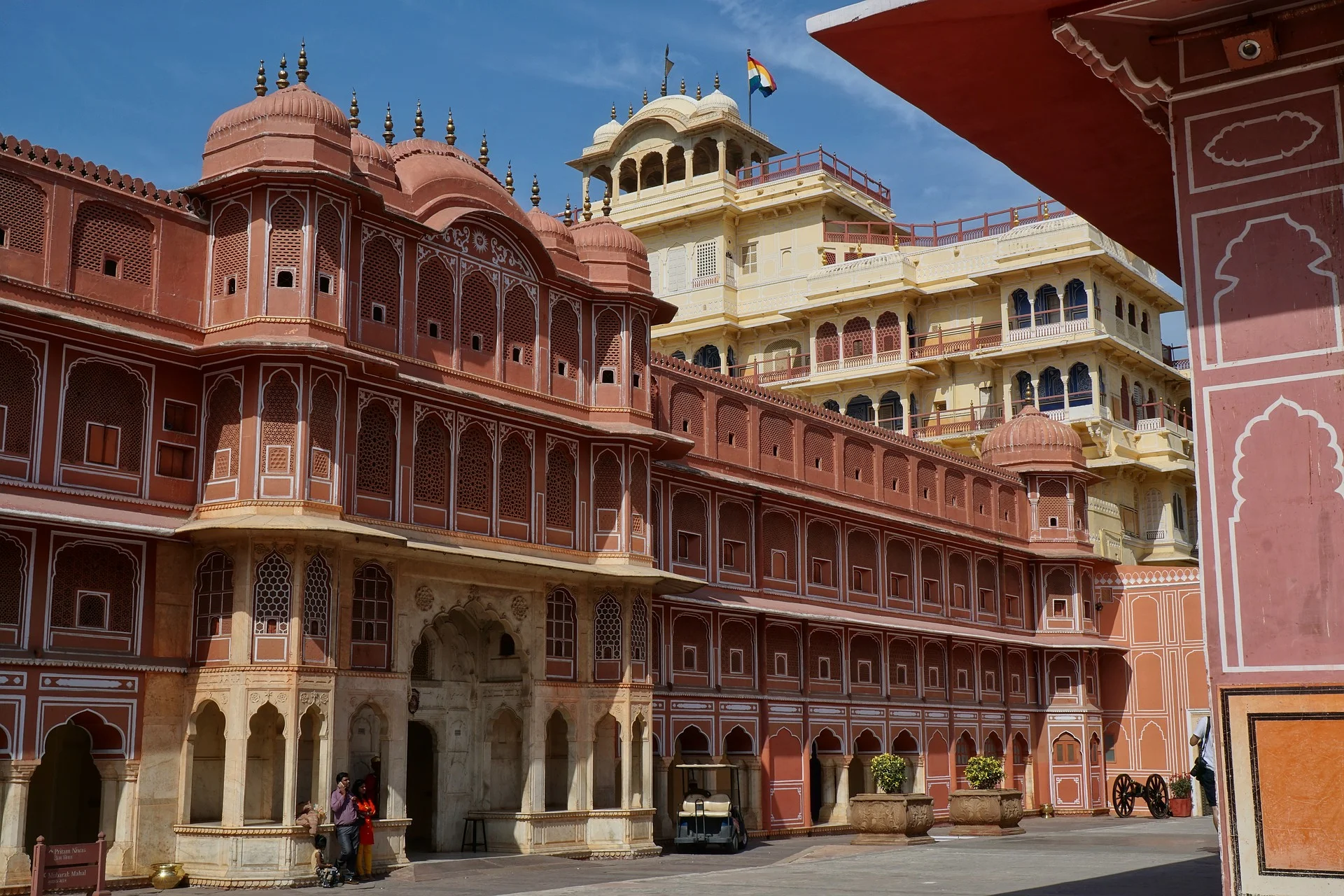
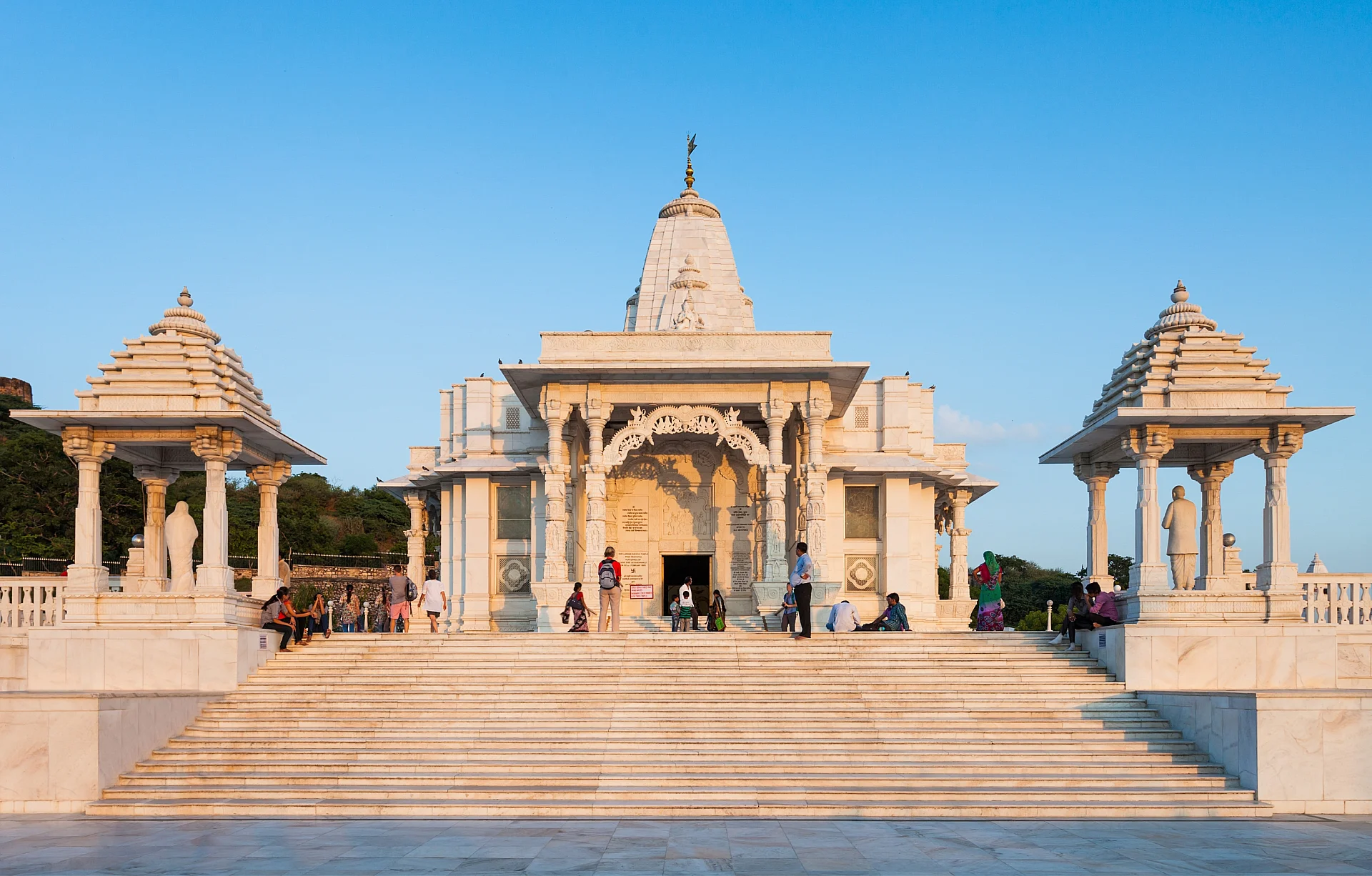
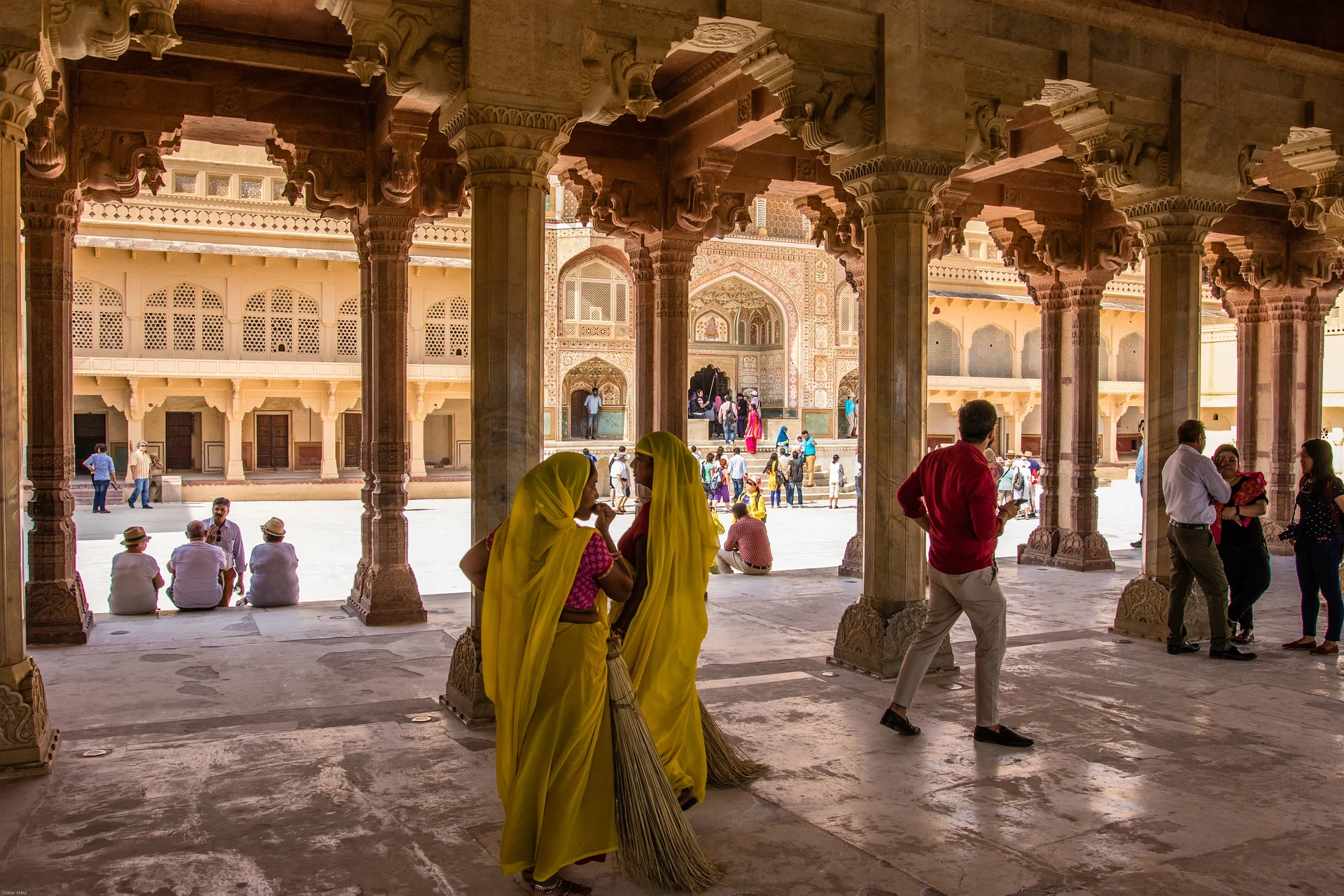
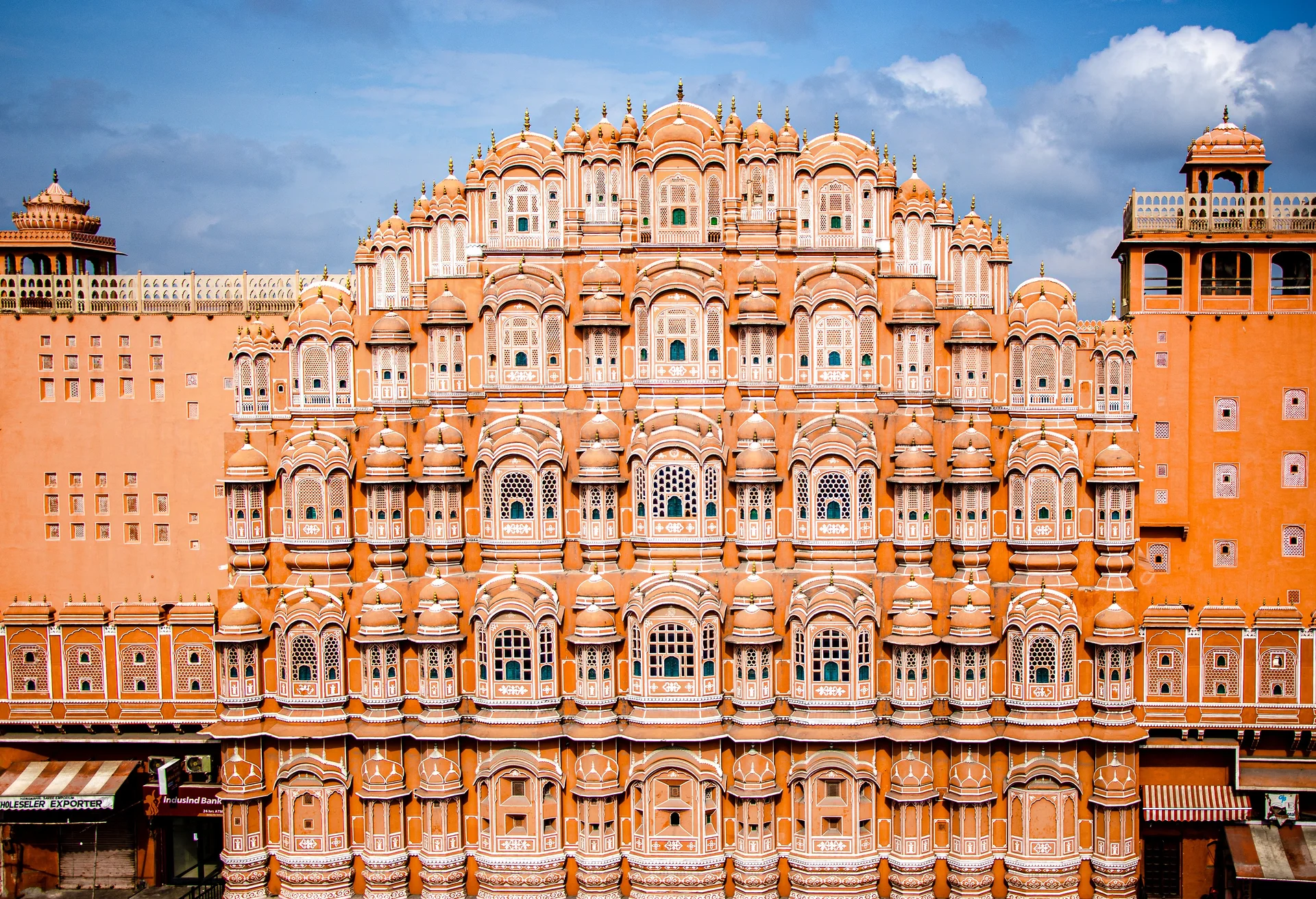
Jaipur is a gentle way into India, if you set your days by the heat: the Hawa Mahal at sunrise, Amer and Nahargarh at opening time or sunset, and in between the heat, the horns and the touts wear you out fast. A couple who travels between October and March, sleeps in a haveli or a palace away from the traffic and keeps the afternoons for a pool or a shaded bazaar gets the pink city without the exhaustion. What to sort out before you go: the e-visa, the season, the hotel, and a few habits around water and food.
At a glance
- When to go
- October to March: days of 72 to 93 °F (22 to 34 °C) and clear skies, the couples' season. April to June tops 104 °F (40 °C): forts at 8:00 only. July to September is humid monsoon, with near-empty forts.
- How many days
- Four days: the old city, Amer and Jaigarh, Galtaji and Nahargarh, then Sanganer and the Jal Mahal. With three days, drop the last; Agra and the Taj Mahal call for a night there, not a day trip.
- Which area
- A haveli in the old city for the bazaars on foot, Rambagh and Civil Lines for gardens and calm, MI Road for the station, restaurants and lower rates.
- Budget for two
- About $1,010 for four nights at comfort level, meals, sightseeing and transport included, flights excluded; a palace night costs $280 to $560, a comfortable haveli $112 to $210.
- The moment for two
- The Hawa Mahal at sunrise from a café terrace, then sunset over the city from Nahargarh, as the pink walls turn ochre.
- Book ahead
- The e-visa (2 to 4 weeks ahead), the haveli (2 to 3 months in winter), the train or driver from Delhi, and a palace dinner. Monuments are paid for on the spot.
Why Jaipur for two
Jaipur was laid out in 1727 by Maharaja Jai Singh II on a grid plan, rare in India, with wide avenues lined with arcades. Its walls were painted pink in 1876 for the visit of the Prince of Wales: pink is the color of hospitality, and the city has kept it. The old city, the Jantar Mantar observatory and the hill forts around Amer (also spelled Amber) are UNESCO-listed, and the bazaars still sell jewelry, hand-printed cloth and embroidered shoes on streets where they have been sold for three centuries.
It is the easiest city in Rajasthan for a first trip to India: a one-hour flight from Delhi, palace hotels at every price, forts less than an hour from the center. In return it asks for a method. Traffic is dense, vendors are persistent, and from 11:00 to 16:00 the heat and the crowds make the forts a chore. A couple who sightsees early, lunches in the shade and goes out in the evening gets the best of it.
The hours that change everything
| Place | Time | Why |
|---|---|---|
| Hawa Mahal | Sunrise, around 7:00 | The façade faces east and turns pink in the first sun; in the afternoon it sits in shade |
| Amer Fort | At 8:00, opening time | Tour coaches arrive around 10:00, and the stone courtyard heats up by mid-morning |
| City Palace | At 9:30, opening time | Tour groups arrive mid-morning; the courtyards are almost empty at opening |
| Jantar Mantar | At 9:00 | Almost no shade on the site: the courtyard is hot by 11:00 |
| Nahargarh | One hour before sunset | The city spreads out below, pink then orange; the ramparts empty at nightfall |
| Galtaji | Morning, or around 16:00 | The gorge stays cool in the morning; at midday the groups and the heat arrive together |
| Bazaars | From 17:00 | Shops open around 10:30 and come alive in the evening; most close on Sundays |
When to go
| Period | Weather | Crowds | Our take |
|---|---|---|---|
| October | Hot, then mild, 66 to 93 °F (19 to 34 °C) | Medium, high at Diwali | Afternoons top 86 °F (30 °C), evenings are mild; skies clear after the monsoon |
| November | Mild, 55 to 84 °F (13 to 29 °C) | High, start of peak season | Clear skies, cool evenings; wedding season, with brass bands in the streets |
| December and January | Cool, 45 to 73 °F (7 to 23 °C), morning haze | Very high at Christmas and New Year | Pleasant days, cold nights, top prices; haze over the forts in the morning |
| February and March | Mild then hot, 52 to 91 °F (11 to 33 °C) | High, then medium | The best light and soft days; Holi in March fills the hotels |
| April to June | Very hot, 75 to 111 °F (24 to 44 °C) | Low | Forts at 8:00 only, then the pool; rooms cost far less |
| July to September | Monsoon, 77 to 95 °F (25 to 35 °C), humid | Low | Green hills and near-empty forts; sudden downpours, mosquitoes, wet roads |
Four markers change prices and noise. Weddings: from November to February, wedding processions with brass bands (baraat) wind through the streets in the evening, and palace hotels host receptions. Diwali, the festival of lights, falls between mid-October and mid-November: the city lights up, the bazaars are packed and fireworks go on for several nights. Holi, the festival of colors, takes place in March: stay in your hotel that day, as powder and water are thrown at every passer-by. The Jaipur Literature Festival, in late January, fills the old-city hotels.
On January 14, for Makar Sankranti, thousands of kites fill the old-city rooftops; in July and August, the Teej festival brings processions of women in green.
Entry rules: passport, e-visa and health
| Documents | Visa | Health | |
|---|---|---|---|
| United States | Passport valid 6 months beyond arrival, with two blank pages | Tourist e-Visa, applied for online before you fly; confirm cost and timing on the official website before you book | No vaccine required from the US; US plans rarely cover you abroad, so buy travel medical insurance with evacuation |
| United Kingdom | Passport valid 6 months beyond arrival, with two blank pages | Tourist e-Visa, applied for online before you fly; confirm cost and timing on the official website before you book | The GHIC does not cover India: buy travel insurance with medical cover and repatriation |
| Canada | Passport valid 6 months beyond arrival, with two blank pages | Tourist e-Visa, applied for online before you fly; confirm cost and timing on the official website before you book | Provincial plans cover little abroad: buy travel insurance with medical cover and repatriation |
Applying for the e-Visa
The visa is requested on the Indian government's official portal, indianvisaonline.gov.in, before you fly. Have ready a scan of your passport, a recent photo, the address of your first hotel and a return or onward ticket. The cost depends on the length (30 days, 1 year or 5 years) and the season: from $12 to $90 per person as a guide, to be checked on the portal. Processing usually takes 3 to 5 working days, sometimes more: apply 2 to 4 weeks before departure, one application per person, and print the approval you receive by email. Several look-alike sites copy the portal and add fees: the official address ends in “.gov.in”. On arrival at the airport, border police take your fingerprints and photo.
Health and insurance
No vaccine is required when arriving from the US, the UK or Canada (the yellow fever certificate only concerns travelers coming from a risk country). Travel doctors usually advise updating tetanus and polio, and adding hepatitis A and typhoid; rabies is worth discussing if you plan to get close to the monkeys of Galtaji. The malaria risk is low in Jaipur, to be confirmed with a travel doctor, and dengue circulates from September to November: repellent on your skin and long sleeves in the evening.
Insurance is essential: Medicare and most US health plans do not cover you in India, a night in a private clinic is expensive, and a medical evacuation without a policy costs a small fortune. Carry your medication in its original packaging, with the prescription: some sedatives and sleeping pills are regulated.
Getting there
By air
| From | Flight time | Good to know |
|---|---|---|
| New York | ~14h30 | Nonstop flights to Delhi; Jaipur follows by a domestic flight or by train |
| Chicago, Los Angeles, San Francisco | 16 to 24h | Nonstop to Delhi from some of them depending on the season, otherwise one stop in Europe or the Gulf |
| London | ~9h | Nonstop flights to Delhi; other UK airports usually mean one stop |
| Toronto, Vancouver | 14 to 16h | Nonstop to Delhi from both, depending on the season |
Jaipur has its own airport (JAI), 8 miles (13 km) from the center, linked to Delhi by flights of about 1h several times a day: from North America or the UK you almost always connect through Delhi or a Gulf hub. Jet lag is 9h30 from New York in summer and 10h30 in winter (12h30 and 13h30 from Los Angeles, 4h30 and 5h30 from London).
Beating jet lag
A 4h30 shift is gone in two nights; from the US, count four or five. For the first two days: morning light, lunch at a set time, no nap after 15:00. The sunrise at the Hawa Mahal falls naturally on the first morning, and an afternoon by the hotel pool is enough for the first day.
From Delhi to Jaipur: the Golden Triangle
Many couples land in Delhi and then follow the Golden Triangle: Delhi, Agra and Jaipur, about 465 miles (750 km) round trip, covered in six to eight days by train or with a driver. Delhi to Jaipur is 170 miles (270 km).
| Option | Time | Rough price | Our take |
|---|---|---|---|
| Fast train | ~4h30 to 5h | $12 to $28 / pers. | The most reliable: morning departures, air-conditioned seats, no traffic |
| Car with driver | ~5h to 6h | $62 to $101 / car | Handy with luggage; plan a stop, and never drive at night |
| Plane | ~1h, plus airports | $45 to $135 / pers. | Useful for a connection; city to city, the train saves time |
The fast trains (Shatabdi and Vande Bharat) link Delhi and Jaipur stations in under five hours, with air-conditioned seats; book online or through your hotel, several weeks ahead in peak season.
Practical things to sort out before you leave
Phone and money
- The currency is the Indian rupee (INR). The amounts on this page are guides, converted for you.
- India is outside any roaming bundle, and pay-as-you-go roaming is expensive. Many US carriers sell a daily pass, but an eSIM for the week, installed before you leave, costs under $23, and Wi-Fi is free in most hotels.
- Cards work in hotels, bigger restaurants and branded shops; tuk-tuks, temples, bazaars and tips are paid in cash. Withdraw in one go from an ATM inside a bank or hotel: each withdrawal carries a flat fee.
- Keep small change, notes of 10 to 100 rupees: a driver or a vendor almost never has change for a big note.
- Tipping works as at home, with lower amounts: 10% in restaurants when service is not included (check the bill), $3.40 to $6.80 a day for the driver, $1.20 for a porter or a café waiter.
Plugs, water and what to wear
- US plugs do not fit: India uses round-pin Types C, D and M at 230 volts. Bring a universal adapter; most phone and laptop chargers are dual-voltage (look for “100-240 V” on the label), but a US hair dryer or shaver is not. UK Type G plugs also need an adapter, and the voltage matches.
- Tap water is not safe to drink, even to brush your teeth: use sealed bottles (check the cap) or the hotel's filtered water. Ice is fine in a palace hotel, not in the street.
- Shoulders and knees covered in temples, forts and busy neighborhoods, in cotton or linen for the heat, and shoes you can slip off in one move.
- A scarf, a hat and sunglasses all year, and from December to January a fleece for breakfast on a terrace: nights drop to 45 °F (7 °C) and few rooms are heated.
Eating without getting sick
- Eat hot and freshly cooked: a dish that leaves the fire in front of you is safe, a lukewarm buffet or a sauce left on the table is not.
- Skip raw salads, street juices, ice outside hotels and pre-cut fruit; fruit with a skin (bananas, oranges) is peeled by you.
- Pick a busy restaurant, especially at lunch: a kitchen that serves many turns its dishes over. Vegetarian food, very common in Rajasthan, is safer than meat outside the good addresses.
- Carry oral rehydration sachets, an anti-diarrheal and hand sanitizer. For diarrhea, drink plenty, eat plain rice and see a doctor if fever or diarrhea lasts beyond two days.
What to book, and how far ahead
Jaipur's monuments are paid for on the spot. What needs booking depends on a room, a seat or a person: the visa, the hotel, the trip from Delhi and a few experiences.
| What | Price for two | Book | Good to know |
|---|---|---|---|
| e-Visa | $23 to $180 | 2 to 4 weeks ahead | One application each, price by length and season; print the approval |
| Haveli or palace | $112 to $560 / night | 2 to 3 months ahead in winter | From November to February, weddings and festivals fill the best rooms |
| Train or car from Delhi | $23 to $101 | 2 to 4 weeks ahead | Daytime trains sell out in peak season; the car is booked through the hotel |
| Dinner in a palace | $112 to $340 | 1 to 2 weeks ahead | Rambagh, Jai Mahal or Narain Niwas; ask for a table in the courtyard or garden |
| Cooking class | $45 to $90 | The day before | Three hours at a family home or in a haveli: chai, lentils and bread, then lunch |
| Driver for the day | $34 to $56 | The day before | Through the hotel, price agreed before you leave, no shop stops |
| Monuments (Amer, City Palace, Hawa Mahal, Jantar Mantar) | ~$68 in all | Nothing to book | Tickets on the spot; a two-day combined ticket covers several sites, ask at the first ticket office |
From the airport to your hotel
© OpenStreetMap contributors
Jaipur airport and the areas it serves
- Jaipur (JAI)
- 1Old City, Hawa Mahal
- 2Civil Lines, Rambagh
- 3MI Road, station
| Destination | Transport | Time | Rough price |
|---|---|---|---|
| Old City, Hawa Mahal | Prepaid taxi | ~40 min. | ~$6.80 / taxi |
| Old City, Hawa Mahal | App (Uber, Ola) | ~40 min. | $3.40 to $5.60 / ride |
| Civil Lines, Rambagh | Prepaid taxi | ~30 min. | ~$5.60 / taxi |
| Civil Lines, Rambagh | App (Uber, Ola) | ~30 min. | $3.40 to $4.50 / ride |
| MI Road, station | Prepaid taxi | ~30 min. | ~$5.60 / taxi |
| MI Road, station | App (Uber, Ola) | ~30 min. | $3.40 to $4.50 / ride |
Jaipur (JAI) is the only airport in the area, 8 miles (13 km) south of the center. In the arrivals hall, the prepaid taxi counter shows a fixed fare: pay at the counter, keep the receipt and ignore anyone in the hall offering a better deal. The apps (Uber, Ola) ask for a meeting point outside the terminal and cost less.
If you arrive from Delhi by train, Jaipur station is west of the old city, about twenty minutes from the hotels: the prepaid tuk-tuk counter at the exit sets the fare. Delhi (DEL) is 170 miles (270 km) away, off the map: see “Getting there”.
Getting around
Tuk-tuk, app or driver
| Option | Price | Good to know |
|---|---|---|
| App (Uber, Ola, Rapido) | $1.20 to $4.50 | Price shown before you get in, no haggling; give a pickup point on the main street |
| Tuk-tuk (auto-rickshaw) | $1.20 to $3.40 | Price agreed before you get in, for two, no shop stop |
| Tuk-tuk for the day | $14 to $28 | Old city and Amer without a car; agree the hours and refuse shop stops |
| Car with driver | $34 to $56 a day | The easiest for Amer, Nahargarh and Galtaji; air-conditioned, booked through the hotel, price fixed the day before |
| Metro (pink line) | ~$0.34 | Air-conditioned, from Mansarovar to Badi Chaupar, near the Hawa Mahal; it does not go to the forts or Galtaji |
Distances deceive: 5 miles (8 km) can take 40 minutes at rush hour, and traffic, which drives on the left, yields to no one. Always allow 30 to 45 minutes between two areas.
Bargaining for a tuk-tuk
The price quoted to a foreigner is often two to three times what a local pays. Counter with half, smile, and settle around two thirds: a 2-mile (3 km) ride costs $1.20 to $2.30. Say “one way, for two, no stops” and pay on arrival, with change in your pocket. A driver who promises a shop “on the way” wants a commission: say nahi, shukriya (no, thank you) and find another vehicle.
Budget for two
India is inexpensive for a couple's trip, and Jaipur stays affordable: most of the budget goes to the hotel and the driver. Here is what four nights for two cost, flights excluded.
| Savvy | Comfort | Treat yourselves | |
|---|---|---|---|
| Hotel, per night | $45 to $79 | $112 to $210 | from $340 |
| Meals, per day for two | $23 | $45 | $135 |
| Sightseeing for the stay | $68 | $112 | $280 with a private guide |
| Transport for the stay | $45 | $112 | $230 with a driver throughout |
Room rates rise 50 to 100% from December to January and during festivals, and drop by half from April to September. Taxes of 5 to 18%, depending on the room rate, are added to the bill, and sometimes a service charge.
Benchmark prices
| Item | Price |
|---|---|
| Vegetarian thali in a neighborhood restaurant | $2.30 to $4.50 |
| Lunch in a good restaurant, per person | $5.60 to $12 |
| Rooftop dinner for two | $23 to $45 |
| Chai | $0.23 to $0.56 |
| 22 oz (650 ml) beer in a restaurant | $3.40 to $5.60 |
| Amer Fort entry | ~$6.80 |
| City Palace entry | ~$11 |
| Entry to the other monuments | $2.30 to $4.50 |
What to eat and drink
Rajasthan cooks mostly vegetarian: lentils, wheat and yogurt are the base of meals, and many restaurants serve no meat. Beef is not served anywhere; lamb and chicken are ordered in the restaurants that offer them.
At the table
-
The Rajasthani thali
A tray of small bowls: lentils, vegetables, gatte ki sabzi (chickpea-flour dumplings), bread, rice and dessert. Count $3.40 to $9 per person at lunch.
-
Dal baati churma
Baked wheat balls dipped in ghee, with lentils and churma (sweet crushed wheat): the festive dish of Rajasthan.
-
Laal maas
A red lamb curry made with Mathania chilies, and it burns: tell the waiter if you are wary of heat.
-
Pyaaz kachori
A puffed fritter stuffed with onion and spices, served hot in the morning with chutney: the city's best-known street breakfast.
-
Sweets
Ghewar (a fried flour disc soaked in syrup, mostly around the monsoon), mawa kachori, malpua: a sweet shop in the Johari Bazaar is browsed like a pastry shop.
-
Kulfi
A dense Indian ice cream made with milk, pistachio or cardamom, sold on a stick or in a clay pot (matka): $1.20 to $2.30.
In the glass
-
Chai
Spiced milk tea (ginger, cardamom), brewed in a pot over a street fire and served in a small glass or a clay cup: $0.34 to $0.56.
-
Lassi
Whipped yogurt, plain, sweet or rose, served in a clay cup you throw away. Pick a busy vendor, where the yogurt does not sit.
-
Beer
Indian beer comes in 22 oz (650 ml) bottles in licensed restaurants and hotel bars; on some days (elections, national holidays), alcohol sales are banned.
Customs and rules to know
Three habits stand out first: you eat and hand things over with your right hand, you take your shoes off at temple doors, and you keep lovers' gestures for the room.
As a couple, in public
- Holding hands is fine; kissing in public shocks and can earn a reprimand. Keep affection for the hotel.
- A foreign couple draws stares and photo requests (a selfie, a hand to shake). A smiling nahi, shukriya is enough to decline.
- The greeting namaste, palms together in front of the chest, always pleases, whether to a vendor or the hotel doorman.
In temples and forts
- Take your shoes off at a temple entrance, even on scorching ground: socks help; some temples also refuse leather items (belt, bag).
- Shoulders and knees covered. A scarf lets women and men cover the head or shoulders.
- Do not touch statues, do not point your feet at an altar, and ask before photographing someone at prayer.
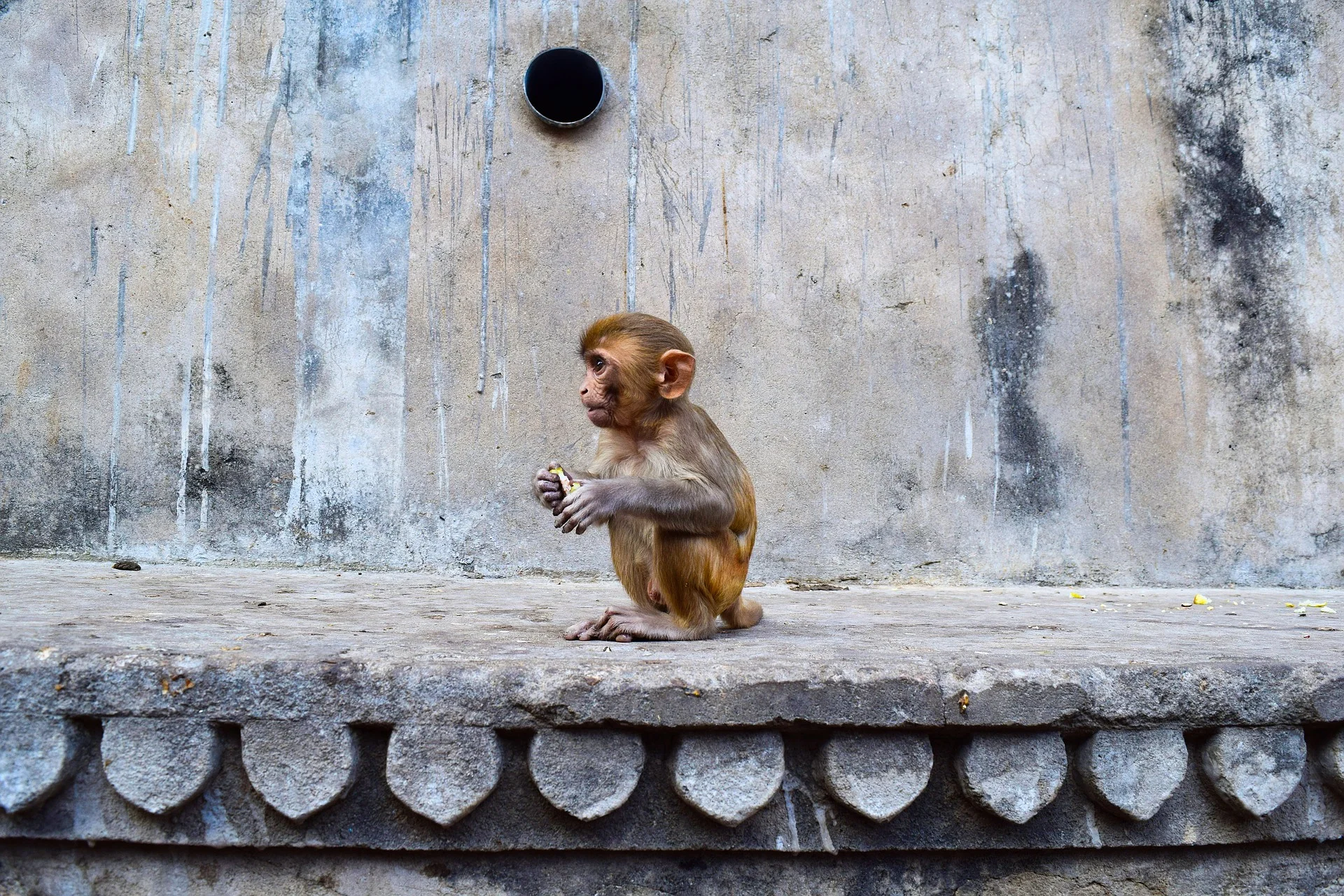
- The monkeys of Galtaji and Amer snatch food, sunglasses and plastic bags: feed them nothing and keep your hands empty.
At the bazaar
Bargaining is the rule in shops with no price tag: the first price is three to four times the final one. Offer a third, move up in small steps, and never go back on a price you accepted. A vendor who offers you chai does not oblige you to buy: thank him and leave if the price does not suit. In fixed-price shops, such as the state cooperative Rajasthali or Anokhi, you do not bargain.
Three words are enough to start: namaste (hello and goodbye), shukriya (thank you) and nahi, shukriya (no, thank you).
Safety
Jaipur is safe for a couple, by day and in the evening, and assaults on tourists are rare. The risks come from commissions, the road, the monkeys, the heat and the plate, far more than from the people.
- Gemstones: a driver, a “student” or a shopkeeper offers stones “at export price” to resell at a profit back home. It is the best-known scam in Jaipur: glass and synthetic stones are worth almost nothing. Buy no stone, valuable jewelry or rug on a driver's recommendation.
- Shop stops: a tuk-tuk or a driver who pulls up at a fabric or souvenir shop earns a commission on your purchase. Refuse from the start.
- Fake guides at the entrance of Amer and the City Palace: an accredited guide wears a badge and his rates are posted at the ticket office; ignore anyone who approaches you in the street.
- Announced closures: “the Hawa Mahal is closed today, come see my cousin's shop” is false. Check at the ticket office, never with a stranger.
- Monkeys at Galtaji, Amer and in the old city snatch bags, bottles and sunglasses: do not stare, do not bare your teeth and hold nothing out. A bite is washed with soap for fifteen minutes, then treated at a hospital the same day (rabies).
- Traffic drives on the left, honks and does not stop: cross with a local, look both ways, and take an app ride home in the evening rather than walking the alleys.
- Heat from April to June tops 104 °F (40 °C): without water or shade, heatstroke arrives within an hour. Drink 2 to 3 liters a day and sightsee before 11:00.
- Water and food: most stomach trouble comes from an ice cube, a raw salad or a street juice; see the hygiene tips above.
- Pollution from November to January: the morning haze can sting the throat; a mask helps if your airways are fragile.
Mistakes couples make
Jaipur disappoints when a couple follows the crowd: forts at noon, a driver who picks the shops, a badly placed hotel. The rest can be fixed.
- Riding an elephant at Amer: the animals carry visitors all morning up a stone ramp, in the sun, and animal welfare groups condemn their conditions. The ramp is a 15-minute walk, or a jeep ride (about $5.60).
- Arriving at Amer after 10:00: the coaches are there, the stone burns and the ticket line grows. Start the day at 8:00.
- Photographing the Hawa Mahal at noon or in the afternoon: the façade is in shade. Sunrise turns it pink.
- Accepting a “city tour by tuk-tuk for $5.60”: the price is that of the four shops where the driver stops. Pay an honest fare for a ride with no stops.
- Buying stones, rugs or jewelry on a driver's advice: the value is fake or inflated.
- Drinking tap water, taking ice in the street, eating a raw salad: three moves that ruin two days.
- Coming from April to June with no heat plan: above 104 °F (40 °C), the forts are visited before 10:00 only, and nothing after.
- Doing Agra as a day trip from Jaipur: nine hours on the road for two hours at the Taj Mahal, which is closed on Fridays. Spend the night in Agra.
- Counting on Sunday for the bazaars: most shops in the old city are closed that day.
- Arriving without an e-visa, or with a passport valid for less than six months: you will be refused boarding.
Frequently asked questions
Is Jaipur a good first stop in India for a couple?
Yes: palace hotels at every price, forts less than an hour from the center, a one-hour flight from Delhi and safe vegetarian food make the city easier than the rest of the country. Bring patience for the traffic, the vendors and the heat.
How many days do you need in Jaipur as a couple?
Four days set the right pace: the old city, Amer and Jaigarh, Galtaji and Nahargarh, then Sanganer and the Jal Mahal. With three days, leave out the fourth; with two days, keep the old city and Amer.
Do you need a visa for India?
Yes, for US, UK and Canadian citizens: an e-Visa, applied for online before you fly on the official portal. Cost and timing vary with the length and the season: check them on the official website before you book, and allow 2 to 4 weeks.
When is the best time to go to Jaipur?
October to March, with November and February-March the best months: days of 77 to 86 °F (25 to 30 °C) and clear skies. April to June is 104 °F (40 °C) and up; July to September brings monsoon showers and few visitors.
Can you ride an elephant at Amer?
It is possible, but we advise against it: the elephants carry visitors all morning on the stone ramp, and animal welfare groups condemn their conditions. Walk up or take a jeep, and hire an accredited guide at the ticket office to make sense of the fort.
Is it safe to drink the water and eat street food in Jaipur?
Tap water: no, sealed bottles only. In the street, eat food cooked in front of you and served hot, like a kachori, and skip raw salads, pressed juices and ice. A busy restaurant is safer than an empty table.