Siem Reap for couples: what to know before you go (2026)
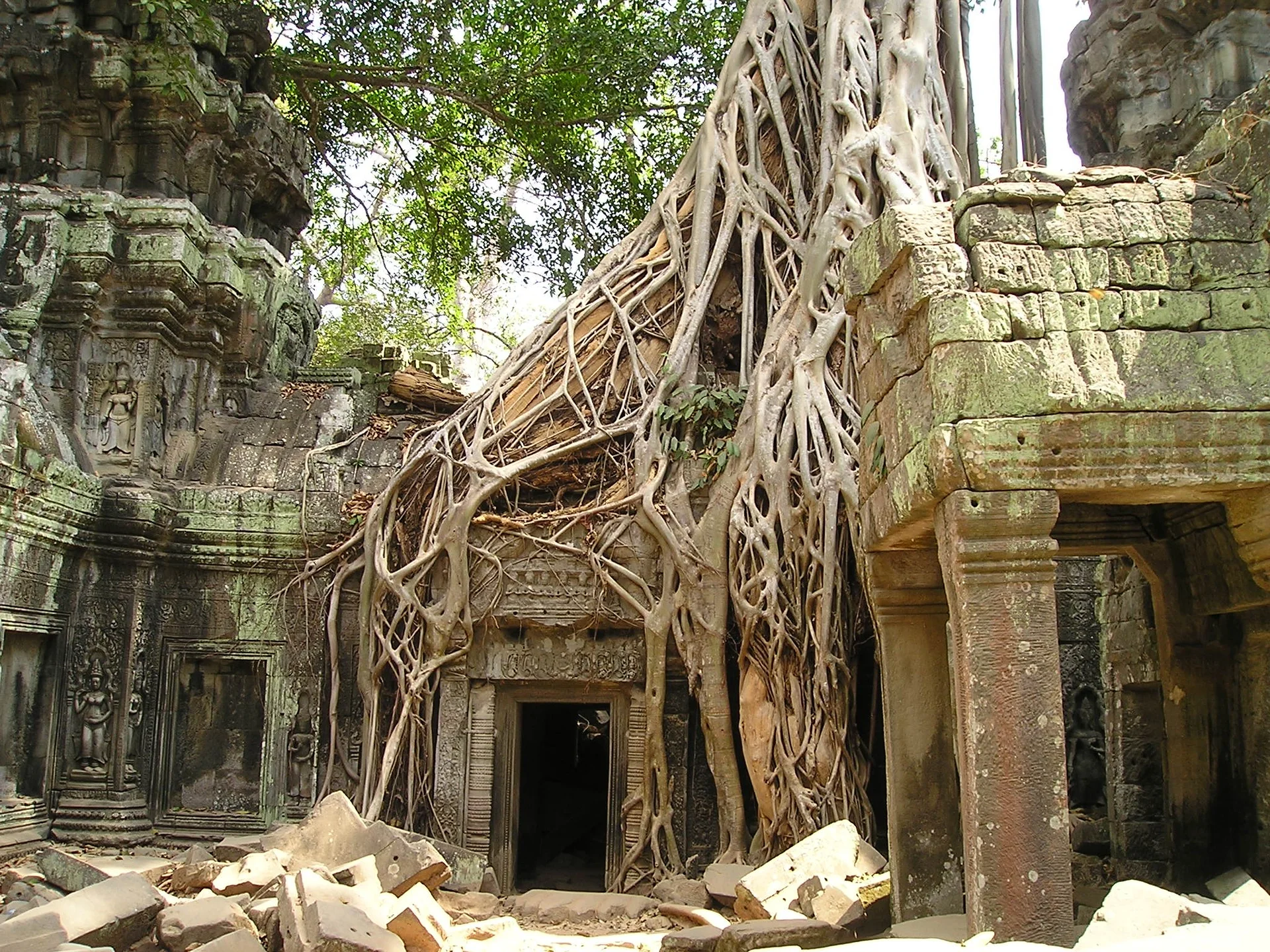
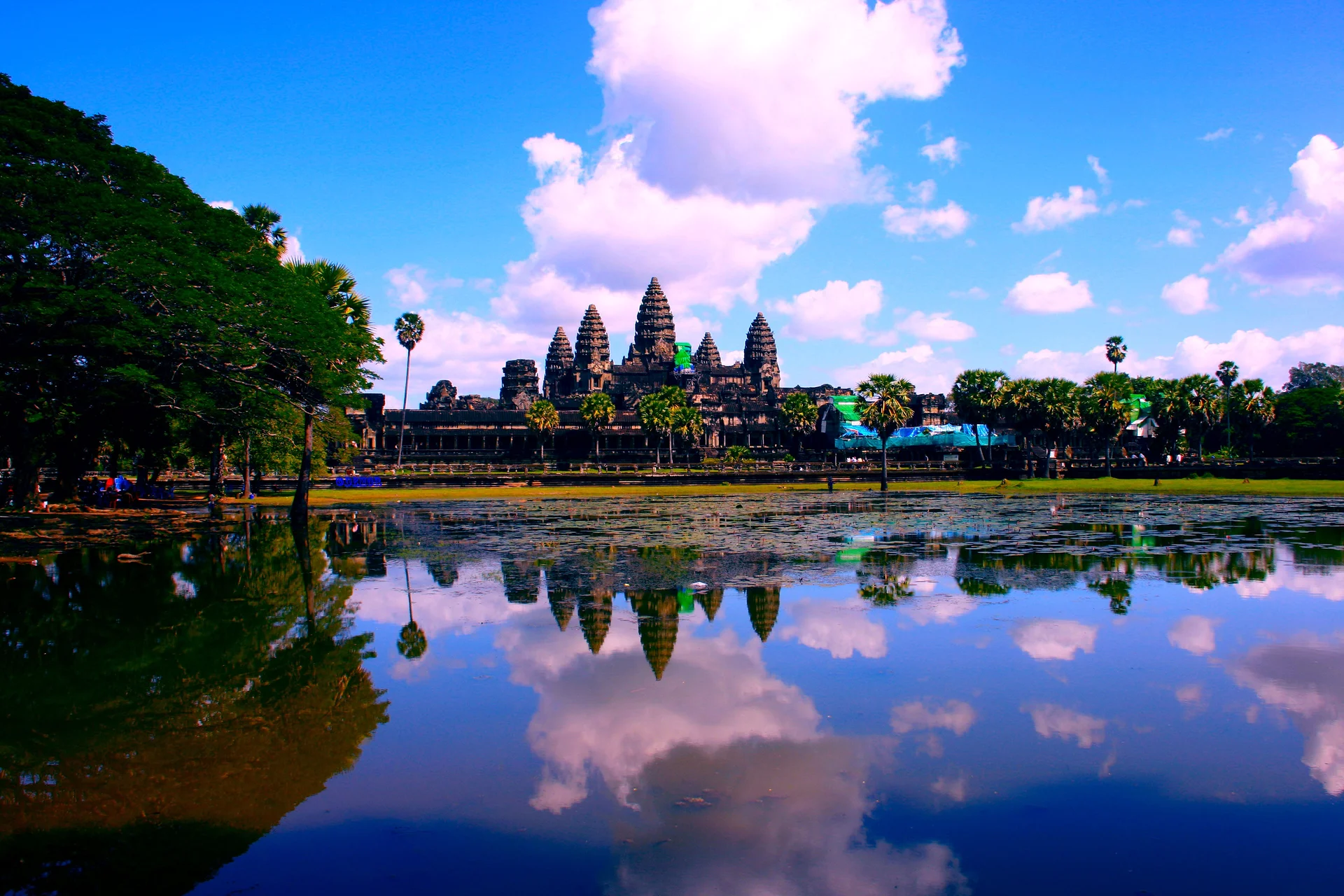
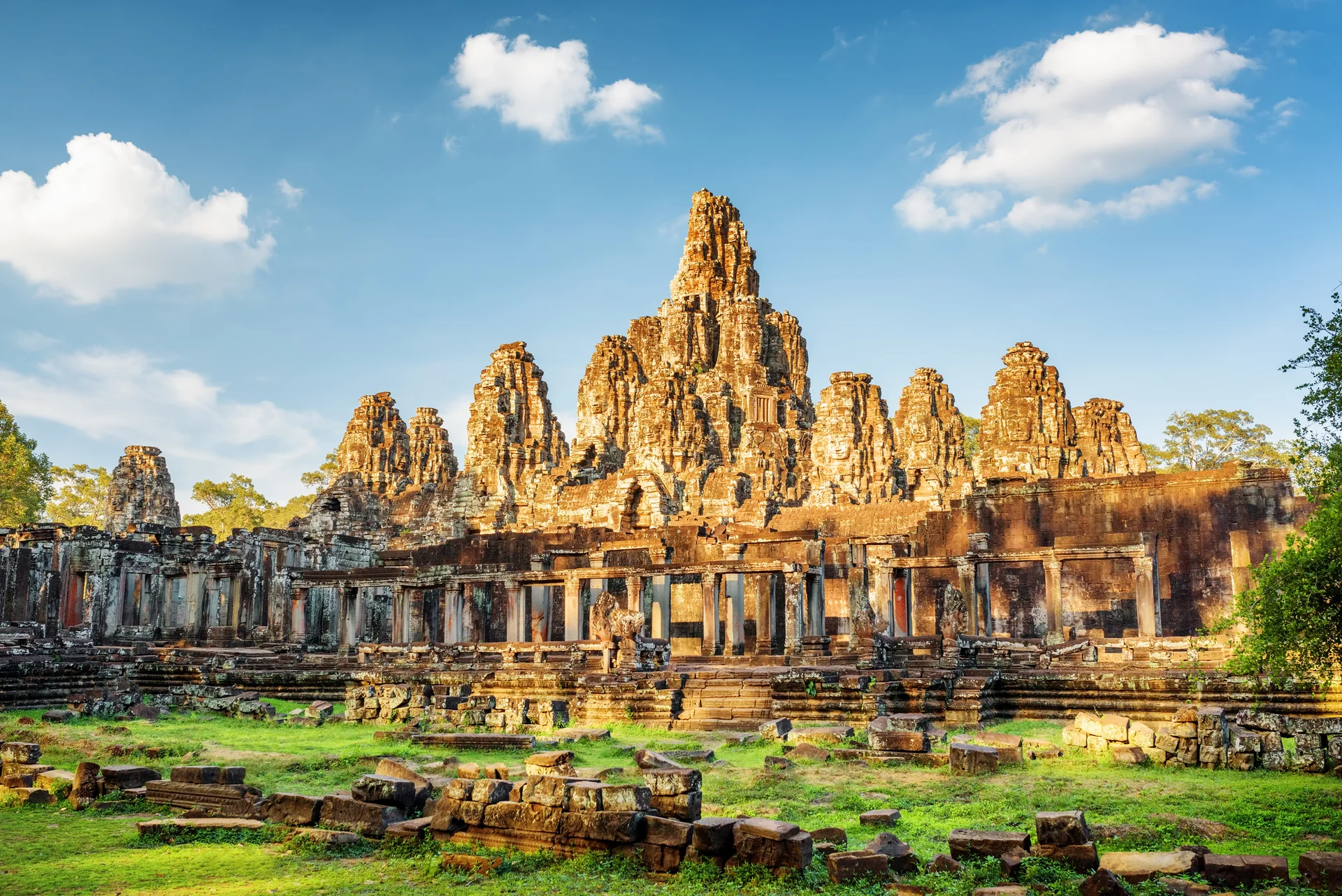
In Siem Reap the day is won before 10am and after 3pm: you see Angkor Wat at sunrise, the Bayon with its stone faces, then Ta Prohm and its roots in the cool hours, while the tour groups are still asleep, and you spend the heat of the day in the shade or by the pool. A couple who plans around that rhythm sees the same temples as everyone else, without the lines or the sunburn. What to settle before you leave: the season (November to February for cooler air), the visa, a three-day Angkor Pass and a tuk-tuk driver for each day.
At a glance
- When to go
- November to February: 68 to 86 °F (20 to 30 °C), dry skies, the best season and the priciest. March to May hits 95 to 104 °F (35 to 40 °C); June to October brings monsoon showers and green temples.
- How many days
- Four days: three mornings of temples on the three-day pass, then Banteay Srei and a lake village. With two days, keep Angkor Wat, the Bayon and Ta Prohm.
- Where to stay
- Old Market to walk to dinner, the river and Wat Bo for quiet, the Angkor Road for big resorts. The temples are 15 to 30 minutes away by tuk-tuk from anywhere.
- Budget for two
- About $1,010 for four nights at a comfortable level, Angkor Pass and tuk-tuk included, flights excluded; $510 on a tight budget, $2,130 and up with a resort and a guide.
- The moment for two
- Sunrise at Angkor Wat, then sunset at Pre Rup, quieter than Phnom Bakheng; the middle of the day belongs to shade and a pool.
- Book ahead
- Your tuk-tuk driver (the day before), a guide for the Bayon (1 week ahead), the Phare circus (1 to 2 weeks) and your hotel 2 to 3 months ahead for Christmas and New Year.
Why Siem Reap for two
Siem Reap is the gateway to Angkor, the largest temple complex in the world: sanctuaries built between the 9th and 13th centuries by the Khmer kings, spread over more than 150 square miles (400 km²) of forest. Angkor Wat, raised in the early 12th century, is the largest; the Bayon, in Angkor Thom, carries more than two hundred smiling faces; Ta Prohm was left to the silk-cotton trees, whose roots grip its walls. The town itself, to the south, is small and relaxed: a river, an old market, café terraces, massages for $12 an hour and hotels with gardens.
The catch is that everyone wants the same pictures at the same time. At sunrise thousands of visitors line the pond at Angkor Wat; between 9am and 11am, Ta Prohm and the Bayon move at the pace of a queue, in 91 °F (33 °C) heat. The right rhythm is one site at opening time, a break from 11am to 3pm, and a second site late in the day.
The hours that change everything
| Place | Time | Why |
|---|---|---|
| Angkor Wat | 5am for sunrise | The gates open at 5am; the sun rises between 5:30 and 6:20am depending on the season, and the day's thickest crowd stands at the pond |
| Bayon | 7:30am, or after 3pm | The faces read best in low light; tour buses arrive from 9 to 11am |
| Ta Prohm | 7:30am at opening, or after 3pm | The narrow passages and the famous trees clog by 9:30am; at 7:30 you walk straight through |
| Phnom Bakheng | Skip it at sunset | Access to the top is capped at a few hundred people, so you wait in line; Pre Rup has a calmer sunset |
| Banteay Srei | 8am, or after 3pm | The temple is small and fills with buses around 10:30am |
When to go
| Period | Weather | Crowds | Our take |
|---|---|---|---|
| November to February | Dry, 68 to 86 °F (20 to 30 °C); cool nights in December and January | Very high, peaking December 20 to January 5 | Clear skies, comfortable walking, the lake still high in November; book your hotel 2 to 3 months ahead |
| March to early April | Very hot, 86 to 100 °F (30 to 38 °C), sometimes 104 °F | Moderate | Sightsee from 5 to 10am only; midday walking turns punishing |
| April 13 to 16 | Very hot | High among Cambodians | Khmer New Year: families visit Angkor, rooms go up and some restaurants close |
| May to August | Monsoon, 77 to 91 °F (25 to 33 °C), very humid; a shower most afternoons | Low | Green, nearly empty temples and low hotel rates; mornings are usually dry |
| September and October | Heaviest rains, 77 to 88 °F (25 to 31 °C); roads sometimes flooded | Low, except during Pchum Ben | Tonlé Sap lake at its peak, stilt villages reachable by boat |
Pchum Ben, the festival of the ancestors (two weeks in late September or October), and Khmer New Year in April are public holidays: many businesses close and Cambodians travel. Christmas and New Year are the most expensive weeks of the year.
Entry requirements: passport, visa and health
| Documents | Visa | Health | |
|---|---|---|---|
| United States | Passport valid 6 months past arrival, with a blank page | Required: online e-visa (~$40) or visa on arrival (~$34), 30 days; check the official site | No vaccine required; check CDC advice; Medicare and most US plans do not cover you here, so buy travel insurance with evacuation |
| United Kingdom | Passport valid 6 months past arrival, with a blank page | Required: online e-visa (~$40) or visa on arrival (~$34), 30 days; check the official site | No vaccine required; the UK GHIC card does not apply: travel insurance with repatriation |
| Canada | Passport valid 6 months past arrival, with a blank page | Required: online e-visa (~$40) or visa on arrival (~$34), 30 days; check the official site | Provincial plans cover little abroad: travel insurance with medical evacuation |
Two ways to get the visa
The e-visa is requested on the Cambodian government's official site: your passport, a digital passport-style photo and a card payment, then the visa arrives by email to print. The visa on arrival is issued at the airport counter: a form, a passport photo and payment in US dollars cash. Both give you 30 days; fees and rules change, so recheck the official site before booking.
Health
No vaccine is required if you arrive from the US, the UK or Canada; see a travel clinic six weeks before you go. Hepatitis A, typhoid and a tetanus-diphtheria-polio booster are the shots most often advised. The main risk is dengue, carried by a mosquito that bites by day: use repellent on your skin and wear long sleeves at dawn and dusk.
Getting there
By air
| From | Time | Good to know |
|---|---|---|
| New York | ~22 to 28h | No nonstop flight; one stop in Asia or the Gulf (Seoul, Tokyo, Doha, Singapore) |
| Los Angeles, San Francisco | ~20 to 26h | One stop in Asia (Seoul, Taipei, Tokyo, Hong Kong, Bangkok) |
| Toronto, Vancouver | ~24 to 32h | One or two stops, through Asia or the Gulf |
| London | ~16 to 22h | One stop in the Gulf, Bangkok or Singapore |
These times are ballparks: they depend on your layover. Nonstop flights link Bangkok, Singapore, Kuala Lumpur, Ho Chi Minh City and Hanoi to Siem Reap in 1 to 2.5 hours, so you can build a ticket with a stop in one of them. The alternative is Phnom Penh, then a 45-minute flight or a 5 to 6 hour bus ride to Siem Reap.
The time difference is 11 hours ahead of New York in summer (12 in winter), 14 to 15 hours ahead of Los Angeles and 6 to 7 hours ahead of London.
Beating jet lag
Stay awake until 9pm on the first night. The 4:30am wake-up of the first days helps with sunrise, but do not schedule it the morning after a 20-hour trip: keep day one light (a walk in the center, a massage, dinner near the hotel) and aim for Angkor Wat on the second or third morning.
The practical stuff
Phone
Your US or UK plan will roam at a steep rate in Cambodia. An eSIM installed before you leave is easiest; a local SIM (Cellcard, Smart or Metfone) is sold at the airport or in town, with your passport, for about $5.60 to $12. Wi-Fi is free in hotels and most cafés.
Money
- Cambodia runs on the US dollar: hotels, temples and restaurants quote prices in dollars, ATMs dispense them, and change under a dollar comes back in riel (about 4,000 riel to the dollar). The amounts on this page are guides, converted for you.
- Carry small bills (1, 5 and 10 dollars): a tuk-tuk driver or a café cannot break a 50. A torn or stained note is refused almost everywhere.
- Cards work in hotels and in town restaurants, often with a fee; ATMs charge a flat fee per withdrawal, so take out fewer, larger amounts.
- Tipping is not expected but it counts: round up at a restaurant or leave $1.20 to $2.30, and $3.40 to $7.90 for a driver or a guide after a full day.
Plugs, water and dress
- Sockets are type A, C and G, at 230 volts: your US plugs fit, but a 110-volt device needs a charger marked "100-240V", and a UK plug fits type G sockets.
- Tap water is not drinkable: use bottled or filtered water (most hotels give it free); restaurant ice in town is commercially made. Carry 1.5 liters (50 oz) for a temple day.
- At the temples, shoulders and knees covered: a light scarf or a long-sleeved shirt does it, with flat closed shoes, because the stone stairs are steep.
- A hat, sunscreen and mosquito repellent; in the monsoon, a light poncho.
What to book, and how far ahead
Siem Reap needs little advance booking, but three things are settled early: the tuk-tuk or car for each day, a guide for the temples, and your hotel in high season.
| What | Price for two | Book | Good to know |
|---|---|---|---|
| 3-day Angkor Pass | ~$135 | On site, the day before your first temple | Valid 10 days, with your photo taken at the counter; check pass prices on the official site before you go |
| Tuk-tuk for the day | $17 to $34 | The day before, through your hotel | Fixed per day for two, agreed before you leave; the circuit changes the price |
| Temple guide | $40 to $79 | 1 week ahead | A licensed guide with a card; the Bayon and Angkor Wat read far better with one |
| Phare circus | ~$79 | 1 to 2 weeks ahead | A 1h15 show at 8pm; the best seats go in high season |
| Khmer cooking class | $45 to $68 | 2 to 3 days ahead | Market in the morning, shared lunch; the half day fits before the heat |
| Boat to a lake village | $45 to $79 | The day before | The choice of village and boat matters more than the price (see the itinerary) |
From the airport to your hotel
© OpenStreetMap contributors
Siem Reap-Angkor Airport and the areas it serves
- Siem Reap-Angkor (SAI)
- 1Old Market, Pub Street
- 2The river, Wat Bo
- 3Angkor Road
| Destination | Transport | Time | Typical fare |
|---|---|---|---|
| Old Market, Pub Street | Official taxi | ~50 min. | ~$34 / taxi |
| The river, Wat Bo | Official taxi | ~50 min. | ~$34 / taxi |
| Angkor Road | Official taxi | ~45 min. | ~$34 / taxi |
Siem Reap-Angkor (SAI), about 25 miles (40 km) east of town, is the airport where commercial flights land since the new terminal opened. The old airport, 4 miles (7 km) from the center (code REP), no longer handles scheduled flights: if a booking site still lists it, check the code on your ticket.
Allow 45 minutes to an hour on the road. Taxis have a counter at the exit with a fixed fare (confirm it before you get in); your hotel will often send a car for a similar price, which is easier after a night flight. Send it your flight time and arrange it before you leave.
In town, the tuk-tuk replaces the taxi: your hotel can put you in touch with a trusted driver for the day from the first evening.
Getting around
Tuk-tuk, car, bike
| Option | Price | Good to know |
|---|---|---|
| Tuk-tuk for the day | $17 to $34 | A motorcycle-drawn cart with shade and cold water; the driver waits at each temple, and the fare is for the day for two |
| Car with driver | $40 to $68 a day | Air-conditioned, useful for Banteay Srei and the lake in the hot hours |
| Tuk-tuk ride in town | $2.30 to $4.50 | Agree the price before you get in; the Grab and PassApp apps show the fare |
| E-bike | $12 to $17 a day | The freest way to see Angkor Thom; not for country roads |
| Bicycle | $2.30 to $3.40 a day | For town and the river; the Angkor road is hot and dusty |
Small circuit, grand circuit
Drivers talk about two loops. The small circuit (about 11 miles, 17 km) covers Angkor Wat, Angkor Thom with the Bayon, then Ta Prohm; the grand circuit (about 16 miles, 26 km) adds Preah Khan, Neak Pean, Ta Som, East Mebon and Pre Rup. Banteay Srei, about 22 miles (35 km) away, is counted separately and costs $5.60 to $12 more by tuk-tuk. The itinerary on this site cuts these loops into three mornings.
Budget for two
Siem Reap is affordable: the hotel makes most of the gap between a tight budget and a luxury stay, and the Angkor Pass is the one fixed cost. Here is what four nights for two cost, flights and pass excluded.
| Budget | Comfort | Splurge | |
|---|---|---|---|
| Hotel, per night | $34 to $68 | $101 to $210 | from $320 |
| Meals, per day for two | $17 | $45 | $112 |
| Tuk-tuk, car and guide for the stay | $68 | $230 | $510 |
| Activities (circus, class, massages) | $45 | $112 | $280 |
Add the three-day Angkor Pass, about $135 for two. Hotel rates double from Christmas to early January.
Price guide
| Item | Price |
|---|---|
| Khmer dish at a neighborhood restaurant | $3.40 to $6.80 |
| Fish amok at a central restaurant | $5.60 to $11 |
| Angkor beer on draft | $0.56 to $1.20 |
| Cocktail at a street bar | $3.40 to $6.80 |
| One-hour massage | $9 to $17 |
| 1.5-liter bottle of water | $0.56 |
| Iced coffee with condensed milk | $1.70 to $2.80 |
What to eat and drink
Khmer cooking is mild and fragrant with lemongrass, galangal and kaffir lime leaves, less fiery than Thai food. A couple eats in three beats: noodles or soup at breakfast, a light lunch between temples, a dinner of amok or grilled meat.
At the table
-
Amok
Fish steamed in a banana leaf with coconut cream, lemongrass and galangal: the national dish, silky, worth trying once.
-
Lok lak
Stir-fried cubes of beef with a lime and Kampot pepper dip, served with rice and raw vegetables: the dish everyone likes.
-
Nom banh chok
Fresh rice noodles in a fish and lemongrass broth, with flowers and herbs: the Khmer breakfast, at the market from 6am.
-
Kuy teav
A rice-noodle soup with pork or beef, herbs to add yourself: the locals' quick lunch.
-
Num pang
A Cambodian sandwich on baguette, with pâté, pickled vegetables and cilantro: the takeaway for a temple morning.
-
Fruit
Green and ripe mangoes, dragon fruit, pineapple and fresh coconut cracked open on the sidewalk: the best fruit in the region, at $1.20 to $2.30.
In the glass
-
Angkor beer
The national beer, light, on draft or in a bottle, at $0.56 to $1.20 in the bars of Pub Street.
-
Iced coffee
Strong coffee, sweet condensed milk and ice: the Cambodian cure for the afternoon heat.
-
Sugarcane juice and coconut
Pressed in front of you, at $1.20 to $1.70: the drink for a break between temples.
-
Khmer cocktails
Bars in the center mix rum with lemongrass, ginger or Kampot pepper; a luxury-hotel cocktail costs three to four times more.
Etiquette and rules
A few simple gestures are met with a smile: a quiet voice, covered clothes, and respect for monks and sanctuaries, where worshippers still pray.
At the temples
- Shoulders and knees covered, hat off inside sanctuaries, shoes off in a working pagoda.
- Climb only by the open stairways: do not scale the ruins, touch the bas-reliefs or climb a Buddha statue for a photo. Drones are banned over Angkor without a permit.
- A woman does not touch a monk or hand him an object directly: she sets it down in front of him. Ask before photographing a monk.
- Do not point your feet at a Buddha or a person, and do not touch anyone's head, a child's included: it is sacred.
Day to day
- Greet with your palms together in front of your chest and a slight bow (the sompeah); a suosdei (hello) or an orkun (thank you) goes a long way.
- Bargain at the market with a smile and no raised voice: a price halves, it does not drop to a tenth.
- Keep displays of affection for the hotel; holding hands is fine.
- Take your shoes off when entering a home, a spa or a temple.
Safety
Siem Reap is safe for a couple, by day and in the evening, and violence against visitors is rare. Trouble comes from the heat, the road and some persistent sellers, more than from people.
- The heat: 95 to 104 °F (35 to 40 °C) from March to May and heavy humidity in the monsoon. Sightsee from 5 to 10am, drink a liter every two hours, cover up and rest at midday; heatstroke arrives fast at Ta Prohm.
- Bag snatching from motorbikes in the center in the evening: wear your bag across your body, on the side away from the road, and keep your phone in a pocket.
- Child sellers of bracelets, postcards and fruit around the temples: do not give them money, it keeps them out of school. A kind word and a "no thank you" is enough.
- Orphanages, which some agencies offer to visit: do not go, most house children who are not orphans, and their presence keeps the place funded.
- The tuk-tuk that stops at a shop "on the way" to collect a commission: say no the first time, or agree on a trip with no stops.
- Mosquitoes, day and night, and dengue: repellent, long clothes, an air-conditioned room or a net.
- Unmarked paths at remote temples: stay on the trails, as landmines remain outside the cleared areas.
Mistakes couples make
Siem Reap disappoints mostly through badly paced days: too many temples at the wrong time, no break, a pass chosen without thought.
- Sightseeing nonstop from 9am to 5pm: from noon, the heat and the groups spoil what the morning gave you. Two sessions, a break from 11am to 3pm.
- Reaching Angkor Wat at 6:30am for sunrise: the sun is already up and the best spots are gone. Be on the causeway at 5am.
- Buying a one-day pass: Angkor Wat, the Bayon and Ta Prohm do not fit into a single hot day; the three-day pass spreads out.
- Showing up at the temples in shorts or a tank top: you are turned back from the upper level of Angkor Wat. A scarf and light trousers fix it.
- Buying a sack of rice or powdered milk "for a family" from a child in a floating village: the item goes back to the shop after you leave. Give to a local charity instead.
- Picking the nearest, most visited floating village (Chong Khneas): it is the most commercial. Kampong Phluk or Kampong Khleang are calmer.
- Sleeping near the new airport to save time: it is 45 minutes from town and the temples.
- Photographing people, monks or children without asking: a hand gesture and a smile work as permission.
Frequently asked questions
How many days do you need for Angkor and Siem Reap as a couple?
Four days set the right pace: Angkor Wat at dawn, the Bayon and Angkor Thom, Ta Prohm and Pre Rup, then Banteay Srei and a lake village. With three days, keep the first three; with two, Angkor Wat, the Bayon and Ta Prohm.
Which Angkor Pass should you choose: 1, 3 or 7 days?
Three days for most couples: it covers Angkor Wat, the Bayon, Ta Prohm, Pre Rup and Banteay Srei, and stays valid for ten days. The one-day pass forces you to do everything in the heat; the seven-day pass is for history buffs. Check prices on the official site before you go.
Do you need a visa for Cambodia?
Yes: a 30-day tourist visa, as an e-visa on the official site or on arrival at the airport, with a passport valid six months past arrival. Americans, Britons and Canadians all need it. Check the fee and rules before you book.
When is the best time to visit Siem Reap?
November to February: 68 to 86 °F (20 to 30 °C), dry skies, easy temple days. March to May is very hot (95 to 104 °F); from June to October the monsoon brings afternoon showers but green, nearly empty temples and cheaper hotels.
What currency do you use in Cambodia?
US dollars, which ATMs dispense and shopkeepers prefer. Change under a dollar comes back in riel (about 4,000 riel to the dollar). Bring small bills and avoid torn notes.
How do you choose a floating village visit responsibly?
Pick Kampong Phluk or Kampong Khleang over Chong Khneas, go with a driver who knows the village, give neither money nor rice to children, and skip orphanage visits. A boat run by a villager and paid at the dock benefits the village.