San Francisco for couples: know before you go (2026)
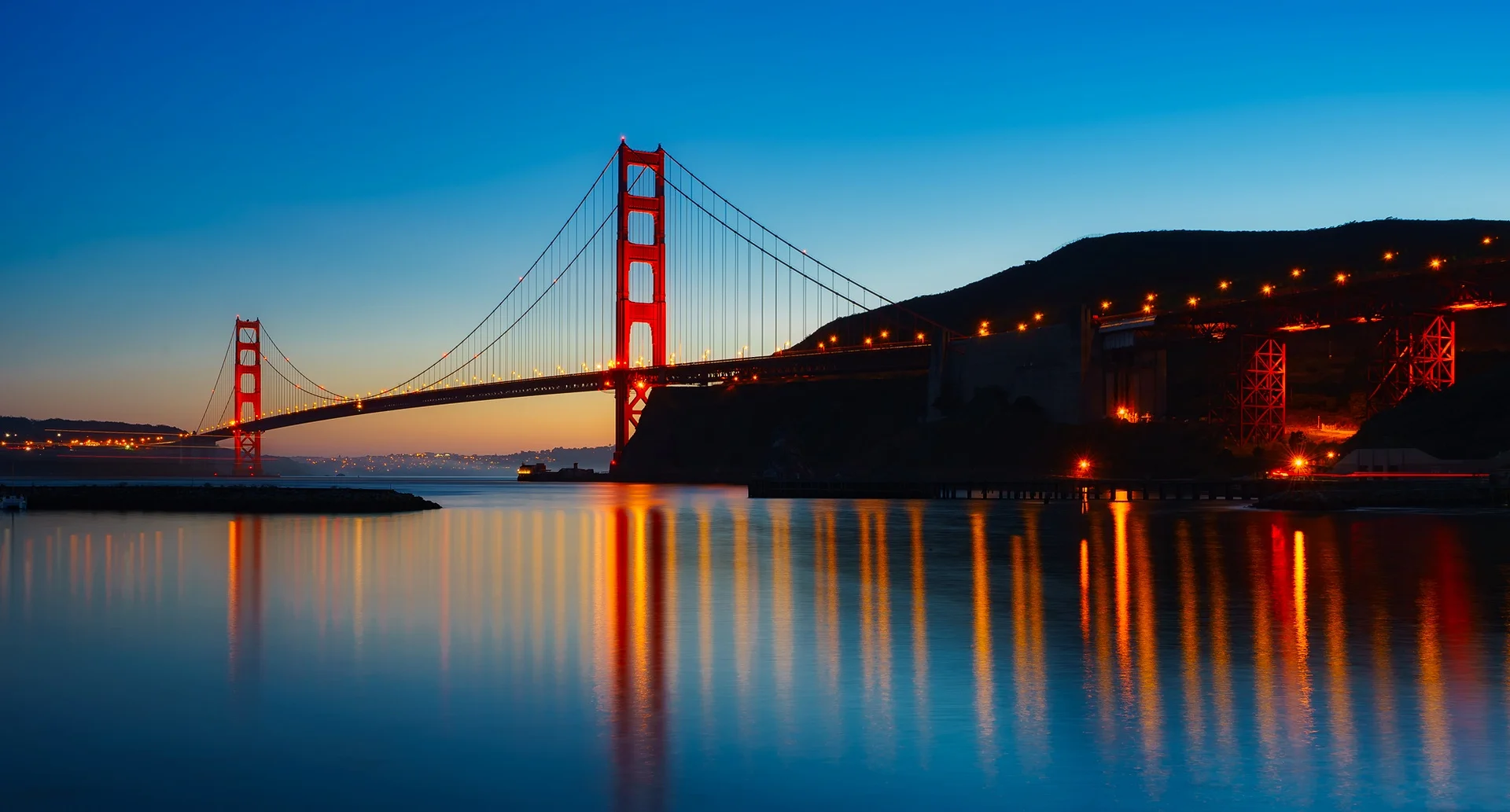
At the Golden Gate Bridge, summer fog often hides the towers until noon, and September and October are the clearest and warmest months on the bay. Three things need settling before you go: the hotel, the biggest line in the budget in one of America's priciest cities; the ferry to Alcatraz, which sells out weeks ahead; and, if you fly in from abroad, the ESTA. Everything else, the cable cars, the Mission, sunset from Twin Peaks, is better decided on the day, with a jacket in your bag and good shoes for the hills.
At a glance
- When to go
- September and October: 55 to 77°F (13 to 25°C), the most sun and the least fog. June to August runs 54 to 70°F (12 to 21°C), with fog and wind in the morning; winter is rainy, but clear between storms.
- How many days
- Four full days for the Golden Gate Bridge, Alcatraz, the cable cars and the Mission without rushing; add a day for Napa or Sonoma. Distances are short, but the hills slow you down.
- Which neighborhood
- Union Square and Nob Hill for a first visit, North Beach for dinners, the Presidio for quiet, a half-hour walk from the Golden Gate Bridge.
- Budget for two
- About $2,130 for three nights at a comfortable level, with hotel, meals, Alcatraz and transit, before flights and hotel taxes. The room is more than half of it.
- The moment for two
- Sunset at Baker Beach with the Golden Gate Bridge in front of you on a clear evening, or the city lighting up from Twin Peaks.
- Book ahead
- Alcatraz: 4 to 8 weeks ahead in summer, 2 to 3 months for the night tour. Popular dinner tables go 2 to 4 weeks ahead.
Why San Francisco for two
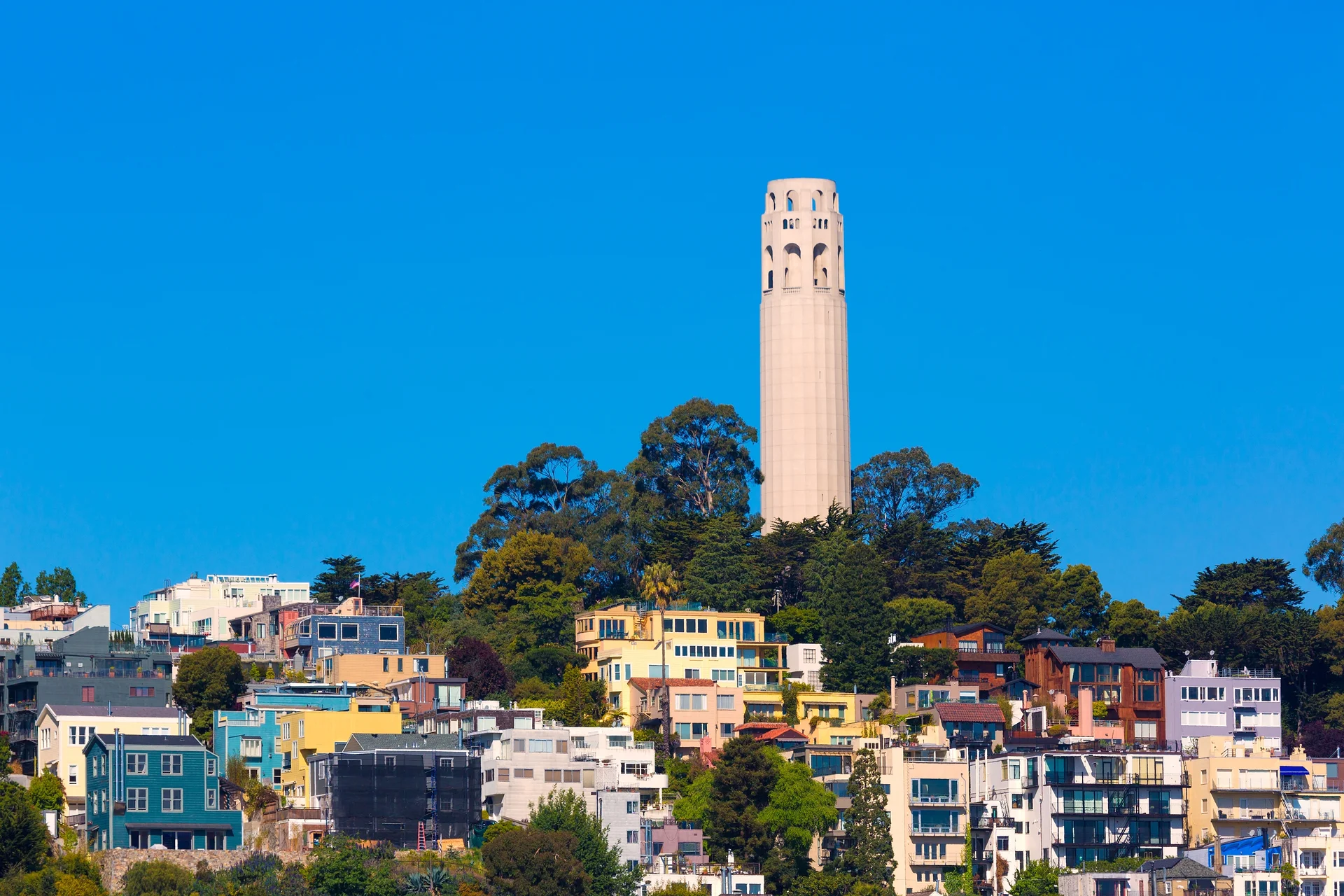
San Francisco is not the California of beaches and palm trees: it is a city of hills between the bay and the Pacific, where you climb 20% grades side by side, the cable car bells keep time, and the fog changes the scenery by the hour. A couple remembers the viewpoints, the Golden Gate Bridge from Baker Beach, the bay from Coit Tower, the Victorian houses at Alamo Square, and the tables of the Mission and North Beach.
Two facts make the trip easier. Distances are short: from Union Square to Fisherman's Wharf, the Presidio or the Mission it is 15 to 30 minutes by bus or cable car, no car needed. And the region puts the vineyards of Napa and Sonoma, the redwoods of Muir Woods and the cliffs of Point Reyes within a day trip.
When to go
| When | Weather | Crowds | Our take |
|---|---|---|---|
| September and October | 55 to 77°F (13 to 25°C), clear skies, very little fog | High; conferences and Fleet Week push prices up | Our favorite: Indian summer, a sharp bay, mild evenings |
| March to May | 48 to 68°F (9 to 20°C), some March showers, green hills | Moderate | Longer days and few crowds, but cool mornings |
| June to August | 54 to 70°F (12 to 21°C), morning and evening fog and wind | Very high | Long days, but the Golden Gate Bridge is often under the fog |
| November to February | 46 to 61°F (8 to 16°C), rain mostly December to February, clear skies between storms | Low, except Thanksgiving and Christmas | Lower prices and crab season, but whole days of rain |
A few dates change the city. In the fall, the Dreamforce conference fills downtown hotels and sometimes doubles weekday rates, and October's Fleet Week brings the Blue Angels over the bay. The last weekend of June is Pride on Market Street; August is the Outside Lands festival in Golden Gate Park; the Lunar New Year parade rolls through Chinatown in January or February. In late summer and fall, smoke from wildfires elsewhere in California sometimes dims the sky for a few days: the AirNow app shows the day's air quality.
Paperwork: ID, ESTA, health
| Documents | Entry authorization | Health | |
|---|---|---|---|
| United States | A REAL ID driver's license (a star in the top corner) or a passport for domestic flights; hotels ask for photo ID | None | Check what your plan covers outside your home state |
| United Kingdom, Australia, New Zealand | A passport valid for your whole stay | ESTA required: ~$42, valid 2 years | Travel insurance: the UK's GHIC does not apply in the US |
| Canada | A valid passport | None (no ESTA) | Travel insurance: provincial plans reimburse little for US care |
Flying in from abroad
The ESTA is requested online on the US government site (esta.cbp.dhs.gov), passport in hand: allow fifteen minutes and about $42 per traveler, children included. The answer usually comes within minutes but can take 72 hours, so apply as soon as the flight is booked, three days before departure at the latest. It is valid for two years for stays of up to 90 days and follows your passport number: a new passport means a new ESTA. Websites that imitate the official page charge more for the same form.
At immigration at SFO, the officer takes your fingerprints and photo and asks for the address of your first hotel and your return date: have both saved in your phone before landing. Allow 45 minutes to an hour and a half between landing and the exit, more when several overseas flights arrive together in the early afternoon.
Getting there
By air, from anywhere
| From | Time | Good to know |
|---|---|---|
| New York, Boston | ~6h30 | Nonstop flights to SFO; the westbound flight is the longer one |
| Chicago | ~4h30 | Nonstop flights to SFO |
| Dallas, Atlanta | 3h45 to 5h30 | Nonstop flights to SFO |
| Seattle, Los Angeles | 1h30 to 2h15 | Frequent flights; from Los Angeles, driving takes 6 hours on I-5 or 9 to 10 hours on scenic Highway 1 |
| London | ~11h15 | Nonstop flights to SFO; the flight home takes ~10h |
| Toronto, Vancouver | 2h45 to 5h45 | Nonstop flights to SFO |
SFO, 13 miles (21 km) south of downtown, takes nearly all the nonstop flights from Europe. Oakland (OAK), across the bay, and San Jose (SJC, an hour's drive) mostly serve domestic flights; compare them on fares, but the ride into town takes longer. Both are covered below, in "From the airport to your hotel".
Practical things to know before you leave
Phone and apps
Cell service is reliable across the city, and most cafes, hotels and museums have free wifi. Download offline maps for Muir Woods and the wine country, where coverage drops. Install the MuniMobile app for bus and cable car tickets, Resy or OpenTable for tables, and Uber, Lyft or Waymo, the driverless taxi, for rides. If you come from abroad, check roaming with your carrier or buy an eSIM before leaving.
Money, taxes and fees
- Shelf prices never include the sales tax of about 8.6%, added at the register. Many restaurants add a 3 to 6% surcharge for employee health care (the “SF Mandate”), printed on the check.
- Tipping works as elsewhere in the US: 18 to 22% of the pre-tax check at restaurants (the card reader suggests 20, 25 or 30%), $2.30 a drink at the bar, 15 to 20% for taxis and rideshares, $4.50 a day for housekeeping, $2.30 a bag for the bellhop. Visitors from the UK should note that service is never included.
- Hotels add about 15% in taxes, sometimes a mandatory “destination fee” of $28 to $51 a night, and hold $56 to $112 a night on your card as a deposit, released after checkout.
The time zone
San Francisco is three hours behind New York and eight hours behind London (seven for a few weeks in March and in the last week of October, when the clocks change on different dates). Flying west from the East Coast, you gain the afternoon: walk in the sun, have dinner early and hold out until 9 pm. Coming from London, expect to wake at 4 or 5 am the first two mornings, the hour of the first Alcatraz boat and of cafes opening around 7. Flying home, jet lag hits harder: leave the first day free.
Layers, shoes and plugs
- Dress in layers: a windbreaker, a fleece and a T-shirt. In summer the waterfront drops to 59°F (15°C) in a cold wind while the Mission reaches 77°F (25°C). You will walk 5 to 7 miles (8 to 12 km) a day with 20% climbs: wear comfortable shoes.
- Tap water comes from the Hetch Hetchy Reservoir in Yosemite and is excellent: fill a bottle.
- Outlets are 120 volts with flat plugs: visitors from the UK need an adapter, and a UK hairdryer will burn out; the hotel lends one.
What to book, and how far ahead
In San Francisco, what sells out ahead is what has limited capacity: the Alcatraz boat, entry to Muir Woods, tastings at Napa and Sonoma wineries and the popular restaurants. The rest, cable cars included, you buy the same day.
| What | Price / person | Book | Good to know |
|---|---|---|---|
| Alcatraz, day or night tour | ~$51 | 4 to 8 weeks ahead in summer; 2 to 3 months for the night tour | The boat leaves from Pier 33 and the visit takes 2h30; the first morning departure beats the crowds |
| Muir Woods | ~$16, plus parking or shuttle | Up to 3 months ahead | Parking or the shuttle must be reserved, even on weekdays |
| Napa or Sonoma tasting | $45 to $101 | 1 to 3 weeks ahead | Many wineries receive by appointment only; three visits a day at most |
| Popular restaurants | 2 to 4 weeks ahead | Resy, OpenTable and Tock open tables a month ahead; Saturday at 7:30 pm goes first | |
| California Academy of Sciences, Thursday night | $23 to $51 | A few days ahead | An adults-only evening (21+) with a bar and an aquarium, in Golden Gate Park |
| Giants game, Oracle Park | $23 to $90 | A few days ahead | April to September; the park sits on the bay and the wind is cold at night |
| Opera, ballet or symphony | $45 to $230 | 3 to 6 weeks ahead | Civic Center halls, fall to spring; take a rideshare home at night |
| Hotel | 2 to 3 months ahead in the fall | Conference nights (Dreamforce) go first and cost twice as much |
From the airport to your hotel
© OpenStreetMap contributors
The two airports and the neighborhoods they serve
- San Francisco International (SFO)
- Oakland (OAK)
- 1Union Square, Nob Hill
- 2Embarcadero, Ferry Building
- 3North Beach, Fisherman's Wharf
- 4Presidio, Marina
- 5Alamo Square, Haight
| Destination | Transport | Time | Typical fare |
|---|---|---|---|
| Union Square, Nob Hill | BART to Powell Street | ~30 min. | ~$12 / pers. |
| Union Square, Nob Hill | Taxi or rideshare | 25 to 50 min. | ~$62 / ride |
| Embarcadero, Ferry Building | BART to Embarcadero | ~30 min. | ~$12 / pers. |
| North Beach, Fisherman's Wharf | Taxi or rideshare | 30 to 55 min. | ~$68 / ride |
| Presidio, Marina | Taxi or rideshare | 30 to 55 min. | ~$68 / ride |
| Alamo Square, Haight | Taxi or rideshare | 25 to 45 min. | ~$56 / ride |
| Destination | Transport | Time | Typical fare |
|---|---|---|---|
| Union Square, Nob Hill | Automated shuttle, then BART | ~50 min. | ~$13 / pers. |
| Embarcadero, Ferry Building | Automated shuttle, then BART | ~45 min. | ~$13 / pers. |
| North Beach, Fisherman's Wharf | Taxi or rideshare | 35 to 60 min. | ~$68 / ride |
| Presidio, Marina | Taxi or rideshare | 40 to 65 min. | ~$73 / ride |
At SFO, the BART station is in the International Terminal; the free AirTrain connects it to every terminal. Trains leave every fifteen to twenty minutes until about midnight and cross downtown under Market Street: Powell Street (Union Square), then Embarcadero. Buy the ticket at the station machines with a card; the fare depends on distance. At Oakland, an automated shuttle links the airport to Coliseum station, where BART takes over.
Taxis and rideshares (Uber, Lyft) pick up at marked zones outside the terminals, and the ride downtown costs $51 to $79 depending on the hour. Between 4 and 7 pm the roads clog and BART beats the car. San Jose (SJC) is an hour's drive away: a bus reaches the Caltrain station, where the train runs to 4th & King, south of downtown; allow two hours in all, or more than $112 by rideshare, and only fly in if the fare is clearly lower.
Getting around
On foot, and up the hills
San Francisco is small (seven miles by seven), and most sights fit in four or five neighborhoods, but the terrain changes everything: ten minutes on the map takes twenty-five with 20% climbs, and Filbert Street, on Russian Hill, reaches 31%. Ride the bus or the cable car up, walk down. The Presidio, the Mission and the waterfront, from the Ferry Building to Fisherman's Wharf, are nearly flat.
Cable cars, buses and BART
| Fare | Price | Good for |
|---|---|---|
| Muni ride (bus, light rail, streetcar) | ~$3.10 | One ride; transfers are included for two hours |
| Cable car | ~$7.90 | One ride, no transfers |
| Muni Passport, 1 day | ~$14 | Unlimited buses, light rail, streetcars and cable cars |
| Muni Passport, 3 days | ~$33 | The same lines, three days in a row |
| BART | ~$2.80 to $13 | Fare by distance, paid by card at the gate; Oakland and Berkeley are 20 to 30 min. away |
| Ferry to Sausalito | ~$14 | From the Ferry Building or Pier 41, ~30 min. |
| Bike rental | ~$45 | Per day, for the Golden Gate Bridge and Sausalito |
Pay with the MuniMobile app or a Clipper card (also in Apple Wallet); bus drivers do not make change. Three cable car lines run: Powell-Hyde and Powell-Mason start at Powell and Market Streets, where the line sometimes takes an hour; board at a stop along the route instead, or take the quieter California Street line, which climbs Nob Hill from Market Street. The F streetcar, with vintage cars from around the world, runs along Market Street and the Embarcadero to Fisherman's Wharf. Rideshares and Waymo driverless taxis cost $12 to $28 a ride across town.
Budget for two
The hotel is the first line in the budget, by far: San Francisco is one of the American cities where a room costs the most, and taxes of about 15% and the mandatory fees of some hotels come on top of the posted price. Here is what three nights for two cost, before flights and hotel taxes.
| Smart | Comfortable | Treat yourselves | |
|---|---|---|---|
| Hotel, per night | $191 to $260 | $320 to $430 | from $620 |
| Meals, per day for two | $101 | $210 | $430 |
| Sights and outings for the stay | $135 | $340 | $680 |
| Transit for the stay | $45 | $101 | $280 by rideshare |
| Total for three nights | $1,180 | $2,130 | $4,260 |
Prices follow the conferences more than the seasons: a room costs 20 to 30% less in January and February than in September or October, and downtown hotels, filled by business travelers Monday to Thursday, often cut their rates from Friday to Sunday, except during a big convention.
Benchmark prices
| Item | Price |
|---|---|
| Drip coffee to go, roaster latte | $3.40, $5.60 |
| Mission burrito | $14 to $17 |
| Loaf of sourdough from a bakery | $12 to $16 |
| Clam chowder in a bread bowl | $16 to $23 |
| Dinner for two with a drink, neighborhood restaurant | $135 to $210 |
| Cocktail | $17 to $23 |
| Pint of beer | $9 to $12 |
| Alcatraz visit | ~$51 |
| Tasting at a Napa winery | $45 to $101 |
What to eat and drink
San Francisco eats what its bay and its waves of immigrants gave it: the fish and crab of the Italian fishermen of North Beach, the sourdough of the Gold Rush, the burritos of the Mission, the dim sum of Chinatown and the farm cooking of California. A couple eats well by following a neighborhood, not an address.
At the table
-
Sourdough
The city's bread since the Gold Rush, with a thick crust and a tangy crumb: Boudin Bakery (Fisherman's Wharf) serves it hollowed out and filled with clam chowder, Tartine Bakery (600 Guerrero Street) sells loaves to take away.
-
Cioppino
A stew of fish, crab and clams in tomato broth, born among the Italian fishermen of the bay: Tadich Grill (240 California Street), open since 1849, serves it at the counter or in a wooden booth.
-
The Mission burrito
A giant tortilla rolled around rice, beans, meat and salsa: La Taqueria (2889 Mission Street) makes it without rice, El Farolito (2779 Mission Street) serves it late, $14 to $17 each.
-
Dungeness crab
A local crab, in season from November to June in a normal year, served in a salad, cooked whole or cracked on ice: Swan Oyster Depot (1517 Polk Street), a 1912 counter with no tables and a line at peak hours.
-
The Mission snack
A morning bun, an orange and cinnamon pastry, at Tartine Bakery, then salted caramel ice cream at Bi-Rite Creamery (3692 18th Street), eaten on the lawns of Dolores Park.
-
Chinatown dim sum
The oldest Chinatown in North America, where steamer baskets start at $3.40: Good Mong Kok Bakery (1039 Stockton Street) to go, Yank Sing (101 Spear Street) at the table, for more.
In the glass
-
Napa and Sonoma wine
Cabernet sauvignon in Napa, pinot noir and chardonnay in Sonoma; in town a glass runs $16 to $28, and a tasting at a winery $45 to $101.
-
Roaster coffee
Specialty roasters make the city's reputation: Blue Bottle at the Ferry Building, Sightglass (270 7th Street) or Philz Coffee (3101 24th Street), where each cup is made by hand, $4.50 to $6.80.
-
Irish coffee
The Buena Vista Café (2765 Hyde Street), near the cable car turnaround, says it introduced Irish coffee to America in 1952 and serves it all day, ~$15.
-
Cocktails
The pisco punch was born here in the 1800s; bars range from tiki, at Smuggler's Cove (650 Gough Street), to the Mission's cocktail rooms, $17 to $23.
-
Craft beer
California brews hoppy IPAs and amber ales in many microbreweries in SoMa and the Mission, $9 to $12 a pint.
Customs and rules to know
San Francisco dresses down and speaks plainly: a fleece is fine at most dinners, and strangers on a cable car will tell you where to get off. A few rules apply, though.
| Rule | What to expect |
|---|---|
| Drinking alcohol in the street, in a park or in a car | A citation |
| Smoking cannabis (legal from age 21) in the street, in a park or in a hotel room | A fine, and a hotel cleaning fee of $280 or more |
| Parking on a hill without turning the wheels toward the curb | A ticket |
| Leaving an item in view in a car | A smashed window, sometimes in an instant |
- San Francisco goes to bed early: many kitchens close at 9:30 or 10 pm, and bars serve until 2 am at most. Book dinner before 8:30 pm.
- Drivers stop for pedestrians in crosswalks: cross on the walk signal, and watch for bikes and electric scooters, which are fast on the waterfront paths.
- On a cable car, do not lean out of the car: buses and cars pass within a foot or two.
- Stores no longer give out plastic bags: bring a bag, or pay a few cents for a paper one.
Safety
Most visitors have no trouble in San Francisco, and the neighborhoods where you will sleep and dine are safe by day and by night. Two realities to know: car break-ins are more frequent here than in most American cities, and a few streets downtown, a block or two from Union Square, are hard to walk through.
- Leave nothing in the car, not even coins or a charger cable: smashed windows are the city's top crime, above all at viewpoints (Twin Peaks, Alamo Square, Lands End, the Presidio). A car with an empty trunk and an open glove box discourages the thief.
- The Tenderloin, west of Taylor Street and south of Geary Street, between Union Square and Civic Center, concentrates open-air drug use, homelessness and run-down streets: cross it by day if you must, avoid it at nightfall, and take a rideshare home from Civic Center after an opera or a concert.
- Around Fisherman's Wharf and Pier 39, as in crowded cable cars, pockets are the target: wallet in front, bag zipped.
- At night, skip poorly lit BART and Muni stations; take a rideshare if the platform is empty.
- Do not hold your phone out on the sidewalk in front of a station or at a red light: phone snatching happens.
Mistakes couples make
Disappointment almost always comes from clothing that is too light, a car that is too full or a ticket bought too late. Leave free hours in each day: the hills slow you down.
- Heading out in a T-shirt because it is California: even in July, the Golden Gate Bridge sits at 57°F (14°C) in the wind.
- Fixing the bridge visit to a set hour: in summer, fog often hides it until 11 am or noon. Check the bridge webcam in the morning, and keep it for the afternoon or another day.
- Leaving a bag, a suitcase or a charger in the rental car, even for five minutes.
- Booking a hotel “at Union Square” without looking at the map: some addresses are three blocks from the Tenderloin. Choose north of Geary Street or on Nob Hill.
- Standing an hour in line at the Powell Street turnaround: board higher up the Powell-Hyde line, or take the California Street line.
- Showing up at Alcatraz without tickets: boats sell out weeks ahead.
Frequently asked questions
Is San Francisco a good destination for a romantic trip?
Yes: the Golden Gate Bridge at sunset, a cable car up to Nob Hill, North Beach and its Italian dinners, the Mission and the lawns of Dolores Park are all made for two, with Napa a day away. The watch points are hotel prices, summer fog and car break-ins.
How many days do you need in San Francisco as a couple?
Four full days cover the Golden Gate Bridge and the Presidio, Alcatraz and North Beach, the cable cars and Nob Hill, the Mission and Alamo Square, a neighborhood a day. With three days, keep the first two and the Mission. Add a day for Napa or Sonoma, and plan five nights if you are flying in from Europe.
Do I need a visa for San Francisco?
Not for a stay under 90 days if you come from the UK, Australia or New Zealand, but you need an electronic authorization, the ESTA, about $42 and valid two years, applied for online before the flight with a biometric passport. Americans and Canadians need nothing beyond a passport or REAL ID for domestic flights.
What is the best month to see the Golden Gate Bridge without fog?
September and October, when the summer fog recedes: days are the warmest of the year (up to 77°F, 25°C) and the bay is sharp. May also gives fine days; from June to August the bridge often disappears in the morning and clears by mid-afternoon.
Do you need to book Alcatraz, and how far ahead?
Yes: boats leave full in season. Book 4 to 8 weeks ahead for a day visit in summer, 2 to 3 months for the night tour, and a month ahead in winter. Allow 2h30 on the island, starting with the morning boat.
Is San Francisco dangerous for a couple?
The tourist routes are safe, by day and by night. The main risk is car break-ins: leave nothing in a vehicle. The Tenderloin, between Union Square and Civic Center, can be crossed by day or skirted at night.