Mexico City for couples: what to know before you go (2026)
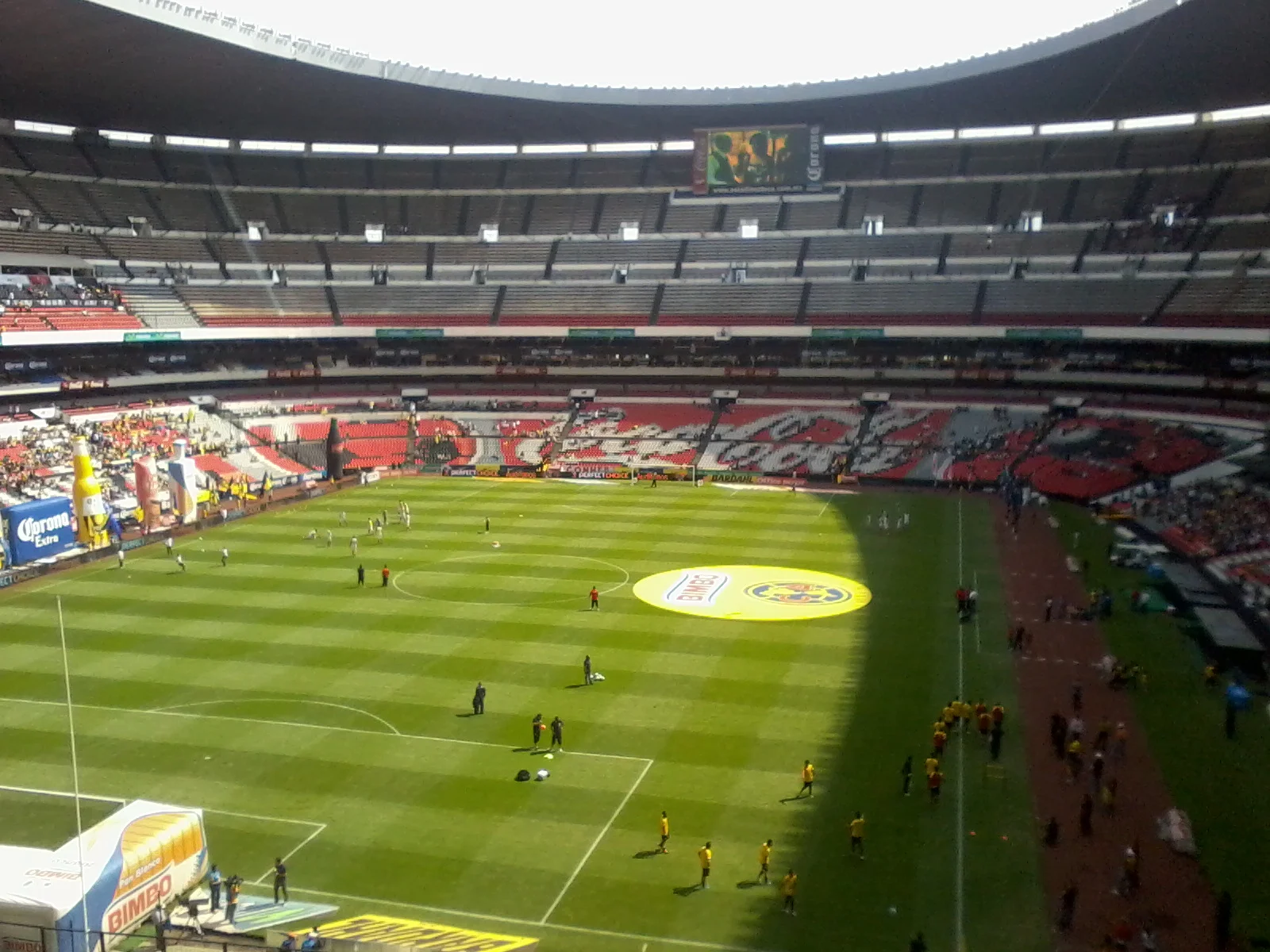
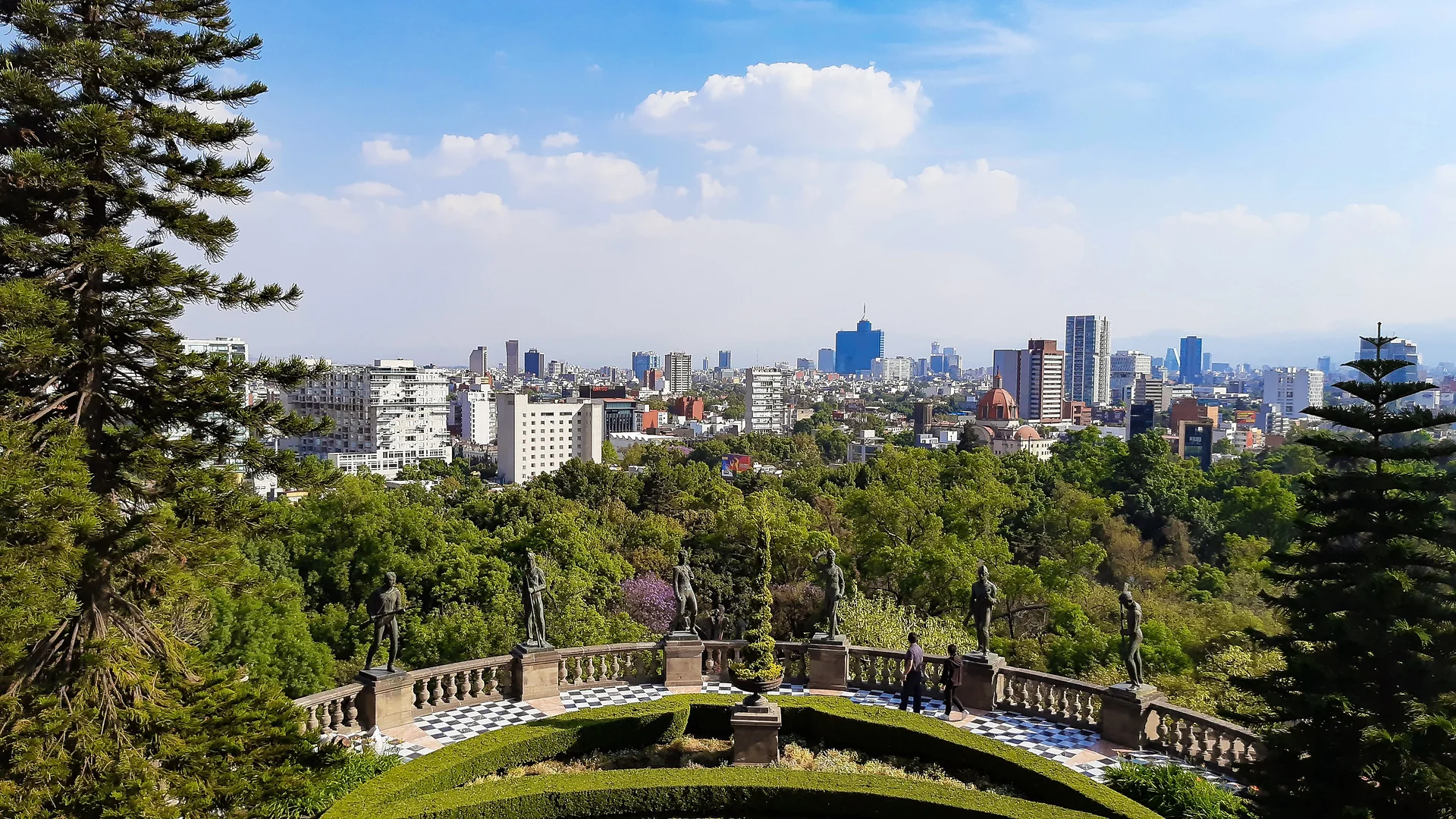
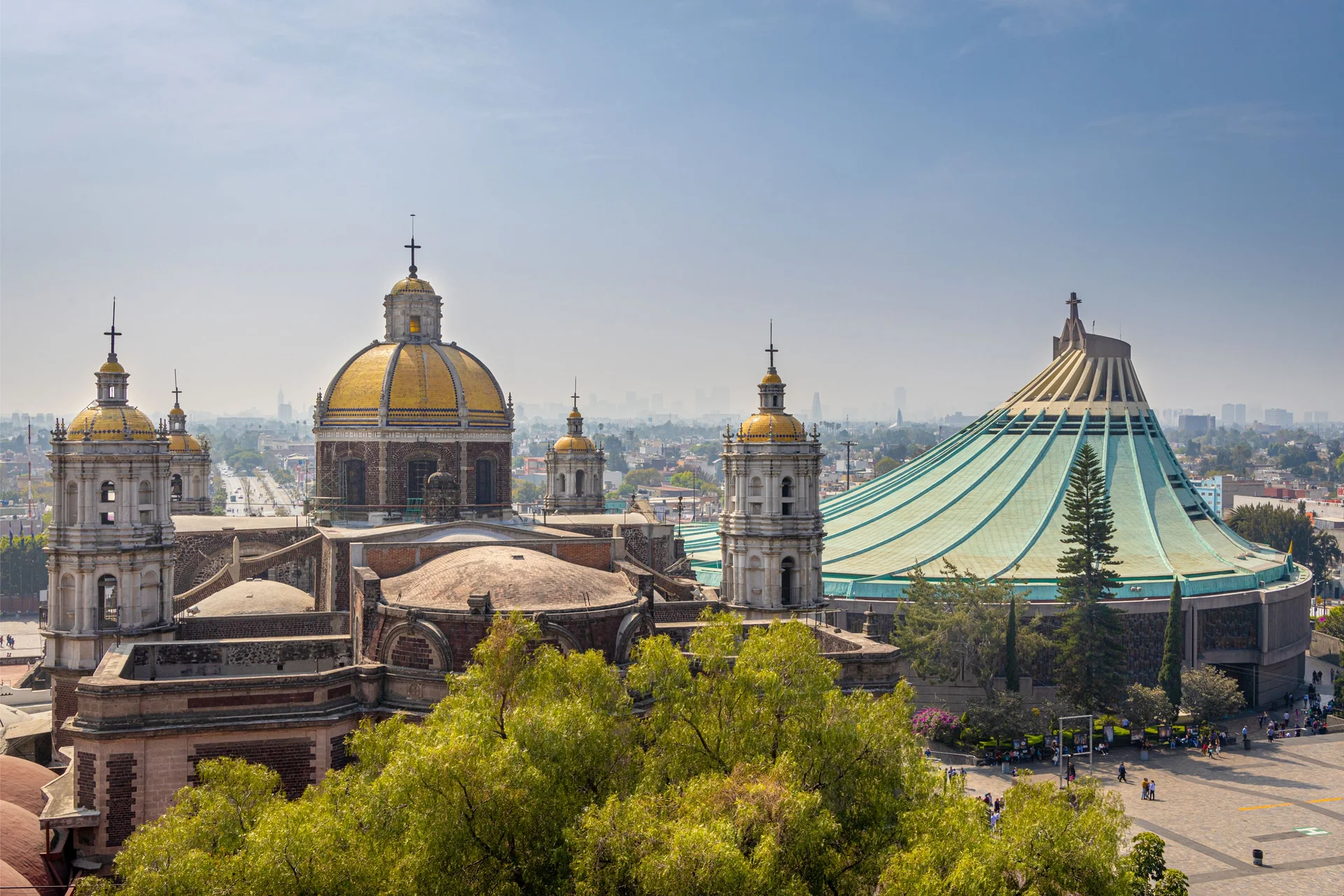
Mexico City sits at 7,350 feet (2,240 m), and the altitude sets the pace of your first days: you walk slower, drink more water, and save the mezcal for night three. The Zócalo and the Templo Mayor take a morning, Frida Kahlo's Casa Azul needs a ticket booked weeks ahead, and Teotihuacán takes a full day. In between, tacos are eaten standing on the sidewalk, dinners happen in the parks of Roma and Condesa, and every ride is a car hailed on an app, never a taxi flagged from the curb.
At a glance
- When to go
- November to April: clear skies, 68 to 77°F (20 to 25°C) by day, chilly nights in December and January. June to September: a shower most afternoons after clear mornings. Late October, early November: hotels fill up and cost more.
- How many days
- Four full days: the Centro Histórico, Chapultepec, Coyoacán with Xochimilco, Teotihuacán. Plan five nights to absorb the flight and the altitude, and keep the first day light.
- Which area
- Roma Norte and Condesa for a first visit, Coyoacán for quiet and gardens, the Centro Histórico to sleep two blocks from the Zócalo, Polanco for luxury hotels.
- Budget for two
- About $260 a day for two, charming hotel included, flights excluded: a street taco costs $1.20, dinner with mezcal $56, and the hotel takes nearly half.
- The moment for two
- Xochimilco on a weekday morning, two hours of canals on a painted boat all to yourselves, or sunset on a Centro hotel terrace as the Zócalo lights up.
- Before you go
- Book the Casa Azul 2 to 4 weeks ahead (1 to 3 months in peak season), and top tables like Pujol or Quintonil weeks ahead. No visa for stays under 180 days.
Why Mexico City for two
Mexico City has 9 million people, stands nearly a mile and a half above sea level, and keeps Aztec ruins a hundred meters from a Baroque cathedral. A trip for two works best planned by district rather than by monument: the Centro Histórico in the morning, Chapultepec and Coyoacán in full daylight, Roma and Condesa as night falls.
-
The Zócalo and the Templo Mayor
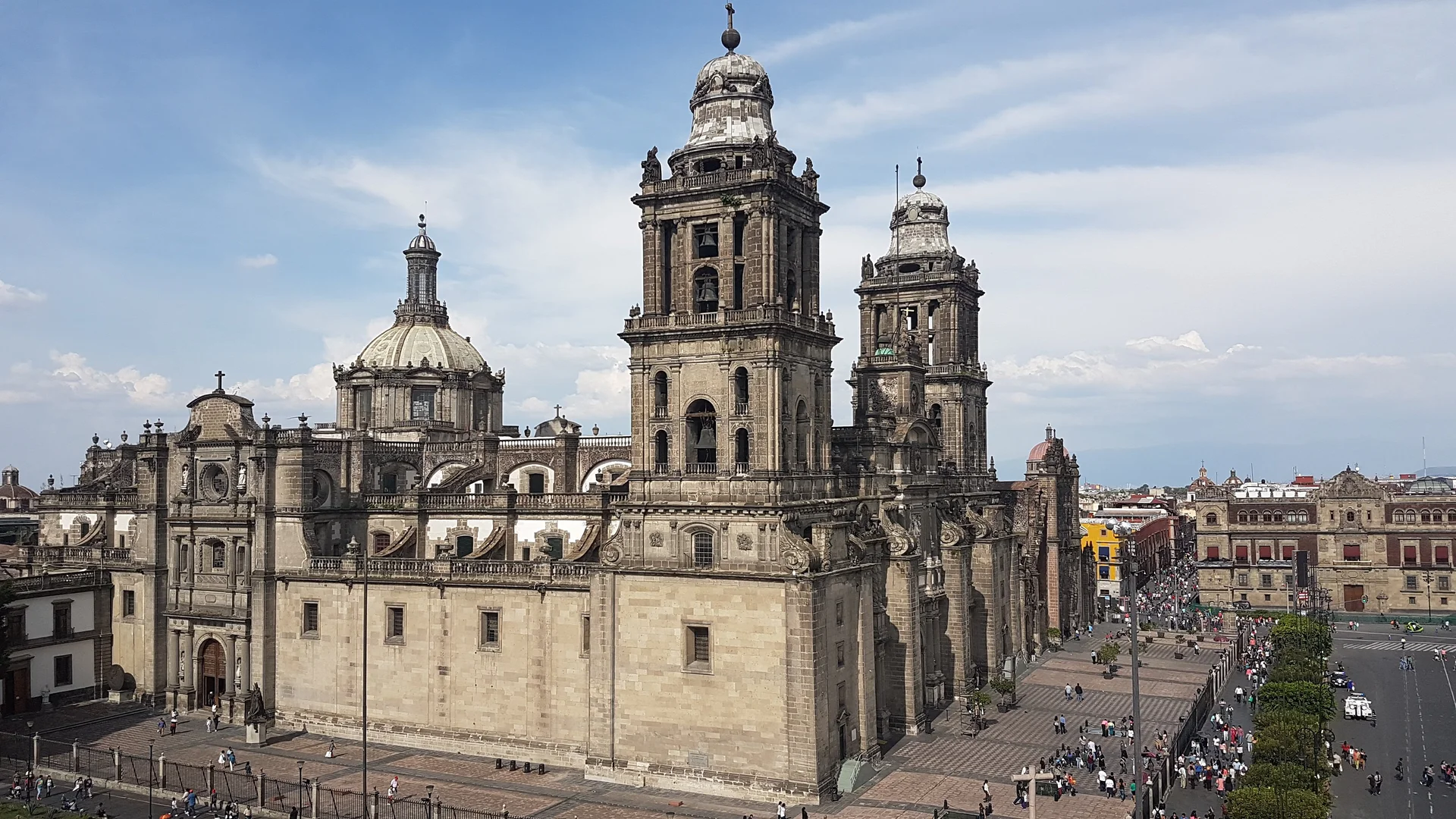
One of the largest city squares in the world borders a 16th-century cathedral, the Palacio Nacional with its Diego Rivera murals, and the ruins of the Aztec capital, uncovered in 1978.
-
Frida Kahlo's Casa Azul
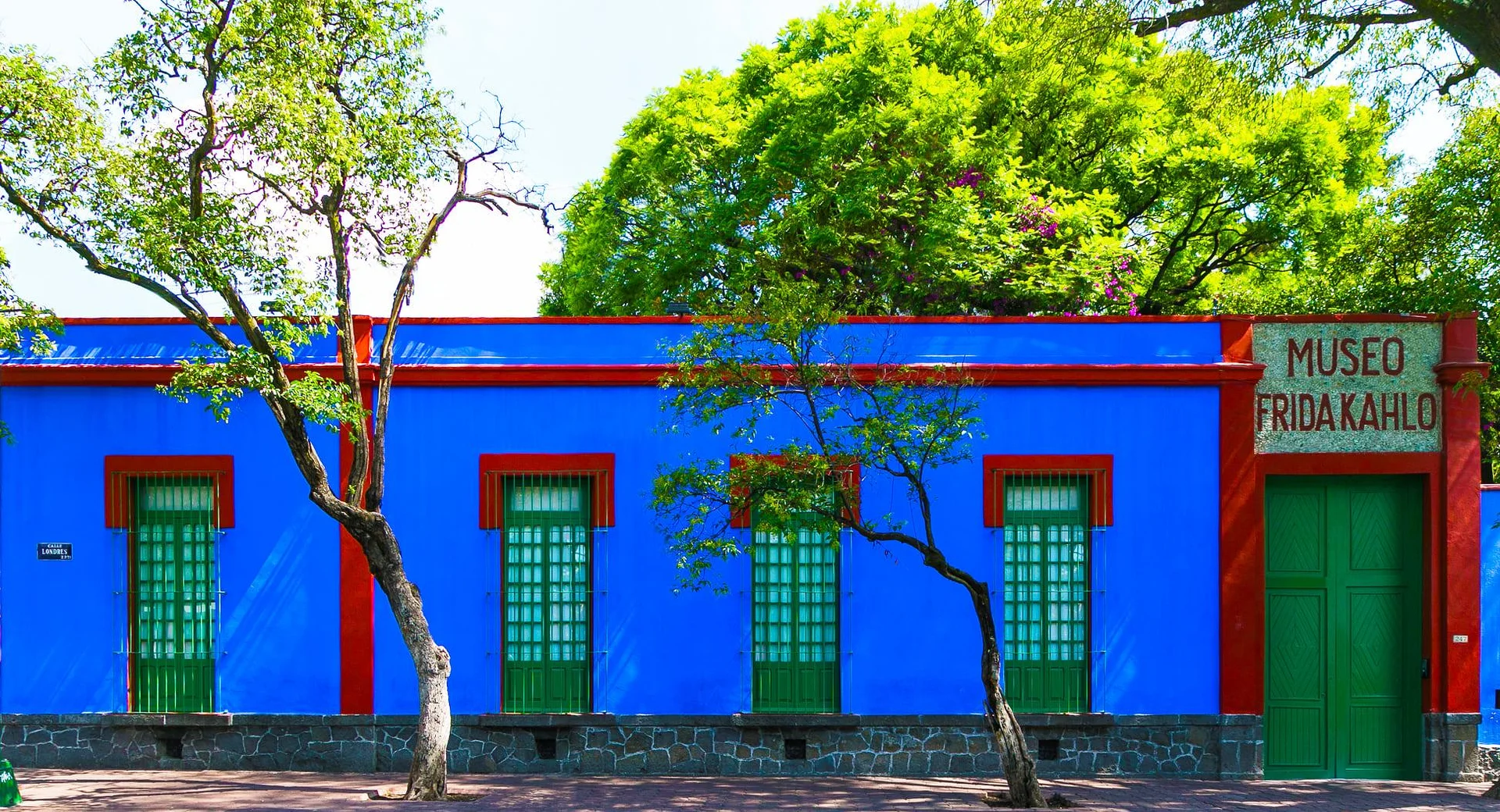
The blue house in Coyoacán where Frida Kahlo was born and lived: her studio, her bed under a mirror, her garden. Tickets are sold online, weeks ahead.
-
Roma and Condesa
Streets lined with jacarandas, terraces open late and some of the best tables in the country: you walk to dinner and walk home.
-
Teotihuacán
The Pyramids of the Sun and the Moon, 31 miles (50 km) away, are a day trip by bus, best done before the midday sun heats the stone.
These four poles are 20 to 50 minutes apart by car, so the district you sleep in matters as much as the hotel.
When to go
| Period | Weather | Our take |
|---|---|---|
| November to February | Dry, 68 to 75°F by day, 41 to 48°F at night | Clear skies, bring a jacket for the evening |
| March to May | Dry and hot, 77 to 86°F, ozone-heavy air | Hot afternoons, sometimes a hazy sky |
| June to September | A shower most afternoons, 72 to 77°F | Clear mornings, museums in the afternoon |
| October | End of the rains, washed sky, 68 to 75°F | The best light of the year |
At 7,350 feet the sun burns even on a cool day: wear sunscreen and a hat all year. Summer storms break in the late afternoon and last an hour or two, so keep the outdoor sites for the morning and the museums for the afternoon.
The dates that change prices
- Día de Muertos, November 1 and 2: a parade, altars in the streets and on the Zócalo, hotels full. Book 2 to 3 months ahead.
- The Formula 1 Grand Prix, late October or early November: hotels in Roma, Condesa and Polanco jump for the whole weekend.
- Christmas and New Year, Holy Week and July: Mexican school holidays, with busier sites and buses to Teotihuacán, Puebla and Tepoztlán.
- March 21: tens of thousands of visitors climb Teotihuacán in white clothes for the equinox. Skip that day.
Entry rules: passport, visa, health
| Documents | Entry permission | Health | |
|---|---|---|---|
| United States | A passport valid for your whole stay (a passport card does not work for flights) | No visa for up to 180 days, no form to file before the flight | Check that your health plan covers care abroad: Medicare does not |
| United Kingdom | A passport valid for your whole stay | No visa for up to 180 days, no authorization to apply for before the flight | Travel insurance: the UK's GHIC does not apply in Mexico |
On arrival
At immigration the officer stamps your passport and sets the length of your stay, up to 180 days: keep the slip that comes with the stamp, as it can be requested when you leave. Have the address of your first night and your return ticket ready, since they are sometimes asked for. The visitor entry fee is built into the price of your airfare. Entry rules change, so check those for your nationality on the official State Department or Foreign Office website before you book.
No vaccine is required. Hepatitis A, tetanus and typhoid are the shots most doctors suggest for Mexico: ask four to six weeks before you leave.
Getting there
From the United States, Mexico City is a short hop: 2h45 from Houston or Dallas, 5h from New York, with nonstop flights from most big hubs. From London there are nonstop flights of about 11h45; from the rest of the UK and Ireland, count on one stop in London, Madrid, Paris or Amsterdam.
| From | Flight | Time |
|---|---|---|
| Houston, Dallas | Nonstop | ~2h45 |
| Atlanta, Miami | Nonstop | 3h30 to 3h45 |
| Los Angeles, Chicago | Nonstop | 4h to 4h15 |
| New York | Nonstop | ~5h |
| London | Nonstop | ~11h45 |
| Manchester, Edinburgh | One stop in London, Madrid or Amsterdam | 14 to 17h |
Time difference
Mexico City keeps Central Standard Time all year and no longer changes its clocks: the same as Chicago in winter, one hour behind in summer, and one or two hours behind New York. London is 6 hours ahead in winter, 7 in summer. The jet lag is gentle: a flight from the US East Coast costs one or two hours of sleep, a flight from London a longer first night, so go to bed early on arrival.
The practical stuff
-
Money
The Mexican peso (MXN) also uses the $ sign: a price written with it is in pesos, not dollars. Cards work in hotels, restaurants and museums; keep cash in 20, 50 and 100 peso bills for tacos, markets, Xochimilco boats and tips. Use ATMs inside a bank or a mall, during the day.
-
Tipping
In restaurants, 10 to 15 percent, below the US norm of 18 to 20: the propina is never included, even when the bill suggests an amount. In hotels, 20 to 50 pesos a night for housekeeping and the same per bag for the porter.
-
Phone
Many US plans include Mexico, but check the data cap and speed; UK plans usually charge roaming. An eSIM installed before you leave is the easy fix. Hotels, cafes and most restaurants have Wi-Fi.
-
Plugs
Same plugs and voltage as the US: two flat pins, 127 V. UK visitors need an adapter, and a UK hairdryer rated for 230 V runs weakly and may burn out.
-
Water
Do not drink the tap water, even to brush your teeth: buy bottled water, cheap everywhere. Restaurants serve ice and juice made from purified water.
-
Altitude and sun
At 7,350 feet most travelers feel short of breath, tired and sometimes headachy for the first two days. Drink two liters of water a day, eat light the first night, and protect yourself from the sun.
-
What to wear
A light shirt and a jacket or sweater for the evening, all year; a rain jacket from June to September; comfortable shoes for the Centro's cobbles and the stone of Teotihuacán. In churches, cover shoulders and knees.
What to book, and how far ahead
In Mexico City, what sells out has a time slot or few seats: the Casa Azul, the top tables, the balloon over Teotihuacán. Everything else you buy on the spot, the same day.
| What | Price / person | Book | Good to know |
|---|---|---|---|
| Casa Azul (Frida Kahlo Museum) | ~$17 | 2 to 4 weeks ahead, 1 to 3 months in peak season | Timed ticket online, no sales on site; closed Monday |
| Pujol, Quintonil, top tables | 4 to 8 weeks ahead | Tasting menu; weekend evenings go first | |
| Teotihuacán, balloon at dawn | $135 to $210 | 3 to 7 days ahead | Leaves around 6am; canceled in wind, so keep a spare day |
| Xochimilco, private boat | ~$34 / boat, per hour | Not needed on weekdays | On weekends, boats are snapped up by late morning |
| Lucha libre, Arena México | $12 to $45 | A few days ahead | Friday night above all; ride there and back by app |
| Palacio Nacional | Free | Not needed | Show your passport at the door; closed Monday |
| National Museum of Anthropology | ~$5.60 | Not needed | Closed Monday; allow 3 hours |
From the airport to your hotel
© OpenStreetMap contributors
The two airports and the areas they serve
- Benito Juárez (MEX)
- Felipe Ángeles (NLU)
- 1Zócalo, Centro Histórico
- 2Roma Norte, Condesa
- 3Polanco
- 4Coyoacán
| Destination | Transport | Time | Typical fare |
|---|---|---|---|
| Zócalo, Centro Histórico | Authorized taxi, prepaid ticket | 25 to 50 min | ~$17 / taxi |
| Zócalo, Centro Histórico | Metrobús line 4 | ~40 min | ~$1.70 / person |
| Roma Norte, Condesa | Authorized taxi, prepaid ticket | 30 to 55 min | ~$23 / taxi |
| Roma Norte, Condesa | Ride-hail car | 30 to 55 min | ~$12 / car |
| Polanco | Ride-hail car | 35 to 60 min | ~$14 / car |
| Coyoacán | Ride-hail car | 45 to 75 min | ~$17 / car |
| Destination | Transport | Time | Typical fare |
|---|---|---|---|
| Zócalo, Centro Histórico | Express bus to the center | 1h15 to 1h45 | ~$3.40 / person |
| Zócalo, Centro Histórico | Ride-hail car | 55 min to 1h30 | ~$28 / car |
| Roma Norte, Condesa | Ride-hail car | 1h to 1h40 | ~$34 / car |
| Polanco | Ride-hail car | 1h to 1h40 | ~$34 / car |
| Coyoacán | Ride-hail car | 1h20 to 2h | ~$43 / car |
Benito Juárez, the AICM, takes almost all flights from North America and Europe, 4 miles (6 km) east of the Zócalo. Its two terminals, T1 and T2, are a few miles apart: check yours, a shuttle links them. After customs, a button gives you a green or a red light: on red, an agent opens your bags, which is harmless if you have nothing to declare.
Ignore the drivers who approach you in the hall. Buy a taxi ticket at an official counter inside the terminal, with a zone price paid up front, or order a ride on an app and walk to the pickup point it shows. Metrobús line 4 is the cheapest option, but it handles luggage badly at rush hour, 7 to 10am and 5 to 8pm.
Felipe Ángeles, the AIFA, is 25 miles (40 km) north, an hour and a half by road at busy times: it serves mostly domestic flights, and few flights from the US or Europe land there. If yours does, take a ride-hail car rather than the bus with luggage. Bus schedules and departure stations change, so check them on the airport's website.
Getting around
On foot within a district, by car between two
Mexico City sprawls for dozens of miles, and traffic doubles travel times at rush hour, 7 to 10am and 5 to 9pm. A district is walkable: the Zócalo and Madero Street, the streets of Roma and Condesa, the square and lanes of Coyoacán. Between districts, count 20 to 50 minutes by car: from the Zócalo it is 2.5 miles to Roma, 7.5 miles to Coyoacán, 31 miles to Teotihuacán. Watch your step: the sidewalks have holes and steps.
| Option | Price | Good to know |
|---|---|---|
| Ride-hail car | ~$4.50 per ride in town | Uber, DiDi and Cabify: price shown before you get in, card payment, check the plate and driver's name |
| Metro | ~$0.28 | One ride whatever the distance; avoid 7 to 9am and 5 to 8pm; the front cars are for women and children at rush hour |
| Metrobús | ~$0.40 | Bus lanes on Insurgentes, Reforma and line 4 to the Centro; rechargeable card sold at stations |
| Station taxi (sitio) | $4.50 to $12 | Only those from a stand, or ordered by your hotel or restaurant |
| Light rail | ~$0.40 | Tasqueña to Xochimilco in 40 min, then a taxi to the boat landing |
Budget for two
| Item | Budget | Comfort | Treat |
|---|---|---|---|
| Hotel, per night | $56 | $124 | $270 |
| Breakfast | $6.80 | $14 | $28 |
| Lunch | $9 | $21 | $45 |
| Dinner with mezcal | $23 | $56 | $157 |
| Transport | $4.50 | $14 | $34 |
| Sights | $12 | $34 | $90 |
| Total per day | ~$112 | ~$260 | ~$620 |
Mexico City costs little for what it offers: tacos, the metro and museums are paid in loose change, and a three-course lunch rarely tops $23 a head. The hotel and the top restaurants make the budget: five nights at the comfort level come to about $1,290, flights excluded.
What to taste
Mexican food is eaten at every hour: on a sidewalk in the morning, at the table at 2pm for the comida, the real meal of the day, and late at night at the counter of a taquería. Addresses are in the itinerary.
-
Street tacos
Not the Tex-Mex kind: a small corn tortilla with meat, onion, cilantro and lime. Al pastor (marinated pork shaved off a spit, with a slice of pineapple), suadero (beef) and carnitas, 20 to 30 pesos each. Eat three or four standing, with green or red salsa, and start mild: habanero salsa bites.
-
Pozole and tamales
Pozole is a hominy broth with pork or chicken, topped with radish and onion, the Sunday lunch dish. Tamales, corn dough steamed in a husk, are a breakfast food, eaten with a hot atole.
-
Tortas and esquites
A torta is a hot sandwich in a small roll, filled with ham, a breaded cutlet or carnitas. Esquites are corn kernels with butter, cheese and chile, eaten with a spoon from a cup at any hour.
-
Breakfast
Chilaquiles (fried tortilla in green or red sauce, topped with cream and cheese), a café de olla with cinnamon, and fresh-squeezed orange juice. By 9am the cafes of Roma and Condesa are full.
-
Mezcal
A smoky agave spirit, distilled mostly in Oaxaca and sipped from a clay cup with an orange slice and chile salt. Tequila, made from a single agave variety, the blue agave, is smoother. At 7,350 feet, one glass is enough the first night.
-
Pulque and beer
Pulque, fermented agave sap, is milky and slightly sour, served in the pulquerías of the Centro, sometimes flavored with fruit. A michelada mixes beer, lime, sauces and salt: the drink of the morning after.
-
Fruit and juices
Cut fruit from street stalls is eaten with lime, salt and chile. Aguas frescas (hibiscus, rice and cinnamon, tamarind) are best drunk in restaurants, made with purified water.
-
Sweets
Churros with hot chocolate, conchas (sweet rolls with a shell-shaped crust) and the pan dulce of morning bakeries. The house dessert is often a flan or a tres leches cake.
Customs and rules to know
Mexicans are warm and formal at once: a greeting before any question and a few words of Spanish open a lot of doors.
- Say buenos días or buenas tardes when you walk into a restaurant, a shop or an elevator, then por favor and gracias: you will get a smile back, often in English.
- In restaurants the check comes only when you ask (la cuenta, por favor): a waiter who brings it unasked would be rushing you out.
- People dine late, around 9pm, and good tables are full by 2:30pm for the comida. A 2pm meeting often starts at 2:30.
- Ask before photographing someone. Drones are banned over archaeological sites without a permit, and some museums charge a fee for photo or tripod use.
- Haggling works in craft markets, never in a restaurant or a shop with marked prices.
- In most public restrooms, paper goes in the bin next to the toilet, not in it: the pipes are fragile. Keep 5 and 10 peso coins, as some restrooms charge.
- In churches, speak quietly and do not photograph during Mass: the Basilica of Guadalupe, to the north, is a pilgrimage site where the faithful approach on their knees.
- Mexico City is one of the most open cities in Latin America to same-sex couples: the Zona Rosa and Roma are neighborhoods where holding hands goes without a second thought.
Safety
Mexico City has a reputation for danger. In the districts in this guide, by day and in the evening, a couple's risks stay ordinary: pickpocketing, a snatched phone, a street taxi. The violence that makes headlines mostly affects other regions of the country and other parts of the city.
- Never hail a taxi on the street or outside a bar: assaults on travelers almost always start in a fake taxi. Order a car on an app, checking the plate and the driver's name before you get in, or take a station taxi.
- Keep your phone away in the Centro, on the metro and on the sidewalks of Reforma: phones are snatched by hand or from a motorbike. Do not take it out at the curb or at a red light, and keep your bag zipped in front of you.
- Pickpockets work the crowded metro, the Zócalo, Plaza Garibaldi and the lines at attractions: wallet and passport at the hotel, one card and a little cash on you.
- Never leave your drink unattended in a nightlife bar, and be wary of a dating-app match who sets a date at a specific bar: the trap, a drugged drink and an inflated bill, exists in the Centro, Roma and the Zona Rosa.
- After 10pm, do not walk the Centro outside the busy streets, and avoid Tepito, Doctores and Guerrero, except by car for lucha libre.
- Mexico City is built on an old lake and shakes often: at your hotel, note the stairwell. If the seismic alert siren sounds, leave the building and step away from the facades.
Mistakes couples make
Disappointments in Mexico City come from a badly chosen Monday, an overloaded first day and a forgotten booking.
- Planning Teotihuacán or a long walk on day one: the altitude and the jet lag take their toll. Keep day one for the Zócalo, a break at the hotel and an early dinner.
- Showing up at the Casa Azul without a ticket: nothing is sold on site, and slots go weeks ahead.
- Counting on a Monday for museums: most close that day, including the Casa Azul, the Templo Mayor and the anthropology museum. Save Monday for Teotihuacán, open every day, or for Xochimilco.
- Starting on mezcal the first night: the altitude amplifies it, wait for night three.
- Drinking the tap water or brushing your teeth with it: a stomach bug ruins a four-day trip.
- Choosing Xochimilco on a Saturday or Sunday when you want quiet: the boats are full of parties. Go on a weekday morning.
Frequently asked questions
Is Mexico City safe for couples?
Yes, with a few rules: a car ordered on an app rather than a hailed taxi, your phone put away on the street, no walking at night outside busy streets. Roma, Condesa, Polanco, Coyoacán and the Centro by day receive visitors all year; the usual incidents are pickpocketing and phone snatching.
How many days do you need in Mexico City as a couple?
Four full days cover the Centro Histórico, Chapultepec and its anthropology museum, Coyoacán with the Casa Azul and Xochimilco, then Teotihuacán. With three days, skip Xochimilco. Plan five nights to absorb the flight, the time change and the altitude.
Do you need a visa for Mexico City?
No: a passport valid for your whole stay is enough for US and UK citizens, for stays up to 180 days. There is no electronic authorization to apply for before the flight. Check the rules for your nationality on the official State Department or Foreign Office website before you book.
How do you avoid altitude sickness in Mexico City?
At 7,350 feet, most travelers get only shortness of breath, tiredness and a mild headache for the first two days. Drink plenty of water, skip alcohol and heavy meals the first night, climb stairs slowly and protect yourself from the sun. If a headache worsens or you are breathless at rest, see a doctor.
Which airport for Mexico City, AICM or AIFA?
The AICM (Benito Juárez), 4 miles from the Zócalo, takes almost all flights from the US and Europe. The AIFA (Felipe Ángeles), 25 miles north, serves mostly domestic flights: count 1 to 2 hours by road to the center, more at rush hour.
How do you book Frida Kahlo's Casa Azul?
Tickets are sold online for a time slot, with no sales on site. Book 2 to 4 weeks ahead, and 1 to 3 months ahead in peak season (Día de Muertos, year-end holidays). The museum is closed on Monday; allow 1h30, then walk on to Coyoacán.