Quebec City for couples: things to know before you go (2026)
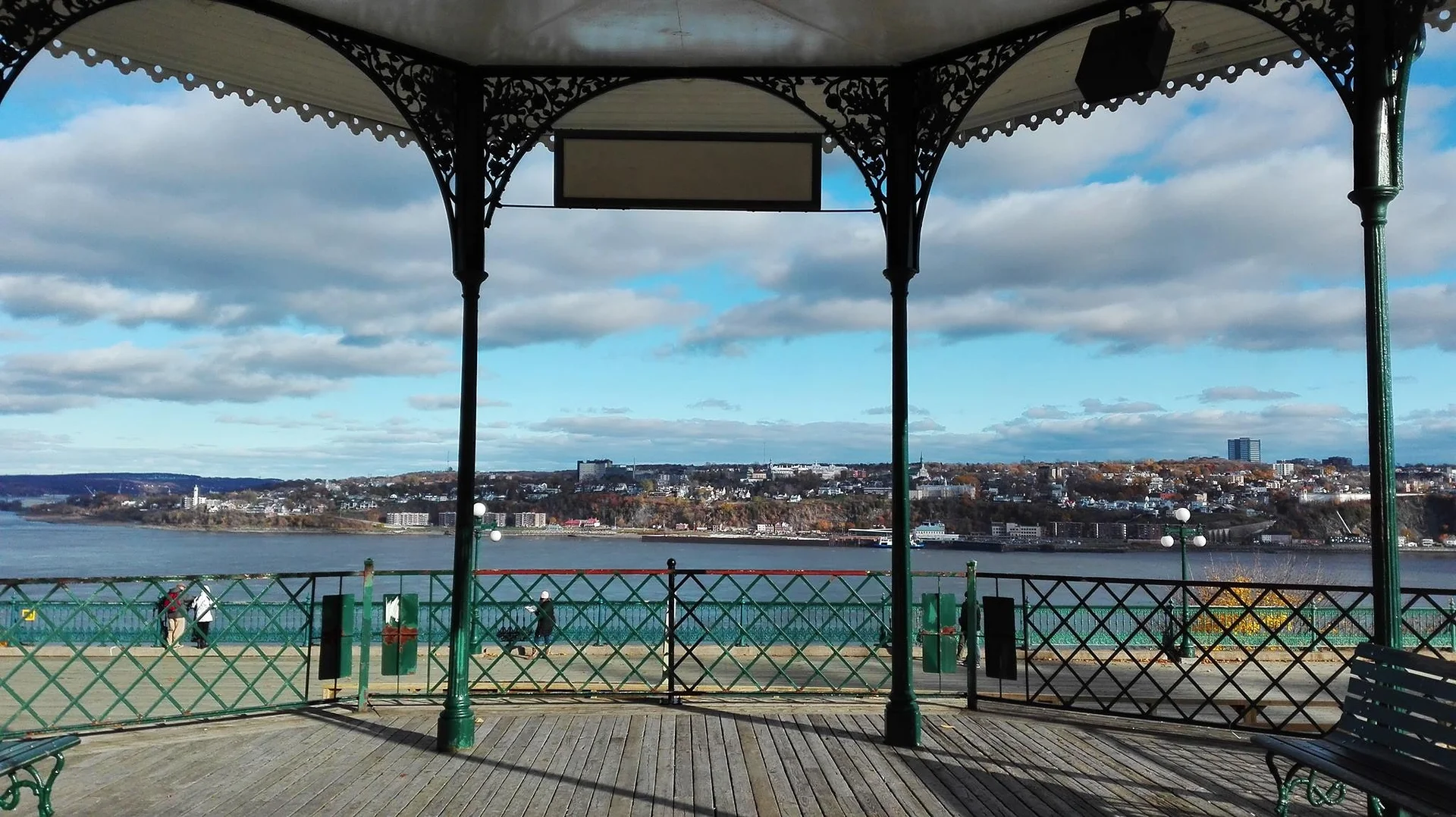
In Quebec City, the date changes everything: in early October the maples turn red along the ramparts and Montmorency Falls is a jacket-weather outing; in February the Winter Carnival fills the Old City under snow that lasts into March. The Château Frontenac, Petit Champlain and the Île d'Orléans work in any season, but you pack and book differently for each. Three things need sorting before you leave: the eTA if you are not a US citizen, a room booked three to four months ahead for October and Carnival, and the flight, since most European flights land in Montréal, 155 miles (250 km) away.
At a glance
- When to go
- Late September to mid-October for red leaves (37 to 64°F, 3 to 18°C), June to August for terraces (59 to 81°F, 15 to 27°C), February for Carnival and snow (5 to 25°F, -15 to -4°C). November and April are gray and quiet.
- How many days
- Four full days: two in the Old City, one for the ramparts and the Plains of Abraham, one for Montmorency Falls and the Île d'Orléans. Plan five nights to absorb the flight.
- Where to stay
- Upper Town for a first visit, Lower Town and Petit Champlain for romantic evenings, Grande Allée for restaurants and softer prices, the Île d'Orléans for quiet.
- Budget for two
- About $1,400 for three nights at the comfort level, with hotel, meals, sights and transport but no flights: the hotel is over half, and taxes add nearly 19% to the room.
- The moment for two
- Sunset on Dufferin Terrace, the river turning pink, then the funicular down to the lit-up lanes of Petit Champlain.
- Before you go
- The eTA (about $5.60 per person) for UK and other visa-exempt visitors; US citizens just need a passport. Then the room: three to four months ahead for October and Carnival.
Why Quebec City for couples
The Old City, a UNESCO World Heritage site, is the only walled city in North America north of Mexico: an upper town of stone and copper roofs, a lower town of cobbled lanes along the river, and a funicular between them. Everything is walkable within about a mile and a quarter (2 km), which leaves the evenings for the two of you: a table in a seventeenth-century house, a drink at the foot of the Château Frontenac, a stroll on Dufferin Terrace once the tour groups have left.
Two things surprise American and British visitors. It is a French-speaking city, with its own accent and vocabulary: breakfast is déjeuner, lunch is dîner, dinner is souper, which matters when you reserve a table. Most servers switch to English as soon as you hesitate, but a bonjour first changes the welcome. And the price on the menu or the shelf never includes tax or tip.
When to go
| Period | Weather | Crowds | Our take |
|---|---|---|---|
| June to August | 59 to 81°F (15 to 27°C), afternoon thunderstorms | Very high, especially in July | Terraces open, long days, summer festival; crowds on Dufferin Terrace |
| September to mid-October | 37 to 64°F (3 to 18°C), clear skies, cool nights | High, with cruise passengers and the Canadian Thanksgiving weekend | Our favorite: red leaves from late September to mid-October |
| Mid-October to November | 25 to 46°F (-4 to 8°C), rain, first snow | Low | Low prices, but short days, gray skies and some closed restaurants |
| December to March | 5 to 28°F (-15 to -2°C), snow | Medium, high during Carnival and at Christmas | The city under snow: Carnival, toboggan slides, Nordic spa; bitter cold |
| April to May | 28 to 59°F (-2 to 15°C), thaw and mud | Low | Cabanes à sucre (sugar shacks) in March and April; trees only bloom in May |
The festival calendar drives prices. The Quebec Winter Carnival takes place in early February and lasts about ten days: night parades, snow sculptures, Bonhomme's ice palace. Its dates change every year, so check the official site before buying flights. The summer festival fills the city for about ten days in July, and the New France Festival puts period costumes on the Old City streets in August. In September and October, cruise ships unload thousands of visitors into the Old City between 10am and 5pm; the streets empty out afterwards. The Ice Hotel, half an hour by car, opens from January to mid-March, with dates that depend on the frost.
Entry requirements: passport, eTA, health
| Documents | Entry authorization | Health | |
|---|---|---|---|
| United States | Valid passport to fly in; at land and sea crossings, a passport card, an enhanced driver's license or a NEXUS card also work | No eTA needed | Medicare does not cover you in Canada and many US plans cover little: buy travel medical insurance |
| United Kingdom | Passport valid for the whole stay | eTA required to fly in: ~$5.60, valid 5 years or until the passport expires | The GHIC card has no value in Canada: buy travel insurance |
The eTA, step by step
The eTA (electronic travel authorization) is requested online on the Government of Canada website (canada.ca/eta), with your passport, a credit card and an email address: allow 15 minutes and about $5.60 per traveler. The answer usually arrives within minutes, sometimes within days, so apply as soon as the flight is booked. It is tied to your passport number, each traveler needs their own, and a new passport needs a new eTA. Look-alike websites charge more for the same form: the address above is the right one. No visa is needed for stays of up to six months.
On arrival
At the airport, the border officer asks for the address of your first night and the length of your stay: write them down before landing. If your flight lands in Montréal and you connect to Québec, immigration is cleared in Montréal, before the connecting flight: leave at least two hours between flights.
Getting there
By air, with Montréal as the gateway
| From | Duration | Good to know |
|---|---|---|
| New York | ~1h30 | Flights to Montréal, then a train, bus or short flight to Québec; driving takes ~9h30 |
| Boston | ~1h30 | Flights to Montréal, then a train, bus or short flight; driving takes ~8h |
| Chicago | ~2h15 | Flights to Montréal or Toronto, then Québec |
| London | ~7h | Direct flights to Montréal; Québec needs a connection |
Two airports matter. Montréal-Trudeau (YUL), 155 miles (250 km) away, gets most transatlantic flights and offers more departures and lower fares. Jean-Lesage Airport in Quebec City (YQB), 10 miles (16 km) from downtown, mainly gets Canadian flights: from Montréal or Toronto, the flight takes under an hour and a half. Compare both: a direct flight to Montréal plus the train often costs less than a ticket to Québec with a connection.
From Montréal to Quebec City
| Option | Duration | Good to know |
|---|---|---|
| Train | ~3h30 | VIA Rail from Montréal's Central Station to Gare du Palais, at the foot of the Old City: the most relaxing option |
| Bus | ~3h15 | From Montréal's bus station, with a stop at Gare du Palais |
| Car | ~2h45 | 155 miles (250 km) of highway (20 or 40); winter tires are mandatory from December 1 to March 15, and rental companies provide them |
Driving from the United States: Boston is about 8h by car and New York about 9h30, via Montréal. Road signs are in French and distances in kilometers: ARRÊT means stop, and a 100 sign is 62 mph. Right turn on red is allowed after a full stop unless a sign forbids it.
Practical things to know before you go
Phone
Most major US plans include roaming in Canada, sometimes at reduced speeds: check yours before leaving. UK plans charge for roaming outside the EU or cap it: take a travel add-on or install an eSIM before the flight. Wi-Fi is free in hotels, cafés and museums. Download an offline Google Maps area for the Old City, where the lanes look alike.
Money and tipping
- Contactless cards work everywhere; ATMs dispense Canadian dollars, and paying by card beats changing cash. Check your card's foreign transaction fee.
- The listed price never includes tax: 14.975% (5% federal GST and 9.975% Québec QST) on meals and purchases, and nearly 19% on a hotel room, where a 3.5% lodging tax is added.
- Tipping works as in the United States: 15 to 20% of the pre-tax bill at a restaurant (the payment terminal asks before charging), $1.20 per drink at the bar, 10 to 15% for a taxi, $2.30 per bag for the porter, $2.30 to $3.40 per night for housekeeping.
- The hotel holds a deposit on your card at check-in: check your limit before leaving.
Jet lag and time zone
Quebec City is on Eastern Time, like New York and Boston, and five hours behind the UK (four for a few weeks in March and one week in late October, when the clocks change on different dates). From the US East Coast, there is no time change at all. From the UK, the five-hour shift goes well on the way out: travel by day, walk in the sun and hold out until 9pm. You will wake around 5am for the first two or three mornings: that is the hour of an empty Dufferin Terrace and a coffee on rue du Petit-Champlain before the shops open.
Plugs, water and clothing
- Plugs are type A and B (two or three flat prongs), 120 volts, as in the United States; UK visitors need an adapter. Phone and laptop chargers handle 100 to 240 volts; a UK hair dryer on 230 volts burns out or runs slowly, and the hotel can lend one.
- Tap water is safe to drink everywhere; restaurants serve it iced without being asked.
- From November to March, you need a winter hat, mittens, insulated boots with grip soles and a warm layer under your coat: at -4°F (-20°C) with the river wind, exposed skin stings in ten minutes. All year, the hills and cobblestones of the Old City call for walking shoes, not heels.
What to book, and how far ahead
In Quebec City, the room is what sells out months ahead: Old City inns have ten to thirty rooms, and they go first. Everything else, apart from the most popular tables, can be booked the day before or the same day.
| What | Price / pers. | Book | Good to know |
|---|---|---|---|
| Room in October or during Carnival | 3 to 4 months ahead | Old City inns with character go first | |
| A night at the Ice Hotel | Several months ahead | Open from January to mid-March; the daytime visit can be booked later | |
| Old City restaurants, Saturday night | 1 to 2 weeks ahead | Allow 3 weeks in October and during Carnival | |
| Citadelle, guided tour | Same day | The changing of the guard is at 10am from late June to early September; arrive 30 min. early | |
| Strøm Nordic spa | ~$51 to $73 | 1 to 2 weeks ahead | Weekend and sunset slots go first |
| Car for the Île d'Orléans | 2 to 3 weeks ahead | Pointless in the Old City; rent it only for the day of the trip |
From the airport to the hotel
© OpenStreetMap contributors
Quebec City airport, Gare du Palais and the areas served
- Jean-Lesage Airport (YQB)
- 1Upper Town, Château Frontenac
- 2Lower Town, Petit Champlain
- 3Grande Allée, Plains of Abraham
| Destination | Transport | Duration | Indicative fare |
|---|---|---|---|
| Upper Town, Château Frontenac | Taxi, flat fare | ~25 min. | ~$30 / taxi |
| Upper Town, Château Frontenac | RTC bus, route 80 then Métrobus 800 or 801 | ~1h | ~$2.80 / pers. |
| Lower Town, Petit Champlain | Taxi, flat fare | ~25 min. | ~$30 / taxi |
| Grande Allée, Plains of Abraham | Taxi, flat fare | ~20 min. | ~$30 / taxi |
| Destination | Transport | Duration | Indicative fare |
|---|---|---|---|
| Upper Town, Château Frontenac | Taxi | ~10 min. | ~$7.90 / taxi |
| Lower Town, Petit Champlain | On foot | ~15 min. | Free |
| Grande Allée, Plains of Abraham | Taxi | ~10 min. | ~$11 / taxi |
The airport taxi is booked at the desk near baggage claim: the fare to downtown is fixed, and a 10 to 15% tip is added. Ride-hailing cars also serve the airport. The bus requires a change at Dorchester terminal to reach the Old City: take the taxi with luggage. From Gare du Palais, Petit Champlain is a 15-minute walk, but Upper Town is a steep climb: take a taxi with bags.
Getting around
On foot first
The Old City fits in a mile and a quarter (2 km), but the Cap Diamant cliff makes it two towns. From the Château Frontenac to Place Royale, allow ten minutes down and twenty back up. The funicular links Dufferin Terrace to Petit Champlain in a minute; the Breakneck Stairs make the same trip on foot. From November to March, the hills and stairs ice over: go slowly, in grip-soled shoes.
Funicular, bus and ferry
| Option | What for | Good to know |
|---|---|---|
| Funicular | The cliff, from Dufferin Terrace to Petit Champlain | Pay per ride; keep some change |
| RTC bus | The Plains of Abraham, Grande Allée, Montmorency Falls | Single fares or the RTC Nomade app |
| Lévis ferry | The Old City seen from the river, at sunset | ~15 min. crossing, year-round |
Taxis and ride-hailing complete the network in the evening, when buses thin out. A car is only for leaving the city: the Île d'Orléans, the Côte-de-Beaupré, Charlevoix.
Budget for two
The hotel is the biggest cost: an Old City room costs more than one on Grande Allée, and taxes add nearly 19%. Meals come at every price; sights are few, because the city is explored for free. The table prices three nights for two, flights excluded.
| Smart | Comfort | Treat | |
|---|---|---|---|
| Hotel, per night | $124 to $168 | $220 to $300 | from $400 |
| Meals, per day for two | $62 | $135 | $280 |
| Sights and activities for the stay | $68 | $168 | $340 |
| Transport for the stay | $45 | $79 | $168 |
| Total for three nights | $730 | $1,400 | $2,580 |
Rooms cost 20 to 30% less in November and spring than in October, during Carnival or in July, and Sunday-to-Thursday nights are cheaper than weekends.
Benchmark prices
| Item | Price |
|---|---|
| Drip coffee, latte | $2.30, $4 |
| A poutine at Ashton | $11 to $14 |
| Brunch for two | $40 to $56 |
| Dinner for two with a drink, bistro | $90 to $135 |
| Cocktail | $11 to $14 |
| Craft beer, a pint | $5.60 to $7.90 |
| Strøm Nordic spa entry | $51 to $73 |
What to taste
Quebec City cooks what winter taught the settlers: fat, maple sugar, meat in pastry, dishes that keep you warm. Today's chefs add the herbs and berries of the boreal forest.
At the table
-
Poutine
French fries, squeaky cheese curds and brown gravy: Québec's comfort dish, at Ashton, the local chain, or at almost any snack bar.
-
Tourtière and pea soup
The tourtière, a spiced pork pie, and yellow pea soup: the traditional meal served at Aux Anciens Canadiens, in a house from 1675.
-
Sugar pie
A pie of maple syrup, sugar and cream, served in thin slices; the pouding chômeur, a cake drowned in syrup, is its cousin.
-
The Québec breakfast
Eggs, baked beans, cretons (a pork spread) and pancakes with maple syrup: a hearty morning meal, served until 2pm at the city's brunch spots.
-
Maple syrup
It is harvested in March and April; at a cabane à sucre, it is poured boiling on snow and rolled into taffy on a stick.
-
Cheese curds
Fresh that day, they squeak between the teeth: eaten plain, straight from the dairy, or melted on a poutine; farmhouse cheeses from Charlevoix turn up in the better restaurants.
In the glass
-
Ice cider
A sweet, concentrated cider made from apples frozen on the tree: a Québec invention, for the end of a meal or with cheese.
-
Cassis from the Île d'Orléans
Blackcurrant cream, liqueur or sorbet, at Cassis Monna & Filles in Saint-Pierre.
-
Craft beer
The city's brewpubs pour draft beers made on site; a pint costs $5.60 to $7.90.
-
Caribou
The Carnival drink: red wine and strong liquor, sometimes with maple syrup, served hot or cold in bars and restaurants.
-
Hot chocolate
Thick, made from melted dark chocolate: at Érico, the menu has about ten versions, a winter ritual.
-
Wine from the Île d'Orléans
Cold-climate vines, including the Vignoble Sainte-Pétronille, facing Montmorency Falls; whites and ice wines.
Local etiquette and rules
A bonjour before any request, even if the conversation then switches to English, changes the welcome; and bienvenue answers merci and means "you're welcome".
| Rule | What awaits you |
|---|---|
| Drinking alcohol on the street or in a park | A ticket: alcohol is for terraces, bars and hotels |
| Smoking or vaping on a restaurant or bar terrace | Forbidden |
| Driving without winter tires from December 1 to March 15 | A fine: rental companies provide the right tires |
- The legal drinking age is 18, and ID is checked at the door of bars.
- Service is relaxed: nobody brings the check unless you ask for it, and nobody rushes you out of your table.
- Kitchens serve from about 5:30pm to 9:30pm; some Old City restaurants close on Sunday and Monday outside summer.
- A right turn on a red light is allowed after a full stop unless a sign forbids it; pedestrians have priority at crossings.
Safety
In Quebec City, violent crime is rare, by day and by night. The risks are cold, ice and a few opportunistic thefts.
- Cold is the first danger: at -4°F (-20°C) with the river wind, bare skin freezes in half an hour. Cover your nose, ears and fingers, and step into a café as soon as your fingers go numb.
- From November to March, sidewalks, the côte de la Montagne, the Breakneck Stairs and Dufferin Terrace ice over: grip soles, short steps, one hand free.
- Theft is rare, but keep your bag closed in the crowd on Dufferin Terrace and leave nothing visible in a rental car at tourist-site parking lots.
- In summer, mosquitoes and black flies bite in parks and on wooded trails: a repellent is enough.
- On the roads of Charlevoix and Jacques-Cartier National Park, moose cross at dawn and dusk: slow down and avoid driving fast at night.
Mistakes couples make
Here, most regrets come down to the season: a hotel booked too late for October, a coat too light for February, a trip from Montréal underestimated. The rest can be fixed on the spot.
- Arriving in October or during Carnival without a room: Old City inns go three to four months ahead, and only suburban hotels, twenty minutes by car, remain.
- Dressing for the city rather than the wind: from November to March, the river makes the cold sharper than the numbers, and a winter hat costs less than a lost day.
- Thinking Montréal to Québec takes an hour: 155 miles (250 km), at least 3h by train, bus or car; allow half a day with luggage.
- Forgetting tax and tip in the budget: 15% tax and 15 to 20% tip add nearly 30% to a restaurant bill, and tax nearly 19% to a hotel room.
- Spending the whole day on rue du Petit-Champlain and Dufferin Terrace: groups pass through from 10am to 5pm, while the ramparts, Grande Allée and the Plains of Abraham are almost empty.
- Renting a car to stay in the Old City: parking is expensive and streets are one-way; rent it for the Île d'Orléans, for one day.
- Doing the Île d'Orléans in two hours: the loop is about 40 miles (65 km), and the villages, orchards and tables deserve half a day at least.
Frequently asked questions
Is Quebec City a good destination for a romantic trip?
Yes: the walled Old City, the Château Frontenac, the lanes of Petit Champlain and the Île d'Orléans suit couples in any season. The only cautions are the cold from November to March, the steep hills and the hotel prices in October and during Carnival.
How many days do you need in Quebec City as a couple?
Four full days cover Upper Town and Lower Town, the ramparts and the Plains of Abraham, Montmorency Falls and the Île d'Orléans. With two days, keep the Old City and Montmorency Falls. Plan five nights to absorb the flight.
Do I need a visa for Quebec City?
US citizens need only a valid passport to fly in. British visitors need an eTA, about $5.60, valid for five years or until the passport expires, requested online before the flight. No visa is needed for a stay under six months.
What is the best season to visit Quebec City as a couple?
Early October, for red leaves and cool nights, or February, for snow and Carnival. Summer is pleasant but crowded, and November and April are gray. Prices rise in October, July and during Carnival.
Do you need a car in Quebec City?
Not for the Old City, which is explored on foot and where parking is expensive. A car helps for the Île d'Orléans, the Côte-de-Beaupré and Charlevoix: rent it for a day or two. From December to March, rental companies fit the mandatory winter tires.
How much does a trip to Quebec City cost for two?
Expect about $1,400 for three nights at the comfort level, with an Old City hotel, meals, sights and transport, flights excluded. A smart budget is around $730 sleeping on Grande Allée; a treat trip exceeds $2,580.