Rio de Janeiro for couples: things to know before you go (2026)




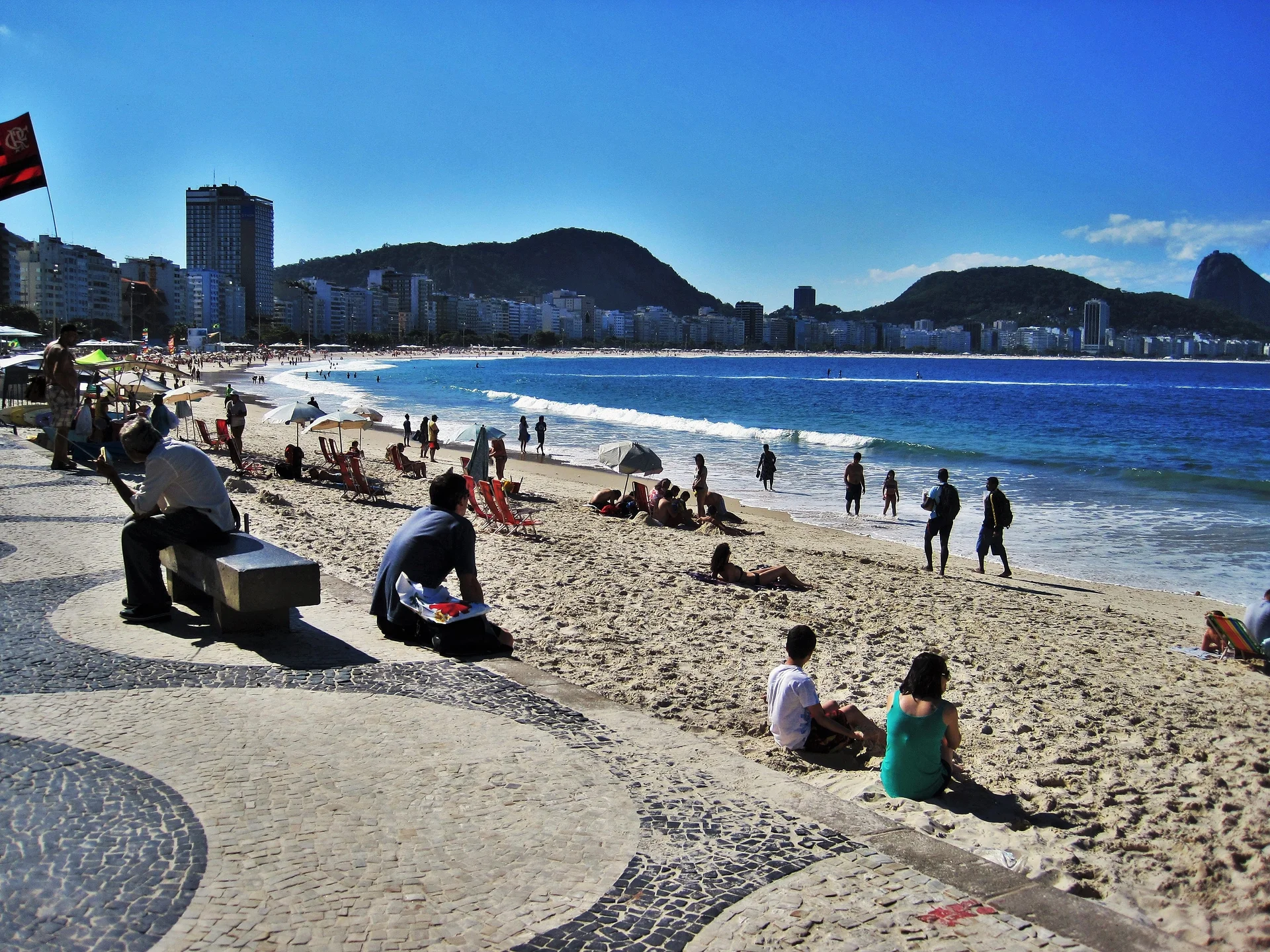
Rio de Janeiro comes down to three choices made before you leave: the season, the neighborhood, and how you get back to the hotel at night. The flight takes 10 to 12 hours, the time difference is 1 to 5 hours, and the two big viewpoints, Christ the Redeemer and Sugarloaf Mountain, only show themselves under a clear sky: save Christ for opening time, Sugarloaf for sunset, and keep a spare day for clouds. The rest can wait until you land: a caipirinha on the wall at Urca, an afternoon on Ipanema beach, a night of samba in Lapa.
At a glance
- When to go
- April to September for clear skies and 64 to 84°F (18 to 29°C); December to March for the beach, 86°F (30°C) and up, with afternoon storms. Carnival dates change every year and prices double.
- How many days
- Four full days for the two viewpoints, downtown, Santa Teresa and the beaches; plan five or six nights, because the 11-hour flight and jet lag eat the first day.
- Which area
- Ipanema for a first visit, Leblon for calm, Copacabana for the beach and lower prices, Santa Teresa for boutique guesthouses, with a ride-hail home every night.
- Budget for two
- About $1,460 for three nights at comfort level, with hotel, meals, Christ the Redeemer, Sugarloaf and transport, flights excluded: the hotel is more than half.
- The moment for two
- Sugarloaf an hour before sunset, then a drink on the Urca wall; Christ the Redeemer in the morning, while the bay is still clear.
- Before you go
- The e-visa for Americans and Canadians, health insurance with medical evacuation, then tickets for Christ the Redeemer and Sugarloaf, a few days ahead.
Why Rio for two
Rio works for couples because of its views and its evenings more than its museums: sunset from the top of Sugarloaf, Christ the Redeemer floating above the clouds, a walk from Copacabana to Ipanema along the water, a drink facing the bay at Urca, a night of samba under the Lapa Arches. The city is spectacular from a distance; up close, it rewards a little method.
Three things change the picture for a couple arriving from North America or Europe. Rio's summer falls in the northern winter: January is 86°F (30°C). The viewpoints are climbed when the sky is clear, not on the day you planned. And evenings are done by ride-hail, not on foot: that rule takes nothing away from the trip, it makes it relaxed.
When to go
| Period | Weather | Crowds | Our take |
|---|---|---|---|
| December to March | 28 to 35°C (82 to 95°F), humid, late-afternoon storms, sea at 25°C (77°F) | Very high from December 20 to early March | The beach at its best, but heavy heat and the highest prices |
| April to June | 22 to 29°C (72 to 84°F), less rain, clearer skies | Medium | Our favorite: mild heat, viewpoints often clear, prices dropping |
| July to September | 18 to 26°C (64 to 79°F), dry, sea at 21°C (70°F) | High in July (school holidays), medium after | The sharpest skies for the viewpoints; cool beach, mild evenings |
| October and November | 22 to 30°C (72 to 86°F), changeable, showers from November | Medium | Gentle prices before high season; views sometimes hazy |
Two dates change the city and its prices. Carnival fills the four days before Ash Wednesday, in February or early March, on dates that move every year: the Sambadrome parades and the street blocos (neighborhood marching bands) fill the hotels, which often require four or five nights and more than double their rates. New Year's Eve (Réveillon) puts a huge crowd in white on Copacabana beach: prices climb from December 26 to January 5.
Entry rules: passport, visa, health
| Documents | Entry permit | Health | |
|---|---|---|---|
| United States | Passport valid six months after arrival | E-visa required: ~$84, up to 10 business days | Travel insurance with medical evacuation: most US health plans cover little or nothing in Brazil |
| United Kingdom | Passport valid six months after arrival | No visa for tourist stays up to 90 days | Travel insurance with repatriation: the GHIC doesn't apply in Brazil |
The visa and the passport
Americans, Canadians and Australians need an electronic visa before the flight, applied for on the Brazilian government's official portal: the fee, processing time and validity should be checked on the official site before you book, because these rules changed recently and may move again. British travelers enter without a visa for up to 90 days of tourism. Everyone needs a passport (a driver's license or ID card is not accepted) valid six months after the arrival date, which is the rule airlines enforce at check-in, plus one blank page for the entry stamp.
On arrival
At Galeão airport, federal police check your passport, take a photo, and may ask for the address of your first hotel and your return ticket: write both down before you land. Allow half an hour to an hour and a half at immigration, longer when two flights from the Americas or Europe land together in the morning.
Health: yellow fever, dengue, sun
- Yellow fever: the vaccine is recommended by health authorities in several countries for the state of Rio de Janeiro. It is given at a travel clinic at least ten days before departure; ask a doctor.
- Dengue, spread by mosquitoes, circulates all year and peaks from January to May: repellent on the skin, long sleeves at dusk, an air-conditioned room or a net.
- Rio's sun is strong even in winter: SPF 50 reapplied after every swim, sunglasses, and no beach between 11am and 3pm in summer.
Getting there
By air, the only way from abroad
| From | Time | Good to know |
|---|---|---|
| New York | ~10h | Nonstop flights to Galeão from JFK and Newark |
| Miami, Atlanta, Houston | 8h30 to 9h30 | Nonstop flights to Galeão; Miami is the shortest |
| Chicago, Los Angeles, San Francisco, Toronto | 13h to 17h | One connection, often via Miami, Atlanta, Houston or São Paulo |
| London | ~11h30 | Nonstop flights to Galeão |
| Dublin, Manchester, Edinburgh | 13h to 16h | One connection, often via London, Lisbon or Madrid |
Two airports serve the city. International flights land at Galeão (GIG), 12 miles (20 km) from downtown; Santos Dumont (SDU), on the bay in the city center, mostly handles domestic flights, useful for continuing to São Paulo, Salvador or Iguazu Falls. Overnight flights land early in the morning: the ride to the hotel is detailed below, in "Airport to hotel".
Practical things to know before you go
Phone and language
Check your carrier's international day pass before you leave, or install an eSIM: roaming in Brazil is expensive or capped on most US and UK plans. Everything in Brazil runs on WhatsApp: restaurants take bookings there and drivers message you as they arrive. Install the Uber and 99 ride apps, and download Portuguese offline in a translation app: few drivers speak English. Three words open smiles: bom dia (good morning), por favor (please) and obrigado (thank you, said by a man; obrigada by a woman).
Money and tipping
- Contactless cards work almost everywhere, from restaurants to ride apps; keep small notes in reais for beach vendors and markets, which increasingly take Pix QR payments, available only to Brazilian bank accounts.
- Restaurants add a 10% service charge (serviço) to the bill: that is the tip, and you leave it unless service was poor. There is no US-style 20%. In taxis and ride apps, round up; at a bar, leave nothing extra.
- Live-music bars add a couvert artístico of $3.40 to $12 to the check to pay the musicians.
- At an ATM, withdraw in daylight, at a bank branch or hotel, and always choose to pay in reais, never in your card's currency.
Jet lag
Brazil no longer has daylight saving time: Rio is 1 hour ahead of New York in summer and 2 hours ahead in winter, and 3 hours ahead of London in winter, 4 in summer. The change is small from the East Coast and bigger from the West Coast (4 to 5 hours ahead). Overnight flights land in early morning and the room is only free at 2 or 3pm: book the night before, or ask at least to drop your bags and take a shower. Walk in the sun on day one, eat early, and be in bed by 9pm: after two nights the rhythm is set.
Plugs, water and what to wear
- Sockets are type N (three pins) or C, and voltage in Rio is 127 volts, close to the 120 volts of the United States: US phones, laptops and most appliances work as they are, and US flat plugs usually fit, though a universal adapter avoids surprises. British 230-volt hair dryers run slowly and need a UK adapter.
- Tap water is treated, but Cariocas (people from Rio) drink filtered or bottled water, and so should you. Ice in restaurants and bars is made from filtered water.
- People get around in shorts, flip-flops and swimsuits; evening restaurants and churches ask for something over the swimsuit. Air conditioning in buses, museums and malls is set very cold: bring a light layer.
What to book, and how far ahead
The two viewpoints, Carnival and New Year's Eve, evening tables and weekend samba nights are worth booking; the beach, the streets of Santa Teresa and open-air samba circles need no ticket.
| What | Price / pers. | Book | Good to know |
|---|---|---|---|
| Christ the Redeemer (Corcovado train or official shuttle) | $17 to $25 | 2 to 7 days ahead in high season | The ticket is dated, with a time slot; the first one of the morning gives the clearest sky |
| Sugarloaf (two cable cars) | ~$37 | The day before, or same day off-season | The ticket is dated; go up an hour before sunset |
| Sambadrome parades | Several months ahead | Tickets for the biggest nights sell first; Carnival moves every year | |
| Hotel for Carnival or New Year's Eve | 6 months ahead | Four to five nights minimum, refundable rate | |
| Popular restaurants | 1 to 2 weeks ahead | Book by WhatsApp or on the restaurant site; Friday and Saturday evenings go first | |
| Samba night in Lapa | $4.50 to $12 | 2 to 3 days before the weekend | A reserved table avoids the line and standing room |
| Match at the Maracanã | $12 to $45 | A few days ahead | Tickets come from the club's site; big derbies sell out fast |
| Tandem paragliding | $112 to $180 | The day before | The flight depends on wind and cloud; morning has the best odds |
Airport to hotel
© OpenStreetMap contributors
The two airports and the neighborhoods to stay in
- Galeão (GIG)
- Santos Dumont (SDU)
- 1Copacabana
- 2Ipanema, Leblon
- 3Santa Teresa
- 4Downtown, Lapa
| Destination | Transport | Time | Typical fare |
|---|---|---|---|
| Copacabana | Ride-hail app | 45 to 75 min. | ~$23 / car |
| Copacabana | Official taxi | 45 to 75 min. | ~$40 / taxi |
| Ipanema, Leblon | Ride-hail app | 50 to 80 min. | ~$25 / car |
| Ipanema, Leblon | Official taxi | 50 to 80 min. | ~$45 / taxi |
| Santa Teresa | Ride-hail app | 40 to 70 min. | ~$23 / car |
| Downtown, Lapa | Ride-hail app | 35 to 60 min. | ~$21 / car |
| Destination | Transport | Time | Typical fare |
|---|---|---|---|
| Downtown, Lapa | VLT light rail | 10 to 20 min. | ~$0.90 / pers. |
| Downtown, Lapa | Ride-hail app | 5 to 15 min. | ~$4.50 / car |
| Santa Teresa | Ride-hail app | 15 to 30 min. | ~$6.80 / car |
| Copacabana | Ride-hail app | 20 to 40 min. | ~$9 / car |
| Ipanema, Leblon | Ride-hail app | 25 to 45 min. | ~$12 / car |
At Galeão, two safe options: a ride-hail car, which you call from the pickup zone marked in the terminal, or the official taxi, paid at a counter in the arrivals hall before you get in. Refuse the driver who approaches you in the hall: he has no license or meter and asks double. From Galeão to downtown the road follows the bay in 35 to 60 minutes; to the beaches, it runs through tunnels in 45 to 80 minutes.
At Santos Dumont, no bus is worth the trouble: the VLT light rail links the airport to downtown for less than $1.20, and a ride-hail car does the rest in 15 to 45 minutes. On the way back, allow three hours before an international flight: traffic toward Galeão is heavy from 4 to 7pm, and one accident in a tunnel stops everything.
Getting around
The south zone on foot, the rest by car or metro
Copacabana, Ipanema and Leblon line up along one shore: Copacabana beach is 2.5 miles (4 km) long, Ipanema 1.6 miles (2.5 km), Leblon 0.6 mile (1 km), and a sidewalk runs along each. You walk there at dawn and late afternoon, in the shade of the buildings; at midday the heat sends you to the beach or a cafe. To get from downtown to the beaches, from the bay to the viewpoints, or to Santa Teresa, take the metro or a car.
Metro, car and tram
| Mode | Price | Good to know |
|---|---|---|
| Metro | ~$1.50 / ride | Three lines; line 1 links Copacabana, Botafogo and downtown, line 4 runs to Ipanema and Leblon |
| Ride-hail app (Uber, 99) | $3.40 to $9 / ride in the south zone | The evening and Santa Teresa option; the price shows before the ride, payment is in the app |
| Taxi | $4.50 to $12 / ride in the south zone | Take one at hotel stands or order by app; avoid hailing one in the street at night |
| VLT light rail | ~$0.90 | Links Santos Dumont, downtown and the port; walking is too long in full sun |
| Bus | ~$0.90 | The network is dense but confusing: avoid it with a phone in your hand |
Budget for two
Between a Copacabana guesthouse and an Ipanema palace, a night runs from $90 to over $510: the hotel sets the budget, and the season sets the hotel. Meals and transport cost less than in the US or Europe, which leaves room for one big dinner. Here is what three nights for two cost, flights excluded.
| Smart | Comfort | Treat | |
|---|---|---|---|
| Hotel, per night | $90 to $146 | $210 to $340 | from $510 |
| Meals, per day for two | $56 | $112 | $250 |
| Sights for the stay | $124 | $230 | $510 |
| Transport for the stay | $45 | $90 | $230 |
| Total for three nights | $680 | $1,460 | $3,030 |
Rooms cost 30 to 50% less from May to September than between Christmas and Carnival, and weeknights are cheaper than weekends. Carnival and New Year's Eve more than double the rates.
Reference prices
| Item | Price |
|---|---|
| Fresh coconut water on the beach | $2.30 |
| Caipirinha, beach stand and bar | $3.40 to $4.50, $5.60 to $7.90 |
| Draft beer (chope) | $2.30 to $3.40 |
| Açaí bowl | $4.50 to $6.80 |
| Lunch by weight (por quilo), per person | $11 to $16 |
| Feijoada for two | $28 to $45 |
| Dinner for two with drinks, neighborhood restaurant | $56 to $90 |
| Ride-hail trip, south zone | $3.40 to $9 |
What to eat and drink
Rio eats from the beach to the counter: fruit juices that don't exist at home, warm cheese rolls, grilled meats, and a black-bean stew that takes up a whole Saturday. You taste by following the time of day more than by following addresses.
At the table
-
Feijoada
Black beans simmered with smoked pork, served with rice, collard greens, farofa (toasted cassava flour) and orange slices: the Saturday lunch dish, for two, at Bar do Mineiro in Santa Teresa.
-
Pão de queijo
A warm cheese roll, gluten-free, with the morning coffee; in cafes, open from 7am, it costs $1.70.
-
Juices and açaí
Sucos of tropical fruit (maracujá, cajá, caju) at juice-bar counters, and the frozen açaí bowl with banana and granola, for $4.50 to $6.80.
-
Churrasco
Grilled meat carved at your table from a skewer, in a churrascaria with a rodízio all-you-can-eat deal: a green or red token on the table tells the waiter to bring more or stop.
-
Moqueca
A fish stew with coconut milk and palm oil, from the Bahian tradition, which restaurants in Leblon and Ipanema serve for two, with rice and farofa.
-
Brigadeiro
Brazil's chocolate truffle, made with condensed milk and rolled in sprinkles: the birthday dessert, sold in boxes of six in pastry shops.
In the glass
-
Caipirinha
Cachaça (sugarcane spirit), lime, sugar and crushed ice: $3.40 to $7.90; the caipifruta swaps the lime for another fruit, strawberry, kiwi or passion fruit.
-
The chope
Draft beer served barely above freezing in a small glass you empty fast, for $2.30 to $3.40; bars bring rounds for the whole table.
-
Coconut water
A green coconut opened with a machete and served with a straw, for $2.30, the beach refreshment.
-
Coffee and guaraná
The cafezinho, a small strong sweet coffee, and guaraná, a soda made from an Amazonian berry, the country's soft drink.
-
On the sand
Globo biscuits, a salty crunchy snack sold in bags, and iced mate, both sold on Ipanema beach for decades.
Customs and rules to know
In Rio, good humor stands in for politeness, and Cariocas, the people of the city, return it to anyone who offers it: say bom dia when you walk into a shop, accept a small delay without irritation, and never look rushed at the table.
- On the beach, vendors pass every minute: a smiling não, obrigado is enough. Chairs and umbrellas are rented from the nearest barraca (beach stand), settled when you leave.
- In town, put something over your swimsuit, and churches ask for covered shoulders and knees.
- An 8pm meeting happens closer to 8:30, but a sunset or a timed ticket waits for no one.
- Por quilo restaurants weigh your plate at the register: serve yourself in small helpings, you can go back.
- Dinner is served from 7:30 to 11pm; lunch from noon to 3pm, with fixed-price menus on weekdays.
Safety
Rio calls for caution without fear: thefts of phones, chains and watches target mostly tourists on the beach, on deserted streets and at red lights. The neighborhoods where you will sleep, Ipanema, Leblon and Copacabana, stay busy until midnight. Four habits are enough: little on you, the beach by day only, a ride-hail car in the evening, and busy streets instead of shortcuts.
- On the beach, carry only a card, a little cash and a phone in a waterproof pouch. Never leave a bag unattended while one of you swims: the other stays and watches.
- At night, don't walk on the sand anymore, even at Copacabana: the Avenida Atlântica sidewalk stays busy until midnight, the sand does not.
- On the street, don't hold your phone out at arm's length: thieves on motorbikes or bicycles snatch it. Check the map in a cafe or under an awning, and leave your watch and jewelry at the hotel.
- Downtown and Lapa empty out after offices close and on Sundays. Stay on busy streets (Avenida Mem de Sá, the Selarón Steps in daylight) and ride home by app; don't walk up to Santa Teresa after dark.
- A favela is visited with a reputable agency or a local association, never alone: a navigation app can route you into one by mistake.
- At the airports, use only the official taxi and ride-hail cars you ordered: the driver who approaches you in the hall has no license or meter.
Mistakes couples make
In Rio, a day is spoiled by the sky, the hour or the ride home at night, rarely by a sight you missed: keep a free day for clouds and a car for the night, and leave one beach afternoon that nothing obliges you to fill.
- Going up Christ the Redeemer or Sugarloaf on the day you fixed in advance without looking at the sky: with low cloud, you see nothing. Check the peaks from the beach in the morning and keep a spare day.
- Doing Christ the Redeemer and Sugarloaf on the same day: each takes half a day, lines included, and sunset won't wait. Christ one morning, Sugarloaf in the late afternoon of another day.
- Walking at night between Lapa and Santa Teresa, or on the beach after dinner: the streets are empty and lighting is thin. A ride-hail car, door to door, costs a few dollars.
- Staying on the beach from 11am to 3pm in summer without protection: the UV index is extreme, and a sunburn on day two ruins the trip.
- Sleeping far from the south zone to save money, in Barra da Tijuca or downtown: the evening rides cost more than the night you saved.
- Booking a group tour that strings together Christ, Sugarloaf and the Maracanã in one day: you spend more time on the bus than at the sights.
Frequently asked questions
Is Rio a good destination for a romantic trip?
Yes: Sugarloaf at sunset, the beaches of Ipanema and Copacabana, the streets of Santa Teresa and Lapa's samba are made for two. The things to watch are the evenings (ride-hail), the beach at night and valuables.
How many days do you need in Rio as a couple?
Four full days cover Christ the Redeemer, Sugarloaf, downtown with Santa Teresa and Lapa, and the beaches with Tijuca Forest. With three days, keep Christ, Sugarloaf and a beach day. To absorb the 11-hour flight, plan five or six nights.
Do I need a visa to visit Rio?
Americans, Canadians and Australians do: an electronic visa, applied for before the flight on the Brazilian government's official portal, with the fee and timing checked on the official site before you book. British travelers don't, for up to 90 days of tourism. Everyone needs a passport.
Is Rio dangerous for a couple?
It calls for caution more than fear. Thefts of phones and jewelry target the beach, deserted streets and red lights. A couple who travels light, rides home by app at night and stays off the beach after dark has, in the great majority of cases, a trip without incident.
When should we see Christ the Redeemer and Sugarloaf?
Christ in the morning, on the first slot, when the sky is clearest; Sugarloaf an hour before sunset, with a drink on the Urca wall afterward. Keep a spare day: under low cloud, neither is worth the ticket.
How much does a trip to Rio cost for two?
Plan about $1,460 for three nights at comfort level, with a hotel in Ipanema, meals, Christ the Redeemer, Sugarloaf and transport, flights excluded. A smart budget is around $680; a treat trip goes past $3,030.