Buenos Aires for couples: know before you go (2026)
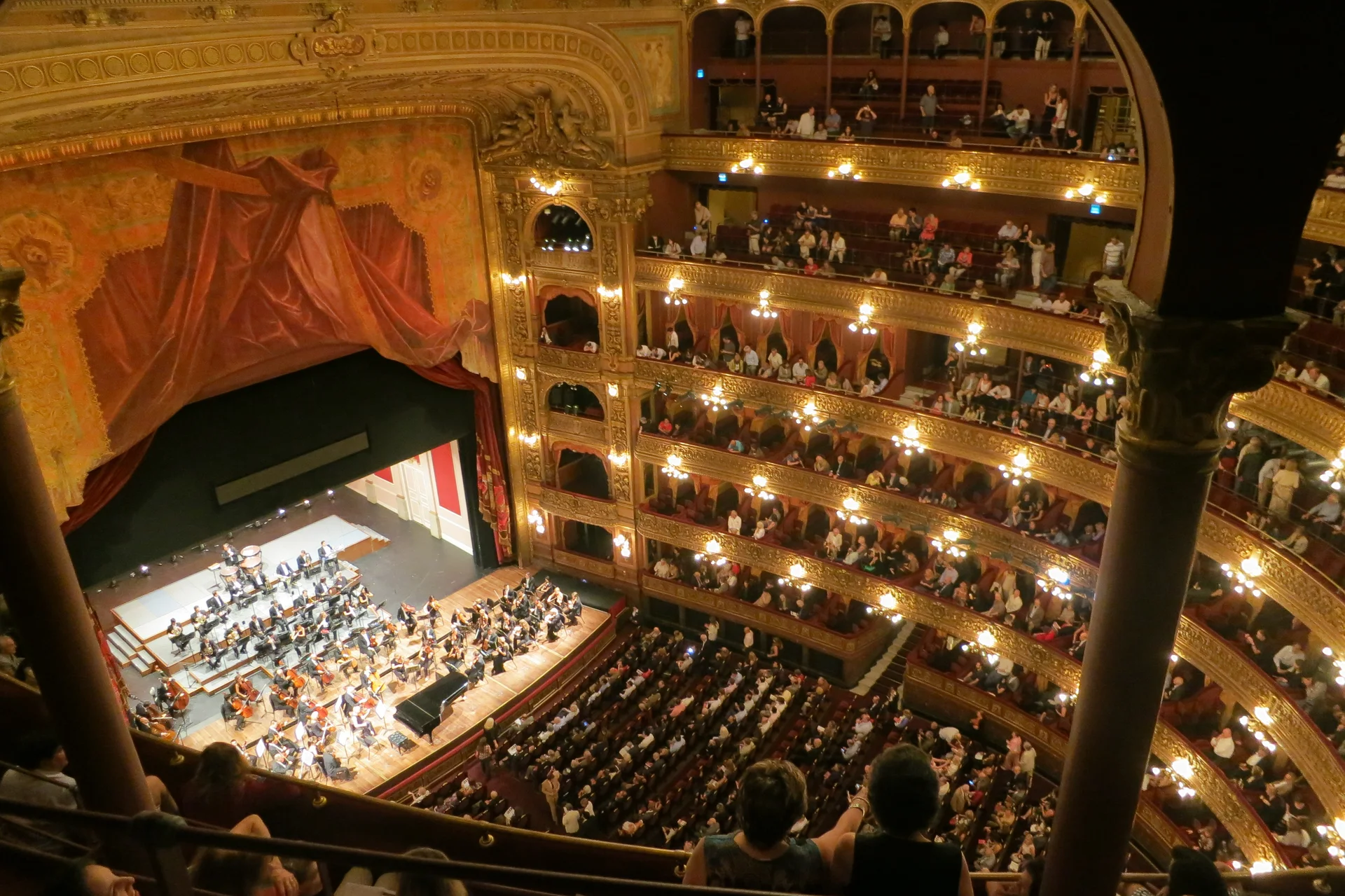
Buenos Aires runs on its own clock: lunch at 2 pm, dinner at 10, tango after midnight. A couple does best to set their watches by it: Recoleta in the morning, a bookshop in the afternoon, a steak at Don Julio at 9:30, then a milonga in Palermo. Two things need settling before you go: how you will pay, since the peso has several exchange rates, and the tables, shows and tours that sell out weeks ahead. The rest, the streets of San Telmo or the terraces of Palermo, you find as you walk.
At a glance
- When to go
- March to May and September to November: 54 to 81°F (12 to 27°C), fall and spring in the south, jacarandas in bloom in late October. December to February is 86°F (30°C) and up, and humid; July is 43 to 63°F (6 to 17°C).
- How many days
- Four full days for the center, Recoleta, Palermo, La Boca and two tango evenings, without rushing; plan six nights to absorb the 9 to 15 hour flight and a time difference of 1 to 5 hours.
- Which neighborhood
- Palermo for a first visit and dinners, Recoleta for calm and hotels with character, San Telmo for tango and old houses.
- Budget for two
- About $1,290 for three nights at a comfortable level, with hotel, meals, a tango show and transport, before flights: the hotel and dinners weigh most.
- The moment for two
- A milonga after midnight, in a hall where people have danced for decades, preceded by a lesson for beginners.
- Book ahead
- Ask your bank how it converts pesos, then book 2 to 4 weeks ahead: a table at Don Julio, a tango show and the Teatro Colón tour.
Why Buenos Aires for two
Buenos Aires splits into day and night. By day it is tree-lined avenues, stone apartment buildings, the Recoleta cemetery, bookshops open until midnight and cafés where nobody hurries you. Night starts at 10 pm: a grilled-beef dinner, then tango, which you either watch in a theater or dance in a milonga, a social ball where couples of every age share one wooden floor.
From the US East Coast the flight is an overnight 9 to 11 hours, and Buenos Aires is only one or two hours ahead of New York, so jet lag is mild. The city wakes up late, so you can sleep until 9 am and miss nothing. And meals, taxis and shows generally cost less than in New York or London, apart from the top tables and luxury hotels. Only paying in pesos takes some preparation before you leave: see “Money” below.
When to go
| When | Weather | Crowds | Our take |
|---|---|---|---|
| March to May | 54 to 81°F (12 to 27°C), a few storms in March, clear skies in May | Moderate, heavier at Easter | Our favorite: soft light, open terraces, no heavy heat |
| June to August | 43 to 63°F (6 to 17°C), cool wind, short days | Light, except the July school holidays | Lower prices and heated tango halls, but gray skies and cool evenings |
| September to November | 52 to 77°F (11 to 25°C), spring showers | Heavy in October and November | Jacarandas bloom from late October to November, parks and terraces, longer days |
| December to February | 68 to 91°F (20 to 33°C), humid, storms, peaks of 100°F (38°C) | Heavy at Christmas and New Year, light in January | Heavy heat; in January many neighborhood restaurants close and locals leave town |
The Tango World Championship (Mundial de Tango) is usually held in August and fills the dance halls and some hotels. Long weekends (fin de semana largo) send locals out of town and empty the center, though they fill the trains and roads to the coast. In July, school winter holidays push up prices in resort areas, not in Buenos Aires itself.
Paperwork: passport, entry, health
| Documents | Entry authorization | Health | |
|---|---|---|---|
| United States | A passport valid for your whole stay; a driver’s license is not accepted | No visa for tourist stays of up to 90 days | Travel insurance: Medicare does not cover care abroad, and many private plans cover only emergencies |
| United Kingdom | A passport valid for your whole stay | No visa for tourist stays of up to 90 days | Travel insurance: the UK’s GHIC does not apply in Argentina |
| Canada | A valid passport | No visa for tourist stays of up to 90 days | Travel insurance: provincial plans reimburse little for care abroad |
On arrival
Entry rules change (documents, health insurance), so check the State Department’s country page, the UK government’s travel advice or the website of Argentina’s national migration office before you book. At Ezeiza airport, immigration takes 30 to 60 minutes when several flights from the Americas and Europe land together in the morning. Keep your first hotel’s address and your return ticket handy: the officer may ask for them.
Vaccines and mosquitoes
No vaccine is required for Buenos Aires. Yellow fever shots are recommended only if you continue to Iguazú Falls, in the north. From summer to fall, dengue circulates some years: mosquito repellent is enough.
Getting there
By air, the only way
| From | Time | Good to know |
|---|---|---|
| New York | ~11h | Nonstop flights from JFK and Newark to Ezeiza; overnight departures land in the morning |
| Miami | ~9h | Nonstop flights to Ezeiza, among them American |
| Atlanta, Dallas, Houston | 10 to 11h | Nonstop flights to Ezeiza, among them Delta, American and United |
| Chicago, Los Angeles, Seattle | 14 to 18h | One stop, most often in Miami, Dallas or Atlanta |
| Toronto | ~11h | Nonstop flights to Ezeiza with Air Canada |
| London | ~14h | Nonstop flights to Ezeiza with British Airways |
Long-haul flights land at Ezeiza (EZE), 22 miles (35 km) from the center. Aeroparque (AEP), on the river, and El Palomar (EPA), to the west, serve domestic flights: Iguazú, El Calafate, Ushuaia, Mendoza, Salta. If you add a domestic flight, check the departure airport before booking: between the two, allow an hour on the road. To reach your hotel, see “From the airport to your hotel”.
Practical things to know before you leave
Phone
US and UK carriers charge extra for roaming in Argentina: take an international day pass or install an eSIM before you leave. Hotel and café wifi is free. Install WhatsApp: restaurants, show organizers and guides answer faster there than by email.
Money: one peso, several rates
The Argentine peso is an unstable currency, and there is an official exchange rate and one or more parallel rates: the “blue dollar” of unofficial exchange houses, the “MEP dollar” of the stock market. The gap between them exists and varies from month to month, sometimes small, sometimes large. The amounts in this guide are rough euro, dollar or pound equivalents; peso prices rise fast, and the rate you get decides the rest.
- By card: accepted almost everywhere, but the rate applied depends on your bank and the network (Visa, Mastercard) and may be less favorable than cash. Ask your bank, before you leave, how it converts a peso payment and what fees it charges. If a terminal offers to charge you in dollars, decline and pay in pesos.
- In cash: bring 50 or 100 US dollar bills in new, undamaged condition (torn or marked bills are refused), or euros or pounds, which exchange at a less favorable rate. Change them at a casa de cambio, a licensed exchange office in town, or at your hotel’s front desk.
- At an ATM: possible, but local banks apply a low cap and a high fee to each withdrawal, on top of your own bank’s: a few large withdrawals beat ten small ones.
- On the street: never change money with the arbolitos who call “cambio, cambio” along Calle Florida. They miscount and slip in counterfeit bills.
Tipping
Service is not included: leave 10% of the bill at a restaurant, in cash if you can, since the card terminal does not always offer it. That is half the American habit. Many bills include a cubierto, a per-person cover charge for bread: it is not the tip. In a taxi, round up; at a hotel, a small bill for the porter.
Time difference
Buenos Aires keeps the same time all year, with no daylight saving: one hour ahead of New York in summer and two in winter, three hours behind London in winter and four in summer. From the US East Coast, jet lag barely registers; from the West Coast, it is four or five hours, so keep the first day light, walk in the sun and stay up until 10 pm. The city’s late dinners work in your favor.
Plugs, water and what to wear
- Plugs are type C (two round pins) and type I (three flat pins in a V), at 220 volts and 50 Hz. US plugs do not fit, so bring a type I adapter. Phone and laptop chargers accept 100 to 240 volts and only need the adapter; a US hair dryer or straightener at 120 volts will burn out, so use the hotel’s.
- Tap water is safe in Buenos Aires and locals drink it; if your stomach is sensitive, bottled water is cheap.
- People dress for the evening: pants or a dress, no shorts or flip-flops at a nice restaurant or a milonga. Sidewalks are broken in places: comfortable shoes by day, heels in the bag.
What to book, and how far ahead
The big parrillas (steakhouses), tango shows and the Teatro Colón fill up weeks ahead: their seats are limited. The rest, a café, a milonga, a museum, is decided the day before or the same day.
| What | Price / person | Book | Good to know |
|---|---|---|---|
| Don Julio or La Cabrera, top steakhouses | 2 to 4 weeks ahead | The 8:30 and 9 pm tables go first; at 11 pm it is easier | |
| Tango show with dinner | $112 to $191 | 1 to 2 weeks ahead | Friday and Saturday fill first; the show without dinner costs $56 to $101 |
| Teatro Colón, guided tour | ~$28 | 2 to 3 days ahead | A one-hour tour in several languages; mornings are less crowded |
| Teatro Colón, opera, ballet or concert | $34 to $168 | 2 to 4 weeks ahead | The season usually runs from April to December; the highest seats are the cheapest |
| Milonga, entry | $5.60 to $14 | Not needed | The lesson before the dance is paid separately |
| Palacio Barolo, guided tour | 1 to 3 days ahead | Up to the lighthouse, at fixed tour times; the light is better late in the day | |
| Estancia day with asado | $101 to $168 | 1 week ahead | Transport from your hotel, lunch and a horseback ride are usually included |
| Ferry to Colonia del Sacramento | $45 to $79 | 1 to 2 weeks ahead | Passport required; the fast crossing takes ~1h15 |
| Hotel | 2 to 3 months ahead | For October, November, April and May, the best places in Palermo and Recoleta sell out first |
From the airport to your hotel
© OpenStreetMap contributors
The three airports and the neighborhoods they serve
- Ezeiza (EZE)
- Aeroparque (AEP)
- El Palomar (EPA)
- 1Recoleta
- 2Palermo
- 3San Telmo
- 4Puerto Madero
| Destination | Transport | Time | Typical fare |
|---|---|---|---|
| Recoleta | Taxi or remis, fixed fare | 45 to 75 min | ~$51 / taxi |
| Recoleta | Tienda León shuttle to Retiro, then a taxi | ~1h15 | ~$17 / person |
| Palermo | Taxi or remis, fixed fare | 50 to 80 min | ~$56 / taxi |
| San Telmo | Taxi or remis, fixed fare | 40 to 70 min | ~$45 / taxi |
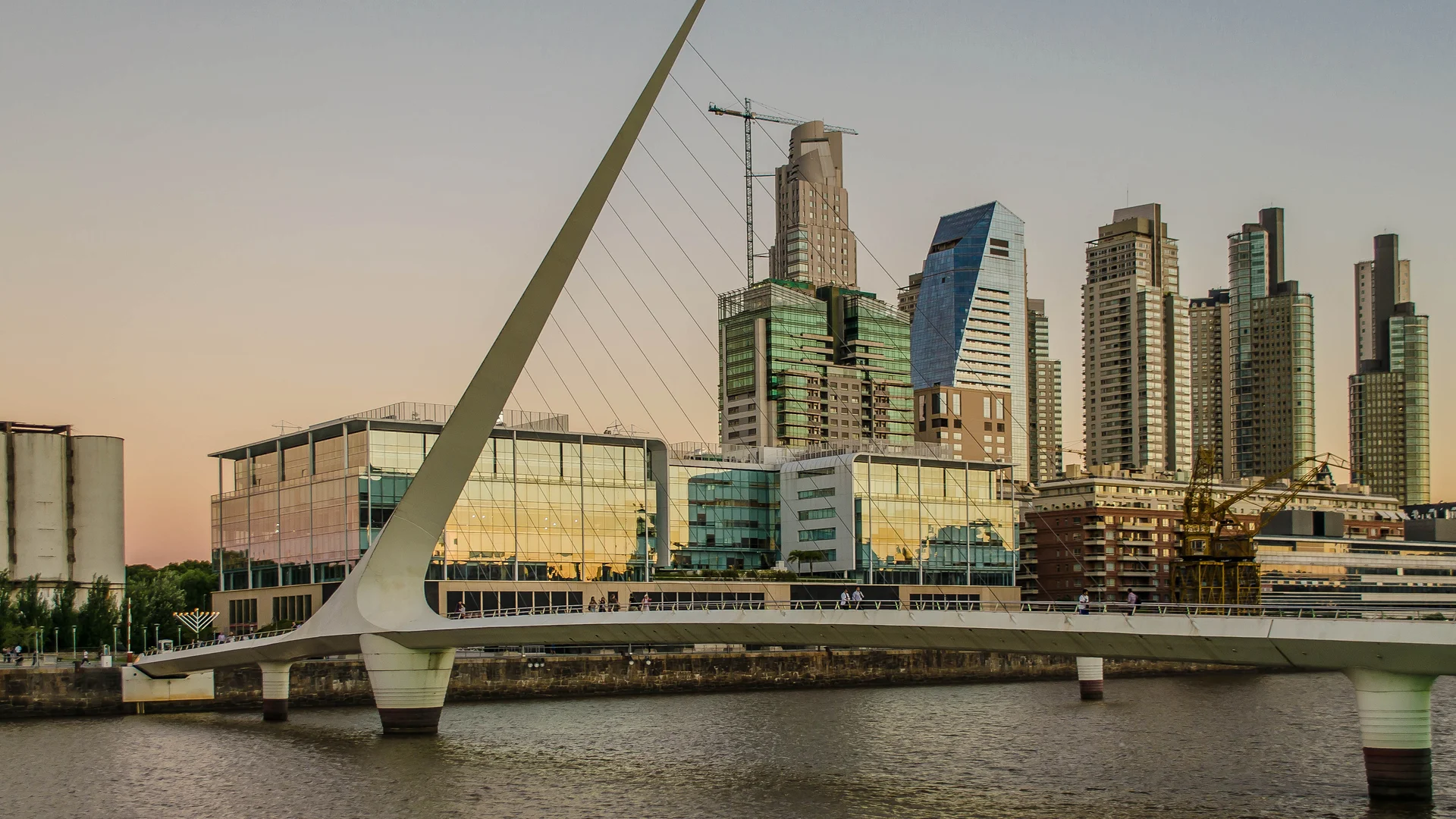
| Puerto Madero | Taxi or remis, fixed fare | 40 to 70 min | ~$45 / taxi |
| Destination | Transport | Time | Typical fare |
|---|---|---|---|
| Palermo | Taxi | 10 to 20 min | ~$5.60 / taxi |
| Recoleta | Taxi | 10 to 20 min | ~$5.60 / taxi |
| San Telmo | Taxi | 20 to 35 min | ~$9 / taxi |
| Puerto Madero | Taxi | 15 to 30 min | ~$7.90 / taxi |
| Destination | Transport | Time | Typical fare |
|---|---|---|---|
| Palermo | Taxi or ride-hailing car | 45 to 75 min | ~$34 / taxi |
| Recoleta | Taxi or ride-hailing car | 45 to 75 min | ~$34 / taxi |
| San Telmo | Taxi or ride-hailing car | 50 to 80 min | ~$36 / taxi |
At Ezeiza, the safest choice is the taxi counter in the arrivals hall: the fare is fixed, paid at the desk, and the driver meets you at the exit. The Manuel Tienda León shuttle is sold at its own counter and drops you at Retiro, where a taxi reaches Recoleta, Palermo or San Telmo in a few minutes. Ride-hailing apps work in the city, with a pickup point shown in the app. Between 5 and 8 pm the Ezeiza road clogs: allow 1h30.
Turn down any offer made in the hall by a private driver: with no license, he charges double. For a domestic connection between Ezeiza and Aeroparque, a shuttle links the two airports in an hour; allow four hours in all between your arrival and the next flight.
Getting around
On foot, then by taxi
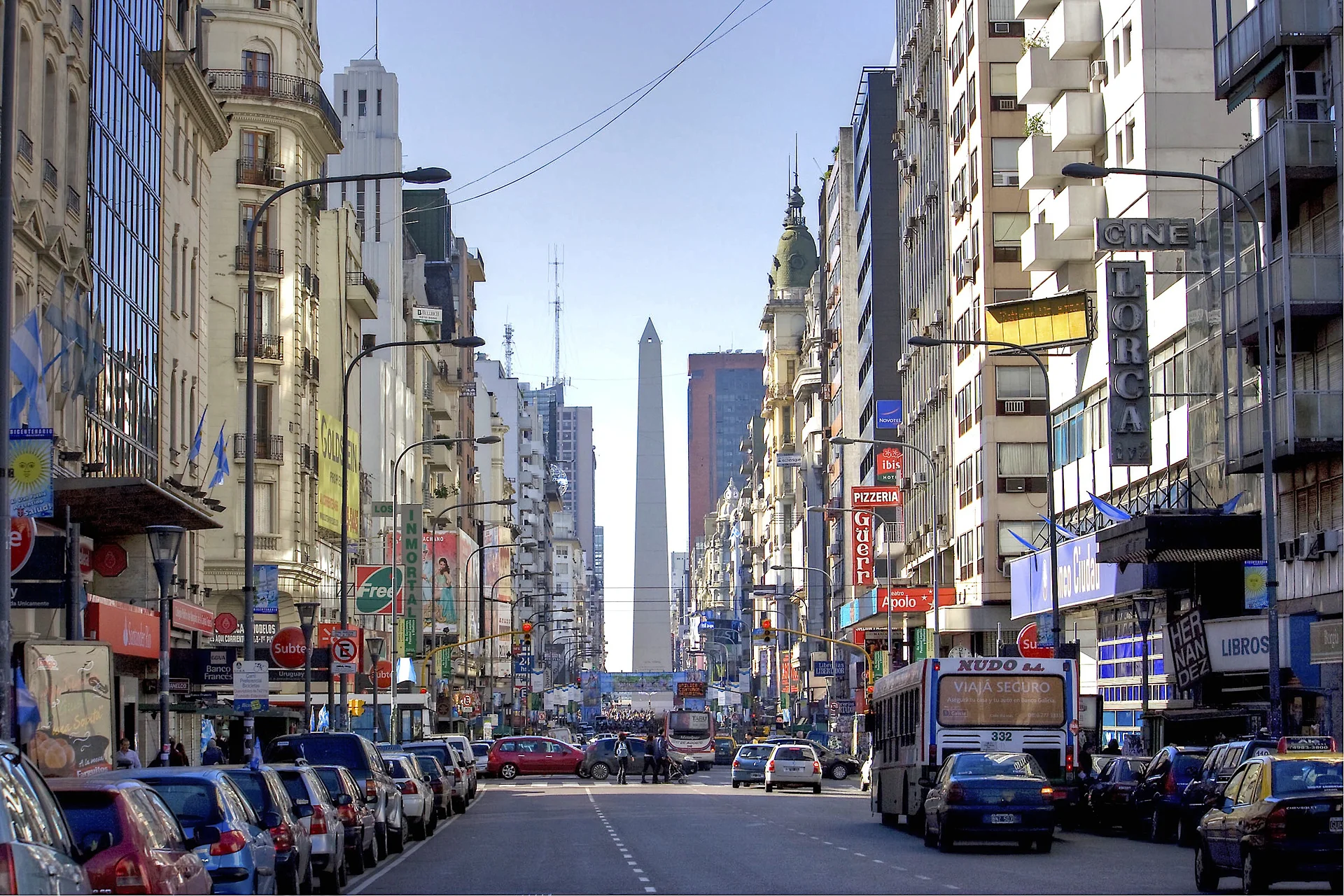
Inside a neighborhood, everything is walkable: Palermo, Recoleta, San Telmo and the center are best explored at a slow pace. Between them the distances are 2 to 5 miles (3 to 8 km), and a taxi is the simplest way for a couple, especially at night. Street numbers rise by 100 at each block (cuadra): “Santa Fe 1860” is about eighteen blocks from “Santa Fe 100”.
| Fare | Price | Good for |
|---|---|---|
| Black-and-yellow metered taxi | $4.50 to $12 / ride | The simplest option, especially after 10 pm; pay with small bills |
| Ride-hailing car (app) | Price shown when you order | Same trip, with the price known before you get in |
| Subway (subte) | Under $1.20 | The center, Recoleta and Palermo |
| Bus (colectivo) | Under $1.20 | A rechargeable SUBE card is required (no cash on board), sold at kiosks and post offices |
| Commuter train to Tigre | ~$1.20 | From Retiro station, ~1h; for the delta excursion |
Subway line D links the Catedral station, on the Plaza de Mayo, to Recoleta and Palermo (Facultad de Medicina, then Plaza Italia and Palermo stations): half an hour from the center to the botanical garden, with no traffic. Lines A, B, C, E and H cover the rest of the center. After 11 pm the trains stop: take a taxi home.
Budget for two
Prices are written in pesos and change fast: these are euro equivalents, valid at the rate you get (see “Money”). The table adds up three nights for two, flights excluded; the hotel and dinners make up most of it.
| Smart | Comfortable | Treat yourselves | |
|---|---|---|---|
| Hotel, per night | $79 to $124 | $146 to $250 | from $450 |
| Meals, per day for two | $68 | $124 | $280 |
| Sights and shows for the stay | $68 | $280 | $680 |
| Transport for the stay | $34 | $68 | $168 |
| Total for three nights | $620 | $1,290 | $3,030 |
Many hotels remove the 21% VAT from the bill of foreign visitors who pay with a card issued outside Argentina: ask before you book. From June to August, outside the July holidays, rooms cost less than in spring and fall.
Reference prices
| Item | Price |
|---|---|
| A coffee and two medialunas (small croissants) | $4.50 to $6.80 |
| An empanada | $2.30 to $3.40 |
| A bife de chorizo (sirloin) at a neighborhood steakhouse | $23 to $34 |
| A bottle of Malbec at a restaurant | $23 to $51 |
| Dinner for two with a bottle, top steakhouse | $101 to $157 |
| A cocktail at a Palermo bar | $7.90 to $14 |
| Tango show with dinner | $112 to $191 / person |
| Entry to a milonga | $5.60 to $14 |
| A taxi ride in town | $4.50 to $12 |
What to eat and drink
The porteño table rests on three legacies: pampas beef, the pasta and pizza of Italian immigration, and the milky sweetness of dulce de leche at every meal. For a couple, a neighborhood parrilla beats a guidebook address.
At the table
-
The asado at the parrilla
Argentine beef grilled over embers: bife de chorizo (sirloin), ojo de bife (ribeye), entraña (skirt steak), vacío (flank). Ask for it jugoso (medium); one cut is enough for two.
-
Provoleta and offal
Cheese melted on the grill opens the meal, with chorizos and mollejas (sweetbreads) for the curious. Chimichurri, herbs and garlic, lifts the meat.
-
The empanada
A pastry filled with knife-chopped beef, cheese or corn, baked or fried, at $2.30 to $3.40 each: lunch at any hour.
-
Porteño pizza
A thick crust under a layer of mozzarella, the fugazzeta with onions, eaten standing at the counter of El Cuartito (Talcahuano 937) or Güerrín.
-
The alfajor and dulce de leche
A round cookie sandwiched with milk caramel and coated in chocolate; dulce de leche also fills croissants, ice cream and the flan you order “mixto”, with cream.
-
Italian-style ice cream
Neighborhood heladerías serve dense ice cream made with cream, dulce de leche and chocolate, open until midnight, to eat as you stroll.
In the glass
-
Malbec
The wine of Mendoza, at the foot of the Andes: round, dark, $23 to $51 a bottle at a restaurant. Ask the waiter for a high-altitude Malbec, which is fresher.
-
Vermouth and fernet
The porteño aperitif is chilled vermut with an olive; the national drink is fernet con coca, an Italian bitter mixed with cola, born in Córdoba.
-
Coffee and mate
The cortado at a café counter, and mate, the herbal infusion locals pass around in a gourd: you are offered one when visiting friends, not in a café.
-
Artesanal beer
Palermo’s bars brew their own: a pint at $3.40 to $5.60, with empanadas on the side.
Customs and rules to know
Porteños are warm and direct: people greet with a kiss on the cheek, even on a first meeting, and switch to first-name terms fast. For a couple, the details that count are mealtimes, the cover charge and the milonga code.
- Dinner is eaten between 9 and 11 pm: kitchens open at 8, but the dining room is empty before 9, and the atmosphere comes later. The merienda (afternoon snack) at 5 pm bridges the wait.
- In a milonga, you invite someone with a look and a nod (cabeceo), never aloud. People dance in sets of four songs (tandas), separated by a short piece of music (cortina) during which you return to your seat; the line of dance moves counterclockwise, without overtaking.
- Smoking is banned in restaurants, bars and dance halls.
- Britain calls them the Falkland Islands, Argentina the Malvinas, and the subject is sensitive, especially for British visitors: better not to raise it.
Safety
The neighborhoods where you will sleep and go out are busy by day and by night, and most stays pass without incident. What you meet is ordinary but frequent: snatch theft, counterfeit bills in your change, a stain used as a pretext.
- Don’t hold your phone in your hand on the sidewalk or at a streetside terrace: motorbike thieves (motochorros) snatch it in passing. Check the map inside a shop and keep the phone in an inside pocket.
- Take only a black-and-yellow metered taxi or a car ordered on an app. Count your change before you get out: counterfeit bills circulate, so pay with small bills.
- If someone points out a stain on your back (mustard, bird droppings), don’t let them clean it: an accomplice empties your pockets in the meantime. Walk away.
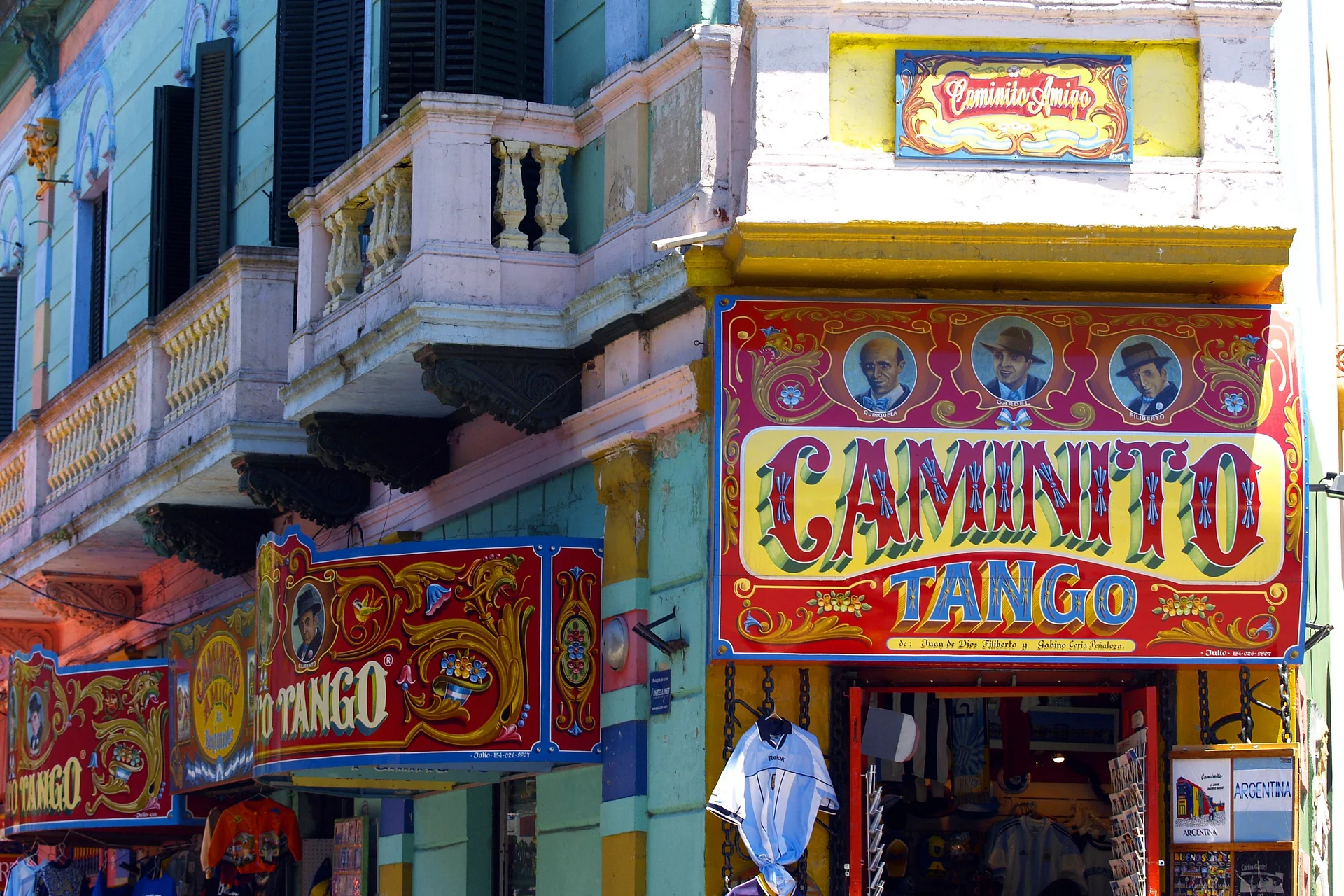
- In La Boca, stay by day within the area of Caminito and the Bombonera, arrive and leave by taxi, and don’t walk the neighboring streets; avoid the neighborhood at night.
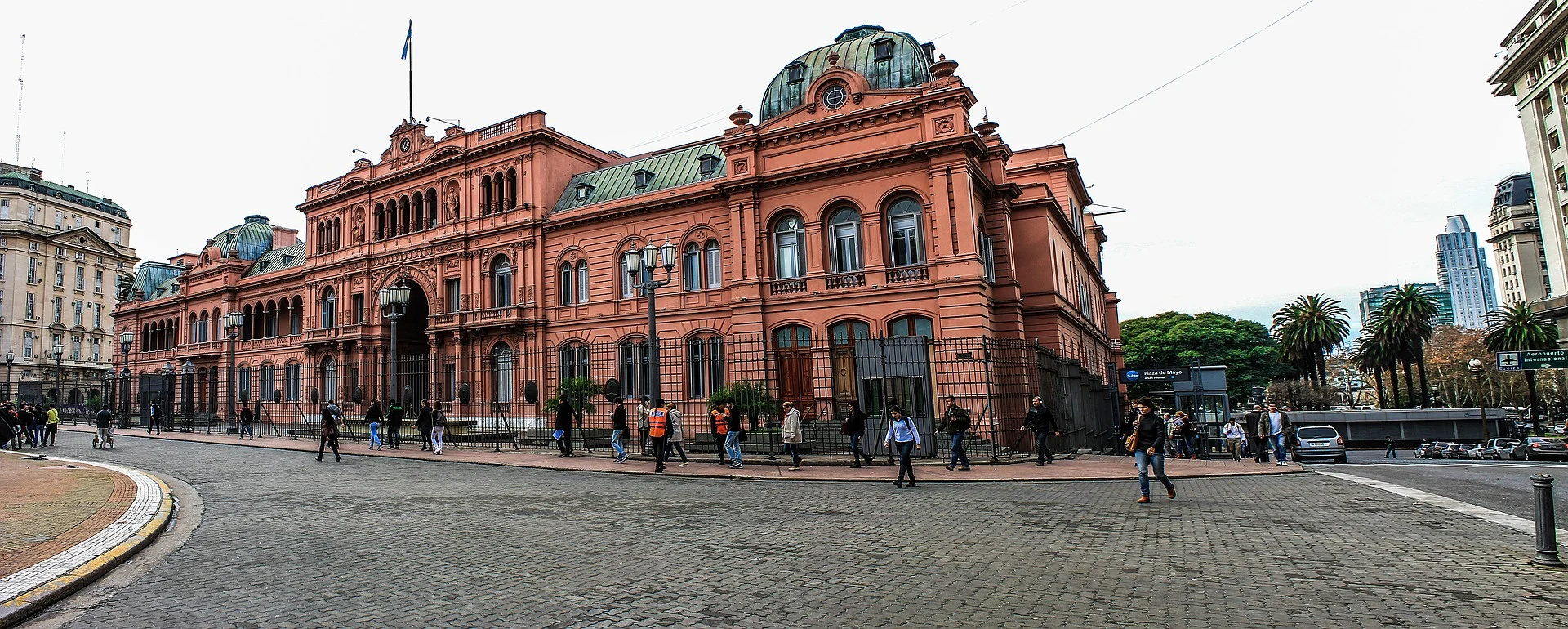
- Demonstrations (piquetes) sometimes block the Plaza de Mayo and 9 de Julio avenue: go around them by taxi rather than walk into them.
- Pickpocketing concentrates on Calle Florida, on the subway at rush hour, at Retiro and in the crowd of the San Telmo fair: bag zipped in front of you, wallet in an inside pocket.
- Take a taxi home after midnight, and withdraw cash inside a bank, not at a street ATM.
Mistakes couples make
A dinner taken too early, a show booked too late, money badly changed: the most common slips are settled before you leave. Keep some hours with no plan, for the streets you hadn’t expected.
- Dining at 8 pm: the room is empty and the kitchen barely warm. Book 9:30 or 10 pm.
- Changing money on the street, or leaving without asking your bank how it converts peso payments.
- Showing up on a Friday or Saturday with no table at a top parrilla and no seat for a tango show.
- Walking in La Boca beyond Caminito, or going in the evening: the neighborhood is a daytime visit, by taxi.
- Putting Palermo and San Telmo in the same day with no taxi: 25 minutes on the road, and the subway stops before the evening ends.
- Not checking the airport of a domestic flight: Ezeiza and Aeroparque are an hour apart.
Frequently asked questions
Is Buenos Aires a good destination for a romantic trip?
Yes: tango, late dinners, bookshops and the tree-lined avenues of Recoleta and Palermo are made for two. The things to watch are how you pay in pesos, phone snatching and the 9 to 15 hour flight.
How many days do you need in Buenos Aires as a couple?
Four full days cover the historic center and San Telmo, the Teatro Colón, Recoleta and Palermo, La Boca and Puerto Madero. With three days, keep the center, Recoleta, Palermo and one tango evening. To absorb the flight, plan at least five nights.
Do you need a visa for Buenos Aires?
No: Americans, Britons and Canadians need no visa for a tourist stay of up to 90 days, only a valid passport. Rules change, so check the official Argentine migration website before you book.
How do you pay in Buenos Aires: card, dollars or euros?
All three work, at different rates: the official rate and the parallel rates differ, and the gap varies. Ask your bank how it converts a card payment, bring some new US dollar bills for cash, and compare two exchange offices the day you arrive.
Where can you watch or dance tango in Buenos Aires?
To watch, a dinner show in San Telmo or Puerto Madero. To dance, a milonga in Palermo or the center, preceded by a lesson: Salón Canning, La Viruta or Confitería Ideal. Book for Friday and Saturday.
Is Buenos Aires dangerous for a couple?
Not in the neighborhoods where you sleep and go out: the risks are phone snatching, counterfeit bills in your change and the streets of La Boca at night. Take a taxi home after midnight and keep your phone put away on the sidewalk.