Zanzibar for couples: what to know before you go (2026)
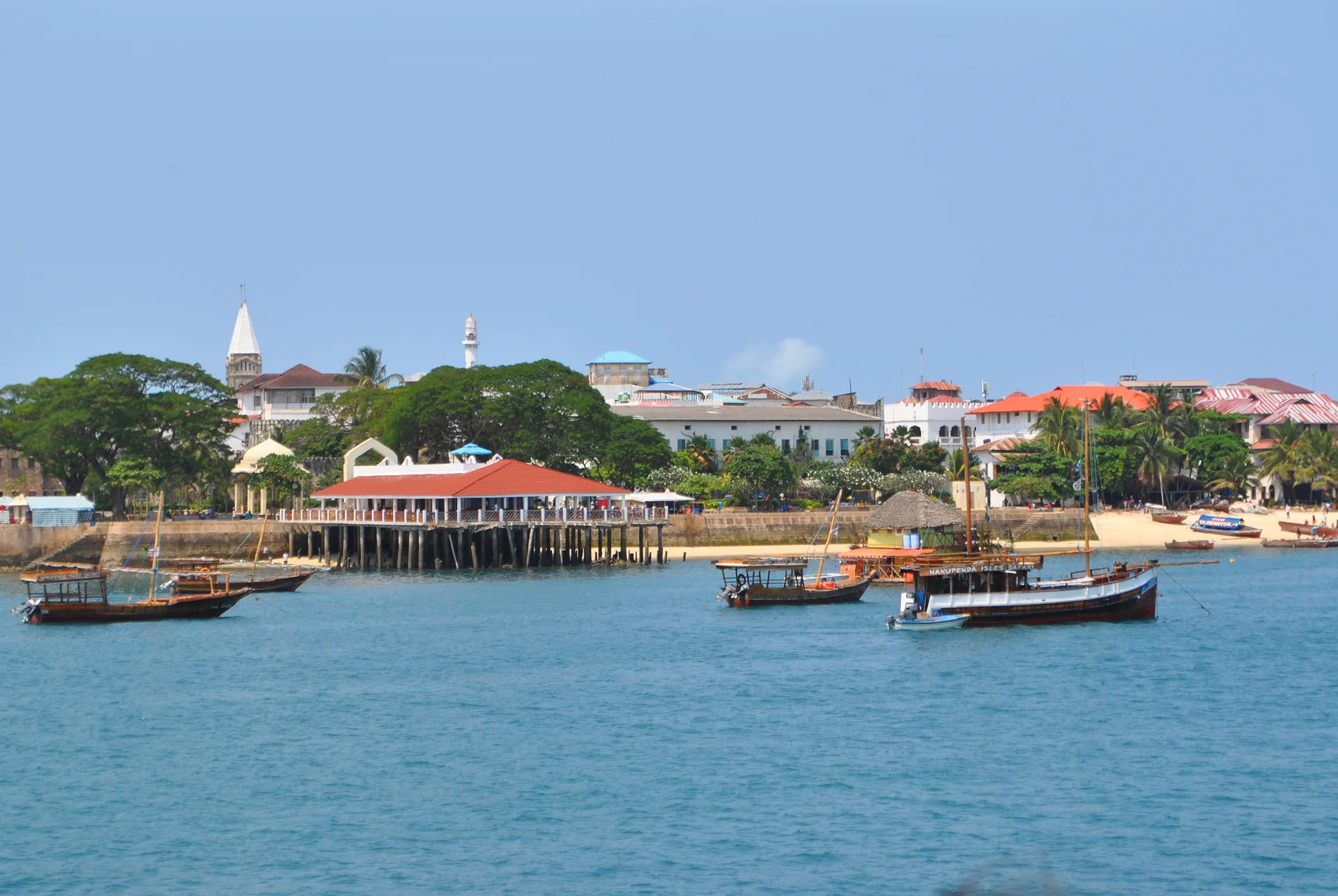
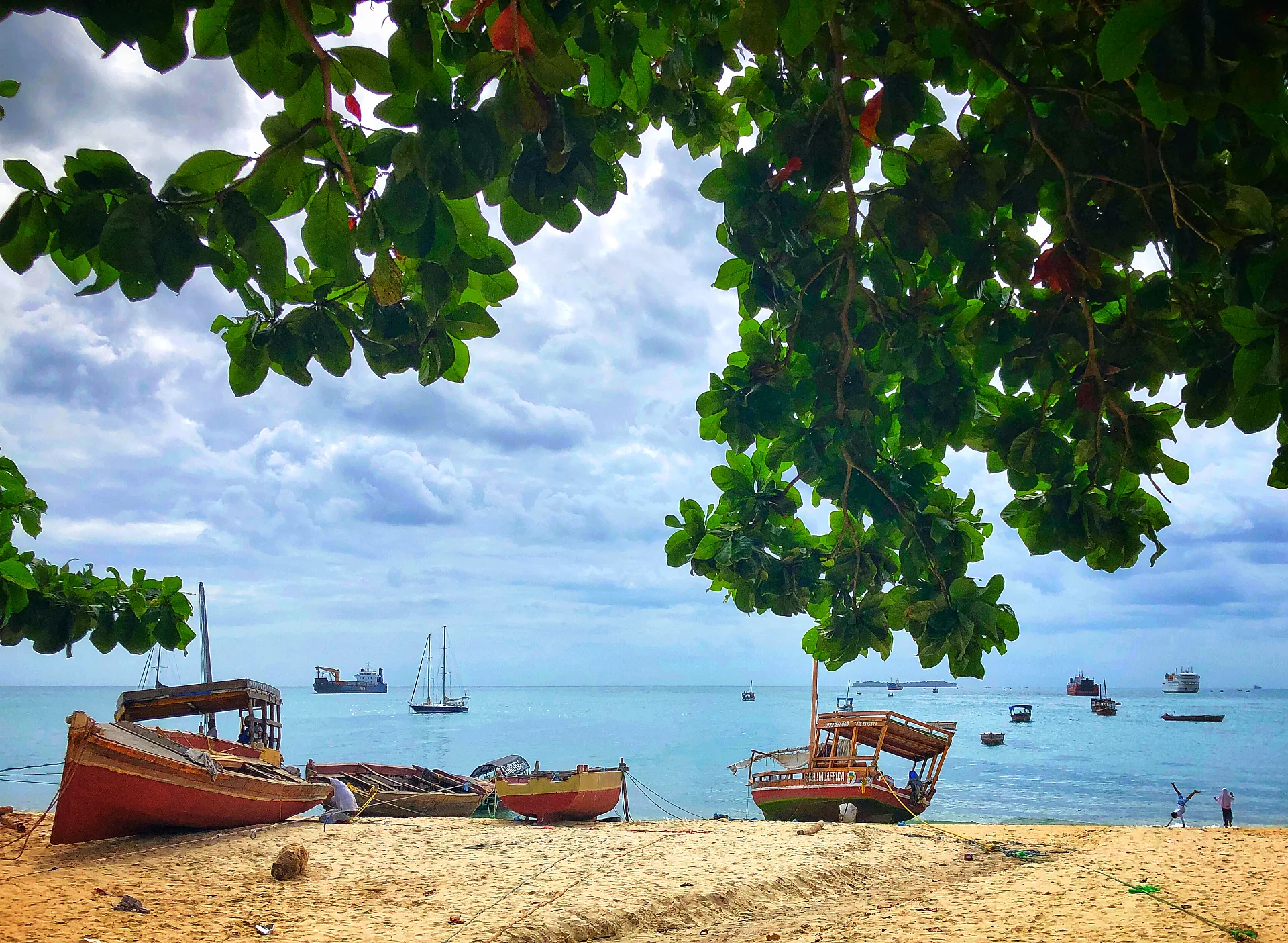
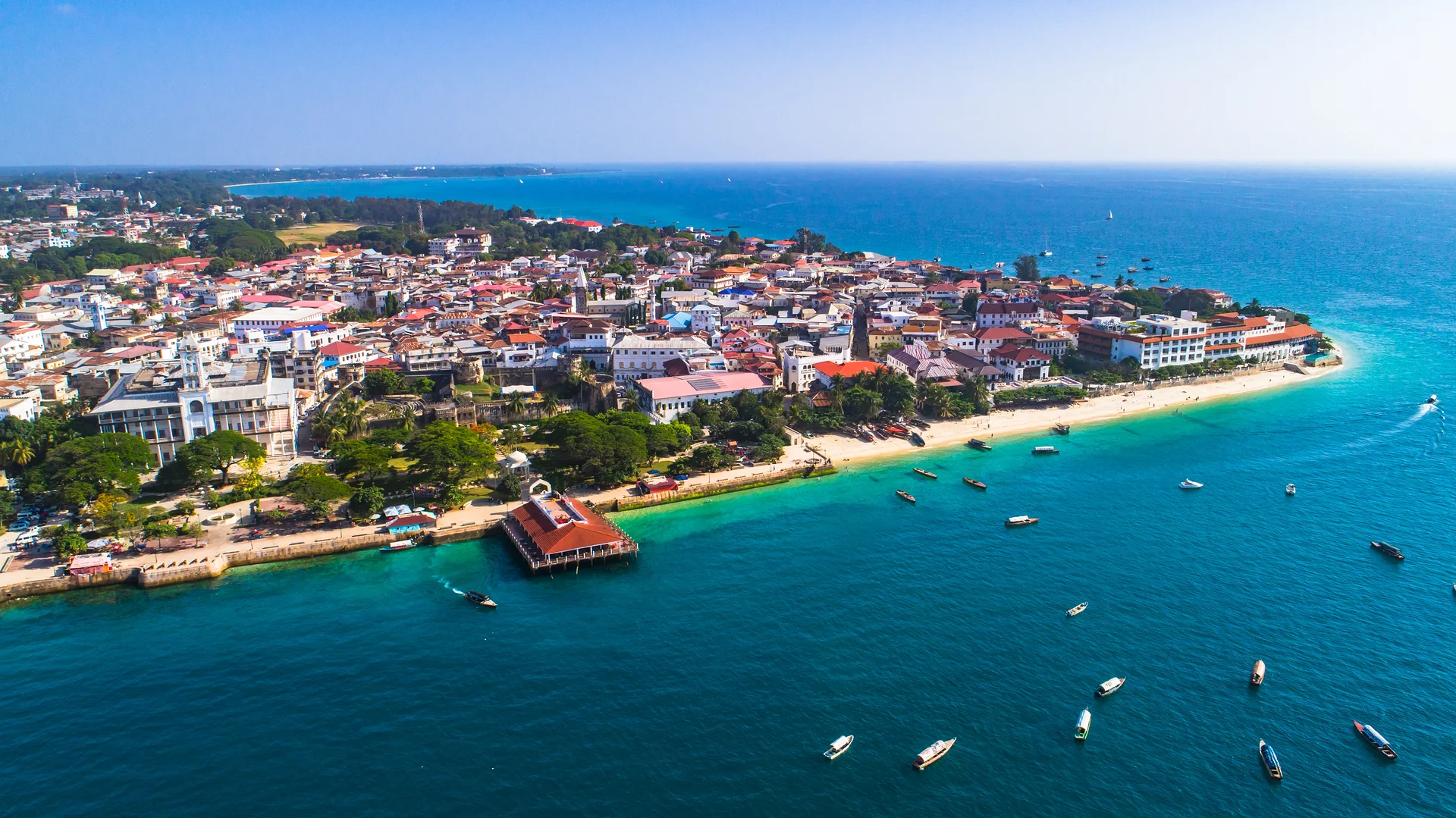
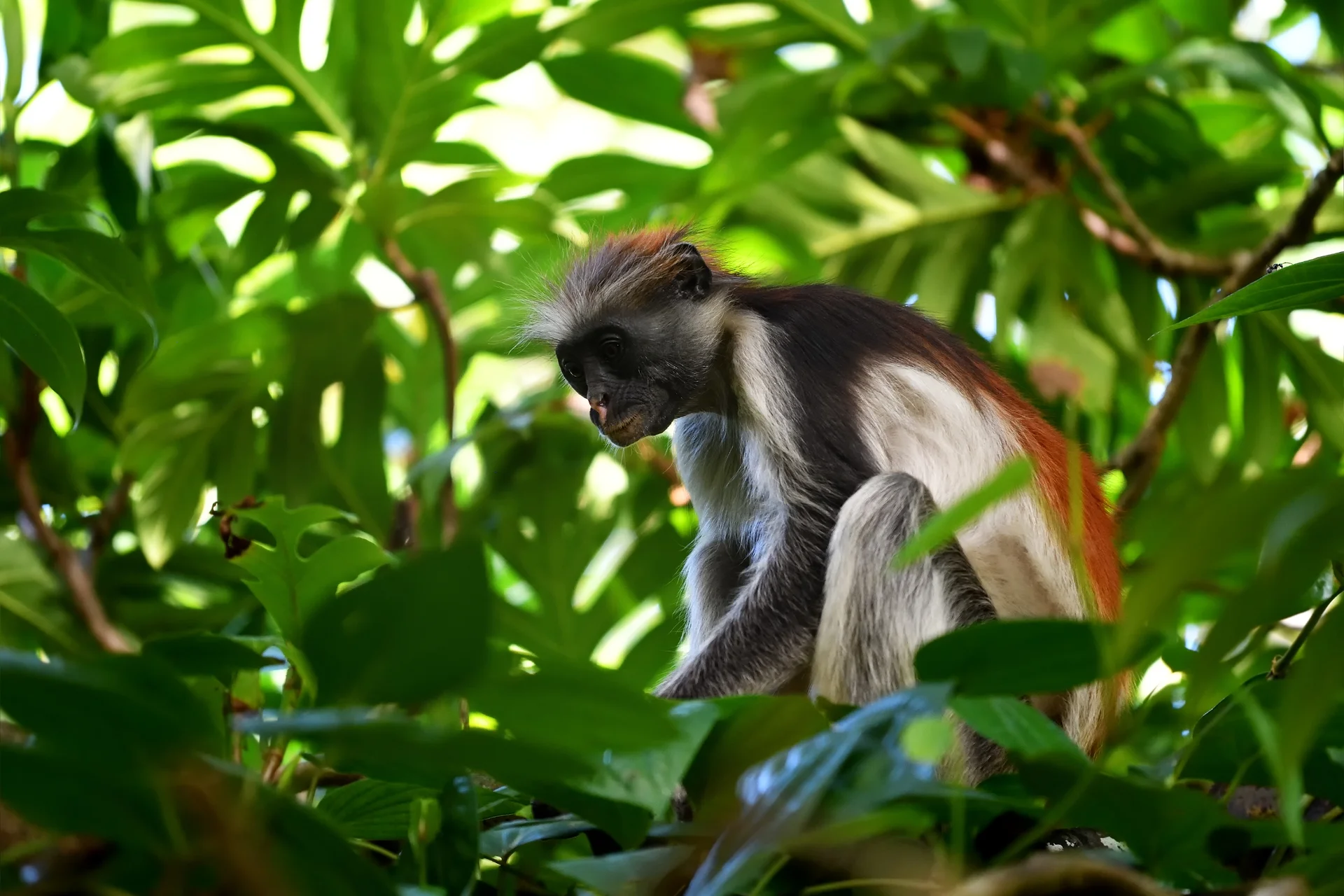
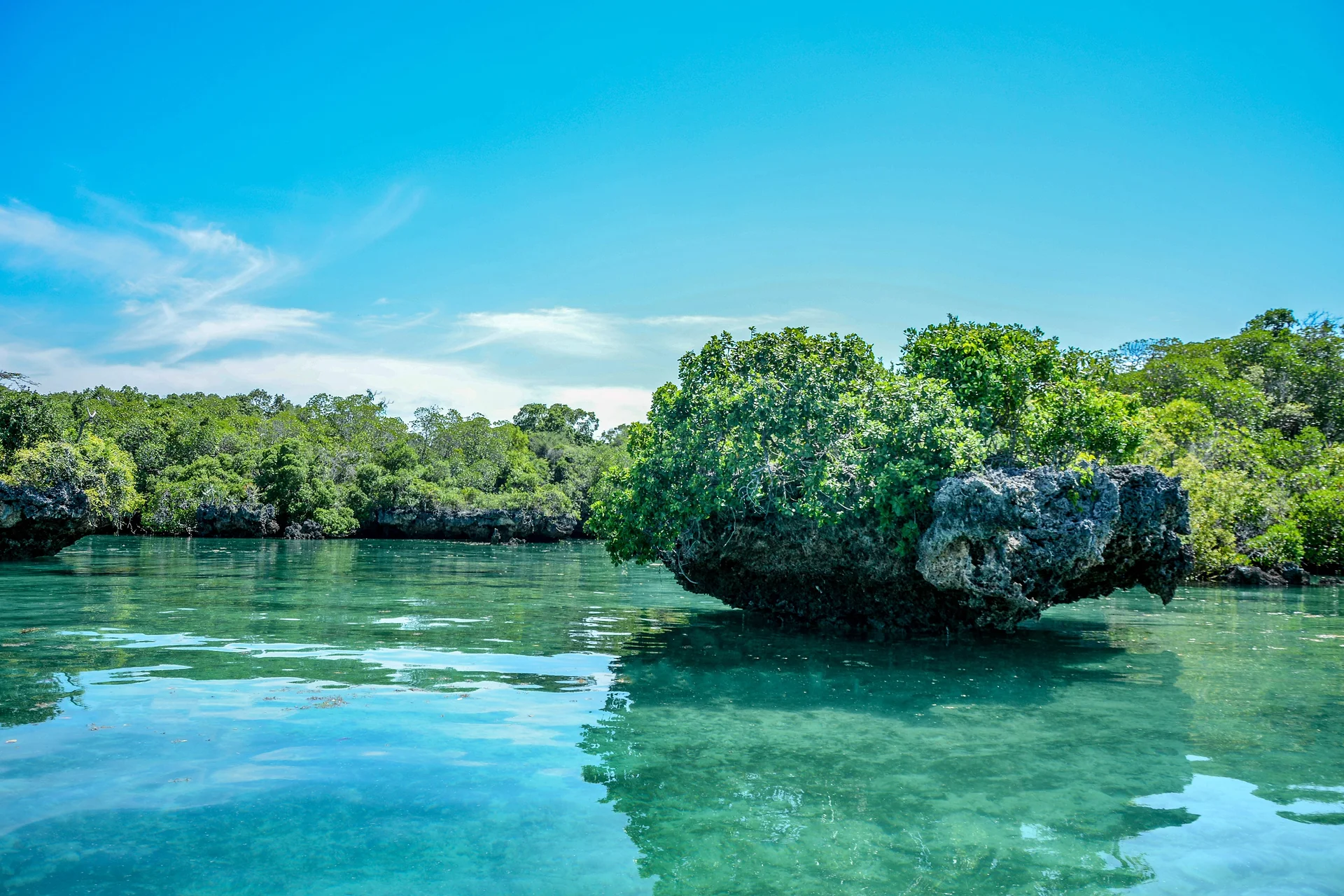
On Zanzibar, you pick the beach by the tide. In the north, at Nungwi and Kendwa, the sea stays close to the sand at any hour; on the east coast, at Paje and Jambiani, it pulls back several hundred yards twice a day, and the lagoon becomes a walk between swims. Around the beaches: Stone Town with its carved doors, Prison Island and its giant tortoises, the red colobus monkeys of Jozani, the dolphins of Kizimkazi. What to settle before you leave: the coast, the season (the long rains fall from March to May), the visa, a doctor's advice on malaria, and clothes that suit an island that is almost entirely Muslim.
At a glance
- When to go
- June to October: dry, 25 to 30 °C (77 to 86 °F), warm sea, a cool breeze at night. January and February are hotter and more humid, but lovely. The long rains fall from March to May, a shorter spell in November.
- How many days
- Seven nights to do it all: two in Stone Town, then four or five on a single beach. With four days, keep Stone Town, Prison Island, Jozani and one coast.
- Which coast
- Nungwi and Kendwa, in the north: swim at any hour, sunsets over the sea. Paje and Jambiani, in the east: kitesurfing and a lagoon, but the sea retreats at low tide.
- Budget for two
- About $2,020 for six nights at a comfortable level, with excursions, flights not included; $1,010 on a tight budget, $4,480 and up with a beachfront villa.
- The moment for two
- Sunset over the sea at Forodhani Gardens in Stone Town, or toes in the water at Kendwa, facing west. On the east coast, it's the sunrise over the lagoon.
- Book ahead
- The hotel 3 to 6 months ahead for July, August and the holidays; the Kizimkazi dolphins, Mnemba and the spice tour the day before, through your hotel, depending on weather and tide.
Why Zanzibar for two
Zanzibar is an island in the Indian Ocean, off the coast of Tanzania, about 85 km (53 miles) long. For centuries it was a trading post of the Omani sultanate, shipping out cloves, spices and, until the slave trade was banned in 1873, enslaved people. Stone Town, its World Heritage old city, keeps the courtyard houses, the carved wooden doors and the memory: the old slave market is now a place of remembrance. The rest of the island is white-sand beaches, fishing villages, seaweed fields and a forest where red colobus monkeys live.
Couples face a choice few destinations impose: where to sleep, for the sea. The beaches are not equal at every hour, and more than an hour's drive separates each coast. The best trip: two nights in Stone Town, then four or five nights on a single beach, with day excursions.
The three Zanzibars
| Coast | What it's for | The sea |
|---|---|---|
| Stone Town | Alleys, markets, sunset on the waterfront, dinners on a terrace | Not a swimming beach: you come for the city |
| Nungwi and Kendwa (north) | Wide beaches, sunsets over the sea, full-moon nights | Close to the sand at any hour, swim whenever you like |
| Paje and Jambiani (east) | Kitesurfing, a turquoise lagoon, fishing villages, sunrise | Retreats at low tide: swim at high tide |
When to go
| Period | Weather | Crowds | Our verdict |
|---|---|---|---|
| June to October | Dry, 25 to 30 °C (77 to 86 °F), warm sea, a cool southeast breeze at night | High in July and August | The best season: clear skies, pleasant nights; book early for July and August |
| January and February | Hot and humid, 30 to 33 °C (86 to 91 °F), short showers, calm sea | High | The best conditions for diving, but a heavy sun from 11am to 3pm |
| March to May | Long rains, heavy showers, 28 to 31 °C (82 to 88 °F), very humid | Very low | Soaked roads, a sometimes murky sea, several hotels close in April and May |
| November to mid-December | Short rains, afternoon showers then sun, 30 °C (86 °F) | Low | Soft prices, warm sea: a fair bet if you can live with a shower |
| Christmas and New Year | Hot, 30 to 33 °C (86 to 91 °F), changeable sky | Very high | The highest prices of the year; hotels full months ahead |
The tides on the east coast
At Paje and Jambiani, look up the tide times for your dates before you book: low tide comes about 50 minutes later each day and falls, depending on the moon, in the morning or the afternoon. The lowest tides follow the full and the new moon. In the north, you hardly notice the difference.
Ramadan and holidays
Ramadan moves back about ten days each year. In Stone Town, many restaurants open only in the evening and people avoid eating or drinking in the street by day; beach hotels run as usual. The holiday that ends Ramadan fills the ferries and roads for a few days. The full-moon nights at Kendwa draw a crowd every month.
Formalities: passport, visa and health
| Papers | Visa | Health | |
|---|---|---|---|
| United States | Passport valid 6 months past arrival, with blank pages | Required: online e-visa or visa on arrival; fee and conditions on the official site, to read before you book | No vaccine required from the US; ask a travel doctor about malaria; Medicare and most US plans do not cover you here, so buy insurance with medical evacuation |
| United Kingdom | Passport valid 6 months past arrival, with blank pages | Required: online e-visa or visa on arrival; fee and conditions on the official site, to read before you book | No vaccine required from the UK; ask about malaria; the GHIC does not cover Tanzania, so buy insurance with repatriation |
The visa
Zanzibar is part of Tanzania: a Tanzanian visa is valid here. You apply online before you go (an e-visa, on the official portal of the Tanzanian immigration service) or, depending on your nationality, on arrival at the airport. Fees, length of stay and rules change, so read the official site before you book, and keep a printout of the visa in your carry-on.
Health
Malaria exists on Zanzibar all year, with a peak after the rains. There is no vaccine: a travel doctor or clinic will tell you, six weeks before you leave, whether a preventive drug suits you and which shots to update (hepatitis A, typhoid, tetanus). On the island: repellent, long sleeves in the evening, a bed net or an air-conditioned room. Check the State Department or FCDO advice for the latest alerts.
Getting there
By air
| From | Time | Good to know |
|---|---|---|
| New York, Boston | ~18 to 26h | One stop, often in the Gulf (Doha), Turkey (Istanbul), East Africa (Addis Ababa, Nairobi) or Europe |
| Los Angeles, San Francisco | ~24 to 32h | One or two stops, by Europe, the Gulf or East Africa |
| London | ~12 to 18h | One stop, most often in the Gulf, Turkey or East Africa |
Times are rough guides: they depend on the layover. Another route: fly to Dar es Salaam, then take a 25-minute flight or a fast ferry of about 2 hours to Zanzibar, handy if you add a safari to the trip.
The time difference is 7 hours ahead of New York in summer, 8 in winter (10 or 11 from Los Angeles; 2 or 3 from London). Tanzania does not change its clocks.
Recovering from the trip
Keep the first day free of plans: a beach, a pool, a dinner near the hotel. The equatorial sun burns even under clouds, and it rises around 6am all year: you will wake early, so put it to use with a walk on the sand.
Practical things to know before you go
Phone
Your US or UK plan will roam at a steep rate in Tanzania; a day pass from your carrier can help. An eSIM installed before you leave is easiest; a local SIM (Vodacom or Airtel) is sold at the airport or in Stone Town, with your passport. Wi-Fi is free in most hotels, slower on the east coast.
Money and tipping
- The currency is the Tanzanian shilling. Hotels and excursions often quote prices in US dollars; the amounts on this page, converted for you, are guides.
- Withdraw shillings at an ATM in Stone Town or Nungwi: not every village on the east coast has one. Also carry dollars in recent, clean notes for excursions and entry fees.
- Cards work at hotels and larger restaurants, often with a fee; in a village or at a stall, you pay in cash.
- Service is sometimes added to the hotel bill. Otherwise, leave 10 % at restaurants, and $5.60 to $12 a day for a driver or guide.
Plugs, water and what to wear
- Plugs are type G (the British three-pin) and D, at 230 volts: bring a British adapter. North American devices at 110 volts need a "100-240 V" charger.
- Tap water is not safe to drink: use bottled or filtered hotel water, and skip the ice at small stalls.
- Closed beach shoes for the lagoon: sea urchins and coral cut at low tide.
- Sunscreen (the sun is strong all year), a hat, mosquito repellent, and a light scarf or sarong for visiting town.
A few words of Swahili
A jambo (hello) or a karibu (welcome, you're welcome) greets nearly every encounter. Asante means thank you, pole pole means slowly: the pace of the island. Answer a greeting before you ask a question.
What to book, and how far ahead
Zanzibar needs little booking, except two things: the hotel in high season, and trips at sea, which depend on wind and tide and are confirmed the day before. The prices below are guides for two.
| What | Price for two | Book | Good to know |
|---|---|---|---|
| Beach hotel in high season | $146 to $280 a night | 3 to 6 months ahead | July, August, Christmas and New Year: the best hotels sell out months ahead |
| Kizimkazi dolphins | $79 to $112 | The day before | Departure around 6:30am: few boats at sea at that hour (see the itinerary) |
| Mnemba Island snorkeling | $112 to $180 | 2 to 3 days ahead | Half a day by boat from Nungwi or Matemwe; confirmed depending on the sea |
| Spice tour | $34 to $56 | The day before, through the hotel | 2 to 3 hours, tastings included |
| Jozani Forest | $45 to $56 | On site | Entry fee and guide, paid on arrival |
| Guided walk in Stone Town | $40 to $68 | The day before | Two hours on foot, with the site of the slave market |
| Prison Island | $40 to $68 | On site or the day before | Boat from Stone Town, island entry and the tortoise enclosure |
From the airport to the hotel
© OpenStreetMap contributors
Zanzibar airport (ZNZ) and the coasts it serves
- Zanzibar Abeid Amani Karume (ZNZ)
- 1Stone Town
- 2Nungwi, Kendwa
- 3Paje
- 4Jambiani
| Destination | Transport | Time | Rough fare |
|---|---|---|---|
| Stone Town | Taxi or transfer | ~20 min. | ~$17 / taxi |
| Nungwi, Kendwa | Private transfer | ~1h15 to 1h30 | $56 to $68 / taxi |
| Paje | Private transfer | ~1h | ~$45 / taxi |
| Jambiani | Private transfer | ~1h15 | ~$51 / taxi |
Zanzibar Abeid Amani Karume (ZNZ), 7 km (4 miles) from Stone Town, is the island's international airport and the only one within 60 km (37 miles). Allow half an hour to over an hour between leaving the plane and walking out, for immigration and for the visa if it was not done online.
Taxis have a counter at the exit, at posted fares; the hotel often sends a driver for a similar price, easier after a night flight and essential for the north and east coasts, where roads are dark. Give the hotel your flight number.
From Dar es Salaam, the fast ferries arrive at the port of Stone Town; settle the taxi fare to your hotel before you get in.
Getting around
Driver, taxi, dala-dala
| Mode | Price | Good to know |
|---|---|---|
| Driver by the day | $56 to $101 | An air-conditioned car or minibus, the simplest for excursions; the price is set for two, fuel included |
| Taxi for a single ride | $5.60 to $28 | No meter: agree on the fare before you get in |
| Dala-dala | $0.56 to $2.30 | A shared pickup or minibus, packed, to the villages; for the curious, not for luggage |
| Scooter | $17 to $28 a day | A local license is often required; dangerous at night; best avoided on a first trip |
| Bicycle | $5.60 to $12 a day | For a village and its beach, not for the main road |
Distances between coasts
| Destination | Time | Good to know |
|---|---|---|
| Nungwi and Kendwa | ~1h15 to 1h45 | The longest road on the island, ~60 km (37 miles) |
| Paje | ~1h | By the Jozani road, with the forest halfway |
| Jambiani | ~1h15 | A continuation of Paje, to the south |
| Kizimkazi | ~1h15 | For the dolphins, to the southwest; leave early |
Budget for two
On Zanzibar, the hotel makes most of the gap between a tight budget and a luxury stay, followed by the boat trips. Here is what six nights for two cost, flights not included, for a double room in mid-season.
| Smart | Comfort | Treat | |
|---|---|---|---|
| Hotel, per night | $56 to $112 | $146 to $280 | from $430 |
| Meals, per day for two | $28 | $68 | $168 |
| Driver and excursions for the stay | $135 | $400 | $900 |
Taxes and service charges are sometimes added to the hotel bill: ask whether the price includes them. Prices rise in July, August and from Christmas to early January.
Benchmark prices
| Item | Price |
|---|---|
| Grilled fish and rice on a village beach | $6.80 to $14 |
| Seafood dinner at a beach restaurant | $23 to $45 |
| Zanzibar pizza at the Forodhani night market | $1.70 to $3.40 |
| Local beer (Kilimanjaro, Serengeti) | $2.30 to $4.50 |
| Sugarcane juice or fresh coconut | $1.20 to $2.30 |
| Cocktail at a beach hotel | $6.80 to $12 |
| Bottled water, 1.5 liters | $0.79 |
| One-hour massage | $28 to $56 |
What to taste
The food of Zanzibar is that of the Swahili coast: fish and seafood, rice, coconut milk, and the spices grown on the island. A couple eats in three beats: fruit and chapati for breakfast, grilled fish on the beach at midday, a seafood dinner or the night market in Stone Town.
At the table
-
Grilled fish
Tuna, snapper or barracuda of the day, grilled with a lime and coconut sauce: the lunch to have on the beach, at $6.80 to $14.
-
Pilau
Rice scented with cumin, cardamom, clove and cinnamon, with meat or fish: the dish of feast days, simple and comforting.
-
Urojo
Zanzibar mix, a yellow turmeric broth with fritters, potatoes and herbs: a street breakfast in Stone Town.
-
Zanzibar pizza
A thin pancake filled with egg, meat or cheese and folded on the griddle: the specialty of the Forodhani night market, for under $3.40.
-
Octopus and lobster
Octopus in coconut and grilled lobster at the seaside terraces; lobster is chosen by weight and the price is agreed before it is cooked.
-
The fruit
Mango, pineapple, passion fruit, jackfruit: sweet, sold at Darajani market or at the roadside for a few hundred shillings.
In the glass
-
Sugarcane juice
Pressed in front of you with lime and ginger, at $1.20 to $2.30: the cool break between two visits.
-
Spiced tea and coffee
A tea with cardamom, ginger or cinnamon, or a strong black coffee in a small cup on the squares of the old town.
-
Local beer
Kilimanjaro and Serengeti, light, at $2.30 to $4.50: in hotels, beach restaurants and a few places in Stone Town.
-
A drink for two, with measure
Alcohol is sold in hotels and visitors' restaurants, not in village shops or at the night market: have your drink at the hotel bar or on a terrace.
Customs and rules to know
A greeting before any question, covered clothes in town and a soft voice go a long way here. The island is almost entirely Muslim, and the day follows the call to prayer.
In town and in villages
- Shoulders and knees covered in Stone Town and the villages: light trousers or a long skirt, a shirt or tee with sleeves; swimsuits and bare chests stay on the hotel beach.
- Mosques are not open to visitors unless a sign says so; look from outside, without going in and without photographing worshippers.
- Ask before photographing a person, especially a woman; a smile and an asante are as good as a yes.
- Holding hands is tolerated, kisses are for the hotel; topless sunbathing and nudity are banned, including on the beaches.
On the beach and at the hotel
- On a hotel beach or a tourist beach (Nungwi, Kendwa, Paje), a swimsuit is the norm; walking through a village, slip on a sarong or shorts.
- Beach vendors offer necklaces and excursions: a smiling hapana asante (no, thank you) is enough.
- Drugs are punished heavily: turn down any offer, even from a friendly stranger.
Safety
Violence against visitors is rare on the island; trouble comes from the sun, the mosquitoes, the sea and a few pushy sellers more than from the people.
- The sun: close to the equator, sunburn takes 20 minutes, even under cloud. SPF 50, a hat, and a UV shirt for snorkeling.
- Malaria and dengue, carried by mosquitoes: repellent, long clothes in the evening, a bed net; the preventive drug is decided with a doctor.
- The lagoon at low tide: sea urchins and coral under a few inches of water. Closed shoes, and never step on live coral.
- Boats: refuse a boat without life jackets for everyone, or one that is overloaded. Pick the ferry among the fast services of known operators.
- The touts (the papasi) in Stone Town, at the port and on the beaches: they offer a guide, a trip or a taxi. Agree on the price before following them, or say no and keep walking.
- The beach at night, alone or as a pair, away from the hotel: thefts are reported there; go back by the lit path or ask the hotel for an escort.
- The street food at the night market: pick the busiest stalls and eat what is cooked in front of you.
Mistakes couples make
What spoils a stay on Zanzibar almost always comes down to the coast: picked from a photo, without checking the tide, the season or the distance.
- Booking a week at Paje or Jambiani without checking the tides of your dates: at low tide, the sea is several hundred yards from the terrace.
- Sleeping in Nungwi and seeing everything by excursion: Stone Town, Jozani and Kizimkazi are each 1h15 to 1h45 away; two nights in Stone Town beat three long drives.
- Staying in Stone Town all week: the city has no swimming beach, and the sea starts elsewhere.
- Going in April or May without knowing: the rains are heavy, the sea is sometimes murky, and hotels close.
- Walking around Stone Town or a village in a swimsuit or bare-chested: the swimsuit stays for the hotel beach.
- Picking a dolphin trip with a dozen boats around the animals: choose a dawn departure, one boat per group, and nobody gets into the water to chase them.
- Counting on a bank card at Paje or Jambiani: withdraw shillings in Stone Town or Nungwi, and keep dollars for excursions.
- Bringing home coral, a large shell or a turtle shell: they are protected, and customs will seize them.
- Following a tout in Stone Town without agreeing on the price: the fare is announced before leaving, not on arrival.
Frequently asked questions
Nungwi or Paje: which coast for a couple?
Nungwi and Kendwa, in the north, if you want to swim at any hour and watch the sun set over the sea. Paje and Jambiani, in the east, for kitesurfing, the lagoon and fishing villages, if you accept that the sea retreats at low tide. The simplest choice for a first trip: Kendwa.
What is the best time to visit Zanzibar?
June to October: dry, 25 to 30 °C (77 to 86 °F), warm sea. January and February are hotter, but lovely. Avoid March to May, the long rains, when several hotels close; November brings short showers and soft prices.
Do I need a visa for Zanzibar?
Yes: a Tanzanian visa, as an e-visa before you leave or, depending on your nationality, on arrival at the airport, with a passport valid six months past arrival. The fee and conditions change: read the official site of the Tanzanian immigration service before you book.
Do I need malaria pills for Zanzibar?
Malaria exists on the island all year. There is no vaccine; a travel doctor or clinic will tell you, six weeks before you leave, whether a preventive drug suits you. Repellent and a bed net stay useful in every case.
Can we drink alcohol and wear a swimsuit on Zanzibar?
Yes, at hotels, visitors' restaurants and on tourist beaches. In town and in villages, cover shoulders and knees and avoid drinking in the street. Topless is banned everywhere.
How many nights should we plan on Zanzibar?
Seven nights to do it all: two in Stone Town, then four or five on a beach, with the excursions to Jozani, Kizimkazi and Prison Island. With four nights, keep Stone Town and a single coast.