Marrakech for couples: what to know before you go (2026)
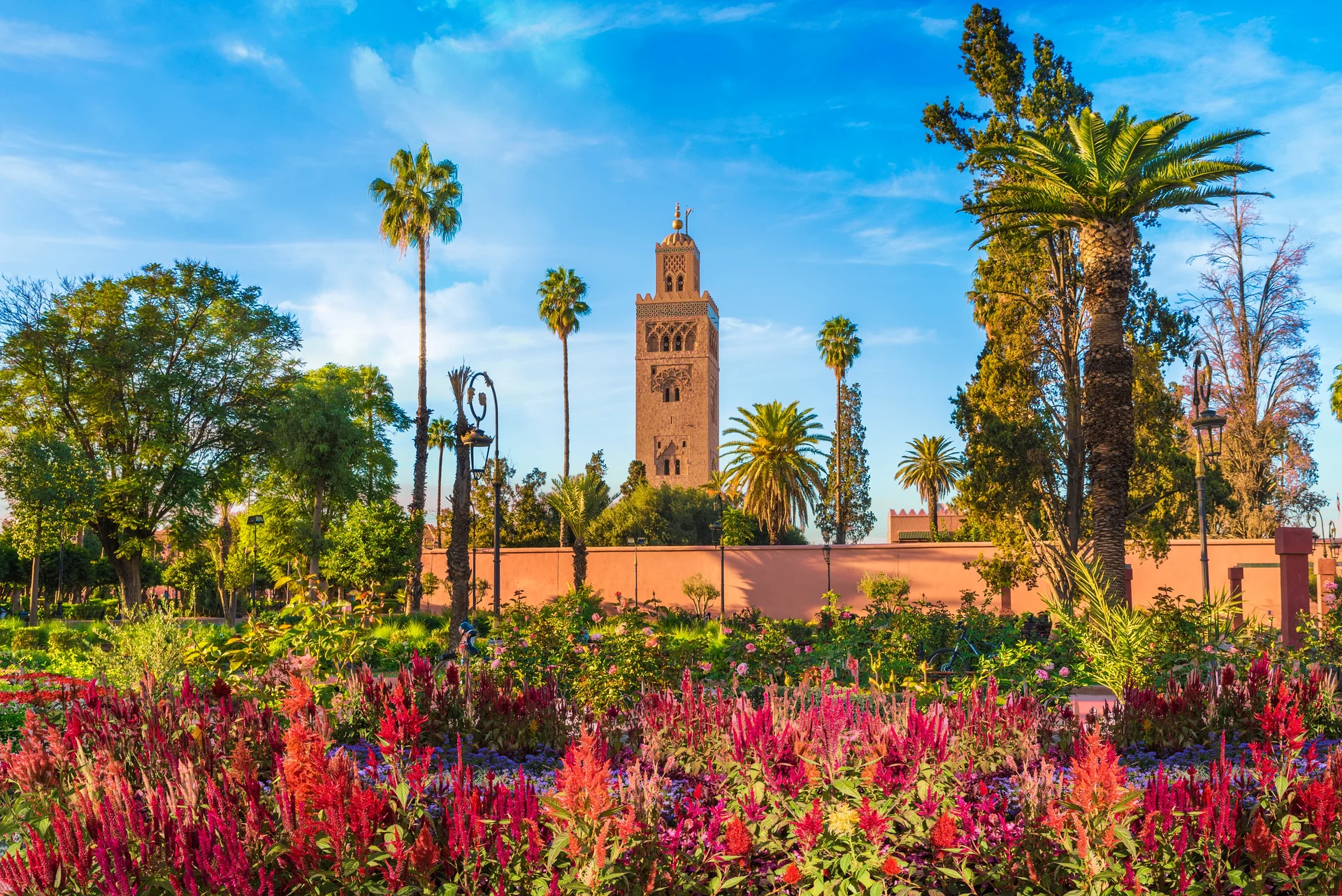
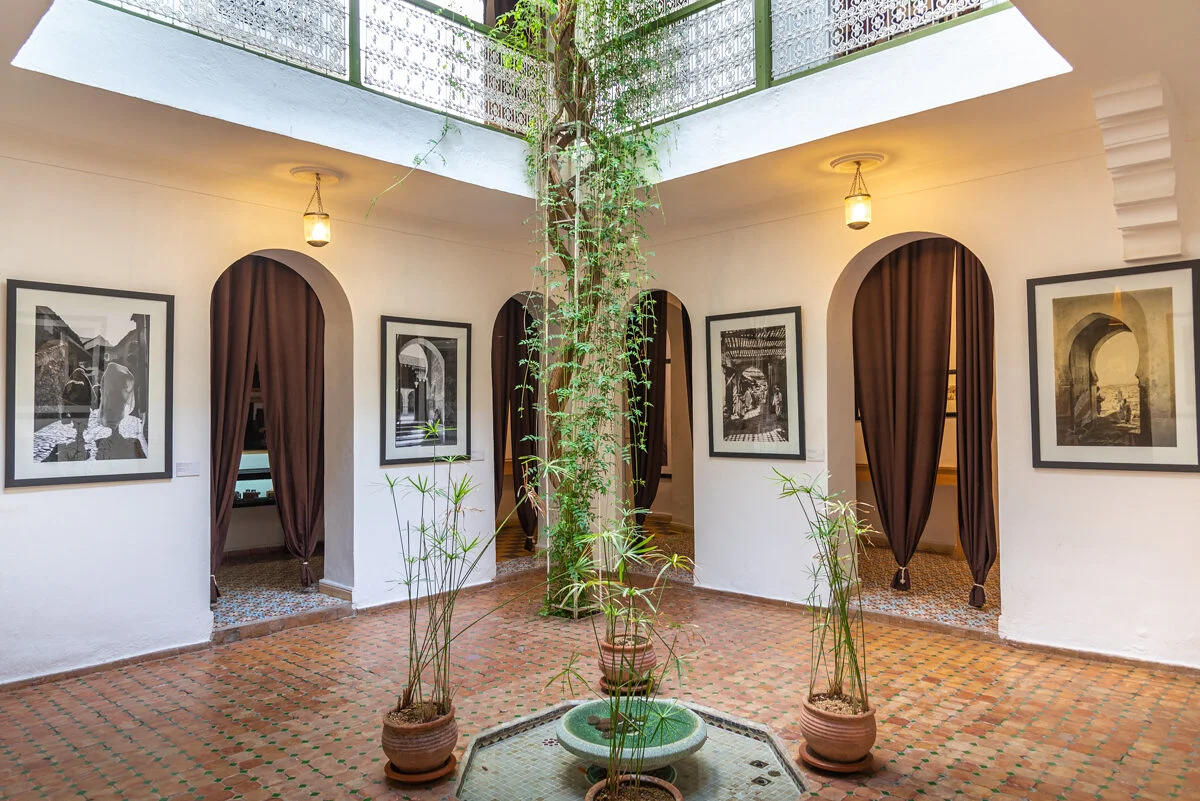
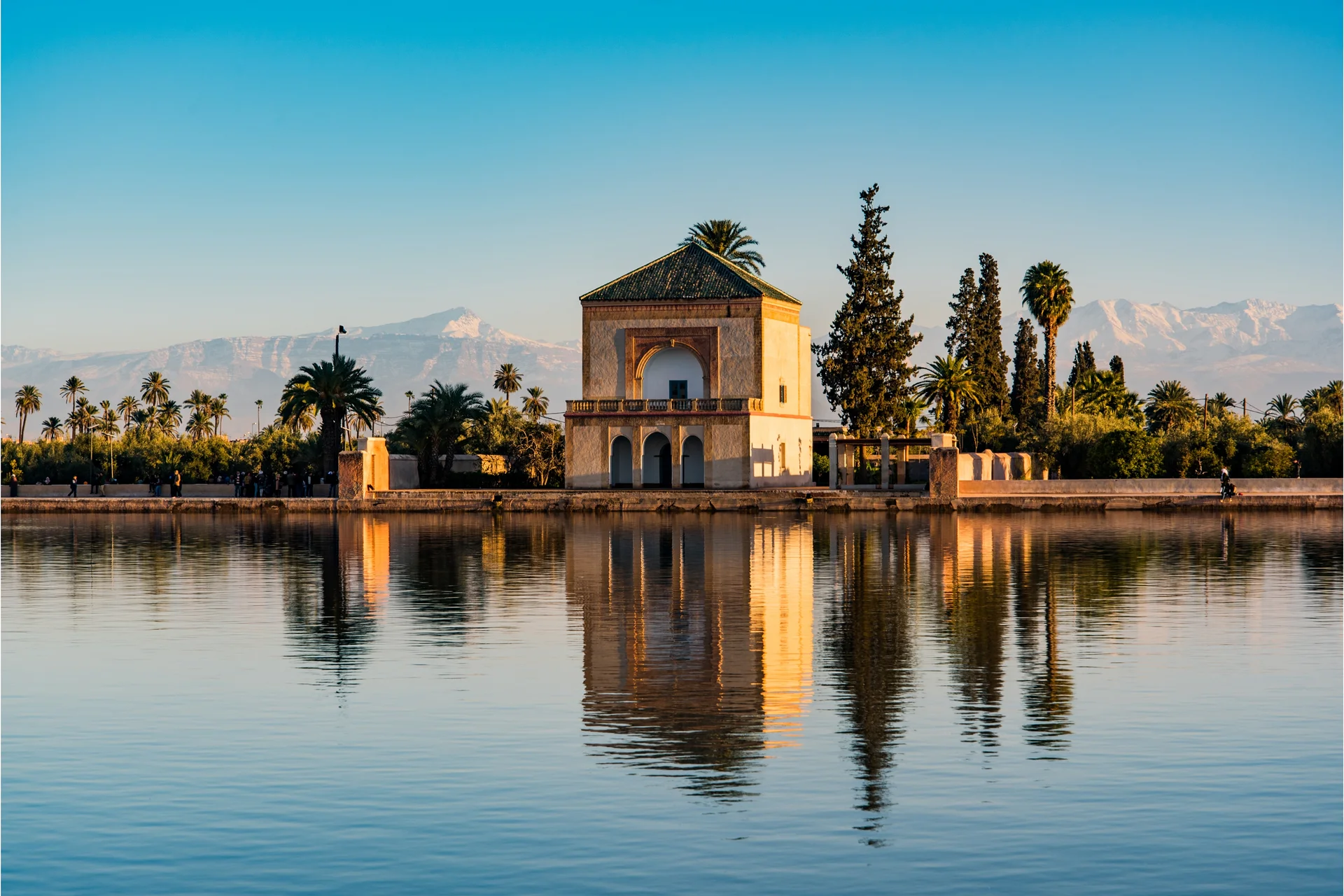
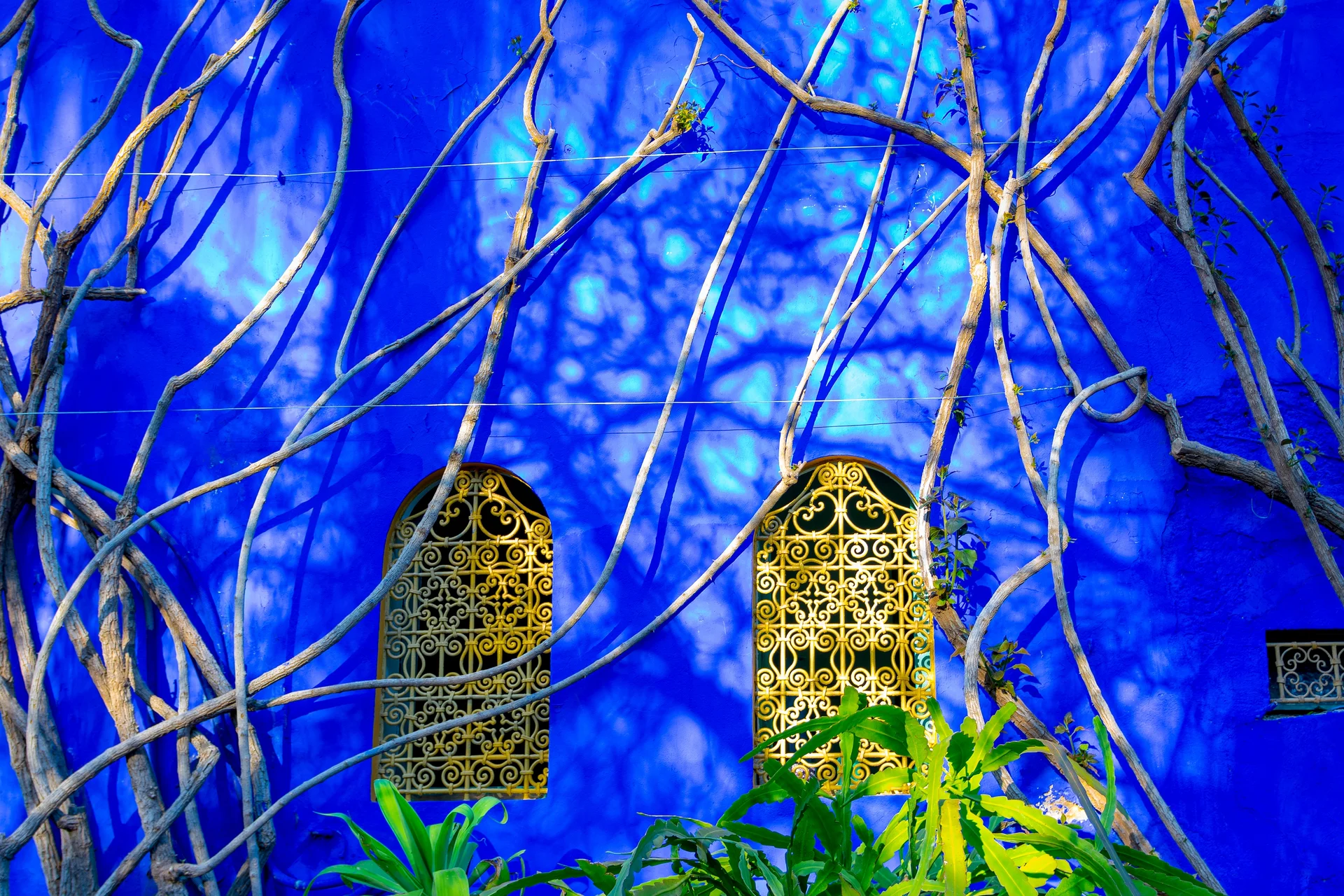
Marrakech runs on three beats: souks and palaces in the morning, before the heat builds; a riad courtyard or a hammam in the afternoon; and Jemaa el-Fnaa at night, when the food stalls light up. Two choices shape the trip: the season, since summer tops 100 °F (38 °C), and where the riad sits, since most are at the end of alleys a taxi cannot enter. The gardens (Majorelle, Menara), a dinner in the Agafay desert and a few rules on haggling, dress and alcohol round it out below.
At a glance
- When to go
- March to May and October to November: 72 to 86 °F (22 to 30 °C) by day and mild evenings on the terraces. June to September runs 91 to 104 °F (33 to 40 °C); in December and January nights drop to about 41 °F (5 °C).
- How many days
- Four days: the medina, the gardens, the Kasbah and its palaces, and a slow day with a hammam. Add one more for the Agafay desert, the Ourika Valley or Essaouira.
- Which area
- The northern medina for a first visit, the Kasbah for quiet, the Koutoubia for being close to the square, Hivernage for pools and gardens.
- Budget for two
- About $960 for three nights in a comfortable riad, with meals, sights and taxis, flights not included. Cash works everywhere outside the hotels.
- The moment for two
- A riad rooftop at the evening call to prayer, then Jemaa el-Fnaa as the smoke from the stalls rises into pink light.
- Book ahead
- The riad with its airport transfer, Majorelle on a timed ticket, the Agafay desert dinner or a hot air balloon, from a few days to a few weeks before.
Why Marrakech for two
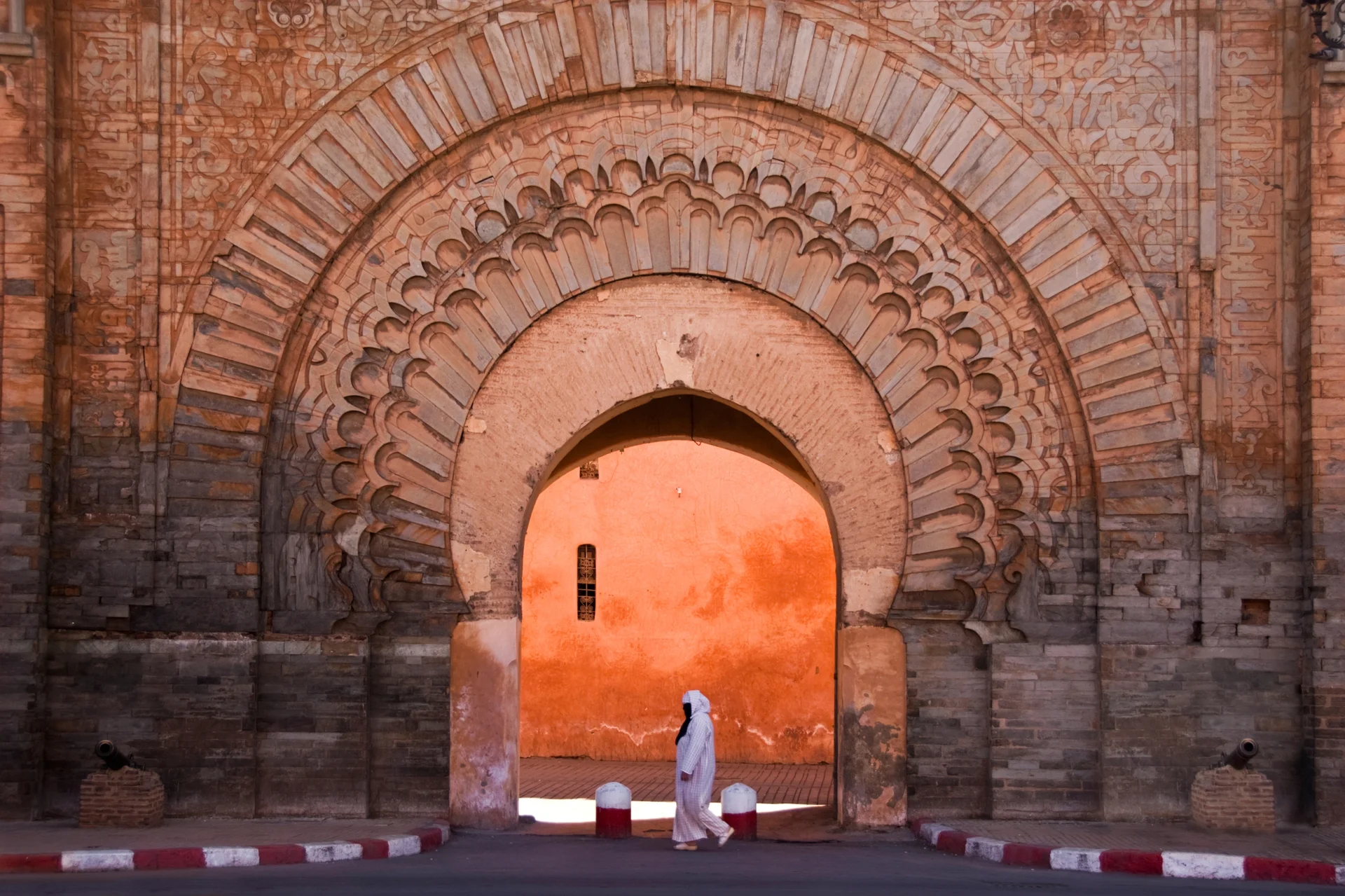
Marrakech is best explored as a pair, one alley at a time: an ochre lane where you press against the wall for a scooter, then a low door that opens onto a courtyard with a fountain and orange trees. Red walls, carved doors and terraces with a view of the Koutoubia minaret and, in winter, the snowy Atlas peaks make every evening a different dinner. It is also the easiest city in Morocco to organize: direct flights from Europe, riads of every size, and a hammam on every block.
Two facts shape the trip. The medina is a maze with no cars, so you arrive at your hotel on foot, and a riad is chosen for its access as much as for its courtyard. And the heat sets the day: from May to September you sightsee before 11 a.m. and after 5 p.m., and nap or swim in between.
When to go
| Period | Weather | Crowds | Our take |
|---|---|---|---|
| March to May | 73 to 86 °F (23 to 30 °C) by day, 50 to 61 °F (10 to 16 °C) at night, little rain; snow stays on the Atlas until April | High season, very busy at Easter | Our favorite: gardens in bloom, terraces, white mountains on the horizon |
| October and November | 72 to 82 °F (22 to 28 °C) by day, 54 to 61 °F (12 to 16 °C) at night | High in October, calmer in November | Gentle warmth, almost as good as spring |
| December to February | 64 to 68 °F (18 to 20 °C) by day, 39 to 46 °F (4 to 8 °C) at night, the most rain | Peaks at Christmas and New Year, quiet in January | Clear skies but cold evenings: pick a riad with heating |
| June to September | 91 to 104 °F (33 to 40 °C), up to 113 °F (45 °C) in July and August | Low, prices drop | Sights before 11 a.m. and after 5 p.m., a pool in between |
Ramadan and moving dates
Ramadan follows the lunar calendar: it moves about ten days earlier each year, so check the dates before booking flights. Muslims fast from sunrise to sunset. The city stays open and hotels are often cheaper, but the rhythm changes: souks open later, many medina restaurants close by day, alcohol sales are restricted, and people avoid eating, drinking or smoking in the street. Hotel restaurants and the new town still serve visitors. At sunset the ftour, the meal that breaks the fast, starts a lively evening, and harira, a tomato and legume soup, and dates are shared everywhere.
Eid al-Fitr, at the end of Ramadan, and Eid al-Adha, the feast of the sacrifice, close most shops for several days, fill the trains and push riad prices up. The clocks also move back one hour during Ramadan, so a phone with the wrong time zone can make you miss a transfer.
Entry rules: passport, visa, health
| Documents | Visa | Health | |
|---|---|---|---|
| United States | Passport valid for six months after arrival to be safe; check the official site before booking | No visa for tourist stays of up to 90 days, entry stamp on arrival | No required vaccines; see a travel clinic four to six weeks before; travel medical insurance with evacuation, since Medicare and most US plans do not pay abroad |
| United Kingdom | Passport valid for six months after arrival to be safe | No visa for tourist stays of up to 90 days | No required vaccines; the GHIC card does not cover Morocco, so take travel insurance with repatriation |
Passport and visa: the rule, then the check
Citizens of the United States and the United Kingdom enter without a visa for a tourist stay of up to 90 days, passport in hand. Conditions can change: confirm the validity requirement and any formalities on the Moroccan foreign ministry site, with your airline or your own government's travel advice before booking. Your riad or hotel keeps your passport for a police registration form when you arrive and returns it within the hour: that is routine, not suspicion.
Health and water
No vaccine is required from the US or the UK; update tetanus and hepatitis A. Private clinics in Marrakech are good and paid in full, so buy insurance that covers medical costs and repatriation. The most common trouble is the stomach: drink bottled water opened in front of you, skip ice and raw salads from stalls, and pick stalls where customers turn over fast.
Getting there
By air, the simple way
| From | Duration | Good to know |
|---|---|---|
| London | ~3h45 | Direct flights daily from several London airports, on the national carrier and low-cost airlines |
| Manchester | ~4h | Direct flights, more frequent from March to November |
| New York, Boston, Washington | 10 to 14h | One stop, often in Casablanca or a European hub; the Atlantic leg takes ~7h |
| Chicago, Los Angeles | 13 to 18h | One or two stops; consider a night in Casablanca or Paris to split the trip |
Fares peak at Easter, Christmas and the UK school holidays; midweek in low season, a round trip from London can be very cheap. Compare two or three dates before choosing.
From elsewhere in Morocco
The train from Casablanca takes about 3 hours in comfortable cars all day, a good connection if you land at Casablanca airport. Supratours buses link Marrakech to Essaouira, 2h30 away by road. The ride from the airport to your riad is covered below, in “From the airport to your riad.”
Practical things to know before you go
Phone
Check what your plan includes for Morocco; if it is a daily roaming fee, an eSIM bought before the flight or a local SIM (Maroc Telecom, Orange, inwi) from the airport or a shop, with your passport, costs less. Wi-Fi is common in riads, cafés and restaurants. Download an offline map of the medina: GPS is approximate there, but it points to the right neighborhood.
Money and tipping
- You pay in dirhams (MAD). Withdraw cash from a bank's ATM, ideally by day and inside the branch lobby, and decline the conversion into dollars or pounds that the machine offers: it costs more. Dirhams are hard to buy before leaving and cannot be exported freely, so spend them or change what is left at the airport.
- Cash is used everywhere outside the hotels: souks, taxis, cafés, neighborhood hammams. Keep small bills, since drivers and vendors never have change for a large one.
- Riads, larger restaurants and spas take cards, sometimes with a surcharge; ask before ordering.
- In restaurants, 10 percent if service is not included; $1.20 to $2.30 per bag for the riad porter; a few coins for a driver, a guide or the man who watches your rental scooter.
Time difference
Morocco is one hour ahead of London in winter and on London time in summer; during Ramadan the clocks go back one hour. New York is five to six hours behind, Los Angeles eight to nine. From the UK there is nothing to absorb; from the US, keep the first day for the riad terrace and a short walk, and save the medina for day two.
Outlets, water and what to wear
- Types C and E outlets, 230 volts: US travelers need an adapter and a dual-voltage charger (most phone and laptop chargers are); UK plugs need a type C adapter.
- Tap water is not for drinking: bottled water everywhere, and use it to brush your teeth if your stomach is sensitive.
- In the medina, both of you cover shoulders and knees; a light scarf helps on cool evenings and in the sun, and covering hair is never required.
- Flat, closed shoes: the paving is uneven, alleys are wet from washing down, and palace marble is slippery.
- High-SPF sunscreen, a hat, sunglasses, and a jacket for evenings from November to March.
What to book, and how far ahead
In Marrakech you book what is small or limited: the riad, a garden's time slot, the desert night, the balloon. The souks, palaces, gates and the square need no advance ticket.
| What | Price / pers. | Book | Good to know |
|---|---|---|---|
| Riad with 5 to 10 rooms | By tier, see “Budget” | 6 to 8 weeks ahead | Small riads go first in spring and at Christmas; ask where the taxi drops you |
| Airport transfer to the riad | $14 to $28 / taxi | When booking the riad | A driver at the exit, then a porter to the door |
| Majorelle Garden and Yves Saint Laurent Museum | $16 to $28 | 1 to 3 days ahead | Timed online ticket; the first slot beats the heat and the crowd |
| Agafay desert dinner and night | $56 to $135 | 3 to 7 days ahead | Leaves in late afternoon, returns late; the tent night comes with dinner |
| Hot air balloon flight | $168 to $250 | 1 to 2 weeks ahead | Departs before dawn, one hour aloft, cancelled in strong wind |
| Hammam and spa massage | $34 to $90 | 1 to 2 days ahead | Late-afternoon slots sell first |
From the airport to your riad
© OpenStreetMap contributors
The airport and the areas it serves
- Marrakech-Menara (RAK)
- 1Jemaa el-Fnaa, souks
- 2Bab Doukkala, Mouassine
- 3Kasbah, Bab Agnaou
- 4Hivernage, Bab Jdid
| Destination | Transport | Duration | Typical fare |
|---|---|---|---|
| Jemaa el-Fnaa, souks | Bus 19, Jemaa el-Fnaa stop | ~30 min. | ~$3.40 / pers. |
| Jemaa el-Fnaa, souks | Petit taxi | 15 to 20 min. | $12 to $16 / taxi |
| Bab Doukkala, Mouassine | Petit taxi | 20 to 25 min. | $12 to $16 / taxi |
| Kasbah, Bab Agnaou | Petit taxi | 20 to 25 min. | $12 to $16 / taxi |
| Hivernage, Bab Jdid | Petit taxi | 10 to 15 min. | $7.90 to $12 / taxi |
Marrakech-Menara airport is 4 miles (6 km) southwest of the center, and it is the only airport for a city stay. Cars do not enter the medina: the driver drops you at the Bab Doukkala gate, at Jemaa el-Fnaa or at Bab Agnaou, and the riad's porter, waiting with a cart, wheels your bags to the door. Email the riad your arrival time and ask for the exact drop-off point.
Airport petit taxis often quote a fixed fare above the meter: agree on the price before getting in, and turn down the driver who approaches you in the hall. The easiest option is the transfer booked by the riad, priced like a taxi, with a driver holding your name at baggage claim. Bus 19 is the cheapest, and it stops near the Koutoubia and Jemaa el-Fnaa.
Getting around
A medina on foot, a city by taxi
You explore the medina on foot, and you get lost: alleys change names, dead ends (derbs) abound, and GPS drops out. Anchor yourself on two landmarks, Jemaa el-Fnaa and the Koutoubia, and ask a shopkeeper for directions rather than a young man who offers. To go from the medina to Majorelle, Guéliz or Hivernage, take a petit taxi.
| Option | Price | Good to know |
|---|---|---|
| Petit taxi | $1.70 to $4.50 a ride in town | The meter is rarely switched on: agree the price before getting in, a bit more at night |
| Horse carriage | $14 to $28 an hour | For an evening ride around the ramparts; agree the price and the duration first |
| Rental bike or scooter | $9 to $23 a day | For wide avenues, gardens and the Palmeraie; never in the souks, where you walk the bike |
| City bus | ~$0.56 a ride | Not needed for a short stay; the lines mostly serve residents |
| Excursion with a driver | $68 to $112 a day | For the Ourika, Essaouira or Agafay; the riad can book a reliable one |
Budget for two
The riad is the first expense, ahead of meals, which can be set at any price, and sights, which add up mainly with the desert, the balloon and the spa. Here is what three nights cost for two, flights excluded, tourist tax included.
| Budget | Comfort | Splurge | |
|---|---|---|---|
| Hotel, per night | $51 to $79 | $146 to $250 | from $400 |
| Meals, per day for two | $28 | $68 | $168 |
| Sights, hammam and taxis for the stay | $56 | $168 | $510 |
| Total, three nights | ~$400 | ~$960 | ~$2,360 |
Reference prices
| Item | Price |
|---|---|
| Fresh orange juice on the square | ~$0.56 |
| Mint tea in a café | $1.20 to $2.30 |
| Tajine in a medina restaurant | $6.80 to $14 |
| Dinner for two in a riad restaurant | $45 to $90 |
| Beer or glass of wine at a restaurant | $4.50 to $9 |
| Entry to a palace or the Saadian Tombs | $6.80 to $9 |
| Neighborhood hammam, with scrub | $5.60 to $12 |
What to eat and drink
Marrakech cooking is slow, spiced family food: you taste it at the riad, in a courtyard restaurant, or at the stalls on the square, from a souk lunch to a long dinner. Salt, cumin, cinnamon and saffron matter more than chile.
At the table
-
Tajine
A stew simmered under a conical lid, lamb with prunes or chicken with olives and preserved lemon, served with bread. The lunch dish, $6.80 to $14.
-
Tanjia
The Marrakech specialty: meat cooked for hours in a clay jar buried in the embers of a hammam's furnace, falling apart with cumin and preserved lemon.
-
Pastilla
A flaky pie of pigeon or chicken dusted with powdered sugar and cinnamon: sweet and savory in one bite, good to share as a starter.
-
Friday couscous
Families eat it after Friday prayers; good restaurants often serve it only that day, with seven vegetables and meat.
-
Msemen
A flaky flatbread with honey or cheese for breakfast, with tea: the start of a riad day.
-
Gazelle horns
Almond crescents scented with orange blossom, from the neighborhood pastry shops, best with a tea.
In the cup and the glass
-
Mint tea
Green tea with fresh mint, sweet, poured from a height: accept it, it is a sign of welcome, even when you did not ask.
-
Orange juice
Squeezed in front of you on the square, a few coins a glass; the stalls post their prices.
-
Alcohol
Served in hotels, licensed restaurants and bars in the new town, not in medina cafés. Moroccan beers and wines are on any menu that lists alcohol.
Customs and rules to know
Marrakech has welcomed travelers for centuries, and residents forgive missteps; a few habits still show respect: a “salam” when you walk into a shop, the right hand for giving and receiving, a calm voice when haggling.
| Rule | What applies |
|---|---|
| Alcohol | Served in hotels, licensed restaurants and bars in Guéliz and Hivernage; not in the street or medina cafés; zero alcohol when driving |
| Dress | Shoulders and knees covered in town, for both of you; swimwear for the pool only |
| Photos | Ask before photographing a person; snake charmers and costumed water sellers expect payment for a photo |
| Mosques | Closed to non-Muslims, apart from a few madrasas and gardens; you see them from the outside |
| Public affection | Holding hands is fine; kissing and embracing are for the room |
| Drone | Banned without a permit: leave it at home |
Haggling
In the souks no price is posted: you bargain, and it is a friendly game. Compare two shops before deciding; offer a little more than half the first price and move up in small steps; never name a price you are not ready to pay. If you want nothing, say no, thank you with a smile and walk on: the seller calls you back with a last price if there is a deal. Restaurants, cafés, museums and metered city taxis do not bargain.
- On Friday at noon the prayer empties the streets; many shops open late in the morning and reopen around 2 p.m.
- Same-sex relations are illegal in Morocco: couples affected should check their government's travel advice before booking.
- Dinner starts late, around 8:30 p.m.; lunch is around 1 p.m., and the souks close at dusk.
Safety
Marrakech is safe for a couple, by day and in the evening on busy streets. Trouble comes from pushy vendors, fake guides, pickpockets in crowds and the heat, far more than from violence.
- Fake guides: a stranger who tells you the street is closed, that the tannery is “this way” or that the souk has a festival, leads you to a shop and then asks for money. Say no, thank you, keep walking and check your offline map.
- Jemaa el-Fnaa: a hand that grabs yours for henna, a monkey set on your shoulder, a snake charmer in front of your lens; each act is paid for, and the price climbs after the fact. Refuse first or set the price.
- Pickpockets work the souks and the square in the evening: phone in a front pocket, bag closed in front of you, nothing in a back pocket.
- Scooters speed through the alleys: at the call of balak, flatten yourself against the wall.
- Alleys off the main routes are dimly lit late at night; return by busy streets, or have the riad's porter walk you back.
- The sun from noon to 4 p.m., May to September: heatstroke comes fast. Drink before you are thirsty, and step into a courtyard or a hammam.
Mistakes couples make
Disappointment almost always comes from a poorly located riad, a haggle done grudgingly or a schedule too packed for the heat. Leave room for detours: Marrakech reveals itself in the alleys where you got lost.
- Booking a riad without asking where the taxi drops you and whether a porter fetches the bags: some riads sit a 15-minute walk from the nearest gate.
- Sleeping right on Jemaa el-Fnaa: the drums go past midnight and the nearby terraces keep going later.
- Following a “guide” who approached you in the street: the tour ends in a shop, with a sum to pay.
- Sightseeing at noon in summer: the medina bakes, and the palaces have little shade. Start at opening, be back at the riad by midday.
- Haggling without knowing the price: a rug or a lamp is compared in two shops before buying, and a taxi fare is agreed before getting in.
- Buying dirhams before leaving or changing money in the street: withdraw at a bank's ATM.
- Eating at the first stall that calls you: pick a stall full of customers with posted prices, not the one the tout points to.
Frequently asked questions
Is Marrakech a good destination for a romantic trip?
Yes: the riad with its courtyard and rooftop, the hammam for two, the gardens and rooftop dinners make a romantic three days. You have to accept the souk sales pitches and choose a riad with good access, both easy with a little preparation.
How many days do you need in Marrakech as a couple?
Three full days cover the souks, Majorelle, the Kasbah and its palaces; a fourth leaves time for a hammam and the Menara gardens. One more day opens up the Agafay desert, the Ourika Valley or Essaouira.
Do Americans and Britons need a visa for Marrakech?
No, for stays of up to 90 days, with a passport valid six months after arrival to be safe. Confirm the rules on the official site or with your government's travel advice before booking.
Can you drink alcohol in Marrakech?
Yes, in hotels, licensed restaurants and bars in Guéliz and Hivernage, but not in the street or in medina cafés. Many riads serve none: ask before booking, or bring a bottle bought in a new-town shop.
What should women wear in Marrakech?
Shoulders and knees covered is the courtesy rule for both of you: a long dress, light trousers, a shirt with sleeves. Nothing is required for the hair. Keep swimwear for the pool and the hammam.
Can you travel to Marrakech during Ramadan?
Yes. The dates move earlier each year, so check them before booking. The city stays open, hotel restaurants serve normally and the ftour evenings are worth living; by day you avoid eating and drinking in the street, and many medina restaurants close.